
A simple dog dental care routine includes daily toothbrushing with dog-safe toothpaste, regular mouth checks, and veterinary dental exams.
If you’re a beginner, start with short, gentle sessions and build the habit slowly. This guide shows you how to follow an easy daily and weekly routine to help keep your dog’s teeth and gums healthy.
Dog Dental Care Routine at a Glance
A daily dog dental care routine helps keep your dog’s teeth and gums healthy. Use this simple dog dental care schedule to build a steady habit.
| Frequency | What to Do |
| Daily | Gently brush your dog’s teeth with a soft toothbrush and dog-safe toothpaste. |
| Weekly | Check for red or swollen gums, if your dog is comfortable. |
| Regularly | Clean your dog’s dental tools and check them for wear. |
| At Least Yearly | Schedule a veterinary dental exam, or sooner if your vet recommends it. |
Start slowly and keep brushing sessions calm. Never force your dog if they seem scared or uncomfortable.
Why Is Dog Dental Care Important?
A regular dog dental care routine helps reduce plaque buildup and keeps your dog’s teeth and gums healthy.
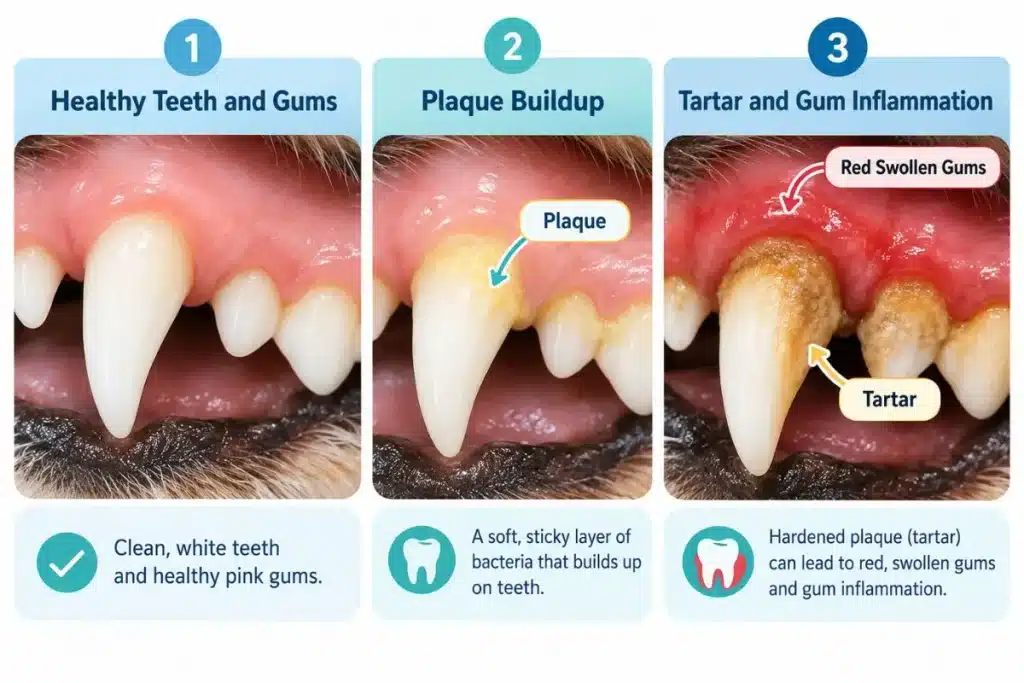
Plaque is a sticky layer of bacteria that forms on teeth. Without regular cleaning, it can harden into tartar, which brushing cannot remove.
Over time, plaque buildup can cause gingivitis (gum inflammation) and lead to periodontal disease, which affects the tissues supporting your dog’s teeth.
The American Veterinary Medical Association explains why regular dental care and veterinary checkups matter.
Making oral hygiene part of your daily dog care helps protect your dog’s dental health.
What You Need for Your Dog’s Dental Care Routine
You only need a few basic dog dental care products to get started. Choose tools that are safe, gentle, and comfortable for your dog.
Dog Toothbrush and Dog-Safe Toothpaste
Choose a dog toothbrush with soft bristles or a finger brush that fits comfortably. Use dog-safe toothpaste, such as an enzymatic formula that helps break down plaque.
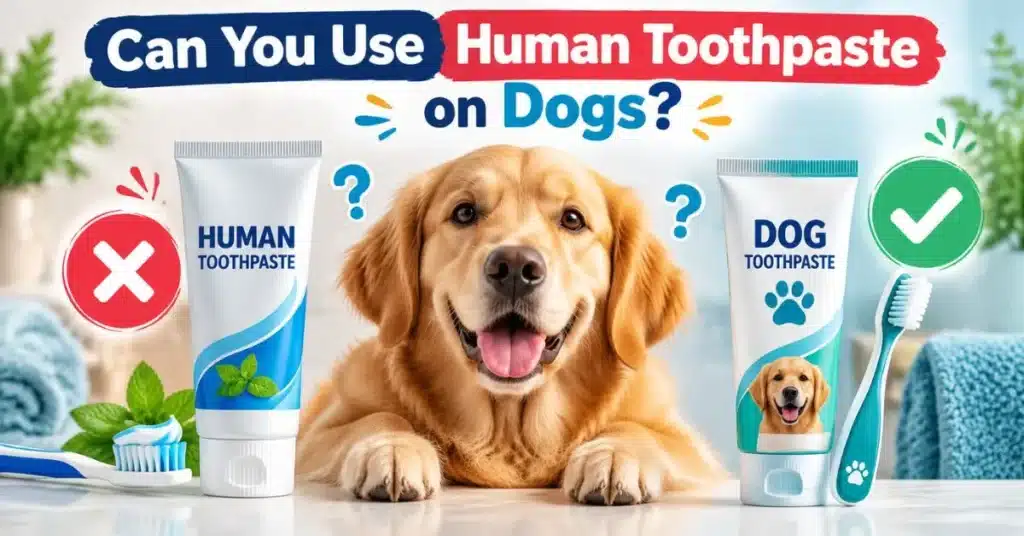
Never use human toothpaste. Some ingredients, including xylitol, are toxic to dogs.
Optional Dental Chews and Oral Care Products
Dental chews, oral wipes, and water additives can help support your dog’s oral health. But they should not replace regular brushing.
Look for the VOHC Seal when choosing dental products. It identifies products that meet standards for controlling plaque, tartar, or both.
Choose chews that match your dog’s size and chewing habits. Ask your vet which products are best for your dog.
How to Start Your Dog’s Dental Care Routine
Starting a dog dental care routine at home takes patience. These simple steps can help your dog feel safe and comfortable.
Check Your Dog’s Comfort First
First, check for red or bleeding gums, broken teeth, or signs of mouth pain. If you notice these problems, contact your vet before brushing.
Choose a quiet place where your dog feels relaxed. Keep each session short, and never force your dog.
Introduce Mouth Handling and Dental Tools
Gently touch your dog’s muzzle and lift their lips for a moment. Reward calm behavior with praise or a small treat.
Next, let your dog sniff the soft toothbrush and taste some dog-safe toothpaste.
This gradual process, called desensitization, helps your dog get used to brushing without feeling pressured.
Start with Short Brushing Sessions
Once your dog feels comfortable, gently brush a few teeth. Use positive reinforcement, such as praise or treats, to reward cooperation.
Slowly brush more teeth as your dog becomes comfortable. If they pull away or seem stressed, stop and try again later.
For step-by-step instructions, see our guide on cleaning your dog’s teeth.
Daily and Weekly Dog Dental Care Schedule
A regular dog dental care schedule helps keep your dog’s teeth and gums healthy. Follow these simple habits to make dental care part of your daily routine.
Daily Dental Care Tasks
Choose a quiet time when your dog feels relaxed, such as after a walk or before bed.
Gently brush your dog’s teeth with a soft toothbrush and dog-safe toothpaste. Focus on the outer surfaces, where plaque builds up.
Reward your dog with praise or a small treat. Then rinse the toothbrush and let it air-dry.
The AAHA dental guidelines recommend daily brushing to help control plaque. However, brushing cannot remove hardened tartar.
Weekly Teeth and Gum Checks
Once a week, gently lift your dog’s lips to check their teeth and gums, if they’re comfortable.
Look for red or swollen gums, bad breath, or visible tartar. Also, watch for changes in how your dog eats or chews.
If you notice pain or other warning signs, contact your vet.
Regular Veterinary Dental Checkups
Schedule a veterinary dental exam at least once a year, or more often if your vet recommends it.
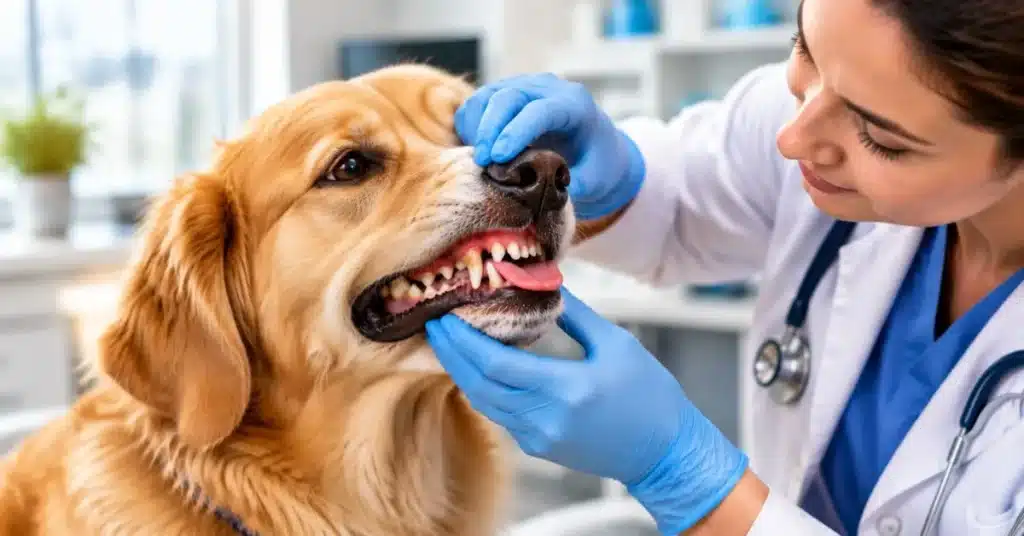
Your vet can check for dental problems and decide whether your dog needs professional teeth cleaning.
Even with daily brushing, regular veterinary care remains important.
7-Day Dog Dental Care Plan for Beginners
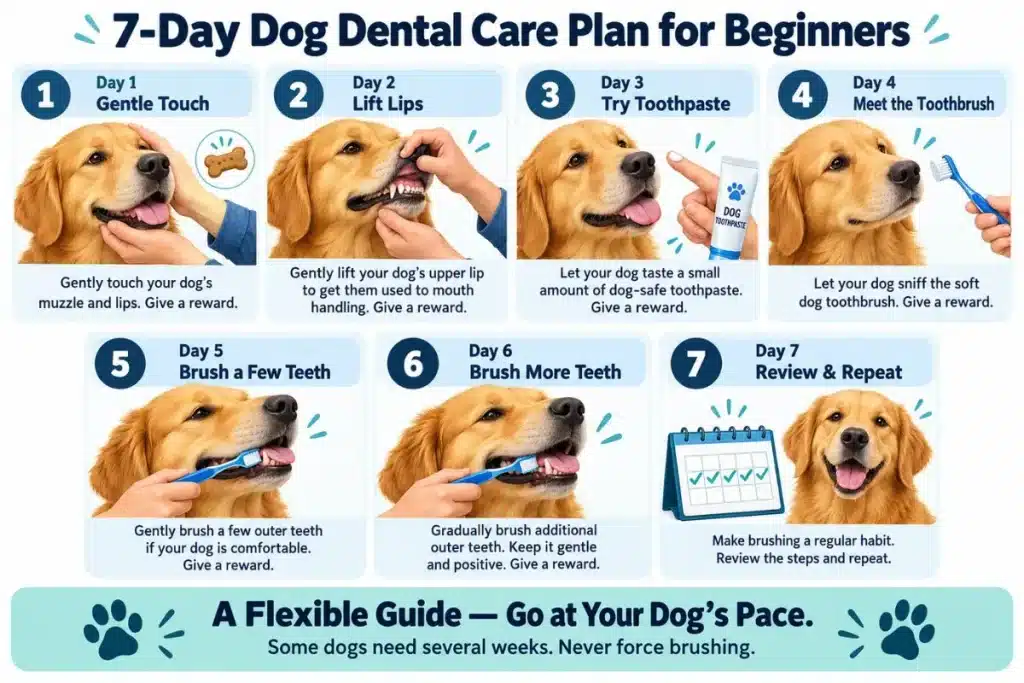
Building a dog toothbrushing habit takes time. This simple 7-day plan helps your dog get comfortable with dental care, one step at a time.
| Day | What to Do |
| Day 1 | Gently touch your dog’s muzzle (snout) and reward calm behavior with praise or a treat. |
| Day 2 | Lift your dog’s lips briefly to show their teeth. Give a reward if they stay relaxed. |
| Day 3 | Let your dog sniff and taste a small amount of dog-safe toothpaste. |
| Day 4 | Introduce a soft toothbrush and let your dog sniff it without pressure. |
| Day 5 | Gently brush a few teeth if your dog feels comfortable. |
| Day 6 | Slowly brush more teeth, using praise and treats to reward calm behavior. |
| Day 7 | Check your dog’s progress and choose a regular time for brushing. |
Remember: This plan is a flexible guide, not a deadline. Some dogs may need several weeks to feel comfortable. If your dog seems scared or stressed, stop and return to an easier step. Never force brushing.
What If Your Dog Won’t Let You Brush Their Teeth?
If your dog won’t let you brush their teeth, don’t force them. Your dog may feel scared, uncomfortable, or unsure about the toothbrush.
Watch how your dog reacts and try these gentle solutions.
| Your Dog’s Behavior | What to Do |
| Moves their head away | Pause brushing and return to an easier step, like gently touching their muzzle. |
| Seems nervous | Keep sessions short and reward calm behavior with praise or treats. |
| Growls or struggles | Stop brushing immediately. Never hold your dog down or force them. |
| Shows signs of pain | Stop brushing and contact your vet for a dental checkup. |
To make toothbrushing easier, give your dog time to get comfortable with the toothbrush. Use praise and treats to encourage calm behavior.
If your dog remains fearful, ask your vet for advice.
Remember: Every dog learns at their own pace. Focus on comfort and trust, not speed.
When to See a Vet for Your Dog’s Teeth
Some dog dental problems need veterinary care, even if you brush your dog’s teeth regularly. Watch for these warning signs.
Signs of Dental Problems in Dogs
Contact your vet if you notice:
- Persistent bad breath: A strong smell that doesn’t go away.
- Red, swollen, or bleeding gums: Possible signs of gum disease or infection.
- Loose or broken teeth: These can cause pain and trouble eating.
- Difficulty chewing: Your dog may drop food or avoid hard food.
- Mouth or facial swelling: This may signal an infection.
- Reduced appetite: Eating less can be a sign of mouth pain.
If your dog has severe pain, significant bleeding, or facial swelling, stop brushing and seek prompt veterinary care.
Why Brushing Can’t Replace Veterinary Care
Brushing helps remove plaque, a sticky layer of bacteria, but it cannot treat existing dental disease.
Your vet can examine your dog’s mouth, recommend professional dental cleaning, and use dental X-rays to find hidden problems.
The AVDC guidance explains why anesthesia-free tooth scraping cannot replace a complete veterinary dental examination.
Common Dog Dental Care Mistakes to Avoid
Even small dog dental care mistakes can harm your dog’s teeth and gums. Avoid these five common mistakes to keep your dog safe.
- Using human toothpaste: Some brands contain xylitol, a sweetener that’s toxic to dogs. Always choose dog-safe toothpaste.
- Forcing your dog: Brushing a scared or uncomfortable dog can cause stress. Stop if your dog resists, and ask your vet for advice if they seem painful.
- Relying only on dental chews: Dental chews can help reduce plaque, but they cannot replace regular brushing.
- Scraping tartar at home: Removing hardened tartar yourself can injure your dog’s mouth. Leave it to veterinary professionals.
- Skipping dental checkups: Brushing alone cannot find every dental problem. Schedule veterinary dental exams as your vet recommends.
Simple Dog Dental Care Checklist
Use this dog dental care checklist to build a healthy routine. Save or print it to track your dog’s daily, weekly, and regular dental care.
Daily Care
- Gently brush with dog-safe toothpaste, or practice brushing if your dog is still learning.
- Watch for mouth pain, discomfort, or unusual behavior.
Weekly Care
- Check your dog’s teeth and gums for visible changes, if they’re comfortable.
Regular Care
- Clean and check your dog’s dental tools for wear.
- Keep veterinary dental appointments and follow your vet’s advice.
Frequently Asked Questions About Dog Dental Care
Is brushing my dog’s teeth every day necessary?
Daily brushing is best because plaque, a sticky layer of bacteria, builds up on teeth. If your dog is still learning, start slowly and build a regular brushing habit.
Can dental chews replace brushing?
No. Dental chews can help control plaque and tartar, but they cannot fully replace toothbrushing. Use them alongside brushing and regular veterinary dental care.
Can I use human toothpaste on my dog?
No. Human toothpaste may contain ingredients that are unsafe for dogs. Some contain xylitol, a sweetener that is toxic to dogs. Always use dog-safe toothpaste.
When should puppies start dental care?
Start puppy dental care early with gentle mouth handling and rewards. Introduce a soft toothbrush slowly, and avoid brushing sore gums during teething. Ask your vet for advice.
How often should my dog have a dental exam?
Most dogs should have a veterinary dental exam at least once a year. Some need more frequent checkups based on their age, breed, and dental health.
Conclusion
A healthy dog dental care routine starts with small, consistent habits. Brush your dog’s teeth daily with dog-safe toothpaste, and introduce brushing slowly if they’re still learning.
Check your dog’s teeth and gums weekly, and schedule regular veterinary dental exams.
Start with one gentle step today. Build the habit at your dog’s pace, without forcing brushing.