
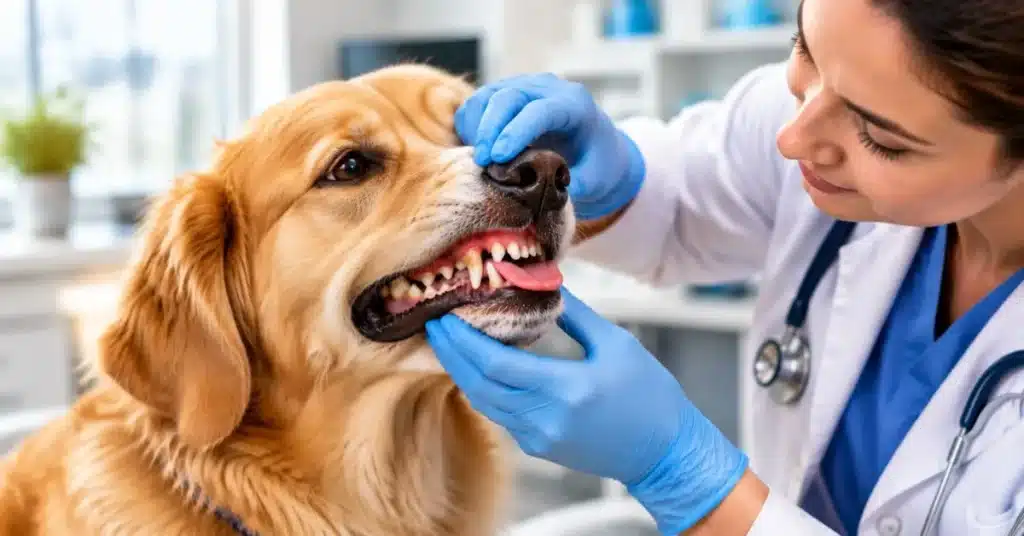
Signs of dental problems in dogs include bad breath, red or bleeding gums, yellow tartar, and trouble chewing. Dogs may also drool more, drop food, paw at their mouths, or avoid having their faces touched.
These signs may point to dental disease, including gum disease. But they do not always reveal the exact problem. Some dogs hide mouth pain and show few clear signs. Watch for changes in your dog’s mouth and behavior. If you notice these symptoms, contact a veterinarian for an examination and advice.
10 Common Signs of Dental Problems in Dogs
Dental problems can affect your dog’s eating habits, comfort, and behavior. Some signs are easy to spot, while others are harder to notice. Here are 10 common signs of dental problems in dogs and what they may mean.
1. Persistent Bad Breath
Bad breath in dogs can be an early sign of dental problems. Your dog’s breath may smell unpleasant, even after eating. Bacteria in plaque and tartar can cause this smell. However, bad breath can have other causes. If it continues, ask your veterinarian to check your dog’s mouth.
2. Red, Swollen, or Bleeding Gums
Healthy gums should not stay red, swollen, or bleed easily. Red gums in dogs may be a sign of gingivitis, which means gum inflammation. You might notice redness along the gumline or blood on a chew toy. These changes can point to dental disease, so contact your veterinarian.
3. Yellow or Brown Tartar Buildup
Look for yellow or brown tartar on your dog’s teeth, especially near the gums. Plaque is a soft layer of bacteria that forms on teeth. Over time, it can harden into tartar. Tartar can irritate the gums and lead to more serious dental problems. Your veterinarian can advise you on the right care.
4. Difficulty Chewing or Dropping Food
A dog with mouth pain may chew slowly or drop food while eating. Your dog may also chew on one side of the mouth or struggle with dry food. Difficulty chewing in dogs can have several causes, including damaged teeth or gum problems. Contact your veterinarian if you notice these changes.
5. Excessive Drooling or Blood in Your Dog’s Saliva
Some dogs naturally drool more than others. However, unusual drooling or blood in your dog’s saliva may signal a problem. Dental disease, mouth injuries, and other conditions can cause these signs. If you notice blood, contact your veterinarian instead of assuming dental disease is the cause.
6. Pawing at the Mouth or Rubbing the Face
Does your dog keep pawing at its mouth or rubbing its face against furniture? This behavior may signal mouth pain or discomfort. A sore tooth or irritated gum could be the cause. However, other problems can cause similar behavior. Do not force your dog’s mouth open. Ask your veterinarian to check it.
7. Loose, Broken, or Discolored Teeth
Loose, broken, or discolored teeth can point to dental disease or an injury. You may notice a chipped tooth, a loose tooth, or a tooth that looks different from the others. Adult dogs should not normally lose their teeth. Contact your veterinarian if you notice these changes, even if your dog still eats normally.
8. Swelling Around the Mouth or Jaw
Swelling around your dog’s muzzle, jaw, or below an eye can signal a serious problem. Possible causes include a dental infection, a tooth-root abscess, or an injury. Facial swelling in dogs needs prompt veterinary attention. Seek emergency care if the swelling affects breathing or your dog’s condition gets worse quickly.
9. Eating Less or Avoiding Hard Food
A dog with mouth pain may lose interest in dry food or avoid hard treats. Your dog may also take longer to finish meals or prefer softer food. Reduced appetite in dogs can have many causes, not just dental problems. Contact your veterinarian if the change continues or your dog struggles to eat.
10. Changes in Behavior or Avoiding Face Touch
Your dog may pull away when you touch its face or stop playing with chew toys. It may also seem withdrawn or become unusually irritable. These changes can sometimes signal dental pain in dogs. However, behavior alone cannot confirm a dental problem. If you notice sudden changes, arrange a veterinary examination.
To help protect your dog’s teeth and gums, follow a consistent dog dental care routine.
Remember: One symptom does not prove that your dog has dental disease. Some dogs also hide pain and show few clear signs. If you notice changes in your dog’s mouth, eating habits, or behavior, contact your veterinarian for advice.
Can Dogs Have Dental Problems Without Showing Signs?
Yes, dogs can have dental problems without clear signs. Your dog may eat normally, even when something is wrong with its teeth or gums. Some problems develop below the gumline, where you cannot see them at home. Dogs may also hide signs of mouth pain, so healthy-looking teeth do not always mean a healthy mouth.
Regular veterinary dental exams can help find hidden problems. Your vet may also use dental X-rays to check areas that are hard to see during a regular exam. Learn more in the AAHA dental care guide.
When Should You Take Your Dog to the Vet?
Contact your veterinarian if you notice signs of dental problems in dogs, such as ongoing bad breath, red gums, heavy tartar, loose teeth, or trouble chewing. These signs may point to dental disease or another problem.
Seek prompt veterinary care if your dog has mouth bleeding, facial swelling, clear signs of pain, or trouble eating or drinking. A veterinarian can check the cause and recommend the right care.
Get emergency veterinary help if your dog has trouble breathing, collapses, or becomes seriously unwell. Do not wait for these symptoms to improve on their own.
Never force your dog’s mouth open if it seems painful. Even a gentle dog may bite when hurt. The AVMA’s pet dental care guide explains other warning signs and when dogs need veterinary attention.
How Can You Help Prevent Dental Problems in Dogs?
A good dog dental care routine can help keep your dog’s teeth and gums healthy. Brush your dog’s teeth daily with a dog toothbrush and dog-safe toothpaste. Start slowly and use gentle movements so your dog can get used to brushing. Never use human toothpaste because some ingredients can harm dogs.
Learn more about human toothpaste for dogs and why choosing the right toothpaste matters.
You can also ask your veterinarian about dental chews and other products approved by the Veterinary Oral Health Council (VOHC). These products may help control plaque, but they do not replace brushing or regular dental checkups.
Schedule regular vet visits to check your dog’s teeth and gums. If your dog already has hard tartar or dental disease, brushing alone will not fix the problem. Your veterinarian can recommend the right treatment.
Frequently Asked Questions
What Are the First Signs of Dental Problems in Dogs?
Early signs include bad breath, red gums, tartar buildup, and trouble chewing. However, symptoms can vary between dogs.
Can a Dog Have Dental Disease Without Bad Breath?
Yes. Dogs can have dental disease without bad breath or other clear signs. Regular veterinary dental exams help detect hidden problems.
Can Dental Problems Make a Dog Stop Eating?
Yes. Dental pain can make eating difficult or cause a dog to avoid hard food. However, other health problems can also reduce appetite.
How Often Should a Dog’s Teeth Be Checked by a Vet?
Have your dog’s teeth checked by a vet at least once a year. Your vet may suggest more frequent checks. Read the AVMA dental guide.