
Knowing how much food your dog needs can be confusing. The right amount depends on your dog’s age, weight, size, activity level, and health.
A Dog Feeding Chart helps you understand how much food your dog may need every day. It gives a simple guide for puppies, adult dogs, and senior dogs based on their different nutritional needs.
However, every dog is different. A small puppy and a large adult dog will not need the same amount of food. Your dog’s lifestyle, body condition, and food type can also change feeding needs.
In this guide, you’ll find a practical dog feeding chart by age and weight with helpful tips to create a healthy feeding routine. You can also learn more about overall dog nutrition basics in our complete guide
What Is a Dog Feeding Chart?
A Dog Feeding Chart is a simple guide that helps dog owners understand how much food their dog needs each day. It usually shows feeding amounts based on age, weight, size, and activity level.
A dog food feeding chart is especially helpful for new dog owners. It gives a starting point for choosing the right portion size and creating a healthy feeding routine.
However, a feeding chart is only a guideline, not an exact rule for every dog. Every dog has different needs based on their lifestyle, body condition, and health.
For example, an active dog may need more food than a less active dog of the same weight. To understand your dog’s overall nutrition needs, you can also explore this nutrition guide from PetMD.
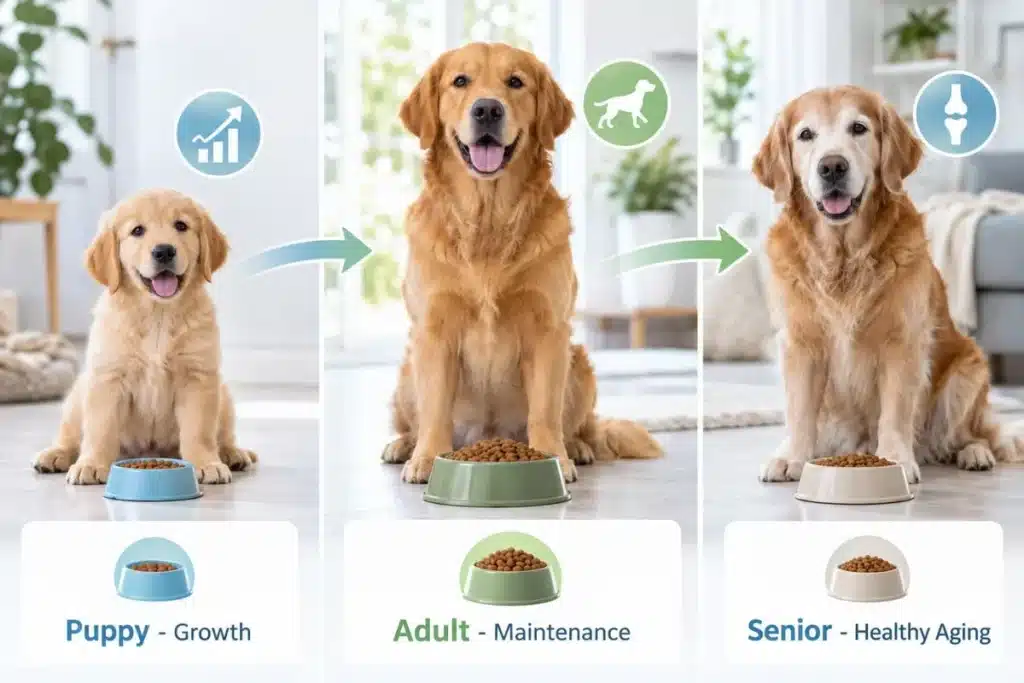
Dog Feeding Chart by Age: Puppy, Adult, and Senior Dogs
Dogs need different amounts of food as they grow. A puppy, an adult dog, and a senior dog all have different nutritional needs.
A dog feeding chart by age helps you understand how feeding needs change during each life stage. However, age is not the only factor. Your dog’s weight, breed, activity level, and health also affect how much food they need.
The right feeding amount helps your dog maintain a healthy weight and get the nutrients they need every day.
Puppy Feeding Chart
Puppies grow quickly during their first months. They need enough nutrients to support growth, energy, and healthy development.
A puppy feeding chart helps owners understand how much food a growing puppy needs. Puppies usually need smaller meals more often because their stomachs are still developing.
Most puppies need:
- Multiple meals per day
- Food made for puppy growth
- A consistent feeding routine
The correct puppy food amount depends on your puppy’s age, weight, breed size, and the type of food you choose.
For example, a small breed puppy and a large breed puppy may need different portions. So, always check your puppy’s growth and body condition when adjusting food amounts.
As your puppy grows, you can slowly adjust the feeding schedule based on their changing needs.
Adult Dog Feeding Chart
Adult dogs need food to maintain their energy, healthy weight, and daily activity. Their feeding needs are usually different from puppies because they are no longer growing.
An adult dog feeding chart helps you estimate how much food your adult dog may need each day.
The right amount can change depending on:
- Activity level
- Body weight
- Breed size
- Daily exercise
For example, an active dog may need more food than a dog that spends most of the day resting. However, overfeeding can lead to unhealthy weight gain.
A regular feeding routine helps adult dogs stay healthy. You should also monitor your dog’s weight and adjust portions when needed.
You can learn more about creating a consistent meal routine in our guide on dog feeding schedule.
The chart below gives a general idea of how much food dogs may need based on their weight. Always check the feeding instructions on your dog food package because different foods have different calorie levels.
| Dog Weight | Daily Food Amount | Meals Per Day |
| 5–10 lbs | ½–1 cup | 2 meals |
| 10–20 lbs | 1–2 cups | 2 meals |
| 20–50 lbs | 2–4 cups | 2 meals |
| 50–80 lbs | 4–6 cups | 2 meals |
| 80+ lbs | Adjust based on needs | 2 meals |
Note: This chart is only a general guide. Your dog may need more or less food depending on their individual needs.
How Does Weight Affect Your Dog’s Food Needs?
A larger dog usually needs more calories because their body uses more energy. But two dogs with the same weight may still need different amounts of food.
For example:
- An active dog may need more food.
- A less active dog may need fewer calories.
- A growing puppy may need different nutrition than an adult dog.
The goal is to help your dog maintain a healthy body weight. Do not increase or decrease food only based on the number on the chart.
Calories and Portion Size: What Dog Owners Should Know
Dog food amounts are often measured in cups, but calories also play an important role.
Different foods can provide different amounts of energy. For example, one cup of kibble from one brand may have more calories than another brand.
That is why you should consider both portion size and calorie content when choosing the right amount of food for your dog.
For more detailed nutrition guidance, you can check the nutrition guidelines from the World Small Animal Veterinary Association (WSAVA).
When to Adjust Your Dog’s Food Amount
You may need to change your dog’s food amount if:
- Your dog gains or loses weight
- Activity level changes
- Your dog moves to a different life stage
- Your veterinarian recommends a diet change
Make changes slowly instead of changing the amount suddenly. Small adjustments help your dog adapt better.
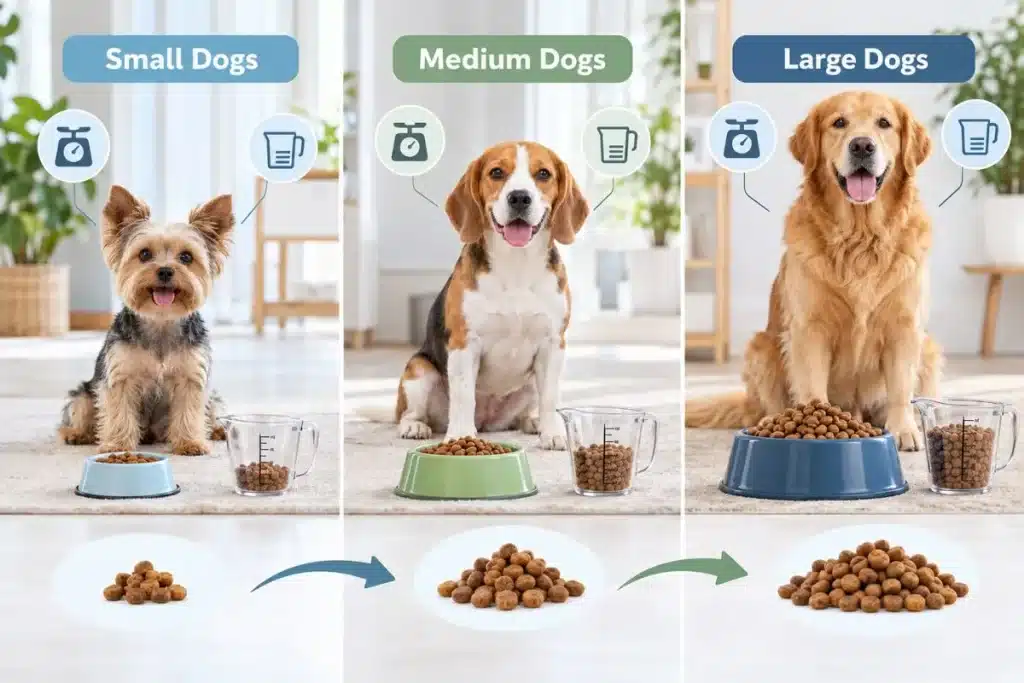
Dog Feeding Chart by Size: Small, Medium, and Large Dogs
Dogs of different sizes have different food needs. A small breed dog, medium breed dog, and large breed dog may need different amounts of food each day.
A dog feeding chart by size helps owners understand how portion sizes can change based on their dog’s body size. However, size is not the only factor. Your dog’s age, weight, activity level, and health also affect daily food needs.
For example, a small active dog may need more energy compared to a larger dog with a lower activity level. So, always consider your dog’s overall lifestyle before changing food portions.
Small Dog Feeding Guide: Food Amount and Tips
Small breed dogs have smaller bodies, but many of them have high energy levels. They often need food that provides enough energy in smaller portions.
When feeding small dogs, focus on:
- Proper portion sizes
- Regular feeding times
- Food with the right calorie level
Small dogs can gain weight quickly if they eat too many treats or large portions. So, check their body condition regularly and adjust food amounts when needed.
Medium Dog Feeding Guide: Food Amount and Tips
Medium breed dogs usually have balanced energy needs. Their food amount depends on their weight, activity level, and daily routine.
Medium dogs often need:
- A consistent feeding schedule
- Balanced meal portions
- Adjustments based on exercise
For example, an active medium-sized dog may need more food than a less active dog of the same size.
Regular weight checks help you keep your dog at a healthy weight.
Large Dog Feeding Guide: Food Amount and Tips
Large breed dogs need careful portion control because their size affects their energy needs.
Large dogs may need:
- Food portions based on body weight
- Proper nutrition for healthy growth and movement
- Regular weight monitoring
Overfeeding can cause unhealthy weight gain and put extra stress on their body. A balanced diet with the right portion size helps large dogs stay healthy.
For more information about choosing the right feeding amount, you can check these feeding guidelines from PetMD.
How Many Times Should You Feed Your Dog?
The number of meals your dog needs depends on their age, size, activity level, and health. A proper dog feeding schedule helps your dog build a healthy eating routine.
Puppies usually need more meals because they are growing quickly. Adult dogs often do well with a regular feeding routine, while senior dogs may need changes based on their health needs.
Use this simple guide to understand how often dogs usually need to eat:
| Age | Meals Per Day |
| Puppy | 3–4 smaller meals |
| Adult Dog | 2 meals |
| Senior Dog | 1–2 meals based on health needs |
Puppy Feeding Schedule: How Often Should Puppies Eat?
Puppies need more frequent meals because their bodies are growing. Smaller meals help them get enough energy throughout the day.
A regular feeding routine also helps puppies develop healthy eating habits. As they grow, you can slowly adjust their meal frequency.
Adult Dog Feeding Schedule: Daily Meal Routine
Most adult dogs can eat two meals per day. Giving food in the morning and evening helps maintain a consistent routine.
However, some dogs may need different schedules based on their activity level, weight, and health condition.
You can learn more about creating a proper routine in our dog feeding schedule guide.
Senior Dog Feeding Schedule: Feeding Needs as Dogs Age
Senior dogs may need changes to their feeding routine as they get older. Some older dogs become less active, while others may need smaller meals more often.
The right schedule depends on their health, energy level, and nutritional needs.
Regular monitoring helps you understand if your senior dog is getting the right amount of food.
Factors That Affect Your Dog’s Food Needs
A Dog Feeding Chart gives a general idea about food amounts. But every dog has different needs.
The right amount of food depends on your dog’s age, weight, activity level, breed size, health, and food type.
For example, two dogs with the same weight may need different amounts of food. An active dog usually needs more energy than a dog with a less active lifestyle.
Understanding these factors helps you choose the right portion size and maintain your dog’s healthy weight.
Age and Life Stage
Your dog’s age affects how much food they need every day.
Puppies need more nutrients because their bodies are growing. They need food that supports healthy development and energy.
Adult dogs usually need food to maintain their weight and daily activity. As dogs get older, their energy needs may change.
Senior dogs may need adjustments based on their activity level and health condition.
Body Weight
Your dog’s body weight is one of the most important factors when deciding food amounts.
Larger dogs usually need more calories than smaller dogs. However, weight alone does not show the full picture.
You should also check your dog’s body condition. If your dog gains or loses too much weight, you may need to adjust the food amount.
Activity Level and Exercise
Your dog’s activity level affects how much energy they use each day.
For example:
- Active dogs may need more calories.
- Less active dogs may need fewer calories.
- Working dogs may need extra energy.
Dogs that exercise more often usually need more food compared to dogs with a calmer lifestyle.
Breed Size and Energy Needs
Your dog’s breed size can also change their feeding needs.
Small breeds, medium breeds, and large breeds often have different energy requirements.
For example, a small active dog may need more calories per pound than a larger dog with low activity.
Knowing your dog’s size helps you choose a more suitable feeding amount.
Health and Special Dietary Needs
Your dog’s health can affect their daily food needs.
Some dogs may need special diets because of health issues. Sudden weight changes, low energy, or appetite changes may also require attention.
If your dog has specific health concerns, talk with a veterinarian before making major diet changes.
Food Type and Calorie Content
Different types of dog food provide different amounts of energy.
For example, kibble and wet food may have different calorie levels. So, the same cup of two different foods may not provide the same nutrition.
Understanding food labels and calorie amounts helps you manage your dog’s daily calorie needs.
Dry Food vs Wet Food: How Much Should You Feed Your Dog?
The amount of food your dog needs can change depending on the type of food you give.
Dry dog food (kibble) and wet dog food have different calorie levels. Dry food usually contains less water, so it often provides more calories in a smaller portion.
On the other hand, wet dog food contains more moisture. So, dogs may need a larger serving to get the same amount of energy.
For example, one cup of kibble may not provide the same calories as one cup of wet food. That is why you should always check the feeding guide on the food package.
Your dog’s age, weight, activity level, and health also affect the right food amount. For more information about daily nutrition choices, read our guide on dog nutrition.
Common Dog Feeding Mistakes to Avoid
A Dog Feeding Chart helps you choose the right food amount for your dog. However, some common mistakes can still affect your dog’s health.
Many owners make small feeding mistakes without realizing it. Avoiding these dog feeding mistakes can help your dog maintain a healthy weight and a better daily routine.
Overfeeding Your Dog
Giving too much food is one of the most common mistakes.
Extra portions, too many treats, and table scraps can add unnecessary calories. Over time, this may lead to weight gain and other health problems.
Always check your dog’s body condition and adjust food amounts when needed.
Giving the Wrong Portion Size
Every dog has different food needs. A portion that works for one dog may not work for another.
Your dog’s age, weight, activity level, and food type should guide the right portion size.
Using the same amount of food for every dog can lead to underfeeding or overfeeding.
Changing Food Too Quickly
Dogs may have trouble adjusting when their food changes suddenly.
A quick diet change can cause stomach problems like digestive discomfort.
When changing your dog’s food, mix the new food with the old food gradually over several days.
Ignoring Weight Changes
Your dog’s food needs can change over time.
Weight gain or weight loss may mean your dog needs a different food amount.
Check your dog’s weight regularly and adjust portions based on their current condition.
Giving Too Many Treats
Treats can be useful for training and rewards. But giving too many treats adds extra calories.
Keep treats balanced with your dog’s daily meals. A healthy routine includes both proper meals and controlled snacks.
Frequently Asked Questions About Dog Feeding Chart
How much food should I feed my dog every day?
The right amount of food depends on your dog’s age, weight, size, activity level, and food type. A Dog Feeding Chart gives a general idea, but every dog has different needs.
Check your dog’s body condition regularly and adjust food portions when needed.
How do I know how much food my dog needs?
You can estimate your dog’s food amount by considering their body weight, calorie needs, and activity level.
Start with the feeding guide on your dog food package. Then adjust the amount based on your dog’s weight changes and daily activity.
How many times a day should a dog eat?
Most adult dogs usually eat two meals per day. However, puppies often need more frequent meals because they are still growing.
Senior dogs may need a different schedule depending on their health and activity level.
Should puppies eat more food than adult dogs?
Yes, puppies often need more frequent meals because they need nutrients for growth and development.
Instead of giving one large meal, puppies usually do better with smaller meals spread throughout the day.
Is a dog feeding chart accurate for every dog?
No, a dog feeding chart is only a general guideline. Every dog has different needs based on their breed, weight, metabolism, activity level, and health.
Use the chart as a starting point and adjust food amounts when necessary.
Can I change my dog’s food amount?
Yes, but make changes slowly. Your dog may need more or less food when their weight, activity level, age, or health condition changes.
Small adjustments are usually better than sudden changes.
How much water should my dog drink with their food?
Dogs need access to fresh water every day. The amount they drink can change based on their size, diet, weather, and activity level.
Dogs eating more dry food (kibble) may need more water because kibble contains less moisture.
Final Tips for Feeding Your Dog
Finding the right food amount for your dog is not only about following a chart. Your dog’s age, weight, size, activity level, and health all affect their daily food needs.
A Dog Feeding Chart can help you understand a good starting point, but every dog is different. Always monitor your dog’s weight and body condition, then adjust food amounts when needed.
A balanced feeding routine, proper portions, and regular care can help your dog stay healthy and active throughout every stage of life.