
Choosing the right food for your dog can be confusing. Many dog owners wonder whether wet dog food or dry dog food is the better choice.
The truth is, both options can provide complete and balanced nutrition when they are made with quality ingredients and meet your dog’s needs.
There is no single winner in the Wet vs Dry Dog Food comparison. The best choice depends on your dog’s age, health condition, activity level, budget, and personal preference.
Dry dog food (kibble) is popular because it is affordable, easy to store, and simple to serve. However, wet dog food contains more moisture and can be a good option for dogs that need extra hydration or prefer softer food.
In this guide, we will compare wet vs dry dog food based on nutrition, hydration, cost, convenience, and different life stages. This will help you choose the right option for your dog with confidence.
Wet vs Dry Dog Food: Key Differences at a Glance
Choosing between wet vs dry dog food can be easier when you understand the main differences. Both options can support your dog’s health, but they work better for different needs.
Wet dog food contains more water and has a softer texture. It can be a good choice for dogs that need extra moisture or prefer softer meals.
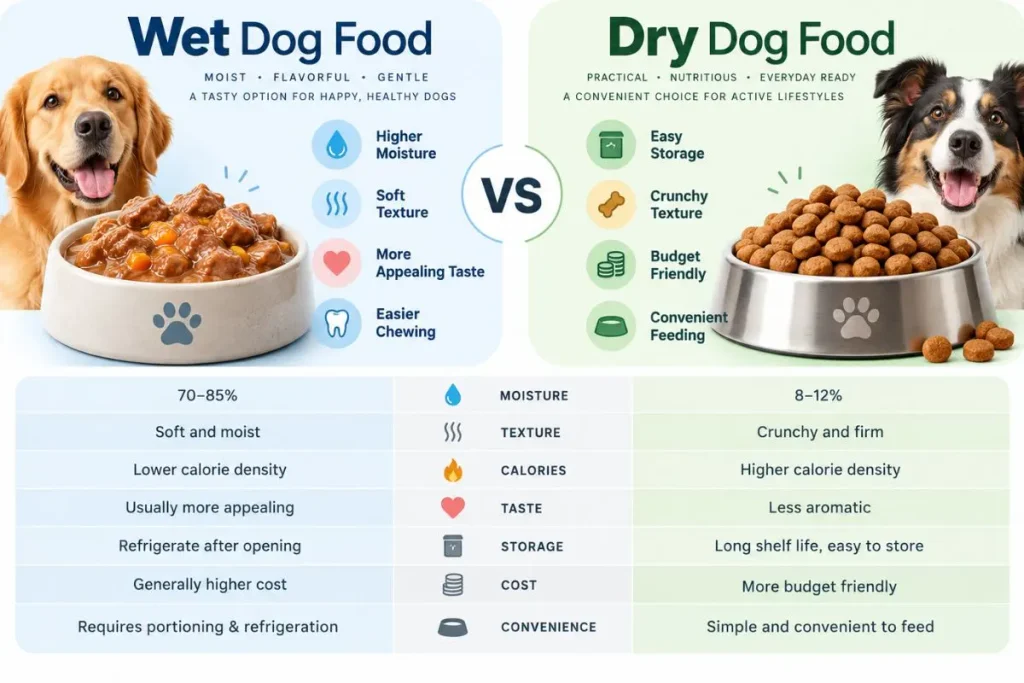
Dry dog food (kibble) is popular because it is affordable, easy to store, and simple to serve. Many dog owners choose it for daily feeding because of its convenience.
The table below shows the key differences between wet dog food vs dry dog food:
| Feature | Wet Dog Food | Dry Dog Food |
| Moisture | Higher water content | Lower water content |
| Texture | Soft and easier to chew | Crunchy kibble texture |
| Calories | Usually fewer calories per cup | More calorie-dense |
| Taste | Often more appealing for picky eaters | Some dogs prefer the crunchy texture |
| Storage | Needs proper storage after opening | Easy to store and lasts longer |
| Cost | Usually more expensive | Usually more budget-friendly |
| Convenience | Needs more preparation | Quick and easy to serve |
Both canned dog food and kibble can be healthy choices when they provide complete and balanced nutrition. The right option depends on your dog’s age, health, activity level, and feeding needs.
If you want to understand what your dog needs in a daily diet, you can read our guide on choosing the right daily diet for your dog.
What Is Dry Dog Food?
Dry dog food is one of the most popular food choices for dogs. It usually comes in small, crunchy pieces called kibble.
Many dog owners choose kibble because it is affordable, easy to store, and simple to serve. It works well for many healthy dogs and fits easily into a daily feeding routine.
However, dry food is not the best choice for every dog. Your dog’s age, health, activity level, and eating habits all play a role when choosing the right food.
How Dry Dog Food Is Made
Kibble is made by mixing different ingredients to create a complete meal for dogs. These ingredients often include meat, grains, fats, vitamins, minerals, and other nutrients.
Manufacturers cook and process these ingredients before shaping them into small pieces. Then, they remove moisture to create the dry and crunchy texture that makes kibble easy to store.
When choosing dry dog food, look for products that provide complete and balanced nutrition for your dog’s needs. Pet food standards from organizations like AAFCO help define nutritional requirements for dog food. You can learn more from the AAFCO guidelines.
Benefits of Dry Dog Food
Dry dog food offers several benefits for both dogs and their owners.
Affordable Daily Feeding
Kibble is usually more affordable than wet food. It can be a practical choice for owners who need a budget-friendly option.
Easy Storage
Dry food is easy to store and does not need refrigeration before opening. This makes it convenient for everyday use.
Simple Portion Control
Owners can measure kibble portions easily. This helps maintain a consistent feeding routine.
Convenient for Busy Owners
Dry food takes little preparation time. You can quickly serve it during busy mornings or travel days.
Limitations of Dry Dog Food
Although kibble works well for many dogs, it also has some limitations.
Lower Moisture Content
Dry food contains much less water than wet food. Dogs eating kibble should always have access to fresh drinking water.
Some Dogs Prefer Softer Food
Some dogs, especially picky eaters or older dogs, may prefer softer textures. They may find wet food easier to eat.
May Not Fit Every Dog’s Needs
Some dogs have specific health conditions that need special diets. In those cases, a veterinarian can help you choose the right option.
What Is Wet Dog Food?
Wet dog food is a type of dog food that contains a high amount of water. It usually comes in cans, trays, or pouches and has a softer texture than dry food.
Many dog owners choose wet food because it is soft, tasty, and easier to chew. It can also help dogs that need more water in their daily diet.
However, wet food is not the right choice for every dog. Your dog’s age, health, activity level, and budget should guide your decision.
Like dry food, good wet food can provide complete and balanced nutrition when it meets your dog’s needs.
How Wet Dog Food Is Made
Wet dog food is made by mixing ingredients like meat, vegetables, grains, vitamins, and minerals. Manufacturers cook these ingredients and add water to create a soft texture.
The higher moisture content is what makes wet food different from dry dog food. Most wet foods contain much more water than kibble.
Benefits of Wet Dog Food
Wet dog food has several benefits that make it a popular choice among many dog owners.
More Hydration
Wet food contains more water than dry food. This can help dogs that do not drink enough water during the day.
Better Taste for Some Dogs
Wet food usually has a stronger smell and softer texture. Because of this, many picky eaters find it more enjoyable.
Easier to Chew
The soft texture makes wet food easier to eat. It can be helpful for some senior dogs or dogs with chewing problems.
Pros and Cons of Wet Dog Food
Wet food can be a great option, but it also has some downsides.
Pros:
- Higher moisture content
- Soft and easy to chew
- More appealing taste
- Helpful for dogs that need extra hydration
Cons:
- Usually costs more than dry food
- Needs proper storage after opening
- Does not stay fresh as long once opened
- Less convenient for some owners
Wet vs Dry Dog Food: Key Differences
Choosing between wet vs dry dog food is not always simple. Both options have benefits, but they work better for different dogs.
The best choice depends on your dog’s nutrition needs, hydration, eating habits, lifestyle, and budget.
Neither wet dog food nor dry dog food is automatically healthier. A food’s quality depends on its ingredients, nutrient balance, and whether it matches your dog’s needs.

Let’s look at the main differences between these two popular dog food options.
Nutrition Comparison: Wet vs Dry Dog Food
Both wet dog food and dry dog food can provide complete nutrition when they contain the right balance of nutrients.
The food type alone does not decide quality. The ingredients and overall nutrition matter more.
Here are the main nutrition factors to compare:
Protein
Protein helps support your dog’s muscles, growth, and energy.
Both wet and dry foods can provide good protein sources. Always choose a food that matches your dog’s age and activity level.
Fat
Fat provides energy and supports healthy skin and a shiny coat.
The right amount of fat depends on your dog’s size, lifestyle, and health needs.
Calories
Dry dog food usually contains more calories in a smaller amount because it has less water.
Wet dog food contains more water, so dogs may need a larger serving to get the same calories.
Ingredients
A good dog food should contain balanced nutrients, including:
- Protein
- Fats
- Vitamins
- Minerals
Organizations like AAFCO provide guidelines for pet food nutrition standards. You can learn more from the AAFCO guide.
Moisture and Hydration
One of the biggest differences between wet and dry dog food is water content.
Wet dog food contains much more moisture than kibble. This can help dogs that do not drink enough water during the day.
Dry dog food (kibble) contains less moisture. Dogs eating mostly dry food should always have access to fresh drinking water.
For more details about the differences between wet and dry food, you can read this food comparison guide.
Taste and Picky Eaters
Taste matters, especially for dogs that are selective about food.
Wet dog food usually has a stronger smell and softer texture. These features can make it more attractive to picky eaters.
Dry dog food has a crunchy texture that some dogs enjoy. However, some dogs may prefer softer meals.
If your dog avoids food often, their personal preference can help guide your choice.
Dental Health: Does Dry Food Clean Teeth?
Many people believe that dry dog food cleans teeth, but this is not always true.
Some dry diets may help reduce some buildup because of their texture. However, food alone cannot replace proper dental care.
Regular brushing and dental products are still important for maintaining your dog’s oral health.
Cost Comparison
Cost is an important factor for many dog owners.
In general:
Dry Dog Food
- Usually costs less
- Easy to buy in larger amounts
- Has a longer shelf life
- Helps owners manage feeding costs
Wet Dog Food
- Usually costs more
- Often comes in smaller portions
- Needs proper storage after opening
- May increase monthly feeding expenses
The final cost depends on your dog’s size, food quality, and daily feeding amount.
Convenience and Storage
Your daily routine also matters when choosing dog food.
Dry dog food is often more convenient because:
- It is quick to measure and serve
- It stores easily
- It works well for travel
- It creates less mess
Wet dog food needs more care because:
- Opened cans or pouches need refrigeration
- It has a shorter storage time after opening
- It requires more preparation
Both options can work well. Choose the one that fits your dog’s needs and your lifestyle.
Wet vs Dry Dog Food for Puppies, Adults, and Senior Dogs
The best choice between wet and dry dog food depends on your dog’s age, health, and daily needs.
A puppy, adult dog, and senior dog do not need the same type of food. Their nutrition needs change as they grow.

Both wet dog food and dry dog food can support your dog’s health. The right choice depends on your dog’s lifestyle, eating habits, and personal needs.
Puppies
Puppies grow quickly during their early months. So, they need food that supports healthy development.
A puppy’s diet should provide:
- Growth support
- Strong muscles and bones
- Daily energy
Puppies also have small stomachs. Because of this, they usually need smaller meals several times a day.
Wet dog food can be helpful for some puppies because it is soft and easy to chew. However, many puppies also do well with quality dry puppy food.
When choosing food for a puppy, select options made for growth and their specific size. You can learn more in our guide about puppy food.
Adult Dogs
Adult dogs usually need food that helps maintain their health and energy.
Their food choice depends on:
- Activity level
- Body size
- Weight goals
- Daily routine
For many healthy adult dogs, dry dog food is a practical option. It is easy to serve, store, and manage every day.
However, wet dog food can also be a good choice. It may work better for dogs that prefer softer meals or need extra moisture.
Senior Dogs
Senior dogs often have different needs than younger dogs.
As dogs get older, some may experience:
- Difficulty chewing hard food
- Lower appetite
- Changes in activity level
Because of its soft texture, wet dog food may be easier for some senior dogs to eat.
However, many senior dogs can still enjoy dry dog food if they have healthy teeth and good eating habits.
If your senior dog has health problems, talk with your veterinarian before changing their diet.
Wet vs Dry Dog Food for Picky Eaters
Some dogs are very selective about their food. They may avoid certain smells, textures, or flavors.
Wet dog food often has a stronger smell and softer texture. This can make it more appealing to some picky eaters.
Another option is mixed feeding, where you combine wet and dry food together.
Mixed feeding can provide:
- The taste of wet food
- The convenience of dry food
- More variety in meals
However, always adjust the portion size. This helps prevent overfeeding and keeps your dog’s calorie intake balanced.
Can Dogs Eat Wet and Dry Food Together?
Yes, many dogs can eat wet and dry dog food together. This method is called mixed feeding.
Mixing both types of food can give your dog the benefits of each option. Wet food adds moisture and flavor, while dry food provides convenience and easy portion control.
Mixed feeding can be useful for dogs that get bored with one type of food. It can also help picky eaters enjoy their meals more.
However, you should choose foods that provide complete and balanced nutrition for your dog’s age, size, and health needs.
Benefits of Mixed Feeding
Combining wet and dry dog food can offer several benefits.
More Variety
Different textures and flavors can make meals more enjoyable for some dogs.
Extra Moisture
Wet food contains more water. It can help increase your dog’s daily moisture intake.
Better Appetite
Some picky eaters may enjoy meals more when wet and dry food are combined.
More Flexibility
Mixed feeding allows owners to create a feeding routine that fits their dog’s needs.
Adjust Portions to Avoid Overfeeding
The most important part of mixed feeding is portion control.
Both wet and dry food contain calories. If you add wet food without reducing dry food, your dog may eat more calories than needed.
To maintain a healthy feeding routine:
- Check the feeding guide on food labels
- Adjust portions based on your dog’s size and activity level
- Monitor your dog’s weight regularly
If your dog has weight problems or special health needs, talk with your veterinarian before making major diet changes.
Wet vs Dry Dog Food: Which One Should You Choose?
Choosing between wet dog food and dry dog food depends on your dog’s individual needs.
There is no single option that works best for every dog. The right choice depends on your dog’s age, health, activity level, eating habits, and budget.
Some dogs benefit from the extra moisture and soft texture of wet food. Others do better with the convenience and affordability of dry food.
Use your dog’s needs as the main guide when choosing their food.
Choose Wet Dog Food If Your Dog:
Wet dog food may be a better option if your dog:
✅ Needs more hydration: Wet food contains more water. It can help dogs that do not drink enough throughout the day.
✅ Is a picky eater: Wet food usually has a stronger smell and softer texture. This can make meals more appealing.
✅ Prefers softer food: Some dogs enjoy wet food because it is easier to chew.
✅ Has chewing difficulty: Senior dogs or dogs with dental issues may find soft food easier to eat.
Choose Dry Dog Food If Your Dog:
Dry dog food may be a better option if you:
✅ Want affordable daily feeding: Dry food is often more budget-friendly for regular meals.
✅ Need easy storage and convenience: Kibble is simple to store, measure, and serve.
✅ Have a healthy dog that eats well: Many healthy dogs can enjoy quality dry food as part of their daily diet.
Final Tip
For some dogs, using only one type of food may not be necessary.
Mixed feeding can combine the benefits of both options. Wet food adds moisture and taste, while dry food provides convenience.
However, always choose food that matches your dog’s nutritional needs, health condition, and lifestyle.
Wet vs Dry Dog Food FAQs
Is wet dog food healthier than dry dog food?
Neither wet dog food nor dry dog food is always healthier. The better choice depends on your dog’s age, health, activity level, and nutritional needs.
Wet food provides more moisture and may help some dogs that need softer meals. Dry food is often more affordable and convenient for daily feeding.
The most important factor is choosing a high-quality food that provides complete and balanced nutrition for your dog.
Can dogs eat only dry food?
Yes, many dogs can eat only dry dog food if it provides complete nutrition for their life stage and needs.
Dry food is popular because it is easy to store, affordable, and simple to serve. However, dogs eating mostly dry food should always have access to fresh drinking water.
Your dog’s health, size, and activity level should guide your feeding choice.
Can dogs eat wet and dry food together?
Yes, many dogs can eat wet and dry dog food together. This is known as mixed feeding.
Combining both foods can provide more variety and combine the benefits of each option. Wet food adds moisture and taste, while dry food offers convenience.
However, remember to adjust portions carefully. Feeding too much of both foods can lead to extra calories and weight gain.
Is wet food better for senior dogs?
Wet dog food can be helpful for some senior dogs, especially those with chewing difficulties or lower appetite.
Its soft texture makes it easier for some older dogs to eat. The extra moisture can also be useful for dogs that do not drink enough water.
However, every senior dog is different. The best choice depends on your dog’s health, teeth, and personal needs.
Does dry food help clean dogs’ teeth?
Dry food alone does not fully clean your dog’s teeth.
Some crunchy foods may help reduce small amounts of buildup because of their texture. However, regular dental care is still important for maintaining good oral health.
Brushing your dog’s teeth and using proper dental products are better ways to support healthy teeth and gums.
Wet vs Dry Dog Food: Which Is Best for Your Dog?
Choosing between wet vs dry dog food is not about finding one option that is best for every dog.
The right choice depends on your dog’s age, health, activity level, eating habits, and lifestyle.
Dry dog food is often a practical choice for many healthy dogs. It is affordable, easy to store, and convenient for daily feeding.
On the other hand, wet dog food can be a better option for dogs that need more moisture, prefer softer meals, or have difficulty chewing.
Some dogs may also benefit from mixed feeding, where owners combine both wet and dry food to get the benefits of each option.
Before choosing a food, focus on your dog’s individual needs rather than choosing based on popularity alone. A high-quality diet with complete and balanced nutrition is the most important factor for your dog’s long-term health.