
Most dogs should eat complete and balanced dog food made for their life stage, along with fresh clean water every day. If you are wondering what dogs should eat daily, the simple answer is: dog food as the main meal, limited treats, and only safe human foods in small amounts.
Avoid toxic foods like chocolate, grapes, raisins, onions, garlic, xylitol, alcohol, and caffeine. If your dog is a puppy, senior, pregnant, nursing, or has a health problem, ask your veterinarian before making major diet changes.
Feeding your dog does not have to feel confusing. Many first-time dog owners wonder whether they should feed dry food, wet food, rice, chicken, eggs, or homemade meals every day.
The safest starting point for most dogs is not a random mix of foods. It is a simple daily routine built around balanced dog food, fresh water, measured portions, limited treats, and safe feeding habits.
Quick Daily Dog Feeding Framework
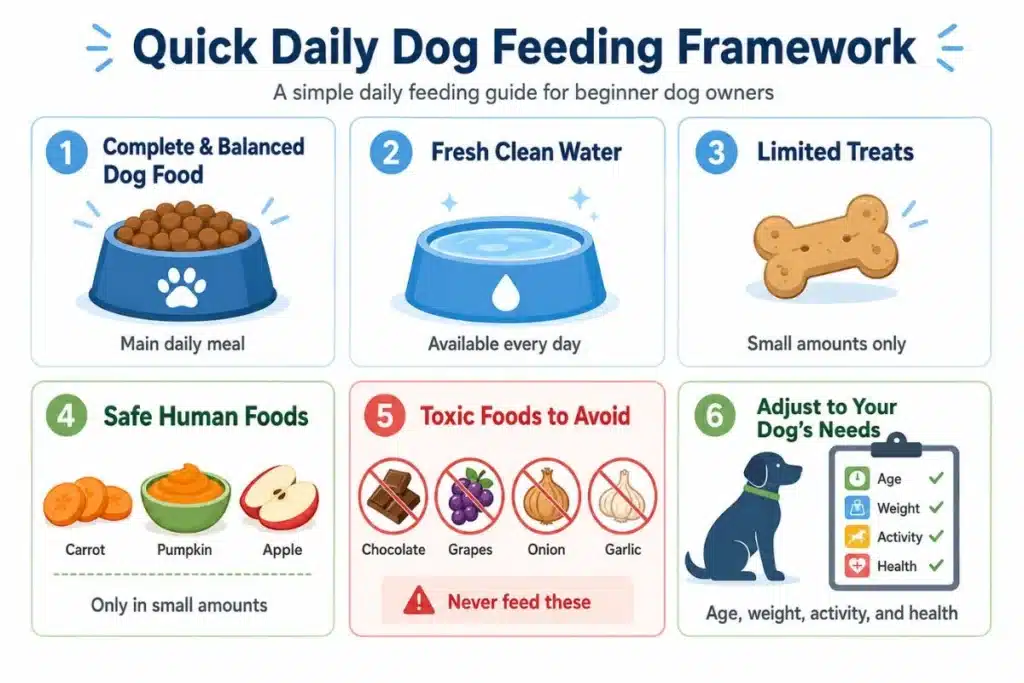
A good daily dog diet should be simple, safe, and consistent. If you are a beginner dog owner, think of your dog’s daily food in a few basic parts: main food, water, treats, safe extras, and foods to avoid.
| Daily Item | What It Means |
| Main meal | Complete and balanced dog food made for your dog’s life stage |
| Water | Fresh clean water available every day |
| Treats | Small amounts only, not a meal replacement |
| Human food | Plain, safe foods only in small amounts |
| Avoid | Toxic foods, unsafe leftovers, and sudden diet changes |
| Adjust | Based on age, weight, activity level, and health condition |
For most healthy dogs, the main meal should come from dog food labeled complete and balanced for their life stage. This means the food is designed to provide the nutrients your dog needs as a regular daily diet.
Fresh water should always be available. Treats can be useful for training or bonding, but they should stay limited. Safe human foods can sometimes be given in small amounts, but they should not replace your dog’s regular meals.
What Should Dogs Eat Daily?
A healthy daily dog diet starts with balance, not random foods. Your dog needs more than just meat, rice, eggs, or table scraps to stay healthy.
Most dogs should eat complete and balanced dog food as their daily base. This can be dry food, wet food, or another properly formulated dog food that matches your dog’s age, size, and life stage.
A good daily diet should also include fresh clean water, measured portions, limited treats, and safe feeding habits. Human foods should be treated as small extras, not as the main meal.
Complete and Balanced Dog Food
Complete and balanced dog food is the best daily base for most dogs. It is made to provide important nutrients in the right amounts, including protein, fat, vitamins, minerals, and energy.
When choosing dog food, look for food made for your dog’s life stage. A puppy usually needs puppy food, an adult dog usually needs adult maintenance food, and a senior dog may need a diet that supports healthy weight and digestion.
Do not choose dog food only because the package looks premium or the marketing sounds natural. Check the label, feeding directions, life-stage statement, and your dog’s individual needs.
Before choosing a daily food, you can also learn how to read labels and spot dog food ingredients to avoid.
Fresh Clean Water Every Day
Water is part of your dog’s daily nutrition. Your dog should have access to fresh clean water every day, not only after meals or exercise.
Water helps support digestion, body temperature, and normal body function. Some dogs may drink more water after exercise, in hot weather, or after eating mostly dry food.
If your dog suddenly drinks much more or much less than usual, it may be a sign that something is wrong. In that case, contact your veterinarian.
For a deeper guide, read our article on how much water should a dog drink daily.
Limited Treats
Treats are useful for training and bonding, but they should not become your dog’s main food. Too many treats can lead to weight gain and may reduce your dog’s interest in regular meals.
A good rule is to keep treats small, simple, and limited. Use them as rewards, not as a second meal.
If your dog begs for food all day, it does not always mean they are truly hungry. Sometimes dogs beg because they learned that begging gets attention or extra snacks.
Safe Human Foods in Small Amounts
Some plain human foods can be safe for many dogs in small amounts. Examples may include plain cooked chicken, plain rice, carrots, apples without seeds, pumpkin, or cooked eggs.
But safe does not mean unlimited. Human food should not replace complete and balanced dog food unless your veterinarian or a veterinary nutritionist has helped you create a balanced plan.
Avoid seasoned, salty, spicy, sugary, or fatty leftovers. Foods cooked with onion, garlic, butter, heavy oil, sauces, or spices are not good daily choices for dogs.
What a Balanced Daily Dog Diet Includes
Dogs need more than just meat, rice, eggs, or leftovers to stay healthy. A balanced daily dog diet gives your dog the right mix of nutrients, energy, and water for normal body function.
For most dogs, the easiest way to provide this balance is to feed complete and balanced dog food made for their life stage.
| Nutrient | Why It Matters |
| Protein | Supports muscles, body repair, and normal growth |
| Fat | Provides energy and supports skin and coat health |
| Carbohydrates | Can provide energy and fiber |
| Fiber | Helps support healthy digestion |
| Vitamins | Support normal body functions |
| Minerals | Support bones, teeth, and body systems |
| Water | Helps hydration, digestion, and temperature control |
You do not need to calculate every nutrient at home if your dog is eating a properly formulated complete and balanced dog food. But it is still helpful to understand why random daily meals can become unbalanced.
For example, plain chicken can be safe for many dogs, but chicken alone is not a complete daily diet. Rice may be useful in some short-term situations, but rice alone does not provide everything your dog needs. Eggs, carrots, pumpkin, or apples can be safe extras for many dogs, but they should not become the foundation of your dog’s diet.
Calories also matter. Too many calories can lead to weight gain, while too few can lead to weight loss or low energy. Your dog’s calorie needs depend on age, weight, breed size, activity level, body condition, and health.
What Should Puppies, Adult Dogs, and Senior Dogs Eat Daily?
Dogs do not need the same food at every life stage. A puppy, adult dog, and senior dog can all need different daily nutrition based on age, growth stage, body size, activity level, and health condition.
The safest approach is to choose complete and balanced dog food made for your dog’s current life stage, then adjust the portion and feeding routine based on your dog’s needs.
| Dog Life Stage | Daily Feeding Focus |
| Puppy | Growth-supporting puppy food and smaller, more frequent meals |
| Adult dog | Complete and balanced adult dog food with a stable feeding routine |
| Senior dog | Weight-conscious, easy-to-digest, vet-guided diet if needed |
Puppies
Puppies are growing fast, so they usually need food made for growth and development. Puppy food is designed to support energy needs, bones, muscles, and healthy body growth.
A puppy should not be fed adult dog food unless your veterinarian recommends it. Adult dog food may not provide the right nutrient balance for a growing puppy.
Puppies also usually need smaller, more frequent meals than adult dogs. Young puppies may need several meals a day, while older puppies can gradually move toward fewer meals as they grow.
Adult Dogs
Most healthy adult dogs should eat complete and balanced adult dog food. The food should match your dog’s size, activity level, body condition, and overall health.
Adult dogs usually do best with a consistent routine. Feeding at regular times can help with digestion, appetite habits, and daily potty routine.
For many adult dogs, two measured meals per day works well. But some dogs may need a different schedule based on breed size, activity level, or veterinary advice.
Senior Dogs
Senior dogs may need a different daily feeding approach than younger adult dogs. Some senior dogs become less active, which means they may need fewer calories to help maintain a healthy weight.
Other senior dogs may need food that is easier to chew, easier to digest, or better suited to their health condition. Weight control, dental comfort, and digestion become more important as dogs age.
Not every older dog needs senior dog food, but many senior dogs benefit from a vet-guided diet review. This is especially important if your dog has kidney disease, diabetes, arthritis, dental problems, appetite changes, or sudden weight changes.
If your senior dog suddenly eats less, loses weight, drinks more water, vomits, or has diarrhea, talk to your veterinarian before changing food at home.
How Much Should You Feed Your Dog Daily?
The right amount of dog food depends on more than your dog’s size. Your dog’s age, weight, activity level, body condition, health, and food type all affect how much they should eat daily.
The best starting point is the feeding guide on your dog food label. Most complete and balanced dog foods include feeding directions based on your dog’s weight and life stage.
However, the label is only a starting guide. Your dog may need a little more or less depending on their daily activity, metabolism, body condition, and your veterinarian’s advice.
Start With the Food Label
Dog food labels usually show a suggested daily amount. This amount may be based on your dog’s weight, age, or life stage.
For example, a label may suggest a certain number of cups per day for a dog within a weight range. That total daily amount can then be divided into meals.
Do not guess by filling the bowl randomly. Measuring your dog’s food with a measuring cup or kitchen scale can help prevent overfeeding and make changes easier to track.
Watch Weight, Body Shape, and Activity
Your dog’s weight matters, but weight alone is not enough. Two dogs can weigh the same but need different amounts of food.
One dog may be active and muscular. Another may be less active and gaining extra fat. Their daily food needs will not be exactly the same.
Your dog may be getting too much food if you notice steady weight gain, soft stool from too many extras, or difficulty feeling the ribs. Your dog may not be getting enough food if you notice visible ribs, weight loss, low energy, or constant hunger with weight loss.
If your dog is gaining or losing weight without a clear reason, talk to your veterinarian before making big changes to their food.
How Many Times a Day Should Dogs Eat?
A simple feeding routine can help prevent overfeeding, begging, and random snacking. For many healthy adult dogs, two measured meals per day works well.
This usually means one meal in the morning and one meal in the evening. However, your dog’s ideal feeding schedule can vary based on age, size, appetite, activity level, and health condition.
| Dog Type | Common Feeding Frequency | Notes |
| Young puppy | 3–4 small meals daily | Smaller stomach and higher growth needs |
| Older puppy | 2–3 meals daily | Gradually moves toward an adult feeding routine |
| Adult dog | Usually 2 meals daily | Morning and evening often work well |
| Senior dog | 1–2 meals or vet-guided schedule | Depends on appetite, weight, and health |
| Dog with health issues | Vet-guided schedule | May need special meal timing or a special diet |
This is a general guide, not a strict rule. Your dog’s feeding routine should match their life stage, body condition, daily activity, and veterinarian’s advice.
For a complete meal timing guide, read our full dog feeding schedule.
What If My Dog Begs Between Meals?
Begging between meals does not always mean your dog needs more food. Sometimes dogs beg because they learned that begging gets treats, attention, or table scraps.
Before increasing your dog’s meals, check a few things:
- Is your dog losing weight?
- Are you feeding the right portion?
- Is your dog getting too many treats?
- Is your dog getting enough exercise?
- Is the food made for your dog’s life stage?
- Is your dog bored or asking for attention?
If your dog is healthy but begs often, try using training, puzzle toys, walks, or attention instead of extra food. If begging comes with weight loss, low energy, vomiting, diarrhea, or unusual hunger, talk to your veterinarian.
Can Dogs Eat Human Food Daily?
Some safe human foods can be given in small amounts, but they should not replace your dog’s main daily meals.
This is where many new dog owners get confused. Plain chicken, rice, eggs, carrots, pumpkin, or apples may be safe for many dogs, but safe does not always mean complete and balanced.
Your dog can eat some safe human foods as treats or small add-ons. But your dog’s main meals should still come from complete and balanced dog food, unless your veterinarian recommends a different diet plan.
For a full safety guide, read our article on can dogs eat human food safely.
Safe Human Foods Are Still Extras
Think of safe human foods as extras, not the foundation of the diet. They should be plain, simple, unseasoned, and given in small amounts.
Examples of human foods that many dogs can eat in small amounts include:
- plain cooked chicken
- plain cooked rice
- cooked egg
- plain pumpkin
- carrots
- cucumber
- apple slices without seeds
- blueberries
- plain cooked sweet potato
These foods should not be seasoned. Avoid salt, garlic, onion, butter, heavy oil, sauces, sugar, and spices.
Can Dogs Eat Rice, Chicken, or Eggs Every Day?
Plain cooked rice, chicken, and eggs can be safe for many dogs in small amounts. In some cases, veterinarians may recommend rice and chicken temporarily as a bland diet for stomach upset.
But rice, chicken, or eggs alone should not become your dog’s complete daily diet. They do not provide the full nutrient balance your dog needs long-term.
If you want to add these foods, keep them plain, cooked, boneless, unseasoned, and small. Avoid fried foods, sauces, garlic, onion, butter, and cooked bones.
Foods Dogs Should Never Eat
Some common human foods can be dangerous for dogs, even if they seem harmless to us. Every beginner dog owner should know the basic foods dogs should never eat before sharing table food or treats.
If your dog eats something unsafe, contact your veterinarian or a pet poison control service quickly. Do not wait for serious symptoms to appear before asking for help.
| Food to Avoid | Why It Matters |
| Chocolate | Can be toxic to dogs |
| Grapes and raisins | Can be dangerous, even in small amounts |
| Onion and garlic | Can harm dogs and should be avoided |
| Xylitol | A dangerous sweetener often found in sugar-free products |
| Alcohol | Unsafe for dogs |
| Caffeine | Found in coffee, tea, energy drinks, and some foods |
| Macadamia nuts | Can cause health problems in dogs |
| Raw yeast dough | Can expand and create serious risk |
| Cooked bones | Can splinter, break teeth, or cause choking |
| Fatty leftovers | May upset digestion and can be risky for some dogs |
This is only a quick safety list. For a more detailed guide, including common toxic foods, symptoms to watch for, and what to do next, read our full guide on what foods are toxic to dogs.
Wet Food vs Dry Food: Which Is Better for Daily Feeding?
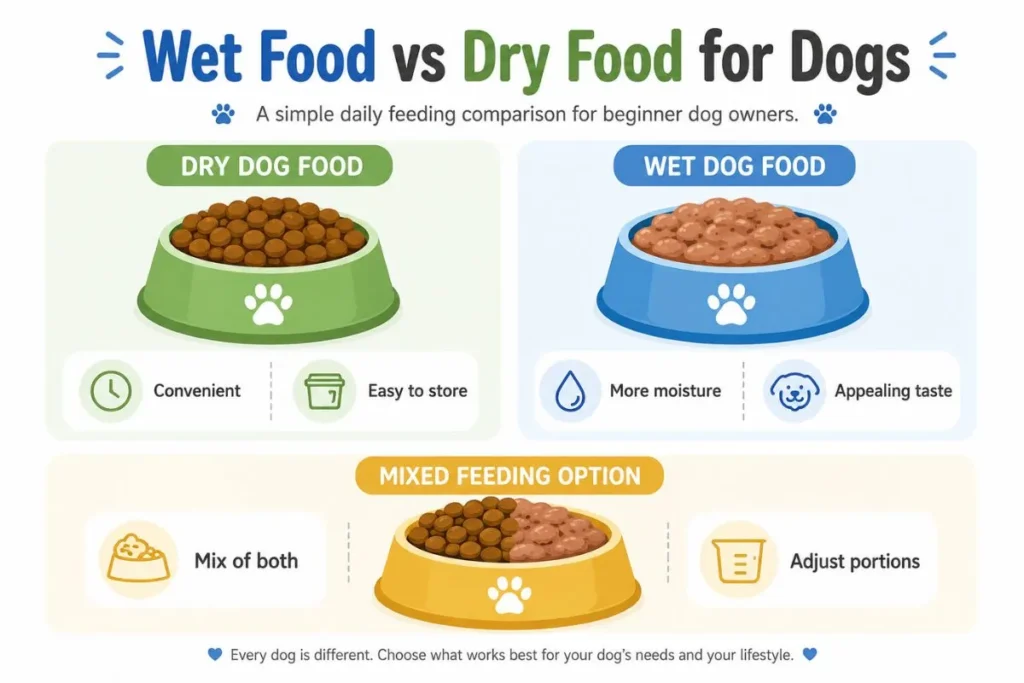
Both wet dog food and dry dog food can work for daily feeding if they are complete and balanced for your dog’s life stage. The better choice depends on your dog’s age, health, preference, budget, dental comfort, digestion, and veterinarian’s advice.
There is no single best option for every dog. Some dogs do well on dry food, some prefer wet food, and some may benefit from a mix of both.
| Food Type | Possible Benefits | Things to Consider |
| Dry dog food | Convenient, easy to store, and usually budget-friendly | Some dogs may need more moisture or may not like the texture |
| Wet dog food | Higher in moisture and often more appealing to picky dogs | Can cost more and needs careful storage after opening |
| Mixed feeding | Can add variety, moisture, and better taste | Portions must be adjusted to avoid overfeeding |
Dry food can be enough for many dogs if it is complete and balanced for their life stage. Wet food can be helpful for picky dogs, senior dogs, or dogs that may benefit from extra moisture.
If you mix wet and dry food, do not simply add wet food on top of the full dry food amount. That can increase calories too much. Adjust the portions so your dog’s total daily food still matches their needs.
Homemade Dog Food vs Commercial Dog Food
Homemade dog food may sound healthier to many new dog owners, but it usually needs more planning than expected. A meal made with chicken, rice, eggs, and vegetables may look healthy, but it can still miss important nutrients if it is not properly balanced.
For most beginners, commercial complete and balanced dog food is usually the easier starting point. It is designed to provide daily nutrition without requiring you to calculate protein, fat, calories, vitamins, and minerals at home.
Homemade dog food can work, but it should be planned with your veterinarian or a veterinary nutritionist, especially if your dog is a puppy, senior, pregnant, nursing, or has a health condition.
| Food Type | Best For | Main Caution |
| Commercial dog food | Most beginner dog owners | Choose complete and balanced food for the right life stage |
| Homemade dog food | Owners working with a vet or veterinary nutritionist | Risk of nutrient imbalance if not properly planned |
| Raw diet | Not a beginner-friendly choice for most owners | Food safety and contamination concerns |
If you want to feed homemade food daily, do not rely on random online recipes alone. Your dog’s diet needs the right balance of protein, fat, calories, vitamins, minerals, and water.
Raw diets are also often discussed online, but they are not a simple beginner feeding choice. Raw meat, eggs, or unpasteurized ingredients may carry bacteria that can affect both pets and people in the home.
Food Safety Note
Whether you feed commercial dog food, wet food, dry food, or homemade meals, food safety still matters. Do not feed expired food, moldy food, food with a strange smell, or food from damaged packaging.
If you are worried about a product’s safety, you can check current pet food recalls before continuing to feed it to your dog.
Common Daily Feeding Mistakes Beginners Should Avoid
Most daily feeding problems start with small habits. A little extra food, too many treats, table scraps, or a sudden food change can affect your dog’s weight, digestion, and routine over time.
The goal is not to make feeding stressful. The goal is to avoid simple mistakes and build a safe, balanced, and consistent daily feeding routine.
Mistake 1: Replacing Dog Food With Rice and Chicken
Plain rice and cooked chicken may be used for a short time in some situations, often when a veterinarian recommends a bland diet. But rice and chicken should not become your dog’s full daily diet long-term.
They may be safe for many dogs in small amounts, but they do not provide complete and balanced nutrition by themselves.
Mistake 2: Giving Too Many Treats
Treats are one of the easiest ways to overfeed a dog. Small treats can add up quickly, especially during training.
If your dog gets treats every day, count them as part of the daily food routine. Use small pieces, choose simple treats, and avoid using human snacks as regular rewards.
Mistake 3: Changing Food Suddenly
Sudden diet changes can upset your dog’s stomach. Some dogs may get vomiting, gas, loose stool, or diarrhea after a quick food switch.
When changing dog food, it is usually better to transition slowly over several days. This gives your dog’s digestive system time to adjust.
Mistake 4: Feeding From the Table
Feeding from the table can create begging habits. It can also expose your dog to unsafe ingredients like onion, garlic, salt, fat, sauces, or cooked bones.
If you want to share safe human food, place a small plain portion in your dog’s bowl instead of feeding directly from your plate. This helps reduce begging and keeps feeding boundaries clear.
Mistake 5: Thinking “Natural” Always Means Safe
Natural does not always mean safe or balanced. Grapes are natural, but they are not safe for dogs. Raw meat may sound natural, but it can carry food safety risks.
Homemade food may look healthier than packaged dog food, but it can still be nutritionally incomplete if it is not properly balanced.
Focus on safety, balance, portion control, and your dog’s actual needs instead of marketing words.
Quick Daily Dog Feeding Checklist
A simple daily feeding checklist can help you avoid common beginner mistakes. Before feeding your dog each day, check the basics: main food, fresh water, portion size, treats, human foods, and safety.
| Daily Check | What to Do |
| Main food | Feed complete and balanced dog food made for your dog’s life stage |
| Water | Keep fresh clean water available every day |
| Portion | Measure food instead of guessing |
| Treats | Keep treats small and limited |
| Human food | Give only plain, safe human foods in small amounts |
| Toxic foods | Avoid chocolate, grapes, raisins, onions, garlic, xylitol, alcohol, and caffeine |
| Routine | Feed at regular times when possible |
| Observation | Watch appetite, stool, energy, weight, and water intake |
This checklist works best when it becomes part of your dog’s everyday care routine. For a complete daily care plan, read our guide on daily dog care routine at home.
7-Day Dog Feeding Check: Is Your Dog’s Diet Working?
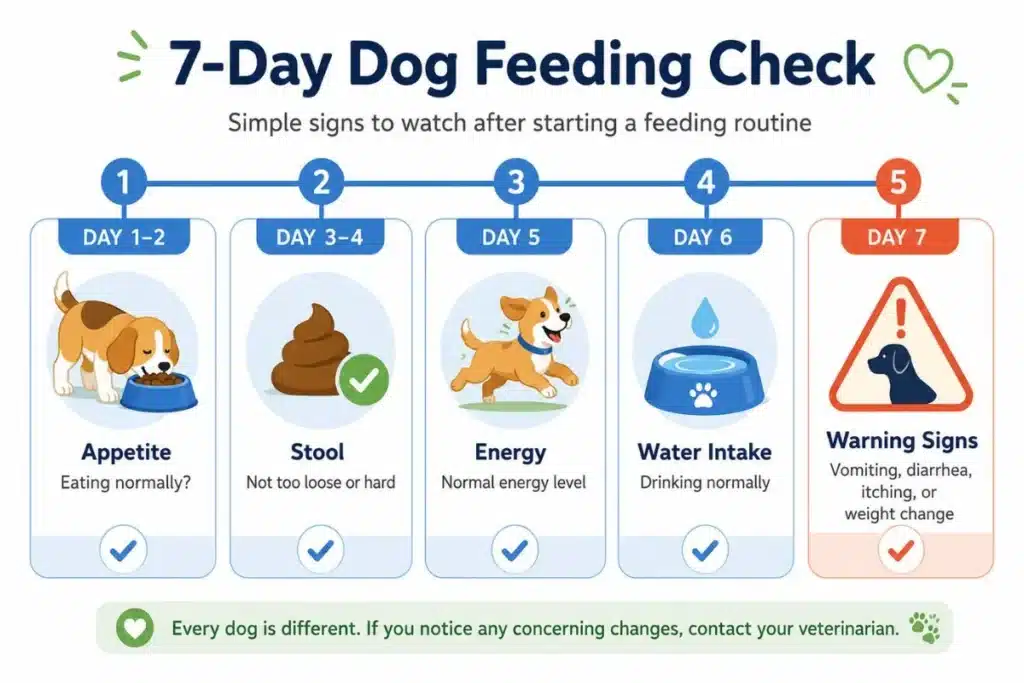
Your dog’s body can give early clues about whether a daily diet is working well. This simple 7-day dog feeding check helps you notice changes in your dog’s appetite, stool, energy, water intake, and overall comfort.
This is not a medical test. It is a beginner-friendly observation method to help you understand your dog’s response after starting or adjusting a feeding routine.
| Day / Area | What to Watch |
| Day 1–2 | Is your dog eating normally? |
| Day 3–4 | Is your dog’s stool normal, not too loose or too hard? |
| Day 5 | Is your dog’s energy level normal? |
| Day 6 | Is your dog drinking water normally? |
| Day 7 | Do you notice vomiting, diarrhea, itching, weight change, or appetite change? |
A dog doing well on a daily diet may show steady appetite, normal stool, normal energy, healthy body condition, regular water intake, and no sudden weight change.
The diet may not be working well if you notice repeated loose stool, vomiting, constipation, gas, sudden itching, dull coat, food refusal, sudden weight gain, sudden weight loss, or unusual drinking habits.
When Should You Talk to a Vet About Your Dog’s Diet?
Some feeding problems need more than online advice. This guide is for general education, but it cannot replace veterinary care.
Dogs can have different diet needs based on their age, breed size, activity level, body condition, allergies, and medical history.
Talk to your veterinarian if your dog:
- refuses food for more than a short period
- vomits repeatedly
- has diarrhea that does not improve
- loses weight suddenly
- gains weight quickly
- drinks much more or much less water than usual
- has signs of food allergy or itching
- has blood in stool or vomit
- seems weak, tired, or uncomfortable
- eats a toxic food
You should also ask your veterinarian before changing your dog’s diet if your dog is a puppy, senior, pregnant, nursing, overweight, underweight, or has a health condition.
FAQs About What Dogs Should Eat Daily
What should dogs eat daily?
Most dogs should eat complete and balanced dog food made for their life stage, with fresh clean water available every day. Treats and safe human foods can be given in small amounts, but they should not replace the main meal. A dog’s daily diet should also match their age, weight, activity level, and health needs.
Can dogs eat human food every day?
Dogs can eat some safe human foods in small amounts, but human food should not become the main daily diet. Plain cooked chicken, rice, carrots, pumpkin, or apple slices may be safe for many dogs, but they are only extras. Avoid seasoned, salty, fatty, sugary, or toxic foods.
Is dry food enough for dogs?
Dry food can be enough for many dogs if it is complete and balanced for their life stage. Your dog should also have fresh water available every day. Some dogs may do better with wet food, mixed feeding, or a vet-guided diet depending on health, preference, dental comfort, and hydration needs.
How many times a day should dogs eat?
Many healthy adult dogs do well with two measured meals per day, usually morning and evening. Puppies often need smaller, more frequent meals because they are growing. Senior dogs or dogs with health issues may need a different routine. Your dog’s schedule should match their age, appetite, activity, and vet advice.
How much should I feed my dog daily?
Start with the feeding directions on your dog food label. Then adjust based on your dog’s weight, age, activity level, body condition, and health. Do not guess by bowl size. Measuring food helps prevent overfeeding and makes changes easier to track.
What foods should dogs never eat?
Dogs should never eat chocolate, grapes, raisins, onions, garlic, xylitol, alcohol, caffeine, raw yeast dough, or cooked bones. Fatty, salty, spicy, or heavily seasoned leftovers should also be avoided. If your dog eats something unsafe, contact your veterinarian or a pet poison control service quickly.
Can dogs eat rice and chicken every day?
Plain rice and cooked chicken can be safe for many dogs in small amounts or as a short-term bland diet when recommended by a vet. But rice and chicken alone are not a complete daily diet. Long-term feeding should provide balanced nutrition, not only a few safe ingredients.
Is homemade dog food safe for daily feeding?
Homemade dog food can be safe only if it is properly balanced. A homemade bowl may look healthy but still miss important nutrients. If you want to feed homemade food daily, work with your veterinarian or a veterinary nutritionist, especially for puppies, senior dogs, or dogs with health problems.
How much water should dogs drink daily?
Dogs should have access to fresh clean water every day. The exact amount can vary based on size, food type, weather, activity, and health. Dogs eating dry food may drink more than dogs eating wet food. Sudden changes in drinking habits should be discussed with a veterinarian.
When should I ask a vet about my dog’s diet?
Ask a vet if your dog refuses food, vomits repeatedly, has ongoing diarrhea, loses weight, gains weight quickly, drinks much more or less than usual, or reacts badly after eating. You should also get vet advice for puppies, senior dogs, pregnant or nursing dogs, and dogs with medical conditions.
Final Thoughts: What Should Dogs Eat Daily?
So, what should dogs eat daily? For most dogs, the safest answer is complete and balanced dog food made for their life stage, along with fresh clean water, limited treats, and only safe human foods in small amounts.
Avoid toxic foods, measure your dog’s portions, and make food changes slowly. Also watch your dog’s appetite, stool, energy, weight, and water intake so you can notice problems early.
Daily feeding does not need to be complicated. A simple, consistent, and balanced routine is usually better than random food changes or too many extra treats.
If you are building a full care routine for your dog, start with our complete dog care for beginners guide.