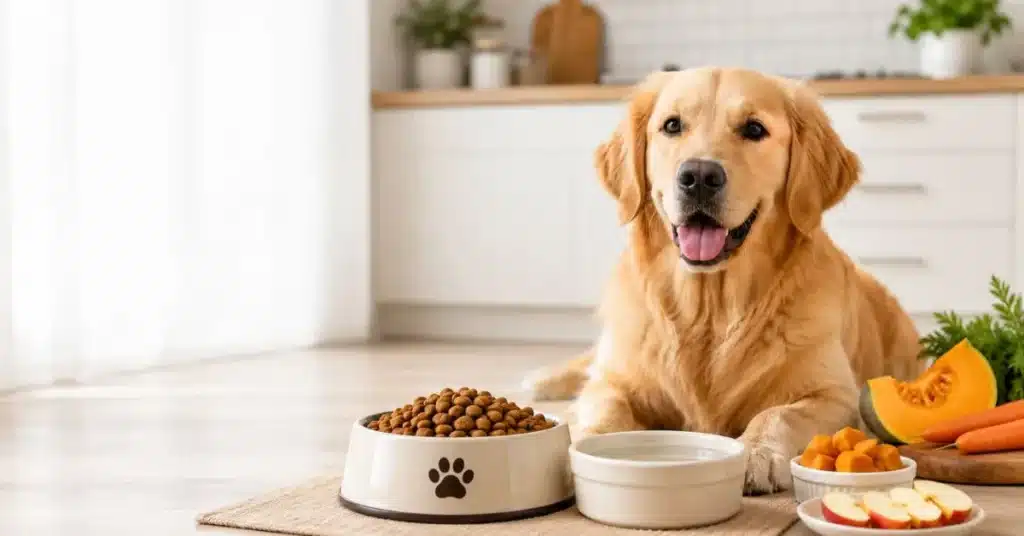
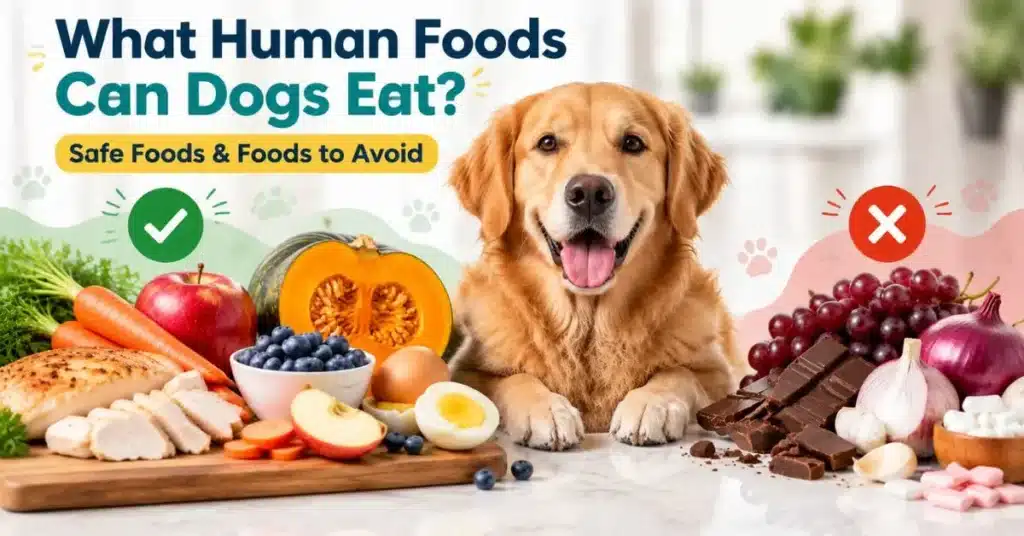
Many dog owners ask, “What human foods can dogs eat?” The answer depends on the type of food, ingredients, and how much you give.
Many human foods are safe for dogs when served in small amounts. For example, some plain meats, fruits, and vegetables can be healthy treats.
However, not every food from your kitchen is safe for your dog. Some foods contain harmful ingredients and may cause serious health problems.
To make better feeding choices, dog owners should understand safe foods, toxic foods, portion size, and proper preparation methods. Human food can be an occasional treat, but it should not replace a balanced dog diet.
Can Dogs Eat Human Foods?
Many dog owners share small amounts of their food with their pets. So, they often ask, “Can dogs eat human food?”
The answer is yes, but it depends on the type of food. Some human foods are safe for dogs, while others can be harmful or even toxic.
Safe foods can work as occasional treats when you prepare them properly and give the right amount. For example, some plain meats, fruits, and vegetables can provide extra nutrients.
However, dogs do not have the same nutritional needs as humans. Their main diet should include proper dog food that provides the right balance of nutrients and calories.
Human food should not replace your dog’s regular meals. Instead, use it as an occasional addition while maintaining a balanced diet. Learn more about your dog’s daily nutrition in our guide on dog nutrition needs.
Human Foods Dogs Can Eat Safely
Many human foods are safe for dogs when you serve them correctly. These foods can be healthy treats, but they should not replace your dog’s regular meals.
Before giving any human food to your dog, check three things:
- Is this food safe for dogs?
- Is it prepared without harmful ingredients?
- Is the portion size right for my dog?
Some foods provide important nutrients like protein, fiber, vitamins, and healthy fats. However, avoid adding salt, spices, sauces, or other ingredients that may harm your dog.
Here are some common human foods dogs can eat safely.
| Food | Why It Is Safe | How to Serve |
| Cooked chicken | Provides lean protein for muscle health | Serve plain without bones or seasoning |
| Eggs | Contains protein and essential nutrients | Give fully cooked eggs without added ingredients |
| Carrots | Provides fiber and a low-calorie snack option | Cut into small pieces before serving |
| Apples | Contains fiber and vitamins | Remove seeds and core |
| Pumpkin | Supports healthy digestion | Use plain pumpkin without sugar or spices |
| Blueberries | Provides antioxidants | Give in small amounts |
Protein Foods That Are Safe for Dogs
Protein helps dogs maintain healthy muscles and support daily activity. Some plain, cooked protein foods can be safe treats for dogs.
Cooked Chicken
Plain cooked chicken is a popular food choice for dogs. It provides lean protein and is easy to digest for many dogs.
When serving chicken:
- Cook it completely
- Remove bones
- Avoid salt, garlic, onion, and spices
Avoid fried chicken because it often contains extra fat and seasoning.
Turkey
Plain turkey can also be a safe protein source for dogs. It provides nutrients that support your dog’s overall health.
Follow these tips:
- Remove the skin and extra fat
- Serve it plain
- Avoid seasoned turkey
Never give cooked turkey bones because they can be dangerous.
Eggs
Cooked eggs can be a healthy treat for dogs. They provide protein and important nutrients.
The best way to serve eggs:
- Cook them fully
- Avoid oil, butter, salt, and spices
- Give a suitable portion
Too many eggs can add extra calories to your dog’s diet.
Salmon
Plain cooked salmon contains omega-3 fatty acids, which can support healthy skin and a shiny coat.
When giving salmon:
- Remove all bones
- Serve it cooked
- Avoid sauces and seasonings
Do not give raw salmon because it may carry risks for dogs.
Fruits Dogs Can Eat Safely
Many fruits can be healthy treats for dogs. They provide vitamins, fiber, and antioxidants.
However, fruits contain natural sugar. So, dogs should eat them in small amounts.
Some safe fruits for dogs include:
| Fruit | Benefits | Safety Tips |
| Apples | Fiber and vitamins | Remove seeds and core |
| Blueberries | Antioxidants | Serve small portions |
| Bananas | Potassium and nutrients | Give in moderation because of sugar |
| Watermelon | Helps with hydration | Remove seeds and rind |
Always prepare fruits properly before giving them to your dog. Remove seeds, pits, and any parts that may cause problems.
Vegetables Dogs Can Eat Safely
Vegetables can be a healthy addition to your dog’s treats. Many vegetables are low in calories and provide useful nutrients.
Here are some vegetables dogs can eat:
Carrots
Carrots are a crunchy and low-calorie snack. They provide fiber and can be served raw or cooked.
Pumpkin
Plain pumpkin can support healthy digestion. Avoid pumpkin products with added sugar or spices.
Sweet Potato
Cooked sweet potato provides fiber and nutrients. Always serve it plain.
Green Beans
Plain green beans can be a healthy snack. Choose options without salt or added ingredients.
Other Human Foods That Are Safe for Dogs
Some other human foods can be safe for dogs when given in small amounts.
Examples include:
- Plain rice – Easy to digest and often used in simple meals
- Plain yogurt – May provide beneficial bacteria, but avoid added sugar
- Peanut butter – Choose only xylitol-free products
Always check the ingredients before sharing human food with your dog. A safe food can still cause problems if your dog eats too much.
Human Foods Dogs Should Not Eat
Not every human food is safe for dogs. Some common foods from our kitchen can cause serious health problems.
Certain foods can lead to toxicity or poisoning in dogs. The risk depends on the food type, the amount eaten, and the dog’s size.
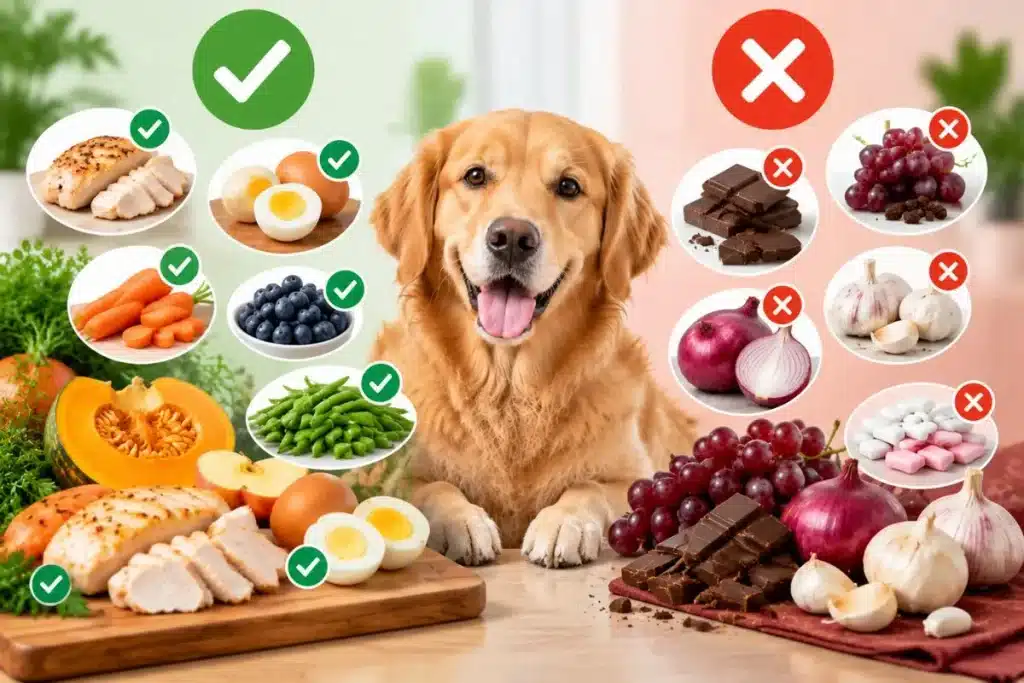
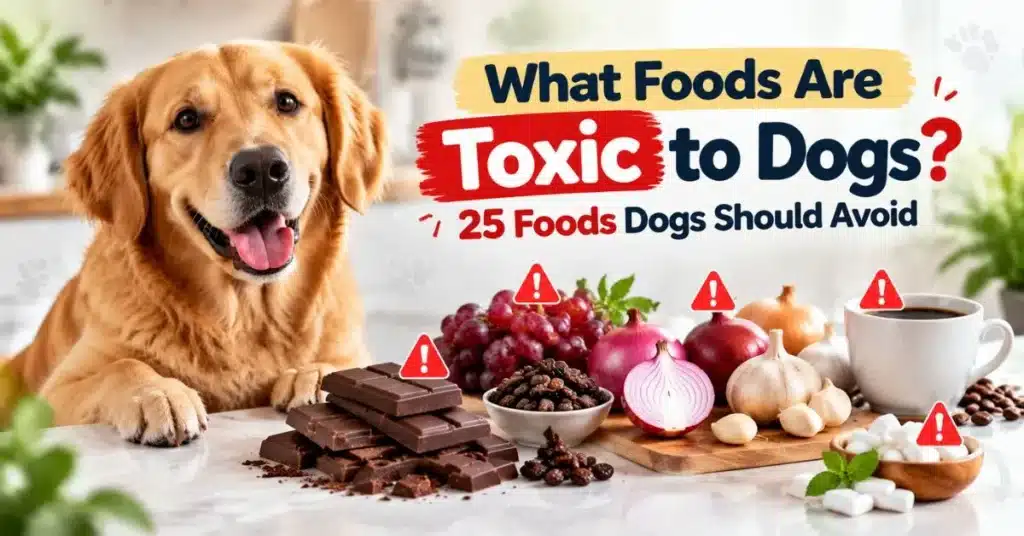
Here are some common human foods dogs should avoid:
| Food | Why It Is Dangerous | What Dog Owners Should Know |
| Chocolate | Contains harmful compounds for dogs | Keep all chocolate products away from dogs |
| Grapes and raisins | May cause serious health problems | Avoid giving them in any amount |
| Onion and garlic | Can damage red blood cells | Avoid raw, cooked, and powdered forms |
| Xylitol | Can cause dangerous reactions | Check labels of sugar-free products |
| Alcohol | Unsafe for dogs | Never give alcoholic drinks |
| Raw dough | Can create health risks | Keep yeast dough away from dogs |
Chocolate and Caffeine: Why They Are Dangerous for Dogs
Chocolate is one of the most common toxic foods for dogs. It contains substances that a dog’s body cannot process safely.
The risk depends on:
- The type of chocolate
- The amount eaten
- The size of the dog
Dark chocolate and baking chocolate usually have higher levels of harmful compounds.
Dogs should also avoid caffeine from foods and drinks like:
- Coffee
- Energy drinks
- Caffeinated products
Keep these items stored safely away from your dog.
Grapes and Raisins: Foods Dogs Should Avoid
Grapes and raisins can be dangerous for dogs. Some dogs may have serious reactions after eating them.
Because we cannot know which dogs will react, it is safest to avoid these foods completely.
Keep away:
- Fresh grapes
- Raisins
- Foods containing raisins
Onion and Garlic: Why Dogs Should Avoid Them
Onion and garlic can harm a dog’s red blood cells. This applies to different forms, including:
- Raw onion
- Cooked onion
- Garlic powder
- Seasoning mixes
Many human foods contain these ingredients. So, always check the label before sharing food with your dog.
Xylitol in Foods: A Hidden Danger for Dogs
Xylitol is a sweetener found in many sugar-free products. It can be harmful to dogs.
You may find xylitol in:
- Sugar-free gum
- Some candies
- Certain peanut butter products
Always check ingredient labels before giving processed foods to your dog.
Alcohol and Raw Dough: Unsafe Foods for Dogs
Dogs should never consume alcohol. Even small amounts can be unsafe.
Also avoid giving dogs raw yeast dough. It can expand inside the stomach and create serious problems.
Keep these items away from your dog:
- Alcoholic drinks
- Bread dough before baking
- Foods containing alcohol
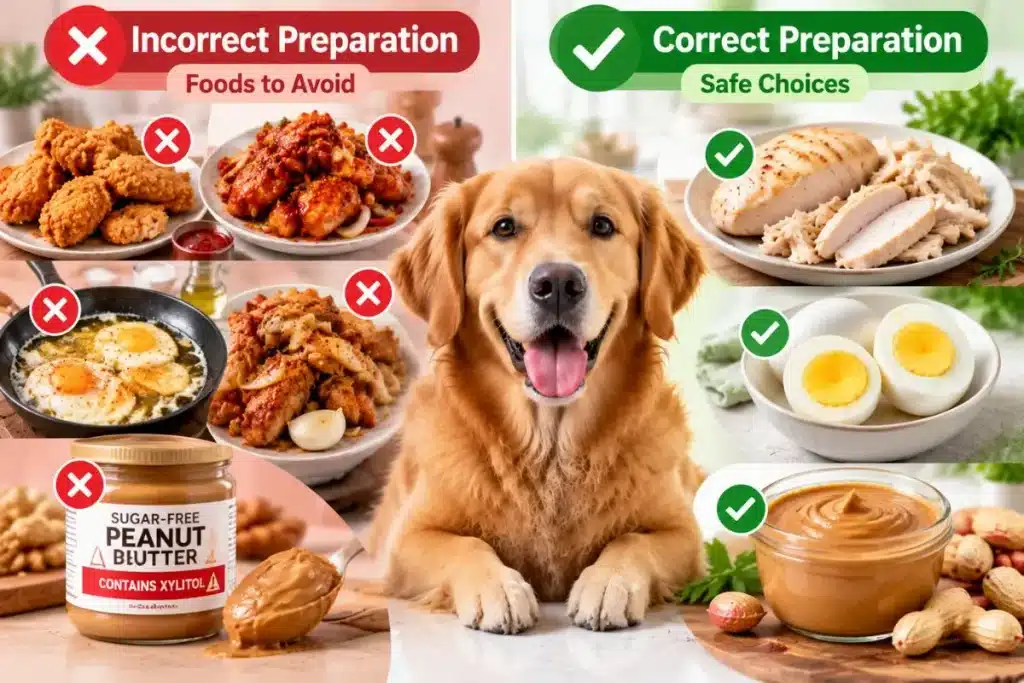
Human Foods Dogs Can Eat When Prepared Correctly
Some human foods are safe for dogs, but preparation matters. A healthy food can become unsafe when you add salt, spices, sauces, or harmful ingredients.
Before sharing any human food with your dog, check:
- Is it plain and properly cooked?
- Does it contain any harmful ingredients?
- Is the portion size right for my dog?
Simple preparation makes a big difference. Here are some common foods that dogs can eat only when you prepare them correctly.
Chicken: Safe Preparation Tips for Dogs
Plain cooked chicken can be a healthy treat for dogs. It provides protein and is easy for many dogs to digest.
Safe:
✅ Plain cooked chicken
✅ Skinless chicken
✅ Boneless chicken
Avoid:
❌ Fried chicken
❌ Garlic or onion seasoning
❌ Spicy sauces
Always remove bones before serving. Cooked bones can break into sharp pieces and may hurt your dog.
Eggs: How to Serve Them Safely
Cooked eggs can be a good source of protein and nutrients. However, the way you prepare them matters.
Safe:
✅ Fully cooked eggs
✅ Plain eggs without added ingredients
Avoid:
❌ Raw eggs
❌ Salt and spices
❌ Butter or oil
Give eggs in moderation because extra calories can affect your dog’s daily diet.
Peanut Butter: Check Ingredients First
Many dogs enjoy peanut butter as an occasional treat. But always check the ingredients before giving it to your dog.
Safe:
✅ Peanut butter without xylitol
Avoid:
❌ Sugar-free peanut butter
❌ Products with xylitol
❌ Added sweeteners
Xylitol is a sweetener that can be harmful to dogs. Always read the label before sharing processed foods.
Choosing the right ingredients and using simple preparation methods can make human food safer for your dog. Remember, these foods should be occasional treats and should not replace a balanced dog diet.
How Much Human Food Can Dogs Eat Safely?
Even safe human foods can become unhealthy if dogs eat too much. The right amount depends on your dog’s size, weight, activity level, and daily calorie needs.
Human food should only be an occasional treat. It should not replace your dog’s regular meals or a balanced diet.
Giving too many treats can add extra calories. Over time, this may lead to weight problems.
Start with a small amount when introducing a new food. Then watch how your dog responds.
Human Food Portion Guide for Dogs by Size
Every dog has different needs. However, your dog’s size can help you understand the right portion range.
| Dog Size | Feeding Consideration |
| Small dogs | Give small portions because they need fewer calories |
| Medium dogs | Give moderate portions based on weight and activity |
| Large dogs | Larger portions may be okay, but avoid overfeeding |
Factors That Affect How Much Human Food Dogs Can Eat
Before giving human food to your dog, consider these factors:
- Weight: Smaller dogs usually need less food than larger dogs.
- Activity level: Active dogs may need more calories than less active dogs.
- Age: Puppies and senior dogs may have different feeding needs.
- Daily diet: Treats should fit into your dog’s total daily food intake.
A small treat may be fine for one dog but too much for another. Always consider your dog’s individual needs.
For a better understanding of daily food amounts, read our guide on dog feeding chart.
You can also learn more about regular feeding portions in our guide on feeding amount for dogs.
Common Mistakes When Giving Human Food to Dogs
Sharing human food with your dog can be a nice way to give treats and variety. However, some common mistakes can affect your dog’s health.
Many owners do not realize that small feeding habits can add extra calories, disturb a balanced diet, or create unhealthy eating patterns.
Avoid these common mistakes when giving human food to your dog.
Giving Leftovers Too Often
Many dogs enjoy leftover food from their owner’s plate. But regular table scraps can add unnecessary calories and may affect your dog’s normal diet.
Instead:
- Give small portions occasionally
- Choose safe foods
- Avoid making leftovers a daily habit
Adding Salt, Spices, or Seasonings
Human meals often contain ingredients that dogs do not need.
Avoid adding:
- Salt
- Spices
- Garlic
- Onion
- Sauces
Plain food is usually a safer choice for dogs.
Ignoring Hidden Ingredients in Human Food
Some foods may look safe but contain hidden ingredients that can harm dogs.
Always check labels for:
- Xylitol
- Added sugar
- Seasonings
- Artificial ingredients
Checking ingredients takes a few seconds but can prevent problems.
Giving Too Many Treats
Even healthy foods can become unhealthy when dogs eat too much.
Too many treats can:
- Add extra calories
- Cause weight gain
- Reduce interest in regular dog food
Always practice moderation when giving human food.
Replacing Dog Food With Human Food
Human food should not replace your dog’s regular meals.
Dogs need a complete diet that provides the right balance of nutrients. Use human foods as occasional treats while keeping a proper feeding routine.
Human Food vs Dog Food: Which Should Dogs Eat More?
Many dog owners wonder whether human food can replace dog food. The answer is no. Human food can be a healthy treat, but it should not become your dog’s main diet.
A complete dog food diet is designed to provide the nutrients dogs need every day. It usually contains the right balance of protein, vitamins, minerals, and calories to support your dog’s health.
Human foods like plain chicken, vegetables, or fruits can add variety. However, they should only make up a small part of your dog’s overall diet.
The best approach is to use safe human foods as occasional treats while keeping a balanced feeding routine. Learn more about your dog’s daily nutrition in our guide on dog nutrition needs.
Common Questions About Human Foods for Dogs
Can Dogs Eat Human Food Safely?
Yes, dogs can eat some human foods when they are safe, properly prepared, and given in the right amount. Foods like plain cooked chicken, some vegetables, and certain fruits can be healthy treats.
However, not all human foods are safe for dogs. Some foods can cause health problems, so always check the ingredients before sharing food with your dog.
What Human Foods Can Dogs Eat Safely?
Dogs can eat many simple, unseasoned foods in moderation. Some safe options include:
- Plain cooked chicken
- Cooked eggs
- Carrots
- Apples without seeds
- Blueberries
- Pumpkin
Always avoid adding salt, spices, sauces, or ingredients that may harm your dog.
What Human Foods Are Toxic to Dogs?
Some human foods can be dangerous for dogs. Common examples include:
- Chocolate
- Grapes and raisins
- Onion and garlic
- Xylitol-containing foods
- Alcohol
If your dog eats a potentially toxic food, contact a veterinarian for advice. You can also check the ASPCA toxic food guide for more information.
Can Dogs Eat Rice and Eggs?
Yes, dogs can eat plain cooked rice and cooked eggs in moderation.
Rice should not contain salt, spices, or sauces. Eggs should be fully cooked and served without butter, oil, or seasoning.
These foods can be occasional additions, but they should not replace a complete dog food diet.
Can Puppies Eat Human Food Safely?
Puppies can eat some safe human foods, but they have special nutritional needs during growth.
A puppy’s main diet should provide the nutrients needed for healthy development. If you give human food, choose safe options and offer only small amounts.
How Much Human Food Can Dogs Eat Safely?
The amount depends on your dog’s size, weight, activity level, and daily calorie needs.
Small dogs usually need smaller portions, while larger dogs may handle more. Even healthy foods can cause problems if dogs eat too much.
Can Human Food Replace Dog Food?
No, human food should not replace your dog’s regular meals.
Quality dog food is designed to provide balanced nutrition, including the right amounts of protein, vitamins, minerals, and calories.
Human food can be an occasional treat, but your dog still needs a complete and balanced diet.
Final Thoughts: Choosing the Right Human Foods for Your Dog
Many human foods can be safe for dogs, but the key is choosing the right foods and serving them correctly. Foods like plain cooked meats, some fruits, and vegetables can be healthy treats when given in small amounts.
However, not every food from your kitchen is safe. Some foods can be harmful or even toxic to dogs, so always check ingredients and avoid unsafe options.
Remember, human food should be an occasional addition, not a replacement for a complete dog diet. Your dog still needs a balanced source of protein, nutrients, and calories to stay healthy.
By choosing safe foods, controlling portion sizes, and following proper feeding habits, you can share occasional treats with your dog while supporting their overall nutrition.