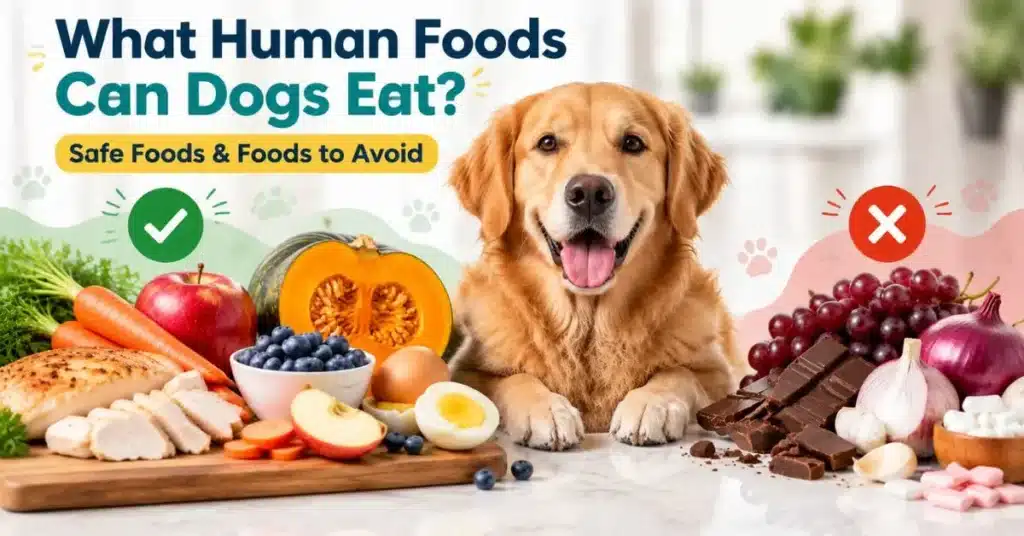
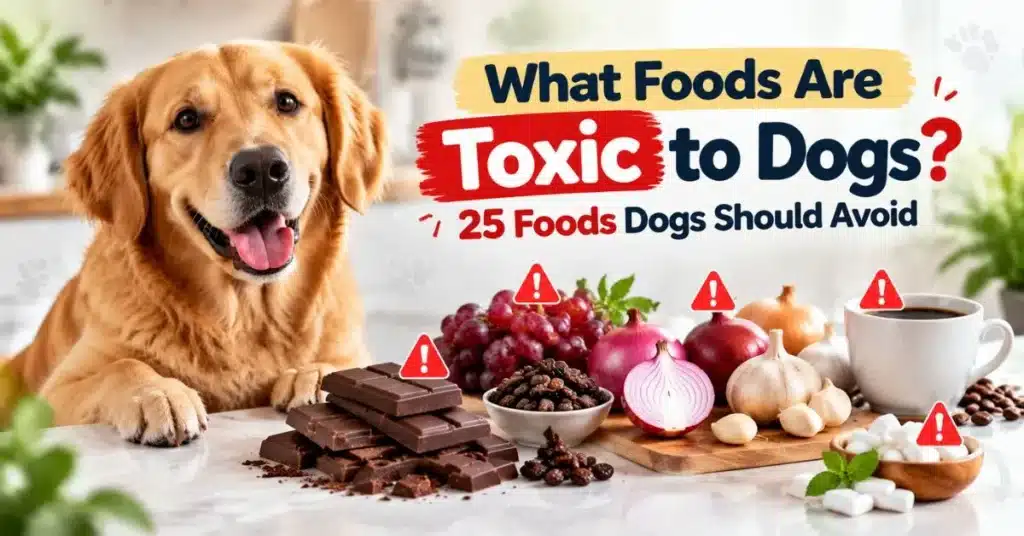
Many foods that are safe for people can be dangerous for dogs. Some common human foods contain ingredients that dogs cannot process properly. These foods may cause mild stomach problems or serious health issues.
So, what foods are toxic to dogs? Common examples include chocolate, grapes, raisins, xylitol, onions, and garlic. Dog owners should avoid these foods because they can harm a dog’s health.
The risk can depend on the type of food, amount eaten, and the dog’s size and health condition. Knowing which foods to avoid can help prevent accidental poisoning.
In this guide, you will learn about the most common toxic foods for dogs, warning signs to watch for, and what to do if your dog eats something harmful.
Why Can Some Human Foods Be Toxic to Dogs?
Dogs cannot process every food the same way humans do. Some human foods contain ingredients that can harm a dog’s body.
Certain ingredients can affect a dog’s digestive system, organs, or overall health. These harmful substances are known as toxins, and the reaction they cause is called toxicity.
The risk depends on several things, such as the type of food, amount eaten, and the dog’s size and health condition. For example, one food may cause mild stomach problems, while another can create a serious health emergency.
That is why every dog owner should know which foods are unsafe. If you are unsure about a food, check trusted sources before giving it to your pet.
25 Toxic Foods Dogs Should Never Eat
Many foods that are safe for people can be dangerous for dogs. Some foods may only cause an upset stomach, while others can lead to serious health problems.
The risk depends on the type of food, amount eaten, and your dog’s size and health condition. So, every dog owner should know which foods can harm their pet.
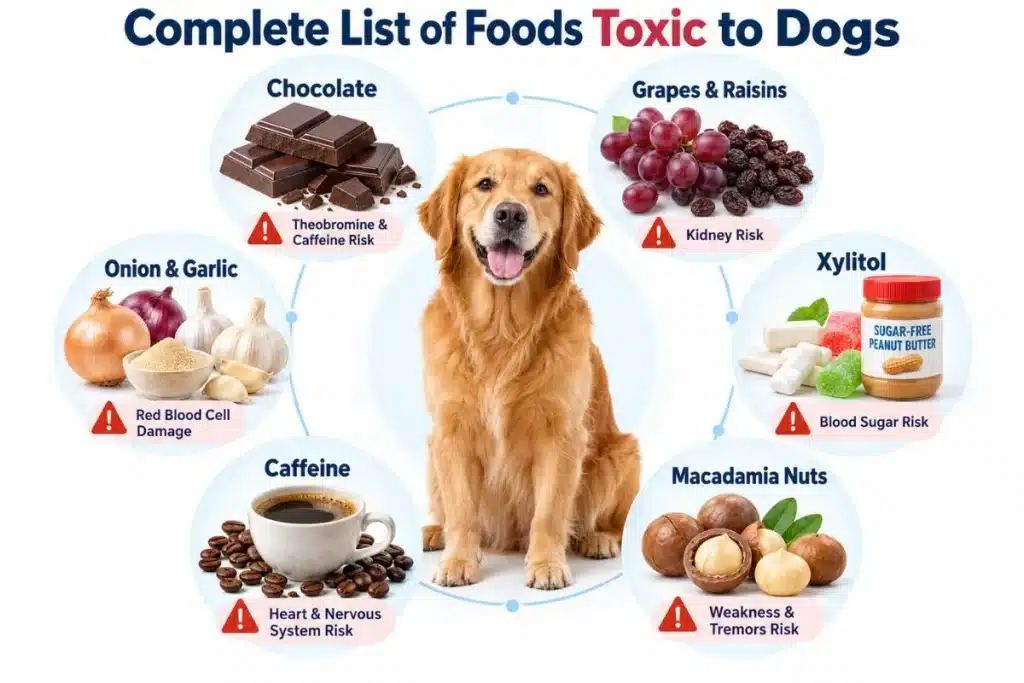
Here are some of the most common toxic foods for dogs that you should keep away from your dog.
| Food | Why It Is Toxic | Common Symptoms |
| Chocolate | Contains theobromine and caffeine, which dogs cannot process well | Vomiting, restlessness, seizures |
| Grapes & Raisins | May cause serious kidney problems in some dogs | Vomiting, weakness, kidney issues |
| Xylitol | Can cause a dangerous drop in blood sugar | Weakness, seizures, collapse |
| Onions & Garlic | Can damage red blood cells | Weakness, tiredness, anemia |
| Alcohol | Affects the nervous system | Loss of coordination, vomiting |
| Caffeine | Can overstimulate the heart and nervous system | Fast heartbeat, tremors |
| Macadamia Nuts | May affect the nervous system | Weakness, shaking |
Chocolate: A Common Toxic Food for Dogs
Chocolate toxicity in dogs is one of the most common food-related risks for pets. Chocolate contains theobromine and caffeine. Dogs cannot break down these compounds as well as humans can.
Dark chocolate and baking chocolate are more dangerous because they contain higher levels of these substances. However, dogs should avoid all types of chocolate.
Common signs of chocolate poisoning include:
- Vomiting
- Restlessness
- Fast heartbeat
- Tremors
- Seizures
The risk depends on the type of chocolate, amount eaten, and your dog’s size. If your dog eats chocolate, contact a veterinarian for advice.
Grapes and Raisins: Why They Are Dangerous for Dogs
Grapes and raisins are toxic to dogs and can cause serious health problems. Some dogs may develop acute kidney injury after eating them.
Scientists still do not fully understand why grapes affect some dogs more severely than others. However, experts recommend keeping grapes and raisins away from all dogs.
Watch for these signs:
- Vomiting
- Loss of appetite
- Weakness
- Lethargy
- Kidney problems
Never assume a small amount is always safe. If your dog eats grapes or raisins, contact a veterinarian.
Xylitol: A Dangerous Sugar Substitute for Dogs
Xylitol is a sweetener found in many sugar-free products. It can be extremely dangerous for dogs because it may cause hypoglycemia, which means a sudden drop in blood sugar.
You may find xylitol in:
- Sugar-free gum
- Sugar-free candy
- Some peanut butter products
- Dental products
Signs of xylitol poisoning include:
- Weakness
- Vomiting
- Loss of coordination
- Seizures
- Collapse
Always check ingredient labels before sharing human foods with your dog. The FDA also provides safety information about products that may contain harmful ingredients for pets.
Onions and Garlic: Foods Dogs Should Avoid
Onions and garlic are toxic to dogs because they can damage their red blood cells. This can lead to a condition called anemia, where the body does not have enough healthy red blood cells.
Dogs can be affected by these foods in different forms, including:
- Raw onions
- Cooked onions
- Garlic powder
- Seasonings containing onion or garlic
Possible signs include:
- Weakness
- Tiredness
- Pale gums
- Loss of appetite
Always check food ingredients before sharing human meals with your dog.
Alcohol and Caffeine: Dangerous Drinks for Dogs
Alcohol and caffeine can be harmful to dogs because they affect the nervous system and heart.
Dogs should never consume:
- Alcoholic drinks
- Coffee
- Tea
- Energy drinks
- Caffeinated products
Possible symptoms include:
- Restlessness
- Fast heartbeat
- Vomiting
- Tremors
- Loss of coordination
Even small amounts can create problems, especially for small dogs. Keep these drinks away from your pet.
Macadamia Nuts: A Risky Food for Dogs
Macadamia nuts can be toxic to dogs and may affect their nervous system. Even though the exact reason is not fully understood, dogs can develop symptoms after eating them.
Signs may include:
- Weakness
- Shaking
- Vomiting
- Difficulty walking
Avoid giving macadamia nuts or foods containing them to your dog.
Other Human Foods Dogs Should Avoid
Besides the common toxic foods above, some other foods can also harm dogs.
These include:
Raw Yeast Dough
Raw dough can expand inside a dog’s stomach and may cause serious digestive problems.
Avocado
Some parts of avocado may cause stomach upset in dogs, especially when eaten in large amounts.
Fatty Foods
High-fat foods can trigger digestive problems and may increase the risk of pancreatitis.
Cooked Bones
Cooked bones can break into sharp pieces and may injure the digestive system.
Excess Salt
Too much salt can cause health problems and should be avoided.
When feeding your dog, choose foods made specifically for pets or safe human foods recommended for dogs.
Signs of Food Poisoning in Dogs: Symptoms to Watch For
Dogs can sometimes eat harmful foods without their owners noticing. Knowing the signs of dog poisoning can help you take quick action.
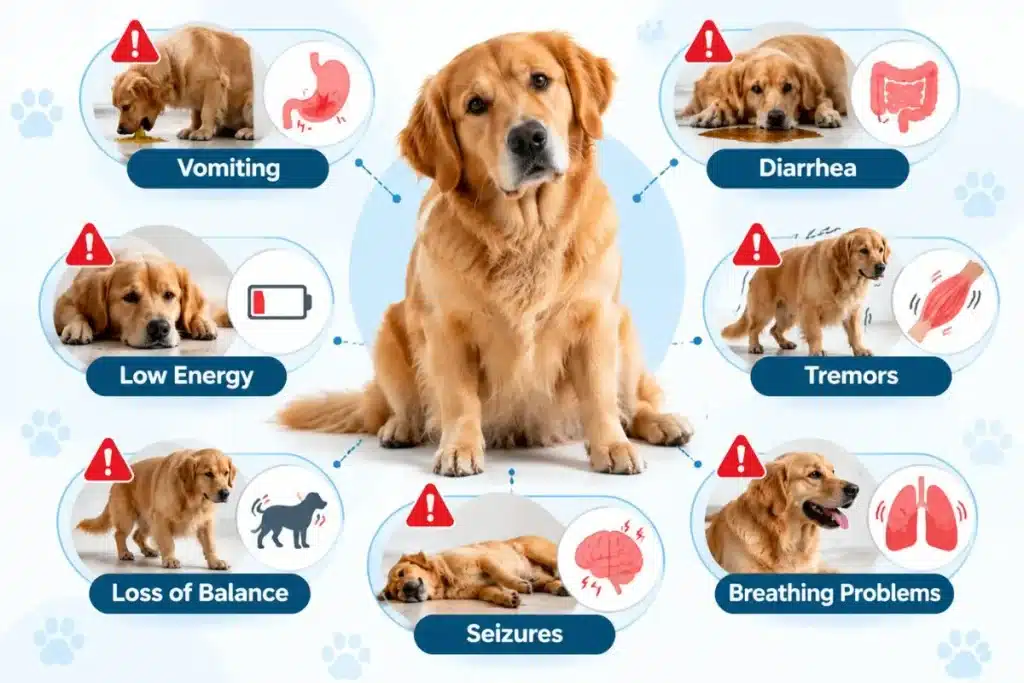
The symptoms of toxic food in dogs can be different for every dog. It depends on the type of food, amount eaten, and your dog’s health condition.
Common warning signs include:
- Vomiting
- Diarrhea
- Loss of appetite
- Lethargy (unusual tiredness)
- Loss of coordination
- Tremors or shaking
- Seizures
- Difficulty breathing
Some symptoms may appear within a few hours. However, some toxic foods can cause problems later, even if your dog looks normal at first.
What To Do If Your Dog Eats Something Toxic
If your dog eats something harmful, stay calm and act quickly. Knowing what to do if your dog eats toxic food can help you protect your pet and avoid further risks.
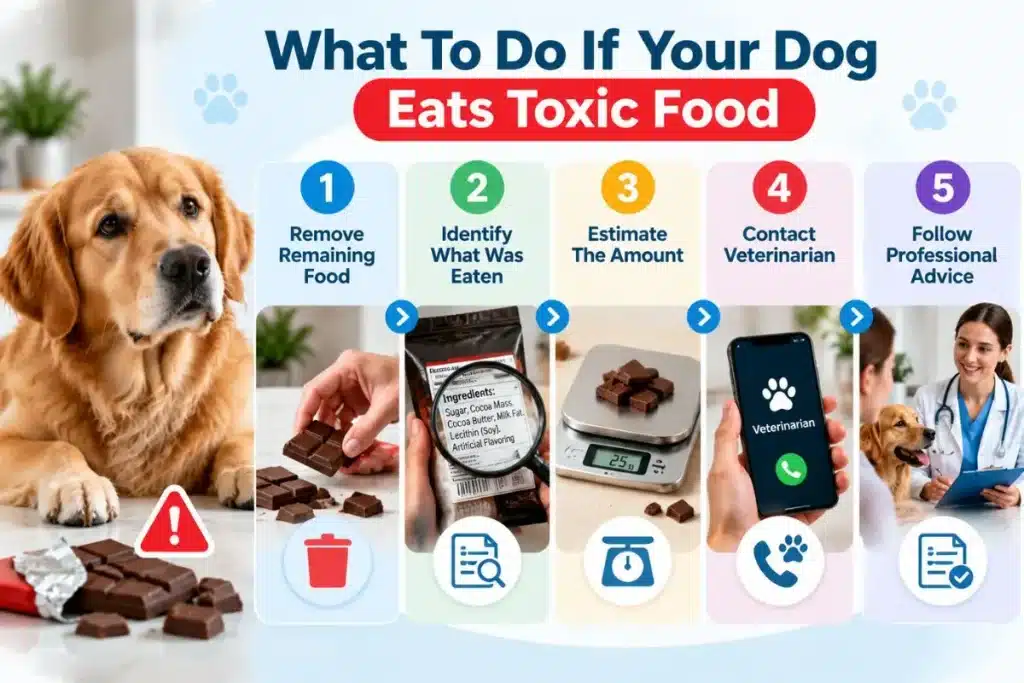
Follow these steps:
1. Remove the Food
Take away any remaining food or product from your dog’s reach. This prevents your dog from eating more.
2. Identify What Your Dog Ate
Find out the exact food, ingredients, or product name. If possible, keep the packaging or label for reference.
3. Check How Much Was Eaten
Try to estimate the amount your dog consumed and note when it happened. This information helps a veterinarian understand the possible risk.
4. Contact a Veterinarian
Do not wait until severe symptoms appear. Contact your veterinarian if you think your dog ate a toxic substance.
5. Follow Professional Advice
Avoid giving home remedies or trying treatments without veterinary guidance. Some actions may make the situation worse.
For a dog poisoning emergency, you can also contact ASPCA Poison Control for expert guidance on possible pet poisoning cases.
What Human Foods Can Dogs Eat Safely?
Not all human foods are harmful to dogs. Some fresh foods can be safe treats when you prepare them properly and give them in the right amount.
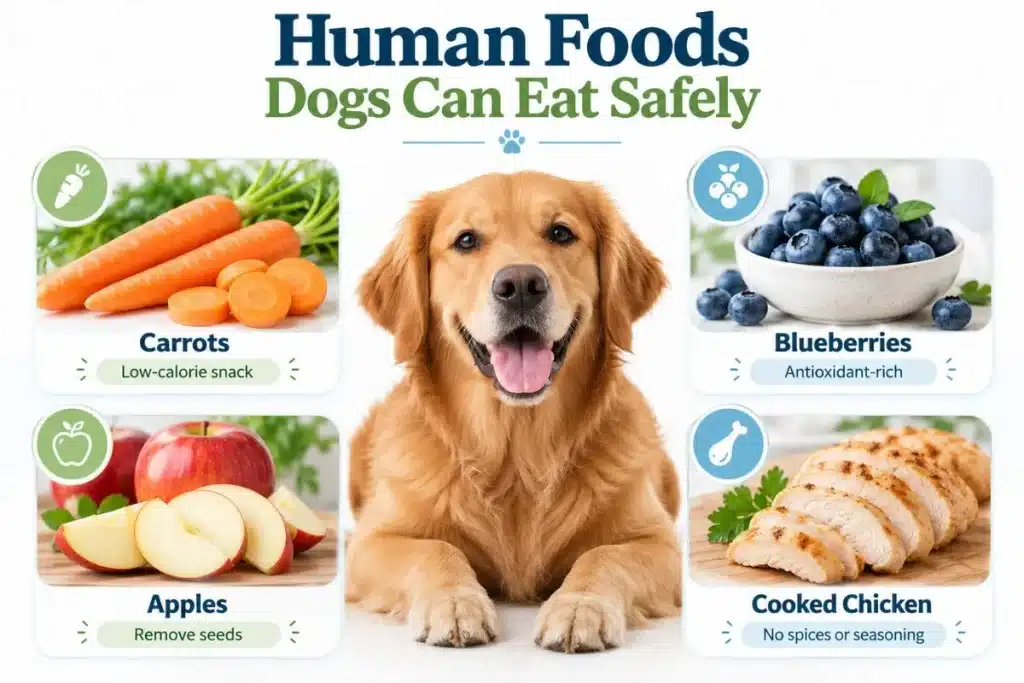
However, these foods should not replace a complete dog diet. Dogs need balanced nutrition based on their age, size, activity level, and health needs.
Some human foods dogs can safely eat include:
- Carrots – A crunchy and low-calorie snack that many dogs enjoy.
- Blueberries – A small amount can be a healthy treat option.
- Apples (without seeds) – Remove the seeds and core before feeding.
- Plain cooked chicken – Serve without salt, oil, spices, or seasoning.
Always introduce new foods slowly. Watch your dog for any unusual reactions, such as stomach upset or changes in behavior.
Every dog is different, so a food that works well for one dog may not suit another. For a larger list of safe options, check our guide on human foods dogs can safely eat.
Common Dog Feeding Mistakes to Avoid
Many dog owners want to share food with their pets. However, some common habits can create health risks for dogs.
Understanding these dog feeding mistakes can help you make safer choices and protect your pet.
Sharing Table Scraps
Giving leftovers from your plate may seem harmless. But some human foods contain ingredients that are unsafe for dogs.
Foods with onion, garlic, chocolate, or high fat can cause health problems.
Ignoring Ingredient Labels
Some products contain hidden ingredients that can harm dogs. Always check food labels before sharing human products with your pet.
Pay special attention to sugar-free products, as some may contain xylitol, which is toxic to dogs.
Giving Sugar-Free Products
Sugar-free gum, candy, and some peanut butter products may contain xylitol. Even a small amount can be dangerous for some dogs.
Assuming Small Amounts Are Always Safe
Many owners think a tiny amount of harmful food cannot cause problems. However, the risk depends on the food type, amount eaten, and your dog’s size.
Before giving any new food, check whether it is one of the foods dogs should avoid.
How to Prevent Food Poisoning in Dogs
Preventing accidental food poisoning in dogs is easier than handling an emergency later. A few simple safety habits can help protect your dog at home.
Follow these simple steps:
✅ Store unsafe foods properly
Keep toxic foods away from your dog’s reach. Store items like chocolate, grapes, raisins, and sugar-free products in closed containers or cabinets.
✅ Read ingredient labels
Always check food labels before sharing human foods with your dog. Some products may contain harmful ingredients like xylitol.
✅ Teach family members
Make sure everyone in your home knows which foods dogs should avoid. Children and guests may accidentally offer unsafe treats.
✅ Avoid leaving food unattended
Dogs are naturally curious and may eat food left on tables or counters. Keep risky foods out of reach.
A safe home environment is one of the best ways to reduce the risk of food poisoning in dogs.
FAQs About Toxic Foods for Dogs
What foods are toxic to dogs?
Many common foods can be toxic to dogs and may cause health problems. Some of the most dangerous examples include chocolate, grapes, raisins, xylitol, onions, garlic, alcohol, and caffeine. The risk depends on the food type, amount eaten, and your dog’s size and health condition.
What is the most dangerous food for dogs?
There is no single food that is the most dangerous for every dog. The level of risk depends on the type of food, amount consumed, and the dog’s size. Foods like chocolate, xylitol, and grapes can cause serious problems and should always be kept away from dogs.
Can one grape hurt a dog?
Yes, one grape may be harmful to some dogs. Grapes and raisins can cause acute kidney injury in certain dogs, and the reaction can be unpredictable. If your dog eats grapes or raisins, contact a veterinarian for advice.
Can dogs eat garlic or onions?
No, dogs should avoid garlic and onions. These foods can damage a dog’s red blood cells and may lead to anemia. They can be harmful in raw, cooked, or powdered forms.
What should I do if my dog eats chocolate?
If your dog eats chocolate, remove any remaining chocolate and check the type and amount eaten. Contact your veterinarian for guidance, especially if your dog shows signs like vomiting, shaking, or seizures.
How quickly do toxic foods affect dogs?
The timing depends on the food, amount eaten, and your dog’s health. Some symptoms may appear within a few hours, while others may take longer. If you suspect your dog ate something toxic, do not wait for severe symptoms before seeking help.
Can small amounts of toxic food be safe for dogs?
No, you should not assume a small amount is always safe. Some toxic foods can cause problems even in small quantities, especially depending on your dog’s size and sensitivity. It is best to avoid giving dogs foods that are known to be harmful.
Final Thoughts: Protecting Your Dog From Toxic Foods
Keeping your dog safe starts with knowing which foods can cause harm. Many foods that are safe for people can be toxic to dogs, so it is important to understand what your pet should avoid.
Common foods like chocolate, grapes, raisins, xylitol, onions, and garlic can create serious health risks. Always check ingredients before sharing human foods with your dog.
Safe feeding is not only about avoiding harmful foods. Your dog also needs a balanced diet with the right nutrients. Learn more about your pet’s nutrition in our guide on what dogs should eat daily.
Making simple feeding choices can help protect your dog’s health and support a happier life.