
A dog feeding schedule helps you decide when and how often to feed your dog. It creates a simple daily routine based on your dog’s age, size, activity level, and health needs.
A puppy usually needs more meals because they are growing quickly. An adult dog often follows a more consistent routine with fewer meals.
In this guide, you’ll learn how to create a healthy dog feeding routine for puppies, adult dogs, and senior dogs. You’ll also learn feeding times, common mistakes, and simple tips to build a better daily habit.
If you are a new dog owner, start with our complete dog care guide to understand the basic needs of your dog before creating a feeding routine.
What Is a Dog Feeding Schedule and Why Does It Matter?
A dog feeding schedule is a simple plan that shows when and how often your dog should eat each day. It helps you create a regular dog feeding routine that fits your dog’s needs.
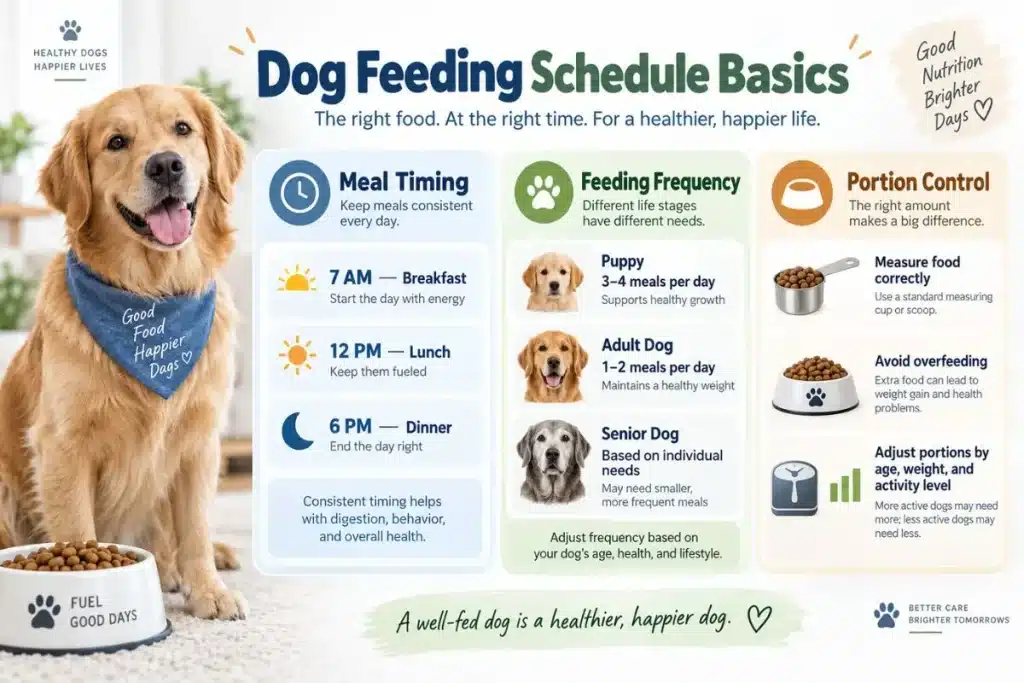
A good feeding schedule focuses on three important things:
- Meal timing — when your dog gets food each day
- Feeding frequency — how many meals your dog needs
- Portion control — how much food your dog should receive
A regular meal schedule helps you track your dog’s eating habits. It also makes it easier to notice changes, such as eating less, gaining weight, or losing interest in food.
Feeding your dog at random times can make it harder to manage their routine. A consistent schedule helps your dog develop healthy eating habits and allows you to adjust meals when needed.
However, every dog has different needs. The best dog feeding routine depends on your dog’s age, size, activity level, and health condition.
For a better understanding of your dog’s nutrition needs, you can check the WSAVA Global Nutrition Guidelines from the World Small Animal Veterinary Association.
Why Is a Consistent Feeding Schedule Important for Dogs?
A consistent feeding schedule helps your dog build a healthy daily routine. It gives your dog a clear idea of when to expect meals each day.
Many new dog owners struggle because meal times change often. One day they feed their dog early, and another day they feed much later.
This makes it harder to track eating habits. It can also make it difficult to notice changes in appetite or behavior.
A regular dog feeding routine helps you:
- Create a better routine: Your dog becomes familiar with regular meal times.
- Monitor eating habits: You can quickly notice changes in appetite.
- Control portions: A schedule helps prevent extra feeding and overeating.
- Track health changes: You can observe weight, energy, and food preferences more easily.
A healthy routine also supports better dog nutrition. When you feed your dog at regular times, you can provide the right amount of food and adjust meals when needed.
For example, a growing puppy may need several meals each day. However, an adult dog may need fewer meals with a more stable routine.
Remember, every dog is different. The best feeding schedule depends on your dog’s age, size, activity level, and health condition.
A good schedule does not need to be perfect. It simply needs to be consistent, practical, and suitable for your dog’s daily needs.
How Often Should You Feed Your Dog? Feeding Frequency by Age
Most adult dogs usually eat one or two meals per day. However, puppies often need more meals because they are growing and have smaller stomachs. The best feeding schedule depends on your dog’s age, size, activity level, and health needs.
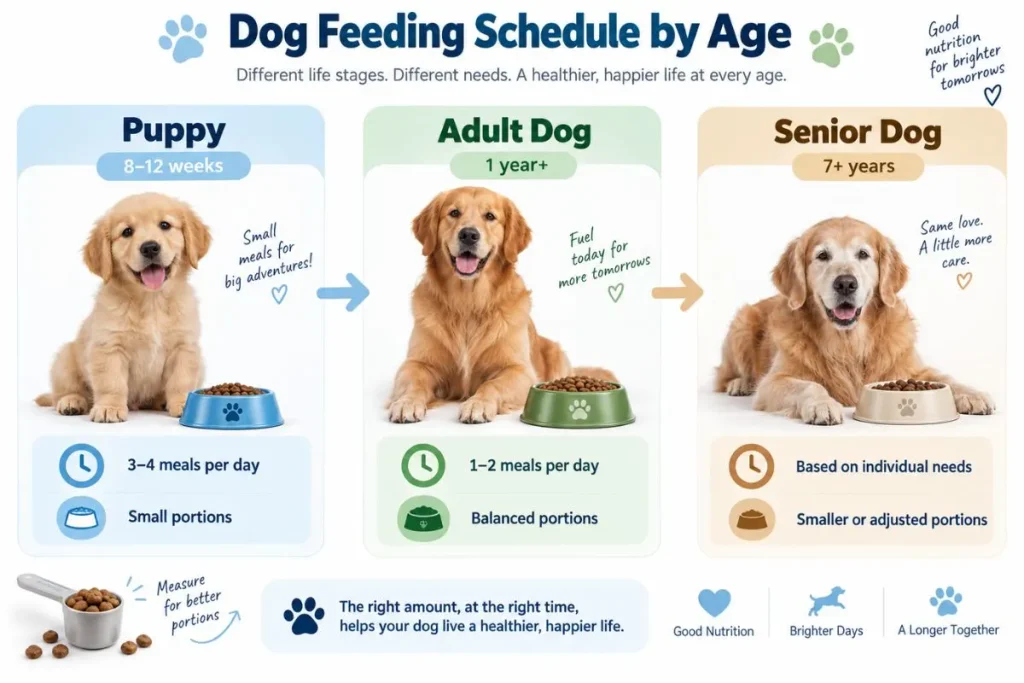
The right feeding frequency depends on your dog’s life stage. A young puppy does not need the same routine as an adult or senior dog.
A regular dog feeding routine helps you manage meals better. It also helps you notice changes in your dog’s appetite, weight, and eating habits.
Dog Feeding Frequency by Age
| Dog Stage | Typical Meals Per Day |
| Puppy | 3–4 meals |
| Adult Dog | 1–2 meals |
| Senior Dog | Depends on health needs |
Puppy Feeding Schedule
Puppies need more frequent meals because they grow quickly. Their small stomachs cannot always handle large meals at once.
A common puppy feeding routine:
- 8–12 weeks: 3–4 meals per day
- 3–6 months: About 3 meals per day
- 6–12 months: Usually 2 meals per day
However, the exact schedule can change based on your puppy’s breed size, activity level, and health condition.
Adult Dog Feeding Schedule
Most healthy adult dogs do well with a consistent routine of one or two meals each day.
Many owners choose two meals because it helps with:
- Portion control
- Regular meal timing
- Tracking appetite changes
For example:
- Morning meal: 7–8 AM
- Evening meal: 5–7 PM
A consistent routine makes it easier to notice if your dog suddenly eats less or changes habits.
Senior Dog Feeding Schedule
Older dogs may need a different feeding routine. Their needs can change because of age, activity level, and health conditions.
Some senior dogs may benefit from:
- Smaller meals
- Controlled portions
- A routine that matches their health needs
Every dog is different. So, there is no single feeding schedule that works for all dogs.
Dog Feeding Schedule by Age: Puppy, Adult & Senior Dogs
Your dog’s feeding needs change as they grow. A puppy, adult dog, and senior dog all have different nutritional needs.
Age affects your dog’s meal frequency, portion size, activity level, and feeding routine. A proper schedule helps your dog get the right amount of food at the right time.
Below is a simple dog feeding schedule by age to help you understand what your dog may need during different life stages.
Puppy Feeding Schedule
Puppies need more frequent meals because they grow quickly. Their small stomachs cannot handle large meals like adult dogs.
A proper puppy feeding schedule helps provide steady energy and supports healthy growth.
Puppy Feeding Frequency by Age
- 8–12 weeks: 3–4 meals per day
- 3–6 months: About 3 meals per day
- 6–12 months: Usually 2 meals per day
For example, a young puppy may follow this routine:
| Time | Meal |
| 7:00 AM | Breakfast |
| 12:00 PM | Lunch |
| 6:00 PM | Dinner |
However, every puppy is different. The ideal puppy meal frequency can change based on breed size, activity level, and health needs.
For example, a small breed puppy may need a different routine than a large breed puppy.
Adult Dog Feeding Schedule
Most healthy adult dogs follow a more stable feeding routine than puppies.
An adult dog feeding schedule usually focuses on consistency, portion control, and maintaining a healthy weight.
Many adult dogs do well with two meals per day, such as:
| Time | Meal |
| 7:00 AM | Morning meal |
| 6:00 PM | Evening meal |
A consistent routine helps you:
- Control portions
- Monitor appetite
- Maintain healthy weight
- Notice changes in eating habits
However, your dog’s needs may vary. Activity level, breed, and lifestyle can affect the right feeding routine.
For example, an active dog may need more food than a less active dog.
Senior Dog Feeding Schedule
Older dogs often need changes to their feeding routine. As dogs age, their digestion, activity level, and health needs may change.
A senior dog feeding schedule should focus on comfort, proper portions, and overall health support.
Some senior dogs may benefit from:
- Smaller meals
- Controlled portions
- Easier-to-digest food
- Regular weight monitoring
For example, an older dog with lower activity levels may need fewer calories than a younger adult dog.
However, every senior dog is different. Health conditions, medications, and lifestyle can affect their ideal feeding routine.
If your senior dog suddenly stops eating, loses weight, or shows major changes in appetite, talk with a veterinarian.
Dog Feeding Schedule by Size: Small, Medium & Large Dogs
Your dog’s size can affect their feeding routine, portion needs, and daily nutrition. A small dog and a large dog may need different amounts of food.
However, size is not the only factor. You should also consider your dog’s age, activity level, weight, and health condition when creating a feeding schedule.
A good routine helps you provide the right amount of food and maintain a healthy weight.
Small Dogs Feeding Schedule
Small dogs often have smaller stomachs and higher energy needs. So, they need carefully measured portions.
A small dog feeding schedule should focus on:
- Regular meal times
- Correct portion sizes
- Limited treats
For example, many small adult dogs do well with two measured meals each day.
A consistent routine also helps you track weight changes. It can show if your dog is eating too much or too little.
Because small dogs can gain weight easily, portion control is important.
Medium Dogs Feeding Schedule
Medium dogs usually follow a balanced feeding routine. Their needs depend on their breed, activity level, and daily lifestyle.
A healthy routine includes:
- Feeding at consistent times
- Providing suitable portions
- Adjusting food when activity changes
For example, an active medium-sized dog may need more food than a less active dog.
Regular monitoring helps you understand whether your current feeding routine works well.
Large Dogs Feeding Schedule
Large dogs often need more attention to portion control and weight management. Their larger body size can affect their calorie needs.
A large dog feeding schedule should include:
- Measured food portions
- Consistent feeding times
- Regular weight checks
Overfeeding can lead to unhealthy weight gain. So, owners should monitor their dog’s body condition and adjust portions when needed.
Large breeds may also have different nutrition needs compared with smaller dogs. Choosing suitable food and maintaining a regular routine can support their overall health.
What Time Should You Feed Your Dog? Daily Feeding Schedule Guide
The best dog feeding time depends on your dog’s needs and your daily routine. However, keeping a regular schedule is usually better than changing meal times often.
Dogs feel more comfortable when they receive food at a predictable time. A consistent daily routine also helps you track eating habits and notice changes.
A simple feeding schedule for many adult dogs can look like this:
| Time | Meal |
| 7–8 AM | Morning meal |
| 5–7 PM | Evening meal |
The exact time does not need to be the same for every dog. The main goal is to create a consistent meal timing routine that works for both you and your dog.
For example, if you leave home for work during the day, choose feeding times that fit your schedule. Your dog does not need a perfect routine, but they do benefit from consistency.
When choosing the best time to feed a dog, consider:
- Your dog’s age
- Activity level
- Exercise schedule
- Health needs
- Your daily lifestyle
A puppy may need meals spread throughout the day. On the other hand, many adult dogs can follow a simple morning and evening routine.
A consistent dog feeding schedule helps you build healthy habits. It also makes managing your dog’s nutrition easier over time.
How Much Food Should You Give Your Dog? Portion Size Guide
Knowing the right amount of food is an important part of a healthy dog feeding schedule. The correct amount helps your dog maintain a healthy weight and steady energy level.
Giving too much food can cause weight gain. On the other hand, giving too little food may affect your dog’s health and daily activity.
The right dog portion size depends on several factors:
- Your dog’s weight
- Age and life stage
- Activity level
- Daily calorie needs
- Type of dog food
For example, an active young dog may need more food than an older dog with a less active lifestyle. A small dog and a large dog also need different portion sizes.
Food labels can help you understand basic feeding amounts. However, these recommendations are only a starting point because every dog has different needs.
You should also monitor your dog regularly. Check their:
- Body weight
- Energy level
- Eating habits
- Overall condition
If your dog gains or loses weight unexpectedly, you may need to adjust the feeding amount.
For a more detailed guide on portion calculation, read our article about [how much food your dog needs].
You can also check the FDA Pet Food Guidance for information about pet food safety and labeling.
Scheduled Feeding vs Free Feeding Dogs: Which Is Better?
Choosing the right feeding method depends on your dog’s needs, lifestyle, and health goals.
The two most common methods are scheduled feeding and free feeding.
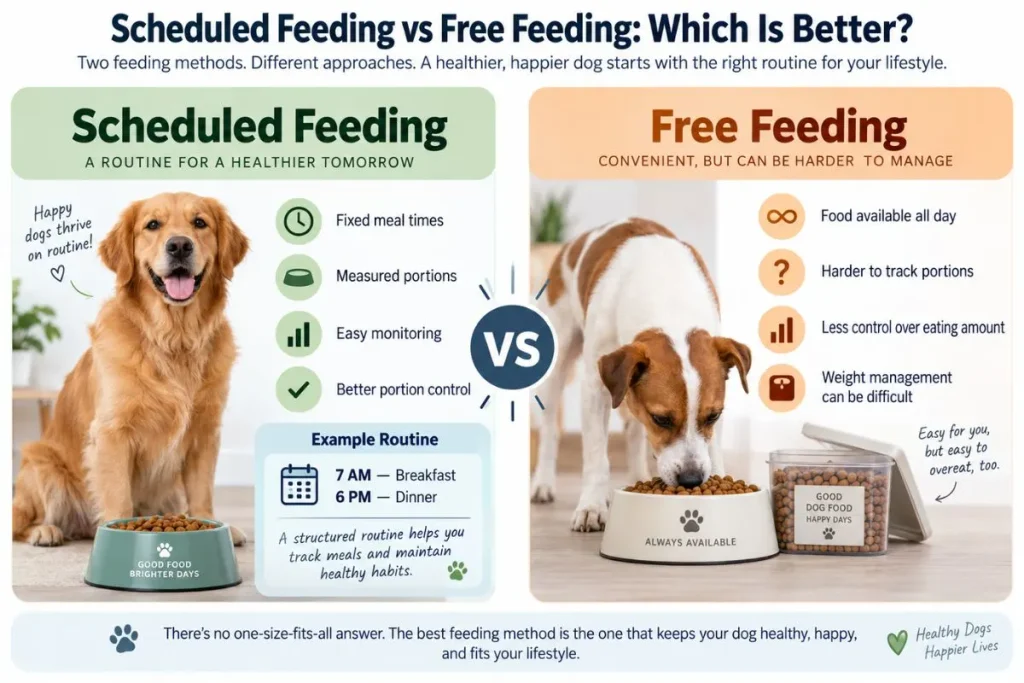
With scheduled feeding, you give your dog meals at specific times each day. With free feeding, you leave food available so your dog can eat whenever they want.
Both methods can work, but they are suitable for different situations.
| Scheduled Feeding | Free Feeding |
| Meals are given at fixed times | Food stays available throughout the day |
| Easier to monitor eating habits | Harder to track food intake |
| Better portion control | Portion control can be difficult |
| Easier to notice appetite changes | Eating changes may go unnoticed |
Scheduled Feeding
Scheduled feeding creates a predictable routine for your dog.
You provide meals at the same time every day. This makes it easier to manage food amounts and track your dog’s eating habits.
Benefits include:
- Better portion control
- Easier weight monitoring
- Regular meal timing
- Quickly noticing appetite changes
For example, you can feed your dog breakfast in the morning and dinner in the evening. This routine helps you understand your dog’s normal eating pattern.
Free Feeding
Free feeding dogs means keeping food available all day. Some owners choose this method because it feels simple and convenient.
However, free feeding does not work well for every dog.
Possible challenges include:
- Overeating
- Weight management problems
- Difficulty tracking appetite changes
For example, if your dog suddenly eats less, you may not notice the change quickly because food is always available.
Which Feeding Method Is Better?
There is no single method that works best for every dog.
A consistent feeding routine is often easier for owners who want better control over portion size, weight, and eating habits.
However, the best choice depends on your dog’s:
- Age
- Activity level
- Health condition
- Eating behavior
Choose the method that helps you maintain a healthy routine for your dog.
Common Dog Feeding Mistakes to Avoid for a Healthy Routine
Many new dog owners make simple feeding mistakes without realizing them. A healthy dog feeding routine is not only about choosing good food.
It also depends on meal timing, portion size, and daily habits. Avoiding common mistakes can help support your dog’s digestive health, weight, and overall well-being.
Feeding Your Dog at Random Times
Changing your dog’s meal times every day can make it harder to build a routine.
Dogs usually do better when they receive food at consistent times. A regular schedule also helps you notice changes in your dog’s appetite.
Try to keep feeding times as predictable as possible.
Overfeeding Your Dog
Overfeeding dogs is one of the most common mistakes among pet owners.
Giving extra food, large portions, or too many treats can lead to unhealthy weight gain. Over time, this may increase the risk of obesity.
To avoid overfeeding:
- Measure food portions
- Follow a suitable feeding schedule
- Consider your dog’s age and activity level
- Monitor weight changes
Giving Too Many Treats
Treats are useful for training and rewards. However, too many treats can add extra calories.
Treats should be a small part of your dog’s daily food intake. They should not replace balanced meals.
Choose healthy treats and give them in moderation.
Changing Dog Food Too Quickly
Sudden food changes can upset your dog’s stomach.
When introducing new food, make the change slowly. Mix a small amount of new food with the old food and gradually increase it.
This gives your dog’s digestive system time to adjust.
Not Providing Enough Fresh Water
Food is important, but water is just as important for your dog’s health.
Always keep clean and fresh water available. Proper hydration supports normal body functions and daily activity.
Avoiding these dog feeding mistakes can help you create a healthier routine for your dog.
Small changes in feeding time, portion size, and daily habits can make a big difference over time.
How To Create a Dog Feeding Schedule: Step-by-Step Guide
Creating a healthy dog feeding routine does not need to be complicated.
You can build a simple schedule by understanding your dog’s age, weight, activity level, and daily habits.
Follow these steps to create a dog feeding schedule that works for your dog.
Step 1: Check Your Dog’s Age
Start by checking your dog’s age.
Puppies, adult dogs, and senior dogs have different feeding needs. A young puppy usually needs more meals than an adult dog.
Step 2: Check Your Dog’s Weight
Your dog’s weight helps you understand the right portion size.
Small dogs and large dogs need different amounts of food. Check your dog’s weight regularly and adjust portions when needed.
Step 3: Choose Meal Frequency
Decide how many meals your dog needs each day.
Consider:
- Age
- Activity level
- Health condition
- Daily routine
A puppy may need several meals, while many adult dogs can follow one or two meals per day.
Step 4: Set a Daily Feeding Routine
Choose meal times that fit your lifestyle.
A consistent schedule helps your dog build a healthy dog routine. It also makes it easier for you to track eating habits.
Step 5: Monitor Changes
Watch for changes in your dog’s:
- Weight
- Appetite
- Energy level
- Eating habits
If you notice sudden changes, adjust the routine or ask a veterinarian for advice.
A good feeding schedule does not need to be perfect. It needs to be consistent, practical, and suitable for your dog’s daily needs.
Dog Feeding Schedule Checklist: 6 Things Every Owner Should Check
Before following a dog feeding schedule, check these important points to create a healthy routine for your dog.
Use this simple checklist:
✅ Age considered
Choose a feeding plan based on your dog’s age and life stage.
✅ Weight checked
Check your dog’s weight to understand the right food portion.
✅ Meal time fixed
Set regular feeding times and follow the same routine each day.
✅ Portion measured
Measure food properly to avoid overfeeding and maintain a healthy weight.
✅ Fresh water available
Always provide clean and fresh water for your dog.
✅ Weight monitored
Track weight changes and adjust the routine when needed.
A simple dog feeding routine helps you build healthy habits and provide better daily care for your dog.
Signs Your Dog’s Feeding Schedule Needs Adjustment
A good dog feeding schedule should support your dog’s health, energy, and daily routine.
However, your dog’s needs can change over time. Age, activity level, weight, and health conditions may affect their feeding needs.
Watch for these signs that your feeding routine may need adjustment:
Weight Gain
If your dog gains extra weight, their food portion or feeding routine may need a review.
Too many calories or treats can make weight management harder.
Weight Loss
Unexpected weight loss may mean your dog is not getting enough food.
It can also be a sign that your dog’s nutrition needs have changed.
Low Energy
A sudden drop in energy can show that your dog may need a different feeding approach.
Monitor changes in activity and daily behavior.
Appetite Changes
Eating much less or more than usual can indicate a problem.
Changes in appetite should not be ignored, especially if they continue for several days.
Digestive Issues
Stomach problems, loose stool, or vomiting may mean your dog’s food or routine needs attention.
If you notice ongoing dog eating problems, consider adjusting the schedule or asking a veterinarian for advice.
A regular feeding schedule adjustment can help your dog maintain a healthier routine.
The goal is not only to follow a schedule but also to make sure that schedule works for your dog’s changing needs.
Frequently Asked Questions About Dog Feeding Schedule
How many times a day should I feed my dog?
Most adult dogs usually do well with one or two meals per day. However, puppies often need more frequent meals because they are growing and have smaller stomachs. The ideal feeding frequency depends on your dog’s age, size, activity level, and health needs.
What is the best time to feed a dog?
The best dog feeding time is usually a schedule you can follow consistently every day. Many owners feed adult dogs once in the morning and once in the evening, such as 7–8 AM and 5–7 PM. A regular routine helps your dog develop healthy eating habits.
How often should I feed my puppy?
Puppies usually need more meals than adult dogs because they grow quickly. Young puppies around 8–12 weeks may need 3–4 meals per day. As they grow, you can gradually reduce meals based on their age, breed size, and nutritional needs.
Should adult dogs eat once or twice a day?
Many adult dogs do well with two meals per day because it helps with portion control and monitoring appetite. Some dogs may follow a once-daily feeding routine depending on their health, lifestyle, and veterinarian recommendations. A consistent schedule is usually more important than the exact number of meals.
How much food should I give my dog?
The right amount of food depends on your dog’s weight, age, activity level, and calorie needs. Food labels can provide a starting point, but every dog has different requirements. Monitoring your dog’s weight and body condition helps you adjust the correct portion size.
Is free feeding better than scheduled feeding for dogs?
Scheduled feeding is often easier for monitoring portions, weight, and eating habits. Free feeding dogs may seem convenient, but it can make it harder to track how much your dog eats. The better option depends on your dog’s behavior, health, and lifestyle.
What are common dog feeding mistakes?
Common dog feeding mistakes include changing meal times often, giving too much food, offering too many treats, changing food too quickly, and ignoring fresh water. Maintaining a consistent feeding routine helps support your dog’s overall health.
How do I know if my dog’s feeding schedule needs to change?
Signs that your dog’s feeding schedule may need adjustment include weight gain, weight loss, low energy, appetite changes, and digestive problems. If your dog’s eating habits change suddenly, review the feeding routine and consider speaking with a veterinarian.
Can I change my dog’s food suddenly?
It is better to change your dog’s food gradually. A sudden switch can cause digestive issues like stomach upset or loose stool. Slowly mixing the new food with the old food gives your dog’s digestive system time to adjust.
How important is water in a dog feeding routine?
Fresh water is an important part of a healthy dog feeding routine. Dogs need access to clean water every day to support hydration and normal body functions. Always keep fresh water available, especially after meals and physical activity.
Final Thoughts: Creating the Right Feeding Schedule for Your Dog
Creating the right dog feeding schedule starts with understanding your dog’s individual needs.
Every dog is different. The best routine depends on your dog’s age, size, activity level, and health condition.
Keep meal times consistent, measure portions carefully, and monitor changes in your dog’s weight, appetite, and energy level.
A healthy feeding routine is not only about when you feed your dog. Choosing the right food is also important for complete nutrition. Learn more about what dogs should eat daily to create a balanced diet plan for your dog.
A good feeding schedule does not need to be perfect. It just needs to support your dog’s health, comfort, and daily lifestyle.