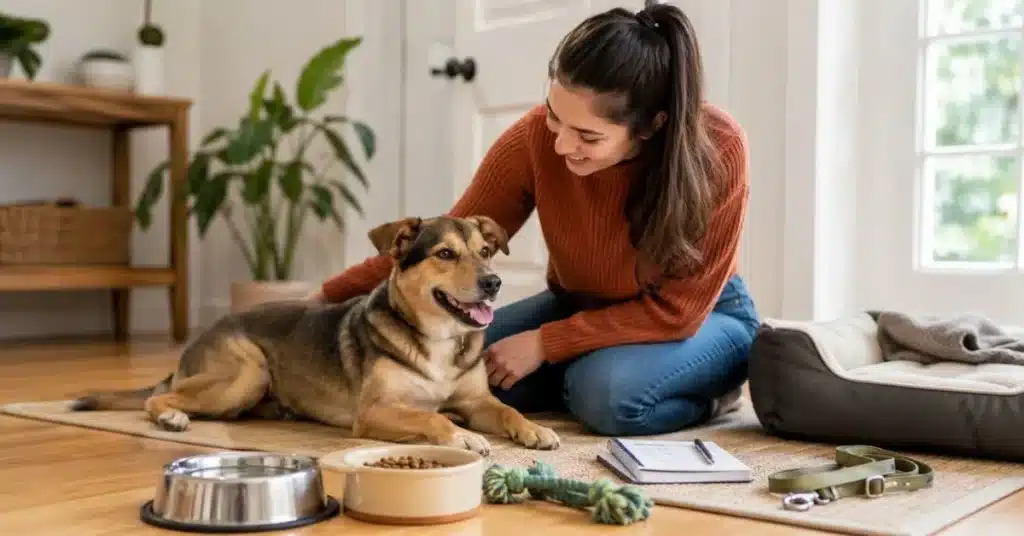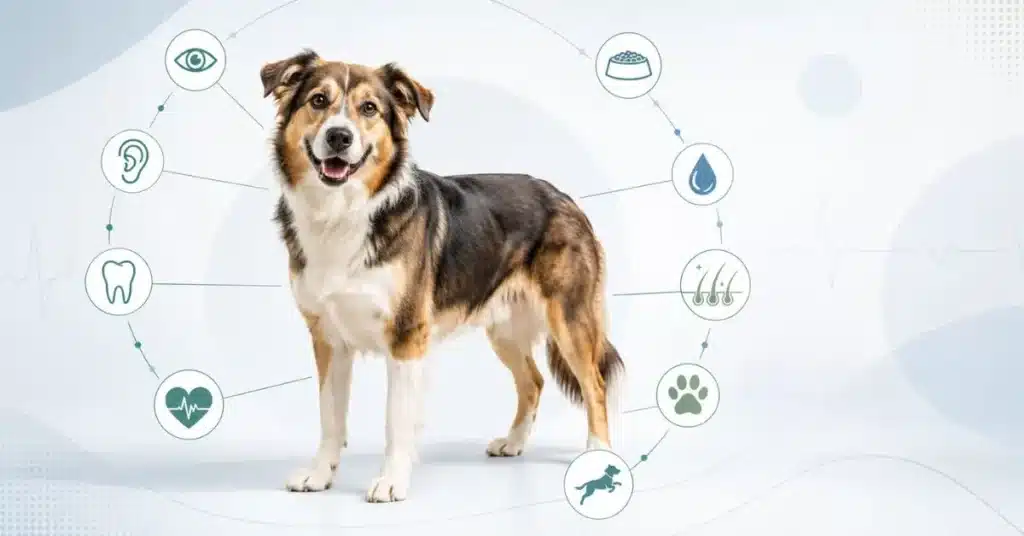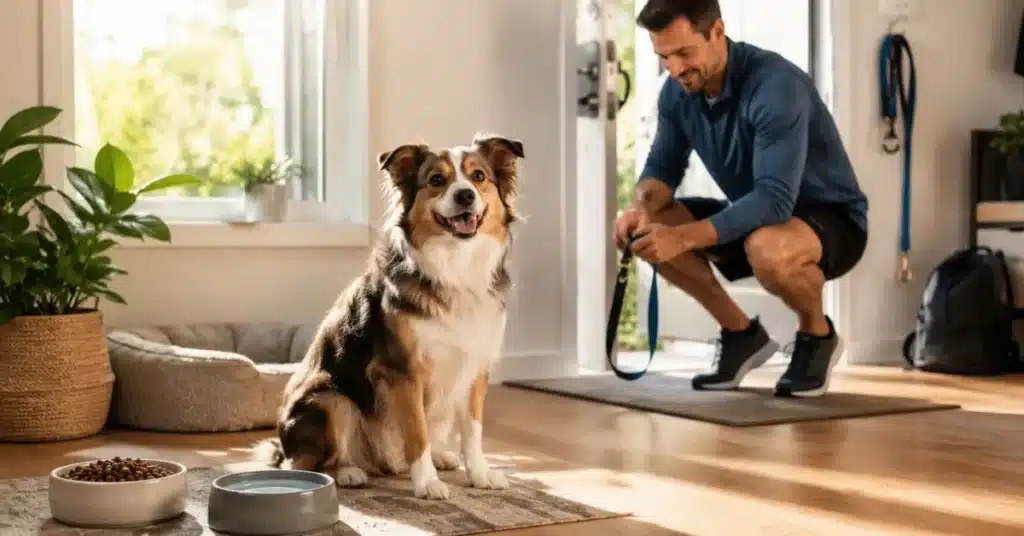

A daily dog care routine includes feeding, fresh water, exercise, mental stimulation, grooming, health checks, and adequate rest. Following a consistent routine helps keep your dog healthy, happy, and well-behaved while making it easier to notice potential health problems early. If you’re a new dog owner, knowing what to do each day can feel overwhelming.
This guide breaks everything down into a simple daily schedule, along with practical tips, health checks, and common mistakes to avoid.
What Is a Daily Dog Care Routine?
A daily dog care routine is a consistent schedule of activities that support your dog’s physical health, mental well-being, and overall quality of life. These activities typically include feeding, hydration, exercise, bathroom breaks, health monitoring, grooming checks, and adequate sleep.
Just like humans, dogs thrive on predictability. According to the American Society for the Prevention of Cruelty to Animals (ASPCA), consistent care routines help support a dog’s physical and mental well-being. When meals, walks, playtime, and rest happen at roughly the same time each day, dogs often feel more secure and experience less stress.
A good daily dog care routine doesn’t have to be complicated. For most dogs, the goal is to consistently provide:
- Nutritious food
- Fresh drinking water
- Daily exercise
- Mental stimulation
- Basic health monitoring
- Comfortable rest and sleep
For new dog owners, establishing a simple routine is one of the most effective ways to build healthy habits from the beginning. To learn more about feeding, grooming, exercise, and overall care, read our complete Dog Care for Beginners guide.
What Should You Do for Your Dog Every Day?
Every day, your dog should receive:
- Fresh water
- Scheduled meals
- Exercise and playtime
- Bathroom breaks
- Mental stimulation
- Basic health checks
- Rest and sleep
The exact routine may vary depending on your dog’s age, breed, size, activity level, and health condition, but these core elements remain important for almost every dog.
One thing I’ve learned from years of dog ownership is that consistency matters more than perfection. A simple routine that you can follow every day is often more effective than an overly complicated schedule that becomes difficult to maintain.
Why Every Dog Needs a Daily Routine
Dogs are creatures of habit. In the wild, animals naturally follow predictable patterns related to feeding, activity, and rest. Domestic dogs often respond similarly when daily activities happen on a regular schedule.
A structured routine provides both physical and mental benefits.
Supports Physical Health
Regular feeding schedules help maintain healthy digestion and appetite. Consistent exercise supports weight management, muscle strength, joint mobility, and cardiovascular health. Daily health checks also make it easier to identify potential problems before they become serious.
When dogs receive the right balance of food, water, exercise, and rest, they are generally better equipped to maintain long-term health.
Reduces Stress and Anxiety
Many dogs feel more comfortable when they know what to expect throughout the day. Predictable meal times, walks, and rest periods can help reduce uncertainty and anxiety.
This is especially important for:
- Puppies
- Newly adopted dogs
- Rescue dogs
- Dogs prone to separation anxiety
A consistent routine helps create a sense of stability and security.
Encourages Better Behavior
Dogs that receive adequate physical exercise and mental stimulation are often less likely to develop boredom-related behaviors.
Insufficient activity can contribute to problems such as:
- Excessive barking
- Chewing household items
- Digging
- Restlessness
- Attention-seeking behavior
While every dog is different, many behavior issues improve when dogs receive appropriate daily care and enrichment.
Makes Health Problems Easier to Detect
One of the biggest benefits of a daily routine is that it helps owners notice changes more quickly.
For example, if your dog normally eats breakfast enthusiastically every morning but suddenly loses interest in food, that change becomes noticeable immediately.
The same applies to:
- Water consumption
- Energy levels
- Bathroom habits
- Sleep patterns
- Overall behavior
Small changes are often easier to recognize when daily activities follow a predictable schedule.
Benefits of Following a Consistent Daily Dog Care Routine
A well-planned routine can positively affect nearly every aspect of your dog’s life.
Some of the most important benefits include:
Better Overall Health
Daily care supports healthy nutrition, hydration, exercise, and preventive health monitoring.
Improved Mental Well-Being
Mental stimulation and predictable routines help keep dogs engaged and reduce boredom.
Stronger Bond Between You and Your Dog
Daily interactions such as walks, training sessions, playtime, and health checks create opportunities to strengthen your relationship with your dog.
Easier Training
Dogs often learn more effectively when activities happen consistently. Predictable schedules can reinforce good habits and support training efforts.
More Confidence for New Dog Owners
Many first-time dog owners worry that they might be forgetting something important. A structured daily routine provides a simple framework that makes dog care easier and more manageable.
Common Mistake:
Many new owners focus only on food and exercise while overlooking mental stimulation and daily health monitoring. A complete routine should support both your dog’s physical and mental needs.
In the next section, we’ll break down a complete daily dog care routine step by step, including what to do in the morning, afternoon, evening, and before bedtime.
A Complete Daily Dog Care Routine for Beginners
A good daily dog care routine doesn’t have to be complicated. The goal is to create a consistent schedule that supports your dog’s physical health, mental well-being, and overall happiness.
While every dog is different, most dogs benefit from a routine that includes feeding, exercise, mental stimulation, health monitoring, bathroom breaks, and adequate rest throughout the day.
The schedule below provides a simple framework that many dog owners can adapt based on their dog’s age, breed, energy level, and lifestyle.
Morning Dog Care Routine
The first hour of your dog’s day often sets the tone for the rest of the day. A consistent morning routine helps establish healthy habits while giving you an opportunity to check your dog’s overall condition.
1. Start With a Potty Break
Most dogs need a bathroom break shortly after waking up.
Taking your dog outside first thing in the morning can help prevent accidents and establish a predictable schedule.
Pay attention to:
- Urination habits
- Stool consistency
- Any signs of discomfort
- Changes in bathroom behavior
These observations can sometimes provide early clues about your dog’s health.
2. Provide Fresh Water
After waking up, many dogs naturally drink water before eating.
Make sure your dog has access to:
- Clean water
- A clean bowl
- Freshly refilled water
Water intake can vary depending on weather, activity level, diet, and individual needs.
Experience Note:
One of the easiest habits I’ve developed over the years is checking the water bowl every morning. It only takes a few seconds and helps ensure my dog always has access to fresh water.
3. Serve Breakfast
A consistent feeding schedule helps support healthy digestion and makes appetite changes easier to notice.
If you’re unsure when or how often to feed your dog, follow a consistent Dog Feeding Schedule that matches your dog’s age, activity level, and nutritional needs.
When feeding your dog:
- Serve meals at roughly the same time each day
- Follow appropriate portion sizes
- Avoid excessive treats before meals
- Monitor appetite
A sudden loss of interest in food can sometimes indicate stress, illness, or another underlying issue.
4. Take a Morning Walk
A morning walk provides:
- Physical exercise
- Mental stimulation
- Opportunities for socialization
- Bathroom breaks
Even a short walk can help your dog burn energy and start the day positively.
The ideal duration depends on:
- Age
- Breed
- Health status
- Energy level
5. Perform a Quick Health Check
Before moving on with your day, spend a minute observing your dog.
Check:
✓ Eyes
✓ Nose
✓ Energy level
✓ Appetite
✓ Overall behavior
This simple habit can help you notice changes earlier and become more familiar with what is normal for your dog. Understanding the Signs of a Healthy Dog can make it easier to recognize when something may require closer attention.
Common Mistake:
Many owners only notice symptoms when their dog becomes visibly sick. Small daily observations often reveal problems much sooner.
Midday Dog Care Routine
For many dogs, midday is a great time for additional exercise, enrichment, and mental stimulation.
Even if you’re busy, a few short activities can make a big difference.
1. Encourage Physical Activity
Depending on your dog’s needs, midday activity may include:
- A walk
- Backyard play
- Fetch
- Tug games
- Light training sessions
Regular activity helps maintain:
- Healthy weight
- Muscle strength
- Joint mobility
- Mental well-being
2. Provide Mental Stimulation
Physical exercise alone isn’t always enough.
Dogs also need opportunities to use their brains.
Examples include:
- Puzzle toys
- Obedience training
- Scent games
- Food-dispensing toys
- Interactive play
Mental enrichment can reduce boredom and help prevent unwanted behaviors. If you’re looking for more ways to keep your dog mentally engaged, explore our guide to the Best Interactive Dog Toys for enrichment and everyday play.
I’ve found that even a 10-minute training session can sometimes tire a dog out more effectively than a longer walk. Mental stimulation is often overlooked but plays a major role in a healthy routine.
3. Check Hydration
During warmer weather or after exercise, it’s a good idea to check your dog’s water bowl again.
Watch for:
- Excessive drinking
- Very little drinking
- Signs of dehydration
Changes in water consumption are often worth monitoring, especially when they occur suddenly.
4. Observe Behavior
Midday provides another opportunity to assess how your dog is feeling.
Ask yourself:
- Is my dog behaving normally?
- Does my dog seem energetic?
- Is there any unusual behavior?
Behavioral changes are sometimes one of the earliest indicators that something may be wrong.
Evening Dog Care Routine
The evening routine helps your dog wind down while ensuring important daily care tasks are completed.
1. Serve Dinner
Many dogs do well with a second meal in the evening.
Try to:
- Feed at a consistent time
- Use appropriate portions
- Avoid overfeeding
- Monitor appetite
Consistency makes it easier to identify changes in eating habits.
2. Take an Evening Walk
An evening walk provides several benefits:
- Additional exercise
- Bathroom opportunities
- Mental stimulation
- Stress relief
For many dogs, this becomes one of the most enjoyable parts of the day.
3. Conduct a Grooming Check
You don’t need to perform a full grooming session every evening.
However, a quick inspection can be valuable.
Check:
- Coat condition
- Skin irritation
- Excessive shedding
- Ticks or parasites
- Paw condition
A brief grooming check can help you spot potential issues before they become more serious. For a complete step-by-step routine, explore our Dog Grooming Guide for Beginners and learn how to keep your dog’s coat, skin, and paws in good condition.
4. Spend Quality Time Together
Dogs are social animals.
Simple activities such as:
- Cuddling
- Gentle play
- Training
- Relaxing together
can help strengthen your bond.
This time also allows you to observe your dog’s mood and behavior more closely.
Common Mistake:
Some owners focus only on physical exercise while overlooking social interaction. Quality time is an important part of your dog’s overall well-being.
Bedtime Dog Care Routine
A simple bedtime routine helps your dog settle down and sleep comfortably.
1. Take a Final Potty Break
Before bed, give your dog one last opportunity to go outside.
This helps:
- Reduce nighttime accidents
- Improve sleep quality
- Maintain a predictable bathroom schedule
2. Check Water Availability
Ensure your dog still has access to fresh water overnight.
Most healthy dogs should have access to water throughout the day and night.
3. Prepare a Comfortable Sleeping Area
Your dog’s sleeping space should be:
- Clean
- Comfortable
- Safe
- Quiet
Many dogs sleep better when they have a dedicated sleeping area. A comfortable dog bed can support better rest, especially for puppies, senior dogs, and dogs that spend long hours sleeping. To find the right option for your dog, check out our guide to the Best Dog Beds.
4. Perform a Quick End-of-Day Check
Before bedtime, ask yourself:
✓ Did my dog eat normally today?
✓ Did my dog drink water normally?
✓ Did my dog get enough exercise?
✓ Did my dog behave normally?
✓ Did anything unusual happen today?
This simple review takes less than a minute but can help you identify patterns and notice changes over time.
If your dog ate normally, stayed active, drank water appropriately, and behaved as expected throughout the day, those are generally positive signs that the routine is meeting your dog’s basic daily needs.
A consistent morning, midday, evening, and bedtime routine creates the foundation for long-term health and happiness. In the next section, we’ll cover the daily health checks every dog owner should perform and how to spot potential problems early.
Daily Health Checks Every Dog Owner Should Do
Most health problems don’t appear overnight. In many cases, dogs show small changes in behavior, appetite, energy, or appearance before more obvious symptoms develop.
The good news is that you don’t need special equipment or veterinary training to notice these changes.
By spending just a few minutes observing your dog each day, you may be able to identify potential issues earlier and seek professional advice when needed.
A daily health check should never replace veterinary care, but it can help you become more familiar with what is normal for your dog.
Why Daily Health Checks Matter
Many dog owners only notice problems once symptoms become severe.
However, subtle changes often appear first.
Examples include:
- Reduced appetite
- Lower energy levels
- Increased thirst
- Changes in bathroom habits
- Unusual behavior
When you see your dog every day, you’re in the best position to notice these changes.
A daily health check helps you understand what is normal for your dog. If you are not sure what healthy signs should look like, read our guide on Signs of a Healthy Dog for a clearer baseline.
Check Your Dog’s Eyes
Healthy eyes are typically:
- Clear
- Bright
- Free from excessive discharge
- Free from significant redness
Pay attention to:
- Excessive tearing
- Squinting
- Cloudiness
- Redness
- Frequent rubbing of the eyes
While minor discharge can be normal for some dogs, sudden changes are worth monitoring.
Check Your Dog’s Ears
Healthy ears should appear:
- Clean
- Light pink
- Free from strong odors
Watch for:
- Excessive scratching
- Head shaking
- Redness
- Swelling
- Unpleasant odor
Ear problems are common in many dogs and can become uncomfortable if ignored.
Check Your Dog’s Nose
A dog’s nose can naturally vary in moisture throughout the day.
Instead of focusing only on whether the nose is wet or dry, pay attention to:
- Sudden changes
- Discharge
- Crusting
- Bleeding
A dry nose alone does not necessarily indicate illness.
Check Your Dog’s Teeth and Gums
Dental health is an important part of overall health.
Look for:
- Bad breath
- Yellow or brown buildup
- Red gums
- Swollen gums
- Difficulty chewing
Healthy gums are generally pink and free from obvious inflammation.
Common Mistake:
Many owners wait until their dog develops severe bad breath before paying attention to dental care. Small daily observations can help identify problems earlier.
Check Your Dog’s Coat and Skin
A healthy coat often appears:
- Clean
- Smooth
- Free from excessive matting
Watch for:
- Bald spots
- Excessive shedding
- Dry skin
- Red patches
- Lumps or bumps
A quick coat inspection during petting or playtime usually takes less than a minute.
Monitor Appetite
Appetite is one of the easiest health indicators to monitor.
Ask yourself:
- Did my dog finish their meal?
- Did my dog seem excited about food?
- Is appetite normal compared to previous days?
Occasional fluctuations can happen, but ongoing changes deserve attention.
Monitor Energy Levels
Every dog has a normal energy pattern.
Some dogs are naturally active.
Others are naturally calm.
Instead of comparing your dog to other dogs, compare your dog to their normal behavior.
Watch for:
- Unusual tiredness
- Reduced interest in activities
- Reluctance to walk
- Excessive sleeping
- Lack of enthusiasm
Monitor Water Intake
Water consumption can provide useful clues about health.
Watch for:
- Drinking significantly more than usual
- Drinking significantly less than usual
- Frequent empty water bowls
- Signs of dehydration
Water needs vary based on:
- Weather
- Diet
- Exercise
- Individual health conditions
What matters most is noticing unusual changes.
Check Bathroom Habits
Bathroom habits can reveal important health information.
Pay attention to:
Urination
- Frequency
- Difficulty urinating
- Straining
- Accidents indoors
Stool
- Consistency
- Color
- Frequency
Sudden changes may indicate digestive or health issues.
This simple routine is a basic starting point for everyday observation. For a more detailed home monitoring approach, you can also follow our guide on How to Monitor Your Dog’s Health at Home.
My 2-Minute Daily Health Check Routine
If you’re a busy dog owner, this simple framework can help you quickly assess your dog’s condition each day.
Ask Yourself:
✓ Did my dog eat normally today?
✓ Is my dog’s energy level normal?
✓ Is water intake normal?
✓ Are the eyes and nose clear?
✓ Is stool normal?
✓ Is behavior normal?
✓ Is my dog moving comfortably?
If most answers are “yes,” your dog is likely following their usual routine.
If two or more answers are unusual, pay closer attention and continue monitoring.
If your dog shows ongoing changes in appetite, energy, water intake, stool, or behavior, it may be helpful to learn the Early Signs Your Dog Is Sick so you know when to monitor closely or contact a veterinarian.
How Much Food Does a Dog Need Daily?
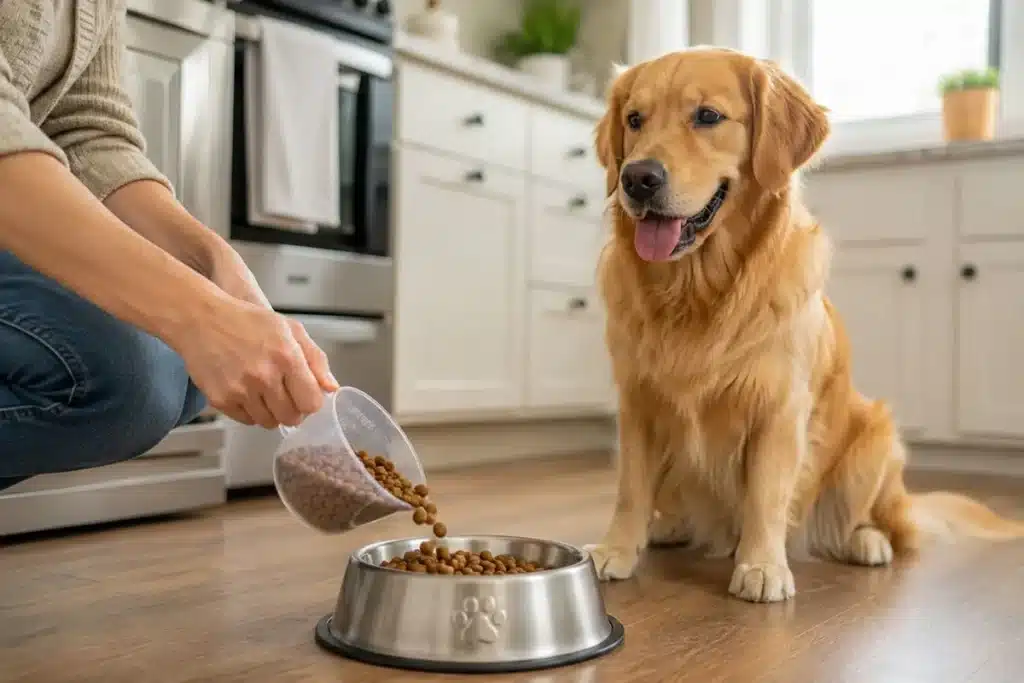
Food is one of the most important parts of a daily dog care routine. Proper nutrition supports healthy growth, energy levels, digestion, immune function, and overall well-being.
However, there is no single feeding amount that works for every dog.
The right amount of food depends on factors such as:
- Age
- Breed
- Body weight
- Activity level
- Health status
- Type of food
The right amount of food depends on factors such as age, breed, body weight, activity level, health status, and the type of food being served. Choosing the right ingredients is just as important as feeding the correct amount, so it’s worth understanding What Should Dogs Eat Daily to support balanced nutrition.
General Feeding Guidelines
Most healthy adult dogs do well with:
- Two meals per day
- Consistent feeding times
- Measured portions
Puppies typically require more frequent meals, while some senior dogs may need feeding adjustments based on health conditions.
Most healthy adult dogs do well with two meals per day, consistent feeding times, and measured portions. Puppies typically require more frequent meals, while some senior dogs may need feeding adjustments based on health conditions. If you’re unsure when to feed your dog, follow a Dog Feeding Schedule that matches your dog’s age, lifestyle, and nutritional needs.
Signs Your Dog Is Eating the Right Amount
Positive indicators include:
✓ Healthy body condition
✓ Consistent energy levels
✓ Normal stool quality
✓ Stable weight
✓ Good appetite
Signs Your Dog May Be Overfed
Watch for:
- Weight gain
- Reduced activity
- Difficulty feeling ribs
- Excessive treats throughout the day
Signs Your Dog May Be Underfed
Watch for:
- Weight loss
- Low energy
- Constant hunger
- Visible ribs
Many owners focus only on the amount of food, but feeding consistency is equally important. Feeding at similar times each day makes it easier to monitor appetite and spot changes quickly.
What to Avoid
❌ Free-feeding without monitoring intake
❌ Frequent table scraps
❌ Sudden food changes
❌ Overfeeding treats
How Much Water Should a Dog Drink Daily?
Water is just as important as food.
Even mild dehydration can affect a dog’s energy levels, comfort, and overall health.
Most dogs should have access to fresh, clean water throughout the day.
Factors That Affect Water Needs
Water requirements vary based on:
- Body size
- Weather conditions
- Activity level
- Diet type
- Health conditions
Dogs eating dry kibble often drink more water than dogs eating wet food.
Signs of Proper Hydration
Healthy hydration often includes:
✓ Regular drinking habits
✓ Moist gums
✓ Good energy levels
✓ Normal urination
Keeping water fresh is just as important as making it available. Using a high-quality water bowl can help improve cleanliness, encourage hydration, and make daily monitoring easier. To compare different options, check out our guide to the Best Dog Bowls.
Signs of Possible Dehydration
Watch for:
- Dry gums
- Lethargy
- Sunken eyes
- Reduced urination
- Excessive panting
Signs of Excessive Water Consumption
Monitor for:
- Constant drinking
- Frequently empty water bowls
- Increased urination
Sudden increases in water intake should not be ignored.
Rather than focusing on exact numbers, I pay attention to my dog’s normal drinking habits. Significant changes are often more important than the specific amount consumed.
Quick Water Check
Ask yourself:
✓ Did my dog drink normally today?
✓ Was fresh water available all day?
✓ Did water consumption change suddenly?
If anything seems unusual, continue monitoring closely.
What to Avoid
❌ Empty water bowls
❌ Dirty water bowls
❌ Restricting water unnecessarily
❌ Ignoring sudden changes in drinking habits
How Much Exercise Does a Dog Need Daily?
Exercise is essential for maintaining a healthy body and mind.
A dog that receives appropriate daily exercise is often:
- Healthier
- Happier
- Better behaved
- Less likely to develop boredom-related problems
Exercise needs vary significantly from one dog to another. According to the American Kennel Club (AKC), factors such as breed, age, health condition, and energy level play an important role in determining the right amount of daily exercise. Understanding your dog’s individual needs is often more important than following a one-size-fits-all exercise recommendation.
Factors That Affect Exercise Needs
Exercise requirements depend on:
- Breed
- Age
- Health status
- Fitness level
- Energy level
There is no universal exercise recommendation that fits every dog.
Exercise Needs for Puppies
Puppies require:
- Short play sessions
- Gentle walks
- Basic training activities
- Socialization
Young puppies should avoid excessive exercise that could place unnecessary stress on developing joints.
Good Puppy Activities
✓ Play sessions
✓ Training games
✓ Exploration walks
✓ Socialization experiences
Exercise Needs for Adult Dogs
Most healthy adult dogs benefit from:
- Daily walks
- Play sessions
- Mental stimulation
- Regular activity
High-energy breeds often require significantly more exercise than low-energy breeds.
Adult Dog Exercise Ideas
✓ Walking
✓ Hiking
✓ Fetch
✓ Tug games
✓ Agility activities
✓ Training sessions
Exercise Needs for Senior Dogs
Senior dogs still need exercise, but their routine may require adjustments.
Focus on:
- Comfortable movement
- Gentle activity
- Joint-friendly exercise
Monitor for:
- Fatigue
- Stiffness
- Discomfort
Senior-Friendly Activities
✓ Short walks
✓ Light play
✓ Gentle enrichment activities
Mental Stimulation Matters Too
Exercise isn’t only physical.
Mental stimulation helps prevent boredom and supports emotional well-being.
Examples include:
- Puzzle toys
- Obedience training
- Scent games
- Food puzzles
- Interactive play
One of the biggest mistakes new owners make is assuming physical exercise alone is enough. Mental stimulation often plays an equally important role in keeping dogs satisfied and well-behaved.
If you’re looking for more ways to keep your dog mentally engaged, explore our guide to the Best Interactive Dog Toys for enrichment, training, and everyday play.
What to Avoid
❌ Over-exercising puppies
❌ Exercising immediately after large meals
❌ Long periods without activity
❌ Ignoring signs of fatigue
How Much Sleep Does a Dog Need?
Sleep is an essential part of a healthy daily routine.
Dogs spend much more time sleeping than humans, and adequate rest supports:
- Recovery
- Growth
- Brain function
- Immune health
- Energy levels
Sleep Needs by Life Stage
Puppies
Puppies typically sleep the most because their bodies and brains are developing rapidly.
Adult Dogs
Most adult dogs spend a significant portion of the day resting or sleeping.
Senior Dogs
Senior dogs often require additional rest and recovery time.
Signs Your Dog Is Getting Quality Sleep
✓ Wakes up easily
✓ Appears refreshed
✓ Maintains normal energy levels
✓ Sleeps comfortably
Signs Sleep May Be Affected
Watch for:
- Restlessness
- Frequent waking
- Difficulty getting comfortable
- Excessive daytime fatigue
Creating a Better Sleep Environment
Provide:
- A comfortable dog bed
- A quiet sleeping area
- Consistent routines
- Appropriate room temperature
A supportive sleeping surface can make a significant difference in your dog’s comfort and recovery. To compare different options and find the right fit, check out our guide to the Best Dog Beds.
What to Avoid
❌ Frequently disrupting sleep
❌ Inconsistent sleeping arrangements
❌ Ignoring signs of discomfort
❌ Expecting puppies and senior dogs to follow identical schedules
Quick Daily Essentials Checklist
Before ending the day, ask:
Food
✓ Did my dog eat normally?
Water
✓ Did my dog drink normally?
Exercise
✓ Did my dog receive physical activity?
Mental Stimulation
✓ Did my dog have opportunities to use their brain?
Sleep
✓ Does my dog have a comfortable place to rest?
If you can answer “yes” to all five questions, you’re covering many of the most important daily care needs that support a healthy and happy dog.
In the next section, we’ll turn everything into a practical daily dog care checklist, sample schedule, and common mistakes framework that new dog owners can follow easily.
Warning Signs You Should Never Ignore
Many minor issues resolve quickly, but some symptoms deserve prompt attention.
Contact a veterinarian if your dog experiences:
- Repeated vomiting
- Persistent diarrhea
- Severe lethargy
- Difficulty breathing
- Refusal to eat for an extended period
- Collapse
- Seizures
- Significant pain
- Severe swelling
- Unexplained bleeding
These symptoms can indicate serious health concerns and should not be ignored. For additional information about common health conditions and warning signs in dogs, refer to the Merck Veterinary Manual, one of the most widely recognized veterinary reference resources.
Everyday Changes Worth Monitoring
Not every concern is an emergency.
However, these changes should still be monitored carefully:
- Reduced appetite
- Increased thirst
- Lower activity levels
- Weight changes
- Behavioral changes
- Increased sleeping
- Changes in bathroom habits
If changes persist or worsen, seek veterinary advice. Many health problems begin with subtle symptoms that are easy to overlook. To learn what to watch for, read our guide on the Early Signs Your Dog Is Sick.
When Should You Contact a Veterinarian?
You know your dog better than anyone else.
If something feels significantly different from your dog’s normal behavior, it is often worth speaking with a veterinarian.
Consider contacting a veterinarian when:
- Symptoms continue for more than a day or two
- Symptoms worsen
- Appetite drops significantly
- Water consumption changes dramatically
- Energy levels decline noticeably
- You are concerned about any unusual behavior
Trust Note:
Daily health checks are useful for monitoring your dog’s overall condition, but they are not a substitute for professional veterinary care. If you are unsure whether a symptom is serious, consult a licensed veterinarian for guidance.
Quick Daily Health Check Checklist
Before ending the day, ask:
✓ Did my dog eat normally?
✓ Did my dog drink water normally?
✓ Was my dog active?
✓ Were eyes and ears normal?
✓ Was stool normal?
✓ Was behavior normal?
✓ Does my dog seem comfortable?
Trust Note:
Daily health checks are helpful for identifying potential concerns early, but they should never replace professional veterinary care.
If you notice unusual symptoms or ongoing changes in your dog’s behavior, appetite, or energy levels, seek advice from a licensed veterinarian. The American Veterinary Medical Association (AVMA) provides additional guidance for pet owners on recognizing health concerns and knowing when veterinary care may be needed.
Daily Dog Care Checklist
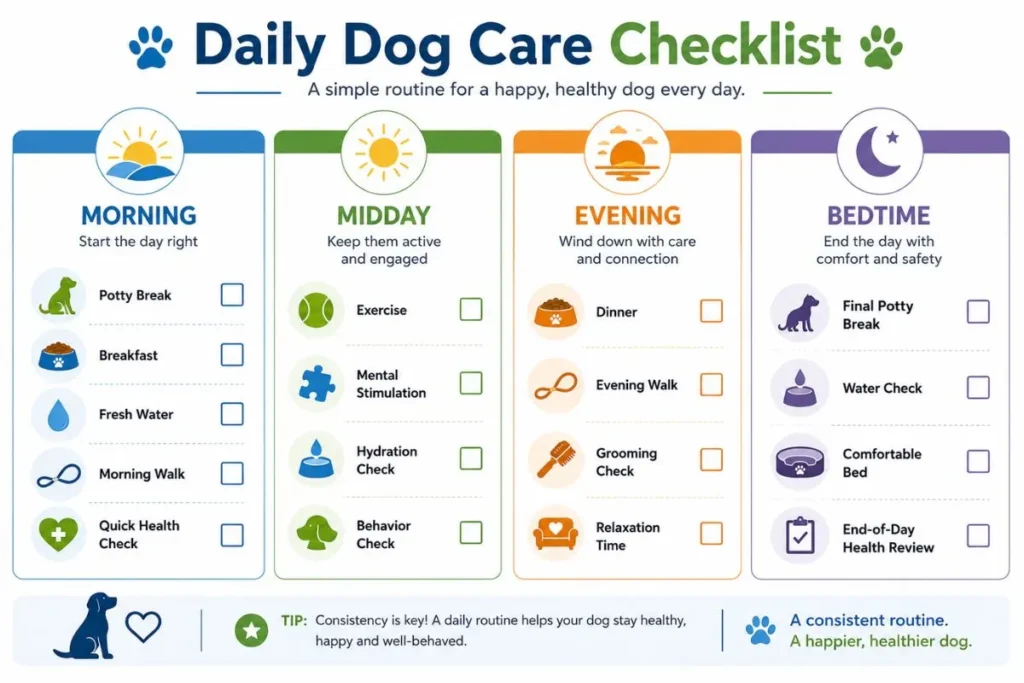
If you’re a new dog owner, remembering every task can feel overwhelming. A simple checklist helps ensure your dog’s basic needs are met consistently throughout the day.
The goal isn’t perfection. The goal is consistency.
Morning Checklist
✓ Fresh water available
✓ Potty break
✓ Breakfast
✓ Short walk or exercise
✓ Quick health check
✓ Positive interaction
Afternoon Checklist
✓ Water check
✓ Exercise or playtime
✓ Mental stimulation activity
✓ Bathroom break
✓ Behavior observation
Evening Checklist
✓ Dinner
✓ Walk or play session
✓ Grooming check
✓ Fresh water
✓ Relaxation time
Bedtime Checklist
✓ Final potty break
✓ Water available
✓ Comfortable sleeping area
✓ Quick end-of-day health review
Sample Daily Dog Care Schedule
Every dog is different, but the sample schedule below can help beginners create a consistent routine.
| Time | Activity |
| 7:00 AM | Potty break |
| 7:15 AM | Fresh water and breakfast |
| 7:45 AM | Morning walk |
| 12:00 PM | Water check and playtime |
| 1:00 PM | Mental stimulation activity |
| 5:30 PM | Evening walk |
| 6:00 PM | Dinner |
| 8:00 PM | Family time and relaxation |
| 10:00 PM | Final potty break |
| 10:15 PM | Bedtime |
This schedule is only an example. Adjust timing based on your dog’s age, breed, health, and your household routine.
There is no single daily schedule that works for every dog. The best routine is one that consistently meets your dog’s physical, mental, and emotional needs.
Common Daily Dog Care Mistakes New Owners Make
Even caring dog owners sometimes make mistakes, especially when they’re new to dog ownership.
Understanding these common mistakes can help you build a healthier routine.
1. Inconsistent Feeding Times
Dogs generally do best when meals happen at predictable times.
Changing feeding times every day can make it harder to:
- Monitor appetite
- Maintain digestive consistency
- Establish healthy routines
Better Approach
Feed meals at approximately the same time each day whenever possible.
2. Overfeeding Treats
Treats can be useful for training and bonding, but too many treats may contribute to:
- Weight gain
- Reduced appetite at mealtime
- Nutritional imbalance
Better Approach
Use treats in moderation and account for them within your dog’s overall diet.
3. Skipping Daily Exercise
Busy schedules often cause owners to skip walks or play sessions.
Over time, insufficient activity can contribute to:
- Boredom
- Restlessness
- Weight gain
- Destructive behaviors
Better Approach
Aim for consistent daily activity, even if exercise sessions need to be shorter on busy days.
4. Ignoring Changes in Water Intake
Many owners monitor food consumption but overlook drinking habits.
Changes in water intake can sometimes provide early clues about health concerns.
Better Approach
Pay attention to your dog’s normal drinking habits and note significant changes.
5. Missing Early Health Warning Signs
Small changes are often easier to overlook than major symptoms.
Examples include:
- Slight appetite changes
- Reduced enthusiasm
- Increased sleeping
- Mild behavior changes
Better Approach
Use a simple daily health check to become familiar with what is normal for your dog.
6. Not Providing Enough Mental Stimulation
Physical exercise is important, but dogs also need opportunities to think and problem-solve.
Without enrichment, some dogs may become bored.
Better Approach
Include:
- Puzzle toys
- Training sessions
- Scent games
- Interactive play
Mental stimulation doesn’t have to be complicated. Even a few minutes of problem-solving activities each day can help keep dogs engaged and satisfied. For additional enrichment options, check out our guide to the Best Interactive Dog Toys and discover activities that encourage healthy mental exercise.
7. Waiting Too Long to Seek Veterinary Advice
Some owners hope symptoms will simply disappear.
While minor issues sometimes improve on their own, ongoing symptoms should not be ignored.
Better Approach
Monitor symptoms carefully and contact a veterinarian when concerns persist or worsen.
10 Practical Daily Dog Care Tips for Beginners
If you’re just starting out, these tips can make daily dog care much easier.
1. Keep feeding times consistent.
2. Refresh water bowls every day.
3. Include both physical and mental exercise.
4. Spend a few minutes observing your dog daily.
5. Use a simple checklist until routines become habits.
6. Create a comfortable sleeping area.
7. Monitor appetite and water intake.
8. Schedule regular walks whenever possible.
9. Reward positive behavior consistently.
10. Focus on consistency rather than perfection.
One lesson many dog owners learn over time is that small daily habits often have a greater impact than occasional big efforts. Consistent feeding, exercise, observation, and interaction can make a significant difference in a dog’s long-term well-being.
Daily Routine Consistency Test
At the end of each day, ask yourself:
✓ Feeding completed on schedule?
✓ Fresh water available all day?
✓ Exercise completed?
✓ Mental stimulation provided?
✓ Health check completed?
Score Guide
5/5 = Excellent
4/5 = Good
3/5 = Routine needs improvement
2/5 or below = Review your daily care habits
This simple test takes less than a minute and can help you identify areas where your routine may need adjustments.
By using a checklist, following a consistent schedule, and avoiding common mistakes, you’ll create a routine that supports your dog’s health, happiness, and overall quality of life.
Daily Care Routine for Puppies, Adult Dogs, and Senior Dogs
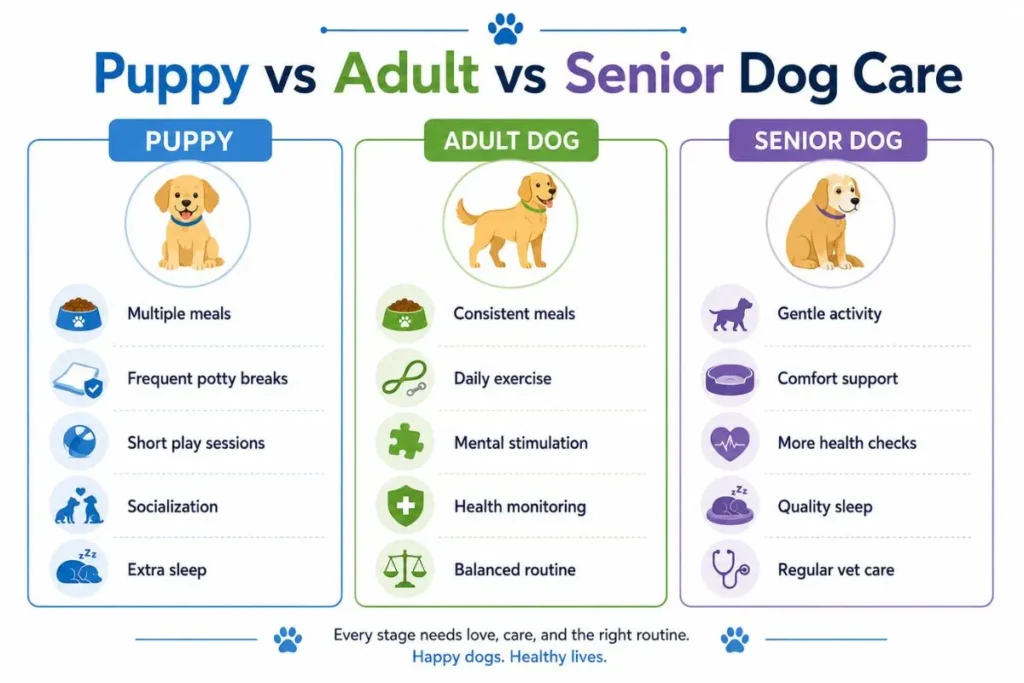
One of the biggest mistakes new dog owners make is assuming that every dog needs the same daily routine.
In reality, a puppy, an adult dog, and a senior dog often have very different care requirements.
While the basic principles of feeding, hydration, exercise, health monitoring, and sleep remain important, the way those needs are met can vary significantly throughout a dog’s life.
Puppy Daily Care Routine
Puppies grow rapidly and require more supervision than adult dogs.
During this stage, focus on:
- Frequent feeding
- Potty training
- Socialization
- Basic training
- Adequate sleep
Puppy Priorities
✓ Multiple meals per day
✓ Frequent potty breaks
✓ Short play sessions
✓ Positive social experiences
✓ Gentle exercise
✓ Basic obedience training
Common Puppy Mistakes
❌ Over-exercising
❌ Expecting adult-level behavior
❌ Inconsistent potty schedules
❌ Skipping socialization opportunities
Puppy Care Focus
A puppy’s daily routine should prioritize learning, development, and positive experiences rather than intense exercise.
Adult Dog Daily Care Routine
Most healthy adult dogs benefit from a balanced routine that includes exercise, mental stimulation, nutrition, and regular health monitoring.
Adult Dog Priorities
✓ Consistent feeding schedule
✓ Daily exercise
✓ Mental stimulation
✓ Social interaction
✓ Preventive health care
Adult Dog Care Focus
The goal is to maintain:
- Healthy weight
- Physical fitness
- Emotional well-being
- Long-term health
Most adult dogs thrive when daily activities happen on a predictable schedule.
Senior Dog Daily Care Routine
Senior dogs often require additional attention and adjustments.
As dogs age, they may experience changes in:
- Mobility
- Energy levels
- Sleep patterns
- Appetite
- Overall health
Senior Dog Priorities
✓ Comfortable exercise
✓ Health monitoring
✓ Joint support
✓ Quality sleep
✓ Regular veterinary care
Senior Dog Care Focus
Older dogs may still enjoy walks and playtime, but activities often need to be adapted to their comfort level.
Common Senior Dog Mistakes
❌ Expecting the same activity level as younger dogs
❌ Ignoring mobility changes
❌ Missing routine health checks
❌ Delaying veterinary visits
Many senior dogs remain active and happy when their routine is adjusted to match their changing needs. Small modifications often make a significant difference in comfort and quality of life.
Daily Dog Care Routine FAQs
What should I do for my dog every day?
Every dog should receive fresh water, appropriate meals, exercise, mental stimulation, bathroom breaks, basic health monitoring, and adequate rest each day. A consistent routine helps support physical health, emotional well-being, and good behavior while making it easier to notice potential health concerns early.
How do I create a daily routine for my dog?
Start with consistent feeding times, regular bathroom breaks, exercise sessions, and daily health checks. Build a schedule that fits both your dog’s needs and your lifestyle. The best routine is one that you can follow consistently while meeting your dog’s physical and mental needs.
Can dogs have the same routine every day?
Yes, most dogs thrive on consistency. Predictable feeding times, walks, play sessions, and sleep schedules can help reduce stress and create a sense of security. While occasional changes are normal, maintaining a consistent routine often supports better behavior and overall well-being.
How many times should I feed my dog daily?
Many healthy adult dogs do well with two meals per day, while puppies often require more frequent feeding. Feeding frequency may vary depending on age, activity level, health conditions, and veterinary recommendations. Consistent feeding schedules can make it easier to monitor appetite and digestion.
How much water should a dog drink daily?
Water needs vary based on factors such as size, weather, activity level, diet, and overall health. Dogs should always have access to fresh, clean water throughout the day. Rather than focusing only on exact amounts, owners should monitor for sudden increases or decreases in water consumption.
How much exercise does a dog need every day?
Exercise requirements vary significantly between dogs. Factors such as breed, age, energy level, and health condition all influence daily exercise needs. Most dogs benefit from regular physical activity combined with mental stimulation, while puppies and senior dogs often require age-appropriate adjustments.
How many hours should a dog sleep each day?
Sleep needs vary throughout a dog’s life. Puppies generally sleep the most because they are growing and developing, while adult dogs require substantial daily rest to maintain health and energy. Senior dogs may spend more time sleeping as they age and their activity levels naturally decrease.
How do I know if my dog is healthy?
Healthy dogs typically maintain a normal appetite, stable energy levels, healthy bathroom habits, and a bright, alert appearance. Consistent behavior, normal water intake, and a healthy coat are also positive signs. Sudden changes in appetite, energy, behavior, or bathroom habits should be monitored closely.
How often should I take my dog to the veterinarian?
Routine veterinary visits are an important part of preventive care. The ideal frequency depends on your dog’s age, health status, and veterinary recommendations. Puppies and senior dogs often require more frequent checkups than healthy adult dogs.
What happens if a dog does not have a routine?
Dogs without a consistent routine may become confused, stressed, or develop unwanted behaviors. Irregular feeding, exercise, and sleep schedules can also make it more difficult to monitor health changes and establish healthy habits. A predictable routine helps dogs feel secure and supports overall well-being.
What is the most important part of a daily dog care routine?
Food, water, exercise, mental stimulation, and health monitoring are all important, but consistency is often the foundation of a successful routine. Following a predictable schedule helps dogs feel secure while making it easier for owners to notice changes in health or behavior.
What daily health checks should I do on my dog?
A simple daily health check can include observing your dog’s appetite, energy level, water intake, bathroom habits, eyes, ears, coat, and overall behavior. These quick observations take only a few minutes and can help you identify potential health concerns before they become more serious.
Final Thoughts
A daily dog care routine doesn’t need to be complicated to be effective. The most successful routines are often simple, consistent, and tailored to a dog’s individual needs.
By providing proper nutrition, fresh water, daily exercise, mental stimulation, health monitoring, grooming, and adequate rest, you can help support your dog’s long-term health and overall well-being.
Remember that every dog is unique. Factors such as age, breed, activity level, lifestyle, and health conditions can all influence what an ideal routine looks like. Use the guidance in this article as a starting point, then adjust the routine based on your dog’s specific needs.
Most importantly, focus on consistency rather than perfection. Small daily habits repeated over time often have the greatest impact on a dog’s health, behavior, and quality of life.
If you’re new to dog ownership, continue learning by exploring our guides on dog feeding schedules, dog grooming, dog hygiene, and the signs of a healthy dog. Building a consistent daily dog care routine today can help your dog stay healthier, happier, and more comfortable for years to come.