
Dog grooming helps keep dogs clean, healthy, comfortable, and stress-free. Regular grooming includes brushing, bathing, nail trimming, ear cleaning, and basic hygiene care. It also helps reduce shedding, prevent matting, improve skin health, and support overall dog wellness.
Many beginner dog owners feel nervous about grooming at home. Some worry about trimming nails incorrectly, while others feel overwhelmed by grooming tools or bathing routines. The good news is that beginner dog grooming does not need to feel difficult or stressful.
With simple routines, patience, and the right grooming tools, home dog grooming can become a safe and positive experience for both you and your dog.
In this beginner-friendly dog grooming guide, you will learn:
- How to groom a dog at home safely
- Essential dog grooming tools for beginners
- How often dogs should be groomed
- Common grooming mistakes to avoid
- Stress-free grooming tips for nervous dogs
By the end of this guide, you will understand how to build a calm, safe, and healthy grooming routine that keeps your dog clean, comfortable, and happy.
What Is Dog Grooming?
Dog grooming is the process of keeping a dog clean, healthy, and comfortable through regular care routines. A basic dog grooming routine usually includes brushing, bathing, nail trimming, ear cleaning, and dental care.
Many beginner dog owners think grooming only means giving a dog a bath or trimming fur. But proper dog grooming involves much more than appearance alone.
Regular grooming helps:
- Reduce shedding
- Prevent painful matting
- Support healthy skin and coat care
- Improve overall hygiene
- Keep dogs more comfortable
- Help owners notice health problems earlier
Basic dog grooming tasks usually include:
- Brushing the coat to remove loose fur and tangles
- Bathing with dog-safe shampoo
- Trimming nails safely
- Cleaning the ears gently
- Maintaining dental hygiene
- Checking the skin and coat for irritation or parasites
A healthy grooming routine can also improve a dog’s daily comfort. Dogs with tangled fur, dirty ears, or overgrown nails may feel irritated or uncomfortable over time.
Different dogs also need different grooming routines. Factors like breed, coat type, shedding level, activity level, and lifestyle all affect how often a dog should be groomed.
For example, long-haired dogs often need more brushing to prevent matting. Short-haired breeds may need less coat maintenance, but they still benefit from regular hygiene care and bathing.
Home dog grooming is also a great way to build trust with your dog. Calm grooming sessions, gentle handling, and positive reinforcement can help dogs feel safer and more relaxed during routine care.
For beginners, the goal is not perfect grooming right away. Instead, focus on building a calm, safe, and consistent grooming routine over time.
If you are new to dog care, learning a simple dog hygiene routine at home can help you better understand your dog’s daily needs. You can also explore guides on how to clean dog teeth at home to improve your dog’s overall dental health and hygiene.
Why Grooming Is Important for Dogs
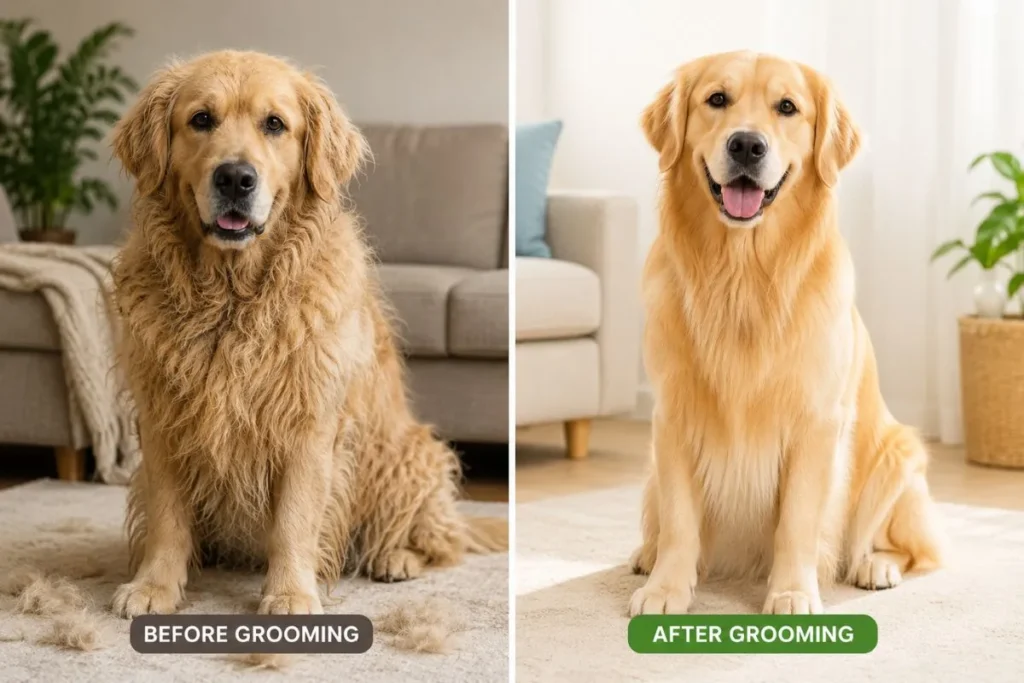
Regular grooming is an important part of keeping dogs clean, healthy, and comfortable. Many people think grooming is only about appearance, but it also supports a dog’s overall health and daily comfort.
A healthy dog grooming routine helps:
- Reduce shedding
- Support healthy skin and coat care
- Improve hygiene
- Prevent odor buildup
- Keep dogs more comfortable
- Lower the risk of some skin and ear problems
One of the biggest benefits of dog grooming is maintaining healthy skin and coat condition. Regular brushing removes loose fur, dirt, and small tangles before they become painful mats.
Brushing also spreads natural oils across the coat. This helps keep the fur softer, cleaner, and healthier over time.
Bathing with a dog-safe shampoo can also help remove:
- Dirt and debris
- Excess oil buildup
- Outdoor allergens
- Bad odors
This improves overall hygiene and helps dogs feel cleaner and fresher.
Consistent grooming may also help prevent common problems such as:
- Excess fur around the home
- Skin irritation
- Ear discomfort caused by dirt buildup
- Overgrown nails
- Poor coat condition
For beginner dog owners, grooming sessions can also become valuable bonding moments. Calm brushing sessions and gentle handling often help dogs feel safer and more relaxed during routine care.
Another important reason grooming matters is early health monitoring. Regular grooming allows owners to check their dog’s skin, ears, coat, teeth, and paws more closely.
During grooming, you may notice signs such as:
- Dry or irritated skin
- Ear redness
- Fleas or ticks
- Unusual lumps or bumps
- Changes in coat texture
- Bad breath or dental problems
Finding these issues early may help prevent bigger health problems later.
Regular grooming also supports preventive pet care because owners may notice skin irritation, ear problems, lumps, or coat changes earlier.
Many new dog owners also underestimate how much grooming affects comfort. Dogs with tangled fur, dirty ears, or long nails may feel uncomfortable during normal activities like walking, resting, or playing.
A regular grooming routine helps dogs feel:
- Cleaner
- More comfortable
- Less itchy
- More relaxed
Even simple habits like brushing regularly or cleaning paws after walks can improve long-term dog hygiene and wellness.
Home dog grooming also helps beginners better understand their dog’s daily care needs. Over time, simple grooming habits make it easier to recognize signs of a healthy dog and maintain a better care routine.
Most importantly, beginner grooming should focus on patience and consistency. Small and positive grooming sessions usually work much better than long stressful routines that overwhelm nervous dogs.
Essential Dog Grooming Tools for Beginners
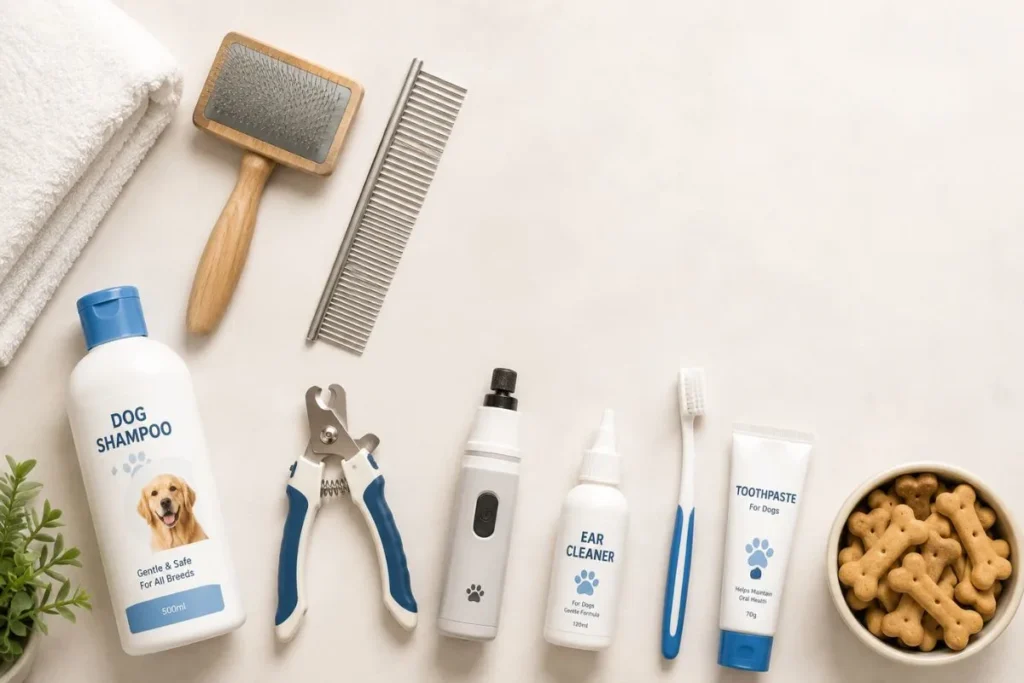
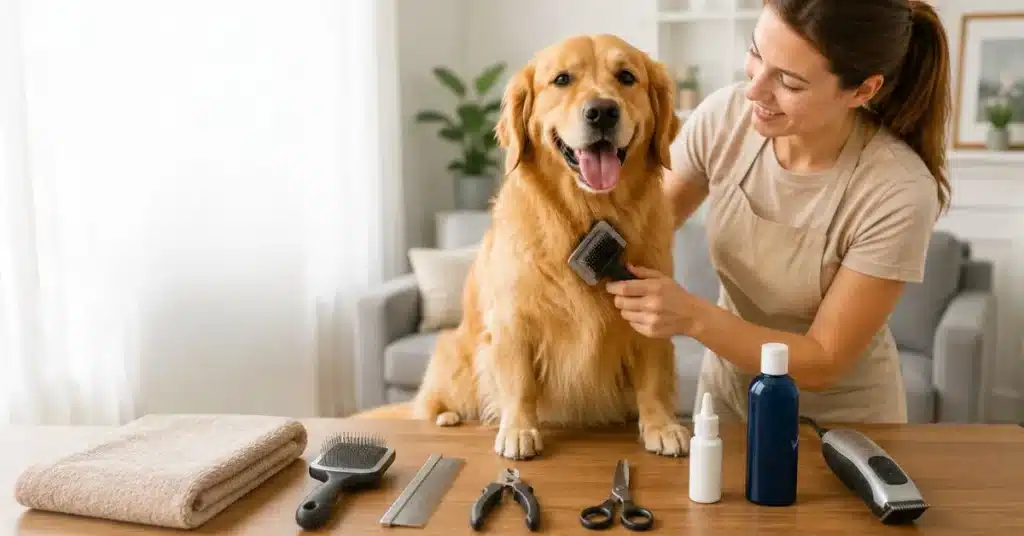
Starting dog grooming at home becomes much easier when you have the right tools ready. Many beginner dog owners feel overwhelmed by the huge number of grooming products online. But the truth is simple — you only need a few basic tools to start a safe and comfortable grooming routine.
The right grooming tools can help:
- Make grooming easier
- Reduce stress
- Improve safety
- Keep your dog more comfortable
- Support better hygiene and coat care
You do not need professional grooming equipment right away. Instead, focus on simple tools that help with daily grooming and hygiene.
Brushes and Combs
Brushing is one of the most important parts of dog grooming. It helps remove loose fur, dirt, tangles, and dead hair before they become bigger problems.
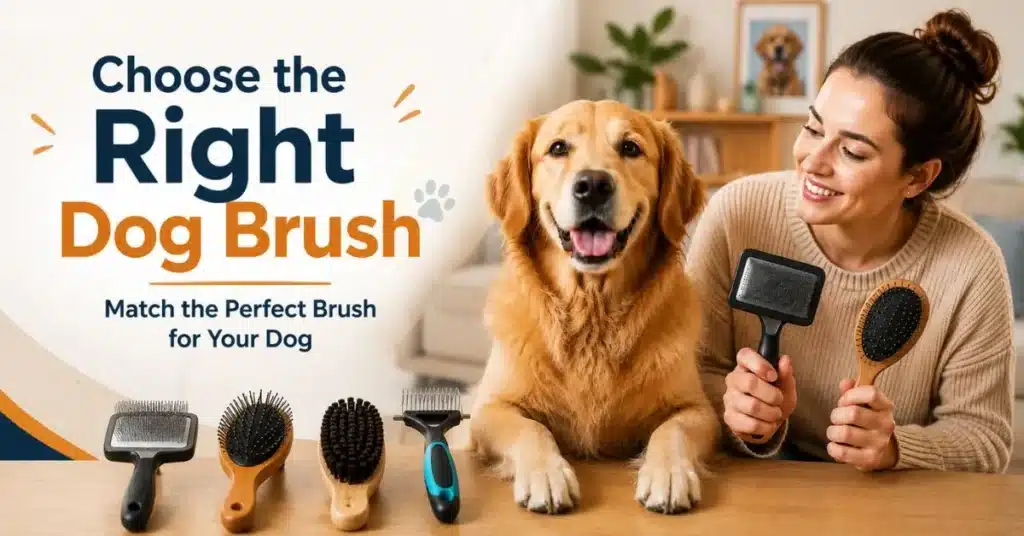
Different dogs need different brushes based on coat type. However, most beginners can start with a few simple tools:
- Slicker brushes
- Bristle brushes
- Deshedding tools
- Wide-tooth combs
Slicker brushes work well for many medium and long-haired dogs. They help remove loose fur and small tangles gently.
Dogs with heavy shedding may also benefit from deshedding tools. These tools help remove loose undercoat fur and reduce extra shedding around the home.
If you are unsure which tools are best for your dog, exploring beginner-friendly dog grooming tools can help simplify the process.
Dog Shampoo
Bathing is another important part of home dog grooming. Beginners should always use shampoos made specifically for dogs.
Human shampoo may cause:
- Dry skin
- Itching
- Irritation
- Coat problems
A gentle dog shampoo helps:
- Remove dirt and odor
- Support healthy skin
- Keep the coat clean
- Reduce buildup on the skin
Dogs with sensitive skin may benefit from oatmeal-based or hypoallergenic shampoos.
Try to avoid harsh or heavily scented products. Simple and gentle shampoos are usually better for beginner grooming routines.
Nail Clippers and Nail Grinders
Nail trimming is one of the most stressful grooming tasks for beginners. Many dogs dislike paw handling at first, and owners often worry about trimming nails too short.
Basic nail care tools include:
- Nail clippers
- Nail grinders
- Styptic powder for emergencies
Many beginners prefer nail grinders because they trim nails slowly and gradually. However, some dogs may dislike the sound or vibration at first.
The safest approach is to work slowly and reward calm behavior during the session. Even trimming a few nails at a time can help nervous dogs feel more comfortable.
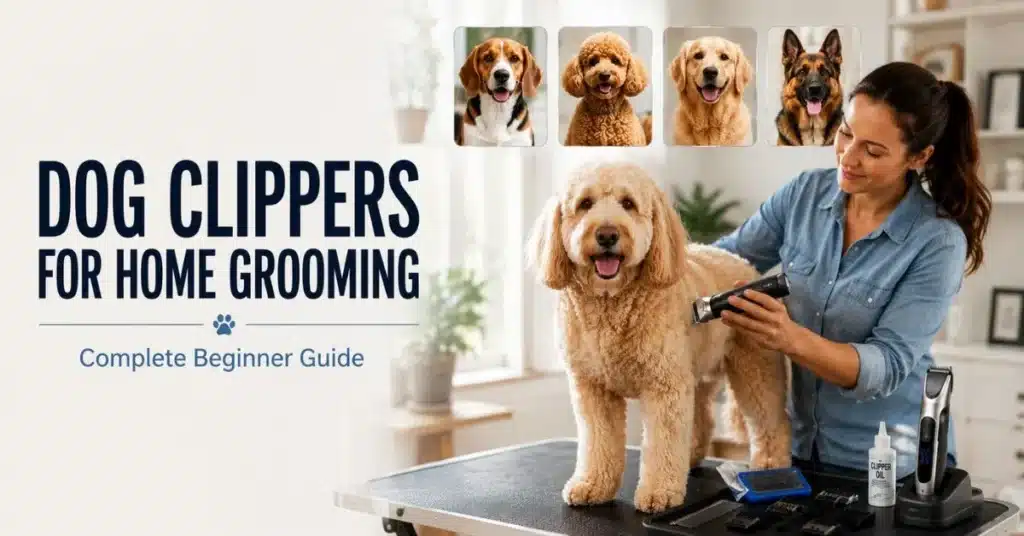
Dog Clippers
Not every beginner needs dog clippers immediately. Short-haired breeds often need less trimming than long-haired dogs.
However, clippers can be helpful for dogs with:
- Thick coats
- Long fur
- Regular trimming needs
When choosing dog clippers, beginners should look for:
- Low-noise operation
- Comfortable grip
- Adjustable guard lengths
- Low heat buildup
Loud or overheating clippers may make grooming stressful for anxious dogs. Quieter grooming tools usually create a calmer experience.
Towels and Drying Tools
Drying the coat properly after bathing is an important part of dog hygiene. Wet fur trapped for too long may lead to odor, irritation, or skin discomfort.
Helpful drying tools include:
- Absorbent dog towels
- Microfiber towels
- Low-noise pet dryers
- Drying gloves
Some dogs tolerate air drying well. Others feel more comfortable with gentle towel drying.
Avoid using very hot air near sensitive skin areas because excessive heat may cause discomfort.
Ear Cleaning and Dental Care Supplies
Dog grooming involves more than brushing and bathing. Regular ear cleaning and dental care also help support long-term hygiene and comfort.
Helpful beginner supplies include:
- Dog ear cleaner
- Cotton pads
- Dog toothbrush
- Dog toothpaste
Never use human toothpaste on dogs because some ingredients may be unsafe for pets.
Dog-safe dental products help support better oral hygiene and reduce plaque buildup over time.
Regular ear checks may also help owners notice:
- Redness
- Irritation
- Strong odor
- Excess wax buildup
Learning simple dog dental care at home can improve your dog’s long-term health and hygiene routine.
Treats and Positive Reinforcement
One of the most overlooked grooming tools is positive reinforcement. Treats help many dogs associate grooming with comfort instead of fear or stress.
During grooming sessions:
- Reward calm behavior
- Keep sessions short
- Avoid forcing nervous dogs
- Build positive experiences slowly
Some dogs only tolerate a few minutes of grooming at first. That is completely normal.
Building trust slowly usually works much better than rushing the process. Positive reinforcement can be especially helpful for puppies and anxious dogs.
Creating a Calm Grooming Environment
Many beginner grooming problems happen because of the environment, not the tools.
Loud sounds, slippery floors, and rushed handling may increase stress and make dogs uncomfortable.
A calmer grooming setup may include:
- Quiet rooms
- Non-slip mats
- Good lighting
- Comfortable room temperature
- Fewer distractions
Starting in a calm environment helps dogs feel safer and makes grooming easier overall.
For beginners, the goal is not perfect grooming right away. Focus on building a safe, positive, and consistent routine that helps your dog become more comfortable over time.
How to Groom a Dog at Home Step by Step
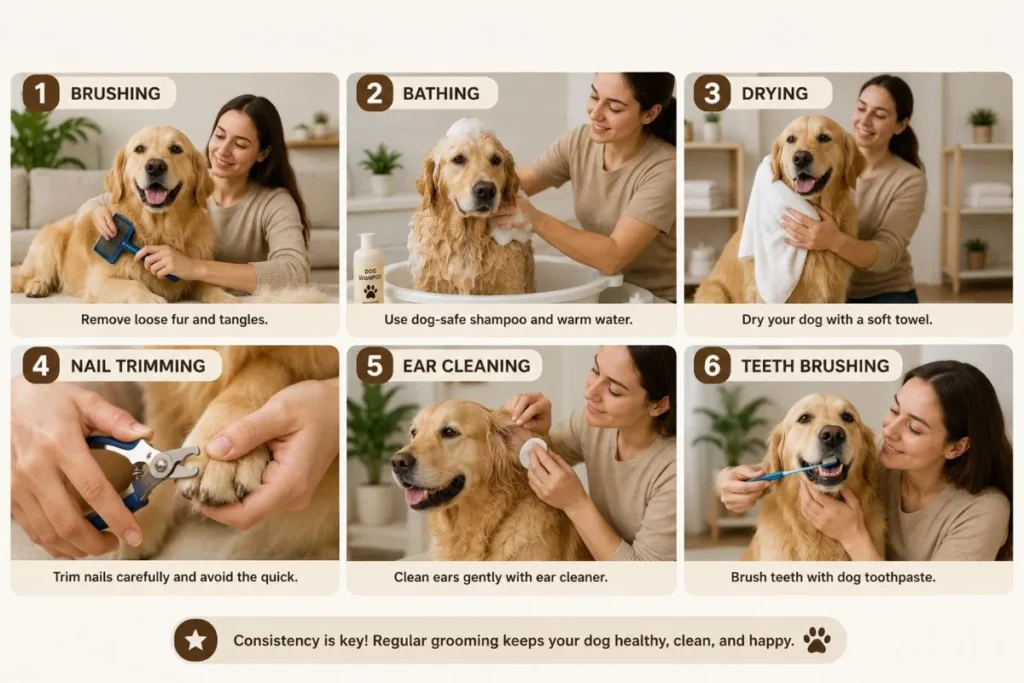
owners worry about making mistakes or hurting their dogs during grooming.
The good news is that home dog grooming becomes much easier when you break the process into small and simple steps. You do not need professional-level skills to build a safe and healthy grooming routine.
Instead of trying to do everything perfectly right away, focus on creating calm and positive experiences. Most dogs need time to adjust to brushing, bathing, nail trimming, and handling.
Starting slowly helps reduce stress and build better long-term grooming habits.
Step 1 – Brush Your Dog Properly
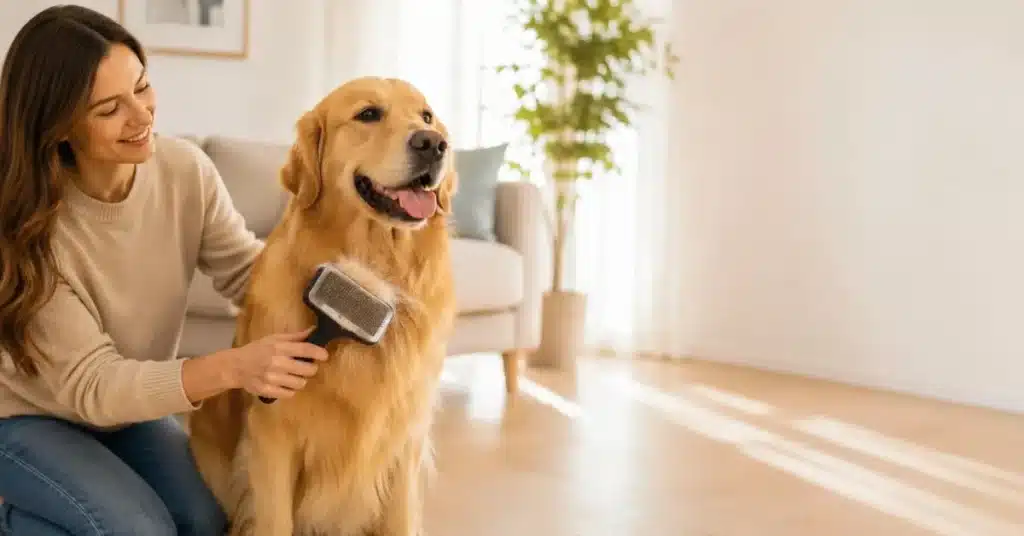
Brushing is usually the easiest place for beginners to start. It removes loose fur, dirt, and tangles while helping dogs relax before bathing or trimming.
Before brushing, let your dog settle down and feel comfortable in the grooming area. Treats and gentle praise can help nervous dogs feel safer during the session.
When brushing your dog:
- Start around the back and shoulders
- Brush in the direction of hair growth
- Avoid pulling tangled fur aggressively
- Take short breaks if your dog becomes anxious
Different dogs need different brushing routines. Long-haired breeds often need more brushing to prevent matting. Short-haired dogs may only need light coat care a few times each week.
Regular brushing helps:
- Reduce shedding
- Prevent painful tangles
- Improve coat care
- Spread natural skin oils
- Remove loose dirt and fur
If your dog sheds heavily, a deshedding tool may help remove loose undercoat fur more effectively. You can also explore tips on how to reduce dog shedding at home for better coat maintenance.
Some dogs dislike brushing during the first few sessions. That is completely normal. Short and positive grooming sessions usually work much better than long stressful routines.
Over time, regular brushing often helps dogs feel calmer during grooming.
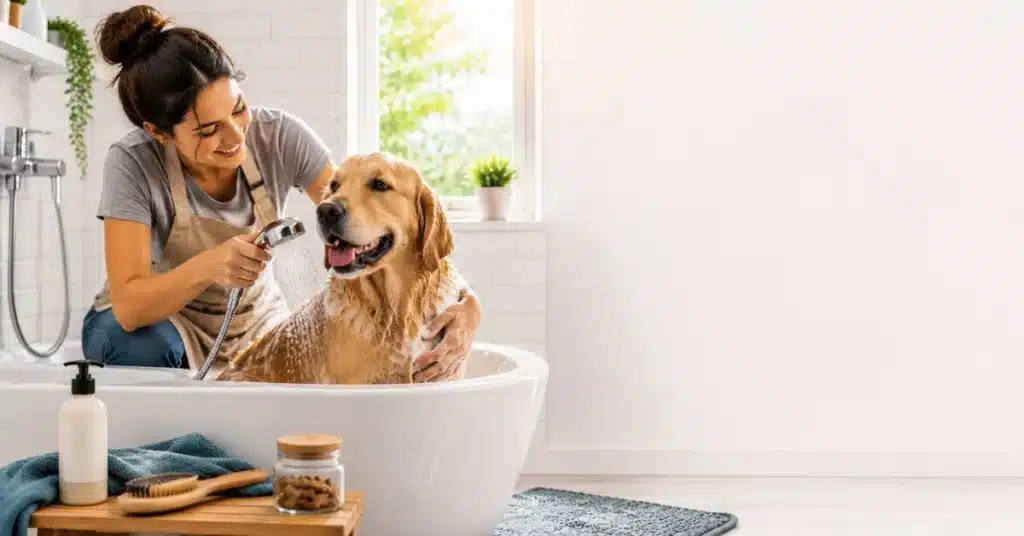
Step 2 – Bathe Your Dog Safely
Bathing helps remove dirt, odor, allergens, and buildup from your dog’s skin and coat. However, bathing too often may dry out the skin and remove healthy natural oils.
Preparing properly before the bath can make the process much easier for beginners.
Before starting the bath:
- Gather towels and shampoo first
- Use lukewarm water
- Place a non-slip mat in the tub
- Keep the room calm and quiet
Wet the coat gently and avoid spraying water directly near the eyes, ears, or nose. Once the fur is fully wet, apply a dog-safe shampoo and massage it carefully into the coat.
Pay extra attention to areas such as:
- Dirty paws
- Underbelly
- Neck area
- Tail region
Never use human shampoo on dogs because it may irritate the skin or damage the coat’s natural balance.
Dogs with sensitive skin may benefit from gentler products like the best dog shampoo for sensitive skin.
Rinse the coat thoroughly because leftover shampoo may cause itching or dryness later.
Some beginner dog owners bathe dogs too often because they want to keep them extra clean. However, overbathing may lead to dry skin and coat problems.
Learning how often you should bathe your dog can help you build a healthier grooming routine.
If your dog becomes nervous during baths, speak calmly and reward relaxed behavior. Over time, this helps many dogs feel safer during grooming.
Step 3 – Dry the Coat Carefully
Drying the coat properly is an important part of home dog grooming. Damp fur trapped for too long may lead to odor, irritation, or skin discomfort.
Start by using an absorbent dog towel to remove excess water gently. Avoid rubbing the fur too aggressively because wet coats tangle more easily.
Some short-haired dogs tolerate air drying well. However, dogs with thick coats may need extra drying support after bathing.
If you use a pet dryer:
- Use low heat settings
- Keep airflow moving continuously
- Avoid sensitive facial areas
- Watch for signs of overheating
At first, some dogs may feel nervous around dryers because of the sound. Introducing the dryer slowly often helps anxious dogs adjust more comfortably.
For many beginners, towel drying and gentle brushing are enough for regular grooming sessions. Following a dog hygiene checklist for beginners can also help simplify the process.
Step 4 – Trim the Nails Safely
Nail trimming is one of the biggest fears for beginner dog owners. Many people worry about cutting nails too short and causing pain or bleeding.
The safest approach is to trim small amounts slowly instead of shortening nails too quickly.
Preparing properly before trimming can reduce stress and improve safety.
Before trimming:
- Make sure the lighting is good
- Keep your dog calm
- Hold the paws gently
- Reward calm behavior often
Dog nails contain a sensitive inner area called the quick. Cutting into the quick may cause bleeding and discomfort. Because of this, beginners should trim conservatively at first.
If you are new to nail care, following a beginner-friendly dog nail trimming guide can help reduce the risk of over trimming and nail injuries.
Signs your dog’s nails may need trimming include:
- Clicking sounds on hard floors
- Difficulty walking comfortably
- Nails touching the ground too much
Some beginners prefer nail grinders because they shorten nails gradually and reduce the risk of sudden over-cutting.
If your dog becomes stressed during nail trimming, trimming only one or two nails at a time is completely okay.
Building trust slowly usually works much better than rushing the process. You can also explore a dog nail care guide for additional beginner tips.
Step 5 – Clean the Ears Gently
Ear cleaning helps reduce dirt buildup and lowers the risk of irritation or ear infections.
Dogs with floppy ears or active outdoor lifestyles may need more frequent ear checks.
Healthy ears usually appear:
- Clean
- Light pink
- Free from strong odor
- Without heavy wax buildup
When cleaning your dog’s ears:
- Use a dog-safe ear cleaner
- Apply the solution carefully
- Wipe gently with cotton pads
- Avoid pushing objects deep into the ear canal
Beginners should never insert cotton swabs deep inside a dog’s ears because this may increase injury risk.
Some signs may require veterinary attention, including:
- Strong odor
- Redness
- Swelling
- Excessive scratching
- Dark discharge
Regular ear checks help owners notice problems earlier before they become more serious. You can also learn more through a beginner-friendly dog ear cleaning guide.
Step 6 – Brush the Teeth
Dental care is often overlooked in beginner grooming routines. However, oral hygiene plays a major role in long-term dog health.
Poor dental care may lead to:
- Bad breath
- Plaque buildup
- Gum irritation
- Tooth problems
Start slowly by helping your dog become comfortable with mouth handling before brushing. Learning more about proper dog dental health can help prevent common oral hygiene problems in dogs.
For beginner dental care, use:
- A dog toothbrush
- Dog-safe toothpaste
- Gentle circular brushing motions
Never use human toothpaste because some ingredients may be harmful to dogs.
Many beginners only manage short brushing sessions at first. That is completely normal. Even small improvements in dental care can support healthier oral hygiene over time.
Dental treats and chewing toys may also help support oral health. However, they should not fully replace brushing.
Building Confidence as a Beginner
Many first-time dog owners expect grooming to feel easy immediately. In reality, most dogs need time to adjust to grooming tools, handling, and routines.
The most important beginner dog grooming tips are simple:
- Stay patient
- Keep sessions short
- Reward calm behavior
- Avoid forcing nervous dogs
- Focus on consistency instead of perfection
Some grooming sessions will go smoothly, while others may feel frustrating at first. That is completely normal for beginners.
Over time, positive grooming experiences help many dogs become calmer and more cooperative during grooming.
The goal is not professional perfection. The goal is building a safe, comfortable, and healthy grooming routine that supports your dog’s long-term well-being.
Dog Grooming Safety Tips for Beginners
Safety should always come first during home dog grooming, especially for beginners. Many first-time dog owners worry about hurting their dog, using the wrong products, or making grooming too stressful. These concerns are completely normal.
The good news is that most grooming accidents can be avoided. Calm handling, safe tools, and simple routines can make grooming much safer and easier.
A safe grooming experience does more than protect your dog physically. It also helps build trust and confidence over time. Dogs that feel calm during grooming usually become easier to handle in future sessions.
Below are some important dog grooming safety tips every beginner should know.
Avoid Rushing the Grooming Process
One of the most common dog grooming mistakes is trying to finish everything too quickly. Rushed grooming often increases stress for both the owner and the dog.
When dogs feel overwhelmed, they may:
- Move suddenly
- Pull away
- Resist handling
- Become scared of grooming tools
Instead of forcing long sessions, focus on short and calm routines.
For example:
- Brush for 5–10 minutes
- Trim only a few nails at a time
- Take breaks during stressful moments
- Reward calm behavior often
Slow grooming sessions usually create better long-term habits than overwhelming dogs with too much handling at once.
Never Use Human Shampoo on Dogs
Many beginners think human shampoo is safe for dogs. However, this is one of the most common beginner grooming mistakes.
Human shampoos are made for different skin pH levels. Because of this, they may cause:
- Dry skin
- Itching
- Skin irritation
- Coat problems
- Increased sensitivity
Always use shampoos made specifically for dogs, especially if your dog has sensitive skin.
Gentle dog shampoos help maintain healthier skin balance and lower the risk of irritation after bathing.
If your dog struggles with odor or dirt buildup, following a simple dog hygiene routine at home may help reduce excessive bathing.
Be Careful Around the Nails
Nail trimming causes anxiety for many beginner dog owners. Cutting too close to the quick may lead to nail bleeding and discomfort.
The safest approach is to trim small amounts slowly instead of shortening nails too quickly.
Before trimming:
- Use good lighting
- Keep your dog calm
- Hold the paws gently
- Reward calm behavior often
If your dog has dark nails, the quick may be difficult to see. In that case, trimming conservatively is usually safer.
Keeping styptic powder nearby may also help stop minor bleeding if accidental over-trimming happens.
Many dogs dislike paw handling at first. That is completely normal. Positive reinforcement and slow progress usually improve cooperation over time.
Prevent Clipper Burns and Overheating
Dog clippers may become hot during long grooming sessions, especially when trimming thick coats. Overheated clippers may cause discomfort or skin irritation if not checked regularly.
To improve clipper safety:
- Touch clipper blades often to check temperature
- Use low-heat settings when possible
- Take breaks during long grooming sessions
- Avoid pressing clippers too hard against the skin
Dogs with sensitive skin may become uncomfortable more quickly, especially around thin coat areas.
If your dog becomes restless during clipping, stop for a short break before continuing. This helps reduce stress and prevent overheating problems.
Protect Sensitive Areas
Some parts of a dog’s body need extra care during grooming.
Sensitive areas include:
- Eyes
- Ears
- Paw pads
- Belly
- Face
- Tail area
When bathing your dog:
- Avoid spraying water directly into the ears
- Keep shampoo away from the eyes
- Use gentle wiping motions around the face
During brushing or clipping, avoid pulling fur roughly around delicate skin areas.
Working slowly around sensitive areas helps dogs feel safer and lowers the risk of irritation or injury.
Watch for Signs of Stress or Anxiety
Many beginner grooming problems happen because owners miss early signs of stress.
Signs your dog may feel overwhelmed include:
- Heavy panting
- Trembling
- Trying to escape
- Lip licking
- Whining
- Tail tucked tightly
- Refusing treats
If these signs appear:
- Pause the grooming session
- Speak calmly
- Offer treats
- Allow short breaks
- Continue slowly later
For nervous dogs, shorter and more frequent grooming sessions usually work much better than long stressful routines.
Creating a positive grooming experience is just as important as completing the grooming itself.
Learning to recognize early dog stress signals can help owners create calmer and safer grooming experiences.
Avoid Overbathing
Some beginner dog owners believe frequent bathing keeps dogs healthier. However, overbathing may dry out the skin and damage natural coat oils.
Bathing frequency depends on:
- Coat type
- Activity level
- Skin condition
- Lifestyle
Dogs that spend more time outdoors may need more cleaning. Indoor dogs with healthy coats often require fewer baths.
Using grooming wipes or cleaning paws between baths may help maintain hygiene without over-washing the skin.
Keep Grooming Tools Clean
Dirty grooming tools may spread bacteria, trap fur, and irritate the skin over time.
Clean these tools regularly:
- Brushes
- Combs
- Nail clippers
- Clippers
- Towels
Removing trapped fur and buildup helps tools work better and improves overall grooming hygiene.
Clean grooming equipment also lowers the risk of skin irritation and odor problems during future grooming sessions.
Create a Calm Grooming Environment
A calm environment can make dog grooming much safer and less stressful.
Helpful adjustments include:
- Quiet rooms
- Good lighting
- Non-slip grooming surfaces
- Comfortable room temperature
- Fewer distractions
Dogs usually respond better when grooming feels calm and predictable instead of rushed or chaotic.
Many beginners underestimate how much the environment affects grooming behavior. Even small changes like lowering noise levels or using treats can improve cooperation.
Over time, calm and positive grooming experiences help many dogs feel more relaxed during routine care.
How Often Should You Groom Your Dog?
One of the most common questions beginner dog owners ask is how often dogs should be groomed. The answer depends on several factors, including coat type, breed, activity level, shedding level, and lifestyle.
Some dogs need frequent brushing and regular coat maintenance. Others only need simple grooming every few weeks.
The goal of a healthy grooming routine is consistency, not excessive grooming. Small and regular grooming sessions are usually safer and less stressful than long grooming sessions done only occasionally.
Different dogs need different grooming schedules because every coat type is different.
For example:
- Long-haired dogs often need more brushing to prevent matting
- Double-coated breeds may shed heavily during seasonal changes
- Active outdoor dogs may need more frequent cleaning
- Short-haired dogs usually need lighter coat care
Regular grooming helps support:
- Healthy skin and coat care
- Better hygiene
- Shedding control
- Odor management
- Overall comfort
Brushing frequency often depends on coat thickness and shedding level. Dogs with thick or long coats may need brushing several times each week.
Short-haired dogs may only need light brushing occasionally. However, regular brushing still helps remove loose fur and dirt.
Bathing frequency also varies between dogs. Some dogs need more frequent baths because of outdoor activity or dirt buildup. Others only need occasional bathing to stay clean and comfortable.
However, overbathing may dry out the skin and damage natural coat oils. Learning how often you should bathe your dog can help you build a healthier grooming routine.
Nail care is another important part of dog grooming frequency. Dogs with overgrown nails may feel uncomfortable when walking or playing.
Checking nails regularly helps prevent:
- Walking discomfort
- Nail damage
- Paw pressure problems
Ear cleaning and dental care should also become part of your grooming routine. Simple hygiene habits often make a big difference in long-term dog health and comfort.
For beginners, creating a simple routine is usually the best approach. Following a dog daily care checklist can help you stay organized and avoid missing important grooming tasks.
Over time, regular grooming becomes easier for both the owner and the dog. The most important thing is building a calm, safe, and manageable routine that supports your dog’s long-term well-being.
Beginner Dog Grooming Tips for a Stress-Free Experience
Creating a stress-free grooming routine is one of the best things beginner dog owners can do. Calm and positive grooming experiences help dogs feel safer, more relaxed, and easier to handle over time.
Many dogs feel nervous during their first grooming sessions. New sounds, unfamiliar tools, and extra handling may feel overwhelming at first. However, patience and consistency usually make grooming much easier over time.
One of the best dog grooming tips for beginners is to start slowly. Trying to do too much during one session may increase stress for both the dog and the owner.
Helpful beginner grooming habits include:
- Start with short grooming sessions
- Use treats and praise often
- Keep routines predictable
- Groom during calm periods
- Stay patient and relaxed
- End each session positively
Positive reinforcement plays a big role in stress-free dog grooming. Rewarding calm behavior helps many dogs associate grooming with comfort instead of fear.
Using the best dog training treats for positive reinforcement may also help nervous dogs feel more comfortable during brushing, bathing, or nail trimming sessions.
A calm grooming environment can make a huge difference as well. Quiet rooms, gentle handling, and fewer distractions often help dogs stay relaxed during grooming.
For example, many dogs respond better when:
- Grooming happens in a quiet space
- Sessions stay short and calm
- Owners speak in a soft voice
- Breaks are allowed during stressful moments
Consistency is also important. Dogs usually become calmer once they understand the routine and know what to expect during grooming sessions.
Socialization may also improve grooming behavior. Dogs that feel comfortable around handling, sounds, and new experiences often adjust to grooming more easily.
Learning how to socialize a dog properly may help reduce fear and anxiety during grooming sessions.
It is completely normal for early grooming sessions to feel imperfect. Many beginners expect professional-level results immediately, but grooming confidence takes time for both the owner and the dog.
The goal of beginner dog grooming is not perfection. The goal is building a calm, safe, and healthy care routine that improves your dog’s comfort, hygiene, and overall well-being over time.
Common Dog Grooming Mistakes Beginners Should Avoid
Many beginner dog grooming mistakes happen because owners try to do too much too quickly. Learning about these problems early can help you build a safer and more comfortable grooming routine.
Small grooming mistakes may lead to:
- Skin irritation
- Grooming anxiety
- Coat problems
- Extra stress
- Poor hygiene habits
The good news is that most beginner grooming mistakes are easy to avoid with patience, simple routines, and the right grooming tools.
Using the Wrong Grooming Tools
Not all grooming tools work for every dog. Different coat types need different brushes, shampoos, and clippers.
Using the wrong grooming tools may:
- Pull fur painfully
- Irritate the skin
- Increase anxiety
- Damage the coat
Many beginners also buy professional grooming tools too early. However, simple beginner-friendly grooming tools are usually better for home grooming.
Gentle and easy-to-use tools often create a safer experience for both the dog and the owner.
Using Human Shampoo or Toothpaste
Many beginners think human products are safe for dogs. However, this is one of the most common dog grooming mistakes.
Human shampoo may cause:
- Dry skin
- Itching
- Skin irritation
- Coat problems
Human toothpaste may also contain ingredients that are unsafe for dogs.
If you are unsure about dental products, learning can you use human toothpaste on dogs may help you avoid common hygiene mistakes.
Always choose products made specifically for dogs whenever possible.
Following a proper dog hygiene routine at home may also help reduce skin and coat problems over time.
Skipping Regular Brushing
Some owners only brush their dogs before bathing. However, regular brushing is important for healthy coat maintenance.
Consistent brushing helps prevent:
- Matting
- Excess shedding
- Dirt buildup
- Tangled fur
Brushing also spreads natural oils across the coat. This helps support healthier skin and better coat condition.
Short brushing sessions several times each week usually work better than occasional long grooming sessions.
Grooming Only When the Dog Looks Dirty
Waiting until grooming becomes absolutely necessary often makes grooming sessions more stressful.
For example, tangled fur, dirty ears, or overgrown nails may make dogs uncomfortable during grooming.
Small and regular grooming routines usually work much better than rare and stressful grooming sessions.
Consistency also helps dogs become more comfortable with grooming tools and handling over time.
Rushing Through Grooming Sessions
Rushed grooming is another common beginner mistake. Trying to finish grooming too quickly may increase stress and anxiety.
When dogs feel overwhelmed, they may:
- Pull away
- Resist handling
- Become nervous around grooming tools
- Fear future grooming sessions
Short and calm grooming sessions usually work much better than long stressful routines.
Taking breaks and rewarding calm behavior can help create a more positive grooming experience.
Over Trimming Nails or Fur
Many beginners worry about nail trimming because cutting too deeply may cause bleeding and discomfort.
Over-trimming fur may also irritate sensitive skin or leave uneven coat areas.
The safest approach is to work slowly and trim small amounts at a time.
If your dog becomes nervous during trimming, taking short breaks may help reduce stress and improve cooperation.
Ignoring Early Health Warning Signs
Grooming sessions are also a good time to check your dog’s overall health.
During grooming, owners may notice signs such as:
- Skin irritation
- Ear redness
- Lumps or bumps
- Fleas or ticks
- Unusual coat changes
Finding these problems early may help prevent more serious health issues later.
Regular grooming also helps owners stay familiar with their dog’s normal skin and coat condition.
Forgetting to Clean Grooming Tools
Dirty grooming tools may trap fur, dirt, and bacteria over time. This may increase the risk of poor hygiene and skin irritation.
Cleaning grooming tools regularly helps:
- Improve hygiene
- Reduce odor buildup
- Protect the skin and coat
- Keep tools working properly
Clean grooming tools also create a safer and more comfortable grooming experience overall.
Final Thoughts on Beginner Grooming Mistakes
Most beginner dog grooming mistakes happen because owners feel nervous or try to move too quickly. The good news is that grooming becomes easier with patience, practice, and consistency.
Focus on creating calm and positive grooming experiences instead of trying to achieve perfect results immediately.
Over time, regular grooming routines help dogs feel safer, more comfortable, and easier to handle during future grooming sessions.
Home Dog Grooming vs Professional Grooming
Many beginner dog owners wonder whether home grooming is enough or if professional grooming services are necessary. The answer depends on your dog’s breed, coat type, grooming needs, and your comfort level.
Both home dog grooming and professional grooming offer benefits. In many cases, dog owners use a combination of both.
Benefits of Home Dog Grooming
Home grooming allows dogs to stay in a familiar and comfortable environment. Many dogs feel calmer at home than in busy grooming salons.
Home grooming may help owners:
- Build trust with their dog
- Create calmer grooming routines
- Save money over time
- Check skin and coat health regularly
- Groom at their dog’s comfort level
For beginners, DIY grooming also helps improve confidence and understanding of basic dog hygiene needs.
Simple home grooming habits like brushing, bathing, and nail checks can improve long-term dog comfort and hygiene.
Using the best dog grooming kit for home use may also help beginners create a safer and easier grooming routine.
Benefits of Professional Grooming
Professional groomers may be helpful for dogs with more difficult grooming needs.
For example, professional grooming may work better for:
- Thick or difficult coats
- Severe matting
- Breed-specific haircuts
- Advanced trimming needs
- Owners with little grooming experience
Professional groomers have experience handling grooming tools, trimming techniques, and difficult coat conditions.
In some cases, professional grooming may also reduce stress for owners who feel nervous about certain grooming tasks.
Home Grooming vs Professional Grooming Costs
Grooming costs are another important factor for many dog owners.
Professional grooming services may become expensive over time, especially for dogs that need frequent coat maintenance.
Home grooming usually costs less in the long run because owners only need basic grooming tools and supplies.
However, professional grooming may still be worth the cost for dogs with complex grooming needs or difficult coat types.
Many beginners choose home grooming first because it helps them learn basic care routines while saving money.
Which Option Is Better for Beginners?
For many first-time dog owners, combining both approaches works best.
For example:
- Handle brushing and hygiene care at home
- Visit professional groomers occasionally for trimming or deep grooming
This approach helps beginners build grooming confidence while still getting professional support when needed.
The best option depends on:
- Your dog’s coat type
- Grooming difficulty
- Your experience level
- Your dog’s stress level during grooming
Some dogs feel calmer during home grooming. Others tolerate professional grooming very well.
Beginner Dog Grooming Checklist
Starting with a simple checklist can help beginner dog owners feel more organized and confident during grooming sessions.
Many beginners feel overwhelmed because dog grooming includes several small tasks at once. A checklist makes the process easier to follow and helps reduce mistakes during grooming routines.
Below is a beginner-friendly dog grooming checklist that covers basic hygiene and coat care tasks.
Basic Dog Grooming Supplies
Before grooming your dog, make sure you have the right tools ready.
Basic dog grooming essentials include:
✅ Dog brush or comb
✅ Dog-safe shampoo
✅ Absorbent towel
✅ Nail clippers or nail grinder
✅ Dog toothbrush and toothpaste
✅ Ear cleaning solution
✅ Treats for positive reinforcement
✅ Non-slip grooming surface
Using the best dog grooming tools for beginners can make grooming safer, easier, and less stressful for both you and your dog.
Before Grooming
Preparing properly before grooming helps many dogs stay calmer during the session.
Before grooming:
✅ Prepare all grooming tools first
✅ Choose a quiet and calm environment
✅ Let your dog relax before starting
✅ Keep treats nearby for rewards
✅ Check the coat for tangles or irritation
A calm setup often creates a better grooming experience, especially for nervous dogs.
During Grooming
During grooming, focus on staying patient and keeping the session positive.
While grooming:
✅ Brush the coat gently
✅ Use lukewarm water during baths
✅ Avoid sensitive areas around the eyes and ears
✅ Reward calm behavior often
✅ Take short breaks if your dog feels stressed
Short and calm grooming sessions usually work better than long stressful routines.
After Grooming
After grooming, take a few minutes to check your dog’s overall comfort and hygiene condition.
After grooming:
✅ Dry the coat properly
✅ Check the ears and paws carefully
✅ Clean grooming tools after use
✅ Praise and reward your dog
✅ Watch for irritation or discomfort
Cleaning grooming tools regularly also helps improve hygiene and keeps the tools working properly.
Following a dog hygiene checklist for beginners can also help you stay consistent with long-term grooming routines.
Why Grooming Checklists Help Beginners
Many beginners feel stressed because grooming involves several small tasks at the same time. Brushing, bathing, nail care, and ear cleaning can feel overwhelming at first.
A simple checklist helps make the process easier and more manageable.
Over time, regular grooming routines become more natural for both the owner and the dog.
The goal is not perfect grooming right away. Instead, focus on building calm, safe, and positive grooming habits that improve your dog’s comfort, hygiene, and overall well-being.
Frequently Asked Questions
Can beginners groom dogs at home?
Yes, beginners can groom dogs at home safely with basic grooming tools, patience, and simple routines. Most first-time dog owners start with brushing, bathing, nail trimming, ear cleaning, and basic hygiene care.
The best approach is to start slowly and keep grooming sessions short and calm. Many dogs need time to adjust to grooming tools and handling.
Using positive reinforcement, treats, and gentle handling can help dogs feel more comfortable during grooming over time.
Can I use human shampoo on my dog?
No, you should not use human shampoo on dogs. Human shampoos are made for different skin pH levels and may cause skin irritation, dryness, itching, and coat problems in dogs.
Always use a dog-safe shampoo designed specifically for canine skin and coat care.
Dogs with sensitive skin may benefit from gentle or hypoallergenic dog shampoos.
How often should dogs be groomed?
Dogs should be groomed regularly based on their coat type, breed, shedding level, and activity level.
In general:
- Long-haired dogs often need frequent brushing
- Short-haired dogs usually need lighter grooming
- Active outdoor dogs may need more bathing and cleaning
- Nail checks and ear cleaning should happen regularly
A consistent grooming routine helps support healthy skin, coat care, hygiene, and overall comfort.
What grooming tools do beginners need?
Beginner dog grooming tools usually include:
- Dog brush or comb
- Dog-safe shampoo
- Nail clippers or nail grinder
- Dog toothbrush and toothpaste
- Ear cleaning solution
- Towels
- Treats for positive reinforcement
Beginners do not need expensive professional grooming equipment. Simple and beginner-friendly grooming tools are usually enough for safe home grooming routines.
Using the best dog grooming tools for beginners can also help make grooming easier and less stressful.
What if my dog hates grooming?
If your dog hates grooming, start with short and calm grooming sessions. Many dogs feel nervous around grooming tools, baths, nail trimming, or handling at first.
To reduce grooming stress:
- Use treats and praise
- Keep sessions short
- Stay calm and patient
- Take breaks when needed
- Avoid forcing nervous dogs
Most dogs become more comfortable once grooming feels predictable and safe.
Positive reinforcement and regular handling often help dogs build confidence over time.
Final Thoughts
Dog grooming may feel overwhelming at first, especially for beginner dog owners. However, with patience, simple routines, and the right grooming tools, home dog grooming becomes much easier over time.
The goal is not perfect grooming. Instead, focus on building a calm, safe, and consistent routine that keeps your dog clean, comfortable, and healthy.
Even small habits like regular brushing, nail checks, ear cleaning, and dental care can improve your dog’s long-term hygiene and overall well-being.
As your dog becomes more comfortable with grooming, the process usually becomes less stressful and more enjoyable for both of you.


Hi, this is a comment.
To get started with moderating, editing, and deleting comments, please visit the Comments screen in the dashboard.
Commenter avatars come from Gravatar.