Choosing the right dog clipper blade size can feel confusing, especially if you are new to home grooming. Blade numbers like #10, #7, and #5 may look similar, but each one creates a different cutting length.
The right dog clipper blade sizes help you control how much hair stays on your dog’s coat after trimming. A shorter blade works well for areas like the face and paws, while longer blades are useful when you want to keep more coat length.
In this dog clipper blade sizes chart and guide, you will learn what different blade numbers mean, how cutting lengths change, and which blade works best for different dog coat types.
Whether you groom a small dog at home or maintain a thicker coat, understanding grooming blade sizes can help you avoid common mistakes and get better grooming results.
This guide will make it easier to choose the right blade for your dog’s needs.
What Do Dog Clipper Blade Numbers Mean?
Dog clipper blade numbers show how much hair the blade leaves behind after a cut. The numbering can confuse beginners because a higher number usually means a shorter cut, not a longer one.
For example:
- A #10 blade gives a close cut and leaves less hair.
- A #7 blade leaves more hair than a #10 blade.
- A #5 blade leaves more coat than both #7 and #10.
So, as a simple rule, higher blade number = shorter cutting length for many common detachable clipper blades. However, blade styles can vary, so always check the manufacturer’s cutting-length chart before grooming.
Many professional animal clippers use A5-style detachable blades. “Detachable” simply means you can remove one blade and replace it with another size. This makes it easy to change the cutting length for different parts of your dog’s coat.
The number is not the only thing that matters, though. You should also consider your dog’s coat type, coat condition, grooming area, and desired hair length. For example, a blade used for a close sanitary trim may not give the finish you want on the body.
Once you understand dog clipper blade numbers, the next step is comparing the exact cutting lengths. The dog clipper blade sizes chart below makes that much easier.
Dog Clipper Blade Sizes Chart
A dog clipper blade sizes chart makes it easier to see how much hair each blade leaves behind. This matters because the blade number alone does not show the final coat length clearly.
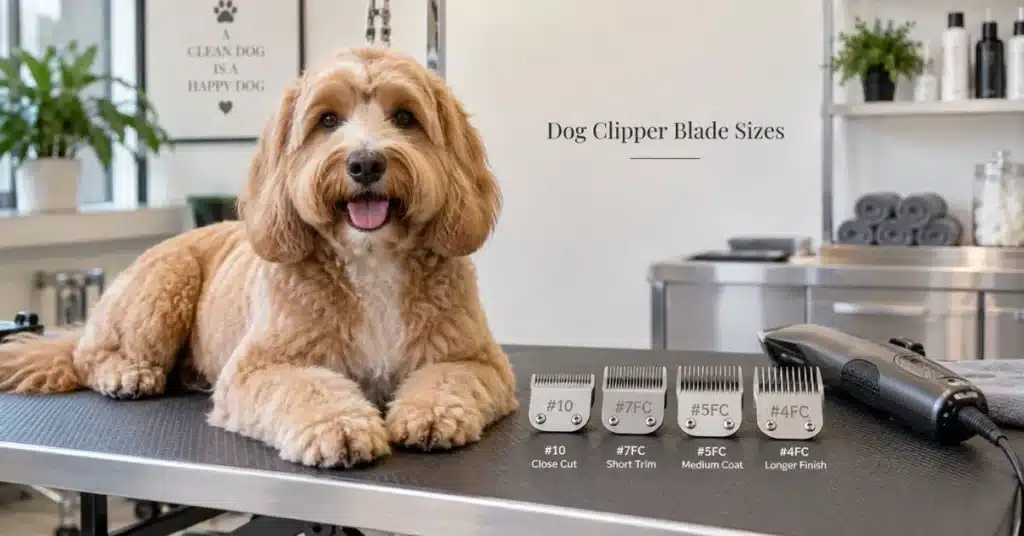
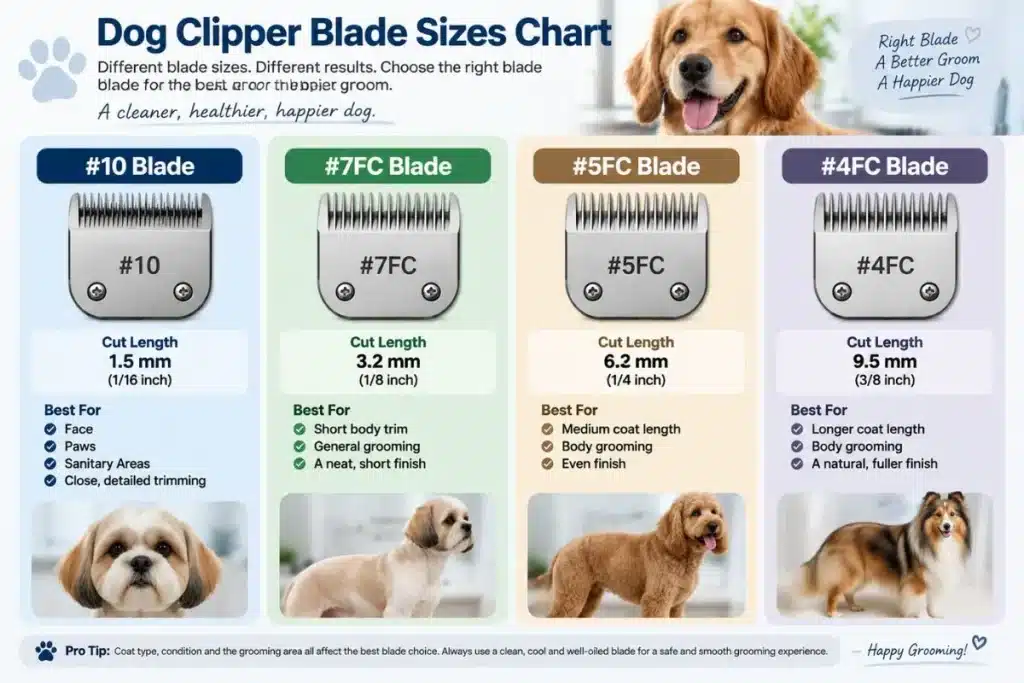
The table below covers several common detachable dog clipper blades used for home and professional grooming.
| Blade Size | Hair Left | Approx. Length | Common Use |
| #10 | Very short | 1/16 in (1.5 mm) | Face, feet, sanitary areas, and close trimming |
| #7FC | Short | 1/8 in (3.2 mm) | Short and smooth body trims |
| #5FC | Medium | 1/4 in (6.3 mm) | Body grooming with more coat left |
| #4FC | Longer | 3/8 in (9.5 mm) | Longer body trims and a fuller finish |
These cutting lengths match common Andis detachable blades. You can check the manufacturer’s blade chart for more blade sizes and cutting lengths.
A #10 blade leaves about 1.5 mm of hair, so it creates a close trim. Groomers often use this size for smaller areas such as the face, feet, and sanitary area.
A #7FC blade leaves about 3.2 mm and gives a short body finish. The #5FC leaves around 6.3 mm, while the #4FC leaves about 9.5 mm for a longer look.
What Does “FC” Mean?
FC means “finish cut.” These blades have closely spaced teeth that help create a smooth, even finish.
A skip-tooth blade is different. Its teeth have wider spaces, which can help move through thick or difficult coats. Because of this design, beginners should not treat a #7FC and a #7 skip-tooth blade as the same tool.
The blade number is important, but it is only one part of the choice. You should also consider your dog’s coat type, coat condition, grooming area, and desired hair length.
So, before grooming, check both the blade size and blade style. This will help you choose a more suitable cutting length and avoid unexpected results.
Dog Clipper Blade Sizes in MM and Inches
Dog clipper blades are measured in both millimeters (mm) and inches. This can be confusing because some grooming tools use one measurement system, while others use another.
A dog clipper blade sizes in mm chart helps you understand the actual cutting length. It makes it easier to choose the right blade for your dog’s grooming needs.
| Blade Size | Cut Length (MM) | Cut Length (Inches) | Common Use |
| #30 Blade | 0.5 mm | 1/50 inch | Very close trimming |
| #15 Blade | 1.2 mm | 3/64 inch | Close detail work |
| #10 Blade | 1.5 mm | 1/16 inch | Face, paws, and sanitary areas |
| #7FC Blade | 3.2 mm | 1/8 inch | Short body trims |
| #5FC Blade | 6.3 mm | 1/4 inch | Medium coat length |
| #4FC Blade | 9.5 mm | 3/8 inch | Longer coat finish |
For example, a #10 blade leaves around 1.5 mm of hair after trimming. It creates a short cut and works well for smaller grooming areas. A #5FC blade leaves about 6.3 mm, so it keeps more coat length.
The same blade number can also feel different depending on the blade style, clipper type, and dog coat condition. A thick or curly coat may need a different approach than a short, smooth coat.
When choosing dog grooming blade sizes, do not focus only on the number. Always check the cutting length, coat type, and grooming area before trimming your dog.
How to Choose the Right Dog Clipper Blade Size
Choosing the right blade starts with one question: How much coat do you want to leave behind? Then look at your dog’s coat type, coat condition, and grooming area.
There is no single best blade size for dog grooming. The right choice can change depending on your dog’s coat and the finish you want.
Short-Coat Dogs
Short, smooth coats usually need less bulk removal than thick or curly coats.
If you want a close trim, choose a blade that leaves less hair. For a softer, longer finish, use a blade or guide comb that keeps more coat.
Thick-Coat Dogs
Thick coats often need more preparation before clipping. Do not choose the shortest blade just because the coat feels heavy.
Some skip-tooth blades have wider-spaced teeth that help move dense hair through the blade more easily. Andis notes that its #7 skip-tooth blade is designed for thick, matted, or heavy coats and rough bulk removal.
Curly-Coat Dogs
Curly and wavy coats can develop knots and mats, so brushing and combing matter before clipping.
Andis also recommends proper brushing and combing for curly, wavy, and double coats before trimming.
If you are still choosing a clipper, our How to Choose Dog Clippers guide can help you compare blade compatibility, power, and other useful features.
Matted Hair
Matted hair needs extra care, especially when mats sit close to the skin.
Do not force the clipper through a tight mat. Severe matting may be safer to handle with help from a professional groomer or veterinarian.
For mild matting, choose a blade based on the mat depth, coat condition, and the length you want to keep. Some skip-tooth blades can remove bulk faster, but they are mainly designed for rough cutting before a smoother finish.
Quick rule: Choose the blade based on coat condition + desired length + grooming area, not breed or blade number alone.
Best Dog Clipper Blade Size for Different Grooming Areas
The best dog clipper blade size depends on the area you are trimming. Sensitive areas often need closer control, while body grooming may leave more coat.
Face and Head
The face has delicate skin and small contours, so control matters more than speed. A #10 dog clipper blade leaves about 1.5 mm (1/16 inch) of hair and is commonly used for close detail work.
Work slowly around the eyes, lips, ears, and skin folds. Do not press the blade firmly against the skin.
Paw Pads
Hair between the paw pads can trap dirt and become tangled. A #10 blade is a common choice for carefully clearing this small area.
Keep the paw steady and spread the pads gently while trimming. Avoid digging the blade between the pads, where the skin can be easy to nick.
Sanitary Areas
A sanitary trim removes excess hair around areas that can easily become dirty. The #10 blade is also commonly used for this type of close trimming.
However, the skin here is thin and sensitive. Use light pressure, keep the skin flat, and check the blade temperature often.
Body Grooming
For the body, choose the blade based on how much coat you want to keep.
- #7FC: leaves about 1/8 inch (3.2 mm) for a short finish.
- #5FC: leaves about 1/4 inch (6.3 mm) for a medium finish.
- #4FC: leaves about 3/8 inch (9.5 mm) for a longer finish.
Remember: Blade size is only part of the decision. Always consider your dog’s coat condition, skin sensitivity, grooming area, and desired length before you start.
#10 vs #7 Dog Clipper Blade: What’s the Difference?
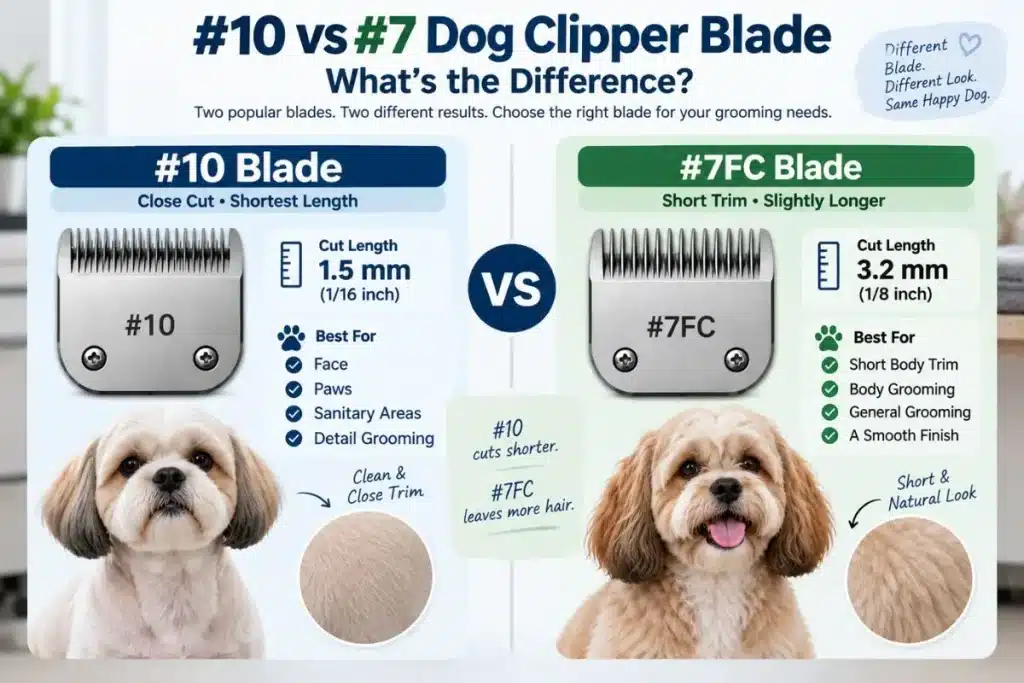
The main difference between a #10 and #7 dog clipper blade is how much hair each blade leaves behind. A #10 cuts closer, while a #7 leaves more coat.
| Feature | #10 Blade | #7FC Blade |
| Cut length | 1/16 inch (1.5 mm) | 1/8 inch (3.2 mm) |
| Finish | Very short, close cut | Short, smooth cut |
| Common use | Face, feet, sanitary areas | Short body trims |
| Best for | Small areas and detail work | Larger body areas |
A #10 dog clipper blade leaves about 1.5 mm (1/16 inch) of hair. Its close cutting length makes it useful when you need more control in small grooming areas.
A #7FC blade leaves about 3.2 mm (1/8 inch), which is twice the length left by a #10. It works well when you want a short body trim without cutting as close.
It is also important to notice the FC label. FC means “finish cut,” which refers to a blade designed to create a smoother finish. A #7FC is different from a #7 skip-tooth blade, even though both carry the number seven.
Quick answer: Choose the #10 for a closer cut and the #7FC when you want to leave more hair. However, always consider your dog’s coat condition, grooming area, and desired finish before choosing a blade.
Common Dog Clipper Blade Mistakes
Using the right dog clipper blade size is important for safe and smooth grooming. However, many beginners make simple mistakes that affect the final result.
Avoiding these dog grooming mistakes can help you get a better finish and make grooming easier.
Choosing a Blade Only by Breed
Many owners choose a blade based only on their dog’s breed. This can be a mistake because dogs of the same breed can have different coat types and thickness.
Choose a blade based on:
- Coat condition
- Hair thickness
- Desired length
- Grooming area
Ignoring Coat Condition
Always check the coat before trimming. A tangled or matted coat may need extra care before using a clipper.
Trying to cut through heavy mats can create an uneven finish and make your dog uncomfortable.
Using the Wrong Blade Length
A shorter blade does not always mean a better cut.
Choose the blade based on the result you want. For example, a #10 blade works well for close areas, while longer blades help keep more body coat.
Forgetting Blade Heat
Clipper blades can become warm during longer grooming sessions. Check the blade temperature regularly and allow it to cool when needed.
Not Cleaning the Blade
Hair and dirt can reduce clipper performance. Clean and oil your blades regularly to keep them working properly.
Quick tip: Choose a blade based on your dog’s coat condition, grooming area, and desired length instead of breed or blade number alone.
How to Maintain Dog Clipper Blades
Regular care helps dog clipper blades stay sharp, clean, and ready for grooming. A simple routine can also improve cutting performance and extend blade life.
Clean the Blade
Remove loose hair from the blade after each grooming session. Hair trapped between the teeth can reduce cutting performance.
Oil Regularly
Add a few drops of clipper blade oil to the blade teeth and moving areas. Oil reduces friction and helps the blade move smoothly.
Keep the Blade Cool
Blades can become hot during longer grooming sessions. Check the temperature often and stop grooming if the blade feels too warm.
Store in a Dry Place
After cleaning, keep your blades in a clean, dry place. Proper storage helps protect them from moisture, dirt, and damage.
Quick tip: Clean and oil your blade after each use, check for heat during grooming, and store it dry.
Quick Dog Clipper Blade Selection Checklist
Choosing the right dog clipper blade size does not have to be complicated. Match the blade with the grooming area and the coat length you want.
Quick Blade Guide:
✅ Face & paws → #10 blade
Best for close trimming and small detail areas.
✅ Short body trim → #7FC blade
Good for a short and smooth body finish.
✅ Medium coat length → #5FC blade
Keeps more hair while creating a neat look.
✅ Longer finish → #4FC blade
Helps maintain a fuller coat appearance.
Quick tip: Always consider your dog’s coat type, coat condition, and grooming goal before choosing a blade. The same blade may give different results on different coats.
Dog Clipper Blade Sizes FAQs
What size dog clipper blade should beginners use?
Beginners should choose a blade based on the grooming area and desired coat length. A #10 blade is a common choice for close areas like the face and paws. Longer blades are better when you want to keep more hair.
What does a #10 dog clipper blade do?
A #10 dog clipper blade creates a close cut and leaves about 1.5 mm (1/16 inch) of hair. It is commonly used for detail grooming, including the face, feet, and sanitary areas.
Is a #10 blade shorter than a #7 blade?
Yes. A #10 blade cuts shorter than a #7FC blade. The #10 leaves around 1.5 mm of hair, while the #7FC leaves about 3.2 mm.
So, choose a #10 for a closer trim and a #7FC when you want a little more coat left.
Which dog clipper blade leaves the most hair?
Among the common blades in this guide, the #4FC blade leaves the most hair. It keeps about 9.5 mm (3/8 inch) of coat, making it suitable for a longer finish.
What blade size should I use for matted dog hair?
Matted hair needs extra care because mats can sit close to the skin. The right blade depends on how tight the mats are and your dog’s coat condition.
For severe matting, a professional groomer may be the safest option.
What does FC mean on dog clipper blades?
FC means “Finish Cut.” These blades have closely spaced teeth and create a smoother finish.
A skip-tooth blade is different because it has wider spaces between the teeth. It is mainly used for removing bulk from thick coats.
Final Thoughts on Dog Clipper Blade Sizes
Choosing the right dog clipper blade size becomes easier when you understand blade numbers, cutting lengths, and grooming needs.
A #10 blade works well for close detail areas, while #7FC, #5FC, and #4FC blades help maintain different coat lengths. Always consider your dog’s coat type, grooming area, and desired finish before choosing a blade.
If you are learning about home grooming tools, our complete guide on Dog Clippers covers everything you need to know about choosing and using the right clipper.