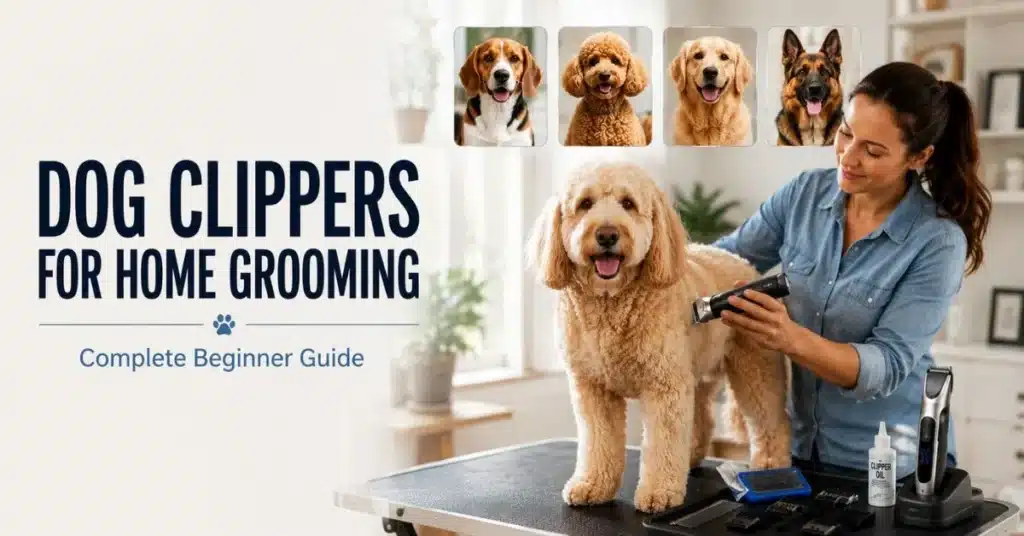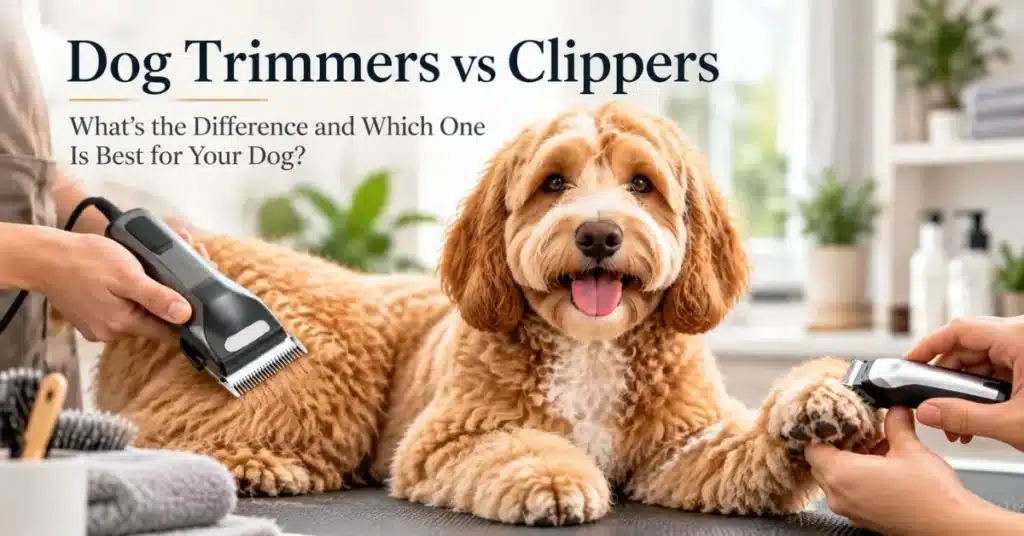
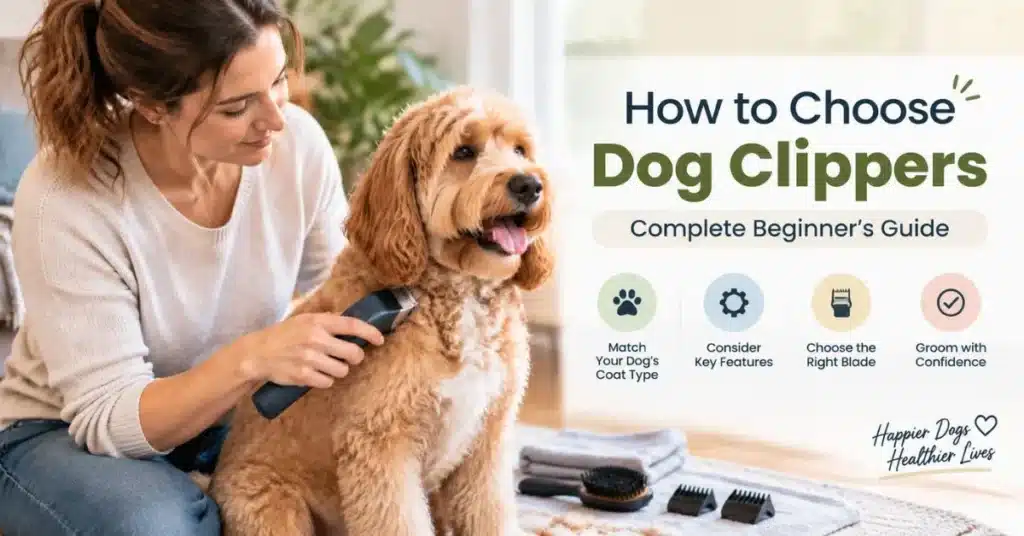
Choosing the right dog clippers depends on your dog’s coat type, grooming needs, and how often you groom at home.
Many dog owners feel confused when choosing a clipper because there are many options available. The wrong clipper can make grooming harder and may make your dog uncomfortable.
In this guide, you will learn how to choose dog clippers based on important factors like blade type, motor power, noise level, heat control, and corded vs cordless options.
Whether you are starting home dog grooming or replacing an old tool, this guide will help you choose the right clipper for your dog.
What Should You Consider Before Choosing Dog Clippers?
Choosing the right dog clippers is not only about buying the most expensive option. The best clipper depends on your dog’s coat type, grooming needs, and how you plan to use it at home.
Before choosing a clipper, consider these five important factors:
1. Your Dog’s Coat Type
Different coats need different levels of power and blade performance. A clipper that works well for short hair may not handle thick or curly coats.
2. Motor Power
A strong motor helps cut through thick and heavy coats more smoothly. Low-power clippers may struggle and pull hair during grooming.
3. Blade System
The right blade affects cutting length, comfort, and grooming results. Understanding blade sizes helps you choose a suitable option for your dog.
4. Noise and Heat Control
Some dogs feel nervous around loud clippers. A quieter clipper with better heat control can make grooming more comfortable.
5. Grooming Frequency
If you groom your dog regularly at home, choose a durable clipper that can handle repeated use.
For beginners, understanding these factors makes home dog grooming easier and helps you avoid choosing the wrong tool. You can also learn more about basic grooming tools in our complete guide to dog grooming at home.
Choose Dog Clippers Based on Your Dog’s Coat Type
Your dog’s coat type is one of the most important things to consider when choosing dog clippers.
Every dog has different hair texture, thickness, and grooming needs. A clipper that works well for one dog may not work well for another.
So, before choosing a clipper, check your dog’s coat type first. The right clipper will make grooming easier and more comfortable for your pet.
Short and Smooth Coat
Dogs with short and smooth coats usually need simple grooming tools.
Breeds like Beagle, Labrador Retriever, and Boxer often have shorter hair that is easier to maintain.
For these dogs, you usually do not need a heavy-duty clipper.
Look for:
- Lightweight design
- Comfortable handling
- Smooth cutting performance
- Easy maintenance
A basic clipper can work well for regular trimming. However, if you groom your dog often, a better-quality clipper can provide smoother results.
Long and Silky Coat
Dogs with long and silky coats need more careful grooming.
Breeds like Shih Tzu, Maltese, and Yorkshire Terrier have hair that can become tangled easily.
For these dogs, choose clippers that provide:
- Smooth blade movement
- Low vibration
- Lower noise
- Comfortable handling
A gentle clipper helps reduce pulling and makes grooming less stressful.
Regular grooming is also important because long hair can develop knots and mats if it is not maintained properly.
Thick or Curly Coat
Thick and curly coats need more powerful clippers.
Breeds like Poodle, Goldendoodle, and Bichon Frise often have dense coats that need stronger cutting ability.
For these dogs, choose clippers with:
- Powerful motor
- Quality blades
- Good heat control
- Strong cutting performance
Low-power clippers may struggle with thick hair. They can pull hair and make grooming uncomfortable for your dog.
If you have a Poodle or similar curly-coated breed, choosing the right clipper is especially important. The American Kennel Club (AKC) also provides helpful grooming information for different dog breeds and coat needs.
Double Coat
Some dogs have a double coat, which means they have two layers of fur.
The top layer protects the dog, while the soft undercoat helps control body temperature.
Common double-coated breeds include:
- Golden Retriever
- Husky
- German Shepherd
Choosing clippers for a double coat needs extra care.
Remember:
- Not every double-coated dog should be shaved
- Some dogs need brushing more than clipping
- Removing too much hair can affect their natural coat protection
Before using clippers, understand your dog’s grooming needs and coat condition.
Choosing the right dog clippers for thick hair, dog clippers for curly hair, or dog clippers for double coat depends on your dog’s unique coat.
When you match the clipper with your dog’s hair type, grooming becomes easier, safer, and more comfortable.
Corded vs Cordless Dog Clippers: Which One Should You Choose?
When choosing dog clippers, one common question comes up:
Should you choose a corded or cordless clipper?
Both options can work well. However, the better choice depends on your dog’s coat type, grooming routine, and how often you use the clipper.
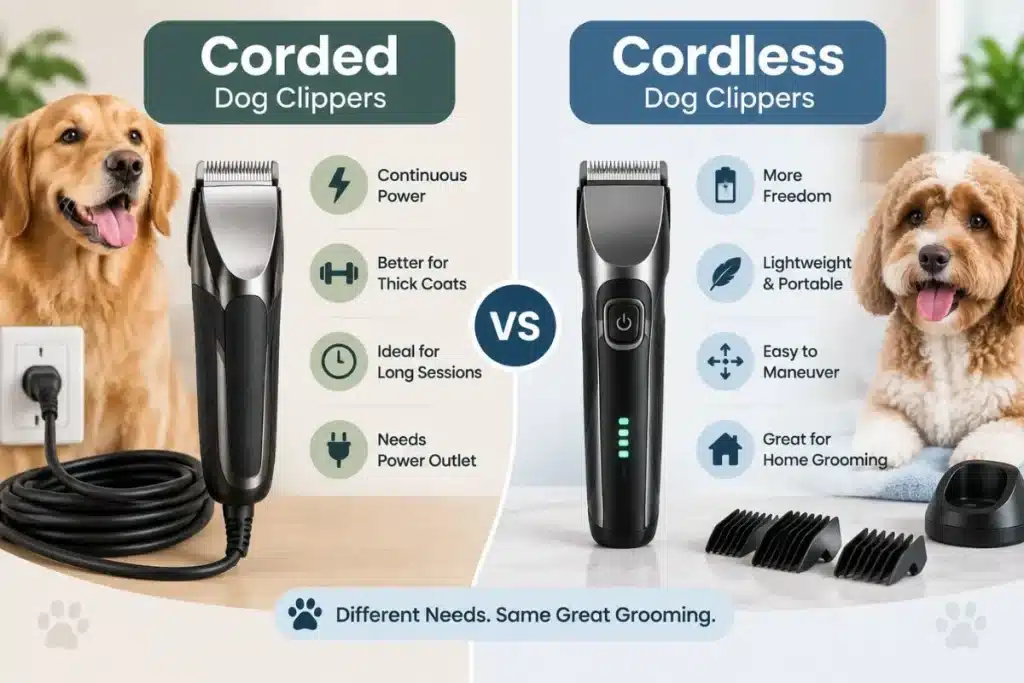
A corded clipper gives steady power, while a cordless clipper gives more freedom to move. Understanding the difference will help you choose the right tool for your dog.
Corded Dog Clippers
Corded dog clippers connect directly to a power outlet. They provide continuous power because they do not rely on a battery.
They are a good choice for:
- Dogs with thick or heavy coats
- Long grooming sessions
- Regular home grooming
Benefits of Corded Clippers:
- Consistent power during grooming
- No need to recharge a battery
- Good for longer trimming sessions
Things to Consider:
- The cord can limit movement
- It may feel less convenient in small spaces
If your dog needs longer grooming sessions, a corded clipper can be a reliable option.
Cordless Dog Clippers
Cordless dog clippers use rechargeable batteries. They allow you to move freely while grooming your dog.
They are a good choice for:
- Quick trimming
- Small and medium dogs
- Beginners who want easier handling
Benefits of Cordless Clippers:
- Easy movement
- Comfortable to hold
- Useful for hard-to-reach areas
Things to Consider:
- Battery life can limit long grooming sessions
- You need to recharge the clipper regularly
For many beginners, cordless clippers feel easier because they offer more flexibility.
Corded vs Cordless Dog Clippers Comparison
| Feature | Corded Clippers | Cordless Clippers |
| Power | Strong and consistent | Depends on battery |
| Movement | Limited by cord | Easy and flexible |
| Battery | No charging needed | Needs regular charging |
| Best for | Long grooming sessions | Quick home grooming |
Which One Should You Choose?
Choose corded dog clippers if:
- Your dog has a thick coat
- You groom for a longer time
- You need continuous power
Choose cordless dog clippers if:
- You want easy movement
- Your dog needs quick trims
- You prefer simple handling
There is no single best option for every dog. The right choice depends on your dog’s coat and your grooming style.
Understanding Dog Clipper Motor Power and Speed
The motor is one of the most important parts of a dog clipper. It controls how smoothly the blades move and how easily the clipper cuts through hair.
A clipper with the right power makes grooming easier. However, a weak motor may struggle with thick or curly coats and can pull your dog’s hair during trimming.
Dogs with different coat types need different levels of power. For example, dogs with heavy or dense coats usually need powerful dog clippers, while dogs with short hair may need less power.
A rotary motor provides strong and steady performance, making it useful for professional grooming and thicker coats. But more power is not always better.
Beginners should choose a clipper based on their dog’s coat type, grooming needs, and usage frequency.
When choosing a clipper, look for a good balance of motor power, clipper speed, blade quality, and comfort.
Blade Size and Cutting Length Explained
Choosing the right dog clipper blade size helps you control how much hair your dog keeps after grooming.
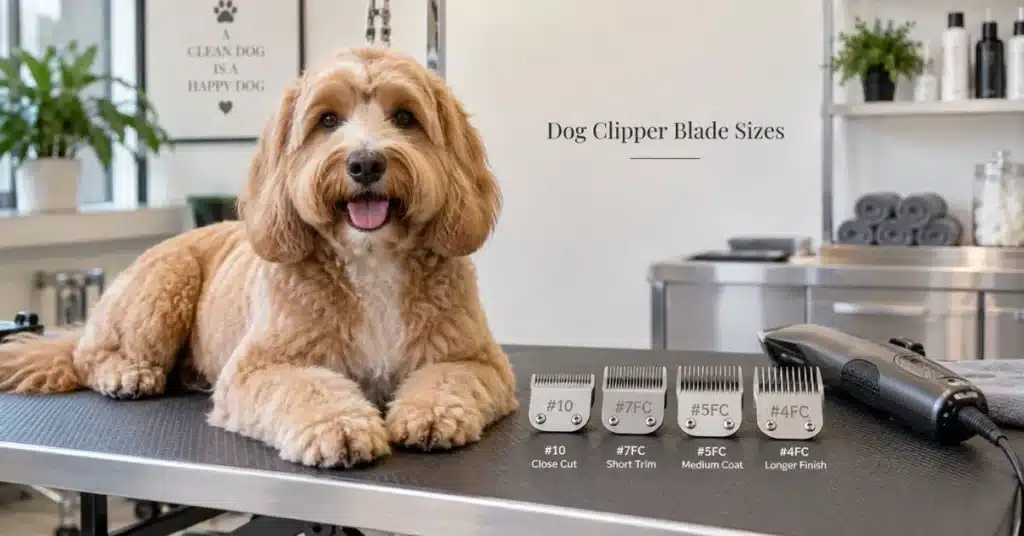
Many beginners feel confused when they see blade numbers like #10, #7, or #5. But the basic idea is simple.
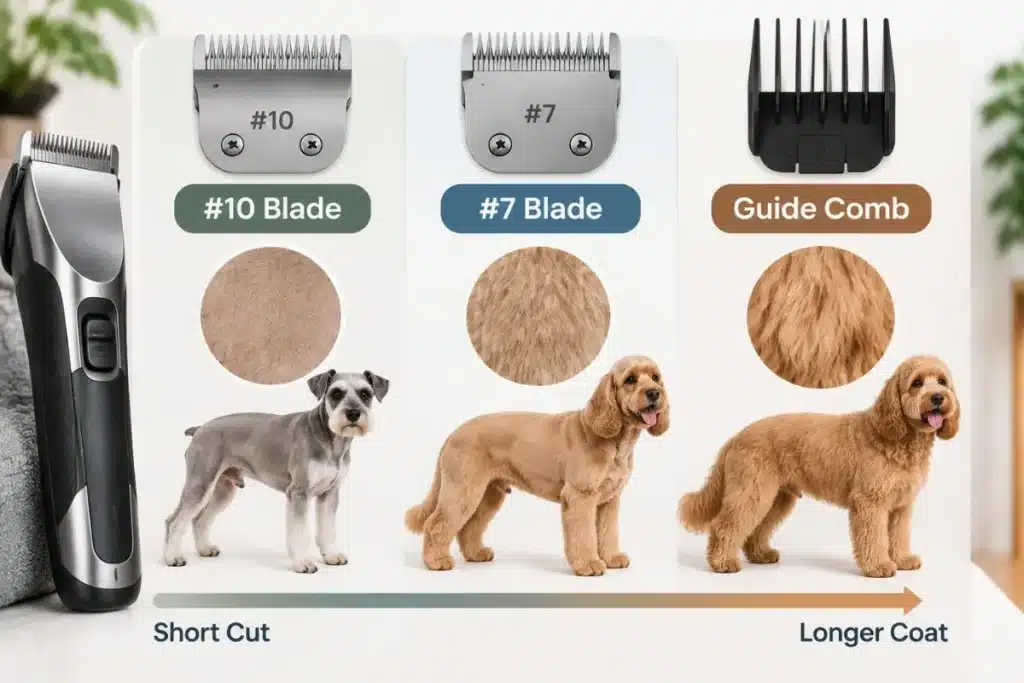
The blade number tells you the cutting length. Different blade sizes create different results, from very short trims to longer coat finishes.
What Do Dog Clipper Blade Numbers Mean?
Dog clipper blades use numbers to show how short or long they will cut the hair.
For example:
- #10 blade → Creates a very short cut and is often used for close trimming.
- #7 blade → Leaves slightly more hair than a #10 blade.
- Higher cutting numbers usually create shorter cuts in common blade systems.
However, cutting length can change depending on the blade brand and clipper type.
Short Cut vs Long Cut
A shorter blade works well when you need:
- Easier coat maintenance
- Cleaning around sensitive areas
- Removing excess hair
A longer cutting length works better when you want:
- A natural-looking coat
- More hair protection
- A softer appearance
The best choice depends on your dog’s coat type and grooming goal.
What Are Guide Combs?
A guide comb is an attachment that fits over the clipper blade. It helps you cut your dog’s hair at a longer and more even length.
Guide combs are useful for beginners because they reduce the risk of cutting too much hair.
Why Noise and Heat Matter When Choosing Dog Clippers
When choosing dog clippers, many people only look at power and price. But noise level and heat control are also important for your dog’s comfort.
Some dogs feel nervous when they hear clipper sounds. This happens more often with puppies, anxious dogs, and dogs that are new to grooming.
A quiet and comfortable clipper can make grooming easier. It can also help your dog feel less stressed during the process.
Why Choose Quiet Dog Clippers?
Dogs have different reactions to grooming sounds. Some dogs stay calm, while others become uncomfortable with loud noise and vibration.
Quiet dog clippers are helpful for:
- Puppies learning grooming
- Nervous dogs
- Dogs that dislike loud sounds
Before grooming, let your dog see and hear the clipper. This helps your dog become familiar with the tool.
Why Does Clipper Heat Matter?
Dog clippers can become warm during longer grooming sessions. A hot blade may make your dog uncomfortable, especially on sensitive areas.
To reduce discomfort:
- Take short breaks during grooming
- Check the blade temperature
- Clean and maintain the clipper regularly
Choosing dog clippers for anxious dogs is not only about cutting performance. A comfortable clipper with low noise and good heat control creates a better grooming experience.
What Features Make a Dog Clipper Beginner Friendly?
Choosing the best dog clippers for beginners is not only about having more power. A good beginner clipper should be easy to use, comfortable to hold, and safe for your dog.
When you start home grooming, the right features can make the process easier. They can also help you avoid common mistakes during trimming.
Here are the key features beginners should look for:
1. Lightweight Design
A lightweight clipper is easier to control.
It helps reduce hand tiredness, especially during longer grooming sessions.
Beginners can move the clipper more comfortably and achieve better results.
2. Comfortable Grip
A good grip gives you better control while trimming.
This is especially helpful when grooming sensitive areas like:
- Face
- Paws
- Ears
A comfortable handle makes grooming feel safer and easier.
3. Low Vibration
Some dogs feel uncomfortable with strong vibration.
A clipper with low vibration can help nervous dogs stay calmer during grooming.
It also makes the tool easier for beginners to handle.
4. Replaceable Blades
Replaceable blades make clipper maintenance easier.
They allow you to:
- Change worn blades
- Choose different cutting lengths
- Keep better grooming performance
5. Good Battery Life
If you choose cordless clippers, battery life is important.
A good battery helps you finish grooming without stopping for frequent charging.
6. Easy Cleaning
Hair and dirt can build up inside a clipper after use.
Choose a clipper that is easy to clean. Regular cleaning helps keep the tool working properly.
The right beginner dog grooming tools should make grooming simple and comfortable. A beginner-friendly clipper helps you groom with more confidence while keeping your dog relaxed.
Common Mistakes When Choosing Dog Clippers
Choosing the right dog clippers can make home grooming easier. However, many beginners make simple mistakes when buying their first clipper.
Avoiding these mistakes will help you choose a tool that matches your dog’s coat and grooming needs.
1. Choosing Only by Price
A cheaper clipper may look attractive, but price should not be the only factor.
Very low-cost clippers may struggle with thick coats or regular grooming.
Instead, focus on:
- Your dog’s coat type
- Motor power
- Blade quality
- Comfort features
2. Buying Human Clippers
Human clippers are not designed for dog coats.
Dogs have different hair textures and grooming needs. A proper dog grooming clipper is made to handle pet hair more effectively.
3. Ignoring Your Dog’s Coat Type
One of the biggest dog clipper mistakes is choosing a clipper without considering your dog’s coat.
A clipper that works for a short-haired dog may not work well for:
- Thick coats
- Curly coats
- Double coats
Always match the clipper with your dog’s hair type.
4. Choosing Weak Clippers for Thick Hair
Dogs with dense or curly coats need more power.
A weak motor can slow down, pull hair, and make grooming uncomfortable.
Choose a clipper that can handle your dog’s coat instead of choosing only based on appearance or price.
5. Forgetting Maintenance
Even a good clipper needs regular care.
Cleaning blades, removing hair buildup, and proper maintenance help keep clippers working smoothly.
Quick Checklist Before Buying Dog Clippers
Before buying dog clippers, think about your dog’s needs first. The right clipper depends on your dog’s coat type, grooming routine, and your experience level.
Use this simple checklist to make a better choice:
| Question | What to Check |
| What is your dog’s coat type? | Short, long, thick, curly, or double coat |
| What do you need the clipper for? | Full grooming or simple trimming |
| Corded or cordless? | More power or easier movement |
| Are you a beginner or experienced? | Easy handling or advanced features |
A good dog grooming clipper should match your dog’s coat and your grooming needs.
Do not choose only by price. Focus on comfort, performance, and ease of use.
Frequently Asked Questions About Choosing Dog Clippers
What type of dog clippers are best for beginners?
The best dog clippers for beginners are lightweight, easy to control, and comfortable to use.
Beginners should look for features like simple handling, low vibration, and good battery life. A clipper that matches your dog’s coat type will make home grooming easier.
Are human clippers safe to use on dogs?
Human clippers are not the best choice for dogs because dog coats have different textures and thickness.
A proper dog grooming clipper is designed to handle pet hair more effectively. Using the right tool can make grooming more comfortable for both you and your dog.
Should I choose corded or cordless dog clippers?
The choice depends on your grooming needs.
Corded dog clippers provide continuous power and work well for longer grooming sessions. Cordless dog clippers offer more freedom and are easier to move around your dog.
For beginners, cordless models are often easier to handle.
What dog clippers are best for thick hair?
Dogs with thick or curly coats need clippers with stronger motors and quality blades.
Look for powerful dog clippers with good heat control and durable cutting performance. Choosing the right clipper helps prevent pulling and makes grooming smoother.
What blade size should I use for my dog?
The right blade size depends on your desired cutting length and your dog’s coat type.
A shorter blade removes more hair, while a longer cutting length keeps more coat. Beginners should understand blade numbers before choosing a blade for grooming.
Why do dog clippers get hot?
Dog clippers can become warm during longer grooming sessions because the blades and motor create heat.
To keep your dog comfortable, take breaks, check the blade temperature, and clean your clipper regularly. Proper maintenance helps reduce overheating problems.
Final Thoughts: Choosing the Right Dog Clippers for Your Dog
Choosing the right dog clippers becomes much easier when you understand your dog’s specific needs.
The best clipper is not always the most expensive option. It should match your dog’s coat type, grooming routine, and comfort level.
Before choosing a clipper, consider important factors like motor power, blade size, noise level, heat control, and corded or cordless options.
Every dog is different, so the right choice depends on your pet’s hair type and your grooming goals.
With the right tools and knowledge, dog grooming at home can become easier, safer, and more comfortable for both you and your dog. If you want to learn more about complete grooming basics, explore our dog grooming guide.
Start by understanding your dog’s coat and grooming needs, then choose a clipper that fits your routine.