A dog hygiene routine at home is a simple system of daily, weekly, and monthly habits that helps keep your dog clean, healthy, and comfortable. It includes coat care, dental hygiene, ear cleaning, paw care, nail maintenance, and keeping your dog’s living environment clean.
Many dog owners focus only on bathing, but good hygiene involves much more than that. Small habits like checking paws, brushing teeth, inspecting ears, and cleaning bedding can help prevent common hygiene problems and keep your dog feeling its best.
In this guide, you’ll learn a beginner-friendly dog hygiene routine with simple daily, weekly, and monthly checklists so you know exactly what to do and when to do it.
Why Dog Hygiene Matters
Many dog owners think hygiene simply means giving their dog a bath every once in a while. In reality, hygiene covers much more than keeping a dog looking clean. It includes caring for your dog’s coat, skin, teeth, ears, paws, nails, bedding, and overall living environment.
Good hygiene plays an important role in your dog’s health and comfort. Small issues such as dirty paws, plaque buildup, excessive shedding, or ear wax accumulation can gradually turn into larger problems if they are ignored for long periods.
According to the American Kennel Club (AKC), consistent hygiene and preventive care habits play an important role in maintaining a dog’s overall health and well-being.
Some of the biggest benefits of maintaining a regular dog hygiene routine include:
- Reducing unpleasant odors
- Supporting healthy skin and coat condition
- Preventing plaque and tartar buildup
- Keeping ears cleaner and healthier
- Helping identify potential health issues early
- Creating a cleaner home environment
- Improving your dog’s overall comfort
If you’re wondering why these habits matter, check out our detailed guide on Why Dog Hygiene Is Important to learn how proper hygiene supports your dog’s long-term health and comfort.
A consistent hygiene routine also makes it easier to spot changes in your dog’s appearance and behavior. When you regularly inspect your dog’s coat, paws, ears, and teeth, you’re more likely to notice signs that something isn’t quite right.
From My Experience
One thing I’ve learned over years of caring for dogs is that hygiene problems rarely appear overnight. Most issues start small and develop gradually. A quick daily check of your dog’s paws, coat, and overall condition can often help you notice problems before they become serious.
Dog Hygiene vs Dog Grooming: What’s the Difference?
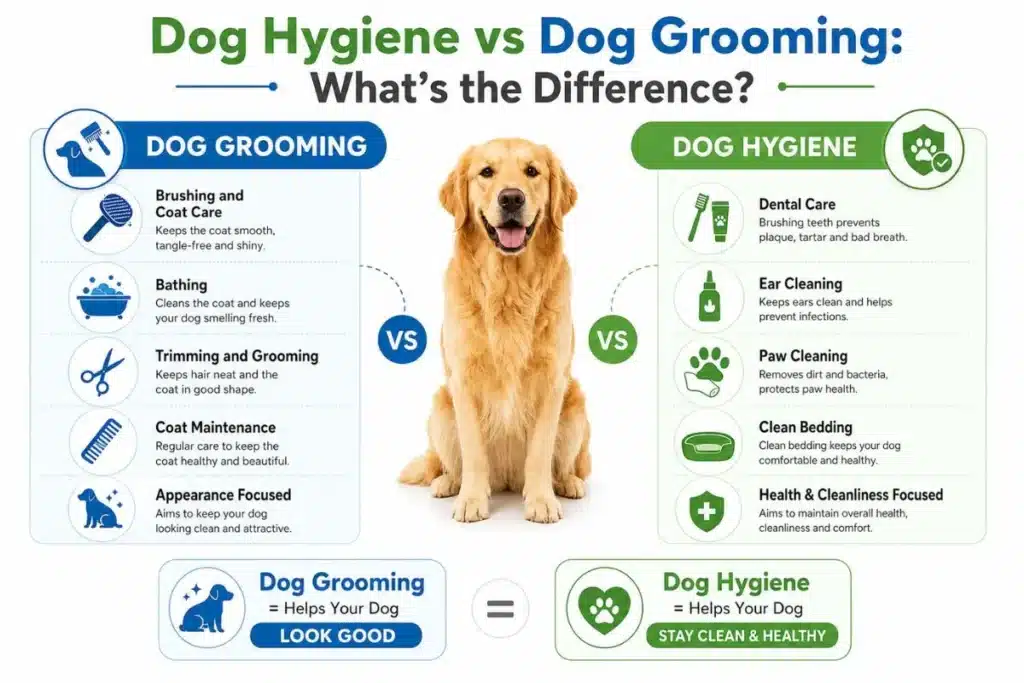
Many people use the terms “dog hygiene” and “dog grooming” interchangeably, but they are not exactly the same thing.
Dog grooming primarily focuses on your dog’s appearance and coat maintenance. Activities such as brushing, trimming, bathing, and coat styling are usually considered grooming tasks.
Dog hygiene focuses on cleanliness, comfort, and health. It includes grooming-related activities, but it also covers dental care, ear cleaning, paw care, bedding cleanliness, and maintaining a healthy living environment.
| Dog Grooming | Dog Hygiene |
| Focuses on appearance | Focuses on cleanliness and health |
| Brushing and coat care | Dental care |
| Bathing and trimming | Ear cleaning |
| Coat maintenance | Paw cleaning |
| Styling and presentation | Hygiene maintenance |
The easiest way to think about it is this:
Grooming helps your dog look good. Hygiene helps your dog stay clean and healthy.
A complete dog care routine should include both.
The Complete Dog Hygiene Routine at Home
The easiest way to manage your dog’s hygiene is by breaking it into daily, weekly, and monthly tasks. This prevents you from feeling overwhelmed and ensures that important hygiene habits don’t get forgotten.
Most dog owners don’t need a complicated schedule. A few minutes each day and some simple weekly maintenance are usually enough to keep a healthy dog clean and comfortable.
Here’s a quick overview of what a balanced dog hygiene routine looks like:
| Daily Tasks | Weekly Tasks | Monthly Tasks |
| Check paws | Brush coat | Inspect nails |
| Refresh water bowls | Brush teeth | Deep clean living areas |
| Inspect coat and odor | Check ears | Replace worn hygiene supplies |
| Quick body inspection | Wash bedding | Review overall hygiene routine |
This simple structure helps cover all the major areas of dog hygiene, including coat care, dental hygiene, ear health, paw cleanliness, and environmental cleanliness.
In the next sections, we’ll break down each part of the routine step by step, starting with the daily habits that make the biggest difference to your dog’s overall hygiene and health.
Daily Dog Hygiene Routine
The best dog hygiene routines are not the most complicated ones. They’re the routines you can actually follow every day.
Most daily hygiene tasks take less than five minutes, but they help prevent many common problems before they become serious. A quick daily check can help you spot dirt, odors, skin issues, or signs of discomfort early.
Check Your Dog’s Eyes
Your dog’s eyes can reveal a lot about their overall health and hygiene.
During your daily check, look for:
- Excessive eye discharge
- Redness
- Irritation
- Tear stains
- Unusual swelling
A small amount of clear discharge may be normal for some dogs, but excessive buildup should not be ignored.
Quick Tip
Make eye checks part of your morning routine. It only takes a few seconds and helps you notice changes quickly.
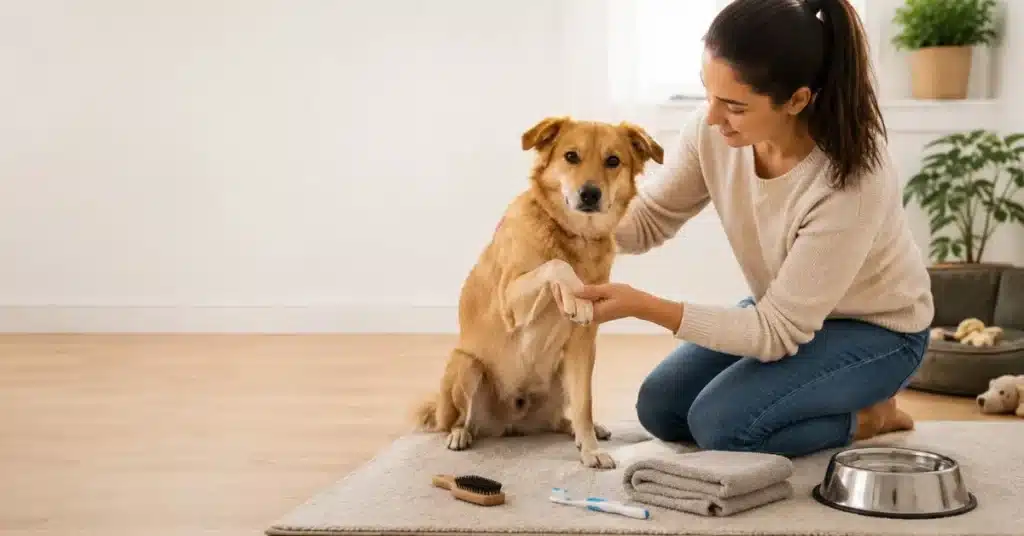
Inspect and Wipe Paws
Paws collect dirt, mud, bacteria, grass, and debris throughout the day.
After walks, especially during rainy weather, take a quick look at your dog’s paw pads and between the toes.
Check for:
- Mud
- Small stones
- Grass seeds
- Cracks
- Cuts
- Irritation
If needed, wipe the paws with a dog-safe wipe or a damp cloth.
For a step-by-step guide, see our article on How to Clean Dog Paws After Walks, where you’ll learn the best way to remove dirt, mud, and debris while keeping your dog’s paw pads healthy.
From My Experience
One of the simplest hygiene habits I’ve developed is checking paws immediately after walks. This prevents dirt from spreading through the house and helps identify small paw problems before they worsen.
Refresh Food and Water Bowls
Clean bowls are often overlooked in dog hygiene routines.
Food residue and standing water can encourage bacterial growth over time.
Every day:
- Replace old water
- Rinse water bowls
- Remove leftover food
- Wipe feeding areas
Fresh water and clean bowls contribute to both hygiene and overall health.
Monitor Coat Condition and Odor
A quick coat inspection helps you identify hygiene issues early.
Run your hand through your dog’s coat and check for:
- Unpleasant odor
- Excessive shedding
- Dirt buildup
- Tangles
- Greasy fur
Many owners assume a bad smell means their dog needs a bath. In reality, regular brushing and proper bedding hygiene often help more than frequent bathing.
Quick Coat Test
Run your hand through your dog’s coat.
If you notice excessive dirt, dandruff, or a strong odor, your dog may need additional grooming or hygiene attention.
Perform a Quick Full-Body Inspection
Take one or two minutes to look over your dog’s body.
Check for:
- Skin irritation
- Redness
- Dry patches
- Scratches
- Unusual lumps
- Signs of discomfort
The goal isn’t to perform a medical examination. It’s simply to become familiar with your dog’s normal condition so you can spot changes quickly.
Daily Hygiene Checklist
Before ending the day, ask yourself:
☐ Did I check my dog’s paws?
☐ Did I refresh water bowls?
☐ Did I inspect the coat?
☐ Did I notice any unusual odors?
☐ Did I perform a quick body check?
If the answer is yes, you’ve already completed the most important daily hygiene tasks.
Weekly Dog Hygiene Routine
While daily checks help maintain cleanliness, weekly tasks provide deeper hygiene maintenance.
Think of these activities as preventive care. Spending a little time each week can help reduce odor, improve comfort, and keep small hygiene problems from becoming bigger issues.
Brush the Coat
Brushing is one of the most important weekly hygiene habits.
Benefits include:
- Removing loose fur
- Reducing shedding
- Preventing tangles
- Distributing natural oils
- Supporting healthy skin
The ideal brushing frequency depends on your dog’s coat type, but a weekly brushing session works well for many dogs.
Common Mistake
Many owners wait until the coat looks messy before brushing. Regular brushing is far more effective than occasional intensive grooming sessions.
Brush Your Dog’s Teeth
Dental hygiene is one of the most neglected areas of dog care.
Plaque and tartar can build up gradually and contribute to bad breath and dental problems.
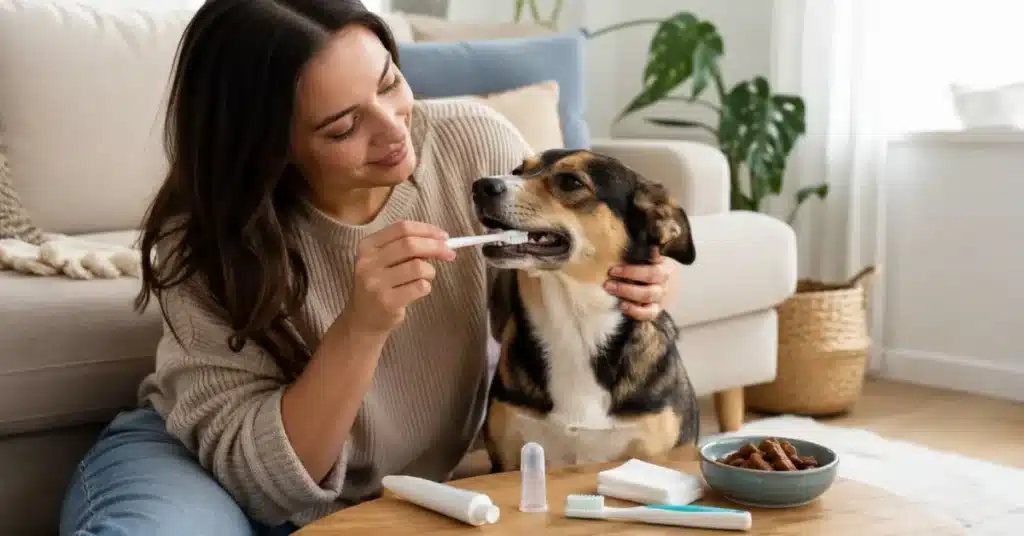
A simple dental routine may include:
- Dog-safe toothpaste
- Dog toothbrush
- Dental wipes
- Veterinary-approved dental chews
If you’re new to dog dental care, read our guide on How to Clean Dog Teeth at Home for a step-by-step brushing routine. Choosing the right toothpaste also makes a big difference, so check out our recommendations for the Best Dog Toothpaste for beginners and regular dental maintenance.
Aim to brush your dog’s teeth several times per week if possible.
Quick Dental Check
Look at the gum line.
Visible yellow buildup may indicate plaque accumulation and the need for more consistent dental care.
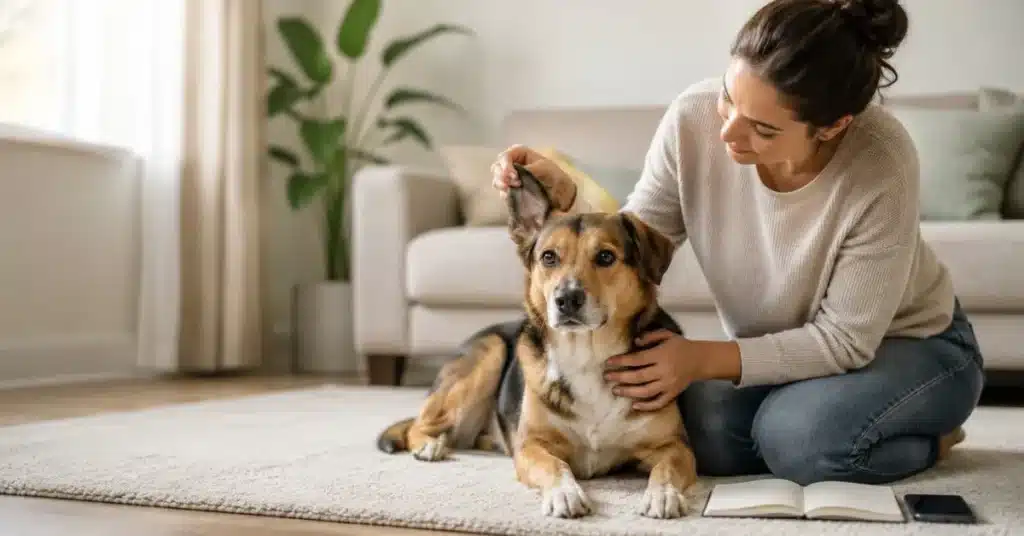
Inspect and Clean Ears
Healthy ears should appear clean and free of excessive wax, redness, or strong odors.
During your weekly inspection:
Check for:
- Excessive wax
- Redness
- Odor
- Scratching
- Irritation
Use only dog-safe ear cleaning products and avoid inserting objects deep into the ear canal.
Vet Alert
Persistent odor, discharge, or signs of pain should be evaluated by a veterinarian.
Wash Bedding and Blankets
Many owners focus on cleaning their dog but forget to clean the places where their dog spends most of their time.
Dog bedding can collect:
- Dirt
- Fur
- Dander
- Odors
- Bacteria
Weekly washing helps create a cleaner environment for both dogs and owners.
Bedding Odor Test
If your dog’s bedding develops a noticeable odor before the end of the week, you may need more frequent cleaning.
Review Skin and Coat Health
Finish your weekly routine with a closer inspection of your dog’s skin and coat.
Look for:
- Dry skin
- Excessive dandruff
- Bald patches
- Redness
- Irritation
This habit often helps identify potential problems before they become more serious.
Weekly Hygiene Checklist
☐ Brush the coat
☐ Brush teeth
☐ Inspect ears
☐ Wash bedding
☐ Review skin condition
☐ Check for unusual odors
Completing these simple weekly tasks helps support healthy skin, cleaner ears, better dental health, and an overall fresher, healthier dog.
Monthly Dog Hygiene Tasks
Daily and weekly hygiene habits do most of the heavy lifting, but monthly maintenance helps keep your dog’s overall hygiene routine on track.
Think of these tasks as a monthly review. They help you catch small issues before they become bigger health or hygiene problems.
Inspect Nail Length
Nail care is often overlooked until nails become too long.
Overgrown nails can affect how your dog walks and may cause discomfort over time.
During your monthly inspection, check:
- Nail length
- Cracks or splits
- Uneven wear
- Signs of discomfort while walking
If you hear your dog’s nails clicking loudly on hard floors, it may be time for trimming.
Common Mistake
Many owners wait until nails become obviously long before checking them. Regular inspections help prevent overgrowth and discomfort.
Deep Clean Your Dog’s Living Areas
Even if bedding is washed weekly, a deeper monthly cleaning is beneficial.
Areas worth cleaning include:
- Dog crate
- Sleeping areas
- Blankets
- Favorite resting spots
- Feeding stations
- Dog toys
A cleaner environment helps reduce odors, dirt buildup, and unwanted bacteria.
Quick Tip
Choose one day each month as your “dog hygiene maintenance day” to make these tasks easier to remember.
Review Hygiene Supplies
Dog hygiene products don’t last forever.
Once a month, inspect:
- Dog wipes
- Ear cleaner
- Toothbrushes
- Grooming tools
- Waterless shampoo
- Paw cleaning supplies
Replace worn or damaged items as needed.
Keeping supplies organized also makes it easier to follow your routine consistently.
Review Your Dog’s Overall Hygiene Progress
Take a few minutes to evaluate how well your routine is working.
Ask yourself:
- Does my dog smell fresh most of the time?
- Are the ears staying clean?
- Is dental care consistent?
- Are the paws relatively clean after walks?
- Is shedding under control?
This monthly review helps you adjust your routine if necessary.
From My Experience
One of the easiest ways to improve a hygiene routine is to identify the task you’re most likely to skip. For many owners, it’s dental care or bedding maintenance. Once you recognize the weak spot, it’s easier to build a more consistent routine.
How to Keep Your Dog Clean Between Baths
One of the biggest misconceptions among dog owners is that keeping a dog clean means bathing frequently.
In reality, many dogs can stay clean and fresh between baths when a few simple hygiene habits are followed consistently.
Frequent bathing isn’t always necessary, and excessive bathing may contribute to dry skin and irritation in some dogs.
Instead, focus on maintaining cleanliness between baths.
If you’d like more practical tips, read our guide on How to Keep Your Dog Clean Without Bathing, where we cover simple techniques such as brushing, paw cleaning, dog wipes, and waterless shampoos to help keep your dog fresh between baths.
Use Dog Wipes for Quick Cleaning
Dog-safe wipes are useful for removing dirt and debris from:
- Paws
- Face
- Belly
- Coat
They are especially helpful after walks, outdoor play sessions, or rainy weather.
If you’re looking for the most effective options, check out our guide to the Best Dog Wipes for Cleaning, where we compare top-rated wipes for daily hygiene, paw cleaning, and quick cleanups between baths.
Quick Tip
Keep a pack of dog wipes near the entrance of your home. This makes quick cleanups much easier after walks.
Use Waterless Dog Shampoo
Waterless shampoos can help freshen your dog’s coat without a full bath.
These products are useful when:
- Your dog has a mild odor
- A full bath isn’t practical
- You want a quick refresh between baths
If you’re considering adding one to your hygiene routine, explore our guide to the Best Waterless Dog Shampoo options for keeping your dog’s coat clean and fresh between baths.
Always choose products specifically designed for dogs.
Brush Your Dog Regularly
Regular brushing does more than improve appearance.
It helps:
- Remove loose fur
- Reduce dirt buildup
- Improve coat condition
- Distribute natural oils
Many owners are surprised by how much cleaner their dog stays when brushing becomes part of the routine.
Coat Maintenance Tip
For many dogs, consistent brushing has a greater impact on cleanliness than increasing bathing frequency.
Clean Paws After Walks
Paws collect more dirt than most owners realize.
A quick paw-cleaning routine can help:
- Reduce dirt inside the house
- Improve hygiene
- Prevent irritation
- Remove debris
Simple Paw Test
After a walk, wipe one paw with a white tissue.
If you consistently see dirt or debris, adding a daily paw-cleaning step can make a noticeable difference.
For a step-by-step cleaning routine, read our guide on How to Clean Dog Paws After Walks, where you’ll learn the best ways to remove dirt, mud, and debris while protecting your dog’s paw pads.
Control Odors at the Source
Many owners try to solve odor problems with sprays alone.
However, odors often come from:
- Dirty bedding
- Poor dental hygiene
- Dirty ears
- Coat buildup
- Unclean paws
Addressing the root cause is usually more effective than masking odors.
If you’re looking for a quick way to freshen your dog’s coat between cleanings, explore our guide to the Best Dog Deodorizing Spray options for reducing odors and keeping your dog smelling fresh.
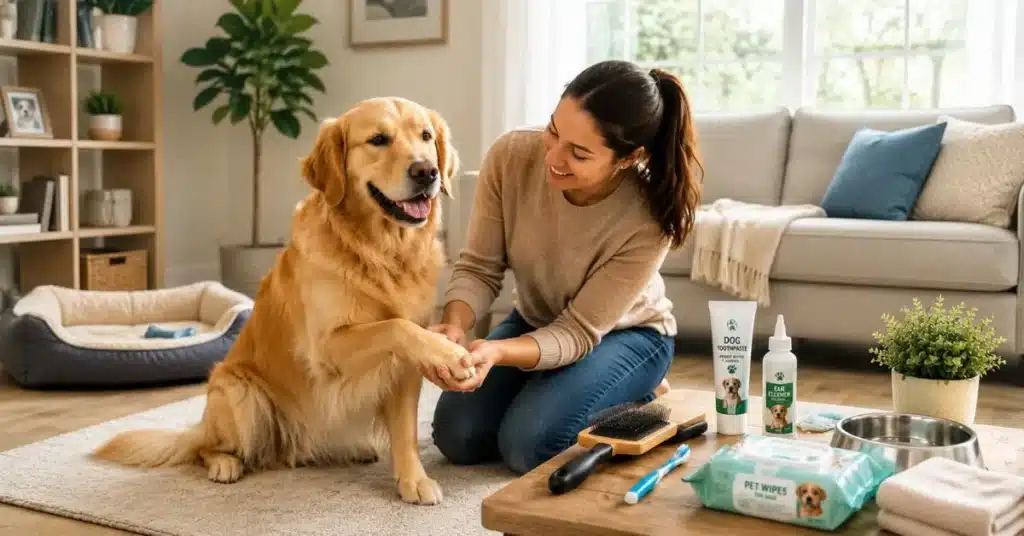
Recommended Hygiene Products for Beginners
If you’re building your first dog hygiene routine, you don’t need dozens of products.
A few basic items can cover most hygiene needs.
Essential Starter Products
- Dog-safe wipes
- Dog toothbrush
- Dog toothpaste
- Ear cleaner
- Waterless shampoo
- Paw cleaner
- Soft grooming brush
Product Selection Tip
Focus on products that support your routine rather than products that promise quick fixes.
Consistency usually matters more than buying additional tools.
Quick Between-Bath Checklist
Before considering a full bath, try these steps first:
☐ Brush the coat
☐ Clean the paws
☐ Use dog wipes
☐ Wash bedding
☐ Check ears
☐ Brush teeth
☐ Use a waterless shampoo if needed
For many dogs, these simple habits are enough to maintain good hygiene between baths while supporting healthier skin, a cleaner coat, and a fresher-smelling home.
Dog Hygiene Safety Tips
Good hygiene should help your dog stay healthy and comfortable. However, using the wrong products or following incorrect practices can sometimes create new problems.
The goal is not to clean your dog more often. The goal is to clean your dog safely and effectively.
Here are some of the most important safety tips every dog owner should know.
Avoid Overbathing
One of the most common hygiene mistakes is bathing dogs too frequently.
Many owners assume that more baths automatically mean better hygiene. In reality, excessive bathing can strip natural oils from the skin and coat.
Potential problems include:
- Dry skin
- Itching
- Irritation
- Dull coat condition
The ideal bathing frequency depends on your dog’s breed, coat type, activity level, and overall health.
Common Mistake
Many first-time dog owners bathe their dog every week even when there is no real need. In many cases, regular brushing and spot cleaning are more effective than additional baths.
The ideal bathing schedule varies by breed, coat type, and lifestyle, which is why veterinary organizations recommend avoiding unnecessary baths.
Never Use Human Toothpaste
Human toothpaste is not designed for dogs.
Many products contain ingredients that dogs should not swallow.
Instead, use:
- Dog-safe toothpaste
- Veterinary-approved dental products
- Dog toothbrushes
Safety Reminder
Even a strong dental routine should be gentle and gradual, especially for dogs that are not used to tooth brushing.
Be Careful With Ear Cleaning
Healthy ears do not need aggressive cleaning.
Cleaning too frequently or inserting objects deep into the ear canal may cause irritation or injury.
When cleaning ears:
✔ Use dog-safe ear cleaning solutions
✔ Follow product instructions
✔ Be gentle
Avoid:
✘ Cotton swabs deep inside the ear canal
✘ Harsh cleaning products
✘ Excessive cleaning
Watch for Skin Irritation
Your dog’s skin can often provide early warning signs of hygiene problems.
Pay attention to:
- Redness
- Excessive scratching
- Flaky skin
- Hot spots
- Unusual bumps
Quick Skin Check
Run your hand through the coat once a week.
If you notice unusual changes, monitor the area closely and seek veterinary advice if needed.
Choose Dog-Safe Products
Not all cleaning products are suitable for dogs.
Always look for products specifically formulated for:
- Dogs
- Puppies (if applicable)
- Sensitive skin (if needed)
Products commonly used in a hygiene routine include:
- Dog wipes
- Waterless shampoo
- Ear cleaners
- Dog toothpaste
- Paw cleaners
Product Safety Tip
Whenever introducing a new product, test it on a small area first and watch for any signs of irritation.
Know When to Contact a Veterinarian
A hygiene routine helps maintain cleanliness, but it does not replace veterinary care.
Contact a veterinarian if you notice:
- Persistent bad odor
- Ear discharge
- Bleeding gums
- Severe skin irritation
- Excessive scratching
- Sudden coat changes
- Signs of pain or discomfort
Vet Alert
If symptoms persist or worsen, seek professional veterinary advice rather than relying solely on home hygiene practices.
Common Dog Hygiene Mistakes
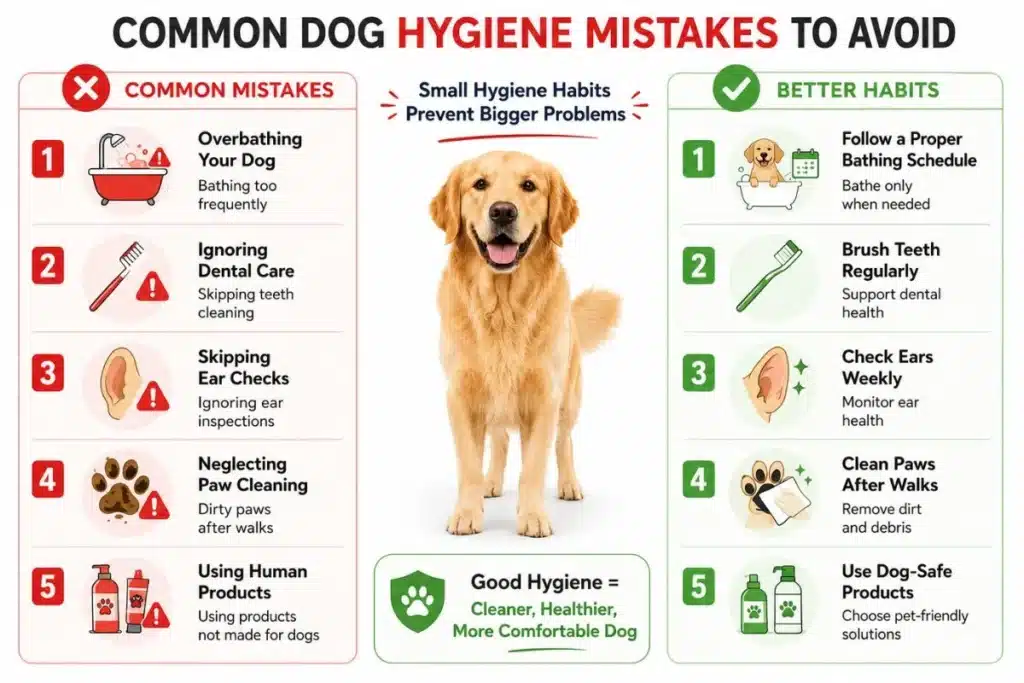
Many dog hygiene problems are caused by simple mistakes rather than neglect.
Fortunately, most of these mistakes are easy to avoid once you know what to look for.
For a more detailed breakdown of the most common errors dog owners make and how to avoid them, see our guide on Common Dog Hygiene Mistakes.
Bathing Too Often
This is one of the biggest mistakes dog owners make.
Frequent bathing may seem helpful, but it can sometimes do more harm than good.
A better approach is to focus on:
- Brushing
- Paw cleaning
- Wipes
- Clean bedding
- Dental care
These habits often provide greater benefits than extra baths.
Ignoring Dental Care
Many owners pay attention to fur and coat cleanliness while completely overlooking dental hygiene.
Unfortunately, dental issues often develop slowly.
Signs that dental care may be lacking include:
- Bad breath
- Yellow teeth
- Plaque buildup
- Inflamed gums
From My Experience
The most commonly skipped hygiene task among dog owners is dental care. Yet it’s often one of the most important long-term habits for overall health.
Skipping Ear Checks
Ear problems often start quietly.
Without regular inspections, owners may not notice issues until symptoms become obvious.
Weekly ear checks require very little time and can help identify potential concerns early.
Neglecting Paw Cleaning
Paws come into contact with:
- Dirt
- Mud
- Grass
- Pavement
- Outdoor debris
Yet many owners rarely inspect them.
Paw Cleaning Tip
Even a 30-second paw wipe after walks can significantly improve overall cleanliness.
Using Human Products
Human products are designed for human needs, not canine needs.
Avoid using:
- Human shampoo
- Human toothpaste
- Household cleaning products on your dog
Dog-specific products are generally safer and more suitable.
My Simple Dog Hygiene Routine
Over the years, I’ve learned that the best hygiene routine is not the most complicated one—it’s the one you can consistently follow.
Many owners start with ambitious plans that quickly become difficult to maintain. A simple routine is usually more effective than a perfect routine that never gets followed.
What I Do Every Day
My daily hygiene habits are intentionally simple.
I typically:
- Check paws after walks
- Refresh water bowls
- Inspect the coat
- Watch for unusual odors
- Perform a quick body check
Most days, this takes only a few minutes.
What I Do Every Week
Weekly maintenance helps keep hygiene under control.
My weekly routine includes:
- Brushing the coat
- Checking ears
- Brushing teeth
- Washing bedding
- Inspecting skin condition
These habits help prevent small issues from building up over time.
What I Review Each Month
Once a month, I review the bigger picture.
I check:
- Nail condition
- Grooming supplies
- Overall cleanliness
- Areas where the routine may need adjustment
This monthly review helps keep the routine effective and realistic.
The Biggest Lesson I’ve Learned
One of the biggest lessons I’ve learned is that hygiene is not about making a dog look perfect.
It’s about maintaining small habits that support long-term health and comfort.
Many hygiene problems don’t come from a lack of effort. They come from inconsistency.
A few minutes of regular care usually produces better results than occasional deep-cleaning sessions.
Common Questions I Hear From Dog Owners
“My dog still smells bad after a bath.”
In many cases, the problem isn’t the bath itself.
Check:
- Bedding cleanliness
- Ear hygiene
- Dental health
- Paw cleanliness
Odors often come from these areas rather than the coat alone.
“I don’t know if I’m doing enough.”
If you’re following a daily, weekly, and monthly hygiene routine, you’re already doing more than many owners realize.
Consistency matters far more than perfection.
“What’s the most important hygiene habit?”
If I had to choose just one, it would be regular observation.
Owners who routinely inspect their dogs tend to spot problems earlier and maintain better overall hygiene.
Dog Hygiene Checklist for Beginners
If you’re new to dog ownership, having a simple checklist can make hygiene routines much easier to follow.
Instead of trying to remember dozens of tasks, focus on a few consistent habits that support your dog’s cleanliness, comfort, and overall health.
For a more detailed step-by-step version, check out our Dog Hygiene Checklist for Beginners, which breaks down the most important daily, weekly, and monthly hygiene tasks into an easy-to-follow format.
Daily Dog Hygiene Checklist
These quick tasks usually take only a few minutes.
| Task | Complete |
| Check your dog’s eyes | ☐ |
| Inspect paws after walks | ☐ |
| Refresh food and water bowls | ☐ |
| Monitor coat condition | ☐ |
| Check for unusual odors | ☐ |
| Perform a quick body inspection | ☐ |
Daily Success Tip
Aim for consistency, not perfection. Even a 3–5 minute daily hygiene check can make a noticeable difference over time.
Weekly Dog Hygiene Checklist
Weekly maintenance helps prevent small issues from becoming larger problems.
| Task | Complete |
| Brush the coat | ☐ |
| Brush teeth | ☐ |
| Inspect ears | ☐ |
| Wash bedding and blankets | ☐ |
| Check skin condition | ☐ |
| Review overall cleanliness | ☐ |
Weekly Reminder
Choose one dedicated day each week for hygiene maintenance. A fixed schedule is easier to follow than trying to remember tasks randomly.
Monthly Dog Hygiene Checklist
Monthly tasks focus on long-term maintenance.
| Task | Complete |
| Inspect nail length | ☐ |
| Deep clean sleeping areas | ☐ |
| Clean dog crate | ☐ |
| Replace worn hygiene supplies | ☐ |
| Review your routine | ☐ |
Is Your Dog Hygiene Routine Working?
Many owners wonder whether their routine is actually effective.
Use this simple checklist as a guide.
Your routine is probably working if:
✅ Your dog has minimal odor
✅ Paws stay relatively clean
✅ Teeth show little visible plaque buildup
✅ Ears appear clean
✅ Coat feels healthy
✅ Bedding remains fresh between washes
✅ You rarely discover hygiene issues unexpectedly
Simple At-Home Hygiene Tests
These quick tests help you identify areas that may need improvement.
Paw Cleanliness Test
After a walk, wipe one paw with a white tissue.
Result
If the tissue consistently collects dirt and debris, consider adding a more structured paw-cleaning routine.
Coat Condition Test
Run your hand through your dog’s coat.
Check for:
- Excessive dirt
- Greasiness
- Strong odor
- Excessive dandruff
A healthy coat should feel relatively clean and comfortable.
Bedding Odor Test
Smell your dog’s bedding at the end of the week.
Result
If the odor is strong before wash day, increase bedding cleaning frequency.
Dental Health Check
Look along the gum line.
Watch for:
- Yellow buildup
- Bad breath
- Inflamed gums
These may indicate the need for more consistent dental care.
Quick Reference Table
| Hygiene Area | Recommended Frequency |
| Paw Checks | Daily |
| Water Bowl Cleaning | Daily |
| Coat Inspection | Daily |
| Brushing | Weekly |
| Teeth Brushing | 2–3 Times Weekly |
| Ear Inspection | Weekly |
| Bedding Cleaning | Weekly |
| Nail Inspection | Monthly |
| Deep Cleaning | Monthly |
Dog hygiene routine at home FAQs
Do dogs need a hygiene routine?
Yes. A regular dog hygiene routine helps keep your dog clean, comfortable, and healthy. It also helps prevent common issues such as bad odors, dirty paws, plaque buildup, ear problems, and skin irritation.
How often should I clean my dog?
Most dogs benefit from daily hygiene checks, weekly maintenance tasks, and occasional bathing based on their breed, coat type, activity level, and lifestyle. A consistent routine is usually more effective than frequent deep cleaning.
What is the best dog hygiene routine?
The best dog hygiene routine includes daily paw and coat checks, weekly brushing and dental care, regular ear inspections, clean bedding, and monthly maintenance tasks such as nail checks and deep cleaning.
Can I keep my dog clean without bathing?
Yes. Regular brushing, paw cleaning, clean bedding, dog wipes, waterless shampoo, and proper dental care can help keep many dogs clean and fresh between baths.
How often should I bathe my dog?
There is no single bathing schedule that works for every dog. Bathing frequency depends on coat type, activity level, and lifestyle. Many dogs only need occasional baths when combined with proper brushing and hygiene maintenance.
How often should I brush my dog’s teeth?
Many veterinarians recommend brushing your dog’s teeth several times per week. More frequent brushing helps reduce plaque buildup, bad breath, and long-term dental problems.
How often should I clean my dog’s ears?
Most dogs benefit from a weekly ear inspection. Some breeds may require more frequent checks depending on their ear structure, activity level, and veterinary recommendations.
Is dog grooming the same as dog hygiene?
No. Grooming focuses mainly on appearance and coat maintenance, while hygiene includes dental care, ear cleaning, paw care, bedding cleanliness, and overall health-related cleanliness.
Why does my dog smell bad even after a bath?
Persistent odors can come from dirty ears, dental problems, unwashed bedding, skin conditions, or poor overall hygiene. Bathing alone may not solve the root cause of the odor.
What are the signs of poor hygiene in dogs?
Common signs include:
- Bad odor
- Dirty paws
- Excessive ear wax
- Plaque buildup
- Greasy coat
- Dirty bedding
- Persistent skin irritation
What hygiene products does a dog need?
Most beginners only need a few basic products:
- Dog wipes
- Dog toothbrush
- Dog toothpaste
- Ear cleaner
- Waterless shampoo
- Paw cleaner
- Basic grooming brush
Building a Simple Dog Hygiene Routine That Lasts
A good dog hygiene routine at home doesn’t have to be complicated. The most effective approach is to follow a simple daily, weekly, and monthly hygiene system that keeps your dog clean, healthy, and comfortable year-round.
Rather than focusing only on baths, pay attention to your dog’s teeth, ears, paws, coat, bedding, and living environment. These small habits work together to prevent common hygiene problems and help you spot potential health issues early.
If you’re a beginner, start with the daily checklist and build from there. Consistency matters more than perfection. Over time, these simple habits will become part of your routine and help your dog stay cleaner, fresher, and healthier throughout every stage of life.
Want to learn more about caring for your dog? Check out our complete Dog Care for Beginners guide for practical tips on feeding, grooming, health, exercise, and everyday care.