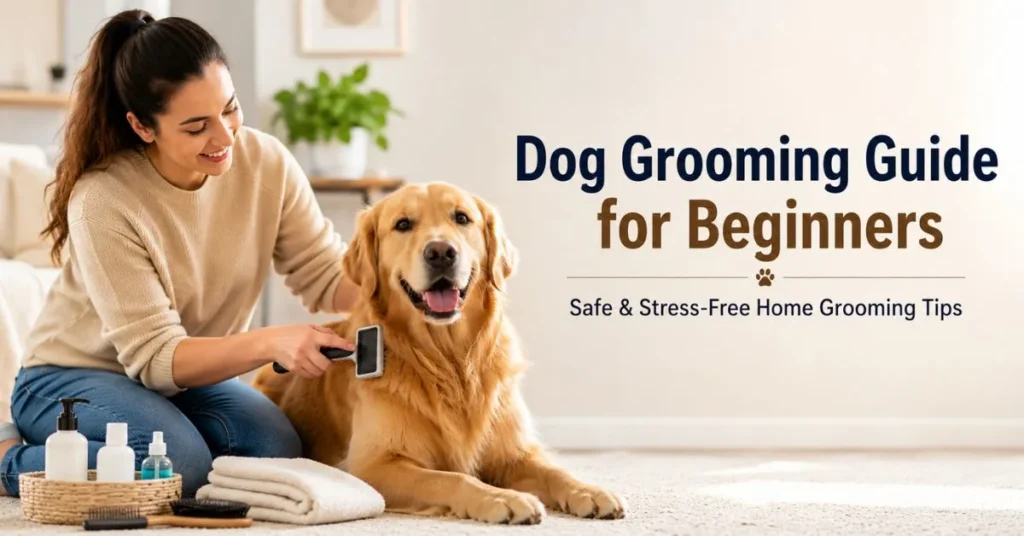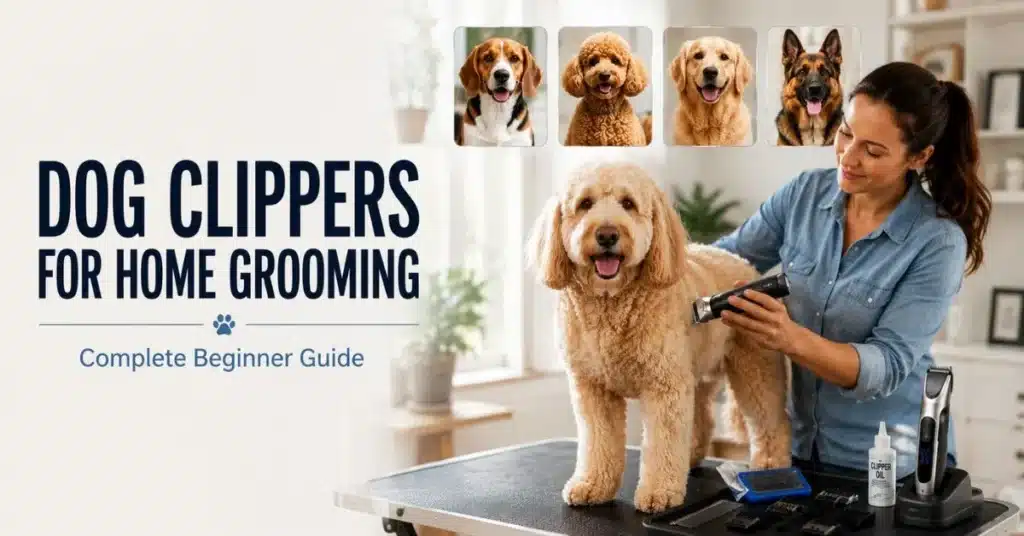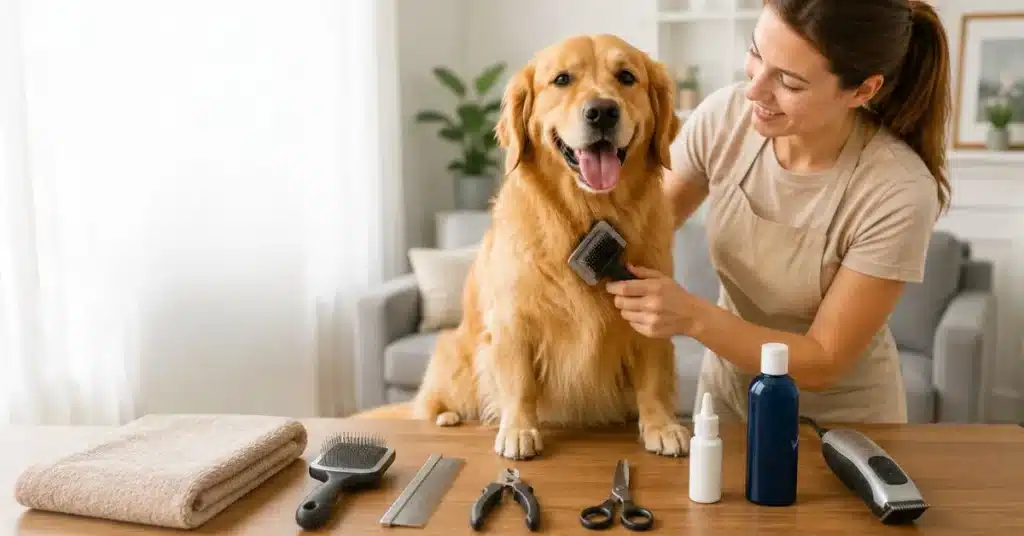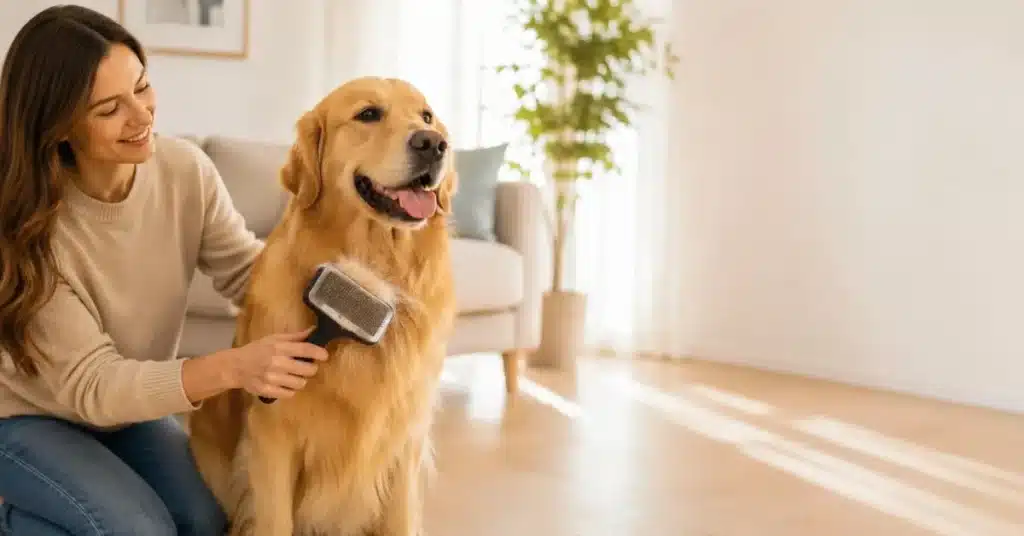
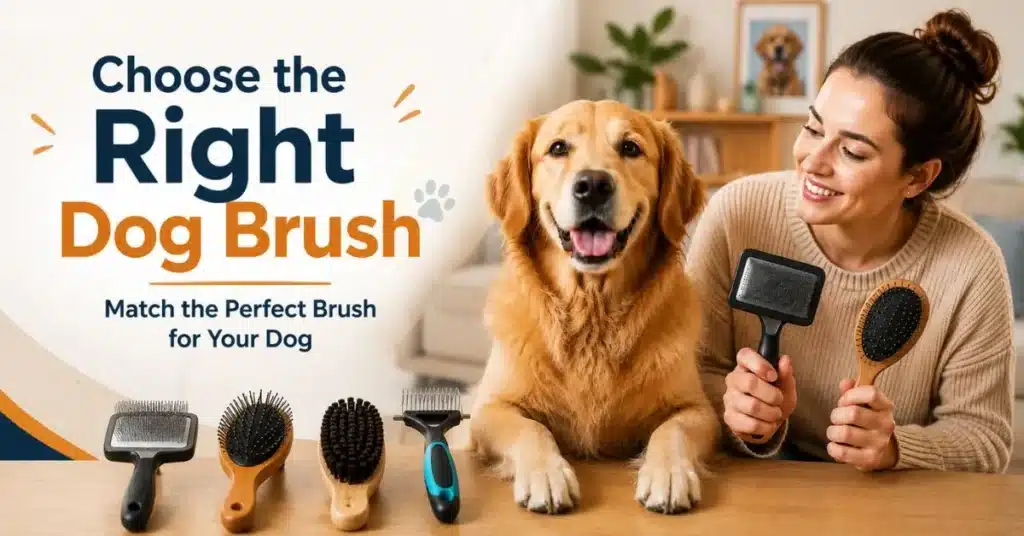
Choosing the right dog brush starts with understanding your dog’s coat type, shedding level, and grooming needs. Short-haired dogs often do well with bristle or rubber brushes, while long-haired, curly-coated, and double-coated dogs may need tools like a pin brush, slicker brush, or undercoat rake.
If you’re not sure which brush your dog needs, don’t choose based on breed alone. This guide will help you identify your dog’s coat type, match it with the right brush, and avoid common beginner mistakes.
Why Choosing the Right Dog Brush Matters
Many first-time dog owners assume that any dog brush will work for any dog. However, choosing the wrong grooming tool is one of the most common mistakes beginners make.
Different brushes are designed for different purposes. Some help remove loose hair, while others are better for managing tangles, reducing matting, or removing a dog’s undercoat. Using the wrong brush may make grooming less effective and can leave your dog’s coat looking messy even after brushing.
For example, a slicker brush may work well for a curly-coated dog, but it may not be necessary for a short-haired Labrador. Likewise, a simple bristle brush may not be enough for a heavily shedding Husky with a thick double coat.
Choosing the right dog brush can help:
- Remove loose hair more effectively
- Reduce shedding around the home
- Prevent tangles and mats
- Distribute natural skin oils
- Improve coat appearance
- Make grooming more comfortable for your dog
Regular brushing is also an important part of maintaining your dog’s overall coat health. If you’re new to grooming, learn more about Why Brushing Your Dog Is Important and how it benefits your dog’s skin and coat.
The goal isn’t to find the “best” dog brush. The goal is to find the right brush for your dog’s specific coat type, shedding level, and grooming needs.
Step 1: Identify Your Dog’s Coat Type
Before you choose a dog brush, you need to know what type of coat your dog has. This is the step many first-time dog owners skip, and it’s often the reason they end up buying the wrong grooming tool.
Different coat types have different grooming needs. A brush that works well for a short-coated Labrador may not be the best choice for a curly-coated Poodle or a heavily shedding Husky.
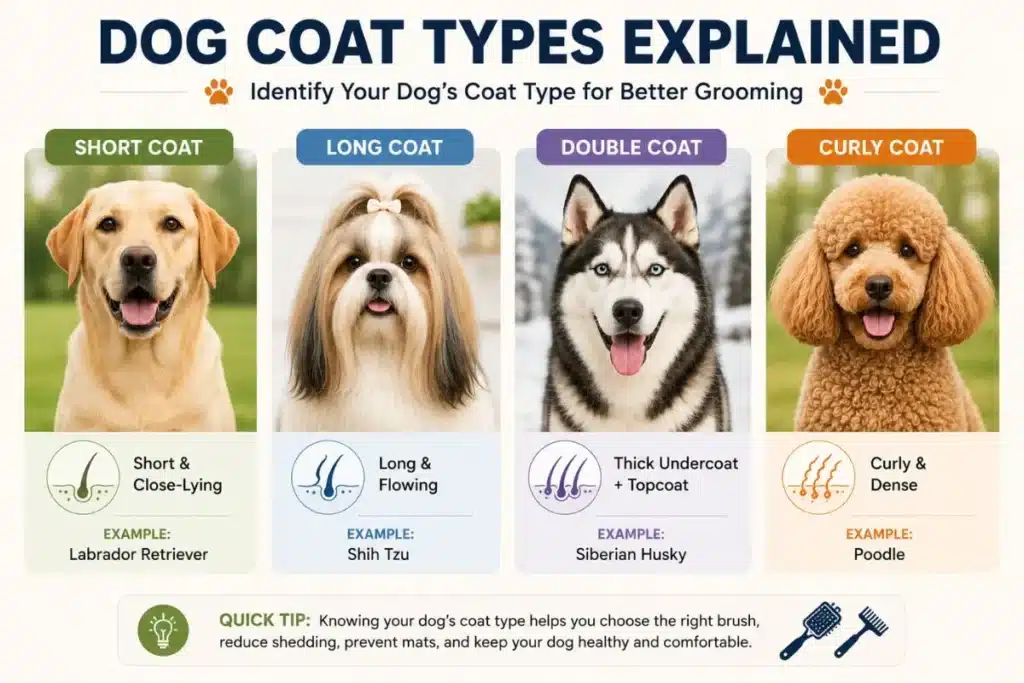
In most cases, dogs fall into one of four common coat categories:
- Short Coat
- Long Coat
- Double Coat
- Curly Coat
Let’s take a closer look at each one.
Short Coat
Short-coated dogs have smooth fur that lies close to the body. Their coats are usually easy to maintain and less likely to become tangled.
Common examples include:
- Labrador Retriever
- Beagle
- Boxer
- Doberman Pinscher
Although short-coated dogs may seem low maintenance, many still shed regularly. Routine brushing helps remove loose hair before it ends up on your furniture and clothing.
Typical Characteristics:
- Smooth coat texture
- Minimal tangles
- Moderate shedding
- Easy grooming routine
Long Coat
Long-coated dogs have hair that grows longer and often requires more frequent grooming.
Common examples include:
- Shih Tzu
- Yorkshire Terrier
- Maltese
- Afghan Hound
These coats can easily develop knots and tangles if not brushed regularly. Long-haired dogs often benefit from grooming tools designed to reach deeper into the coat without causing discomfort.
Typical Characteristics:
- Longer hair growth
- More prone to tangles
- Requires regular brushing
- Higher maintenance than short coats
Double Coat
Double-coated dogs have two layers of fur:
- A protective outer coat (topcoat)
- A dense insulating undercoat
Many owners don’t realize their dog has a double coat until seasonal shedding begins. These dogs typically have a protective outer coat and a dense undercoat. According to the American Kennel Club (AKC), double-coated breeds often experience heavier seasonal shedding as loose undercoat hair is naturally released.
Common examples include:
- Siberian Husky
- Golden Retriever
- German Shepherd
- Australian Shepherd
During shedding seasons, these dogs can release large amounts of loose undercoat. Regular brushing helps manage shedding and maintain coat health.
Typical Characteristics:
- Thick, fluffy appearance
- Heavy seasonal shedding
- Dense undercoat
- Requires specialized grooming tools
Curly Coat
Curly-coated dogs have hair that forms curls or waves instead of lying flat.
Common examples include:
- Poodle
- Goldendoodle
- Labradoodle
- Bichon Frise
These dogs often shed less visibly than many other breeds, but loose hair can become trapped within the coat. Without regular grooming, this may lead to tangles and matting.
Typical Characteristics:
- Curly or wavy texture
- Lower visible shedding
- Higher risk of matting
- Requires consistent grooming
Quick Coat Type Test
Not sure which category your dog falls into? Use this simple test:
Your dog’s fur feels short and smooth.
➡️ Short Coat
Your dog has long, flowing, or silky hair.
➡️ Long Coat
Your dog has a fluffy undercoat beneath the outer fur.
➡️ Double Coat
Your dog’s hair forms curls or waves.
➡️ Curly Coat
If you’re still unsure, focus on your dog’s fur texture, shedding level, and grooming needs rather than relying on breed alone. Even dogs of the same breed can have slightly different coat characteristics.
Once you’ve identified your dog’s coat type, you’ll have a much easier time choosing the right grooming tool. For coat-specific recommendations, see our Best Dog Brush by Coat Type guide.
Now that you know your dog’s coat type, the next step is understanding the different types of dog brushes and what each one is designed to do.
Step 2: Understand Different Types of Dog Brushes
Now that you’ve identified your dog’s coat type, the next step is understanding the different types of dog brushes available.
This is where many dog owners become confused. Pet stores and online marketplaces offer dozens of grooming tools, and many of them look similar at first glance. However, each brush is designed for a specific purpose, and choosing the wrong one can make grooming less effective.
The goal isn’t to find the most expensive brush. It’s to find the grooming tool that matches your dog’s coat type, shedding level, and grooming needs.
If you’d like a deeper overview of how different grooming tools compare, see our Types of Dog Brushes Explained guide.
Let’s look at the most common dog brushes and when they are typically used.
Slicker Brush
A slicker brush is one of the most versatile dog grooming tools available. It features fine wire bristles designed to remove loose hair, tangles, and small mats.
Slicker brushes are commonly used for:
- Long coats
- Curly coats
- Thick coats
- Dogs prone to tangles
Common examples include:
- Poodle
- Goldendoodle
- Labradoodle
- Shih Tzu
Benefits of a Slicker Brush
- Helps remove loose hair
- Reduces tangles
- Helps prevent matting
- Improves coat appearance
- Reaches deeper into the coat
Potential Limitation
A slicker brush may not be necessary for every dog. For some short-coated breeds, a simpler grooming tool may be more appropriate.
Want to learn when a slicker brush is the right choice? Read our Slicker Brush Guide for Beginners for a more detailed explanation.
Pin Brush
A pin brush looks similar to a human hairbrush and features rounded pins that glide through longer coats.
Pin brushes are generally best for:
- Long-haired dogs
- Silky coats
- Routine maintenance grooming
Common examples include:
- Yorkshire Terrier
- Maltese
- Afghan Hound
- Shih Tzu
Benefits of a Pin Brush
- Gentle on the coat
- Removes loose surface hair
- Keeps long hair looking neat
- Suitable for regular maintenance
Potential Limitation
Pin brushes are excellent for everyday grooming, but they may not be the best choice for removing heavy undercoat shedding.
Bristle Brush
A bristle brush uses tightly packed natural or synthetic bristles to clean and smooth the coat.
These brushes are often recommended for:
- Short-coated dogs
- Smooth-coated breeds
- Dogs with minimal tangling
Common examples include:
- Labrador Retriever
- Boxer
- Beagle
- Doberman Pinscher
Benefits of a Bristle Brush
- Removes dirt and debris
- Distributes natural skin oils
- Promotes a healthy shine
- Comfortable for routine brushing
Potential Limitation
Bristle brushes generally work on the surface of the coat and may not remove large amounts of loose undercoat.
Rubber Brush
A rubber brush is one of the easiest grooming tools for beginners to use.
These brushes feature flexible rubber tips that help lift loose hair while gently massaging the skin.
They are commonly recommended for:
- Short-haired dogs
- Dogs with sensitive skin
- Dogs that dislike traditional brushes
Common examples include:
- Pug
- Labrador Retriever
- Boxer
- Pit Bull
Benefits of a Rubber Brush
- Easy to use
- Gentle on sensitive skin
- Helps remove loose hair
- Can make grooming more enjoyable
Potential Limitation
Rubber brushes work well for routine maintenance but may not be effective for severe shedding or matting.
Undercoat Rake
An undercoat rake is specifically designed for dogs with thick double coats.
Unlike standard brushes, it reaches through the outer coat to remove loose undercoat hair.
These tools are often used for:
- Husky
- Golden Retriever
- German Shepherd
- Australian Shepherd
Benefits of an Undercoat Rake
- Removes loose undercoat
- Helps manage seasonal shedding
- Reduces fur buildup
- Improves airflow through the coat
Potential Limitation
Undercoat rakes are designed for double-coated breeds and may not be suitable for every coat type.
If your dog has a thick double coat, our Undercoat Rake Guide for Beginners explains how to use this tool safely and effectively.
Deshedding Tool
A deshedding tool is designed to remove loose hair before it ends up on your floors, furniture, and clothing.
Many dog owners turn to deshedding tools when regular brushing isn’t enough to manage shedding.
These tools are commonly used for:
- Heavy shedders
- Double-coated breeds
- Seasonal shedding control
Common examples include:
- Husky
- German Shepherd
- Golden Retriever
- Labrador Retriever
Benefits of a Deshedding Tool
- Removes large amounts of loose hair
- Helps control shedding
- Reduces pet hair around the home
- Supports coat maintenance
Potential Limitation
Deshedding tools should be used carefully and according to your dog’s grooming needs. Overuse may not be necessary and can sometimes make grooming uncomfortable.
Quick Comparison of Dog Brush Types
| Brush Type | Best For | Main Purpose |
| Slicker Brush | Curly, long, and thick coats | Remove tangles and loose hair |
| Pin Brush | Long and silky coats | Daily maintenance grooming |
| Bristle Brush | Short coats | Surface cleaning and shine |
| Rubber Brush | Short coats and sensitive skin | Loose hair removal and massage |
| Undercoat Rake | Double coats | Undercoat removal |
| Deshedding Tool | Heavy shedders | Shedding control |
Remember, no single brush works for every dog. The best choice depends on your dog’s coat type, shedding level, and grooming needs.
Now that you understand the different types of dog brushes, the next step is matching the right brush to your dog’s specific coat and grooming needs.
Step 3: Match the Right Brush to Your Dog
Now that you’ve identified your dog’s coat type and learned what each brush is designed to do, it’s time to match the right grooming tool to your dog’s specific needs.
This is where many dog owners overcomplicate things. In reality, the best choice usually comes down to three factors:
- Your dog’s coat type
- Your dog’s shedding level
- Your grooming goals
The goal isn’t to find the “best” dog brush. It’s to find the brush that makes grooming easier, more comfortable, and more effective for your dog.
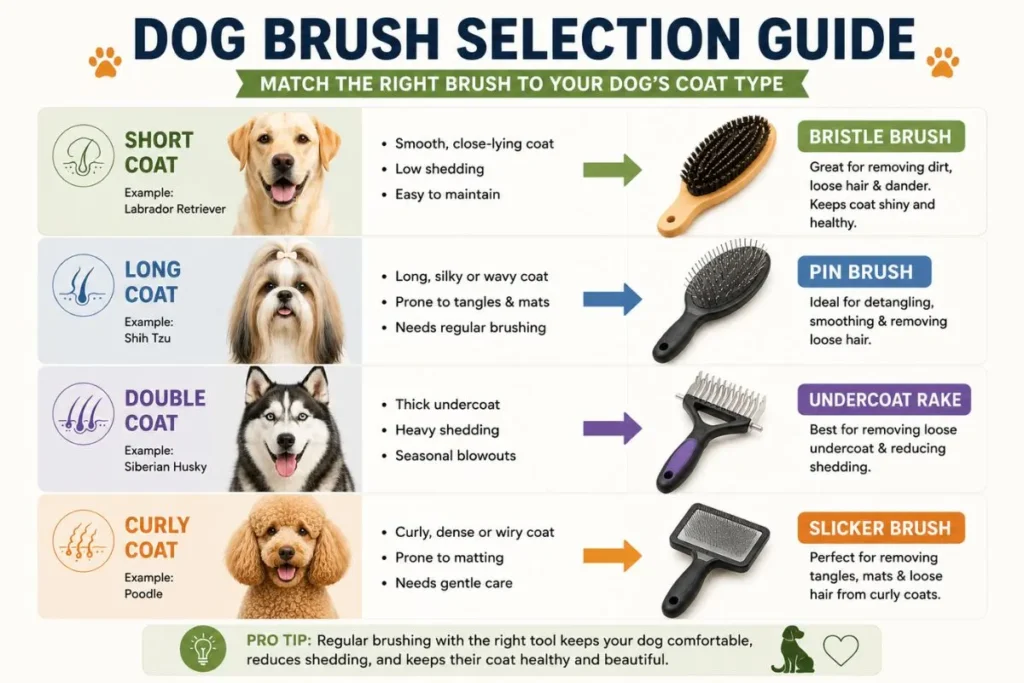
Dog Brush Selection Chart
Use this quick reference chart to match your dog’s coat type with the most suitable grooming tool.
| Dog Coat Type | Recommended Brush | Alternative Brush |
| Short Coat | Bristle Brush | Rubber Brush |
| Long Coat | Pin Brush | Slicker Brush |
| Double Coat | Undercoat Rake | Slicker Brush |
| Curly Coat | Slicker Brush | Metal Comb |
| Heavy Shedding | Deshedding Tool | Undercoat Rake |
If you’d like more detailed recommendations based on specific coat types, see our Best Dog Brush by Coat Type guide.
Best Brush for Short-Coated Dogs
Short-coated dogs often have smooth hair that lies close to the body.
Common examples include:
- Labrador Retriever
- Beagle
- Boxer
- Doberman Pinscher
Recommended Choice: Bristle Brush
Why?
- Helps remove loose surface hair
- Distributes natural oils
- Keeps the coat shiny
- Comfortable for routine grooming
Alternative Option: Rubber Brush
A rubber brush may be a good choice if your dog has sensitive skin or dislikes traditional brushes.
Real-World Example
Many Labrador owners assume they need a professional-looking slicker brush. In reality, a simple bristle brush or rubber brush is often more practical for routine grooming.
Best Brush for Long-Coated Dogs
Long coats require regular maintenance because tangles and knots can develop quickly.
Common examples include:
- Shih Tzu
- Maltese
- Yorkshire Terrier
Recommended Choice: Pin Brush
Why?
- Glides through long hair
- Helps maintain coat appearance
- Suitable for routine brushing
Alternative Option: Slicker Brush
A slicker brush can help remove tangles before they become mats.
Real-World Example
Many long-haired dog owners focus on appearance, but regular brushing is equally important for preventing painful tangles and matting.
Best Brush for Double-Coated Dogs
Double-coated dogs often experience significant seasonal shedding.
Common examples include:
- Husky
- German Shepherd
- Golden Retriever
- Australian Shepherd
Recommended Choice: Undercoat Rake
Why?
- Reaches loose undercoat
- Helps reduce seasonal shedding
- Improves coat maintenance
Alternative Option: Slicker Brush
Can help remove loose surface hair and support routine grooming.
Real-World Example
A Husky owner may become frustrated when regular brushes fail to remove loose undercoat. In many cases, the problem isn’t the grooming routine—it’s using the wrong grooming tool.
Best Brush for Curly-Coated Dogs
Curly coats often trap loose hair within the coat instead of releasing it naturally.
Common examples include:
- Poodle
- Goldendoodle
- Labradoodle
- Bichon Frise
Recommended Choice: Slicker Brush
Why?
- Helps prevent tangles
- Removes trapped hair
- Reduces matting
Alternative Option: Metal Comb
Useful for checking deeper sections of the coat after brushing.
Real-World Example
Many owners assume curly-coated dogs require less grooming because they shed less. However, curly coats often need consistent brushing to prevent mats and tangles.
Should You Use More Than One Brush?
Sometimes, yes.
Different brushes perform different jobs, and some dogs may benefit from more than one grooming tool.
For example:
Double-Coated Dogs
- Undercoat Rake for loose undercoat
- Slicker Brush for routine maintenance
Curly-Coated Dogs
- Slicker Brush for daily grooming
- Metal Comb for checking hidden tangles
Long-Coated Dogs
- Pin Brush for maintenance
- Slicker Brush for occasional detangling
There is no rule that says you must use only one grooming tool. The best setup depends on your dog’s coat type, grooming needs, and shedding level.
Now that you’ve matched the right brush to your dog, the next step is learning how to avoid common buying mistakes and recognize signs that you’re using the wrong grooming tool.
Common Dog Brush Buying Mistakes
Before buying a dog brush, it’s helpful to understand the mistakes many first-time dog owners make. Avoiding these common errors can save money, improve grooming results, and help you choose the right tool for your dog’s coat.
Mistake 1: Choosing a Brush Based Only on Breed
Many owners search for things like:
- Best brush for a Labrador
- Best brush for a Husky
While breed can provide useful clues, coat type is usually more important than breed. Always look at your dog’s actual coat characteristics before choosing a grooming tool.
Mistake 2: Ignoring Shedding Level
Two dogs with similar coats may shed very differently.
If your dog sheds heavily, you may need tools designed specifically for loose hair removal. Understanding your dog’s shedding level is just as important as understanding coat type.
Mistake 3: Assuming One Brush Does Everything
No single brush removes tangles, loose hair, undercoat buildup, and mats equally well.
Different grooming tools serve different purposes, which is why many experienced dog owners use more than one brush as part of their grooming routine.
Mistake 4: Using Deshedding Tools Too Often
Deshedding tools can be effective for managing loose hair, especially in double-coated breeds. However, using them more often than necessary may not provide additional benefits and can make grooming uncomfortable for some dogs.
If you’re unsure when a regular brush is enough and when a deshedding tool makes sense, see our Dog Brush vs Deshedding Tool comparison guide.
Mistake 5: Buying the Cheapest Option Available
A low-quality brush may have:
- Weak construction
- Bent pins
- Poor grip
- Less effective grooming performance
A well-made grooming tool often lasts longer and provides a safer and more comfortable grooming experience.
The best dog brush isn’t necessarily the most expensive one. It’s the one that matches your dog’s coat type, shedding level, and grooming needs.
Signs You’re Using the Wrong Dog Brush
Not sure if your current brush is working?
Watch for these common warning signs.
Your Dog Dislikes Brushing
If your dog suddenly avoids grooming sessions, the brush may be uncomfortable or unsuitable.
Hair Continues to Mat
Regular brushing should help manage tangles.
If mats continue to form, you may need a different brush type.
Shedding Doesn’t Improve
Some brushes only work on the surface of the coat.
Heavy shedders may require specialized tools.
The Brush Pulls Hair Excessively
Grooming should not feel like you’re constantly pulling hair.
This may indicate that the brush isn’t suitable for your dog’s coat.
Skin Appears Red or Irritated
Stop brushing and inspect the brush if you notice irritation.
Damaged pins, excessive pressure, or the wrong brush type can contribute to discomfort.
Now that you know how to match a brush to your dog’s coat and avoid common mistakes, the next step is learning how to brush safely and create a simple grooming routine that works for your dog.
Dog Brush Safety Tips
Choosing the right brush is important, but using it correctly matters just as much. Even a good dog brush can cause discomfort if you use too much pressure, brush too often, or force it through tangles.
If you’re new to grooming, our How to Brush a Dog Properly guide explains the full step-by-step brushing routine.
Use Gentle Pressure
Brushing should never feel like scraping the skin. Use light, steady strokes and avoid pressing too hard, especially on sensitive areas.
Pay Attention to Sensitive Areas
Be extra gentle around:
- Behind the ears
- Under the legs
- Around the belly
- Near the tail
These areas can be more sensitive and more likely to develop tangles.
Check Your Brush Regularly
Over time, brush pins and bristles can become damaged. Replace the brush if you notice:
- Bent pins
- Broken bristles
- Sharp edges
- Loose parts
Never Force Through Mats
If the brush gets stuck in a mat, do not pull harder. Work slowly from the edges, use a detangling tool if needed, or consider professional grooming for severe mats.
According to ASPCA pet care resources, severe matting can cause discomfort and may require professional attention to remove safely without stressing your dog.
Watch Your Dog’s Body Language
Your dog may show discomfort by pulling away, licking lips, turning their head, or trying to leave. If that happens, pause and make the grooming session gentler and shorter.
Quick Dog Brush Selection Checklist
Still unsure which brush to choose?
Use this simple checklist before buying.
Dog Brush Buying Checklist
✓ Identify your dog’s coat type
✓ Determine whether your dog sheds lightly or heavily
✓ Choose a brush designed for that coat type
✓ Consider your dog’s skin sensitivity
✓ Decide whether you need daily grooming or seasonal shedding control
✓ Avoid buying based on breed alone
✓ Avoid assuming one brush works for every dog
✓ Read product instructions before using specialty tools
If you can check all of these boxes, you’re much more likely to choose the right grooming tool.
Common Questions About How to Choose the Right Dog Brush
How Do I Know Which Dog Brush Is Right for My Dog?
The right dog brush depends on your dog’s coat type, shedding level, and grooming needs. Start by identifying whether your dog has a short, long, curly, or double coat, then choose a brush designed for that coat type.
If you’re still unsure, see our Best Dog Brush by Coat Type guide for more detailed recommendations.
What Type of Dog Brush Should I Use?
Different coat types require different grooming tools.
- Short coats: Bristle Brush or Rubber Brush
- Long coats: Pin Brush or Slicker Brush
- Double coats: Undercoat Rake
- Curly coats: Slicker Brush
For a detailed breakdown of each grooming tool, visit our Types of Dog Brushes Explained guide.
Can I Use the Same Brush on Every Dog?
Usually not. Different coat types have different grooming needs. A brush that works well for a Labrador may not be the best option for a Poodle, Husky, or Shih Tzu. Matching the brush to your dog’s coat type typically produces better grooming results.
What Brush Is Best for Shedding Dogs?
For heavy shedders, many owners use a Deshedding Tool or Undercoat Rake. For routine loose hair removal, a Slicker Brush, Rubber Brush, or Bristle Brush may also help, depending on the coat type.
For more recommendations, check out our Best Dog Brush for Shedding Dogs guide.
What Is the Difference Between a Slicker Brush and a Pin Brush?
A Slicker Brush is designed to remove loose hair, tangles, and small mats, while a Pin Brush is typically used for maintaining long coats and daily grooming. Slicker Brushes are generally better for detangling, while Pin Brushes are often gentler for routine brushing.
Do Puppies Need a Special Dog Brush?
In many cases, yes. Puppies often benefit from softer, gentler brushes that help create positive grooming experiences while their coats develop.
For beginner-friendly recommendations, see our Best Dog Brush for Puppies guide.
How Often Should I Brush My Dog?
Brushing frequency depends on your dog’s coat type. Short-coated dogs may only need brushing once or twice a week, while long-haired, curly-coated, and double-coated dogs often require more frequent grooming.
According to PetMD grooming resources, grooming schedules can vary significantly depending on a dog’s coat characteristics and overall coat condition.
Choosing the Right Dog Brush: Key Takeaways
Choosing the right dog brush starts with understanding your dog’s coat type, shedding level, and grooming needs. Instead of focusing on breed names or marketing claims, focus on finding the brush that matches your dog’s coat and grooming routine.
Remember these three simple steps:
1. Identify your dog’s coat type.
2. Match the brush to your dog’s grooming needs.
3. Avoid common brushing mistakes.
If you’re building a complete at-home grooming routine, continue with our Dog Grooming for Beginners guide to learn the essential grooming practices every dog owner should know.