
How can you reduce dog shedding at home? While you can’t completely stop normal dog shedding, you can significantly reduce loose hair by brushing your dog regularly, feeding a balanced diet, using the right grooming tools, and maintaining healthy skin and coat care.
Many dog owners worry that heavy shedding always means something is wrong, but that’s not always the case. Shedding is a natural part of a dog’s hair growth cycle and varies depending on breed, coat type, season, and overall health. Understanding the difference between normal shedding and excessive shedding is the first step toward choosing the right solution.
In this guide, you’ll learn why dogs shed, how to reduce dog shedding naturally at home, the best grooming habits, foods that support a healthy coat, common mistakes to avoid, and when it’s time to see a veterinarian. By the end, you’ll have a practical home care routine to manage shedding and keep your dog’s coat healthy.
Why Do Dogs Shed?
If you’re finding dog hair on your couch, clothes, or floors every day, your first thought might be that something is wrong. Fortunately, that’s not always the case. In fact, dog shedding is a completely natural process that helps your dog’s coat stay healthy throughout the year.
Just like humans naturally lose hair every day, dogs also replace old, damaged, or worn-out hairs with new growth. This continuous renewal process keeps the coat clean, functional, and able to protect your dog from changing weather conditions, dirt, moisture, and skin irritation.
The amount of shedding varies from one dog to another. Some breeds lose hair steadily throughout the year, while others shed heavily only during certain seasons. Factors such as breed, coat type, age, nutrition, overall health, and environment all influence how much loose hair you may notice around your home.
The Natural Hair Growth Cycle
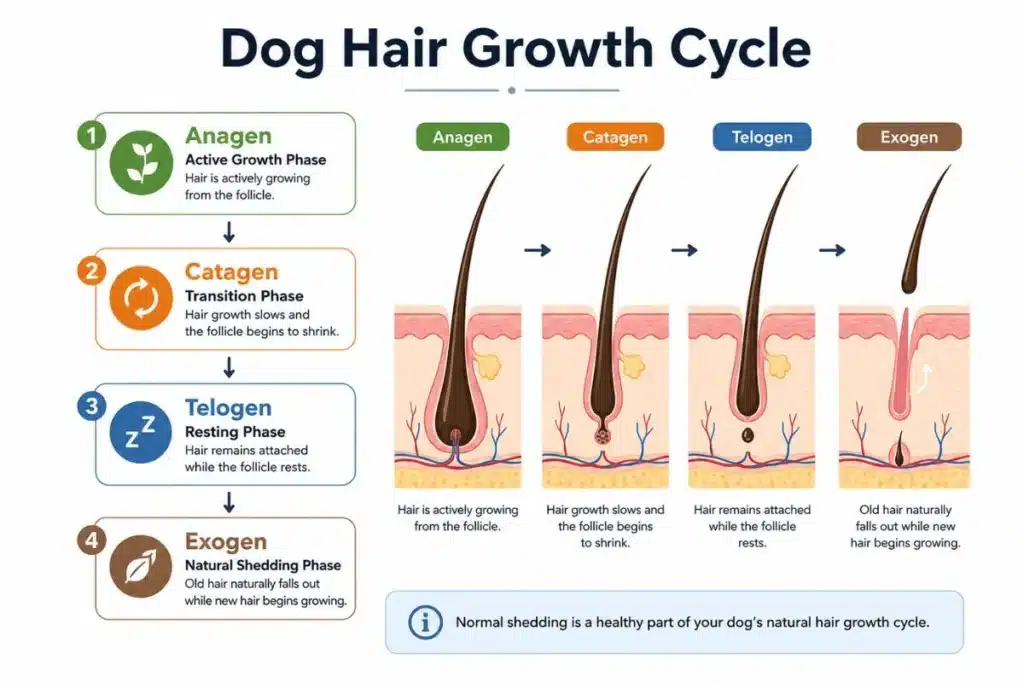
Every dog’s coat follows a natural hair growth cycle, which is one of the main reasons shedding occurs.
The cycle includes four stages:
- Anagen – the active growth phase, when new hair develops.
- Catagen – a short transition phase where growth slows.
- Telogen – the resting phase before the old hair is released.
- Exogen – the shedding phase, when old hairs naturally fall out and make room for new ones.
Because thousands of hair follicles move through these stages at different times, healthy dogs shed continuously, even if the amount isn’t always noticeable.
Seasonal Shedding Is Completely Normal
Many dogs, especially those with a double coat, experience heavier shedding during spring and fall.
This seasonal increase happens because the coat adjusts to changing temperatures. During these periods, your dog may release a large amount of loose undercoat—a process often referred to as “blowing the coat.”
Although it can seem excessive, this type of shedding is usually a normal part of your dog’s natural coat cycle rather than a sign of illness.
Not Every Dog Sheds the Same Way
Some dogs naturally shed far more than others.
For example:
- Golden Retrievers, German Shepherds, and Siberian Huskies are known for heavy seasonal shedding because of their dense double coats.
- Breeds such as Poodles and Bichon Frises tend to shed much less, although they still require regular grooming to remove loose hair trapped within their curly coats.
Understanding your dog’s coat type is one of the first steps toward choosing the right grooming routine and managing shedding more effectively.
If your dog’s hair loss seems much heavier than expected, isn’t seasonal, or is accompanied by bald patches or irritated skin, the cause may be something other than normal coat renewal. In that case, our guide on Why Is My Dog Shedding So Much? explains the most common causes of excessive shedding and what you should do next.
Is Your Dog’s Shedding Normal or Excessive?
Finding loose dog hair around your home can be frustrating, but it doesn’t always mean something is wrong. In fact, normal shedding is part of a healthy dog’s natural coat renewal process. The challenge is knowing when shedding is expected and when it may signal an underlying problem.
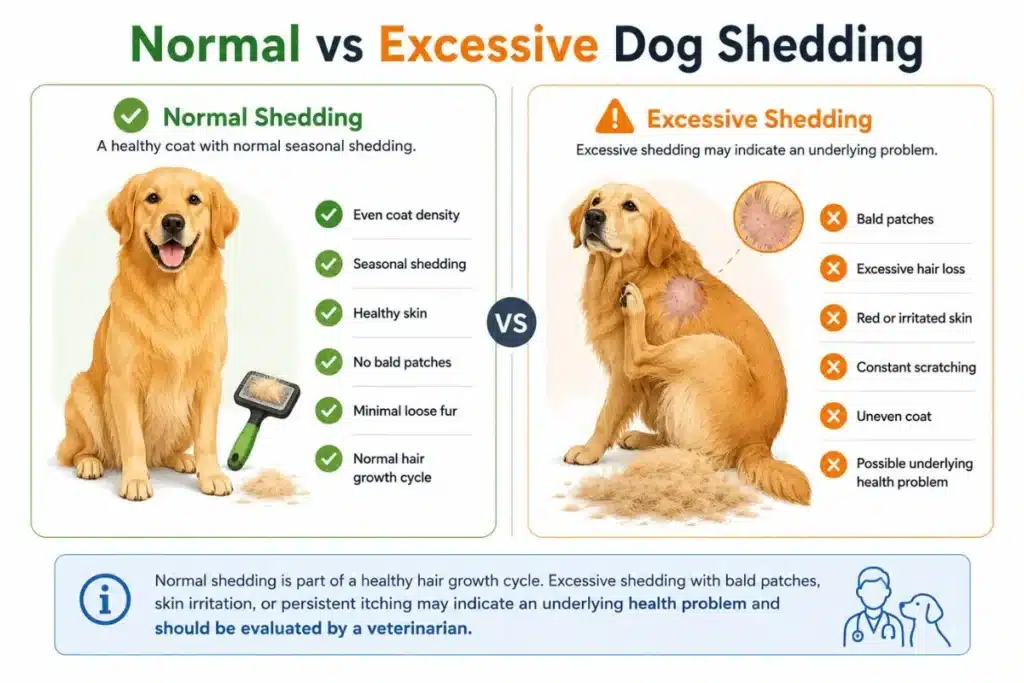
Most dogs shed throughout the year, while many double-coated breeds shed more heavily during spring and fall. However, if your dog suddenly starts losing much more hair than usual, develops bald patches, or has irritated skin, it’s important to look beyond normal seasonal shedding.
Understanding the difference between normal shedding and excessive shedding helps you choose the right solution instead of worrying unnecessarily or trying treatments that may not address the real cause.
Signs of Normal Dog Shedding
In most healthy dogs, shedding follows a predictable pattern.
Your dog’s shedding is generally considered normal if:
- Loose hair is evenly distributed across the body.
- The coat remains full, soft, and healthy.
- The skin looks clean without redness or irritation.
- Shedding increases gradually during spring or fall.
- Your dog has a normal appetite, energy level, and behavior.
- There is no excessive scratching, licking, or discomfort.
Many dog owners notice more loose hair after brushing. This is usually a good sign because the brush is removing dead hair that would otherwise end up around your home.
Signs of Excessive Shedding
Excessive shedding is different from the normal coat cycle. It often appears suddenly or is accompanied by other skin or health changes.
Warning signs include:
- Hair falling out in clumps
- Noticeable bald patches
- A thinning coat that doesn’t improve
- Red, inflamed, or irritated skin
- Constant scratching or licking
- Dry, flaky skin or dandruff
- Sores, scabs, or signs of dermatitis
- Evidence of parasites such as fleas or mites
- Changes in appetite, weight, or energy level
These symptoms don’t automatically indicate a serious illness, but they do suggest that the shedding may have a cause beyond normal coat renewal.
Normal vs Excessive Dog Shedding
| Normal Shedding | Excessive Shedding |
| Even hair loss across the body | Hair loss in patches or clumps |
| Healthy-looking skin | Red, inflamed, or irritated skin |
| Seasonal increase | Sudden increase at any time of year |
| Thick, healthy coat | Noticeably thinning coat |
| No discomfort | Frequent scratching, licking, or biting |
| Active, healthy behavior | May occur with other health changes |
Quick Tip
Normal shedding should not leave bald patches or damaged skin. If your dog’s coat is thinning unevenly or the skin looks unhealthy, it’s best to identify the underlying cause rather than simply brushing more often.
When Should You Be Concerned?
If your dog’s shedding becomes noticeably heavier than usual and is accompanied by bald patches, persistent itching, skin irritation, or other changes in health, it’s time to investigate further. These signs may be associated with allergies, parasites, hormonal conditions, skin infections, or other medical issues that require appropriate treatment.
15 Effective Ways to Reduce Dog Shedding at Home
The Good News: You Can Manage Shedding Effectively
While you can’t completely stop normal dog shedding, you can significantly reduce the amount of loose hair around your home by following a consistent grooming routine and supporting your dog’s overall skin and coat health.
The key is to focus on healthy daily habits rather than searching for a single “magic solution.” For most dogs, a combination of regular brushing, proper nutrition, good hydration, and the right grooming products delivers the best long-term results.
Let’s look at the most effective ways to reduce dog shedding at home.
1. Brush Your Dog Regularly
If you only make one change to your grooming routine, make it regular brushing.
Brushing removes loose, dead hair before it falls onto your furniture, carpets, and clothing. It also distributes your dog’s natural skin oils throughout the coat, helping keep the fur healthier and shinier.
How often you should brush depends on your dog’s coat type:
- Short-coated breeds: 1–2 times per week
- Long-coated breeds: 3–4 times per week
- Double-coated breeds: 3–5 times per week (daily during seasonal shedding)
- Curly-coated breeds: Every 2–3 days to prevent tangles
Regular brushing also gives you a chance to check for skin irritation, lumps, parasites, or other coat problems before they become more serious.
If you’re unsure which grooming tool is best for your dog, read our guide on How to Choose the Right Dog Brush to find the best option for every coat type.
Quick Tip: Brush your dog outdoors whenever possible. This keeps loose hair out of your home and makes cleanup much easier.
2. Use the Right Brush for Your Dog’s Coat Type
Not every brush works for every dog.
Using the wrong grooming tool can make brushing less effective and may even cause discomfort or damage the coat.
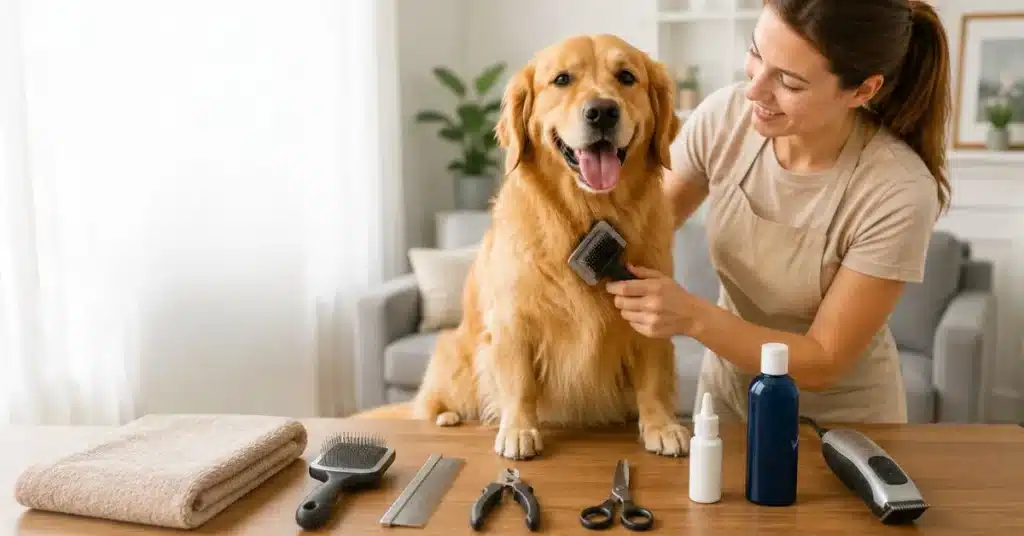
Some of the most common grooming tools include:
- Slicker Brush – Ideal for long, curly, and medium-length coats.
- Undercoat Rake – Best for double-coated breeds with thick undercoats.
- Rubber Grooming Brush – Great for short-haired dogs.
- Bristle Brush – Helps smooth the coat and remove surface debris.
- Pin Brush – Suitable for long-coated breeds.
Choosing the right brush allows you to remove more loose fur without pulling healthy hair or irritating the skin.
If you’re deciding between different grooming tools, our comparison guide Dog Brush vs. Deshedding Tool explains when each option works best.
3. Feed a High-Quality, Balanced Diet
A healthy coat starts from the inside.
Even the best grooming routine can’t fully compensate for poor nutrition. Dogs need a balanced diet containing high-quality protein, healthy fats, vitamins, and minerals to support healthy skin and strong hair follicles.
The foundation of a healthy coat starts with a complete and balanced diet that provides the right amount of protein, healthy fats, vitamins, and minerals. Proper nutrition supports healthy skin, strengthens hair follicles, and helps maintain normal coat growth throughout your dog’s life.
Nutritional deficiencies may contribute to:
- A dull coat
- Dry skin
- Increased shedding
- Slower coat renewal
Choose a complete and balanced dog food that matches your dog’s:
- Age
- Breed size
- Activity level
- Health condition
Remember, changing foods frequently without a reason can also upset your dog’s digestive system. If you’re considering a dietary change, introduce new food gradually.
For a detailed feeding guide, check out What Should Dogs Eat Daily?
4. Add Omega-3 Rich Foods to Support Coat Health
Healthy fats play an important role in maintaining your dog’s skin and coat.
Omega-3 fatty acids help support the skin barrier, reduce dryness, and promote a shinier coat. In some dogs, improving skin health may also help manage normal shedding as part of an overall grooming routine.
Common sources of Omega-3 include:
- Salmon
- Sardines
- Fish oil
- Veterinary-approved Omega-3 supplements
Keep in mind that supplements are not a cure for excessive shedding caused by allergies, parasites, or medical conditions. They work best when combined with a balanced diet and proper grooming.
Want to learn which foods naturally support a healthier coat? Read Foods That Help Reduce Dog Shedding for a complete guide.
Important: Always consult your veterinarian before adding supplements to your dog’s diet, especially if your dog has an existing medical condition.
5. Keep Your Dog Well Hydrated
Hydration is often overlooked, but it’s essential for healthy skin and coat function.
When dogs don’t drink enough water, their skin can become dry, which may affect coat quality and contribute to increased shedding in some cases.
To help your dog stay hydrated:
- Provide clean, fresh water at all times.
- Wash the water bowl daily.
- Encourage drinking after walks or exercise.
- Monitor water intake during hot weather.
If your dog suddenly drinks significantly less water or shows other signs of illness, consult your veterinarian rather than assuming dehydration is the only issue.
6. Bathe Your Dog Properly
Bathing your dog the right way helps remove loose fur, dirt, allergens, and excess oil that can build up in the coat. While bathing won’t stop normal dog shedding, it can help remove dead hair before it spreads throughout your home.
However, bathing too often can strip the skin of its natural oils, leading to dry skin, irritation, and in some cases, even more shedding.
A general bathing schedule is:
- Short-coated dogs: Every 6–8 weeks
- Medium- or long-coated dogs: Every 4–6 weeks
- Very active or outdoor dogs: As needed, using a dog-safe shampoo
Before bathing, brush your dog to remove loose hair and tangles. After the bath, dry the coat thoroughly and brush again to remove any remaining loose fur.
For a complete step-by-step guide, read How to Bathe a Dog at Home.
Quick Tip: Never use hot water. Lukewarm water is gentler on your dog’s skin and helps prevent dryness.
7. Use a Dog-Specific Shampoo
One of the most common grooming mistakes is using human shampoo on dogs.
Dogs have a different skin pH than humans. Human shampoos can disrupt the skin barrier, causing dryness, irritation, itching, and increased shedding.
Instead, choose a dog-specific shampoo designed for your dog’s skin and coat needs.
Depending on your dog, you may consider:
- Moisturizing shampoos for dry skin
- Oatmeal shampoos for sensitive skin
- Deshedding shampoos for heavy seasonal shedding
- Hypoallergenic shampoos for dogs with allergies
Keep in mind that shampoo alone will not eliminate shedding. It works best as part of a complete grooming routine that includes regular brushing and proper nutrition.
If you’re looking for recommendations, see our guide to the Best Shampoo for Shedding Dogs.
8. Follow a Consistent Grooming Schedule
Consistency matters more than intensity.
Many owners only brush or bathe their dog after shedding becomes overwhelming. By then, loose hair has already spread around the house.
A simple grooming routine is usually much more effective.
Suggested Weekly Grooming Routine
| Task | Frequency |
| Brush the coat | 2–5 times per week (depending on coat type) |
| Check skin and ears | Weekly |
| Trim nails | Every 3–4 weeks |
| Bathe with dog shampoo | Every 4–8 weeks |
| Inspect for fleas and ticks | Weekly |
Following a regular routine helps remove loose hair before it accumulates and makes it easier to notice early signs of skin or coat problems.
For a more detailed schedule, explore our Best Grooming Routine for Shedding Dogs.
Key Tip: A consistent grooming routine is far more effective than occasional intensive grooming sessions.
9. Reduce Stress to Support a Healthy Coat
Stress doesn’t just affect your dog’s behavior—it can also affect the condition of the skin and coat.
Some dogs temporarily shed more after stressful events, such as:
- Moving to a new home
- Boarding or travel
- Loud noises or fireworks
- Changes in routine
- Introducing a new pet
While stress-related shedding is often temporary, reducing stress can help your dog return to its normal coat cycle.
You can support your dog’s emotional well-being by:
- Maintaining a consistent daily routine
- Providing regular exercise
- Offering mental enrichment through toys and games
- Giving your dog a quiet place to rest
- Using positive reinforcement during grooming
A relaxed dog is often easier to groom, making brushing sessions more comfortable for both you and your pet.
10. Maintain Healthy Skin
Healthy skin is the foundation of a healthy coat.
Even the best brush or shampoo won’t produce lasting results if your dog’s skin is unhealthy.
Watch for signs such as:
- Persistent itching
- Dry, flaky skin
- Redness or inflammation
- Small sores or scabs
- Excessive licking or chewing
Keeping your dog’s skin healthy involves more than grooming. It also depends on:
- A balanced diet
- Proper hydration
- Routine grooming
- Parasite prevention
- Regular veterinary checkups
If you notice ongoing skin problems together with heavy shedding, don’t rely solely on home remedies. A veterinarian can help identify the underlying cause and recommend the most appropriate treatment.
11. Vacuum and Clean Your Home Regularly
Even with the best grooming routine, you’ll still find some dog hair around your home. That’s because normal shedding cannot be completely eliminated. However, keeping your home clean makes shedding much easier to manage and improves your overall living environment.
Focus on areas where pet hair collects most, including:
- Carpets and rugs
- Sofas and upholstered furniture
- Dog beds and blankets
- Curtains
- Car seats
To make cleanup easier:
- Vacuum at least 2–3 times per week.
- Use a lint roller for clothing and furniture.
- Wash your dog’s bedding weekly.
- Consider a vacuum designed for pet hair if you have a heavy-shedding breed.
Keeping your home clean won’t reduce the amount your dog sheds, but it reduces the impact of shedding on your daily life.
12. Check for Fleas and Other Parasites
If your dog suddenly starts scratching more than usual while shedding heavily, parasites could be part of the problem.
External parasites such as:
- Fleas
- Ticks
- Mites
can irritate the skin and damage the coat, leading to excessive shedding, hair loss, and discomfort.
Watch for signs such as:
- Constant scratching
- Biting or chewing the skin
- Small black flea dirt
- Red bumps
- Hair loss around the tail or neck
Routine flea and tick prevention is one of the simplest ways to protect both your dog’s skin and coat.
Quick Tip: If shedding is accompanied by intense itching or visible parasites, treating the underlying cause is more important than increasing brushing.
13. Avoid Over-Bathing Your Dog
Many owners believe that frequent baths will reduce shedding. In reality, bathing too often can have the opposite effect.
Over-bathing may:
- Remove natural skin oils
- Dry out the skin
- Increase irritation
- Make the coat look dull
- Contribute to additional shedding in some dogs
Instead of bathing more often, focus on:
- Regular brushing
- Proper nutrition
- Healthy skin care
- Bathing only when needed
For most healthy dogs, bathing every 4–8 weeks is sufficient, although this may vary depending on breed, coat type, and lifestyle.
14. Never Use Human Shampoo
This is one of the easiest mistakes to avoid.
Although human shampoo may seem harmless, it is formulated for human skin—not canine skin.
Dogs have a different skin pH, and using human shampoo can:
- Disrupt the skin barrier
- Cause dryness
- Increase itching
- Irritate sensitive skin
- Lead to more noticeable shedding over time
Always choose a dog-specific shampoo that matches your dog’s skin and coat needs.
If you’re unsure which product to choose, explore our guide to the Best Shampoo for Shedding Dogs for recommendations based on coat type and skin condition.
15. Know When Home Care Isn’t Enough
Most cases of normal dog shedding can be managed successfully with regular grooming, proper nutrition, and healthy daily habits.
However, home care has its limits.
Contact your veterinarian if your dog develops:
- Bald patches
- Sudden heavy hair loss
- Persistent itching
- Red, inflamed, or infected skin
- Open sores or scabs
- Hair loss accompanied by weight loss, lethargy, or other signs of illness
These symptoms may indicate conditions such as:
- Allergies
- Dermatitis
- Hormonal disorders
- Skin infections
- Parasites
- Alopecia
While brushing, bathing, and improving nutrition can support coat health, they cannot treat underlying medical conditions.
Early veterinary evaluation often leads to faster diagnosis and more effective treatment.
Quick Home Shedding Checklist
Before buying new grooming products, ask yourself:
✅ Am I brushing my dog consistently?
✅ Am I using the correct brush for my dog’s coat?
✅ Is my dog eating a balanced, high-quality diet?
✅ Is my dog drinking enough water?
✅ Am I using a dog-specific shampoo?
✅ Have I checked my dog’s skin for redness, parasites, or bald patches?
✅ Is the shedding seasonal rather than sudden?
If you answered “Yes” to most of these questions but your dog is still shedding excessively, it’s a good idea to schedule a veterinary examination.
What to Avoid
Avoid these common mistakes that can make shedding worse:
- ❌ Using the wrong brush for your dog’s coat type
- ❌ Bathing too frequently
- ❌ Using human shampoo
- ❌ Feeding a poor-quality diet
- ❌ Ignoring signs of skin irritation or parasites
- ❌ Waiting until shedding becomes severe before grooming
- ❌ Expecting one product to completely stop shedding
Foods That Help Reduce Dog Shedding
No matter how often you brush your dog, a poor diet can make shedding worse. Healthy skin and a strong coat depend on the right balance of protein, healthy fats, vitamins, and minerals. When your dog doesn’t get enough essential nutrients, the coat may become dry, dull, brittle, and more prone to excessive shedding.
While food alone won’t completely stop normal shedding, a balanced diet can support healthier skin, strengthen hair follicles, and help manage loose fur as part of a complete grooming routine.
1. High-Quality Protein
Hair is made primarily of protein, making it one of the most important nutrients for maintaining a healthy coat.
Choose dog foods that list high-quality animal protein as the main ingredient, such as:
- Chicken
- Turkey
- Beef
- Lamb
- Salmon
Dogs that don’t receive enough quality protein may develop a dull coat, slower hair growth, and increased shedding over time.
2. Omega-3 Fatty Acids
Omega-3 fatty acids help support the skin’s natural moisture barrier and promote a shinier, healthier coat.
Common sources include:
- Salmon
- Sardines
- Fish oil
- Krill oil
Some dogs may benefit from fish oil supplements, but they should only be used according to your veterinarian’s advice.
Note: Omega-3 supports healthy skin and coat health but is not a cure for excessive shedding caused by allergies, parasites, or medical conditions.
3. Zinc and Biotin
Important nutrients such as zinc and biotin help maintain healthy skin cells and support normal hair growth.
These nutrients are commonly found in:
- Complete commercial dog foods
- Eggs (in moderation and properly cooked)
- Liver
- Veterinary-approved supplements
Dogs with nutritional deficiencies may experience poor coat quality or increased shedding.
4. Vitamins That Support Coat Health
Several vitamins contribute to healthy skin and coat maintenance, including:
- Vitamin A – Supports healthy skin.
- Vitamin E – Acts as an antioxidant that helps protect skin cells.
- B Vitamins – Help maintain normal skin and coat function.
Most high-quality commercial dog foods already contain these nutrients in balanced amounts.
Foods to Avoid
Some foods can negatively affect your dog’s overall health or may not provide balanced nutrition when fed regularly.
Avoid:
- Excessive table scraps
- Fatty human foods
- Highly processed snacks
- Foods that are toxic to dogs, such as chocolate, onions, grapes, raisins, and xylitol-containing products
A balanced commercial diet formulated for your dog’s life stage is usually the safest choice.
Not all human foods are safe for dogs. While an occasional healthy treat may be fine, you should never feed foods that are toxic to dogs, as they can cause serious health problems ranging from digestive upset to life-threatening poisoning.
Can Diet Really Reduce Dog Shedding?
Diet plays an important role, but it’s only one piece of the puzzle.
A healthy diet works best when combined with:
- Regular brushing
- Proper bathing
- Healthy skin care
- Routine parasite prevention
- Consistent grooming habits
If your dog continues to shed excessively despite eating a balanced diet, another underlying cause may be involved.
Quick Nutrition Checklist
Before changing your dog’s diet, ask yourself:
✅ Is the food complete and balanced?
✅ Does it contain high-quality animal protein?
✅ Does it provide healthy fats such as Omega-3?
✅ Is your dog drinking enough water?
✅ Have you spoken with your veterinarian before adding supplements?
Best Grooming Routine for Shedding Dogs
Many dog owners only start brushing or bathing their dog after shedding becomes overwhelming. Unfortunately, by then, loose hair has already spread throughout the house.
The secret to managing dog shedding isn’t grooming more aggressively—it’s following a consistent grooming routine. Small, regular grooming sessions are much more effective than occasional deep grooming.
A well-planned routine helps:
- Remove loose fur before it falls around your home.
- Keep your dog’s skin healthy.
- Prevent mats and tangles.
- Improve coat condition.
- Detect skin problems, fleas, or ticks early.
Rather than guessing when to groom, follow a simple schedule based on daily, weekly, and monthly care.
Recommended Grooming Schedule for Shedding Dogs
| Frequency | What to Do | Why It Matters |
| Daily | Check the coat, provide fresh water, inspect for loose fur or skin changes | Helps identify problems early and supports healthy skin and coat. |
| 2–5 Times Per Week | Brush your dog using the correct grooming tool for its coat type | Removes loose hair before it spreads around your home and reduces matting. |
| Weekly | Inspect ears, paws, nails, and check for fleas, ticks, or skin irritation | Helps detect parasites or skin issues before they become serious. |
| Every 4–8 Weeks | Bathe using a dog-specific shampoo and brush after drying | Removes dead hair, keeps the coat clean, and supports healthy skin. |
| Monthly | Review your dog’s overall coat condition and body health | Allows you to monitor long-term changes in shedding and coat quality. |
Daily Grooming Habits
Daily grooming doesn’t need to take much time.
Spend 5–10 minutes checking your dog’s:
- Coat for loose hair
- Skin for redness or irritation
- Eyes and ears for cleanliness
- Water bowl to ensure fresh water is always available
These quick checks help you notice small problems before they become larger health concerns.
Weekly Grooming Routine
Weekly grooming should focus on removing loose hair and keeping the coat in good condition.
Your weekly routine should include:
- Brushing with the correct brush for your dog’s coat type
- Checking for fleas and ticks
- Inspecting the skin for dryness or irritation
- Cleaning the ears if needed
- Trimming nails when necessary
Regular weekly grooming is one of the most effective ways to manage normal dog shedding while improving your dog’s overall comfort.
Monthly Coat Health Check
Once each month, take a closer look at your dog’s overall skin and coat health.
Check for:
- Excessive shedding
- Bald patches
- Dry or flaky skin
- Dull coat
- Unusual odors
- New lumps or bumps
If you notice significant changes that don’t improve with regular grooming, it’s a good idea to speak with your veterinarian.
Quick Tip
A consistent grooming routine removes loose hair before it ends up on your furniture. Short, regular grooming sessions are usually more effective—and less stressful for your dog—than long, infrequent grooming sessions.
Build a Routine That Fits Your Dog
There isn’t a single grooming schedule that works for every dog.
A Golden Retriever or German Shepherd may need brushing several times each week, while a Poodle may shed less but require more frequent coat maintenance to prevent tangles.
Adjust your grooming routine based on:
- Breed
- Coat type
- Activity level
- Season
- Overall health
The goal isn’t to follow someone else’s schedule—it’s to create a routine that keeps your dog’s skin healthy and coat well maintained.
If you’re looking for a complete care schedule beyond grooming, our Daily Dog Care Routine guide covers everyday habits that help keep your dog healthy from head to tail.
You can also read Dog Hygiene Routine at Home for practical tips on maintaining your dog’s overall cleanliness between grooming sessions.
Best Products That Help Reduce Dog Shedding
While no product can completely stop normal dog shedding, the right grooming tools can make managing loose hair much easier. Choosing products that match your dog’s coat type, skin condition, and grooming needs helps remove dead hair more effectively while keeping the coat healthy.
Before buying any product, remember that regular brushing, proper nutrition, and a consistent grooming routine are still the foundation of healthy coat care. Grooming products work best when they’re part of a complete shedding management plan—not a replacement for one.
Dog Brushes
A quality dog brush is the first tool every dog owner should have.
Different coat types require different brushes:
- Slicker Brush – Ideal for long, curly, or medium-length coats.
- Rubber Grooming Brush – Best for short-coated breeds.
- Pin Brush – Suitable for long-haired dogs.
- Bristle Brush – Helps smooth the coat and remove surface debris.
Using the correct brush regularly removes loose hair before it spreads around your home while keeping the coat neat and healthy.
If you’re unsure which brush suits your dog, explore our complete guide to the Best Brush for Shedding Dogs.
Deshedding Tools
For dogs with thick double coats, a standard brush may not remove all loose undercoat effectively.
A deshedding tool is designed to reach the undercoat and remove loose hair without cutting healthy fur when used correctly.
These tools are particularly useful for breeds such as:
- Golden Retriever
- German Shepherd
- Labrador Retriever
- Siberian Husky
However, deshedding tools should be used gently and only as recommended. Overusing them may irritate the skin or remove more hair than necessary.
Learn how to choose the right option in our guide to the Best Deshedding Tool for Heavy Shedding Dogs
Dog-Specific Shampoo
Choosing the right shampoo is just as important as choosing the right brush.
A quality dog shampoo helps:
- Remove loose hair during bathing
- Keep the skin clean
- Support a healthy coat
- Reduce dryness when used appropriately
Depending on your dog’s needs, you may choose:
- Moisturizing shampoo
- Oatmeal shampoo
- Hypoallergenic shampoo
- Deshedding shampoo
Remember that shampoo improves coat condition, but it won’t cure excessive shedding caused by allergies, parasites, or medical conditions.
For detailed recommendations, see our guide to the Best Shampoo for Shedding Dogs.
Buying Tip
Choose grooming products based on your dog’s coat type—not popularity or marketing claims. The most expensive product isn’t always the best choice. A simple, well-matched grooming tool used consistently often delivers better results than several expensive products used incorrectly.
Common Mistakes That Make Dog Shedding Worse
Even if you’re brushing your dog regularly and buying quality grooming products, a few common mistakes can still make dog shedding worse. Many dog owners unknowingly follow habits that dry out the skin, damage the coat, or allow loose hair to build up over time.
The good news is that these mistakes are easy to fix. By making a few simple adjustments to your grooming routine, you can help keep your dog’s skin healthy, coat stronger, and loose fur under control.
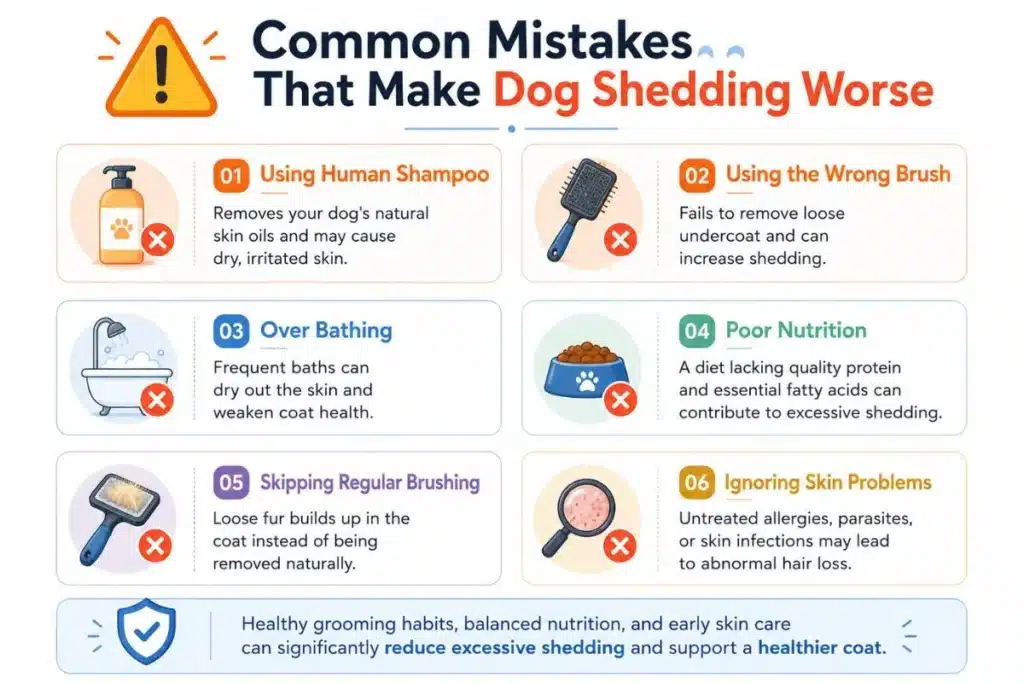
1. Using the Wrong Brush
Not every brush is suitable for every coat type.
For example, using a bristle brush on a thick double-coated dog may remove very little loose undercoat, while an undercoat rake may be unnecessary for a short-haired breed.
Using the wrong grooming tool can:
- Leave loose hair trapped in the coat.
- Make brushing less effective.
- Cause unnecessary discomfort.
- Increase matting in long-haired dogs.
Always choose a brush that matches your dog’s coat type rather than using the same brush for every breed.
2. Bathing Too Frequently
Many owners think more baths mean less shedding.
In reality, over-bathing can strip away your dog’s natural skin oils, leaving the skin dry and the coat more fragile.
Instead of bathing every week, follow a schedule that suits your dog’s breed, lifestyle, and coat type. Most healthy dogs only need a bath every 4–8 weeks, unless advised otherwise by a veterinarian.
3. Feeding a Poor-Quality Diet
Healthy fur starts with healthy nutrition.
A diet lacking high-quality protein, Omega-3 fatty acids, zinc, and other essential nutrients may lead to:
- Dry skin
- A dull coat
- Weak hair follicles
- Increased shedding
Choosing a balanced, complete dog food supports healthy skin and long-term coat health.
4. Using Human Shampoo
Human shampoo is designed for human skin, not canine skin.
Because dogs have a different skin pH, using human shampoo can:
- Dry out the skin
- Cause irritation
- Increase itching
- Damage the skin barrier
- Contribute to additional shedding
Always choose a dog-specific shampoo that’s appropriate for your dog’s skin and coat.
5. Ignoring Skin Problems
Not all shedding is caused by grooming habits.
Sometimes the real problem is an underlying skin condition such as:
- Allergies
- Fleas
- Mites
- Dermatitis
- Skin infections
Ignoring these issues while continuing to brush or bathe your dog won’t solve the problem. If you notice bald patches, persistent scratching, or inflamed skin, it’s important to identify the underlying cause rather than simply trying another grooming product.
6. Skipping Regular Brushing
Brushing only when shedding becomes severe allows loose hair to accumulate in the coat.
Over time, this may lead to:
- More hair around your home
- Mats and tangles
- Poor coat condition
- More difficult grooming sessions
Short, consistent brushing sessions several times a week are usually much more effective than brushing only occasionally.
What to Avoid
To help manage dog shedding more effectively, avoid these common mistakes:
❌ Using the wrong brush for your dog’s coat type.
❌ Bathing your dog too often.
❌ Feeding a poor-quality or unbalanced diet.
❌ Using human shampoo instead of a dog-specific shampoo.
❌ Ignoring signs of skin irritation, parasites, or allergies.
❌ Waiting until shedding becomes severe before brushing.
When Should You See a Veterinarian?
In most cases, dog shedding is a natural part of a healthy coat cycle and can be managed with regular grooming, proper nutrition, and consistent skin care. However, excessive shedding combined with other symptoms may indicate an underlying medical condition that requires professional veterinary care.
Home grooming can improve coat health, but it cannot treat conditions such as allergies, parasites, hormonal disorders, or skin infections. Recognizing the warning signs early can help your dog receive the right treatment before the problem becomes more serious.
If your dog develops bald patches or unexplained hair loss, it may be a sign of alopecia, a medical condition that refers to abnormal hair loss in dogs. While some cases are mild, others may be linked to underlying health problems that require veterinary diagnosis and treatment.
When to Contact Your Veterinarian
| Sign | Recommended Action |
| Bald patches (Alopecia) | Schedule a veterinary examination to determine the underlying cause. |
| Persistent scratching or biting | Check for parasites, allergies, or skin irritation and seek veterinary advice if symptoms continue. |
| Red, swollen, or infected skin | A skin infection or dermatitis may require medical treatment. |
| Sudden heavy shedding | If shedding increases dramatically outside seasonal coat changes, consult your veterinarian. |
| Weight gain, lethargy, or poor coat quality | These signs may be associated with hormonal conditions such as hypothyroidism and should be professionally evaluated. |
Common Questions About Dog Shedding
1. Why is my dog shedding so much?
Dogs may shed more than usual because of seasonal coat changes, breed, poor nutrition, stress, parasites, allergies, or underlying medical conditions. Heavy shedding is often normal in double-coated breeds during spring and fall, but sudden or excessive hair loss should be investigated.
If your dog’s shedding is accompanied by bald patches, inflamed skin, or persistent itching, it’s best to identify the underlying cause rather than simply increasing grooming.
Learn more in our guide on Why Is My Dog Shedding So Much?
2. Can I stop dog shedding completely?
No. You cannot completely stop normal dog shedding because it is part of a dog’s natural hair growth cycle.
However, you can significantly reduce loose hair by:
- Brushing regularly
- Feeding a balanced diet
- Keeping your dog hydrated
- Following a consistent grooming routine
- Using the right grooming tools
The goal is to manage shedding effectively, not eliminate it entirely.
3. Does fish oil help reduce dog shedding?
Fish oil may help support healthy skin and coat, thanks to its Omega-3 fatty acids. For some dogs, healthier skin can contribute to less loose hair over time.
However, fish oil is not a cure for excessive shedding caused by allergies, parasites, hormonal disorders, or other medical conditions.
4. Does brushing really reduce shedding?
Yes. Regular brushing is one of the most effective ways to reduce loose hair around your home.
Brushing removes dead hair before it falls onto furniture and clothing while also distributing natural skin oils throughout the coat.
For the best results, use a brush that matches your dog’s coat type.
5. Does bathing help reduce shedding?
Yes—but only when done properly.
Bathing helps remove loose fur, dirt, and dead hair, making brushing afterward even more effective. However, bathing too frequently may dry out your dog’s skin, which can worsen coat problems.
Using a dog-specific shampoo and following an appropriate bathing schedule is generally the best approach.
6. Which dog breeds shed the most?
Some breeds naturally shed more than others because of their coat type.
Heavy-shedding breeds include:
- Golden Retriever
- German Shepherd
- Labrador Retriever
- Siberian Husky
- Alaskan Malamute
These breeds often have double coats and experience heavier seasonal shedding.
7. How often should I brush my dog?
The ideal brushing frequency depends on your dog’s coat type.
As a general guide:
- Short coats: 1–2 times per week
- Long coats: 3–4 times per week
- Double coats: 3–5 times per week (daily during seasonal shedding)
- Curly coats: Every 2–3 days
Consistent brushing is usually more effective than occasional long grooming sessions.
8. Which brush works best for shedding dogs?
There isn’t one brush that’s best for every dog.
Different coat types require different grooming tools:
- Slicker Brush – Long or curly coats
- Undercoat Rake – Double-coated breeds
- Rubber Brush – Short-coated dogs
- Pin Brush – Long-haired breeds
See our complete guide to the Best Brush for Shedding Dogs to choose the right grooming tool.
9. Can stress cause dog shedding?
Yes. Stress can temporarily increase shedding in some dogs.
Common triggers include:
- Moving to a new home
- Travel
- Loud noises
- Changes in routine
- Introducing a new pet
Stress-related shedding often improves once your dog feels safe and returns to a normal routine.
10. When should I worry about my dog’s shedding?
You should contact your veterinarian if shedding is accompanied by:
- Bald patches
- Persistent scratching
- Red or inflamed skin
- Hair loss in clumps
- Skin infections
- Weight loss or lethargy
- Sudden heavy shedding outside normal seasonal changes
These signs may indicate an underlying medical condition that requires professional evaluation.
Final Thoughts: Managing Dog Shedding Starts with Consistency
If you’ve been wondering how to reduce dog shedding at home, the most important thing to remember is that normal shedding is a healthy and natural part of your dog’s life. Every dog sheds to some degree, and no brush, shampoo, or supplement can stop that process completely.
What you can do is manage shedding effectively through consistent grooming, proper nutrition, healthy skin care, and the right grooming tools. Small habits practiced regularly will always deliver better results than occasional deep grooming sessions or relying on a single product.
It’s also important to recognize the difference between normal shedding and excessive hair loss. If your dog develops bald patches, persistent itching, inflamed skin, or sudden heavy shedding, don’t ignore these warning signs. Early veterinary care can help identify underlying conditions before they become more serious.
Remember, the goal isn’t to eliminate shedding—it’s to keep your dog’s skin healthy, coat strong, and home cleaner while supporting their overall well-being.
If you’re new to dog grooming, our complete Dog Grooming Guide for Beginners will help you build a simple grooming routine, choose the right tools, and avoid common beginner mistakes.