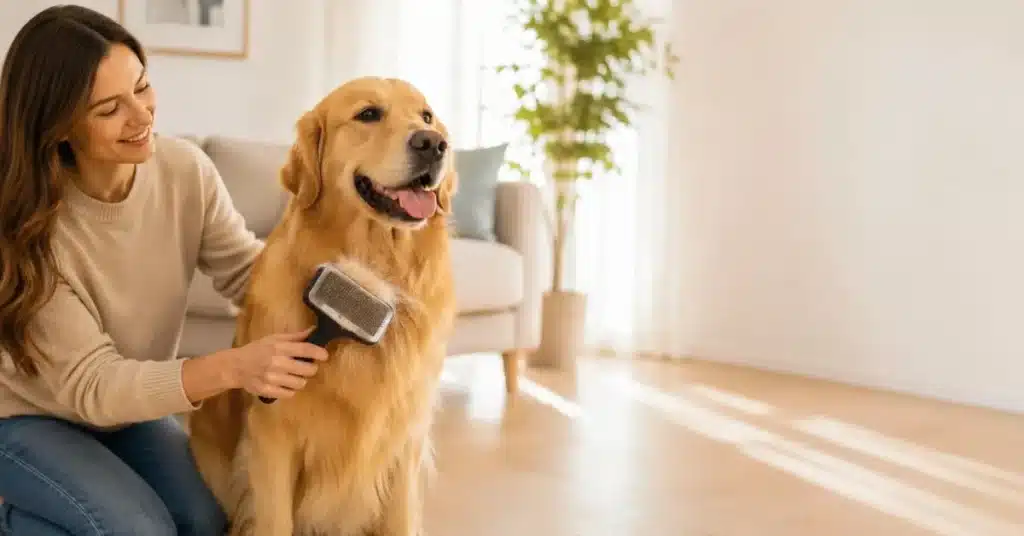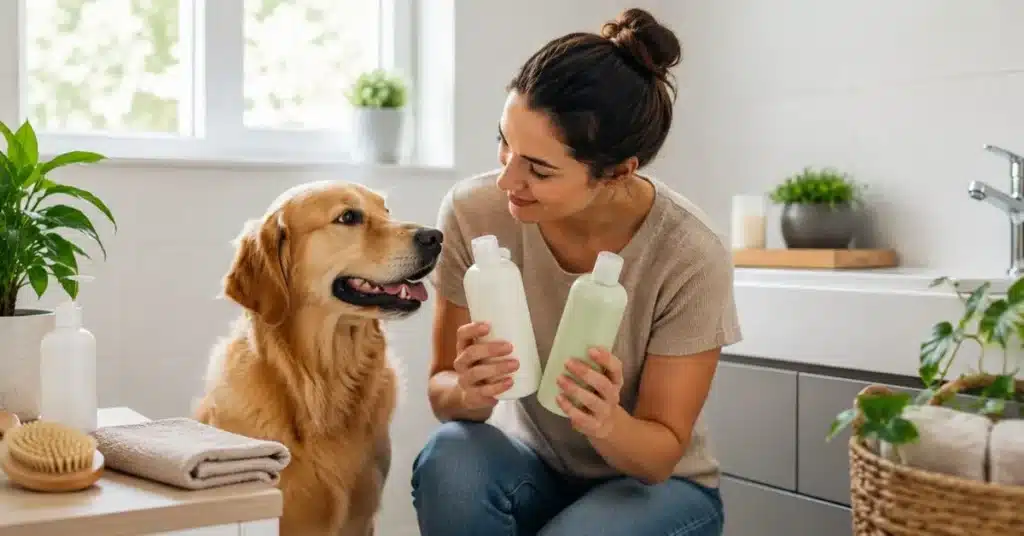
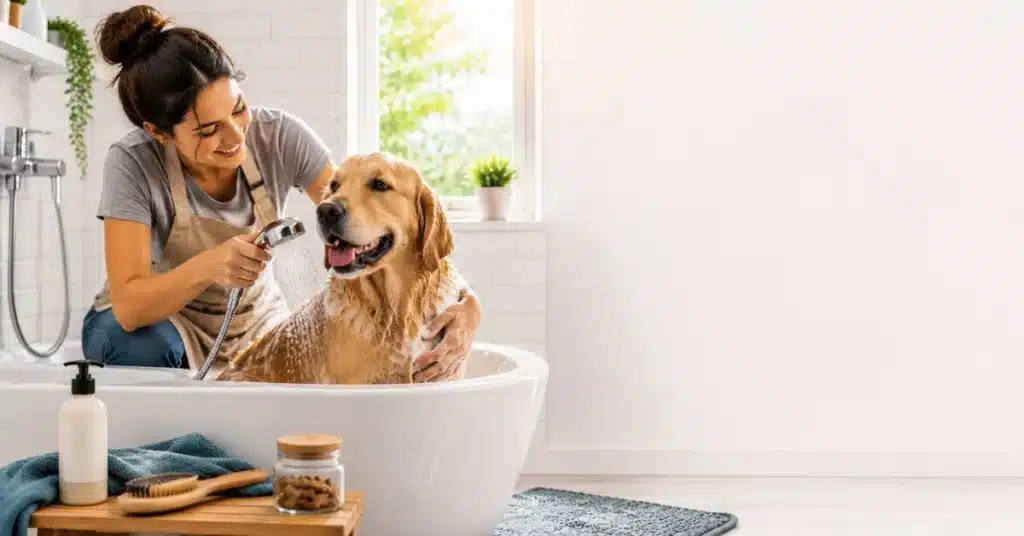
How to bathe a dog at home starts with good preparation, gentle handling, and the right supplies. Brush your dog’s coat before the bath. Then use lukewarm water and a dog-specific shampoo. Rinse the coat well and dry it completely. These simple steps help keep your dog’s skin healthy and coat clean while making bath time less stressful.
Not every dog needs a bath on the same schedule. A dog bath at home depends on your dog’s coat type, daily lifestyle, activity level, and skin condition. For example, an active Labrador that loves muddy trails may need baths more often than an indoor Shih Tzu. Dogs with sensitive skin may also need a different bathing routine based on veterinary advice.
This beginner-friendly guide explains exactly how to bathe a dog at home from start to finish. You’ll learn how to prepare for bath time, choose the right supplies, wash and dry your dog safely, avoid common mistakes, and decide how often your dog needs a bath. By the end, you’ll have the confidence to make bath time safe, simple, and comfortable for both you and your dog.
Do Dogs Really Need Regular Baths?
Many first-time dog owners wonder how often their dog really needs a bath. The answer is simpler than many people think. Most healthy dogs only need a bath when they become dirty, greasy, or develop a strong odor—not on a fixed schedule. Bathing helps keep your dog’s skin and coat clean, but bathing too often may remove some of the natural oils that help protect healthy skin.
Why Dogs Need Baths
Bathing isn’t just about making your dog smell better. It removes dirt, mud, pollen, loose fur, and other debris that collect in the coat during everyday activities. A proper dog bath also helps keep the skin and coat clean while preserving their natural protective oils when done correctly.
Regular brushing and simple hygiene habits often keep your dog cleaner between baths. When combined with a consistent dog grooming routine for beginners, bathing becomes just one part of overall coat care.
Bathing can help:
- Remove dirt, mud, and outdoor debris
- Reduce unpleasant odors
- Wash away pollen and allergens
- Remove loose fur before it spreads around your home
- Support healthy skin and a cleaner coat
Quick Tip: If your dog only has dusty paws or light dirt on the coat, brushing or spot cleaning may be all that’s needed.
Signs Your Dog Needs a Bath
Not every dirty paw means it’s time for a full bath. Instead, look for signs that your dog actually needs one.
| Situation | Full Bath Needed? |
| Mud covering the coat | ✅ Yes |
| Sticky or greasy fur | ✅ Yes |
| Strong body odor | ✅ Yes |
| Dusty paws after a walk | ❌ Usually no |
| Loose shedding hair only | ❌ Brush first |
For example, if your Labrador comes home from a muddy hike with dirty paws, rinsing the paws may be enough. But if the mud covers the body or the coat feels greasy and smells unpleasant, a full bath is usually the better choice.
If loose hair is the main problem, a bath may not be the best solution. Learning how to reduce dog shedding at home can often help remove excess fur without increasing bath time.
Common Mistake: A mild “dog smell” is completely normal. It doesn’t always mean your dog needs a full bath.
Factors That Affect Bathing Frequency
There isn’t a single bathing schedule that works for every dog. Dog bath frequency depends on your dog’s coat type, lifestyle, activity level, and skin condition.
For example, an indoor Beagle may stay clean much longer than an active Golden Retriever that loves hiking and swimming. Dogs with sensitive skin may also need a different bathing routine based on veterinary advice.
The biggest factors include:
- Coat type
- Indoor or outdoor lifestyle
- Daily activity level
- Swimming or muddy adventures
- Skin sensitivity
- Veterinary recommendations, when needed
Between baths, simple daily care also makes a difference. Following a regular dog hygiene routine at home helps keep the coat cleaner, supports healthy skin, and may reduce the need for frequent bathing.
What You’ll Need Before Bathing Your Dog
A successful dog bath at home begins before the water is turned on. Taking a few minutes to prepare your dog bathing supplies makes the entire process easier and helps your dog stay calm. When everything is ready, you can focus on bathing your dog instead of searching for missing items.
Essential Bathing Supplies
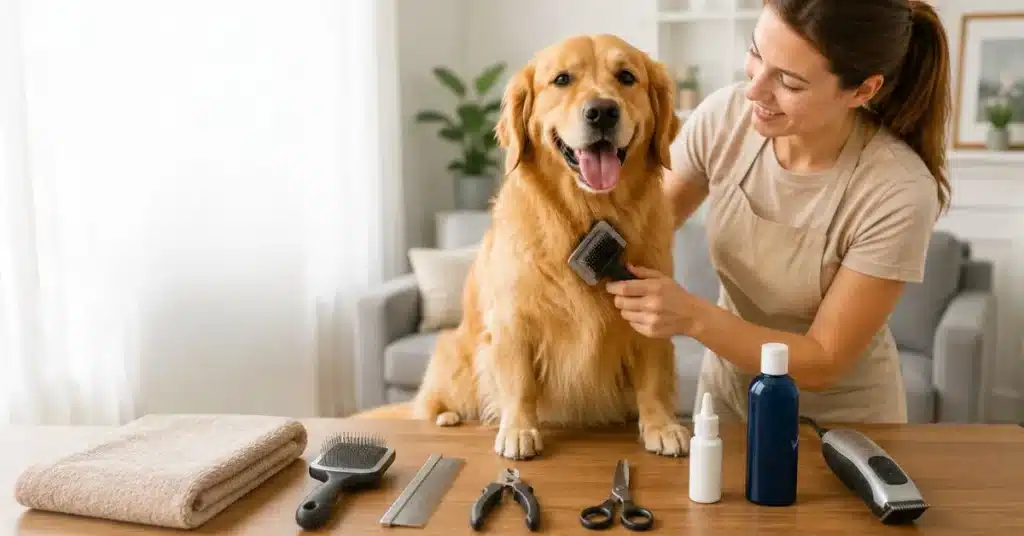
You don’t need a professional grooming setup to bathe your dog safely at home. A few basic supplies are enough for most healthy dogs.
Keep these essentials nearby before bath time:
- Dog-specific shampoo
- Dog brush or comb
- Microfiber towel
- Non-slip bath mat
- Cup or handheld shower sprayer
- Dog treats for rewards
Choosing the right shampoo matters because different coats and skin types have different needs.
Brushing before the bath removes loose fur, dirt, and small tangles. It also helps water and shampoo reach the entire coat more evenly.
Quick Tip: Lay out your shampoo, towel, brush, and treats before bringing your dog into the bathing area.
Optional Bathing Tools That Make Bath Time Easier
These tools aren’t required, but they can make home bathing more comfortable and convenient.
Helpful options include:
- Portable dog bathing tub
- Handheld shower sprayer
- Grooming gloves
- Lick mat
- Waterproof grooming apron
If you bathe your dog regularly, a complete dog grooming kit keeps your most-used supplies together and saves time during every bath.
Remember: Buy tools that solve a real need. Simple equipment is often all you need for a safe and comfortable bath.
Choose the Best Bathing Location
The best place to bathe your dog depends on its size, your home, and the weather.
| Dog Size | Best Bathing Location |
| Small dogs | Utility sink or small bathtub |
| Medium dogs | Standard bathtub or walk-in shower |
| Large dogs | Walk-in shower or outdoor bathing area (weather permitting) |
Wherever you bathe your dog, make safety your first priority. Place a non-slip bath mat on the floor, use lukewarm water, and keep your supplies within easy reach before your dog steps into the bathing area.
For example, a small puppy may feel secure in a utility sink. A large Labrador usually has more space to stand comfortably in a walk-in shower.
Common Mistake: Don’t choose a bathing location based only on convenience. Pick a space where your dog can stand comfortably without slipping or feeling trapped.
Prepare Your Dog Before Bath Time
A smooth bath starts before the water is turned on. Taking a few minutes to prepare your dog for bath time makes the process safer, easier, and less stressful. It also helps your dog stay calm and gives you everything you need within reach before the bath begins.
Brush Before Bath
Always brush your dog’s coat before getting it wet. Brushing removes loose fur, dirt, and small tangles that can become tighter after the coat is soaked. It also helps water and shampoo spread more evenly through the coat.
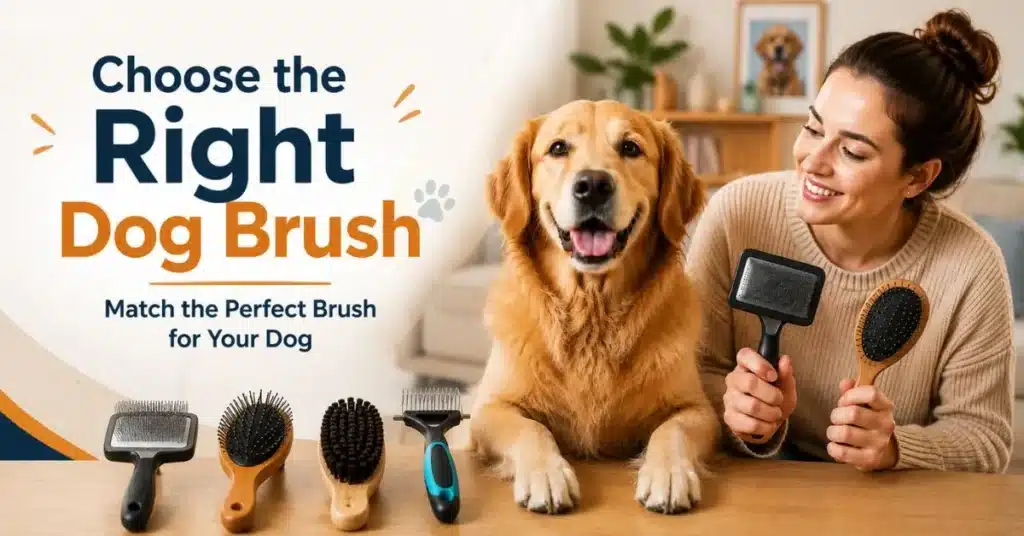
Different coat types need different brushes. If you’re not sure which brush your dog needs, read our guide to choosing the right dog brush to find the best option for your dog’s coat.
Brushing before bathing helps:
- Remove loose fur and dirt
- Prevent mats from becoming tighter
- Help shampoo reach the skin more evenly
- Make rinsing quicker and easier
Quick Tip: Brush gently from the neck toward the tail. If you find a mat, loosen it carefully instead of pulling on the fur.
Check Your Dog’s Skin, Ears, and Paws
Take a quick look at your dog’s skin, ears, and paws before every bath. You’re not trying to diagnose a health problem. You’re simply checking for anything that needs attention before your dog gets wet.
Look for:
- Cuts or scratches
- Red or irritated skin
- Fleas or ticks
- Sore paw pads
- Unusual ear odor or discharge
If you notice open wounds, severe skin irritation, or signs of an ear infection, postpone the bath and contact your veterinarian before continuing.
Safety Reminder: Keep water out of your dog’s ear canals. Clean only the outer ear unless your veterinarian recommends a different ear-care routine.
Help Nervous Dogs Stay Calm
Some dogs love bath time. Others become nervous as soon as they see the tub. A slow, positive approach usually works better than rushing.
Let your dog explore the bathing area first. Offer praise, speak calmly, and reward relaxed behavior with small treats.
Real-Life Example: If your puppy backs away from the bathtub, don’t pull them inside. Let them investigate the area, reward calm behavior, and introduce the water slowly. A positive first experience often makes future baths much easier.
Common Mistake: Skipping preparation often makes bath time longer and more stressful. Spending just a few extra minutes getting ready can make the entire experience smoother for both you and your dog.
How to Bathe a Dog at Home: Step-by-Step Guide
Now that your dog is calm and everything is ready, it’s time to begin the bath. Taking each step slowly helps your dog feel more comfortable and gives you better results. The goal isn’t just to get your dog clean—it’s to protect their skin, keep their coat healthy, and make future baths easier.
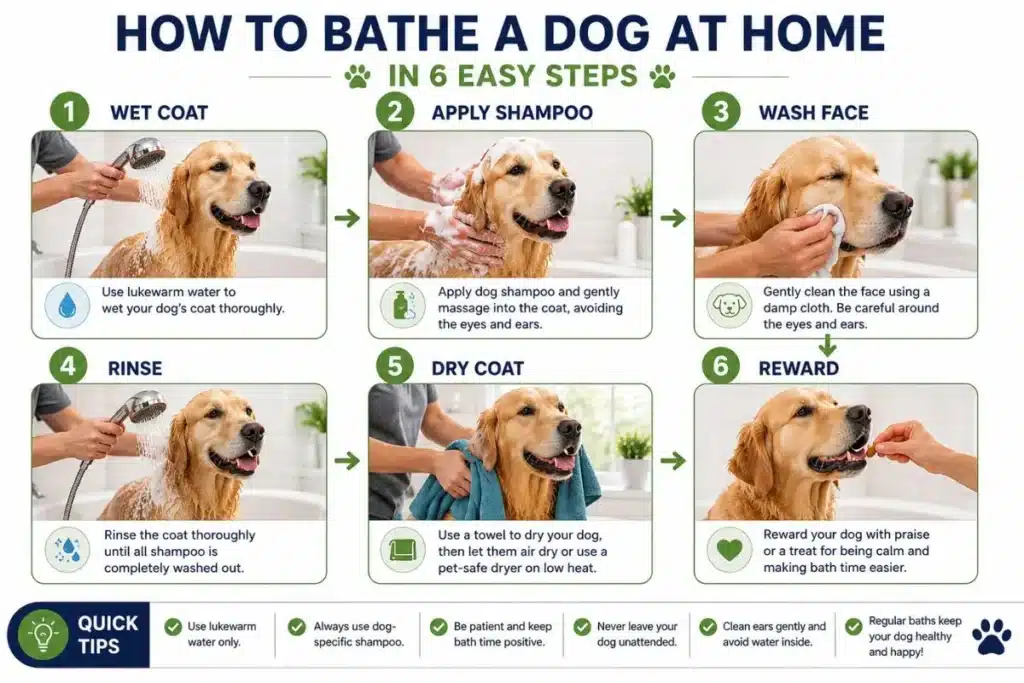
Step 1: Wet the Coat with Lukewarm Water
Start by wetting your dog’s coat with lukewarm water. Begin at the neck and work your way toward the back, chest, legs, and tail. Wet the coat slowly so your dog has time to adjust to the water.
Avoid spraying water directly into your dog’s face, eyes, or ears. Instead, let the water flow gently over the body until the entire coat is wet. Dogs with thick or double coats may need a little extra time because water takes longer to reach the undercoat.
A fully wet coat allows shampoo to spread more evenly and clean the skin more effectively.
Quick Tip: Test the water with your wrist before you begin. It should feel comfortably warm, never hot or cold.
Safety Reminder: Keep water out of your dog’s ear canals. Spraying directly into the ears may increase the risk of irritation or infection.
Step 2: Apply Dog Shampoo Correctly
Once the coat is completely wet, apply a small amount of dog-specific shampoo to your hands or directly onto the body. Gently massage it into the coat, starting at the neck and working toward the chest, back, belly, legs, and tail.
Focus on creating a light, even lather instead of using a large amount of shampoo. More shampoo doesn’t mean a cleaner dog—it simply takes longer to rinse away.
Leave your dog’s face until the end. Most dogs are more comfortable if you clean the face separately with a soft, damp cloth.
Choosing the right shampoo also matters. Puppies, dogs with sensitive skin, and dogs with heavy shedding often benefit from different formulas. If you’re unsure which product is right for your dog, read our complete guide to choosing the right dog shampoo before your next bath.
Apply shampoo in this order:
- Neck
- Shoulders and chest
- Back
- Belly
- Legs and paws
- Tail
- Face (last)
Quick Tip: Massage the shampoo with your fingertips instead of your nails. Gentle pressure cleans the coat without irritating your dog’s skin.
Common Mistake: Using too much shampoo or human shampoo can leave residue behind and may irritate your dog’s skin.
Step 3: Wash Your Dog’s Face Carefully
Your dog’s face is the most sensitive part of the bath. Instead of spraying water or shampoo directly onto the face, use a soft, damp washcloth to clean around the eyes, muzzle, cheeks, and chin.
If needed, wipe away dirt with gentle strokes. Take extra care around the eyes, nose, and mouth. Keeping your dog’s face dry for as long as possible often helps reduce stress during bath time.
Some dogs dislike having their face touched. If your dog seems uncomfortable, work slowly and reward calm behavior with praise or a small treat.
Safety Reminder: Never spray water or apply shampoo directly into your dog’s eyes, ears, or nose.
Real-Life Example: Many puppies stay much calmer when their face is cleaned with a soft cloth instead of a handheld sprayer.
Step 4: Rinse the Coat Thoroughly
Rinsing is one of the most important dog bath steps. Any shampoo left behind can irritate your dog’s skin and leave the coat feeling sticky or dull.
Start at the neck and work your way down the body. Let clean, lukewarm water flow through the coat until every area is free of shampoo. Dogs with long or double coats usually need extra rinsing because shampoo can stay trapped close to the skin.
Pay close attention to areas where shampoo often collects, including:
- Under the front legs
- Belly
- Tail
- Between the back legs
- Thick areas of the coat
A simple way to check your work is to run your fingers through the coat. If the fur still feels slippery or soapy, keep rinsing.
Keeping your dog’s coat clean between baths is just as important as bathing correctly. Following a regular dog hygiene routine at home helps reduce dirt buildup and keeps your dog’s skin healthier between washes.
Quick Tip: When you think you’ve finished rinsing, spend another 30–60 seconds rinsing thick or long coats to help remove hidden shampoo residue.
Common Mistake: Stopping the rinse too early. Even a small amount of leftover shampoo may cause itching, dry skin, or irritation.
Step 5: Dry Your Dog Thoroughly
A bath isn’t finished until your dog’s coat is completely dry. Leaving moisture trapped in the coat can make your dog uncomfortable and may contribute to skin irritation, especially in dogs with thick or double coats.
Start by gently patting the coat dry with a clean microfiber towel. Avoid rubbing the fur aggressively, as this can create tangles and make long coats harder to manage.
If your dog has a thick coat, you may need to use a pet dryer on a low-heat or cool setting. Keep the dryer moving and hold it a safe distance from your dog’s body. Never aim hot air directly at the skin.
Choose the drying method that fits your dog:
| Coat Type | Best Drying Method |
| Short coat | Microfiber towel |
| Long coat | Towel, then pet dryer if needed |
| Double coat | Towel followed by thorough drying |
| Curly coat | Towel and gentle blow-drying to help prevent tangles |
Quick Tip: Pat the coat dry instead of rubbing it. This helps reduce tangles and keeps the coat looking smoother.
Common Mistake: Letting thick-coated dogs air-dry while the undercoat is still damp.
Step 6: Reward Your Dog After Bath Time
Bath time should end on a positive note. Giving your dog praise, affection, or a favorite treat helps create a good association with future baths.
Let your dog relax for a few minutes after drying. If they enjoy brushing, a gentle brushing session can also help smooth the coat and remove any loose fur left behind.
Many dogs become more comfortable with bathing when every experience ends with something positive. A calm finish today often leads to an easier bath next time.
Post-Bath Care: Keep Your Dog Comfortable After the Bath
Bath time doesn’t end when your dog is clean. A few simple steps after the bath help keep your dog’s skin healthy, coat comfortable, and grooming routine on track. Taking care of your dog now can also make the next bath easier.
Brush the Coat Again
Once your dog’s coat is completely dry, brush it again to remove any loose fur that the bath loosened. Brushing also helps smooth the coat and prevent small tangles from turning into mats.
Use slow, gentle strokes and choose a brush that matches your dog’s coat type. Never brush a coat that is still damp, especially if your dog has long or curly fur, because wet hair is more likely to stretch and break.
Quick Tip: Wait until the coat feels completely dry before brushing for the best results.
Check Your Dog’s Skin
After the bath, take a quick look over your dog’s skin and coat. Bath time is one of the easiest opportunities to notice small changes that might otherwise go unnoticed.
Look for:
- Red or irritated skin
- Dry or flaky patches
- Small cuts or scratches
- Lumps or bumps
- Areas of excessive hair loss
If you notice anything unusual or if your dog keeps scratching after the bath, contact your veterinarian for advice.
Safety Reminder: Mild redness from rubbing with a towel may fade quickly. Persistent redness, swelling, or discomfort should be checked by a veterinarian.
Make Sure the Ears Are Dry
Moisture left around the ears can create an environment where irritation or infection is more likely, especially in dogs with floppy ears.
Use a clean, dry towel to gently dry the outer ear. Never push cotton swabs or other objects into your dog’s ear canal.
If your dog has frequent ear problems, ask your veterinarian about the safest way to clean and care for the ears.
Common Mistake: Cleaning deep inside the ear canal with cotton swabs can do more harm than good.
Reward Your Dog and Let Them Relax
Finish every bath with praise, affection, or a favorite treat. Positive reinforcement helps your dog build good memories around bath time and can reduce anxiety during future grooming sessions.
Give your dog a few minutes to relax before heading outside or starting another activity. A calm finish helps make the entire experience more enjoyable.
Real-Life Example: Many dogs become noticeably calmer during future baths when every grooming session ends with praise, treats, and a few quiet minutes to relax.
Common Dog Bathing Mistakes to Avoid
Bathing your dog at home is simple once you know the right steps. However, a few common mistakes can make bath time less comfortable and may affect your dog’s skin and coat. Learning what to avoid helps you give your dog a safer and more enjoyable bath.
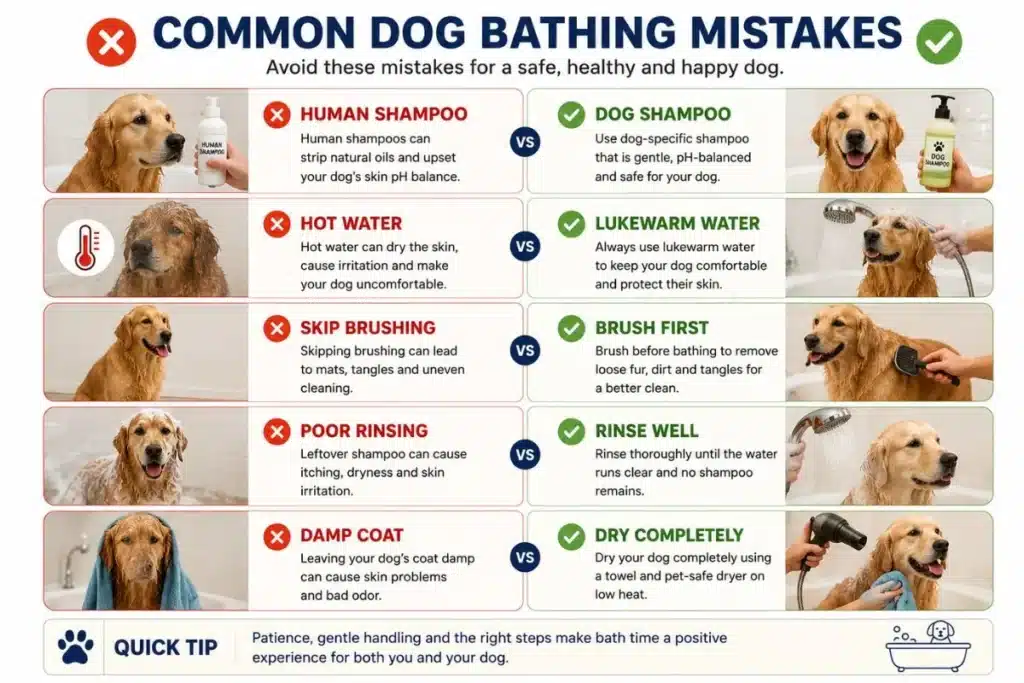
Using Human Shampoo
Human shampoo is made for people, not dogs. It can remove too many of your dog’s natural skin oils and may leave the skin feeling dry or irritated.
Always choose a shampoo made specifically for dogs. If you’re unsure which product fits your dog’s coat or skin type, read our guide to choosing the right dog shampoo before your next bath.
Common Mistake: Assuming baby shampoo is always a safe replacement for dog shampoo.
Using Water That Is Too Hot
Hot water can make your dog uncomfortable and may dry out the skin. Cold water can also make bath time unpleasant, especially during cooler weather.
Instead, use lukewarm water from the beginning of the bath until the final rinse.
Quick Tip: Test the water with your wrist before wetting your dog’s coat. It should feel comfortably warm, not hot.
Skipping Brushing Before the Bath
Brushing before the bath removes loose fur, dirt, and small tangles. It also helps shampoo spread evenly through the coat.
If you skip this step, wet tangles can tighten into mats that are much harder to remove later. If you aren’t sure which brush to use, our guide to choosing the right dog brush explains the best options for different coat types.
Real-Life Example: A Golden Retriever with loose undercoat sheds much more easily after a quick brushing than after bathing without brushing first.
Not Rinsing Shampoo Completely
Leaving shampoo residue behind is one of the most common dog bathing mistakes. Leftover shampoo may cause itching, dry skin, or skin irritation, especially in dogs with sensitive skin.
Rinse from the neck toward the tail and check the coat with your fingers. If the fur still feels slippery, keep rinsing until the coat feels completely clean.
Safety Reminder: Double-coated dogs often need extra rinsing because shampoo can stay trapped close to the skin.
Leaving the Coat Damp
A coat may look dry on the outside while moisture remains trapped underneath. This is especially common in long-haired and double-coated breeds.
Dry the coat completely before ending bath time. Pay extra attention to thick areas around the neck, chest, and hindquarters where moisture takes longer to dry.
Quick Tip: Pat the coat dry with a microfiber towel first. If needed, finish with a pet dryer on a low-heat or cool setting.
Quick Mistake Checklist
Before finishing the bath, make sure you didn’t:
❌ Use human shampoo
❌ Use water that was too hot
❌ Skip brushing before the bath
❌ Leave shampoo residue in the coat
❌ Leave the coat damp
Mistake vs Better Choice
| Common Mistake | Better Choice |
| Human shampoo | Dog-specific shampoo |
| Hot water | Lukewarm water |
| Skipping brushing | Brush before bathing |
| Poor rinsing | Rinse until no shampoo remains |
| Damp coat | Dry the coat completely |
How Often Should You Bathe Your Dog?
One of the first questions many new dog owners ask is, “How often should dogs be bathed?” The answer depends on your dog’s coat, lifestyle, age, and skin health. Instead of following a fixed schedule, watch your dog’s coat and overall cleanliness to decide when a bath is really needed.
Bathing too often may remove some of the natural oils that help protect your dog’s skin. Waiting too long can allow dirt, grease, and odors to build up. The goal is to find the right balance for your individual dog.
Bathing Frequency by Coat Type
Your dog’s coat is one of the biggest factors that affects bathing frequency.
| Coat Type | General Bathing Guidance |
| Short coat | Bathe when the coat becomes dirty or develops a strong odor. |
| Long coat | Bathe as needed and brush regularly to help prevent tangles. |
| Double coat | Bathe when necessary and dry the undercoat completely after every bath. |
| Curly coat | Bathe as needed and brush often to help reduce matting. |
Quick Tip: Don’t bathe your dog just because a certain number of weeks has passed. Check the coat, skin, and odor first.
Consider Your Dog’s Lifestyle
Daily activities also affect how often your dog needs a bath.
A dog that spends most of the day indoors usually stays cleaner than a dog that enjoys hiking, swimming, or muddy parks.
Ask yourself:
- Does your dog swim often?
- Does your dog play in mud?
- Does the coat become greasy quickly?
- Does your dog spend most of the day indoors?
These answers can help you decide whether your dog needs a full bath or simply a quick brush and spot cleaning.
Real-Life Example: An indoor French Bulldog may stay clean for longer, while an active Labrador may need baths more often because it gets dirty more frequently.
Bathing Puppies
Puppies usually don’t need frequent baths unless they become especially dirty. Their skin is more delicate, so gentle handling and a puppy-safe shampoo are important.
Keep each bath short, use lukewarm water, and dry the coat completely before letting your puppy rest or go outside.
Bathing Senior Dogs
Older dogs often benefit from shorter and calmer baths. Joint stiffness or reduced mobility can make standing in the tub uncomfortable.
Prepare your supplies before you begin, use a non-slip bath mat, and support your dog if needed. A calm approach makes bath time easier for both of you.
Dogs with Sensitive Skin
Dogs with sensitive skin may need a different bathing routine. Bathing too often or using the wrong shampoo may increase dryness or irritation.
If your dog has allergies, ongoing itching, or a diagnosed skin condition, follow your veterinarian’s advice when deciding how often to bathe them. A consistent dog grooming routine for beginners can also help keep the coat clean between baths.
Safety Reminder: If your dog develops persistent redness, itching, or flaky skin after a bath, stop using the current shampoo and contact your veterinarian.
Quick Decision Guide
| Situation | Full Bath Usually Needed? |
| Mud covering the body | ✅ Yes |
| Greasy or sticky coat | ✅ Yes |
| Strong body odor | ✅ Yes |
| Dusty paws only | ❌ Usually no |
| Loose shedding hair | ❌ Brush first |
Special Bathing Situations
Every dog is different, and some situations need extra care during bath time. A puppy, a senior dog, or a dog that dislikes water won’t always need the same approach. Adjusting your routine helps keep your dog safe, comfortable, and less stressed.
Bathing a Puppy
Most puppies only need a bath when they become noticeably dirty. Their skin is more delicate than an adult dog’s, so gentle handling and a puppy-safe shampoo are important.
Keep the bath short, use lukewarm water, and dry the coat completely before your puppy rests or goes outside.
Quick Tip: Keep your puppy’s first few baths short and positive. Good early experiences often make future baths much easier.
Bathing a Senior Dog
Older dogs may need extra support during bath time. Joint stiffness or reduced mobility can make standing in the tub uncomfortable.
Prepare everything before you begin. Use a non-slip bath mat, support your dog if needed, and keep the water comfortably lukewarm.
Safety Reminder: If your senior dog struggles to stand or seems uncomfortable during bathing, ask your veterinarian whether home bathing is the best option.
Helping a Dog That Hates Water
Some dogs become nervous as soon as they see the bathtub. The best approach is to move slowly and let your dog build confidence over time.
Allow your dog to explore the bathing area before turning on the water. Reward calm behavior with praise and small treats. Then introduce the water gradually.
If you’re still building your dog’s confidence, our dog grooming guide for beginners shares simple techniques that make grooming sessions less stressful.
Real-Life Example: A rescue dog may need several short practice sessions before feeling comfortable enough for a full bath. Patience usually works better than forcing the experience.
Bathing After Swimming
Swimming doesn’t always replace a bath. After swimming in a pool, lake, river, or the ocean, rinse your dog’s coat with clean water to remove chlorine, salt, sand, or other debris.
If the coat still feels sticky, smells unpleasant, or looks dirty after rinsing, a full bath is usually the better choice.
AKC also recommends rinsing a dog’s coat thoroughly after swimming to remove chlorine and pool chemicals.
Quick Tip: Dry the coat thoroughly after swimming, especially if your dog has a thick or double coat.
Bathing a Muddy Dog
If your dog comes home covered in mud, don’t rush straight to the bathtub. Let the mud dry slightly, then brush away as much loose dirt as possible before bathing.
Removing loose mud first makes shampoo work more effectively and helps prevent tangles.
Common Mistake: Bathing a muddy dog without brushing away loose dirt first often makes the coat harder to clean.
Quick Decision Guide
| Situation | Best First Step |
| Puppy | Use a puppy-safe shampoo and keep the bath short. |
| Senior dog | Prepare the bathing area and provide extra support. |
| Dog afraid of water | Introduce the water slowly and reward calm behavior. |
| After swimming | Rinse the coat with clean water first. |
| Mud-covered dog | Brush away loose mud before bathing. |
When to See a Veterinarian
Most healthy dogs can be bathed safely at home. However, not every skin or coat problem can be solved with another bath. If your dog shows signs of pain, infection, or ongoing skin irritation, contact your veterinarian before bathing them again.
Signs of a Skin Infection
A regular bath won’t treat a skin infection. In some cases, it may even make irritated skin feel worse.
Watch for signs such as:
- Red or swollen skin
- Pus or discharge
- Scabs or crusty patches
- Skin that feels unusually warm
- A strong or unusual odor from the skin
These symptoms may be linked to an underlying skin condition that needs veterinary care instead of home bathing.
Safety Reminder: Only use a medicated shampoo if your veterinarian recommends it for your dog’s specific condition.
Open Wounds or Broken Skin
Avoid bathing your dog if you notice open wounds, fresh cuts, or broken skin. Water and shampoo can irritate damaged tissue and may slow the healing process.
If you’re unsure whether your dog’s condition needs medical attention, the American Veterinary Medical Association (AVMA) offers trusted pet care resources for dog owners.
Common Mistake: Using regular dog shampoo to clean an open wound instead of seeking proper veterinary advice.
Severe Itching That Doesn’t Improve
Occasional scratching is normal. However, constant scratching, chewing, or licking after a bath may be a sign of allergies, parasites, or another skin problem.
If the itching continues, becomes worse, or causes hair loss, stop bathing and arrange a veterinary examination.
Quick Tip: If the itching started after using a new shampoo, stop using the product until you’ve spoken with your veterinarian.
A Persistent Bad Odor
A healthy dog should smell cleaner after a thorough bath. If a strong odor returns quickly, another bath usually isn’t the answer.
Persistent odor may be linked to skin infections, ear problems, dental disease, or other health conditions. Your veterinarian can identify the underlying cause and recommend the right treatment.
Common Questions About Bathing Your Dog
Can I use baby shampoo on my dog?
Baby shampoo is milder than regular human shampoo, but it isn’t made for a dog’s skin. For regular bathing, use a dog-specific shampoo instead.
Can I use human shampoo on my dog?
No. Human shampoo isn’t formulated for canine skin and may remove too many natural oils. Over time, it can contribute to dryness or skin irritation. A dog-specific shampoo is the safer choice.
How often should I bathe my dog?
There isn’t one schedule that fits every dog. Bathing frequency depends on coat type, lifestyle, activity level, and skin health. Bathe your dog when the coat becomes dirty, greasy, or develops a strong odor.
Should I brush my dog before or after a bath?
Brush before the bath to remove loose fur and tangles. Brush again after the coat is completely dry to smooth the coat and remove any remaining loose hair.
Should I use hot or cold water?
Neither. Lukewarm water is the safest and most comfortable choice for most dogs. Water that is too hot or too cold can make bath time unpleasant.
Can puppies be bathed?
Yes, but only when they truly need a bath. Use lukewarm water, a puppy-safe shampoo, and keep the bath short. A calm first experience helps puppies become more comfortable with future baths.
Why does my dog still smell after a bath?
A bath removes normal dirt and odors, but it can’t fix every problem. If a strong smell returns quickly, it may be caused by a skin infection, ear problem, dental disease, or another health condition. Contact your veterinarian if the odor continues.
Can I bathe my dog without a bathtub?
Yes. You can use a walk-in shower, utility sink, portable dog bathing tub, or an outdoor bathing area when the weather is suitable. Choose the safest option based on your dog’s size and comfort.
Should I use conditioner after shampoo?
Some dogs benefit from a dog-specific conditioner, especially those with long, curly, or dry coats. Many healthy dogs don’t need conditioner after every bath. Choose products that match your dog’s coat and skin needs.
Can dogs catch a cold after a bath?
A bath doesn’t cause a cold. However, leaving your dog wet in a cold environment can make them uncomfortable and may contribute to other health problems. Dry the coat completely before your dog goes outside or rests in a cool place.
Can I bathe my dog too often?
Yes. Bathing more often than necessary may remove natural oils that help protect your dog’s skin and coat. Follow your dog’s individual needs instead of bathing on a fixed schedule.
What should I do if my dog hates baths?
Stay calm and introduce bath time slowly. Reward relaxed behavior with treats and praise, and avoid forcing your dog into the tub.
Final Thoughts: Make Every Dog Bath Safe and Stress-Free
Learning how to bathe a dog at home doesn’t have to be difficult. With the right preparation, dog-specific products, and a calm approach, you can safely bathe most healthy dogs at home. Every successful bath helps keep your dog’s skin clean, coat healthy, and future grooming sessions less stressful.
Remember that there isn’t one bathing routine that works for every dog. Coat type, lifestyle, age, and skin condition all affect how often your dog needs a bath and the care they need afterward. Paying attention to these differences will help you build a routine that works for your dog’s individual needs.