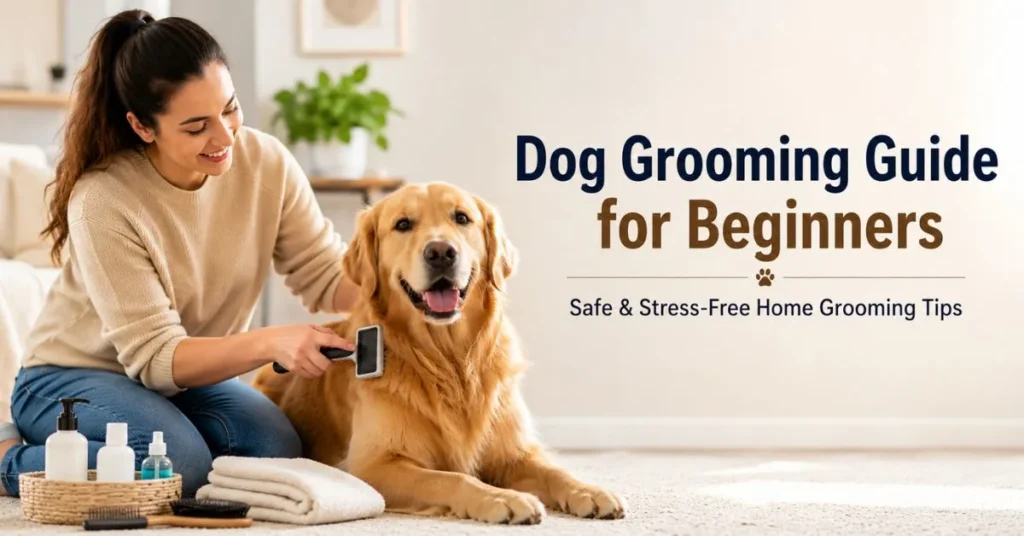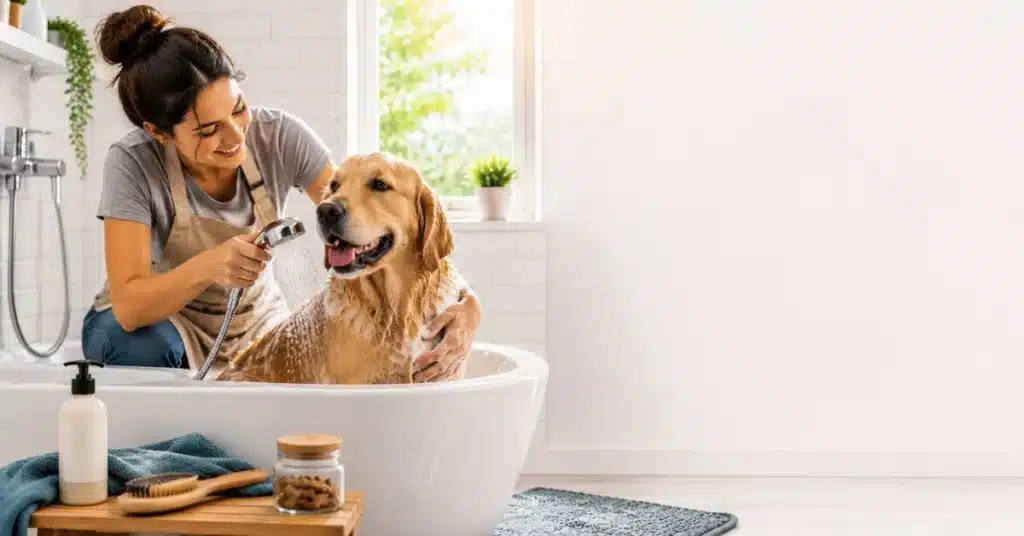
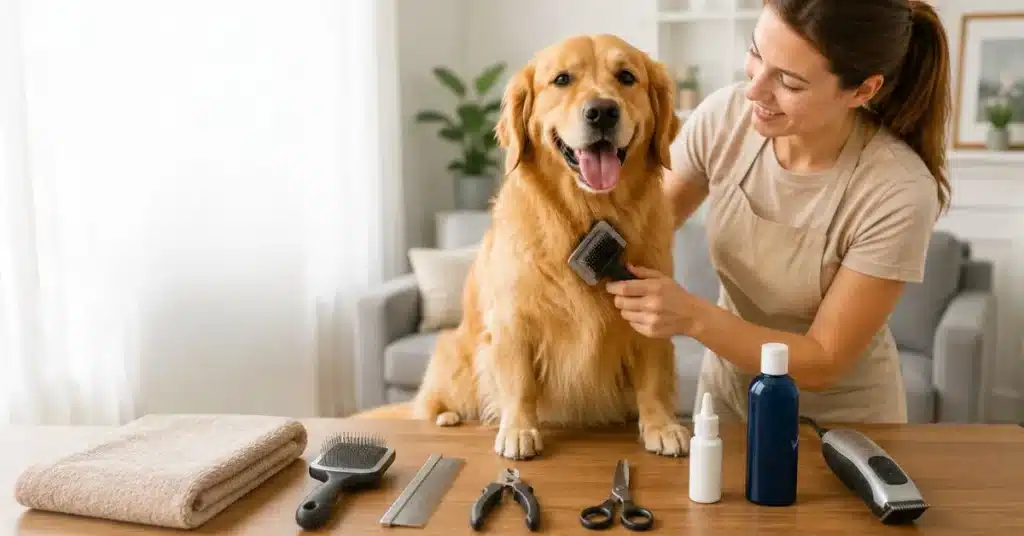
A dog grooming kit for home is a collection of tools that helps you maintain your dog’s coat, nails, ears, and overall hygiene without frequent trips to a professional groomer. The right grooming kit can make routine care easier, more affordable, and less stressful for both you and your dog.
Many first-time dog owners struggle to figure out which grooming tools they actually need. Some buy tools they never use, while others miss important items that can make grooming safer and more effective.
In this guide, you’ll learn which grooming tools are essential, which ones you can skip, how to choose tools based on your dog’s coat type, and how to build a safe, beginner-friendly grooming kit at home.
What Is a Dog Grooming Kit?
Many first-time dog owners assume that a dog grooming kit is something only professional groomers need. In reality, a dog grooming kit is simply a collection of dog grooming tools designed to help maintain your dog’s coat, nails, ears, skin, and overall hygiene at home.
A typical grooming kit may help with:
- Brushing loose hair
- Removing tangles and mats
- Trimming nails
- Cleaning ears
- Bathing
- Maintaining coat health
A grooming kit is not about making your dog look like a show dog. Instead, it helps keep your dog clean, comfortable, and well-maintained between professional grooming appointments.
For example, a Labrador Retriever may only need a brush, nail trimmer, and dog shampoo, while a Poodle often requires additional tools such as dog clippers, a slicker brush, and a stainless-steel comb. Because grooming needs vary by breed and coat type, there is no single grooming kit that works perfectly for every dog.
If you’re unsure which grooming tools are essential and which ones are optional, our guide on Essential Dog Grooming Tools Explained can help you understand what each tool does and when you actually need it.
Quick Tip:
The best dog grooming kit is not the one with the most tools—it’s the one that matches your dog’s coat type, grooming routine, and specific care needs.
Why a Home Dog Grooming Kit Can Be Useful
A home dog grooming kit is more than a convenience. For many dog owners, it helps make routine care easier by supporting your dog’s coat health, skin comfort, hygiene, and regular maintenance between professional grooming visits.
Better Coat and Skin Health
Regular grooming helps remove loose hair, dirt, and debris that can build up in your dog’s coat. Brushing may also help distribute natural oils through the coat, which can support a cleaner and healthier-looking appearance.
A basic grooming routine can help with:
- Reducing loose hair around the home
- Preventing small tangles before they become mats
- Keeping the coat cleaner between baths
- Noticing skin changes earlier
As part of a broader routine pet care plan, regular grooming can help owners monitor their dog’s overall coat and skin condition more effectively.
Reduced Grooming Costs
Professional grooming can be helpful, especially for dogs with long, curly, or high-maintenance coats. However, many owners use a grooming kit to handle simple tasks at home, such as brushing, nail trimming, ear cleaning, and basic bathing.
This may reduce the number of professional visits needed for routine maintenance.
Reality Check:
Home grooming does not replace professional grooming in every situation. Dogs with severe matting, specialized coat needs, or skin and ear concerns may still need help from a professional groomer or veterinarian.
Easier Routine Maintenance
Small grooming tasks are easier when they are done regularly. For example, brushing your dog’s coat before tangles become mats is much easier than trying to remove heavy matting later.
The same applies to nail care. Short, regular trims can be less stressful than waiting until nails become overgrown.
For a full routine, see our Daily Dog Care Routine guide.
Stronger Owner-Dog Bond
Many dogs become more comfortable with grooming when it is introduced gently. Short sessions of brushing, paw handling, and ear checks can help your dog feel safer during routine care.
This also supports better overall hygiene at home. For a deeper routine, read our Dog Hygiene Routine at Home guide.
What Should a Dog Grooming Kit Include?
One of the most common mistakes first-time dog owners make is buying a large grooming kit without understanding which tools are actually necessary. In reality, most dogs only need a few essential grooming tools to stay clean, comfortable, and well-maintained at home.
If you’re unsure which tools are worth buying, our Essential Dog Grooming Tools Explained guide provides a detailed breakdown of each grooming tool and its purpose.
Brushes
A brush is often the most important tool in any dog grooming kit.
Regular brushing helps:
- Remove loose hair
- Reduce shedding
- Prevent tangles and mats
- Distribute natural oils
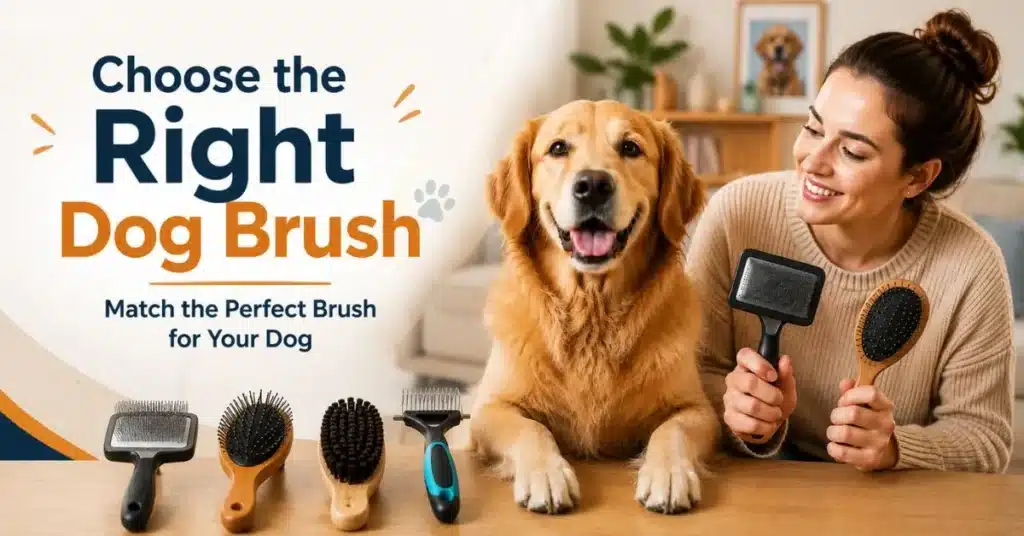
Common brush types include:
- Slicker Brush
- Pin Brush
- Bristle Brush
- Rubber Brush
Common Beginner Mistake: Choosing a brush based on popularity rather than coat type.
Combs
A grooming comb helps remove small tangles and inspect the coat more closely.
Best for:
- Long-haired dogs
- Curly-coated dogs
- Dogs prone to matting
Popular options include stainless-steel combs, wide-tooth combs, and flea combs.
Nail Trimmers
Regular nail care helps maintain comfort, traction, and healthy movement.
Safety Tip: Trim small amounts at a time to avoid cutting the quick.
Dog Clippers
Dog clippers are useful for breeds with continuously growing coats, such as Poodles, Goldendoodles, and Shih Tzus.
When choosing clippers, consider:
- Noise level
- Battery life
- Blade quality
Important: Human clippers are not designed for most dog coats.
Grooming Scissors
Grooming scissors are useful for:
- Paw trimming
- Face trimming
- Minor touch-ups
Beginners should use them carefully and only for basic trimming tasks.
Shampoo and Hygiene Products
A complete grooming kit should also include:
- Dog Shampoo
- Ear Cleaner
- Dog Toothbrush
- Dog Toothpaste
- Towels
Always choose products designed specifically for dogs.
Tool Overview Table
| Tool | Purpose | Essential or Optional |
| Brush | Coat maintenance and shedding control | Essential |
| Comb | Tangle and mat detection | Essential |
| Nail Trimmer | Nail care | Essential |
| Dog Shampoo | Bathing and hygiene | Essential |
| Ear Cleaner | Ear hygiene | Essential |
| Dog Clippers | Coat trimming | Optional |
| Grooming Scissors | Touch-ups and detailing | Optional |
Quick Checklist
A basic beginner dog grooming kit should include:
✔ Brush
✔ Comb
✔ Nail Trimmer
✔ Dog Shampoo
✔ Ear Cleaner
✔ Treats for positive reinforcement
Pro Tip: Start with the essentials and add specialized tools only when your dog’s coat type requires them.
Essential vs Optional Grooming Tools
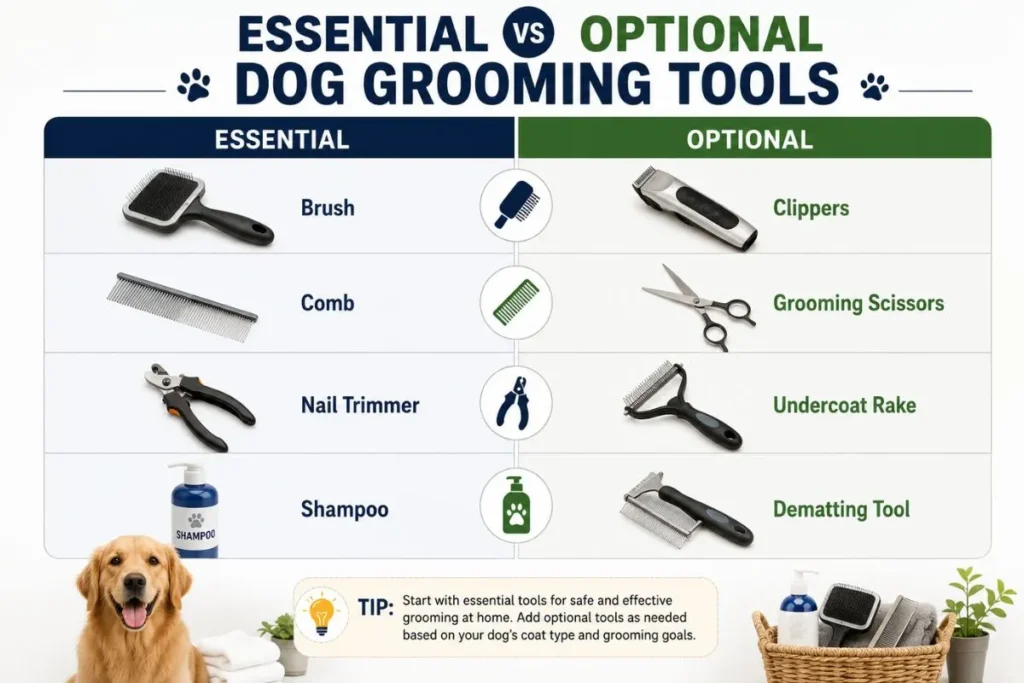
Many grooming kits contain tools that beginners may never use.
Before spending money, it helps to separate essential tools from optional tools.
| Tool | Essential | Optional |
| Brush | ✔ | |
| Comb | ✔ | |
| Nail Trimmer | ✔ | |
| Dog Shampoo | ✔ | |
| Ear Cleaner | ✔ | |
| Clippers | ✔ | |
| Grooming Scissors | ✔ | |
| Undercoat Rake | ✔ | |
| Dematting Tool | ✔ |
Must-Have Tools for Most Dogs
If you’re building your first grooming kit, prioritize:
- Brush
- Comb
- Nail Trimmer
- Dog Shampoo
- Ear Cleaner
These tools cover the majority of routine grooming needs for most dog owners.
Recommended Tools
As your grooming experience grows, you may want to add:
- Dog Clippers
- Grooming Scissors
- Deshedding Tools
Advanced Tools
Some tools are only necessary for specific coat types.
Examples:
- Undercoat Rake
- Dematting Tool
- Thinning Shears
Pro Tip:
Start with the essentials and expand your grooming kit only when your dog’s coat type or grooming routine requires additional tools.
How to Choose the Right Dog Grooming Kit
Not every dog grooming kit is suitable for every dog. One of the biggest mistakes beginners make is choosing a kit based on the number of tools included rather than their dog’s actual grooming needs.
Instead, focus on five factors: coat type, dog size, grooming frequency, budget, and experience level.
1. Consider Your Dog’s Coat Type
Your dog’s coat type is the most important factor when choosing grooming tools.
- Short coats usually need basic tools such as a brush and nail trimmer.
- Long coats often require a slicker brush, comb, and clippers.
- Curly coats typically need more frequent grooming and specialized tools.
- Double coats benefit from undercoat rakes and deshedding tools.
If you’re unsure which category your dog falls into, see our Dog Coat Type Matching Guide.
2. Think About Your Dog’s Size
Dog size can influence which tools are most practical.
- Small dogs often benefit from smaller grooming tools.
- Medium dogs usually require standard-sized tools.
- Large dogs may need larger brushes, stronger clippers, and durable nail trimmers.
3. Consider Grooming Frequency
Ask yourself how often you plan to groom your dog.
- Occasional grooming usually requires only a basic kit.
- Regular home grooming may justify investing in clippers and additional tools.
Reality Check: Advanced grooming tools only make sense if you plan to use them regularly.
4. Set a Realistic Budget
A larger grooming kit is not always a better grooming kit.
- $25–$50: Basic grooming essentials
- $50–$100: More complete grooming setup
- $100+: Advanced tools and professional-grade equipment
If you’re comparing actual kit options, see our Best Dog Grooming Kit for Beginners guide.
5. Match the Kit to Your Experience Level
- Beginners: Focus on a brush, comb, nail trimmer, and shampoo.
- Intermediate owners: May benefit from clippers and grooming scissors.
- Advanced owners: Often use specialized tools and multiple clipper blades.
Pro Tip:
The best dog grooming kit is not the most expensive one. It’s the one that matches your dog’s coat type, grooming needs, and the tools you feel confident using safely.
Recommended Grooming Tools by Coat Type
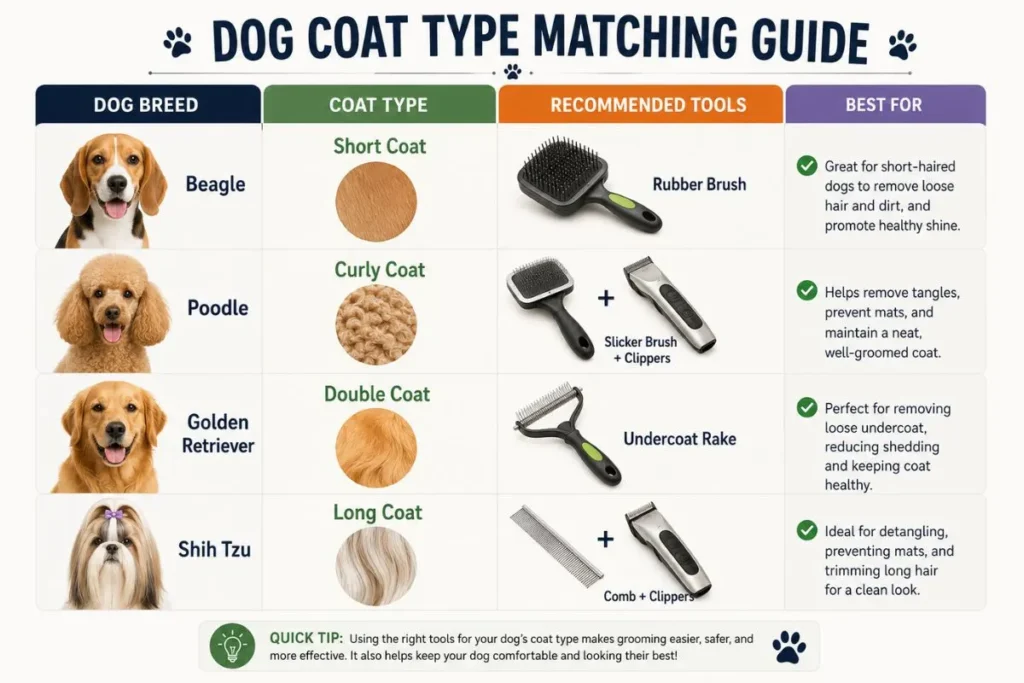
One of the easiest ways to avoid wasting money on unnecessary grooming tools is to choose a grooming kit based on your dog’s coat type. Different coat types require different grooming routines, brushes, combs, and maintenance tools.
If you’re not sure what coat type your dog has, start with our Dog Coat Type Matching Guide to identify the right grooming category before buying any tools.
Best Grooming Kit Setup for Short-Haired Dogs
Breed Examples:
- Labrador Retriever
- Beagle
- Boxer
- Doberman
Short-coated dogs are generally easier to maintain and usually require fewer grooming tools than long-haired breeds.
Essential Tools
✔ Rubber Brush
✔ Nail Trimmer
✔ Dog Shampoo
✔ Ear Cleaner
Optional Tools
✔ Deshedding Tool
Usually Unnecessary
✖ Heavy-Duty Clippers
✖ Dematting Tools
✖ Thinning Shears
Common Mistake:
Many owners buy clippers for short-coated dogs even though regular brushing often provides most of the grooming benefits.
Best Grooming Kit Setup for Long-Haired Dogs
Breed Examples:
- Shih Tzu
- Yorkshire Terrier
- Maltese
- Afghan Hound
Long-haired dogs require more frequent coat maintenance because tangles and mats can develop quickly.
Essential Tools
✔ Slicker Brush
✔ Stainless Steel Comb
✔ Nail Trimmer
✔ Dog Shampoo
Recommended Tools
✔ Dog Clippers
✔ Grooming Scissors
Why It Matters
Long-haired breeds often develop mats in areas such as:
- Behind the ears
- Under the legs
- Around the collar
Regular brushing and combing help prevent these problems before they become difficult to remove.
Best Grooming Kit Setup for Curly-Coated Dogs
Breed Examples:
- Poodle
- Goldendoodle
- Labradoodle
Curly coats require some of the most intensive grooming care because tangles can form close to the skin where they are difficult to see.
Essential Tools
✔ Slicker Brush
✔ Stainless Steel Comb
✔ Dog Clippers
✔ Nail Trimmer
Recommended Tools
✔ Grooming Scissors
✔ Detangling Spray
Common Mistake
Many owners brush only the outer layer of the coat. However, mats often develop near the skin and may go unnoticed until grooming becomes more difficult.
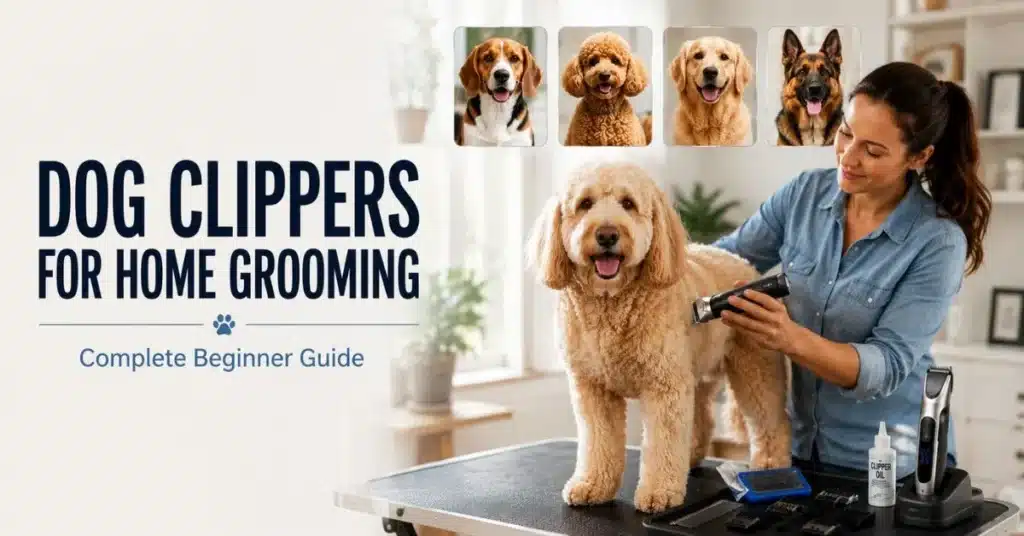
If you’re planning to trim a curly-coated dog at home, our Dog Clippers for Home Grooming guide can help you choose the right clipper setup.
Best Grooming Kit Setup for Double-Coated Dogs
Breed Examples:
- Golden Retriever
- German Shepherd
- Siberian Husky
Double-coated breeds typically shed heavily during seasonal coat changes and require tools that can reach the undercoat effectively.
Essential Tools
✔ Undercoat Rake
✔ Slicker Brush
✔ Nail Trimmer
✔ Dog Shampoo
Recommended Tools
✔ Deshedding Tool
Important Note
Most double-coated breeds do not require routine full-body clipping. Improper clipping may affect the coat’s natural insulation and shedding cycle.
Coat Type Comparison Table
| Coat Type | Essential Tools |
| Short Coat | Rubber Brush, Nail Trimmer |
| Long Coat | Slicker Brush, Comb, Clippers |
| Curly Coat | Slicker Brush, Comb, Clippers |
| Double Coat | Undercoat Rake, Slicker Brush |
Quick Coat-Type Test
Not sure which category your dog belongs to?
Does your dog have short, smooth fur?
Short Coat
Does your dog have long, flowing hair?
Long Coat
Does your dog have curls or waves?
Curly Coat
Does your dog have a thick undercoat that sheds seasonally?
Double Coat
Knowing your dog’s coat type before buying grooming tools can help you avoid unnecessary purchases and build a grooming kit that actually meets your dog’s needs.
Common Dog Grooming Kit Mistakes
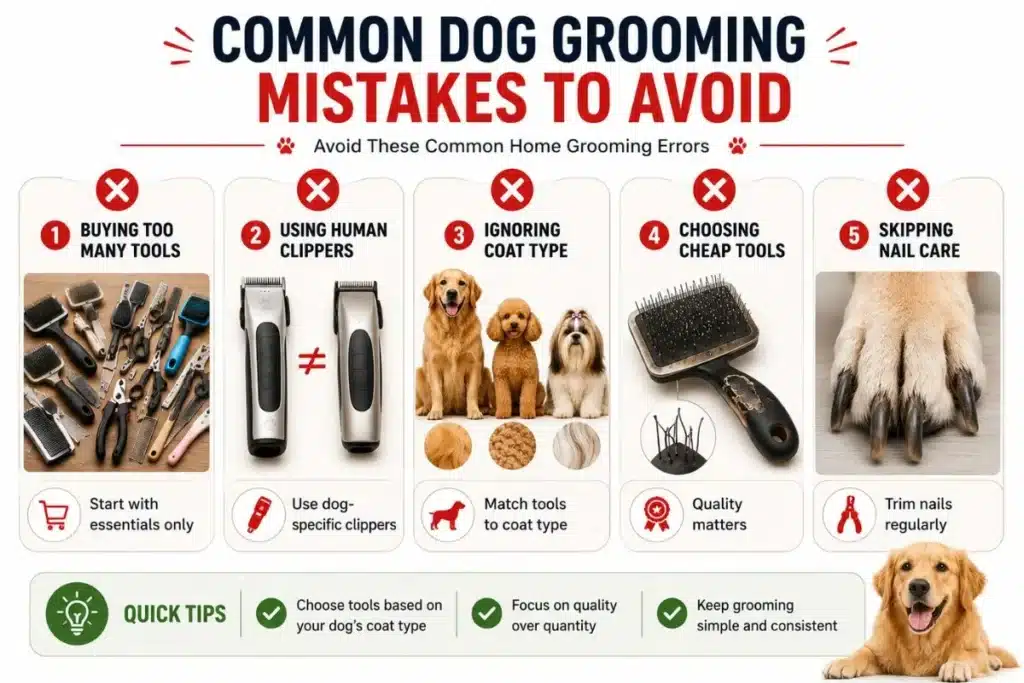
Many dog owners buy grooming tools with good intentions but still make mistakes that waste money, create frustration, and sometimes make grooming more difficult for their dogs.
The good news is that most dog grooming mistakes are completely avoidable once you understand which tools you actually need and how to choose them correctly.
Buying Too Many Tools Too Soon
One of the most common beginner mistakes is purchasing a large grooming kit packed with tools that may never be used.
Many starter kits include:
- Multiple brushes
- Several combs
- Different grooming scissors
- Specialty grooming tools
While these items may be useful for certain coat types, most dog owners only use a small number of tools regularly.
Better Approach
Start with:
✔ Brush
✔ Comb
✔ Nail Trimmer
✔ Dog Shampoo
Then add specialized tools only when your dog’s grooming needs require them.
Real-World Example
A Labrador Retriever owner may rarely need grooming scissors or dematting tools, while a Poodle owner may use them frequently.
Buying tools before understanding your dog’s coat type often leads to unnecessary spending.
Using Human Clippers on Dogs
This is one of the most common mistakes made by first-time dog owners.
Human clippers are designed for human hair, which is very different from many dog coats.
Potential problems include:
- Hair pulling
- Uneven cutting
- Blade overheating
- Skin irritation
Why Dog Clippers Are Different
Dog clippers are designed to handle:
- Dense fur
- Thick coats
- Longer grooming sessions
If you’re planning to trim your dog’s coat at home, our Dog Clippers for Home Grooming guide explains how to choose the right clipper for different coat types.
Safety Reminder:
If your dog requires regular trimming, always use clippers designed specifically for pets.
Ignoring Coat Type
Many grooming problems happen because owners choose tools without considering their dog’s coat type.
For example, a brush that works well for a:
- Golden Retriever
may not work well for a:
- Poodle
- Shih Tzu
- Maltese
Different coat structures require different grooming tools and maintenance routines.
Common User Complaint
I bought a highly rated brush online, but it doesn’t work for my dog.
In many cases, the problem is not the quality of the brush. The problem is that the brush doesn’t match the dog’s coat type.
If you’re unsure which grooming tools are best for your dog, our Dog Coat Type Matching Guide can help you choose tools based on your dog’s specific coat.
Choosing the Cheapest Grooming Kit
Budget matters, but the cheapest grooming kit is not always the best value.
Low-quality tools may:
- Break quickly
- Perform poorly
- Pull hair instead of grooming effectively
- Create frustration during grooming sessions
Better Strategy
Focus on:
✔ Tool quality
✔ Durability
✔ Suitability for your dog’s coat type
✔ Long-term value
rather than simply choosing the lowest price.
Skipping Nail Care
Many owners focus heavily on coat grooming while neglecting nail maintenance.
Overgrown nails may contribute to:
- Discomfort
- Altered walking posture
- Reduced traction
- Paw stress
Regular nail care is an important part of a complete grooming routine.
Even dogs that rarely require clipping still benefit from consistent nail maintenance.
Common Beginner Mistake Checklist
Avoid these common mistakes:
✖ Buying every grooming tool at once
✖ Using human clippers on dogs
✖ Ignoring coat type
✖ Choosing tools based only on price
✖ Neglecting nail care
✖ Buying tools before understanding your dog’s grooming needs
Pro Tip:
The best dog grooming kit is not the one with the most tools. It’s the one that matches your dog’s coat type, grooming routine, and experience level.
Dog Grooming Safety Tips
Choosing the right grooming tools is important, but using them safely is just as important. Many grooming-related problems happen not because of the tools themselves, but because they are used incorrectly.
Whether you’re trimming nails, brushing a coat, or using clippers, following a few basic safety practices can make grooming more comfortable and less stressful for both you and your dog.
Nail Trimming Safety
Nail trimming is one of the grooming tasks that makes many dog owners nervous. The biggest concern is accidentally cutting into the quick, the sensitive area inside the nail that contains blood vessels and nerves.
Safer Nail Trimming Tips
✔ Trim small amounts at a time
✔ Use sharp, high-quality nail trimmers
✔ Work in a well-lit area
✔ Reward calm behavior with treats
✔ Stop if your dog becomes overly stressed
Common Mistake
Trying to remove too much nail during a single grooming session.
Small, gradual trims are usually safer and more comfortable for your dog.
Clipper Safety
Dog clippers can save time and make coat maintenance easier, but they should always be used carefully.
Check Blade Temperature Regularly
Clipper blades can become hot during extended grooming sessions.
A hot blade may cause:
- Discomfort
- Skin irritation
- Minor burns
Quick Safety Test
Touch the blade gently against the inside of your wrist.
If it feels too hot for your skin, allow it to cool before continuing.
Additional Clipper Safety Tips
✔ Clean blades after use
✔ Lubricate blades regularly
✔ Use the correct blade guards
✔ Take short breaks during long grooming sessions
Ear Cleaning Safety
Ear care is an important part of dog hygiene, but overcleaning can sometimes cause irritation.
Safe Ear Cleaning Practices
✔ Use dog-specific ear cleaners
✔ Clean only when necessary
✔ Follow product instructions carefully
✔ Check for unusual odor or redness
For additional guidance on safe ear cleaning practices, the American Kennel Club (AKC) provides helpful recommendations for cleaning your dog’s ears safely at home.
Avoid
✖ Inserting cotton swabs deep into the ear canal
✖ Using harsh cleaning products
✖ Cleaning excessively
When to Seek Professional Advice
Contact a veterinarian if you notice:
- Persistent odor
- Redness
- Swelling
- Excessive discharge
- Signs of discomfort
These symptoms may indicate an underlying ear issue that requires professional attention.
Bathing Safety
Bathing helps maintain coat cleanliness, but a few common mistakes can make the process less effective.
Common Bathing Mistakes
✖ Using human shampoo
✖ Incomplete rinsing
✖ Allowing water into the ears
Best Practices
✔ Use dog-safe shampoo
✔ Rinse thoroughly
✔ Dry the coat properly
✔ Keep water away from the ear canal
For a complete hygiene routine, see our Dog Hygiene Routine at Home guide.
Grooming Nervous Dogs
Some dogs become anxious around grooming tools, especially puppies, rescue dogs, and dogs with limited grooming experience.
Gentle Introduction Method
Step 1: Let your dog see and sniff the tool.
Step 2: Reward calm behavior.
Step 3: Use the tool briefly.
Step 4: Gradually increase grooming time over multiple sessions.
Pro Tip
Never force a frightened dog through a long grooming session.
Short, positive experiences are often more effective than trying to complete everything at once.
Safe Home Grooming Checklist
Before each grooming session:
✔ Brush the coat first
✔ Check clipper blade temperature
✔ Inspect tools for damage
✔ Prepare treats
✔ Work in a quiet environment
✔ Keep sessions calm and positive
✔ Stop if your dog shows signs of excessive stress
Safety Reminder:
Home grooming works well for routine maintenance, but dogs with severe matting, skin problems, ear infections, or other health concerns may benefit from guidance from a professional groomer or veterinarian. Following basic pet grooming safety guidelines can also help reduce the risk of grooming-related injuries and stress.
Is a Dog Grooming Kit Worth It?
Many dog owners wonder whether investing in a dog grooming kit for home use is actually worth the cost. The answer depends on your dog’s grooming needs, your budget, and how much grooming you plan to handle yourself.
For many owners, a grooming kit can make routine care more convenient and help reduce ongoing grooming expenses. However, the value of a grooming kit often depends on how frequently you use it and whether the tools match your dog’s coat type.
Potential Cost Savings
Routine professional grooming can become expensive over time, especially for dogs that require frequent coat maintenance.
A home grooming kit may help reduce costs associated with:
- Regular brushing
- Nail trimming
- Basic bathing
- Routine coat maintenance
The exact amount you save will vary depending on your location, grooming schedule, and whether your dog requires professional grooming services.
Trust Note:
Home grooming may reduce routine grooming expenses, but it is not always a complete replacement for professional grooming.
Convenience Benefits
One of the biggest advantages of a dog grooming kit is convenience.
With the right tools, you can:
- Groom your dog when needed
- Handle minor grooming tasks quickly
- Reduce the need for frequent appointments
- Maintain your dog’s coat between professional visits
This can be especially helpful during seasonal shedding periods when regular brushing is often needed.
Better Coat Maintenance Between Grooming Appointments
Even dog owners who use professional groomers often benefit from having basic grooming tools at home.
Routine grooming can help:
- Reduce tangles and mats
- Control loose hair
- Improve coat appearance
- Maintain overall coat condition
Small grooming sessions throughout the month are often easier than dealing with major grooming problems later.
For a complete daily maintenance routine, see our Daily Dog Care Routine guide.
Limitations of Home Grooming
Balanced information is important when deciding whether a grooming kit is worth buying.
A grooming kit has limitations, and some dogs may still benefit from professional assistance.
Examples include:
- Severe matting
- Breed-specific styling
- Complex coat maintenance
- Medical grooming concerns
- Dogs that become highly stressed during grooming
Professional groomers have specialized equipment and experience that can be helpful in these situations.
Reality Check
For most dog owners, a grooming kit is worth it for routine maintenance and basic grooming tasks. However, the best results often come from combining regular home grooming with professional grooming when needed.
Instead of viewing home grooming and professional grooming as competitors, think of them as tools that can work together to support your dog’s comfort, hygiene, and coat health.
Dog Grooming Kit vs Individual Tools
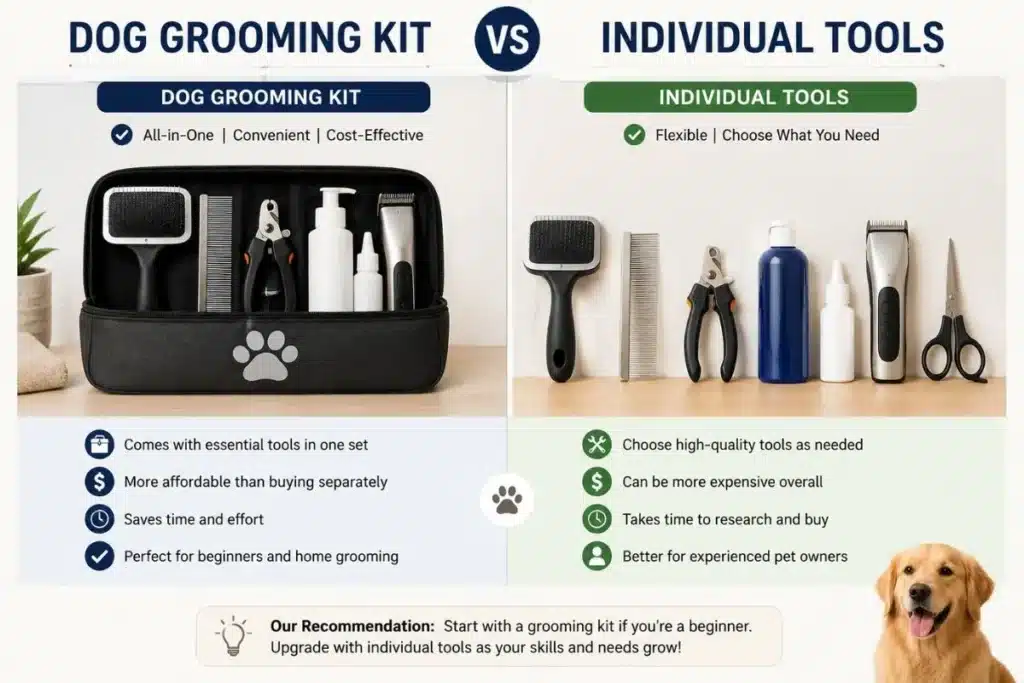
Many dog owners wonder whether it’s better to buy a complete grooming kit or purchase grooming tools separately. The right choice depends on your dog’s grooming needs and your experience level.
A dog grooming kit is often the best option for beginners because it provides several essential tools in one package and usually costs less than buying each item individually.
On the other hand, individual grooming tools offer more flexibility. They allow you to choose specific brushes, combs, clippers, and other tools based on your dog’s coat type and grooming routine.
Quick Comparison
| Feature | Grooming Kit | Individual Tools |
| Beginner Friendly | ✔ | |
| Lower Upfront Cost | ✔ | |
| Customization | ✔ | |
| Upgrade Flexibility | ✔ |
Which Option Is Better?
For most first-time dog owners, a basic grooming kit is a practical starting point. As your grooming experience grows, you can gradually replace or upgrade individual tools based on your dog’s specific needs.
Beginner Dog Grooming Kit Checklist
If you’re building your first dog grooming kit, don’t worry about buying every tool available. Most beginners only need a few essentials to start grooming safely and effectively at home.
Use this simple checklist before making a purchase.
Essential Tools
These items cover the basic grooming needs of most dogs.
Coat Care
✔ Brush suitable for your dog’s coat type
✔ Stainless Steel Comb
Nail Care
✔ Dog Nail Trimmer
Bathing & Hygiene
✔ Dog Shampoo
✔ Ear Cleaner
✔ Towels
Training & Comfort
✔ Treats for positive reinforcement
✔ Non-slip grooming surface
Recommended Tools
Helpful for many dogs but not always required.
✔ Dog Clippers
✔ Grooming Scissors
✔ Deshedding Tool
✔ Detangling Spray
Advanced Tools
Usually needed for specific coat types or experienced groomers.
✔ Undercoat Rake
✔ Dematting Tool
✔ Thinning Shears
✔ Multiple Clipper Blade Sizes
Quick Buying Checklist
Before purchasing a grooming kit, make sure you know:
✓ Your dog’s coat type
✓ How often you’ll groom your dog
✓ Whether clippers are actually necessary
✓ Your budget range
✓ Which tools are essential versus optional
Pro Tip:
Start with the essentials and add specialized tools only when needed. A smaller, well-chosen grooming kit is often more useful than a large kit filled with tools you’ll rarely use.
Best Dog Grooming Kits for Home Use
The best dog grooming kit for home use depends on your dog’s coat type, grooming routine, budget, and experience level. Rather than looking for a single “best” option, focus on the category that best matches your needs.
Best Dog Grooming Kit for Beginners
Ideal for:
- First-time dog owners
- Short-haired breeds
- Basic grooming needs
Look for:
✔ Brush
✔ Comb
✔ Nail Trimmer
✔ Dog Shampoo
Avoid overly complex kits that include tools you may never use.
Learn more in our Best Dog Grooming Kit for Beginners guide.
Best Dog Grooming Kit Under $50
Ideal for:
- Budget-conscious owners
- Dogs with simple grooming needs
Look for:
✔ Essential grooming tools
✔ Durable construction
✔ Positive user reviews
See our Best Dog Grooming Kit Under $50 recommendations.
Best Dog Grooming Kit Under $100
Ideal for:
- Long-haired breeds
- Curly-coated dogs
- Regular home grooming
Look for:
✔ Better-quality clippers
✔ Higher-quality brushes
✔ More complete tool selection
Explore our Best Dog Grooming Kit Under $100 guide.
Best All-in-One Dog Grooming Kit
Ideal for:
- Multi-dog households
- Owners who want a complete setup
Look for:
✔ Multiple grooming tools
✔ Organized storage
✔ Good overall tool quality
See our Best All-in-One Dog Grooming Kit guide.
Best Professional Dog Grooming Kit for Home Use
Ideal for:
- Experienced owners
- High-maintenance coats
- Frequent home grooming
Look for:
✔ Professional-grade clippers
✔ Multiple blade options
✔ Durable grooming tools
✔ Reliable warranty support
Read our Best Professional Dog Grooming Kit for Home Use guide for detailed recommendations.
Quick Tip:
The best grooming kit is not necessarily the one with the most tools. It’s the one that matches your dog’s coat type, grooming needs, and your experience level.
Common Questions About Dog Grooming Kits
What should a dog grooming kit include?
A basic dog grooming kit should include a brush, comb, nail trimmer, dog shampoo, and ear cleaner. Depending on your dog’s coat type, you may also need clippers, grooming scissors, deshedding tools, or an undercoat rake.
Can I groom my dog at home?
Yes. Most dog owners can handle routine brushing, bathing, nail trimming, and basic coat maintenance at home with the right tools and a little practice. Some dogs with severe matting or specialized grooming needs may still benefit from professional grooming.
How often should I groom my dog?
Grooming frequency depends on your dog’s coat type. Short-haired breeds may only need occasional brushing, while long-haired and curly-coated dogs often require grooming several times per week to prevent tangles and mats.
What grooming tools do I actually need as a beginner?
Most beginners only need a brush, comb, nail trimmer, dog shampoo, and ear cleaner. Additional tools such as clippers and grooming scissors can be added later if your dog’s coat requires them.
Can I use human clippers on my dog?
Generally, no. Human clippers are designed for human hair and may struggle with dense dog coats. Dog-specific clippers are typically safer, more effective, and more comfortable for your dog.
Should I buy a dog grooming kit or individual tools?
A grooming kit is often a convenient starting point for beginners. However, individual tools may be a better option if you want to customize your setup based on your dog’s coat type and grooming needs.
What is the best grooming kit for my dog’s coat type?
The best grooming kit depends on your dog’s coat. Short-coated breeds often need only basic tools, while long-haired, curly-coated, and double-coated dogs may require additional grooming equipment such as clippers, slicker brushes, or undercoat rakes.
Do all dogs need clippers?
No. Many short-haired breeds rarely require clipping. Clippers are generally more useful for dogs with long, curly, or continuously growing coats.
Are dog grooming kits worth it?
For many owners, yes. A grooming kit can help reduce routine grooming expenses and make regular maintenance more convenient. However, some dogs may still need occasional professional grooming.
What are the most common dog grooming mistakes?
Common mistakes include buying unnecessary tools, using human clippers, choosing tools that don’t match the dog’s coat type, skipping nail care, and neglecting routine grooming maintenance.
Final Thoughts
A dog grooming kit for home can make routine grooming easier, safer, and more affordable when you choose tools that match your dog’s coat type and grooming needs. For most dog owners, a simple setup with a brush, comb, nail trimmer, dog shampoo, and ear cleaner is enough to handle basic grooming tasks at home.
Rather than buying every tool available, focus on the essentials first and add specialized tools only when needed. By choosing the right tools, avoiding common grooming mistakes, and following safe grooming practices, you can keep your dog clean, comfortable, and well-groomed year-round.
If you’re new to home grooming, our Dog Grooming for Beginners guide can help you build a complete grooming routine and learn the fundamentals of safe at-home dog care.