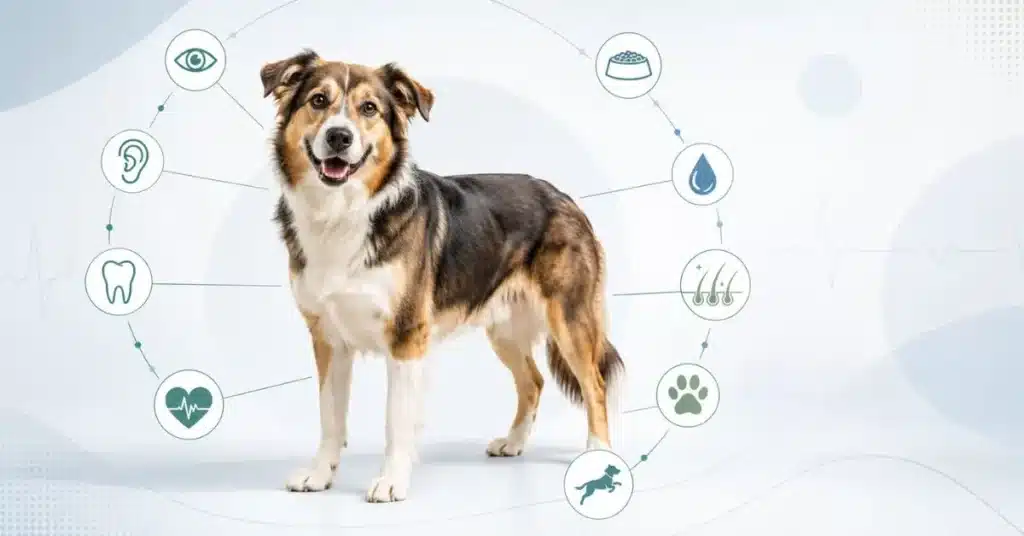
Signs of a healthy dog often include a steady appetite, normal energy, clear eyes, healthy gums and coat, comfortable breathing, and pain-free movement. Regular stool and urination are also important signs of overall wellness.
The best way to judge your dog’s health is to compare these signs with their normal routine. Age, breed, personality, and lifestyle can all affect what is normal for an individual dog.
No single sign can confirm complete health. Watch for sudden or persistent changes and speak with a veterinarian when something seems unusual.
Quick Signs of a Healthy Dog
A healthy dog usually has a steady routine. Its appetite, water intake, behavior, movement, and bathroom habits should remain normal for that individual dog.
Use this quick dog health checklist to spot common signs of good health:
- Consistent appetite
- Normal water intake
- Alert and responsive behavior
- Stable body condition
- Clear, comfortable eyes
- Clean ears without a strong odor
- Healthy gums, teeth, and mouth
- Comfortable skin and a coat that looks normal for the breed
- Easy breathing at rest
- Regular stool and urination
- Comfortable, pain-free movement
- Normal sleep and social behavior
For a simple routine you can follow every day, use our daily dog care checklist.
What Does Healthy Mean for Your Dog?
A healthy senior dog may look very different from a healthy puppy. There is no single activity level, sleep pattern, or body type that is normal for every dog.
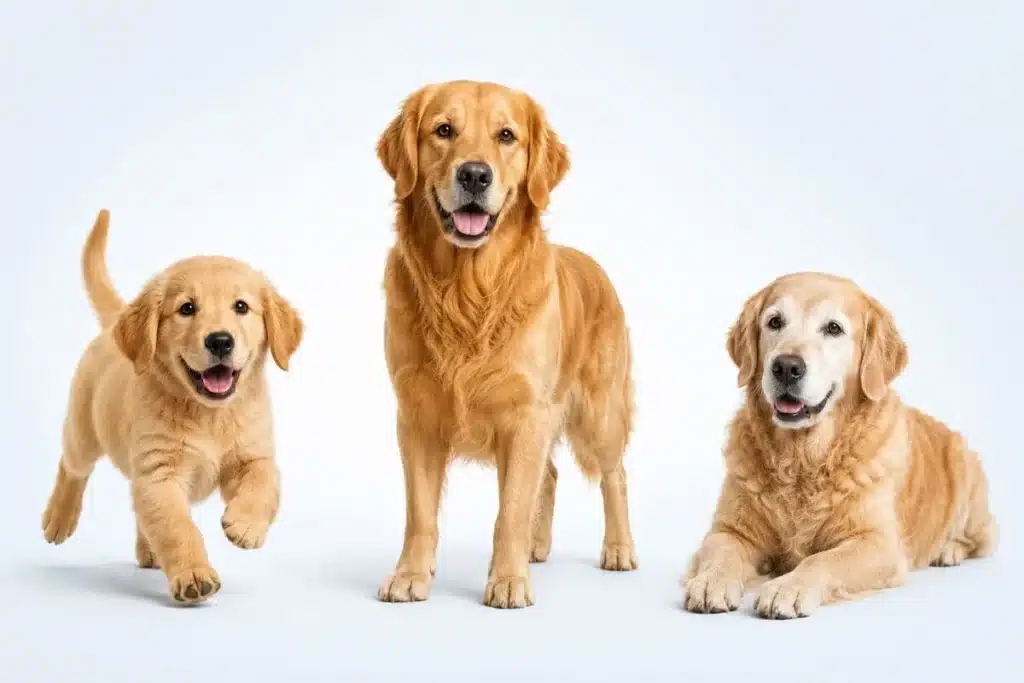
Age, breed, personality, exercise level, lifestyle, and medical history all shape normal dog behavior. A puppy may have short bursts of energy and sleep often, while an adult dog usually follows a steadier routine. Senior dogs may move more slowly and rest more, which is why life-stage veterinary care is important.
The best way to judge your dog’s health is to learn their normal baseline. This means knowing what is usual for their appetite, water intake, energy, sleep, movement, bathroom habits, and social behavior.
For example, a calm senior dog may sleep more than a young dog but still respond normally to food, walks, and familiar people. The main concern is a sudden or lasting change from that usual pattern, such as refusing food, avoiding interaction, or struggling to stand.
Following a regular daily dog care routine can make small changes easier to notice over time.
12 Signs of a Healthy Dog to Check From Head to Tail
A dog’s health cannot be judged by one feature alone. Look at their behavior, appetite, body condition, breathing, bathroom habits, movement, and physical appearance together.
The signs below can help you understand what is normal for your dog and notice changes that may need attention.
1. Normal Energy and Responsive Behavior
A quiet dog is not necessarily unhealthy. Normal energy levels vary by age, breed, temperament, fitness, and daily routine.
A healthy dog is usually alert and responds to familiar people, food, walks, toys, or activities they normally enjoy. A calm dog may rest quietly but still react when called.
Lethargy is different from calm behavior. A lethargic dog may appear unusually weak, hide, avoid interaction, or lose interest in normal activities.
Sudden weakness, irritability, or withdrawal may be one of the early signs your dog is unwell, especially when other changes are also present.
2. A Consistent Appetite and Drinking Pattern
Eating normally is reassuring, but appetite is only one part of the health picture.
A healthy dog usually shows a steady interest in meals and follows a drinking pattern that is normal for them. Small changes may happen because of weather, activity, stress, age, or food type.
However, sudden appetite loss, extreme hunger, excessive thirst, or a major drop in drinking should not be ignored.
For practical feeding guidance, read what dogs should eat daily.
3. A Stable and Healthy Body Condition
A thick or fluffy coat can hide gradual weight changes. That is why body condition can be more useful than scale weight alone.
At a healthy body condition, you should usually be able to feel the ribs under a light layer of fat. The dog may also have a visible waist from above and an abdominal tuck from the side.
Normal body shape differs by breed. A Body Condition Score (BCS) helps assess whether a dog appears underweight, ideal, overweight, or obese.
Sudden weight gain, weight loss, or muscle loss deserves closer attention.
Practical tip: Take monthly top-view and side-view photos from the same angle. This makes gradual body-shape changes easier to notice.
4. Bright, Comfortable Eyes
Healthy dog eyes usually look clear, open, and comfortable.
There should not be ongoing squinting, rubbing, major redness, cloudiness, or unusual discharge. Some breeds naturally develop mild tear staining, so learn what is normal for your dog.
Pay closer attention when only one eye changes. New swelling, discharge, repeated blinking, or visible discomfort may need veterinary advice.
5. Clean Ears Without a Strong Odor
Healthy ears should look comfortable, not constantly itchy or painful.
A small amount of wax may be normal. However, the ears should not have a strong odor, heavy discharge, obvious redness, or swelling.
Ear shape and wax production vary by breed. Dogs with long, floppy, or hairy ears may need closer routine checks.
Repeated scratching, head shaking, pain, or a sudden bad smell may suggest a problem. For safe routine care, follow our guide on how to clean dog ears at home.
6. Healthy Gums, Teeth, and Mouth
Gum color is useful only when you know what is normal for your own dog.
Many dogs have pink gums, while others naturally have dark or spotted pigmentation. Healthy-looking gums should not have unexplained bleeding, severe swelling, or painful sores.
The teeth should not appear broken or loose, and the dog should be able to chew comfortably. Mild breath odor may occur, but strong or worsening bad breath can be linked to plaque, tartar, or dental disease.
Very pale, gray, or blue-looking gums, especially with weakness or breathing difficulty, may require urgent veterinary care.
Regular brushing supports oral health. See how to clean your dog’s teeth at home.
7. Comfortable Skin and a Normal Coat
Heavy shedding may be normal for one dog, while constant scratching tells a different story.
A healthy coat should look normal for the dog’s breed, coat type, season, and grooming routine. The skin should not have unexplained bald patches, open sores, widespread redness, or ongoing irritation.
Watch for repeated scratching, licking, chewing, dandruff, fleas, ticks, or new tender areas.
A shiny coat can be reassuring, but it does not prove complete health. For regular care, follow a dog hygiene routine at home.
8. Comfortable Breathing at Rest
Panting after play can be normal. Struggling to breathe while resting is different.
A healthy dog should generally breathe quietly and comfortably at rest, without visible effort. Panting may occur after exercise, during warm weather, or when a dog is excited or stressed.
Possible warning signs include:
- Unexplained panting while resting
- Noisy or difficult breathing
- Repeated coughing or wheezing
- Heavy belly movement while breathing
- Pale, gray, or blue-looking gums
Difficulty breathing requires urgent veterinary attention, especially when weakness or unusual gum color is also present.
9. Regular Stool and Bowel Movements
Bathroom habits can reveal changes before other signs become obvious.
A healthy dog usually passes stool on a predictable schedule. The stool is generally formed and easy to pick up.
One unusual bowel movement does not always mean illness. Diet changes, stress, or unfamiliar food may temporarily affect stool consistency.
However, repeated straining, ongoing diarrhea, constipation, visible blood, large amounts of mucus, or black, tar-like stool should not be treated as normal.
10. Normal Urination
A healthy dog usually urinates without pain or difficulty. Their frequency should remain normal for their age, routine, and water intake.
Watch for:
- Straining to urinate
- Repeated attempts with little or no urine
- Visible blood
- Sudden indoor accidents
- A major change in frequency
- Drinking far more than usual
A single accident may happen because of stress, excitement, or a routine change. Persistent changes are more important.
A dog that is unable to pass urine needs urgent veterinary care.
11. Comfortable, Pain-Free Movement
Dogs do not always cry when they are in pain.
A healthy dog generally walks with a balanced gait, rises without obvious discomfort, and places weight normally on all four legs.
Older dogs may move more slowly than younger dogs. The main concern is a new or worsening change, such as:
- Limping
- Sudden stiffness
- Difficulty standing
- Reluctance to climb stairs
- Avoiding jumps
- Reduced interest in walks
Observe natural movement instead of forcing exercise as a test. Sudden mobility changes should be discussed with a veterinarian.
12. Normal Sleep and Social Behavior
Healthy sleep and social behavior vary between dogs.
Puppies and senior dogs often sleep more than healthy adult dogs. Some breeds and personalities are also naturally quieter.
A healthy dog should still show a normal interest in familiar people, surroundings, meals, and daily activities. They should respond in a way that is usual for them after resting.
Sudden hiding, confusion, irritability, restlessness, withdrawal, or major sleep changes may deserve attention. These changes matter more when they appear with appetite loss, weakness, pain, or bathroom problems.
Healthy Signs vs Warning Changes
Healthy signs become easier to understand when you compare them with changes that may need attention. Use this table as a quick reference, but always consider your dog’s normal baseline and overall condition.
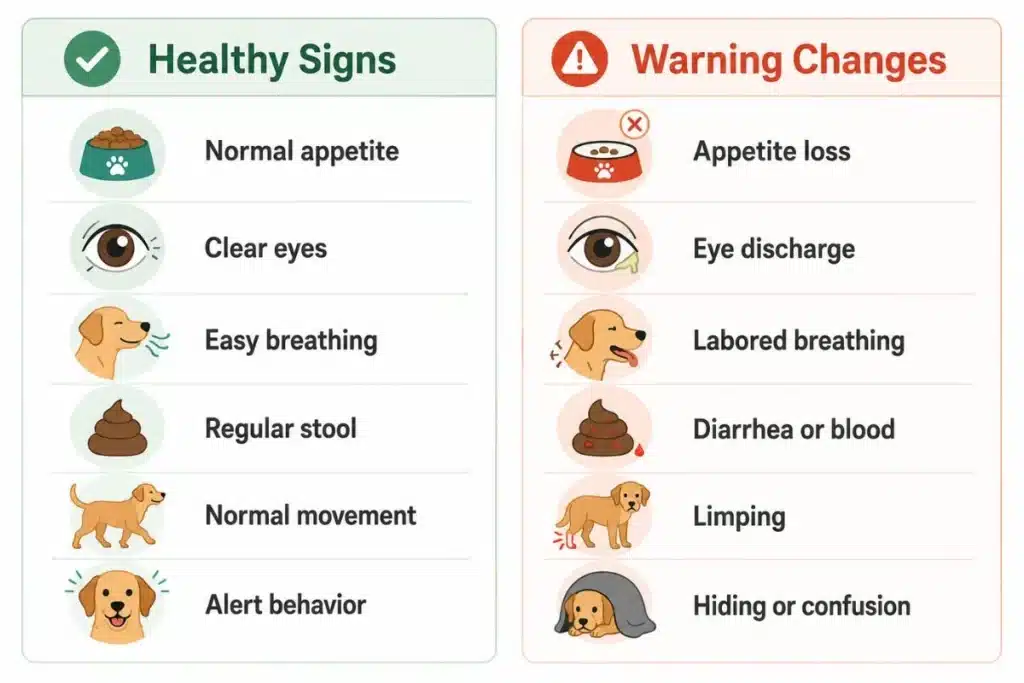
| Check Area | Common Healthy Pattern | Possible Warning Change |
| Appetite | Normal interest in meals | Sudden loss or major increase |
| Energy | Alert and responsive | Unusual weakness or withdrawal |
| Eyes | Clear and comfortable | Redness, cloudiness, or discharge |
| Breathing | Easy and quiet at rest | Labored, noisy, or unexplained panting |
| Stool | Regular and generally formed | Blood, black stool, or ongoing diarrhea |
| Urination | Normal frequency without straining | Blood, repeated attempts, or inability to urinate |
| Movement | Comfortable and balanced | Limping, stiffness, or pain |
| Behavior | Normal for the individual dog | Sudden hiding, confusion, or irritability |
One small change does not always mean your dog is sick. However, persistent, worsening, or multiple changes should be discussed with a veterinarian.
A Simple 60-Second Home Wellness Check
You do not need special equipment to notice whether something has changed. This quick check can help you compare your dog with their usual routine.
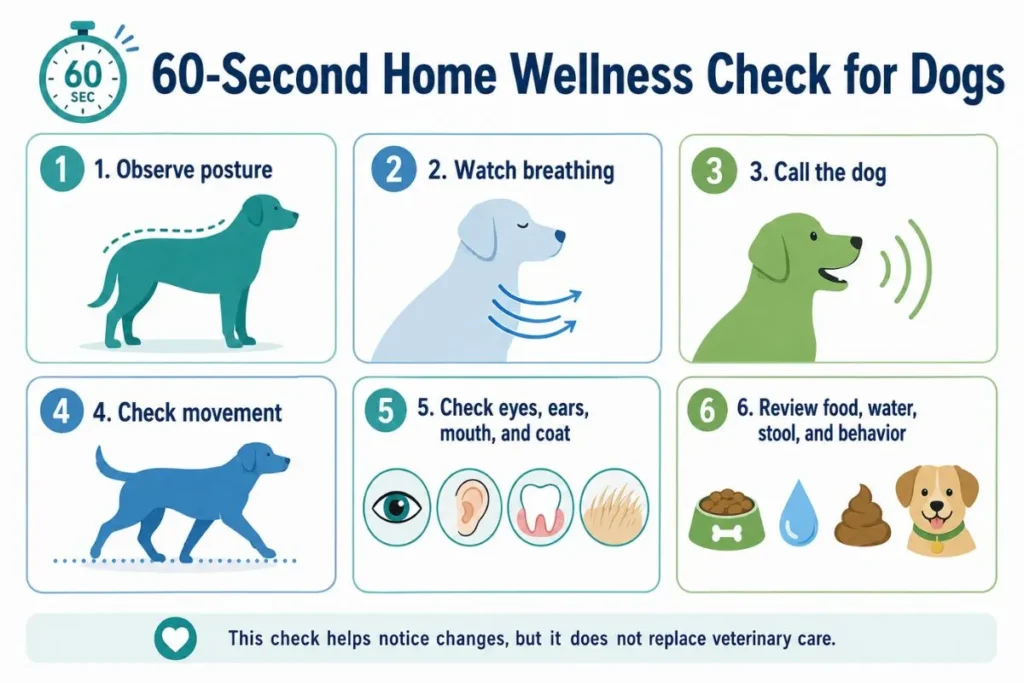
- Observe from a distance. Check whether your dog looks alert, relaxed, and responsive.
- Watch their breathing. Breathing at rest should appear quiet and comfortable.
- Invite normal interaction. Call their name or offer a familiar activity, such as food or a walk.
- Watch their movement. Notice how they stand, walk, turn, and place weight on each leg.
- Check visible areas. Look at the eyes, ears, mouth, skin, and coat for new changes.
- Review the last 24 hours. Think about appetite, water intake, stool, urination, sleep, and behavior.
This quick check can help you notice changes from your dog’s normal baseline, but it cannot diagnose illness or replace a veterinary examination.
Daily, Weekly, and Monthly Health Checks
A regular dog health monitoring routine can make small changes easier to notice. You do not need to examine your dog in detail every day. Instead, watch simple daily habits and complete a closer check each week and month.
Daily Health Checks
During your dog’s normal routine, pay attention to:
- Appetite and interest in meals
- Normal water intake
- Energy and responsiveness
- Comfortable breathing at rest
- Stool and urination
- Walking and general movement
- Sleep, mood, and social behavior
The goal is to understand your dog’s normal baseline, not to search for illness every day. A small one-time change may not be serious, but a sudden, repeated, or lasting change deserves closer attention.
For a simple routine you can follow each day, use our daily dog care checklist.
Weekly Health Checks
Once a week, choose a calm time to check your dog’s:
- Eyes and ears
- Mouth, teeth, and gums
- Skin and coat
- Paws and nails
- Body for new lumps, swelling, or tender areas
Keep the check gentle. Stop if your dog shows pain, fear, or discomfort.
These weekly checks support preventive care and may help you notice gradual changes that are easy to miss during daily life.
Monthly Health Checks
Once a month, review your dog’s weight and body condition. Check whether the ribs, waist, muscle tone, and overall shape look consistent with the previous month.
Taking top-view and side-view photos in the same place and lighting can make slow changes easier to notice.
You can also review:
- Diet or medication changes
- Exercise and mobility
- Skin and coat condition
- Behavior or sleep changes
- Upcoming veterinary needs
A consistent monthly wellness routine can help you track weight gain, muscle loss, reduced mobility, or other gradual changes.
Common Mistakes When Checking Your Dog’s Health
Most dog health mistakes happen when owners focus on one sign instead of the whole picture. To understand how your dog is doing, look at their appetite, behavior, breathing, movement, bathroom habits, and overall condition together.
Relying on a Wet or Dry Nose
A wet nose does not always mean a dog is healthy. A dry nose does not always mean illness either.
Nose moisture can change after sleep, exercise, warm weather, or time spent indoors. It should never be used as a stand-alone health test.
Assuming a Shiny Coat Means Perfect Health
A shiny coat can be reassuring, but it is only one sign. Breed, coat type, grooming products, and diet can all affect how the coat looks.
A dog may still have a health problem even if the coat appears normal.
Looking Only at Appetite
Eating normally does not prove complete health. A dog may continue eating while showing changes in breathing, movement, stool, urination, or behavior.
Always consider appetite together with other signs.
Comparing Your Dog With Other Dogs
Do not compare your dog with a puppy, another breed, or a more active dog. The best comparison is your dog’s own normal baseline.
Focus on what is usual for their energy, sleep, appetite, movement, and social behavior.
Ignoring Gradual Changes
Slow weight gain, muscle loss, stiffness, or coat changes can be easy to miss.
Monthly photos, weight records, and short routine notes can help you notice these changes earlier.
Waiting During an Emergency
Do not keep monitoring at home if your dog has difficulty breathing, collapses, has a seizure, cannot urinate, or has pale, gray, or blue-looking gums.
These signs may require urgent veterinary care.
Following a regular daily dog care routine can make small and gradual changes easier to notice.
When Should You Contact a Veterinarian?
Home observation can help you notice a change, but it cannot explain what is causing it. Knowing when to take your dog to the vet can prevent a minor concern from becoming more serious.
Contact a Vet Soon
Speak with a veterinarian if a change is persistent, recurring, or getting worse, even when your dog does not appear seriously ill.
Arrange veterinary advice if you notice:
- A lasting change in appetite
- Recurring diarrhea or vomiting
- Unexplained weight loss
- Repeated coughing
- Ongoing limping or stiffness
- A new lump or swelling
- Sudden behavior changes
- Increased thirst or urination
- Persistent itching or skin irritation
One mild change may not always mean illness. However, several changes appearing together may be more concerning.
Seek Urgent Veterinary Care
Some dog emergency signs should not be monitored at home. Contact an emergency veterinary clinic immediately if your dog has:
- Difficulty breathing
- Pale, gray, or blue-looking gums
- Collapse or loss of consciousness
- A seizure
- Severe weakness or inability to stand
- Inability to urinate
- Significant or uncontrolled bleeding
- Repeated vomiting with weakness
- A suddenly swollen or painful abdomen
- Possible poisoning
Do not wait for several symptoms to appear. A single serious sign, such as breathing difficulty, collapse, or inability to urinate, may require immediate care.
Can a Dog Look Healthy and Still Be Sick?
Yes. A dog can appear healthy while a health problem is still developing.
A normal appetite, clear eyes, a healthy-looking coat, and playful behavior are reassuring. However, some conditions cause few visible signs in their early stages, while others develop too slowly to notice during daily care.
Regular veterinary wellness exams remain important. A veterinarian may recommend physical exams or preventive screening based on your dog’s age, breed, medical history, and current needs.
Home observation is useful for noticing change, but only a professional veterinary assessment can investigate the cause.
Frequently Asked Questions About Signs of a Healthy Dog
How Can I Tell If My Dog Is Healthy?
Look for a steady pattern in your dog’s appetite, energy, breathing, movement, bathroom habits, and behavior. Compare these signs with what is usual for your own dog. Clear eyes and normal interest in daily activities are reassuring, while lasting or worsening changes deserve veterinary advice.
What Should Healthy Dog Gums Look Like?
Healthy dog gums are often moist and pink, but some dogs naturally have dark or spotted pigmentation.
Learn what is normal for your dog. Gums that suddenly look very pale, gray, blue, swollen, or bleeding may signal a serious problem, especially when weakness or breathing trouble is also present.
Should a Healthy Dog’s Nose Be Wet?
Not always. A wet nose can be normal, but a dry nose does not automatically mean your dog is sick.
Nose moisture may change after sleep, exercise, warm weather, or time indoors. It should be considered with appetite, energy, breathing, movement, and behavior—not used as a health test by itself.
What Should Healthy Dog Poop Look Like?
Healthy dog poop is usually formed, moist, and easy to pick up. Your dog should also follow a bowel pattern that is normal for them.
One unusual stool may happen after stress or a diet change. However, ongoing diarrhea, repeated straining, visible blood, heavy mucus, or black stool should be discussed with a veterinarian.
How Do I Know If My Dog Is a Healthy Weight?
A healthy weight depends on more than the number on a scale.
You should usually be able to feel the ribs under a light layer of fat. A visible waist from above and an abdominal tuck from the side are also useful signs. A veterinarian can check your dog’s Body Condition Score.
How Does a Healthy Dog Behave?
A healthy dog is usually alert, responsive, and interested in familiar activities such as food, walks, play, or family interaction.
Normal energy varies by age, breed, personality, and lifestyle. A calm dog may still be healthy. Sudden weakness, hiding, irritability, or loss of interest deserves closer attention.
Can a Dog Look Healthy but Still Have a Health Problem?
Yes. Some health problems cause few visible signs at first, so a dog may continue eating, playing, and behaving normally. Regular veterinary wellness exams can help identify concerns that home observation may not reveal.
When Should I Worry About a Change in My Dog?
Contact a veterinarian when a change is persistent, worsening, recurring, or affects several areas at once. Difficulty breathing, collapse, seizure, inability to urinate, severe weakness, or pale, gray, or blue gums require urgent veterinary care.
Final Thoughts on the Signs of a Healthy Dog
Your dog’s usual pattern is the most useful guide to their everyday health. Pay attention to meaningful changes in appetite, energy, movement, breathing, bathroom habits, and behavior, while continuing regular veterinary care.
Consistent everyday care helps support these healthy patterns. Our dog care guide for beginners covers the basic feeding, hygiene, exercise, and preventive care routine every new owner should know.