

Early signs your dog is sick may include changes in appetite, energy, behavior, breathing, digestion, urination, movement, or gum color.
The clearest clue is often a sudden change from your dog’s normal daily behavior. One mild, isolated change may only need close monitoring, but contact a veterinarian if food refusal continues or appears with vomiting, weakness, pain, or reduced drinking.
Get Emergency Veterinary Help Now If Your Dog Has:
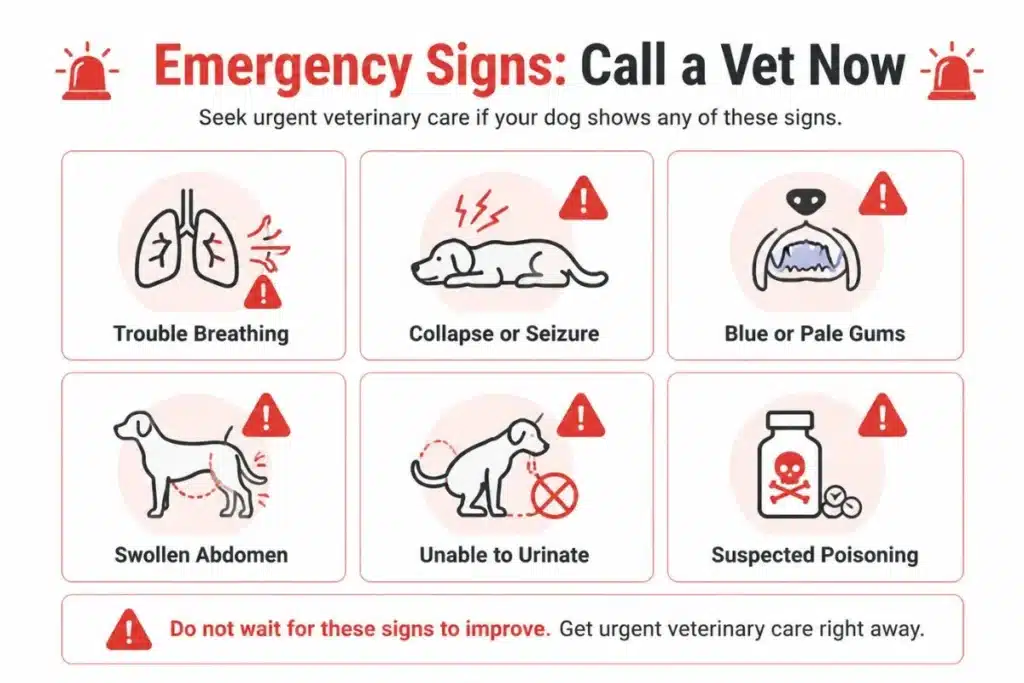
Seek an emergency vet immediately if your dog shows any of these serious warning signs:
- Trouble breathing or visible respiratory distress
- Blue, grey, or very pale gums
- Collapse, unconsciousness, or a seizure
- Severe or uncontrolled bleeding
- A swollen, hard, or painful abdomen
- Repeated attempts to vomit without producing anything
- Straining but being unable to urinate
- Suspected poisoning
- Sudden weakness or inability to stand
Do not wait for these symptoms to improve. These emergency signs in dogs require urgent veterinary attention.
The first clue is often not a dramatic symptom. It may be a small change in your dog’s normal daily routine.
Dogs cannot tell us when they feel pain or discomfort, and some may hide that something is wrong. To understand how to tell if your dog is sick, compare their current appetite, energy, movement, and behavior with what is normal for them.
One symptom alone may not reveal the cause. However, sudden, persistent, worsening, or multiple changes deserve closer attention. Your dog’s age, medical history, medications, and existing health conditions can also affect how urgent the situation may be.
Knowing the common signs of a healthy dog gives you a useful baseline for noticing unusual changes early.
How Can You Tell If Your Dog Is Sick?
Start with one simple question: What is different from your dog’s normal behavior today?
To spot possible sick dog symptoms, compare your dog’s current routine with what is normal for them. Look for both physical symptoms and behavioral changes.
Watch for changes in:
- Eating and drinking
- Energy and interest in play
- Sleeping, hiding, or social behavior
- Vomiting, stool, or urination
- Breathing and panting
- Walking, movement, or signs of pain
- Eyes, gums, skin, and coat
One mild change may not always mean illness. However, sudden, repeated, worsening, or multiple dog health warning signs deserve closer attention.
Following a consistent daily dog care routine can make unusual changes easier to notice early.
Early Signs Your Dog May Be Sick
Early illness often appears as a pattern of small changes, not one dramatic symptom.
A change in eating, drinking, energy, sleep, or behavior may seem minor at first. It becomes more concerning when it is sudden, persistent, worsening, or combined with other symptoms.
Changes in Eating, Drinking, Energy, and Behavior
Changes in your dog’s daily routine are often among the first clues that something may be wrong.
Compare what you see today with your dog’s usual appetite, water intake, activity level, sleep pattern, and personality.
Eating Less or Refusing Food
A loss of appetite in dogs may look like:
- Leaving meals unfinished
- Eating more slowly
- Refusing food
- Ignoring favorite treats
- Struggling to chew or swallow
Missing one meal after travel, stress, or a routine change may not always mean illness.
However, a dog refusing food repeatedly is more concerning when it happens with vomiting, weakness, pain, difficulty swallowing, or refusal to drink.
Knowing what your dog should normally eat each day can make a sudden appetite change easier to recognize.
Record the last full meal, whether treats were accepted, water intake, and any other symptoms.
Drinking Much More or Less Than Normal
A noticeable change in water intake can also be an early warning sign.
Your dog may suddenly empty the water bowl more often, drink from unusual places, or refuse water altogether.
Temporary thirst may increase after exercise or during hot weather. However, increased thirst in dogs deserves closer attention when it appears with:
- Frequent urination
- Weight loss
- Vomiting
- Low energy
Drinking too little may increase the risk of dehydration, especially when vomiting or diarrhea is causing fluid loss.
Record how often you refill the bowl, whether your dog is urinating more, and whether they can keep water down.
Low Energy or Unusual Tiredness
Resting after a long walk or active day may be normal. Lethargy in dogs is different.
A lethargic dog may show little interest in normal activities, even after having enough time to rest.
For example, a normally playful dog that refuses breakfast, stays withdrawn, and ignores a favorite toy is more concerning than a dog simply sleeping after exercise.
You may also notice:
- Weakness
- Slow responses
- Reluctance to stand
- No interest in walks
- Reduced social interaction
Persistent low energy, especially with appetite loss, vomiting, breathing changes, pain, or difficulty standing, should be discussed with a veterinarian.
Sleeping More Than Usual
Dogs naturally sleep for many hours. Their sleep needs vary by age, activity level, and routine.
The concern is not only how long your dog sleeps, but whether their sleep pattern has changed noticeably.
A sick dog may:
- Sleep through meals
- Ignore walk time
- Withdraw from family activity
- Seem unusually difficult to wake
Sleeping more becomes more concerning when it appears with weakness, reduced appetite, hiding, confusion, or poor responsiveness.
Compare the change with your dog’s usual routine instead of judging sleep duration alone.
Sudden Behavior or Personality Changes
A dog that is acting strange may:
- Hide
- Become unusually clingy
- Avoid interaction
- Pace or seem restless
- Act irritable
- Pull away when touched
- Growl or snap unexpectedly
Some dogs react this way because they are in pain or discomfort.
For example, a normally friendly dog that suddenly hides, avoids being handled, or growls when lifted may be showing pain behavior, not a new training problem.
Pay attention to withdrawal, guarding one body area, difficulty settling, reduced interest in family members, or sudden aggression.
One brief change may be related to stress. However, persistent or worsening personality changes, especially with physical symptoms, deserve veterinary attention.
Digestive and Bathroom Changes
Eating habits are only one clue. Changes in vomiting, stool, urination, or body weight can help show whether the problem is mild and isolated or part of a more concerning pattern.
Vomiting or Repeated Nausea
One isolated episode of dog vomiting does not always mean serious illness. However, repeated vomiting deserves closer attention, especially if your dog also seems weak, painful, restless, or unusually tired.
Vomiting becomes more concerning when you notice:
- Blood in the vomit
- Inability to keep water down
- A swollen or painful abdomen
- Vomiting with diarrhea or lethargy
- Signs of dehydration
Vomiting usually involves active abdominal effort. Regurgitation is often more passive, with food or liquid coming back up without obvious heaving.
Record how often it happens, what the vomit looks like, the last meal your dog ate, and whether they may have swallowed food, medication, a toxin, or a foreign object.
Diarrhea, Constipation, or Stool Changes
Changes in your dog’s stool may include loose stool, repeated diarrhea, constipation, mucus, blood, or straining.
One soft stool in an otherwise active dog is different from repeated diarrhea in dogs with vomiting, weakness, appetite loss, or dehydration. Bright red blood, a large amount of blood, or black, tarry stool deserves prompt veterinary attention.
Constipation may appear as repeated straining, passing small hard stools, or being unable to pass stool comfortably. Pay attention to stool color, consistency, frequency, and whether your dog seems painful.
Record the number of episodes and any blood, mucus, unusual material, or sudden diet changes.
Changes in Urination
Important dog urination changes may include urinating more or less than usual, having indoor accidents, straining, crying while urinating, or passing blood in the urine.
A dog that drinks more and urinates frequently may need veterinary assessment if the change continues or appears with weight loss, vomiting, or low energy.
Watch carefully for repeated attempts to urinate with only a few drops—or no urine at all. A dog straining to pee with little or no urine needs urgent veterinary care, as a urinary blockage can become dangerous.
Record how often your dog urinates, the amount produced, any visible blood, unusual odor, accidents, and signs of discomfort.
Unexplained Weight Loss or Abdominal Changes
Unexplained weight loss in dogs may develop gradually and can be easy to miss under a thick coat. You may notice more visible ribs, loss of muscle around the back or hips, or a looser collar.
Weight loss deserves attention when it continues despite a normal appetite or appears with increased thirst, vomiting, diarrhea, or low energy.
A suddenly swollen, hard, or painful abdomen is different from gradual weight change and may require emergency veterinary care, especially with restlessness, weakness, or repeated unsuccessful attempts to vomit.
Cornell University provides more information about gastric dilatation-volvulus, commonly called bloat.
Breathing, Pain, and Movement Changes
Changes in breathing or movement deserve careful attention. They may indicate significant discomfort and, in some cases, can worsen quickly.
Compare what you see with your dog’s normal breathing, walking, posture, and activity level.
Coughing, Sneezing, or Nasal Discharge
An occasional sneeze may happen because of dust, excitement, or mild airway irritation. Repeated sneezing or a persistent dog cough, however, deserves closer attention.
Watch for:
- Frequent or worsening coughing
- Thick, yellow, green, or bloody nasal discharge
- Coughing with weakness or low energy
- Reduced appetite
- Noisy or difficult breathing
A dog cough with lethargy or visible breathing effort is more concerning than an occasional cough in an otherwise active dog.
Record when the coughing or sneezing began, how often it occurs, what the discharge looks like, and whether exercise, eating, or drinking makes the symptoms worse.
Fast, Noisy, or Labored Breathing
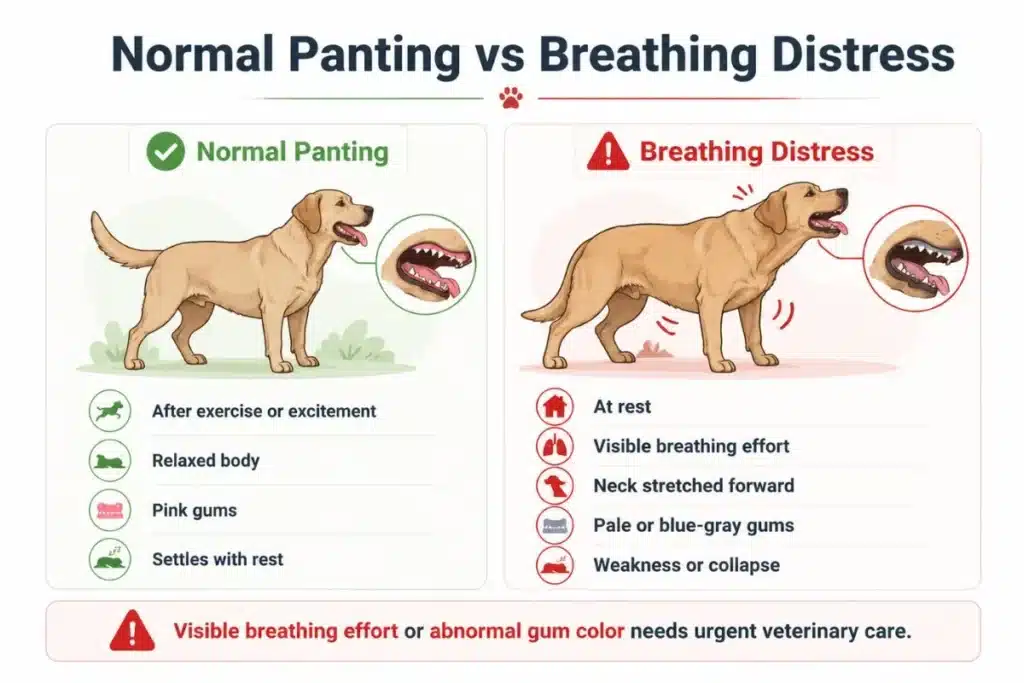
A dog may breathe faster after exercise, excitement, or exposure to heat. Rapid breathing at rest, especially when the dog is calm, is more concerning.
Signs of labored breathing in dogs may include:
- The chest or abdomen working harder than usual
- Open-mouth breathing while resting
- Loud, raspy, or unusual breathing sounds
- Stretching the neck to breathe
- Weakness, confusion, or collapse
- Blue, grey, or very pale gums
Fast, noisy, or labored breathing at rest is not normal. Visible breathing effort, weakness, or blue, gray, or very pale gums needs urgent veterinary attention. Do not wait at home for breathing difficulty to improve.
Unusual Panting at Rest
Panting can be normal after exercise, during hot weather, or when a dog is excited or stressed.
However, dog panting at rest may be concerning when it is new, persistent, or happens in a cool and quiet environment. Pay closer attention if panting occurs at night or appears with:
- Pain or restlessness
- Weakness
- Trembling
- A swollen abdomen
- Noisy or difficult breathing
Normal panting should gradually settle as the dog cools down and rests. Unusual panting that continues, worsens, or involves obvious breathing effort should be discussed with a veterinarian promptly.
Limping, Stiffness, or Difficulty Moving
A dog experiencing pain may hold one leg up, walk stiffly, avoid stairs, or stop jumping onto familiar furniture.
Other signs of reduced mobility include:
- Difficulty standing or lying down
- Walking more slowly than usual
- An uneven or changed gait
- Swelling around a leg or joint
- Pulling away when touched
- Refusing to bear weight on one limb
Mild stiffness after unusual activity may improve with rest. However, dog limping that is severe, worsening, or accompanied by swelling, crying, weakness, or sudden inability to walk needs veterinary attention.
Do not force your dog to walk or repeatedly press the painful area. Keep movement limited and handle them gently.
Whining, Trembling, or Other Signs of Pain
Dogs do not always cry when they are in pain. Some show discomfort through subtle changes in posture, movement, or behavior.
Possible signs your dog is in pain include:
- Whining or unusual vocalization
- Trembling or shaking
- A hunched or tense posture
- Pacing and difficulty settling
- Guarding one part of the body
- Repeatedly changing position
- Avoiding touch or interaction
For example, a dog that keeps standing up, lying down, and pacing may be unable to find a comfortable position.
Sudden or persistent pain behavior, especially with weakness, breathing changes, abdominal swelling, or difficulty moving, deserves prompt veterinary assessment.
Visible Changes in the Eyes, Gums, Skin, Coat, and Ears
Some early signs of illness can be noticed during everyday care.
Changes in your dog’s eyes, gums, skin, coat, or ears may be among the first clues that something is wrong, especially when they appear suddenly or alongside other symptoms.
Changes in Gum Color
Many dogs have pink gums, but natural pigmentation can vary. Some dogs normally have dark or spotted areas on their gums, so focus on any sudden change from your dog’s usual gum color rather than color alone.
Watch for:
- Pale or white gums
- Blue or grey gums
- Yellow gums
- Unusually dark red gums
- Dry or tacky gums
Dry or tacky gums may occur with dehydration, but this sign alone cannot confirm the cause. Consider it alongside your dog’s water intake, vomiting, diarrhea, energy level, and other symptoms.
Abnormal gum color can be linked to changes in circulation, oxygenation, or hydration, but it cannot identify the cause by itself.
Pale, blue, or gray gums with weakness, collapse, or breathing difficulty require urgent veterinary care.
Eye Changes
Possible dog eye changes include redness, swelling, cloudiness, squinting, or unusual discharge.
Watch for signs such as:
- Keeping one eye partly closed
- Rubbing or pawing at the eye
- Thick or bloody eye discharge
- Unequal pupils
- Trouble seeing clearly
- Sudden loss of balance
Mild watering may happen after irritation.
However, persistent red eyes in dogs, pain, cloudiness, swelling, or sudden vision changes should be checked by a veterinarian.
Skin, Coat, or Ear Changes
Changes in the skin or coat may include:
- Excessive scratching
- Hair loss
- Redness
- Wounds
- Swelling
- Lumps
- An unusual odor
Ear problems may appear as:
- Frequent head shaking
- Scratching around the ears
- Redness or swelling
- Dark, thick, or unusual ear discharge
- A strong dog ear smell
- Pain when the ears are touched
Routine dog ear cleaning at home can make it easier to notice new redness, odor, discharge, or sensitivity.
Do not insert cotton swabs deeply into the ear. Stop cleaning if the ear looks painful, swollen, or heavily inflamed.
Persistent dog skin changes, open wounds, spreading hair loss, painful lumps, or ear symptoms with balance problems deserve veterinary attention.
What Matters Most
Focus on the overall pattern, not one symptom alone. Sudden, worsening, or multiple changes—especially with pain, breathing difficulty, abnormal gum color, or poor responsiveness—need closer attention.
Normal Change or Possible Illness?
A symptom becomes more meaningful when you compare it with your dog’s normal routine and any other signs appearing at the same time.
A single mild change may be temporary. However, persistent, repeated, worsening, or combined symptoms are usually more concerning than one isolated event.
| Change | May be less concerning | More concerning |
| Sleeping more | After heavy exercise or a busy day | No interest in food, play, walks, or interaction |
| Eating less | Missing one meal after stress or a routine change | Repeated food refusal with vomiting, weakness, pain, or reduced drinking |
| Panting | After exercise, excitement, or warm weather | Panting at rest with visible breathing effort, weakness, or abnormal gum color |
| Loose stool | One mild episode in an otherwise active dog | Repeated diarrhea, blood, vomiting, pain, or low energy |
| Hiding | During loud noise, unfamiliar visitors, or temporary stress | Sudden, persistent withdrawal that is unlike your dog’s normal behavior |
| Limping | Brief mild discomfort after unusual activity | Severe or worsening pain, swelling, or inability to bear weight |
When asking, “Is my dog sick or just tired?”, look at the whole pattern rather than one symptom. Consider whether your dog is still eating, drinking, responding to you, moving comfortably, and showing interest in normal activities.
The severity and progression of the change also matter. A mild symptom that improves may be less urgent than one that continues, becomes worse, or appears with several other warning signs.
Comparing these changes with the common signs of a healthy dog can make subtle problems easier to identify. Focus on what is normal for your own dog, and contact a veterinarian whenever you are unsure or concerned.
Symptom Combinations That Need More Attention
One mild symptom may be temporary. However, two or more unusual changes appearing together can be more concerning.
Watch closely for combinations such as:
- Loss of appetite and lethargy
- Vomiting and diarrhea
- Increased thirst and frequent urination
- Coughing and fast or labored breathing
- Pale gums and weakness
- Abdominal swelling and restlessness
- Straining to urinate with little or no urine
- Limping with swelling or severe pain
These symptom combinations do not confirm a specific illness. They may, however, show that the problem is affecting more than one part of your dog’s normal routine or body function.
For example, skipping one meal may be temporary. A dog not eating and acting lethargic, especially with vomiting or weakness, deserves closer attention.
The same is true when a dog is coughing and breathing fast, or when pale gums appear with weakness.
Focus on the overall pattern, severity, progression, and urgency. Contact a veterinarian promptly if several symptoms appear together, continue, or become worse.
Should You Monitor, Call a Vet, or Seek Emergency Care?
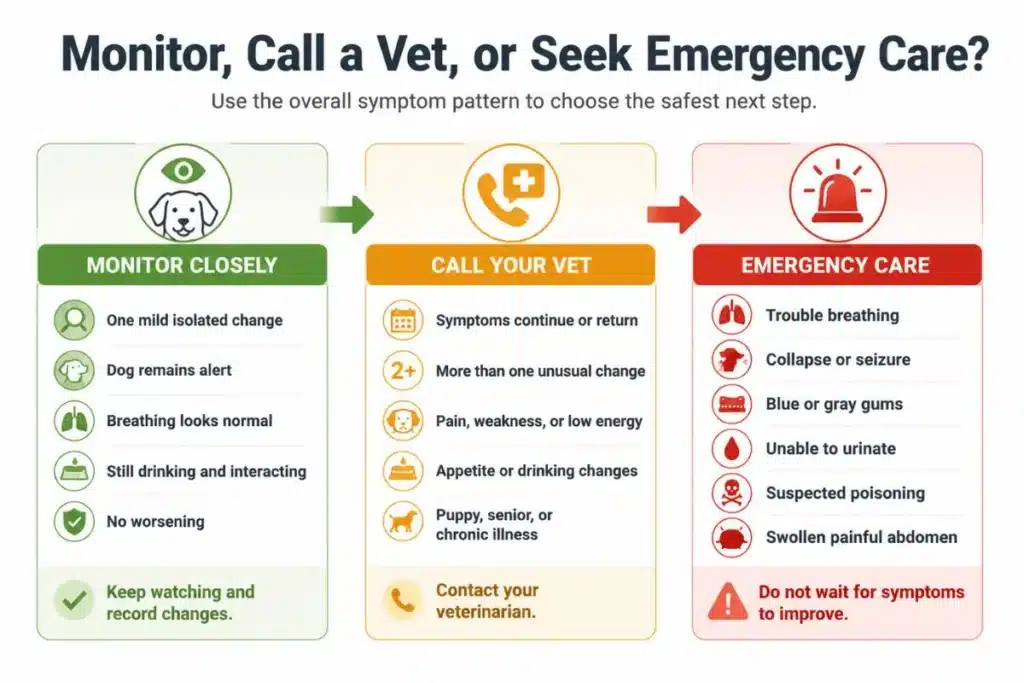
The safest next step depends on the severity of the symptoms, whether they are getting worse, and whether several unusual changes are happening together.
Monitor Closely
Close monitoring may be reasonable when your dog has one mild, isolated change and otherwise seems comfortable.
Your dog should still be:
- Alert and responsive
- Breathing normally
- Drinking water
- Moving comfortably
- Interacting with you
- Showing no signs of worsening pain or weakness
Do not rely on one fixed waiting period for every symptom. Instead, watch for changes in frequency, severity, appetite, energy, breathing, stool, urination, and behavior.
Contact Your Veterinarian
Arrange a veterinary assessment when symptoms are repeated, persistent, worsening, or affecting more than one part of your dog’s routine.
Call your veterinarian if your dog has:
- More than one unusual symptom
- Clear pain or reduced movement
- Ongoing appetite or drinking changes
- Repeated vomiting or diarrhea
- Noticeably lower energy
- Behavior that remains different from normal
Puppies, senior dogs, and dogs with chronic health conditions may need help sooner because they can be more vulnerable.
Routine checkups are important, but new or worsening symptoms should not always wait until the next scheduled visit. Contact your veterinarian whenever you are unsure or concerned.
Seek Emergency Veterinary Care
Go to an emergency vet immediately if your dog has trouble breathing, collapses, has a seizure, cannot stand, shows blue or grey gums, has severe bleeding, cannot urinate, or may have swallowed something poisonous.
A swollen, painful abdomen with restlessness or repeated unsuccessful attempts to vomit also needs urgent care.
These dog emergency symptoms should not be monitored at home while waiting for improvement.
A Simple 5-Minute Health Check at Home
This is not a diagnostic test. It is a quick way to organize what you are seeing before you contact a veterinarian.
Use the simple LOOK method to compare your dog’s current condition with their normal baseline.
L — Look at Behavior
Check whether your dog is:
- Alert and responsive
- Hiding or avoiding interaction
- Weak or difficult to wake
- Interested in food, walks, play, or family activity
A sudden loss of interest in normal activities may be more meaningful than one isolated symptom.
O — Observe Breathing
Watch your dog while they are calm and resting.
Ask:
- Is the breathing quiet and effortless?
- Is it unusually fast at rest?
- Do you hear noisy or harsh breathing?
- Is the chest or abdomen working harder than usual?
Visible breathing effort or abnormal gum color needs urgent veterinary attention.
O — Observe Food, Water, Stool, and Urine
Note whether your dog is:
- Eating and drinking normally
- Vomiting or unable to keep water down
- Passing normal stool
- Urinating without pain or straining
Changes in appetite, hydration, stool, or urination can help reveal whether the problem is isolated or part of a larger pattern.
K — Know the Emergency Signs
Seek emergency care for breathing difficulty, collapse, seizure, blue or grey gums, inability to urinate, or suspected poisoning.
What to Record Before Calling Your Veterinarian
A few clear details can help your veterinarian understand what changed, when it started, and how quickly it developed.
Before calling, write down:
- When the symptom started
- How often it has happened
- Whether it is improving, staying the same, or worsening
- Your dog’s last normal meal
- Any change in water intake
- The color and appearance of vomit or stool
- Changes in urination, including straining or accidents
- Any change in breathing
- Current medications or supplements
- Recent diet changes
- Possible exposure to a toxin or swallowed object
- A safe photo or short video of the symptom
This information creates a clearer clinical history and helps the veterinarian assess symptom onset, frequency, progression, medication history, and possible toxin exposure.
A simple daily dog care checklist can make it easier to notice and record changes over time.
Do not delay urgent care to collect notes, photos, or videos. If your dog shows a critical emergency sign, seek veterinary help immediately.
What Not to Do When Your Dog Seems Sick
Worried owners sometimes act quickly in ways that can delay proper care or make a sick dog more uncomfortable. Avoid these common mistakes while you monitor symptoms or contact a veterinarian.
Do Not Give Human Medication
Never give your dog ibuprofen, acetaminophen, naproxen, aspirin, or other human medicine unless a veterinarian specifically instructs you. A medication that is safe for people may be harmful to dogs.
For more safety information, read the FDA guidance on pain relievers for pets.
Do Not Induce Vomiting Without Veterinary Advice
If your dog may have swallowed a toxin, human medication, household chemical, or foreign object, contact a veterinarian promptly. Do not induce vomiting unless a veterinary professional specifically tells you to do so, because it may be unsafe in some situations.
For suspected poisoning in the United States, contact the ASPCA Animal Poison Control Center. The service operates 24 hours a day, and a consultation fee may apply.
Do Not Force Food or Water
Avoid force-feeding a dog that is vomiting, extremely weak, struggling to swallow, or having breathing problems. Forced food or water may increase discomfort or create a choking risk.
Do Not Press Painful Areas
A dog in pain may bite even if they are normally gentle. Do not squeeze swollen areas, repeatedly move an injured leg, or force your dog to walk.
Do Not Diagnose from One Symptom
Vomiting, lethargy, appetite loss, or coughing can have many possible causes. One sign alone cannot confirm a condition.
Do Not Follow a Universal 24-Hour Rule
There is no single safe waiting period for every dog or symptom. Puppies, senior dogs, and dogs with existing health problems may need help sooner.
Most importantly, do not delay emergency care to continue searching online, taking notes, or recording videos when your dog shows a critical warning sign.
Build a Normal Health Baseline for Your Dog
You can recognize possible illness earlier when you already know what a normal day looks like for your dog.
A simple dog health baseline helps you notice changes in:
- Appetite and eating habits
- Normal water intake
- Energy and activity level
- Sleep pattern
- Stool frequency and appearance
- Urination pattern
- Walking and movement
- Usual gum appearance
- Body weight
- Current medications or supplements
Following a consistent daily dog care routine makes these patterns easier to track. Focus on what is normal for your own dog, since age, size, activity level, and health history can affect daily habits.
You can keep a simple daily dog health tracking log on your phone or in a notebook:
Date:
Appetite:
Water:
Energy:
Stool:
Urine:
Breathing:
Movement:
Behavior:
Other changes:
You do not need to record every detail forever. A short health log is most useful when something changes, your dog starts a new medication, or you need to explain a pattern to your veterinarian.
Changes in body weight, appetite, elimination, movement, or normal behavior are often easier to recognize when you have a clear baseline for comparison.
Common Myths About Sick Dogs
Several common beliefs about sick dogs can lead to unnecessary panic or false reassurance. Understanding these myths can help you make better decisions when your dog is acting differently.
A Warm or Dry Nose Always Means Illness
A warm or dry nose does not automatically mean your dog is sick or has a fever. Nose temperature and moisture can change after sleep, exercise, warm weather, or normal daily activity.
Instead of relying on nose moisture alone, look for changes in appetite, energy, behavior, breathing, movement, and other symptoms.
A Dog That Is Eating Cannot Be Sick
Some owners believe that a dog eating normally must be healthy. This is another common misconception.
A dog may still eat during the early stages of an illness. That is why you should also pay attention to energy level, behavior, water intake, breathing, stool, urination, and movement, rather than judging your dog’s health by appetite alone.
Tail Wagging Means the Dog Feels Fine
A wagging tail does not always mean your dog is happy or comfortable.
Dogs use body language for many reasons. A dog may still wag its tail while feeling anxious, frightened, stressed, or in pain. Always consider your dog’s overall posture, facial expression, movement, and behavior instead of focusing on tail movement alone.
Dogs Always Cry When They Are in Pain
Many dogs hide pain instead of showing it. Rather than crying, they may become quieter, avoid being touched, hide from family members, pant while resting, walk more slowly, or show less interest in food and play.
Because dogs often mask subtle symptoms, watching for changes in their normal behavior is usually more reliable than waiting for obvious signs of pain.
Frequently Asked Questions About Sick Dogs
What Are the First Signs That a Dog Is Sick?
The first signs a dog is sick often include changes in appetite, energy, behavior, digestion, breathing, urination, or movement.
Your dog may eat less, sleep more, hide, vomit, develop loose stool, pant at rest, or lose interest in normal activities. A sudden change from your dog’s usual routine is often the clearest warning.
How Do Dogs Act When They Are Sick?
Common sick dog behavior includes:
- Hiding
- Sleeping more
- Avoiding play
- Becoming unusually clingy
- Acting irritable
- Pulling away when touched
Some dogs may also pace, tremble, or struggle to settle. These changes are more concerning when they are sudden, persistent, worsening, or combined with physical symptoms.
Can a Dog Be Sick and Still Eat Normally?
Yes. Some dogs continue eating during the early stage of an illness, so appetite alone cannot confirm that a dog is healthy.
Also watch for changes in energy, breathing, behavior, stool, urination, movement, and signs of pain.
Is My Dog Sick or Just Tired?
A dog may be tired after exercise, travel, or an unusually active day.
Lethargy is more concerning when your dog remains withdrawn after resting, ignores food or favourite activities, appears weak, or struggles to stand. Compare the change with your dog’s normal activity level and look for other symptoms.
Is a Warm or Dry Nose a Sign of Illness?
Not by itself. A warm or dry nose can happen after sleep, exercise, warm weather, or normal changes in moisture.
Your dog’s overall behavior and other symptoms are more useful than nose temperature alone.
What Gum Colors Are Concerning in Dogs?
Pale, white, blue, gray, yellow, or unusually dark red gums can be concerning. A sudden change from your dog’s normal gum color deserves veterinary attention, especially when it appears with weakness or breathing problems.
How Long Should I Monitor a Mild Symptom?
There is no single safe waiting period for every dog or symptom. Contact a veterinarian if the sign repeats, persists, worsens, causes pain, or appears with other unusual changes. Emergency symptoms should not be monitored at home.
Can Puppies and Senior Dogs Become Sick Faster?
Yes, they may be more vulnerable.
Puppies, senior dogs, very small dogs, and dogs with chronic health conditions may become dehydrated, weak, or unstable more quickly. Seek veterinary advice earlier if a high-risk dog develops appetite loss, vomiting, diarrhea, breathing changes, unusual weakness, or several symptoms together.
Final Thoughts: Recognizing When Your Dog Needs Help
The early signs of illness in dogs are often subtle. Your goal is not to diagnose the cause at home, but to notice meaningful changes and explain them clearly to a veterinarian.
A mild, short-lived change may only need close observation. Symptoms that continue, become more severe, or appear together deserve veterinary attention. Seek urgent care for any critical emergency sign described earlier in this guide.
For everyday health, feeding, hygiene, and training guidance, read our complete dog care guide for beginners.
Medical Disclaimer
This article is for general educational purposes only. It cannot diagnose the cause of your dog’s symptoms and does not replace an examination, diagnosis, or treatment from a licensed veterinarian. Contact a veterinarian for symptoms that are persistent, worsening, or concerning, and seek urgent veterinary care for severe or rapidly developing signs.