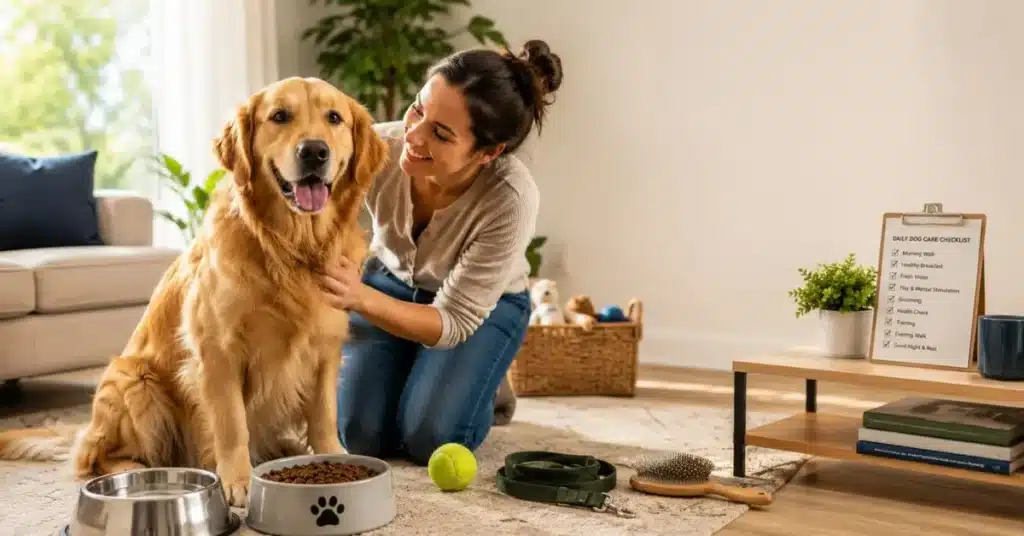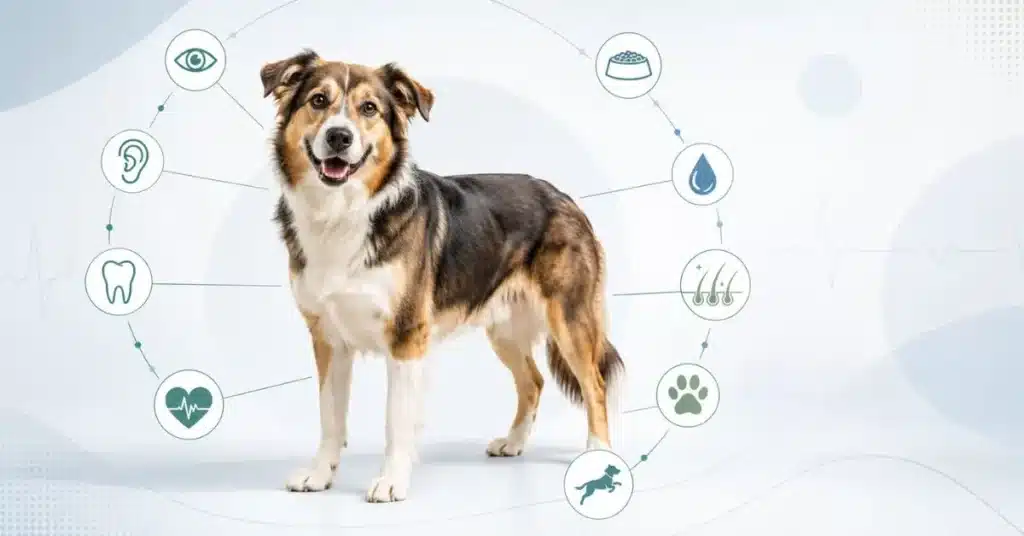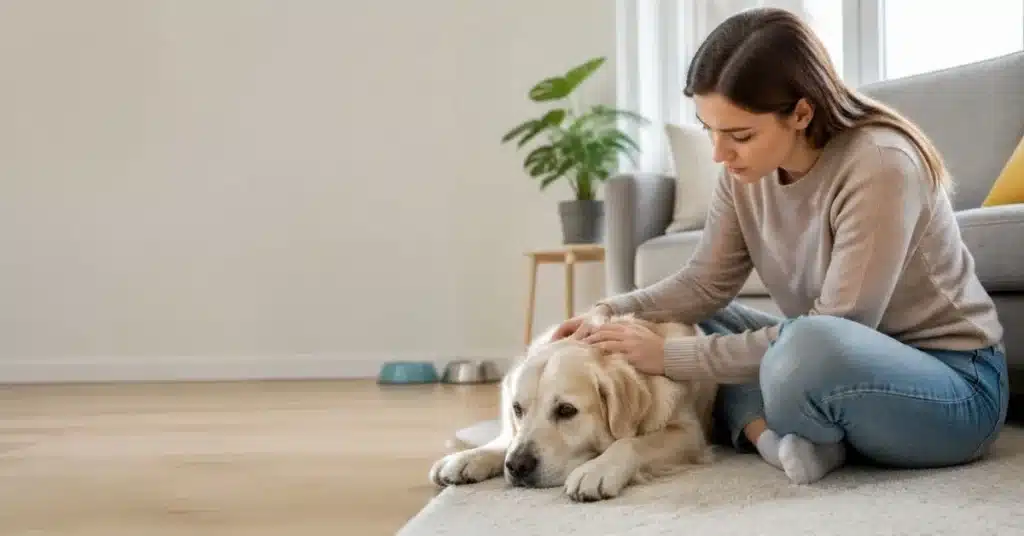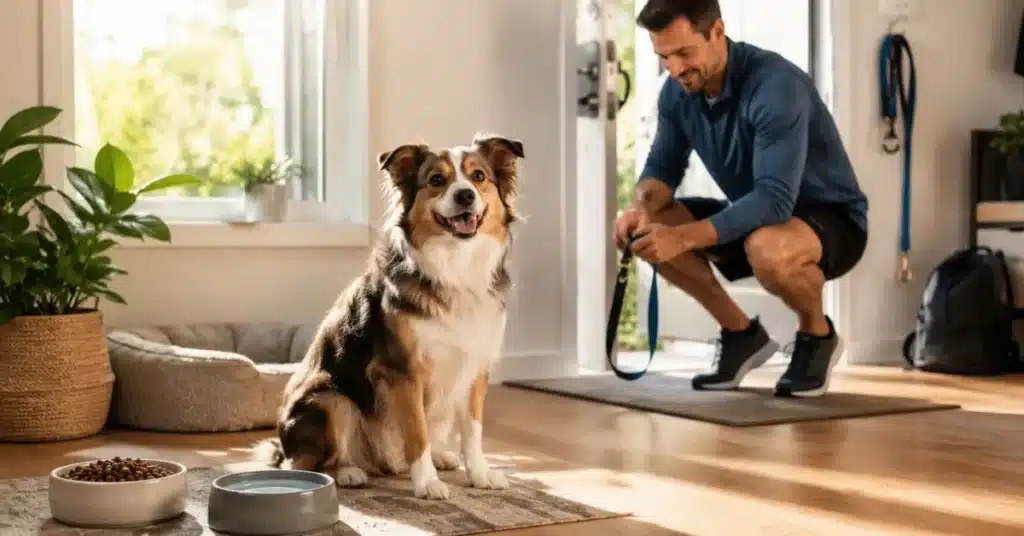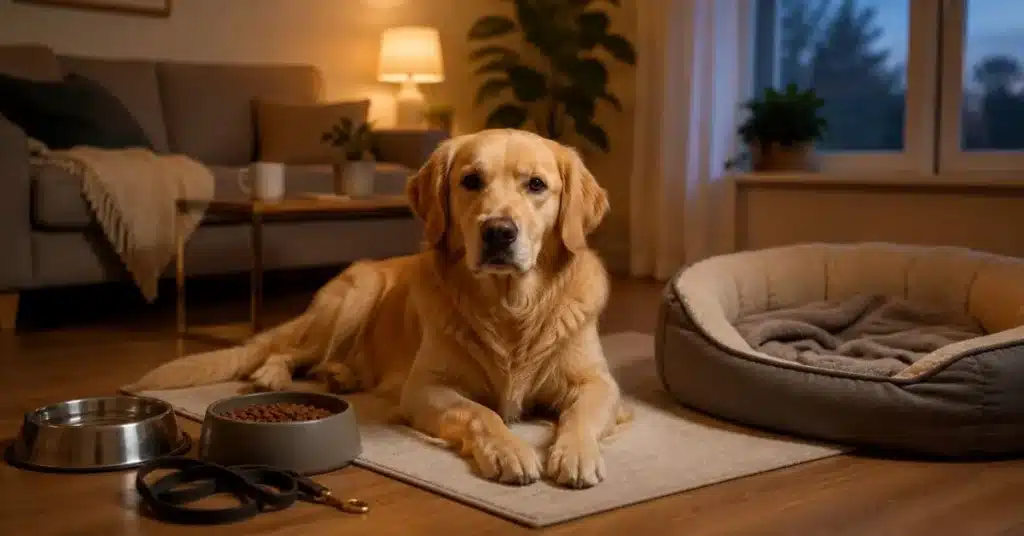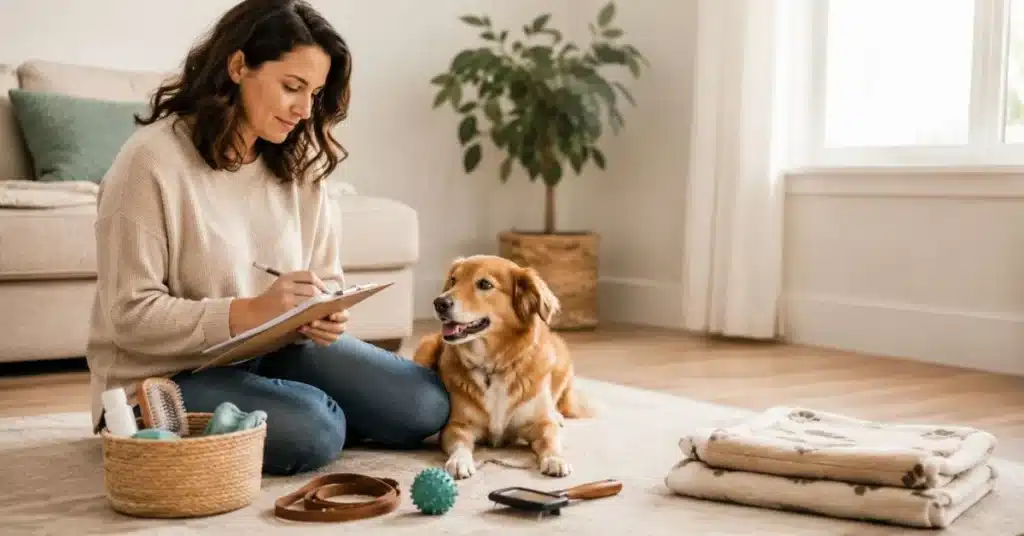
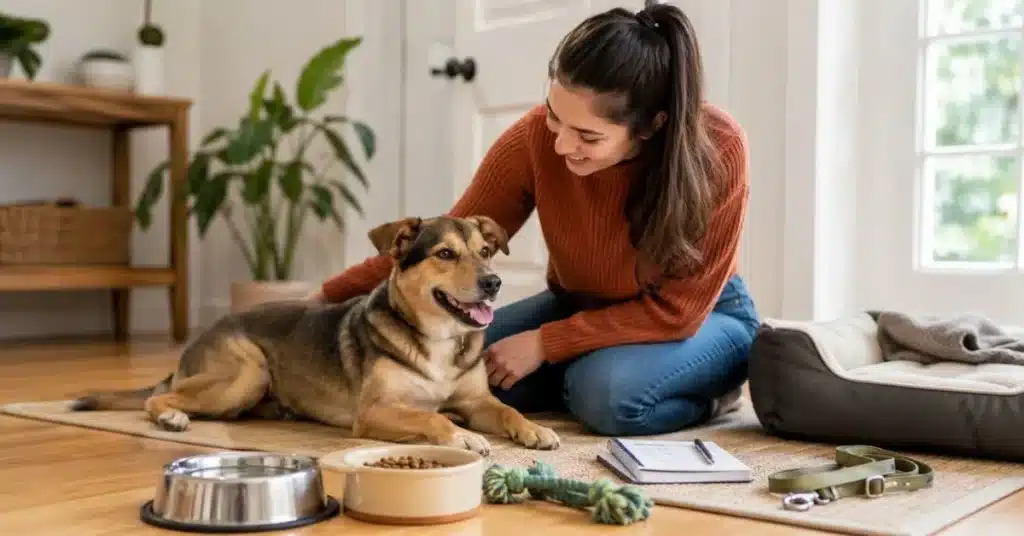
A daily dog care checklist helps you track the essentials, including fresh water, measured meals, potty breaks, suitable exercise, mental stimulation, quick health checks, prescribed medication, and a clean, comfortable place to rest.
Every dog has different needs, so adjust these daily tasks based on your dog’s age, health, activity level, and veterinary care plan. New to dog ownership? Start with our complete dog care guide for beginners to learn the basics of everyday care.
Quick Daily Dog Care Checklist
Use this quick daily dog care checklist to keep track of the essential tasks your dog needs each day.
- Provide clean, fresh drinking water
- Serve the correct measured meal portions
- Offer suitable potty breaks
- Provide age-appropriate exercise
- Include play, sniffing, enrichment, or short training
- Spend calm social and bonding time together
- Check appetite, energy, movement, stool, and urination
- Give prescribed medication as directed, if needed
- Check the coat, skin, paws, eyes, and ears
- Keep the sleeping area clean, safe, and comfortable
Adjust feeding times, potty breaks, exercise, medication, and supervision to match your dog’s age, health, activity level, and individual care plan.
This checklist shows what to complete each day. For a detailed morning-to-bedtime schedule, follow our complete daily dog care routine.
Essential Dog Care Tasks to Complete Every Day
These are the core responsibilities most dog owners should track consistently. The exact timing and amount will depend on your dog’s age, health, energy level, and individual care plan.
Food and Fresh Water
Serve your dog’s planned meals using a measured portion instead of guessing the amount. Follow the food label, your dog’s feeding plan, and any instructions provided by your veterinarian. Because meal size and frequency vary, read our guide on what dogs should eat each day for more detailed feeding information.
For additional evidence-based feeding guidance, review the WSAVA Global Nutrition Guidelines.
Keep clean, fresh drinking water available throughout the day. Refresh the water regularly, and wash the food and water bowls to prevent dirt and residue from building up.
Potty Breaks and Bathroom Habits
Provide regular potty breaks based on your dog’s age, routine, and health. Puppies, healthy adult dogs, and senior dogs may need different schedules.
Pay attention to your dog’s stool, urination, and normal bathroom habits. Record any noticeable or continuing change so you can discuss it with a veterinarian when necessary.
Exercise and Mental Enrichment
Dogs need both physical activity and mental stimulation, but these are not exactly the same. Walking and supervised play support physical movement, while sniffing games, puzzle activities, and simple training exercises keep the mind engaged.
The right type and amount of activity depend on your dog’s age, mobility, health, and energy level. Avoid applying one fixed exercise rule to every dog. A short, reward-based session can also reinforce basic dog training at home while providing useful mental enrichment.
Medication, Bonding, and Rest
Give only medication prescribed or approved for your dog, following the correct dose and schedule. Never give human pain medicine or leftover medication without veterinary approval, as human pain relievers may be unsafe for pets. Record each dose immediately, especially when several caregivers share responsibilities.
Spend calm bonding time with your dog through gentle play, training, or quiet interaction. Finally, provide a clean, safe, and comfortable resting area where your dog can sleep without unnecessary disturbance.
Check Daily, but Act Only When Needed
A quick daily dog hygiene check does not mean every area needs cleaning or grooming each day. Look for dirt, damage, irritation, or unusual changes, then act only when necessary.
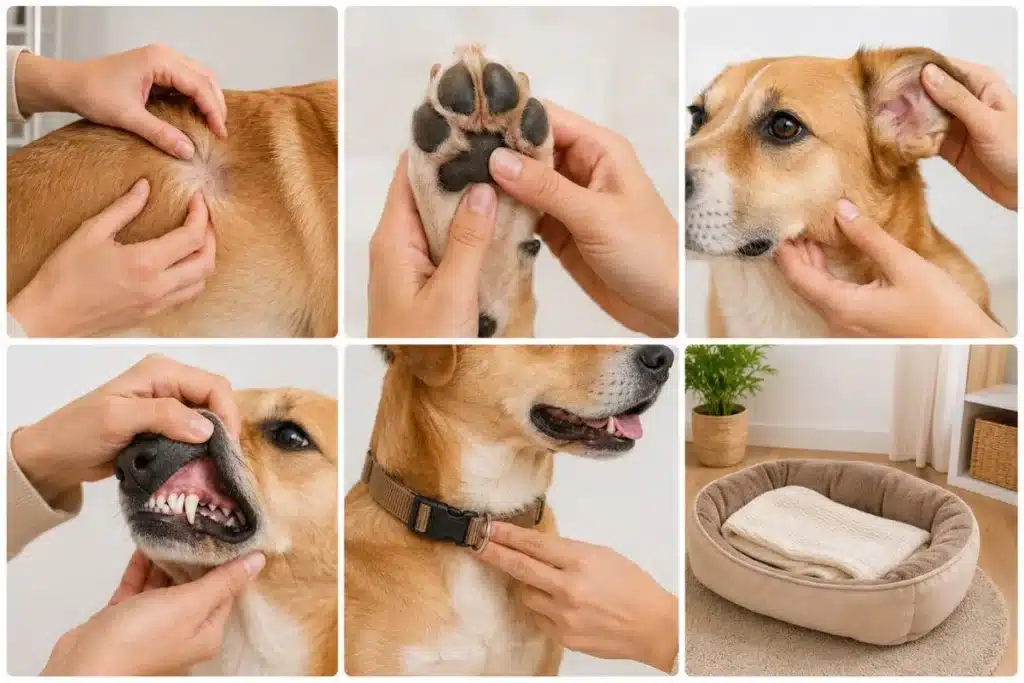
- Coat and skin: Check for tangles, excessive shedding, redness, swelling, parasites, or sensitive areas.
- Paws and paw pads: Look for dirt, cuts, irritation, cracked pads, or anything caught between the toes. Clean the paws only when needed. For broader cleaning guidance, follow our simple dog hygiene routine.
- Eyes and ears: Notice unusual redness, discharge, swelling, odor, or signs of discomfort without automatically cleaning them every day.
- Teeth and breath: Check for strong odor, visible buildup, bleeding, or difficulty eating. Learn how to clean your dog’s teeth at home safely.
- Collar or harness: Make sure it fits comfortably and has no broken, sharp, or badly worn parts.
- Bedding and sleeping area: Remove dirt, moisture, loose hair, or anything that could affect comfort.
The goal is simple: inspect daily, record unusual changes, and clean or groom only when appropriate.
Dog Care Tasks That Are Not Usually Daily
Some dog-care tasks need regular attention, but doing them every day may be unnecessary or irritating. Their frequency should depend on your dog’s coat type, health, activity level, and individual care plan.
| Task | General approach |
| Bathing | Bathe according to coat, activity, and veterinary needs. |
| Nail trimming | Trim when the nails become too long. |
| Ear cleaning | Clean only when needed or advised. |
| Full grooming | Adjust frequency to the coat type. |
| Deep bedding cleaning | Clean based on dirt, odor, and household hygiene. |
| Veterinary visits | Follow your dog’s preventive and medical care plan. |
Remember: checking daily does not mean cleaning or grooming daily.
Two-Minute Daily Dog Health Check
You do not need to diagnose a health problem. A quick daily dog health check simply helps you notice changes from what is normal for your dog.
Your dog’s baseline means their usual appetite, drinking habits, energy, movement, bathroom habits, breathing, and behavior. Knowing the normal signs of a healthy dog can make unusual changes easier to recognize.
Ask yourself these questions once a day:
- Did my dog eat normally?
- Is their water intake normal?
- Is their energy level usual?
- Are they walking and moving comfortably?
- Are their stool and urination normal?
- Are their breathing and behavior normal?
- Is there any new redness, swelling, discharge, or discomfort?
Important
This checklist can help you notice changes, but it cannot diagnose the cause or replace veterinary care.
Contact a veterinarian promptly if your dog experiences difficulty breathing, collapse, severe weakness, trouble urinating, repeated vomiting, or clear signs of severe pain.
Adjust the Checklist for Your Dog
The same basic checklist can look different for a puppy, healthy adult dog, or senior dog. Adjust each task to your dog’s life stage, health, energy level, and veterinary care plan.
| Puppy | Adult Dog | Senior Dog |
| More frequent potty opportunities | Consistent daily routine | Mobility and comfort checks |
| Short play and training sessions | Suitable regular activity | Gentle, low-impact activity |
| Closer supervision | Mental enrichment | Medication tracking |
| Age-appropriate feeding plan | Appetite and weight checks | Appetite and bathroom checks |
| Plenty of rest | Bonding and rest | Easy access to water and bed |
Puppies
Puppies usually need closer supervision, more frequent potty breaks, and shorter play or training sessions. Follow an age-appropriate meal and toilet plan rather than copying an adult dog’s schedule.
Adult Dogs
Healthy adult dogs often benefit from a consistent routine that includes physical activity, mental enrichment, bonding, and rest. Monitor changes in weight, appetite, energy, and behavior, and reinforce basic dog training at home through short, positive sessions.
Senior Dogs
A senior dog daily care checklist may place more focus on comfortable movement, medication, appetite, bathroom habits, and rest. Keep food, fresh water, and the sleeping area easy to reach.
For broader guidance on age-related health, comfort, and environmental support, review the AAHA senior pet care guidelines.
Common Daily Dog Care Mistakes
Checklist problems often happen when care responsibilities are unclear or tasks are recorded too late. These common mistakes are easy to avoid with a simple tracking system:
- Assuming someone else fed the dog: Always confirm before serving a meal.
- Double feeding in a shared household: Record each meal immediately after it is given.
- Refilling water without cleaning the bowl: Refresh the water and check the bowl for dirt or residue.
- Treating every grooming task as daily: Inspect the coat, paws, eyes, and ears each day, but clean or groom only when needed.
- Relying only on memory: Write down completed walks, meals, potty breaks, and unusual changes.
- Forgetting to record medication: Mark the time and caregiver as soon as a prescribed dose is given.
In a shared household, one person may serve breakfast while another handles the midday potty break. Recording the time, task, and caregiver helps prevent missed care, double feeding, and confusion about medication.
Printable Daily Dog Care Tracker
Use this printable daily dog care checklist when family members, dog walkers, or pet sitters share feeding, walking, potty, or medication duties. Mark each task immediately after completion and use the notes column to record anything unusual.
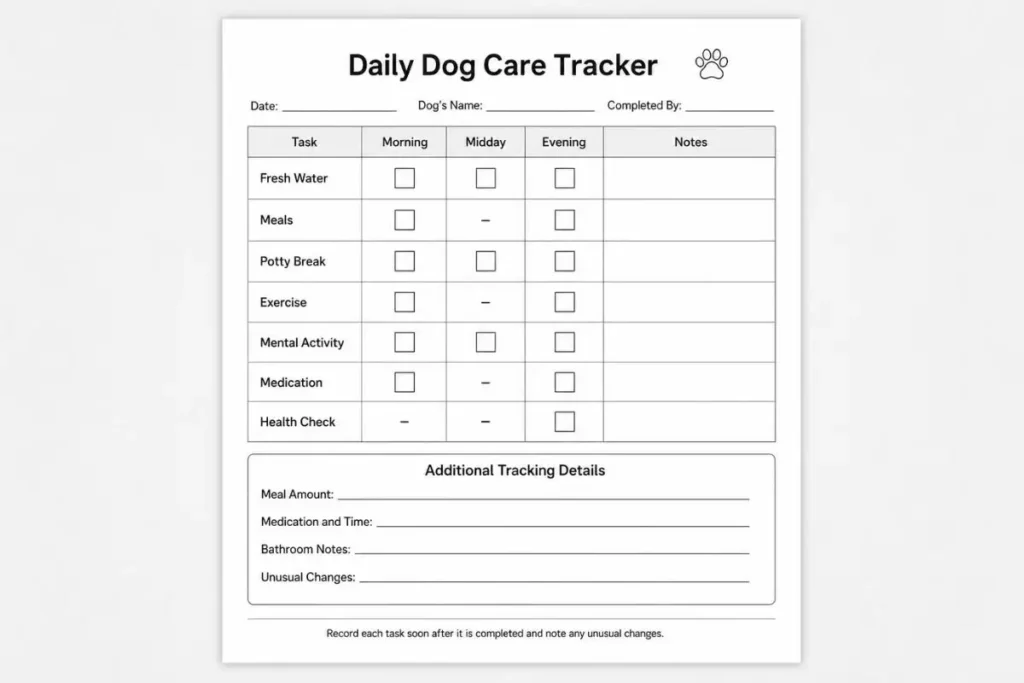
| Task | Morning | Midday | Evening | Notes |
| Fresh water | ☐ | ☐ | ☐ | |
| Meals | ☐ | — | ☐ | |
| Potty break | ☐ | ☐ | ☐ | |
| Exercise | ☐ | — | ☐ | |
| Mental activity | ☐ | ☐ | ☐ | |
| Medication | ☐ | — | ☐ | |
| Health check | — | — | ☐ |
Optional Tracking Details
Add the details that apply to your dog:
- Date: __________
- Dog’s name: __________
- Completed by: __________
- Meal amount: __________
- Medication and time: __________
- Bathroom notes: __________
- Unusual changes: __________
Customize the tracker to match your dog’s feeding plan, potty needs, activity level, health condition, and prescribed medication schedule. Remove any field that does not apply.
Test the Checklist for Three Days
Use the tracker for three normal days before making major changes:
- Day 1: Follow the original checklist.
- Day 2: Identify any missed, repeated, or confusing tasks.
- Day 3: Test the revised version.
Then ask:
- ☐ Were all essential tasks clear?
- ☐ Could everyone see what was completed?
- ☐ Were any tasks missed or repeated?
- ☐ Did the notes help identify unusual changes?
When you need more detailed timing, use the daily dog care routine as your scheduling guide.
Common Questions About Daily Dog Care
What should be included in a daily dog care checklist?
A daily dog care checklist should cover measured meals, fresh water, potty breaks, suitable exercise, mental enrichment, basic health checks, prescribed medication, and a safe place to rest.
Adjust the timing and frequency to match your dog’s age, health, and individual care needs.
Does every dog need the same daily checklist?
No. Every dog has different needs based on age, health, activity level, medication, and household routine.
Puppies may need more potty breaks and supervision. Senior dogs may need gentler activity, medication tracking, and closer comfort checks.
What should I check during a daily dog health check?
Check your dog’s appetite, water intake, energy, movement, stool, urination, and behavior.
Also look for new redness, swelling, discharge, breathing changes, or signs of discomfort. Record unusual changes, especially if they continue or become worse.
Which dog-care tasks are not required every day?
Tasks such as bathing, nail trimming, ear cleaning, full grooming, and veterinary visits are not usually needed every day.
Their frequency depends on your dog’s coat, lifestyle, health, and care plan. Remember, checking an area daily does not mean cleaning it daily.
Can a pet sitter or family member use this checklist?
Yes. A dog sitter daily checklist can help caregivers track meals, walks, potty breaks, medication, and health notes.
Add the time, completed-by field, and short notes to reduce missed or repeated tasks.
Final Thoughts on Your Daily Dog Care Checklist
A useful daily dog care checklist should be easy to follow and flexible enough for your dog. Track the essential daily tasks and record each one as it is completed. Remember that daily checks are different from occasional grooming or cleaning. Update the checklist whenever your dog’s age, health, medication needs, or household routine changes.