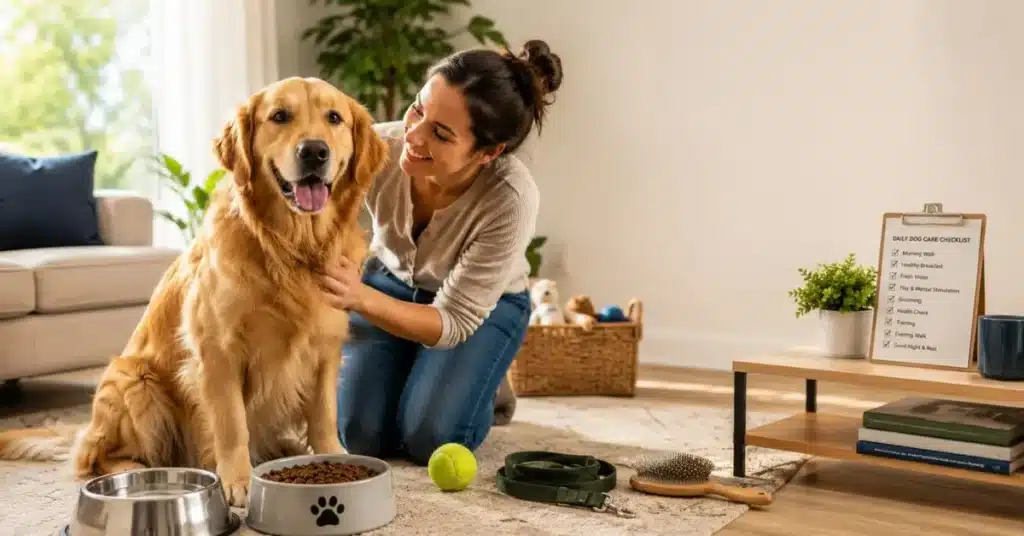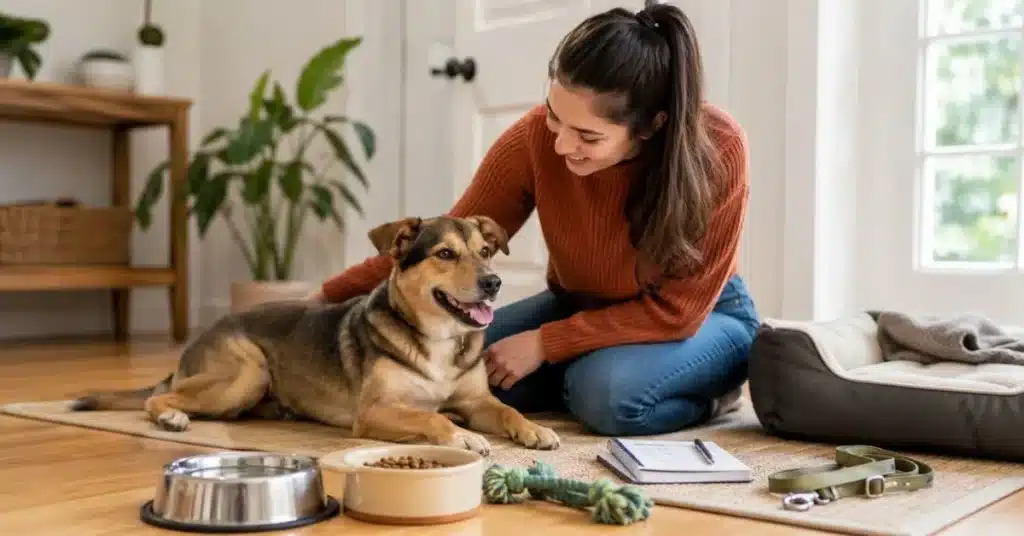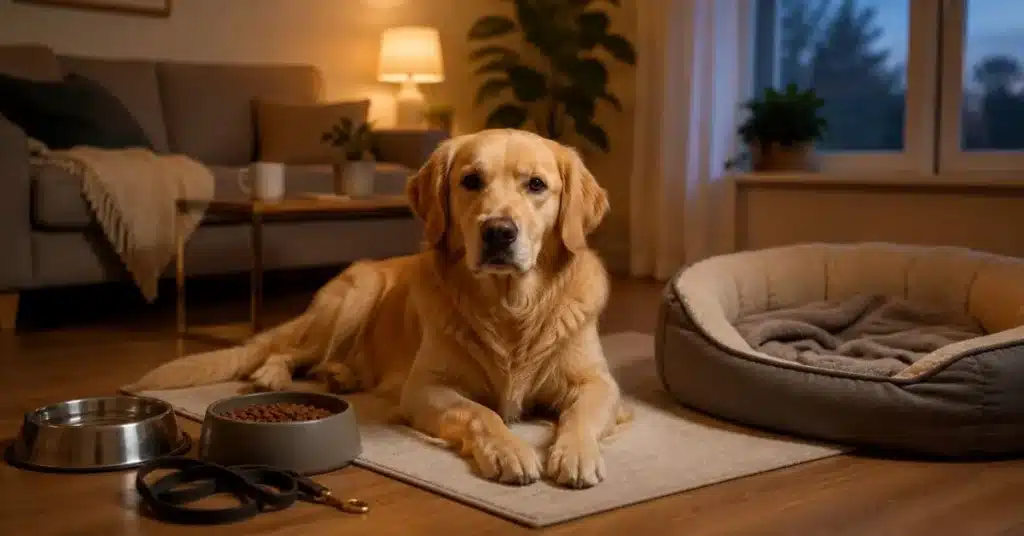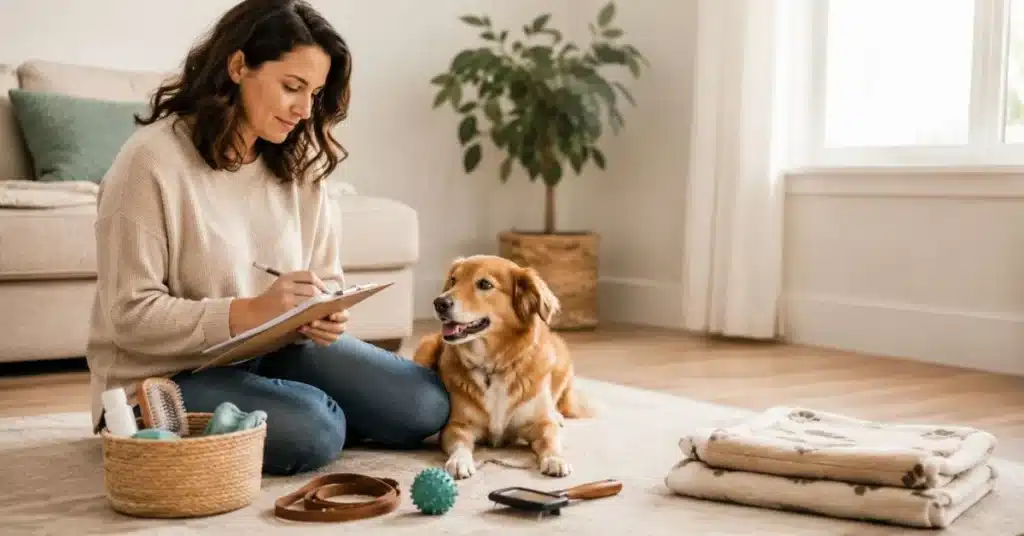
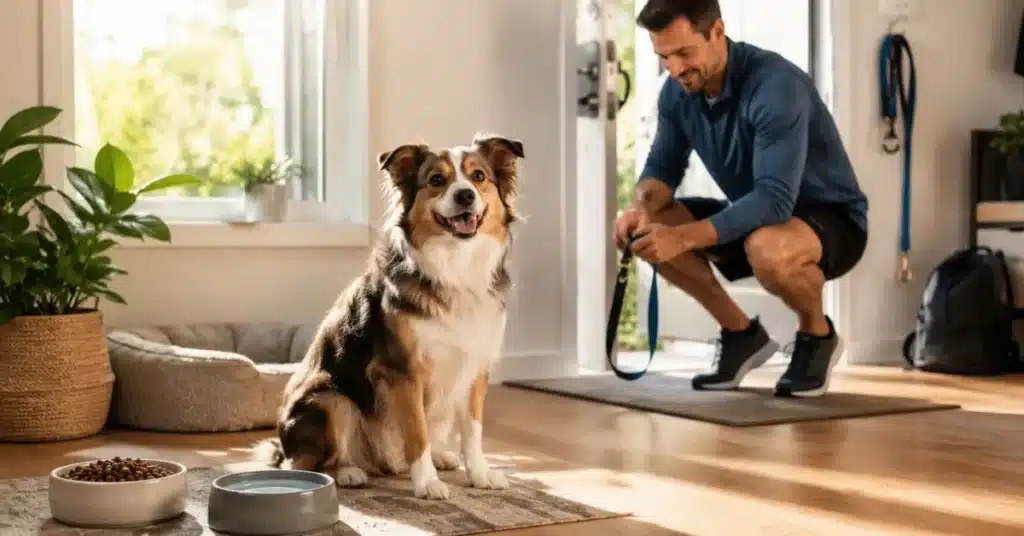
A simple morning dog care routine should start with a potty break. Then give your dog fresh water and check their appetite, energy, movement, breathing, and bathroom habits. Next, serve breakfast or give any prescribed medication as directed. Offer another potty break if needed, then add suitable walking, sniffing, play, or short training.
The exact order may change based on your dog’s age, health, feeding plan, activity needs, and your available time. Keep the routine simple and repeatable rather than rigid.
Morning Routine at a Glance
Potty Break → Fresh Water → Quick Health Check → Breakfast or Prescribed Medication → Another Potty Break if Needed → Walk, Sniffing, or Enrichment → Calm Settling
The order may vary slightly based on your dog’s needs, but these essential morning care steps should not be skipped.
What Should a Dog’s Morning Routine Include?
A good morning routine for dogs should cover their basic needs without making the morning stressful. Complete the essential morning care tasks first. Then add extra activities when you have enough time.
| Essential morning tasks | Flexible morning tasks |
| First potty break | Longer walk |
| Fresh water | Short training session |
| Breakfast or regular feeding plan | Puzzle or sniffing game |
| Prescribed medication, if needed | Brushing |
| Quick health check | Extra playtime |
| Safe resting area | Longer bonding time |
Essential tasks support your dog’s comfort, health, and regular daily habits. Extra activities can change from day to day. Choose them based on your dog’s age, health, energy, and your available time.
A short morning can still be a good morning. Focus on meeting the most important dog care needs in a calm and consistent way. New owners can also review the other basic dog care needs in our complete beginner guide.
Morning Dog Care Routine Step-by-Step
The easiest way to avoid missed tasks is to follow the same general order each morning. Keep the routine flexible because your dog’s age, health, habits, and energy can change their needs.
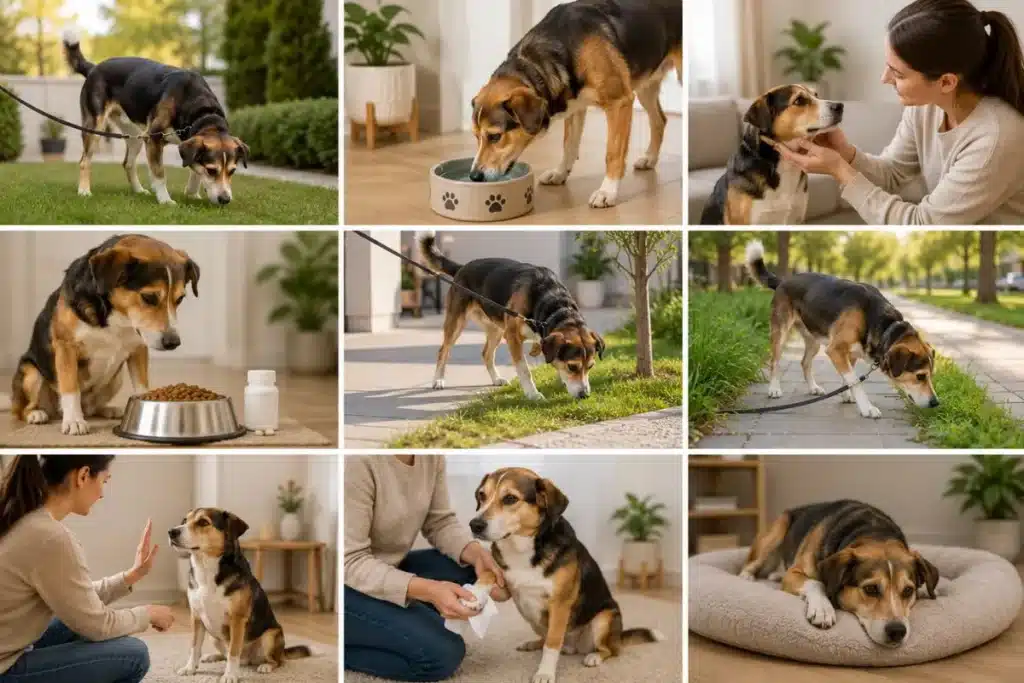
1. Start With a Potty Break
Take your dog outside for a morning potty break soon after they wake up. Puppies, senior dogs, and dogs with limited bladder control may need to go outside more urgently.
Do this before checking your phone, making coffee, or preparing breakfast. Keep the leash and waste bags near the door so you can leave quickly.
Notice your dog’s urination, stool, and any overnight accidents. These details can help you spot changes in their normal bathroom habits.
Remember that a short potty break is not always a complete walk. It meets an immediate bathroom need, while a longer walk may provide exercise and mental stimulation.
2. Refresh the Water Bowl
Check your dog’s water bowl every morning. Replace water that looks stale, dirty, or mixed with food, hair, or debris.
Your dog should have access to clean, fresh water unless a veterinarian has given different instructions. The ASPCA’s general dog-care guidance also recommends keeping fresh water available and cleaning food and water dishes regularly.
Pay attention to your dog’s normal drinking habits. A major or lasting change may be worth discussing with your veterinarian.
3. Do a Quick Morning Health Check
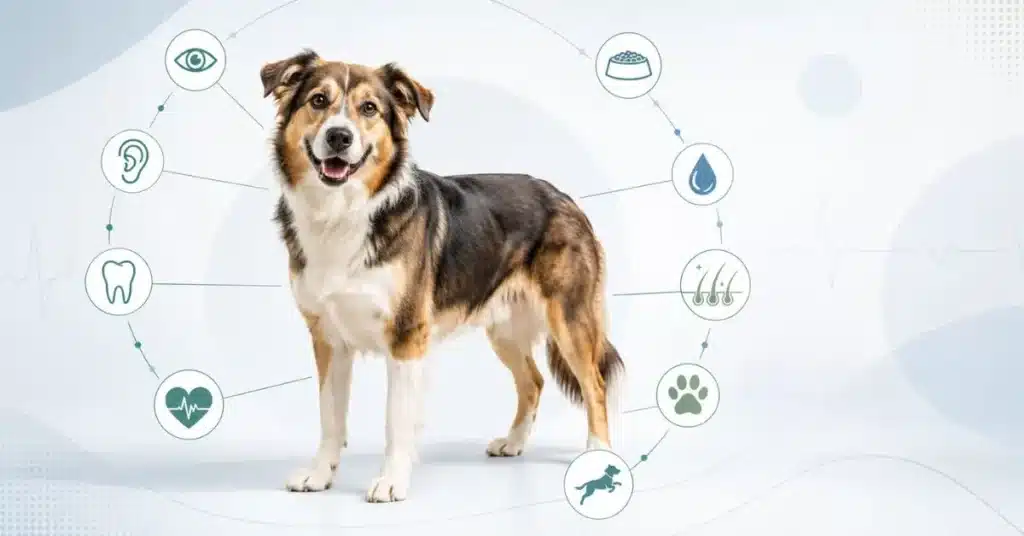
You do not need to perform a medical examination. You only need to notice whether your dog seems normal for them.
Take a few seconds to observe:
- Appetite and interest in food
- Energy and alertness
- Comfortable walking and movement
- Stiffness, limping, or signs of pain
- Calm breathing while resting
- Vomiting or diarrhea
- Normal urination and stool
- Eye or nose discharge
- Sudden changes in behavior
You can also monitor your dog’s health at home by tracking appetite, movement, drinking, and bathroom habits over time.
One unusual morning does not always mean your dog is sick. However, appetite loss, weakness, breathing changes, or repeated digestive problems may be among the early signs your dog is sick.
Contact a veterinarian if a change is severe, lasts longer than expected, or looks very different from normal.
4. Serve Breakfast and Prescribed Medication
Serve your dog’s morning meal according to their usual feeding plan. A similar feeding time each day may help create a steady routine. However, you do not need to serve breakfast at the exact same minute.
Avoid using one universal portion for every dog. The right amount depends on the food, age, size, body condition, activity, and health needs.
Notice whether your dog shows normal interest in breakfast. A sudden change in appetite may deserve closer attention.
Give prescribed medication only as directed by your veterinarian or the product label. The FDA explains that medication errors can harm pets.
Mark the medication after giving it. This simple step can prevent another family member from accidentally repeating the dose.
5. Offer Another Potty Break if Needed
Some puppies and adult dogs need a second potty break after breakfast. Watch your dog’s normal pattern instead of following one fixed timetable.
Keep this trip calm and bathroom-focused. A short potty outing is different from running, rough play, or other hard exercise after eating.
6. Add Suitable Walking, Sniffing, or Exercise
A quick potty trip may not provide enough physical activity or mental stimulation. Add a suitable walk, sniffing session, or gentle activity when your dog is ready.
The right amount depends on your dog’s:
- Age and health
- Breed and body type
- Fitness level
- Energy
- Weather conditions
- Total activity during the day
A sniffing walk can make a shorter outing more interesting because your dog uses both body and mind.
When a longer walk is not possible, combine a short outdoor trip with safe indoor play or enrichment. The AVMA recommends adjusting outdoor activity for weather conditions.
Do not force the usual walk when heat, cold, pain, or illness makes it unsafe.
7. Include Short Training or Mental Enrichment
Add a three- to five-minute training session when time allows. Practice simple skills such as sit, wait, recall, or calm behavior.
You can also use:
- A food puzzle
- A treat-search game
- A short sniffing activity
- A safe interactive toy
Keep the activity positive and low-pressure. Training does not need to be long to be useful.
For more beginner-friendly ideas, follow our guide to simple dog training at home.
8. Check the Paws and Coat
After an outdoor walk, perform a quick paw and coat check. Look for mud, wet fur, burrs, small tangles, ice, road salt, or visible irritation.
Wipe or dry the paws when needed. Remove loose debris gently, but do not turn this into a full grooming session. For a wider cleaning plan, follow our basic dog hygiene routine.
9. Help Your Dog Settle Before You Leave
Give your dog a short calm transition after walking, playing, or training. A dog that returns excited may need a few quiet minutes before you leave for work.
Before leaving, check that:
- Fresh water is available
- A final potty break was offered if needed
- The resting area is safe and comfortable
- The room temperature feels suitable
- Any enrichment item is safe for unsupervised use
Keep your departure calm and simple. Avoid creating extra excitement right before you leave.
The goal is to meet your dog’s needs and help them settle comfortably as the household becomes quiet.
Should You Feed or Walk Your Dog First?
This choice becomes easier when you separate a short potty break from a full walk or hard exercise. Most dogs should get a calm bathroom break soon after waking. Puppies may need to go outside more quickly.
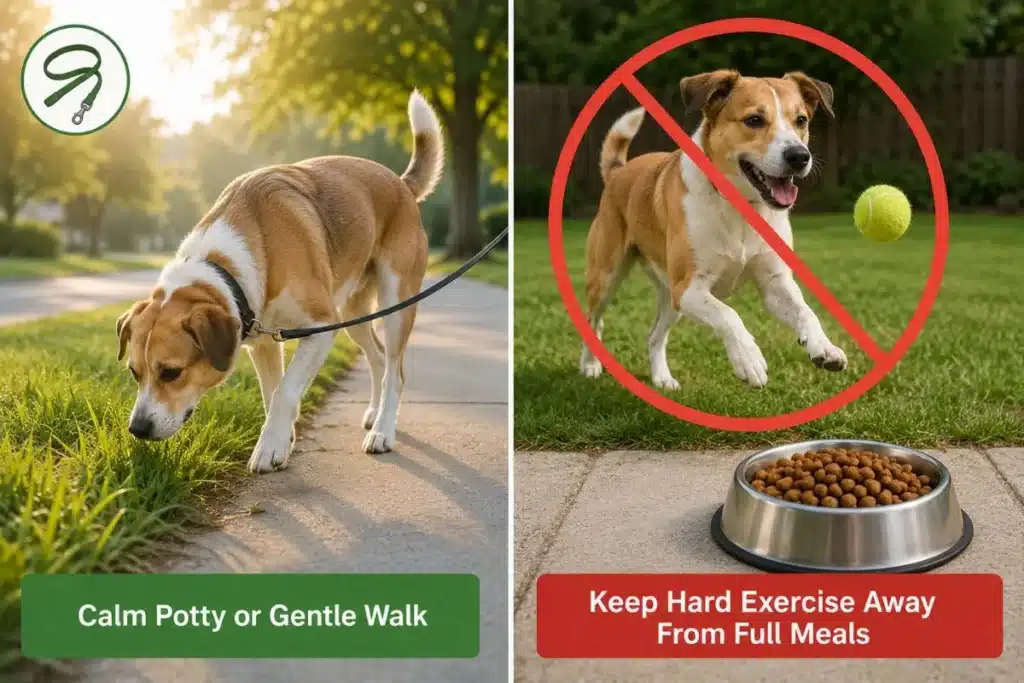
After the potty break, you can serve breakfast before walking or take your dog on a gentle walk first. Choose the order that matches your dog’s normal routine, health, and comfort.
A slow potty trip or relaxed sniffing walk is not the same as running or rough play. Avoid vigorous exercise close to a full meal, especially for dogs with a higher risk of bloat or GDV.
GDV is a serious emergency where the stomach fills with gas and may twist. Large, deep-chested dogs may face a greater risk. AAHA’s bloat safety guidance recommends keeping hard exercise and highly exciting activity away from mealtimes.
Safety note: A calm bathroom trip is different from running, rough play, or other hard activity around meals.
There is no single correct order for every dog. Ask your veterinarian for help if your dog has digestive issues, limited movement, or a known GDV risk.
Sample 30-, 60-, and 90-Minute Morning Schedules
A good routine should fit your real morning. It should not force you to rebuild your whole day.
Choose a flexible morning schedule based on your available time. Also consider your dog’s age, health, energy, and normal bathroom habits.
| Step | 30-Minute Routine | 60-Minute Routine | 90-Minute Routine |
| First potty break | Quick bathroom trip | Potty break with short sniffing | Potty break with relaxed sniffing |
| Water and health check | 3–5 minutes | About 5 minutes | 5–10 minutes |
| Breakfast | Follow the usual feeding plan | Follow the usual feeding plan | Follow the usual feeding plan |
| Activity | Brief walk or indoor enrichment | Suitable walk with short training | Longer walk, play, or enrichment |
| Final care | Potty if needed, then settle | Paw check, final potty, and settle | Coat check, final potty, and settle |
A 30-minute dog morning routine should focus on the most important tasks. Cover bathroom needs, fresh water, breakfast, a quick health check, and calm settling.
A 60-minute routine gives you more time for walking, sniffing, and short training. A 90-minute morning schedule can include longer activity, enrichment, and a simple grooming check.
Busy-owner example
A working owner can combine the first potty break with a short sniffing walk. Then they can refresh the water, serve breakfast, offer another potty break, and help the dog settle before leaving.
These are flexible examples, not strict rules. Adjust the timing for puppies, senior dogs, health needs, and weather changes.
Use this plan with our complete daily dog care checklist so you do not miss important afternoon or evening tasks.
Puppy vs Adult vs Senior Dog Morning Routine
The same basic steps can work for dogs of all ages. However, the timing, urgency, and activity level will change as your dog grows older.
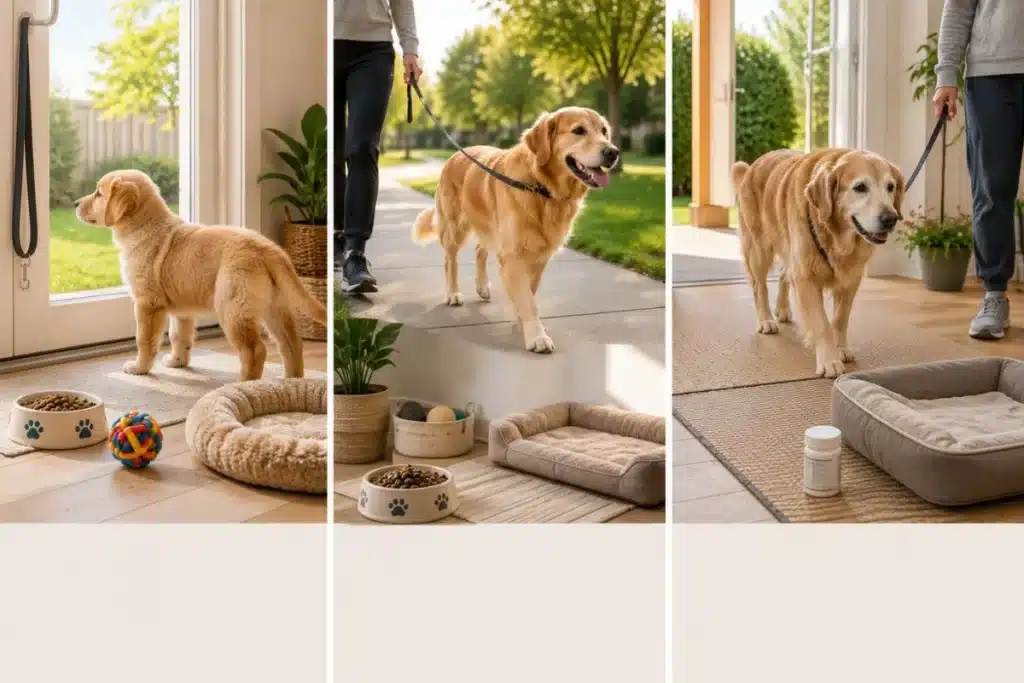
| Morning need | Puppy | Adult dog | Senior dog |
| First potty break | Usually urgent | Follow the normal routine | May need quick access |
| Activity | Short and supervised | Based on health and fitness | Gentle and easy on movement |
| Feeding | Follow a puppy feeding plan | Follow the normal adult plan | A special health plan may apply |
| What to watch | Accidents, appetite, and energy | Changes from normal habits | Stiffness, thirst, and movement |
| Rest | Frequent naps | Calm settling | Comfortable recovery time |
Puppy Morning Routine
A puppy morning routine should start with a potty break soon after waking. Then serve breakfast and offer another potty break after the meal.
Add a short play or training session, but keep it calm and supervised. Puppies also need plenty of sleep, so allow time for a nap afterward. The AKC puppy schedule guide follows a similar routine.
Adult Dog Morning Routine
An adult dog morning routine can follow a more stable pattern. Include a potty break, breakfast, suitable exercise, and time to settle.
Choose the activity based on your dog’s health, fitness, energy, and normal habits.
Senior Dog Morning Routine
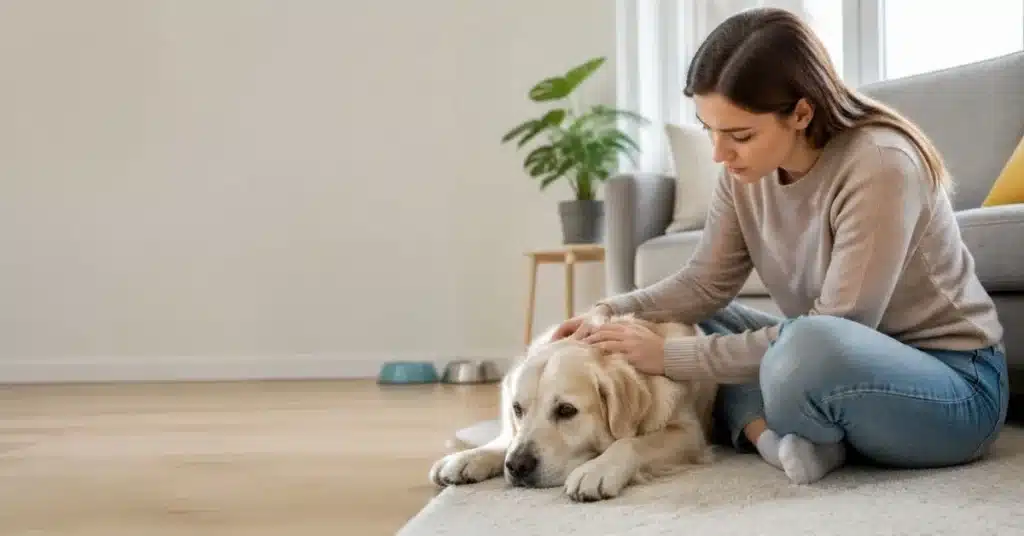
Give a senior dog extra time to stand, stretch, and walk comfortably. Watch for new stiffness, limping, increased thirst, or reduced movement.
Choose gentle activity and follow any prescribed medication plan. Easy bathroom access may also help. AAHA’s senior dog care guidance explains why changes in movement and bathroom habits deserve attention.
Morning Dog Routine Before Work
Before leaving, make sure your dog’s basic needs are covered. Offer a final potty break and check that fresh water is available. Also confirm that breakfast and any prescribed medication have been given.
Prepare a safe and comfortable resting area. Add clean bedding and keep the room at a suitable temperature. You may leave a safe food puzzle or chew, but only if your dog can use it without supervision.
Puppies, senior dogs, and dogs with limited bladder control may need help during the day. A trusted dog walker or pet sitter can provide a bathroom break and light activity.
Before-Work Checklist
- ☐ Final potty break completed
- ☐ Fresh water available
- ☐ Breakfast and medication given
- ☐ Safe resting area prepared
- ☐ Midday care arranged if needed
Keep your departure calm and simple. This can help your dog settle into the workday routine more comfortably.
How to Adapt the Routine for Apartments and Weather
Your dog’s basic morning needs stay the same. However, the routine may change based on your home and the weather.
Apartment Morning
Keep the leash, waste bags, and keys near the door. Allow extra time for stairs or the elevator. Use a familiar potty area whenever possible.
If the outdoor trip is short, add a brief indoor sniffing game or training session.
Hot Morning
Walk during the cooler part of the morning. Choose shaded areas, carry water, and keep activity shorter.
Avoid hot pavement, as it can hurt your dog’s paw pads. The AVMA dog-walking safety guide offers more advice for warm weather.
Rainy or Cold Morning
Keep the potty trip short when the weather is uncomfortable. Dry your dog’s paws and coat after returning.
Check for ice, road salt, mud, or debris. Then replace missed outdoor activity with indoor enrichment.
Rainy apartment example: Quick potty, paw drying, breakfast, a short sniffing game, and one final bathroom break before settling.
Common Morning Dog Care Mistakes to Avoid
Most morning dog care mistakes happen when owners miss basic needs or make the routine too complicated.
- Delaying the first potty break: This may cause discomfort or indoor accidents. Better action: Take your dog outside soon after waking.
- Treating a potty trip as full exercise: A quick bathroom trip may not provide enough movement. Better action: Add suitable walking, sniffing, or play later.
- Using the same routine for every dog: Puppies, adults, and senior dogs have different needs. Better action: Adjust the routine for age, health, fitness, and weather.
- Allowing intense exercise after eating: Running or rough play near meals may increase bloat or GDV risk in some dogs. Following an exact clock: A very rigid dog schedule can become stressful. Better action: Keep the order steady, but allow small timing changes.
- Ignoring appetite or movement changes: These changes may signal pain or illness. Better action: Watch closely and contact your veterinarian if they continue.
- Leaving while your dog is excited: Your dog may struggle to settle. Better action: Allow a short calm period before leaving.
- Adding too many steps: A complicated routine is hard to follow. Better action: Focus on potty, water, food, health, activity, and rest.
Quick Morning Dog Care Checklist
Use this simple morning dog care checklist to cover your dog’s essential needs each morning.
- ☐ First potty break
- ☐ Fresh water provided
- ☐ Quick health check completed
- ☐ Breakfast served
- ☐ Prescribed medication given
- ☐ Second potty break if needed
- ☐ Walking, sniffing, or enrichment
- ☐ Paws and coat checked
- ☐ Safe resting area prepared
- ☐ Calm settling before you leave
Keep this dog morning checklist in a visible place. It can help you follow a simple routine without missing important care.
Test Your Routine for Three Mornings
Three mornings of observation can help you build a better routine than copying a strict plan made for another dog.
Day 1: Observe
Follow your current routine without changing it. Notice where delays happen and which tasks take longer than expected.
Day 2: Follow the Essential Order
Use this simple order:
Potty → Water → Observe → Feed → Potty if Needed → Activity → Settle
Track your dog’s appetite, bathroom habits, energy, movement, and settling time.
Day 3: Adjust
Change the timing based on your available time, your dog’s life stage, and their response. Keep the essential steps and remove anything that makes the routine difficult to repeat.
Three-Day Morning Routine Tracker
| Track | Day 1 | Day 2 | Day 3 |
| First potty time | |||
| Is breakfast normal? | |||
| Stool and urination normal? | |||
| Energy and movement | |||
| Activity completed? | |||
| Settled calmly? | |||
| Total routine time |
Safety note: This is a routine-observation exercise, not a medical test. Contact your veterinarian if you notice severe or ongoing changes.
Morning Dog Care Routine FAQs
What should I do with my dog first thing in the morning?
Start with a potty break. Then provide fresh water and check your dog’s appetite, energy, movement, and bathroom habits. After that, serve breakfast and add suitable activity.
Should dogs go outside immediately after waking?
Many puppies need a potty opportunity soon after waking. Senior dogs may also need quick, easy access outside. Follow your dog’s normal pattern instead of using one strict time.
Should I feed or walk my dog first?
Either option may work after the first potty break. Choose breakfast or a gentle walk based on your dog’s usual routine. Avoid hard exercise close to a full meal.
How long should a dog’s morning routine take?
A morning routine may take 30, 60, or 90 minutes. The best length depends on your schedule and your dog’s needs. Complete essential care before adding optional activities.
Does every dog need a long morning walk?
No. A dog morning walk should match your dog’s age, health, energy, fitness, weather, and total daily activity. Short sniffing sessions or indoor enrichment may work better.
Can I change the routine on weekends?
Yes. Your weekend dog routine can start later or include extra activity. However, avoid delaying important potty, water, food, or medication needs for too long.
Why does my dog wake up very early?
Your dog may need the toilet, feel hungry, hear noise, follow a learned pattern, or feel uncomfortable. Track the pattern and watch for other changes.
What should I do if my dog refuses breakfast?
Compare the change with your dog’s normal appetite. Watch for vomiting, weakness, pain, or unusual behavior. Contact your veterinarian if the problem continues or other symptoms appear.
Build a Morning Routine That Fits Your Dog
A good morning dog care routine does not need to be long or perfect. Start with a potty break, fresh water, a quick health check, and the usual feeding plan. Then add suitable activity and calm settling.
Adjust the timing to match your dog’s age, health, energy, and your daily schedule. Keep the routine simple enough to follow each morning. Contact your veterinarian if changes in appetite, movement, breathing, or bathroom habits continue. A steady morning also helps create a smoother evening dog care routine.