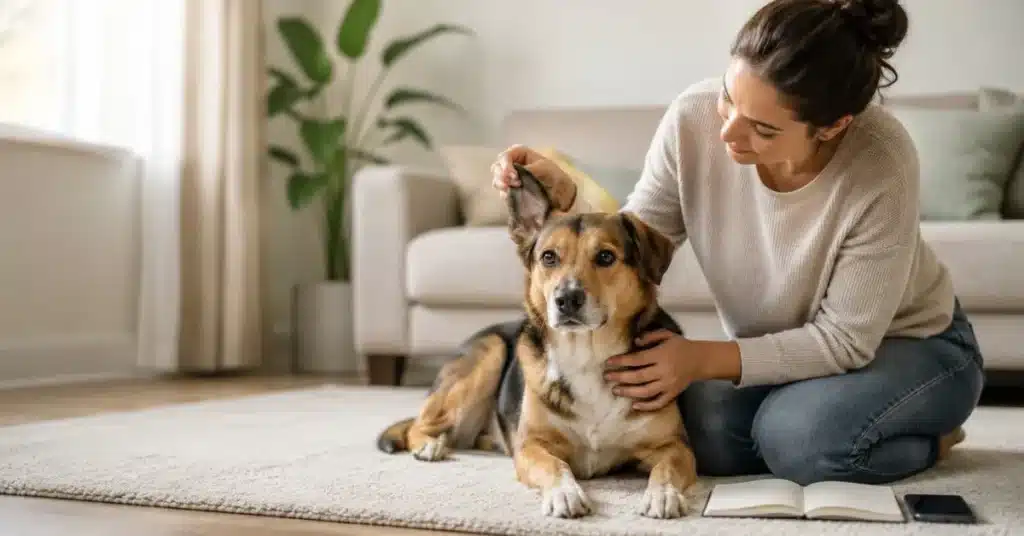
To monitor your dog’s health at home, first learn what is normal for them, including their appetite, water intake, bathroom habits, energy, behavior, movement, breathing, and weight. Check these patterns during daily routines, perform a gentle head-to-tail check regularly, and record any unusual changes. Home monitoring can help you notice problems, but it cannot diagnose illness or replace veterinary care.
Many owners first notice a change by thinking, “My dog seems a little off.” Your dog may eat less, sleep more, avoid walks, show lower energy, or behave differently than usual.
These changes do not always mean your dog is sick. However, knowing their normal health pattern makes unusual changes easier to notice, track, and explain to your veterinarian.
This guide will show you how to establish a normal baseline, monitor daily habits, perform a gentle dog health check at home, and keep a simple health log. You will also learn when a change can be monitored and when veterinary help may be needed. For help with feeding, exercise, hygiene, and everyday care, read our complete dog care guide for beginners.
Important: Home monitoring can help you notice and record changes, but it cannot confirm that your dog is healthy or identify the cause of a symptom. Contact your veterinarian whenever you are concerned. Seek urgent veterinary care for difficulty breathing, collapse, seizures, severe bleeding, or other emergency signs.
Why Monitoring Your Dog’s Health Matters
Small changes are easier to notice when you know what is normal for your dog. This includes their usual appetite, energy, behavior, movement, sleep, and bathroom habits.
Regular monitoring helps you recognize meaningful changes, such as eating less, sleeping more, avoiding walks, or moving differently. Keeping short notes also makes it easier to compare changes over time instead of relying on memory.
These details can give your veterinarian a clearer health history, including when a change started, how often it happened, and whether it improved or worsened. Dog health monitoring at home cannot detect every illness or replace veterinary care, but it can support responsible observation and preventive care.
Use the Observe, Record, Compare, Act Method
Monitoring becomes easier when you follow the same four steps instead of reacting to every small change. This simple dog health tracking method helps you stay organized without trying to diagnose your dog at home.
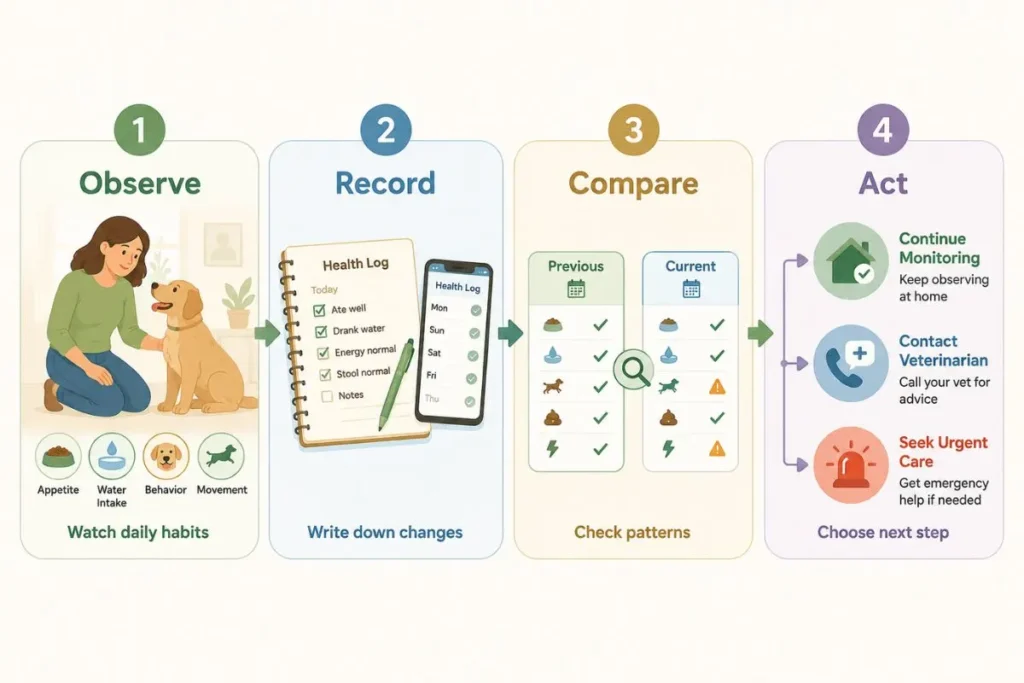
Observe
Watch your dog’s appetite, water intake, bathroom habits, energy, behavior, movement, breathing, and overall physical condition. Focus on changes from their usual routine.
Record
Write down what changed, when it started, how often it happens, and whether any other signs appeared. Include useful details such as duration, photos, or short videos.
Compare
Compare the change with your dog’s normal baseline and previous health records. Look for patterns and note whether the change is improving, continuing, or getting worse.
Act
Choose the next step based on what you observe. You may continue routine monitoring, contact your veterinarian, or seek urgent veterinary care when a change is severe or concerning.
Start by Learning What Is Normal for Your Dog
You cannot notice an unusual change until you understand what is normal for your dog. Every dog has a different routine, so what is normal for one dog may not be normal for another.
Age, breed, diet, activity level, environment, and existing health conditions can all affect daily habits. Instead of comparing your dog with a universal standard, build a normal health baseline based on their usual patterns.
What Should Be Included in a Normal Baseline?
Pay attention to these areas:
- Appetite: How much does your dog normally eat? Are they usually excited about meals?
- Water intake: How often do they drink, and what amount seems normal for them?
- Stool: Note the usual frequency, consistency, and appearance.
- Urination: Observe how often your dog urinates and whether they appear comfortable.
- Energy level: Consider their normal interest in walking, playing, and interacting.
- Sleep pattern: Notice when, where, and how long your dog usually sleeps.
- Behavior: Record their typical mood, social habits, and response to family members.
- Movement: Watch how comfortably they walk, stand up, lie down, and use stairs.
- Body weight: Keep a recent weight measurement so you can track changes over time.
- Existing marks or lumps: Note any scars, skin marks, or lumps already examined by your veterinarian.
You do not need to measure every detail perfectly. The main goal is to understand your dog’s normal routine, making meaningful changes easier to recognize.
Before recording new changes, review the common signs of a healthy dog and compare them with your dog’s individual habits. This can help you create a more accurate baseline without assuming that every healthy dog looks or behaves the same way.
What Should You Monitor in Your Dog Every Day?
You do not need to perform a full physical examination every day. Many important changes can be noticed during meals, walks, bathroom breaks, rest, and normal interaction.
Compare what you see with your dog’s usual routine. One unusual sign may not explain the cause, but repeated or worsening changes deserve closer attention.
Appetite and Water Intake
Notice whether your dog eats their usual amount and remains interested in meals. Record any clear increase or decrease in appetite, especially if it continues or appears with vomiting, low energy, weight changes, or unusual bathroom habits.
Watch your dog’s drinking pattern as well. Drinking noticeably more or less than usual, urinating more often, or having unexpected accidents may be worth discussing with your veterinarian.
For everyday feeding guidance, read what dogs should eat daily based on their age, activity level, and individual needs.
Stool and Urination
Pay attention to your dog’s normal stool and urination habits. Look for changes in:
- Frequency
- Stool consistency
- Visible straining
- Difficulty urinating
- Unexpected accidents
- Signs of discomfort
One unusual bathroom break does not confirm a health problem. Record the change and watch for a pattern. Contact your veterinarian if the problem continues, worsens, or causes visible discomfort.
Energy, Behavior, and Sleep
Consider whether your dog still shows normal interest in walking, playing, eating, and spending time with family members.
Meaningful behavior changes may include:
- Hiding more than usual
- Irritability or restlessness
- Less interest in walks or play
- Unusual tiredness
- Sleeping much more or less
- Avoiding normal interaction
Compare these changes with your dog’s normal personality. A change may need veterinary attention when it continues, becomes worse, or appears with other physical signs.
Movement and Resting Breathing
Watch how comfortably your dog stands up, walks, lies down, and uses stairs. Look for new limping, stiffness, poor balance, hesitation, or reluctance to do something they normally enjoy.
Observe breathing only while your dog is resting quietly or sleeping. Do not judge resting breathing while they are panting after exercise, feeling hot, excited, or stressed.
Contact your veterinarian if breathing becomes noisy, unusually fast while resting, visibly difficult, or your dog cannot settle comfortably.
A consistent daily dog care routine makes these changes easier to notice during feeding, exercise, bathroom breaks, and rest.
Quick Daily Dog Health Checklist
- Ate close to their usual amount
- Drank close to their usual pattern
- Passed stool and urine without visible difficulty
- Showed their usual energy and behavior
- Walked, stood, and rested comfortably
- Breathed smoothly while resting
- Any unusual change was recorded
Completing this checklist does not confirm that your dog is healthy. It simply helps you identify and record changes from their normal routine.
How to Perform a Gentle Head-to-Tail Health Check
Daily habits can reveal many health changes, but a gentle physical check may help you notice issues that are harder to see during normal activity. Follow the same head-to-tail order each time so the process feels predictable for both you and your dog.
Prepare Your Dog Before the Check
Choose a quiet, well-lit area where your dog feels comfortable. Use a rug, yoga mat, or another non-slip surface so they can stand or lie down without sliding.
Begin when your dog is calm—not immediately after exercise, play, or an exciting event. Keep the first few checks short, use a gentle touch, and reward calm behavior with praise or a small treat.
Watch your dog’s body language throughout the check. Stop if they repeatedly pull away, hide, growl, flinch, or appear painful. Never force your dog to remain still or allow you to examine a sensitive area.
Check the Eyes and Face
Look at both eyes and compare their appearance. Check for new redness, unusual discharge, cloudiness, squinting, or swelling around the eyes.
The face should appear reasonably even on both sides. Sudden facial swelling, one eye looking different from the other, or discomfort when opening an eye should be discussed with your veterinarian.
Do not try to diagnose an eye condition at home or place medication in the eyes unless your veterinarian has instructed you to do so.
Look at the Ears
Gently lift each ear flap and look for a new odor, redness, swelling, discharge, or obvious irritation. Also notice whether your dog is shaking their head, scratching their ears frequently, or reacting when an ear is touched.
Avoid placing cotton swabs or other objects deep inside the ear canal. For safe routine maintenance, follow the correct method to clean your dog’s ears at home.
Stop the examination if the ear appears painful or your dog becomes distressed.
Examine the Mouth, Teeth, and Gums
Only check your dog’s mouth if they are relaxed and comfortable with facial handling. Gently lift the lips and look for unusual bad breath, bleeding, swollen gums, heavy buildup, or a visibly broken or loose tooth.
Watch for discomfort while chewing, dropping food, eating on one side of the mouth, or refusing hard food. These changes may need veterinary attention.
Never force your dog’s mouth open. Regular care may help control buildup, but use a safe process when you clean your dog’s teeth at home.
Feel the Skin, Coat, and Body
Run your hands gently over your dog’s neck, shoulders, back, sides, chest, and abdomen. Look and feel for new lumps, swelling, wounds, redness, hair loss, flaky skin, or areas that seem unusually warm or sensitive.
Part the coat in a few places to check the skin underneath. Also look for fleas, ticks, scabs, or signs of repeated itching.
If your dog already has a lump that has been examined by a veterinarian, note any change in its size, shape, color, texture, or sensitivity. You cannot determine whether a lump is harmless by appearance or touch alone.
A consistent dog hygiene routine at home can make changes in the skin, coat, and paws easier to notice.
Check the Paws and Nails
Examine each paw pad and look between the toes. Check for cuts, swelling, redness, cracked pads, or grass seeds, stones, and other foreign objects.
Look for broken, split, or overgrown nails. Notice whether your dog is licking one paw repeatedly or avoiding pressure on a particular foot.
Long nails may affect comfortable movement. Follow a safe method when you trim your dog’s nails at home and stop if your dog becomes frightened or uncomfortable.
Watch Movement and Reaction to Touch
After the physical check, watch your dog stand up, walk, turn, sit, and lie down. Look for limping, stiffness, poor balance, difficulty rising, or reluctance to jump or use stairs.
Notice whether your dog pulls away, flinches, cries, growls, or becomes tense when a particular area is touched. These reactions may suggest discomfort, but they do not identify the cause.
Contact your veterinarian if a movement change is sudden, worsening, persistent, or accompanied by weakness, swelling, unusual behavior, or difficulty using a limb.
Safety reminder: A home health check should remain calm and gentle. Stop immediately if your dog appears frightened, painful, or likely to bite. Never force an examination, and do not use the check to diagnose or treat a health problem yourself.
Track Your Dog’s Weight and Body Condition
The number on a scale is useful, but it does not tell the whole story. Tracking both body weight and body condition can help you notice gradual changes that may be difficult to see from day to day.
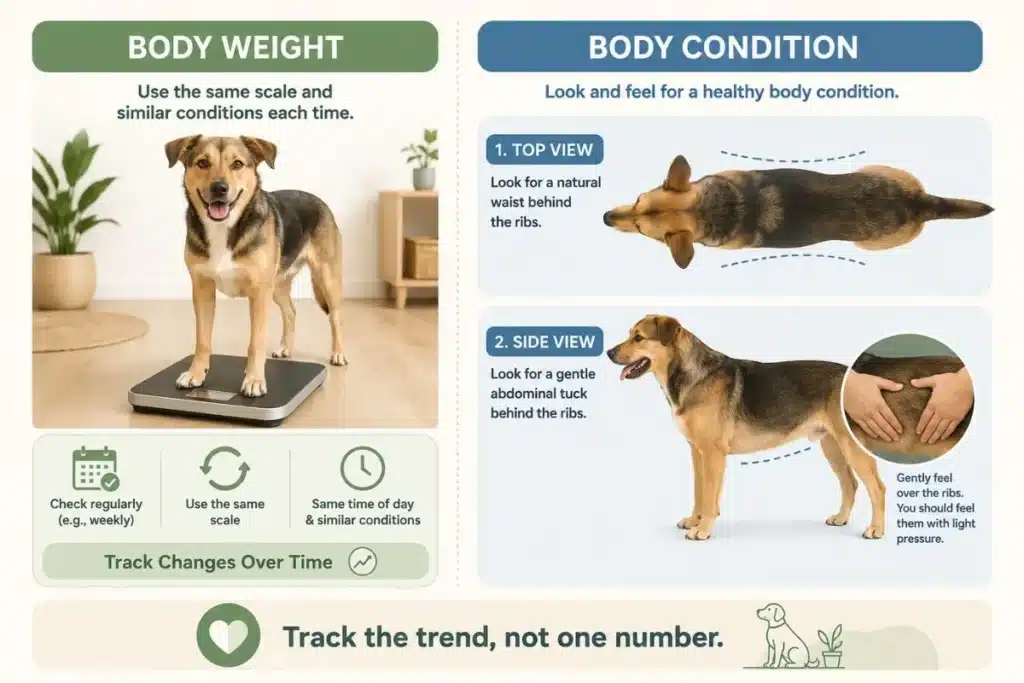
Use the same scale whenever possible. Weigh your dog under similar conditions, such as at roughly the same time of day and before or after meals consistently.
Do not focus on one measurement. A weight trend over several weeks or months is usually more useful than a single number.
A Body Condition Score (BCS) adds context to your dog’s weight. It considers how easily you can feel the ribs, whether a waist is visible from above, and how the abdomen looks from the side.
| Body Weight | Body Condition Score |
| Measured with a scale | Assesses body fat and shape |
| Helps track changes over time | Adds context to weight |
| Does not show the full picture | Considers the ribs, waist, and body outline |
Remember that muscle loss and fat gain are not the same. A dog may remain at a similar weight while losing muscle or gaining body fat.
Veterinarians may therefore assess both Body Condition Score and Muscle Condition Score. Record noticeable changes, but ask your veterinarian to interpret them based on your dog’s age, size, activity level, and health history.
You can review the WSAVA body and muscle condition resources to understand how veterinarians assess body fat and muscle condition.
Keep a Simple Dog Health Log
Memory can be unreliable when a health change develops slowly. A short dog health log makes it easier to notice patterns, compare changes, and give your veterinarian clear information.
You do not need to record every normal activity. Focus on changes that are new, repeated, persistent, or worsening.
What Should You Record?
For each change, write down:
- Date and time: When did you first notice it?
- What changed: Describe the exact behavior or physical sign.
- Frequency: Did it happen once or several times?
- Duration: How long did it last?
- Appetite and water: Did your dog eat or drink differently?
- Stool and urine: Note changes in frequency, appearance, or comfort.
- Energy and movement: Was your dog less active, stiff, or reluctant to walk?
- Medication: Record prescribed medicines and when they were given.
- Action taken: Note whether you continued monitoring or contacted your veterinarian.
A specific note such as “ate half of breakfast and vomited twice” is more useful than writing, “My dog seemed unwell.”
Use a Simple Health-Log Table
You can copy this dog health record template into a notebook, spreadsheet, or phone note:
| Date | Appetite | Water | Energy | Stool/Urine | Change Noticed | Action Taken |
A daily dog care checklist helps you track whether feeding, walking, grooming, and other routine tasks were completed. A health log has a different purpose: it records changes in your dog’s condition.
Add Photos or Short Videos When Helpful
Photos or videos can help document an intermittent limp, unusual movement, skin change, changing lump, or coughing episode that may not appear during a veterinary visit.
When tracking a visible change, use similar lighting and angles. These records may give your veterinarian useful context, but they cannot identify or diagnose the cause.
Illustrative Example—Not a Diagnosis
A dog eats less than usual at breakfast but remains active, drinks normally, and has normal bathroom habits. The owner records the appetite change rather than guessing the cause. The next day, the dog eats normally again, and the log is updated.
A different response is needed when reduced appetite appears with weakness, repeated vomiting, breathing difficulty, or another concerning change. In that situation, contact a veterinarian instead of relying only on continued observation.
What Should You Do After Noticing a Change?
Monitoring does not always mean waiting. Your next step should depend on the type, severity, duration, and pattern of the change, along with your dog’s age, normal routine, and medical history.
Continue Observing and Recording
A mild, isolated change may sometimes be monitored when your dog remains comfortable, alert, active, and close to their usual behavior.
Write down:
- What changed
- When it started
- How often it happens
- Whether it is improving or worsening
- Whether any other signs appear
There is no universal “wait 24 hours” rule. Some changes require faster attention, so contact your veterinarian whenever you feel unsure.
Contact Your Veterinarian
Ask for veterinary advice when a change is persistent, recurring, worsening, or clearly different from your dog’s normal pattern. Several changes appearing together may also need prompt attention.
Contact your veterinarian about concerns such as:
- A new or changing lump
- An ongoing cough
- Reduced appetite with lower energy
- Repeated vomiting or bathroom changes
- A noticeable weight gain or loss
- Limping, stiffness, or visible discomfort
- A sudden change in behavior or movement
Share your health log and explain when the change began, how often it occurs, and whether it is getting better or worse. Include relevant details about medications, previous conditions, and recent changes in food or routine.
For a fuller warning-sign guide, review the early signs your dog is sick.
Seek Urgent Veterinary Care
Emergency warning: Seek urgent veterinary care if your dog shows:
- Difficulty breathing or heavy breathing effort
- Pale, blue, gray, or purple gums
- Collapse or unresponsiveness
- A seizure
- Severe bleeding or a major injury
- Sudden weakness or paralysis
- A suddenly enlarged abdomen with distress
- Repeated attempts to vomit without bringing anything up
- Known or suspected toxin exposure
These signs may indicate a serious emergency. Do not delay veterinary care to finish a checklist, search online for a diagnosis, or wait for the next routine health check.
For difficulty breathing, collapse, seizures, severe bleeding, or another critical emergency, leave for the nearest emergency veterinary facility immediately. Call ahead only if doing so will not delay your departure.
Common Dog Health-Monitoring Mistakes to Avoid
The goal is to notice meaningful changes, not to examine every detail or diagnose an illness at home. Avoid these common mistakes when checking your dog’s health:
- Not knowing your dog’s normal baseline: Learn their usual appetite, energy, behavior, bathroom habits, movement, and sleep pattern. Without this baseline, changes are harder to recognize.
- Judging health from one sign: A dry nose, one missed meal, or a quiet afternoon does not confirm illness. Look at the overall pattern and check for other changes.
- Not recording changes: Write down when the change started, how often it happens, and whether it is improving or worsening.
- Checking breathing while your dog is panting: Observe resting breathing only when your dog is calm or sleeping—not after exercise, during excitement, or in hot weather.
- Forcing a physical check: Stop if your dog pulls away, growls, flinches, or appears distressed. Forced handling can increase fear and create a bite risk.
- Using an online checklist to diagnose: Online information may help you organize observations, but only a veterinarian can evaluate the cause. AAHA explains why owners should rely on a veterinarian for diagnosis rather than online or AI tools.
- Giving human or leftover medicine: Never give your dog a human pain reliever, another pet’s prescription, or leftover medication unless your veterinarian specifically directs you to do so. Review the FDA’s guidance on pain relievers for pets.
- Treating tracker data as a diagnosis: Activity and sleep trackers may show trends, but the data cannot confirm illness.
Finally, never delay emergency veterinary care or skip routine examinations because a home checklist looks normal.
Dog Health Monitoring FAQs
How Often Should I Check My Dog’s Health at Home?
You can observe your dog’s daily habits during meals, walks, bathroom breaks, play, and rest. A gentle physical check can also be done regularly when your dog is calm. There is no perfect schedule for every dog, so follow your veterinarian’s advice for puppies, seniors, medications, or existing health conditions.
What Should I Monitor in My Dog Every Day?
Monitor your dog’s appetite, water intake, stool, urination, energy, behavior, movement, and breathing while resting. Compare these areas with your dog’s normal routine. Record any change that is new, repeated, worsening, or appears with other concerning signs.
How Often Should I Weigh My Dog?
The right frequency depends on your dog’s age, size, health condition, and veterinary recommendations. Use the same scale and similar conditions whenever possible. Focus on the weight trend over time, because one measurement may change slightly without showing a meaningful health problem.
Should I Track How Much Water My Dog Drinks?
Yes. A noticeable change in your dog’s drinking pattern can provide useful information, especially when it appears with changes in urination, appetite, energy, or weight. Water needs vary with diet, weather, activity, size, and health, so compare intake with your dog’s usual pattern.
Is a Dry Nose a Sign That My Dog Is Sick?
No. A dry nose alone does not confirm illness. Nose moisture may change after sleep, rest, sun exposure, or because of the indoor environment. Look at your dog’s overall appetite, behavior, breathing, energy, hydration, movement, and bathroom habits instead of relying on one sign.
Can a Home Health Check Replace a Veterinary Exam?
No. A home health check can help you notice and record changes, but it cannot diagnose illness or replace a veterinary examination. A veterinarian can assess your observations alongside your dog’s medical history and perform tests that cannot be completed through home monitoring.
What Should I Record Before Calling a Veterinarian?
Record when the change started, how often it happens, how long it lasts, and whether it is improving or worsening. Include changes in appetite, water intake, stool, urination, energy, movement, medications, and recent routines. Photos or short videos may help document symptoms that appear only occasionally.
What Should I Do If My Dog Dislikes Being Examined?
Stop if your dog pulls away, hides, growls, flinches, or appears distressed. Keep future checks short, calm, and gentle, and use positive reinforcement without forcing access to sensitive areas. Contact your veterinarian if a normally tolerant dog suddenly resists touch or appears painful.
Final Thoughts on Monitoring Your Dog’s Health
Knowing what is normal for your dog makes meaningful changes easier to notice.
Use the same simple process each time: observe daily habits, record unusual changes, compare them with your dog’s normal baseline, and act when something is persistent, worsening, or concerning.
Home health monitoring cannot diagnose illness or replace a veterinary examination. However, clear notes about appetite, behavior, movement, bathroom habits, and other changes can help your veterinarian understand the situation more accurately.
Keep your monitoring routine calm and consistent. Seek urgent veterinary care for difficulty breathing, collapse, seizures, severe bleeding, or any other emergency sign.