A dog hygiene checklist helps you keep your dog clean, comfortable, and easier to care for. It covers simple tasks like paw cleaning, dental care, coat and skin checks, ear care, nail care, and bathing. It also reminds you to clean the bowls, bedding, toys, and tools your dog uses.
Some tasks need regular attention, while others are weekly, monthly, or as needed. Your dog’s coat type, lifestyle, activity level, and health can change how often each task is needed. If you are starting from scratch, build a simple dog hygiene routine first.
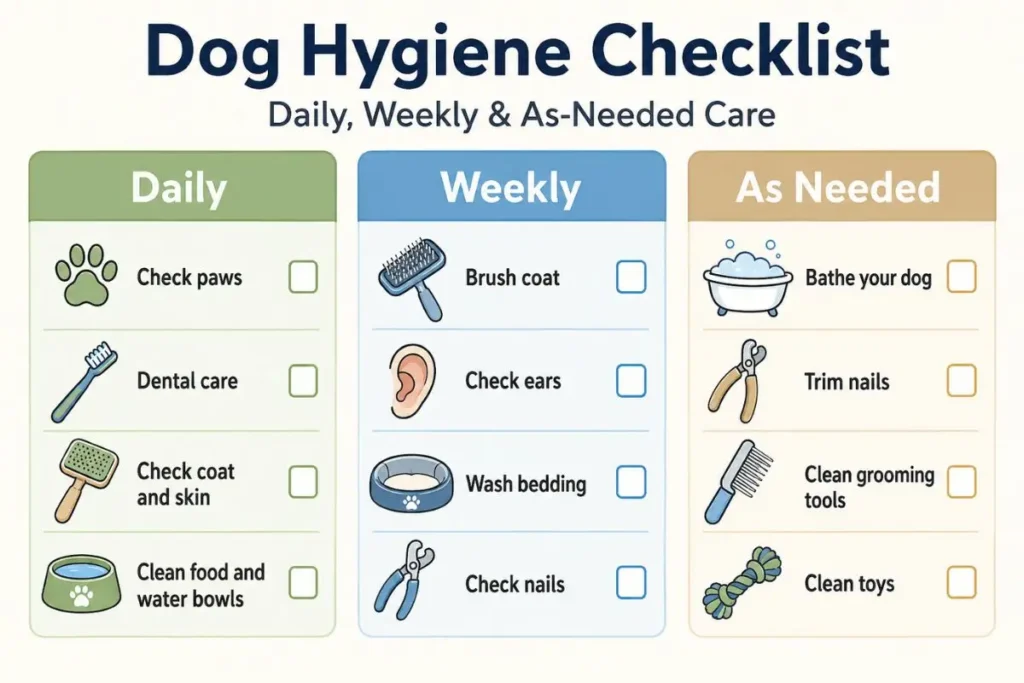
Quick Dog Hygiene Checklist at a Glance
A dog hygiene checklist helps you see what needs attention and when. Use this guide as a simple starting point. Then adjust it based on your dog’s coat, lifestyle, activity, and health needs.
| Hygiene Task | Typical Timing | Quick Cue |
| Check and clean paws | After dirty walks or as needed | Mud, debris, or irritation |
| Dental care | Ideally daily | Plaque, bad breath, or gum changes |
| Check coat and skin | Regularly | Dirt, tangles, or skin changes |
| Brush the coat | Depends on coat type | Loose hair or tangles |
| Check the ears | Regularly | Redness, discharge, or unusual odor |
| Clean bedding | About weekly or as needed | Dirt, hair, or odor |
| Check the nails | Regularly | Long nails or clicking sounds |
| Bathe | As needed | Dirt, odor, or coat condition |
| Clean toys and tools | Regularly | Visible dirt or odor |
This is not a fixed schedule for every dog. Some dogs need more frequent care than others. Breed, coat type, activity, and individual needs can all affect the routine. The AKC guide also explains why grooming needs can vary from dog to dog.
Daily Dog Hygiene Checklist
Daily hygiene does not mean giving your dog a full cleaning every day. Focus on small tasks that need regular attention.
Pay extra attention after walks, meals, and messy outdoor activities. A quick check can help you spot dirt or problems early.
Check and Clean the Paws When Needed
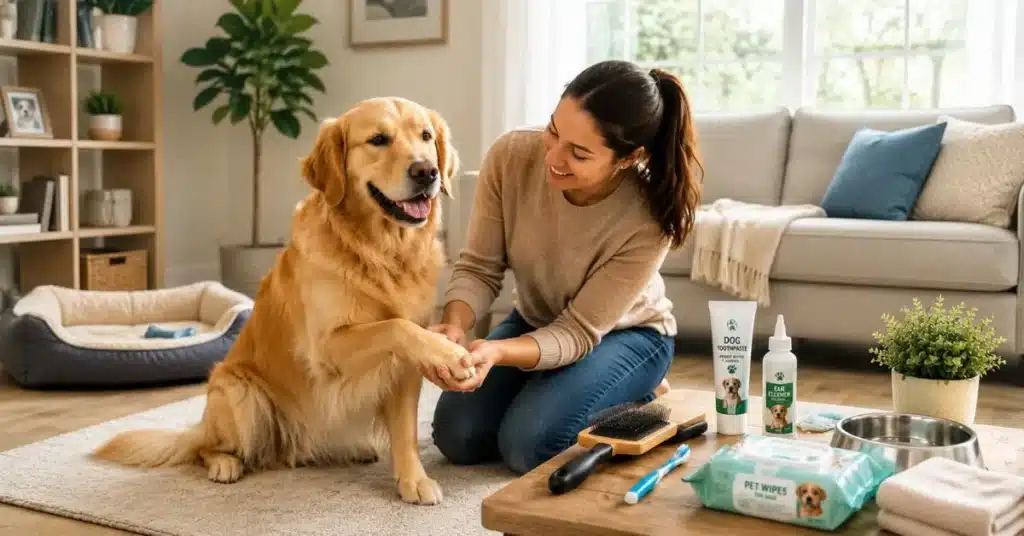
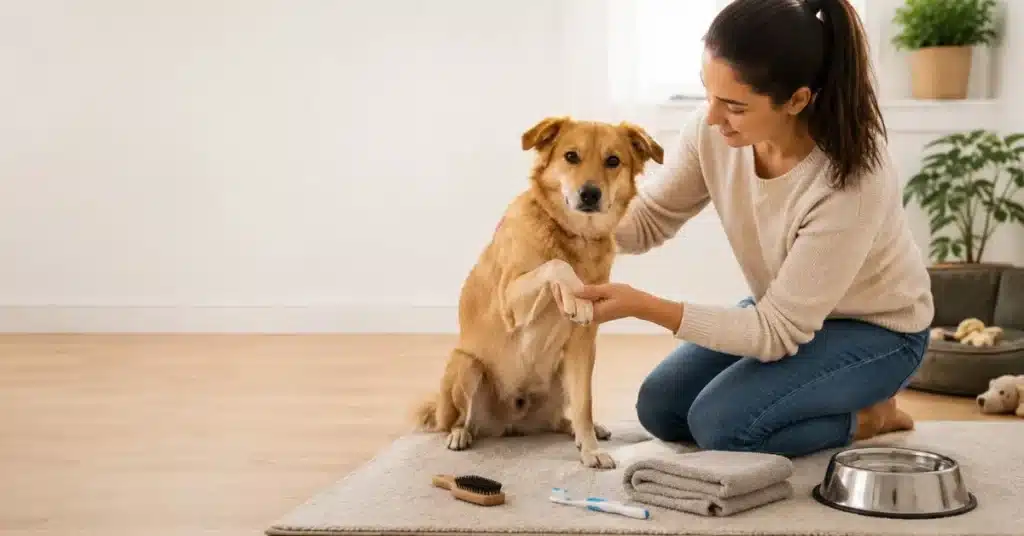
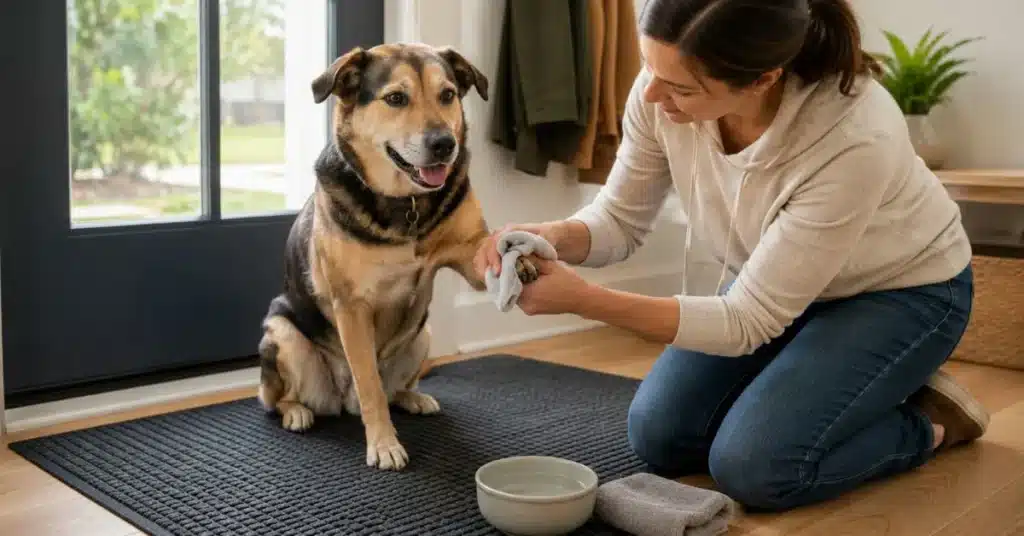
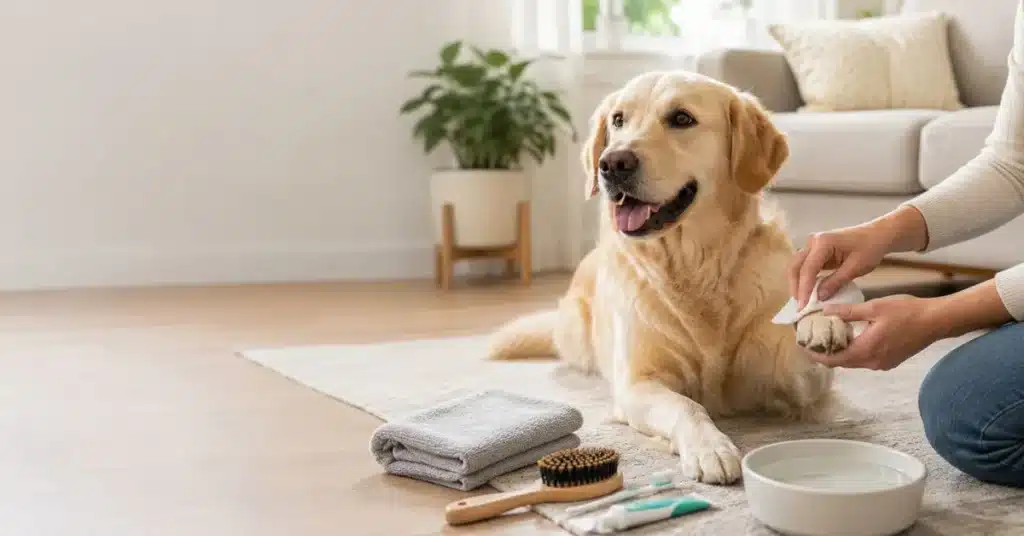
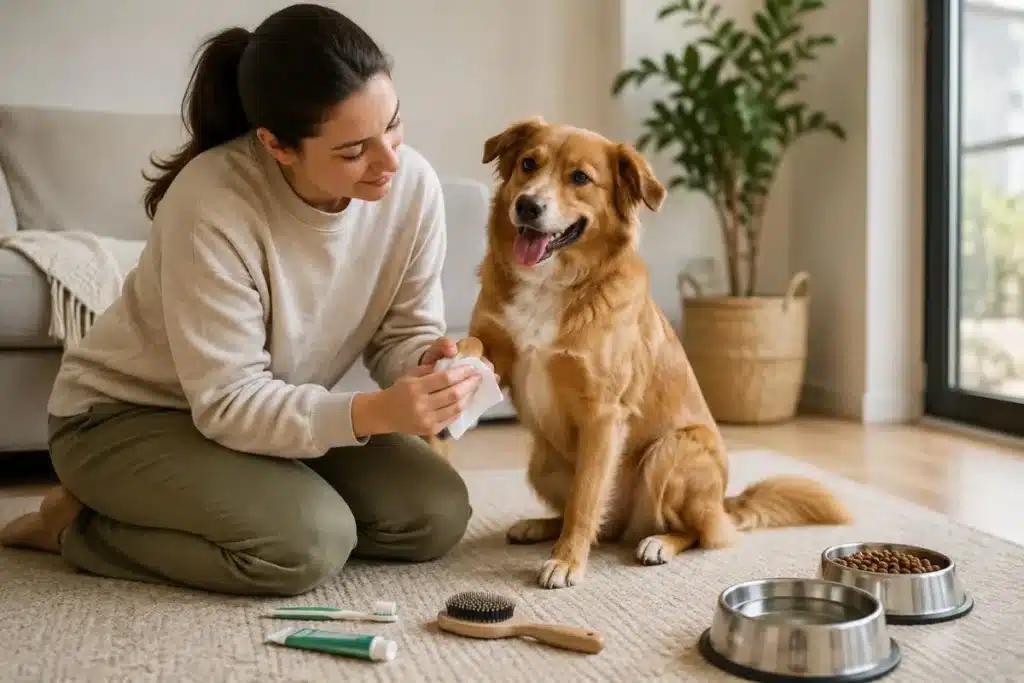
Check your dog’s paws after outdoor walks, especially after muddy or wet trips. Look between the toes and around the paw pads for dirt, debris, or anything stuck in the fur.
Clean dirty paws with a damp cloth or another dog-safe method. But avoid washing clean paws again and again.
For example, muddy paws need cleaning after a park visit. Clean, dry paws after a short walk may not need extra washing.
If you notice swelling, wounds, or ongoing irritation, contact your veterinarian. Don’t treat these signs as a simple cleaning problem. For detailed steps, see how to clean dog paws after a walk.
Keep Up With Dental Hygiene
Dental hygiene needs regular attention. The AAHA dental guide recommends daily brushing with a pet-safe toothbrush and toothpaste. Never use human toothpaste for your dog.
While brushing, take a quick look at the teeth and gums. Watch for ongoing bad breath, red or swollen gums, drooling, or trouble eating.
These signs may need a veterinary dental exam instead of more home cleaning. See our guide to cleaning dog teeth at home for the full process.
Do a Quick Coat and Skin Check
Run your hands over your dog’s coat and skin during normal daily contact. Look for dirt, tangles, mats, burrs, or other debris.
Also watch for new redness, sore spots, or unusual skin changes. Dogs with different coat types and lifestyles may need different levels of grooming.
Keep Food and Water Areas Clean
Keep your dog’s food and water bowls free from leftover food, slime, and visible dirt.
The CDC cleaning guide recommends washing wet-food bowls after each use. It also recommends cleaning dry-food and water bowls daily.
Weekly Dog Hygiene Checklist
Weekly care is a good time to check areas that may not need daily attention. Focus on your dog’s coat, ears, bedding, and nails.
Think of “weekly” as a simple reminder, not a strict rule. Your dog may need more or less care based on coat type, lifestyle, activity, and individual needs.
Brush and Check the Coat
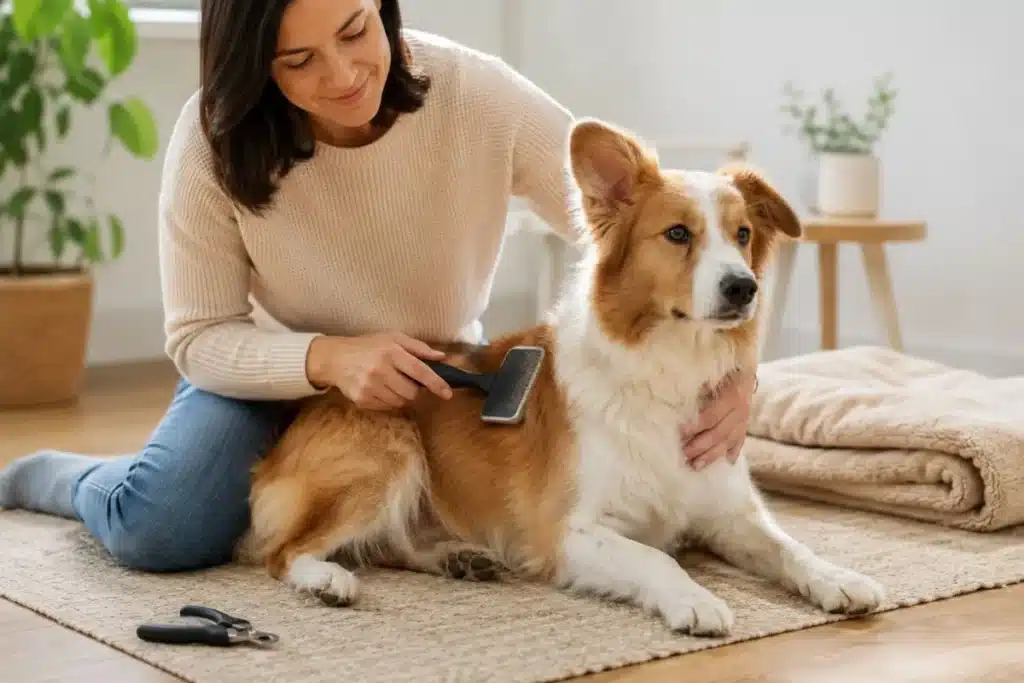
Regular brushing helps remove loose hair, dirt, and small debris. It also helps you notice tangles, mats, or skin changes.
Brushing needs depend on the coat. Dogs with long, thick, or easily tangled coats may need brushing more often. Short-coated dogs may need less.
Use a brush that matches your dog’s coat. If you need help choosing one, see how to choose the right dog brush.
Check the Ears Before You Clean Them
Make ear checks part of your regular hygiene routine. But remember, checking the ears does not always mean cleaning them.
Look at the outer ear and notice any unusual smell. Watch for redness, swelling, discharge, extra debris, or trapped moisture.
This is especially useful after swimming or bathing. If you notice severe redness, swelling, discharge, or a strong unusual odor, the AKC guide recommends veterinary care. For routine ear care, see how to clean dog ears at home.
Wash Bedding and Blankets
Your dog’s bed and blankets can collect hair, dirt, moisture, and odors. Regular washing helps keep the sleeping area clean.
Always follow the item’s care instructions.
Inspect the Nails
Check your dog’s nails regularly, but do not assume they need trimming every week. Nail growth and natural wear can vary.
One useful sign is clicking on hard floors. This can mean the nails are getting too long.
Dark nails can make the quick harder to see. The quick is the blood vessel inside the nail. If you are unsure, ask a veterinarian or groomer for help. When trimming is needed, follow our guide to trim dog nails at home.
Monthly and As-Needed Dog Hygiene Tasks
Some hygiene tasks fit into a monthly check. But that does not mean you must do them every month.
Your dog’s needs can change with coat type, lifestyle, activity, and health. So use this section as a guide, not a strict schedule.
Bathe Your Dog When Needed
Bathe your dog when the coat looks dirty, smells bad, or gets messy after outdoor activity. Some dogs need baths more often than others.
Use a shampoo made for dogs. Human shampoo can be too harsh for a dog’s skin.
The AKC bathing guide explains that bath needs vary by coat, breed, and lifestyle. It also recommends using dog-formulated shampoo.
If your dog has an ongoing skin problem, follow your veterinarian’s advice. For the full process, see how to bathe a dog at home.
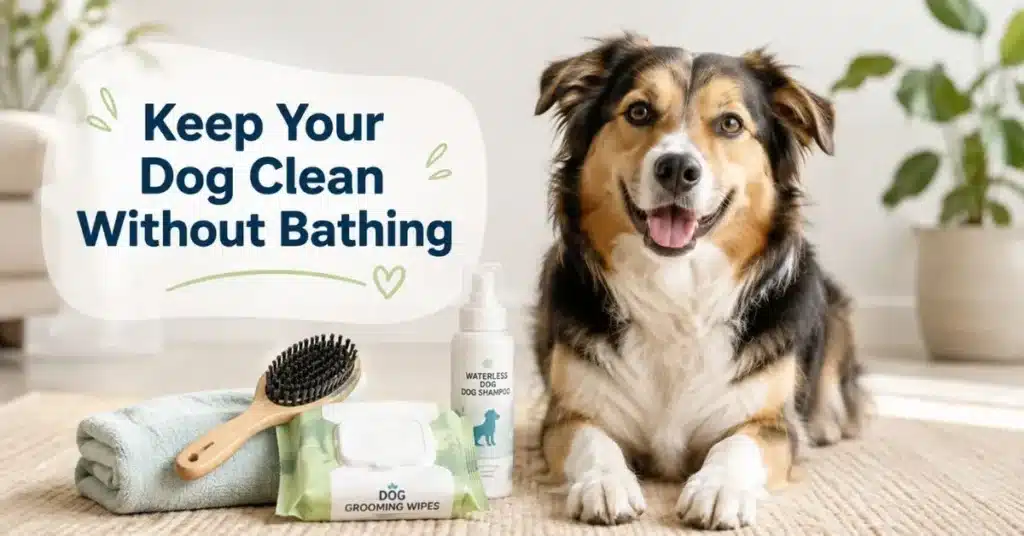
Not every cleanup needs a full bath. You can also keep your dog clean without bathing when a lighter cleanup is enough.
Trim Nails When Length Calls for It
Check your dog’s nails regularly and trim them only when needed. Nail growth and natural wear differ from dog to dog.
A clicking sound on hard floors can be a useful sign that the nails are getting long.
If you are not comfortable trimming the nails, ask a groomer or veterinarian for help.
Clean Grooming Tools and Frequently Used Gear
Keep brushes, combs, and grooming tools free from trapped hair, dirt, and buildup.
Wash collars or leashes when needed, if the care label allows it. After cleaning, let all tools and gear dry fully before you store or use them again.
Clean Toys as Needed
Check your dog’s toys for dirt, odor, and buildup.
The CDC cleaning uses monthly cleaning as an example for pet toys. It also says to clean them sooner if they look dirty or smell bad.
Always follow the toy’s care instructions. Rubber, plastic, rope, and plush toys may need different cleaning methods.
Don’t Forget the Things Your Dog Uses Every Day
Good dog hygiene is not only about cleaning your dog. Your dog’s bowls, bedding, toys, brushes, and other gear can also collect dirt, hair, food, and odors.
Check these items as part of your regular cleaning routine:
| Item | What to Check |
| Food and water bowls | Food, slime, or odor |
| Bedding and blankets | Hair, dirt, moisture, or smell |
| Toys | Dirt, damage, or buildup |
| Brushes and combs | Trapped hair, dirt, or debris |
| Collars and leashes | Dirt, odor, or wear |
The same guide suggests washing beds and blankets weekly and toys about monthly. Clean any item sooner if it looks dirty or smells bad.
Always check the care label or cleaning instructions before washing pet gear. If you use a cleaner or disinfectant, follow the product label carefully.
You also do not need to disinfect every item during normal cleaning. In many cases, regular cleaning with soap or detergent is enough unless there is a specific reason to disinfect.
How to Adjust This Checklist for Your Dog
A dog hygiene schedule should fit your dog’s needs. It should not follow a strict calendar.
Your dog’s coat type, lifestyle, age, health, and environment can all change how often care is needed.
Dogs with long, thick, or fast-growing coats may need more brushing and coat care. Short-coated dogs may need less.
Lifestyle also matters. Dogs that hike, swim, play outside, or get muddy often may need more paw, coat, or bathing care.
Age and health matter too. Puppies, senior dogs, and dogs with skin, ear, or dental problems may need a different routine.
So, use this checklist as a starting point, not a fixed schedule for every dog. For more detail, see how often to clean your dog.
Common Dog Hygiene Mistakes to Avoid
A good routine can still cause problems if you clean too much or use the wrong method. Avoid these common dog hygiene mistakes to keep daily care simple and safe.
- Following a strict schedule: Every dog has different hygiene needs. Adjust the routine based on coat type, activity, lifestyle, and health.
- Bathing too often: More baths do not always mean better hygiene. Too much bathing can leave your dog’s skin and coat dry.
- Using human hygiene products: Human shampoo, conditioner, and toothpaste are not made for dogs.
- Cleaning the ears without checking first: Look at the ears before cleaning them. Redness, swelling, discharge, or an unusual smell may need veterinary care.
- Forgetting everyday dog items: Bowls, bedding, toys, brushes, and grooming tools can also collect dirt and buildup. Clean them as part of your regular routine.
- Forcing nail or ear care: Stop if your dog becomes very stressed or you cannot continue safely. Ask a veterinarian or groomer for help when needed.
Also, do not treat ongoing pain, redness, irritation, or unusual odor as a simple cleaning issue. If the problem continues, professional care may be the safer next step.
When to Stop Cleaning and Call a Vet or Groomer
Routine cleaning works well for normal dog hygiene, but some problems need professional help.
Stop cleaning if your dog seems painful, very stressed, or you cannot continue safely. Contact a veterinarian or groomer if you notice:
- Pain or strong discomfort during cleaning
- Bleeding, cuts, sores, or open wounds
- Severe redness or swelling
- Unusual discharge
- A strong odor along with redness, swelling, or discharge
- A foreign object stuck in a paw, ear, eye, nose, or mouth
- Severe mats that you cannot remove safely
- Nails you do not feel comfortable trimming
- Ongoing skin, ear, or dental problems
These signs may need professional care instead of repeated home cleaning.
Dog Hygiene Checklist FAQs
What hygiene does a dog need every day?
Daily dog hygiene should focus on small tasks, not a full grooming session. Check dirty paws after walks, keep food and water areas clean, and give your dog’s coat and skin a quick look. Daily tooth brushing is also considered the best home dental-care routine.
How often should I bathe my dog?
There is no single bathing schedule that works for every dog. Breed, coat type, activity, lifestyle, and skin needs can all affect bath frequency. Bathe your dog when needed rather than following a strict calendar.
Do dogs need their ears cleaned every week?
No. Checking the ears and cleaning them are not the same thing. Some dogs need regular ear cleaning, while others may rarely need it. Cleaning too often can also irritate the ear canal.
If you see redness, pain, discharge, or a strong unusual odor, contact your veterinarian instead of repeatedly cleaning the ear.
What should beginners include in a dog hygiene checklist?
A dog hygiene checklist for beginners should cover the main areas that need regular attention. Include the paws, coat and skin, teeth, ears, nails, and bathing, along with your dog’s bowls, bedding, toys, and grooming tools.
You can adjust each task based on your dog’s individual needs.
How can I tell if my dog needs extra cleaning?
Look for simple cues such as muddy paws, visible dirt, loose debris, tangled fur, a dirty coat, or smelly bedding and toys. Outdoor activity, swimming, and wet weather may also create extra cleaning needs.
But ongoing pain, redness, swelling, discharge, or unusual odor may need professional care rather than more cleaning.
Keep Your Dog’s Hygiene Routine Simple
Use this dog hygiene checklist as a flexible guide, not a strict schedule. Adjust each task to your dog’s coat, lifestyle, activity level, age, and health needs.
Focus on consistent care instead of trying to do everything at once. Small, regular checks can make hygiene easier to manage. For a broader daily-care plan, see our dog care for beginners guide.