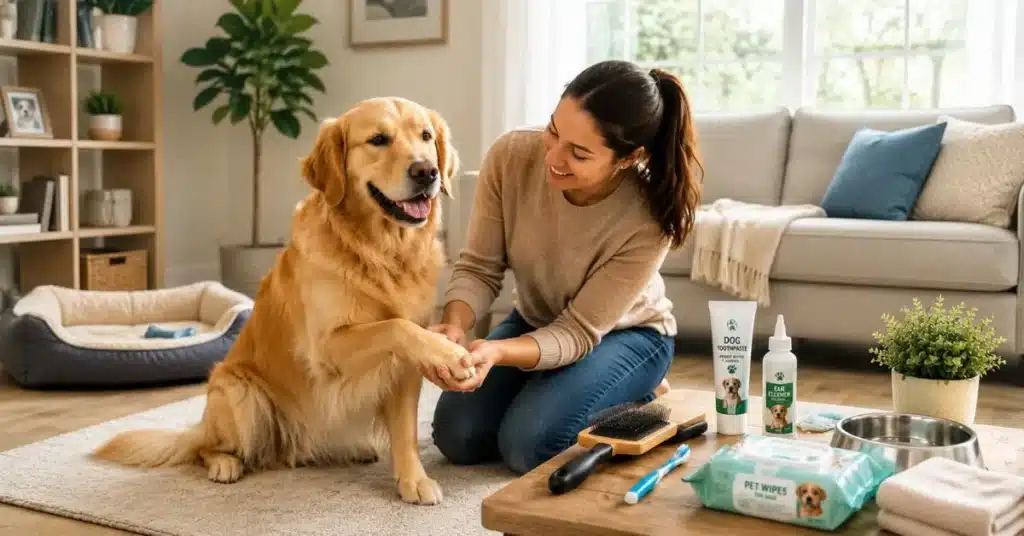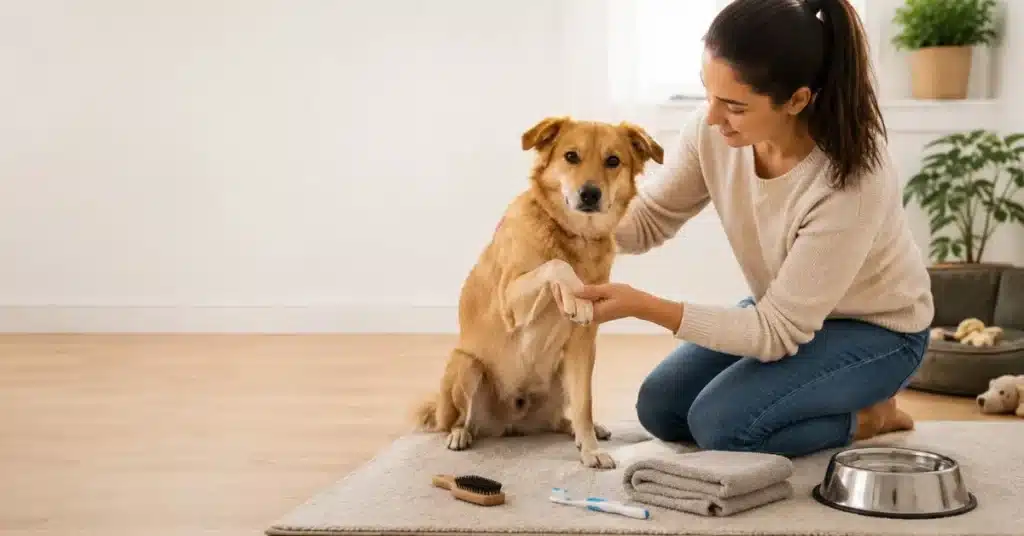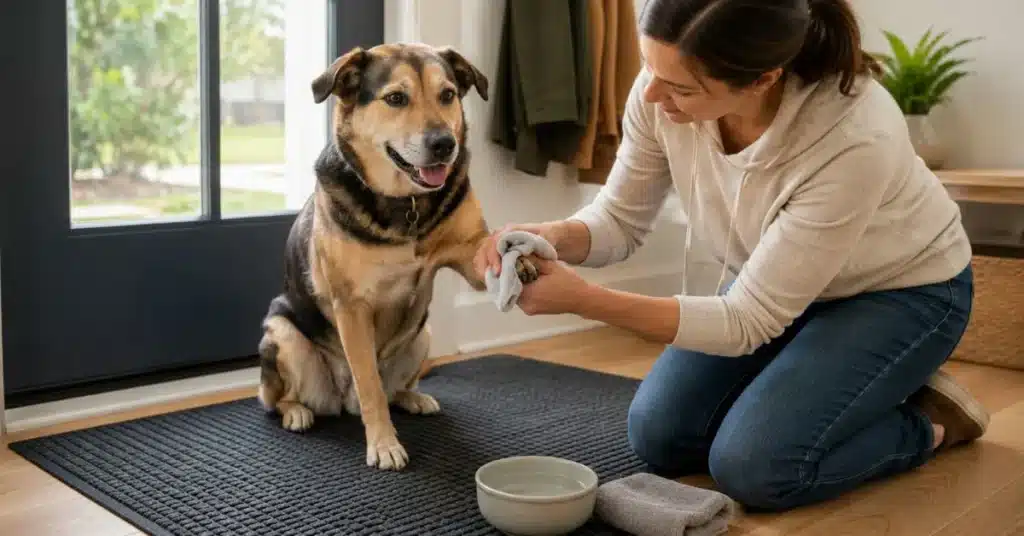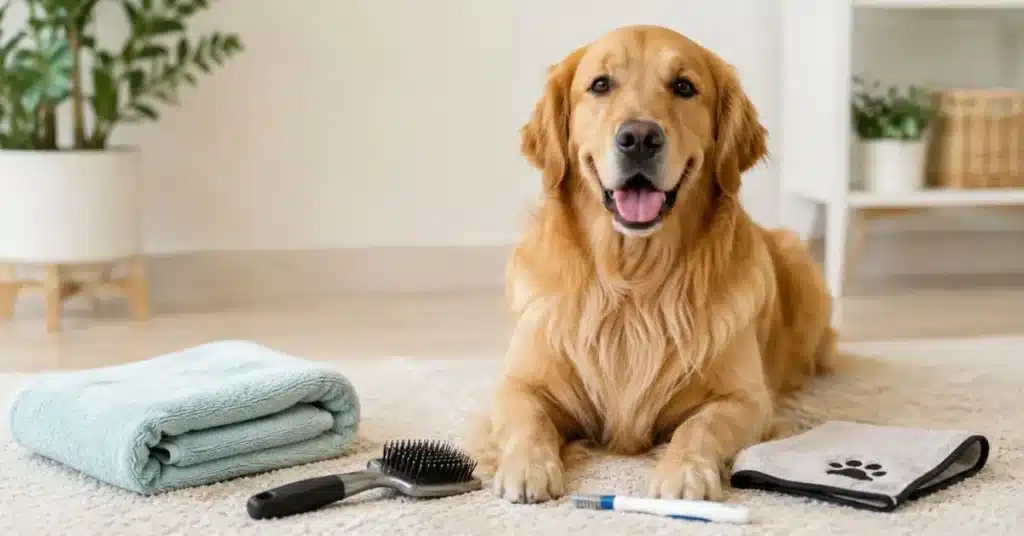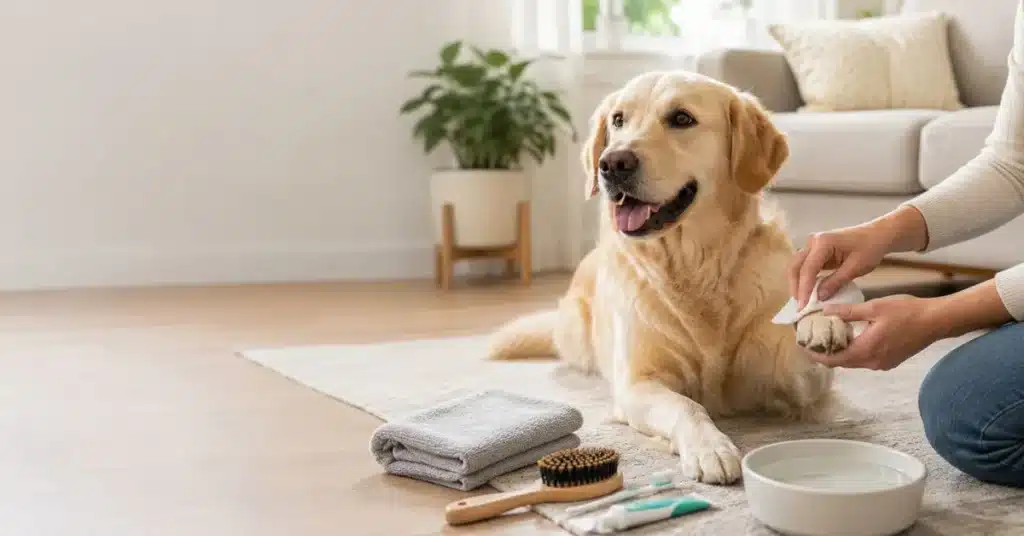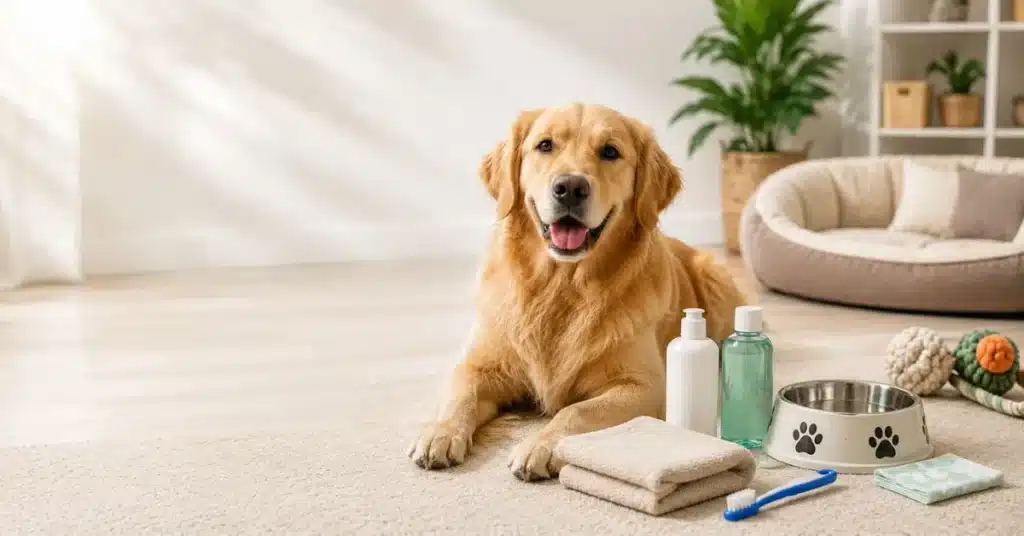
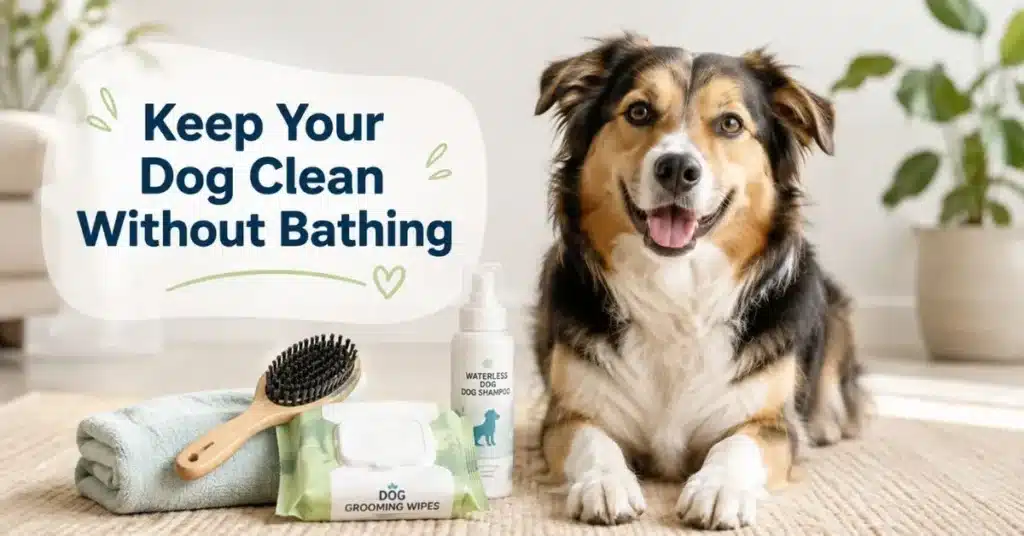
You can keep your dog clean without bathing by brushing off loose dirt or wiping dirty areas with a damp towel. For quick between-bath cleanup, dog-safe grooming wipes or a dog-formulated waterless shampoo can also help with light dirt, dirty paws, and mild odor.
These methods work best for small, everyday messes. But heavy mud, grease, sticky residue, or an unknown substance may still need a proper rinse or bath.
Can You Keep Your Dog Clean Without a Full Bath?
Yes, you can keep your dog clean between baths in many everyday situations. A full bath is not always needed for small messes.
No-bath cleaning works well for:
- Light dirt or dust
- Mildly dirty paws
- Small muddy spots
- Mild coat odor
- Regular between-bath cleaning
The best method depends on your dog’s coat, skin, lifestyle, and the type of mess. For example, brushing may remove dry dust. A damp towel may be enough for a small dirty area.
However, no-bath cleaning does not replace regular bathing completely. Heavy mud, grease, sticky substances, or other hard-to-remove messes may need a proper rinse or bath.
For a simple daily and weekly care plan, see our dog hygiene routine.
Quick Guide: Which No-Bath Cleaning Method Should You Use?
The right cleaning method depends more on the mess than on the product you have. Start with the simplest method that can remove the dirt safely.
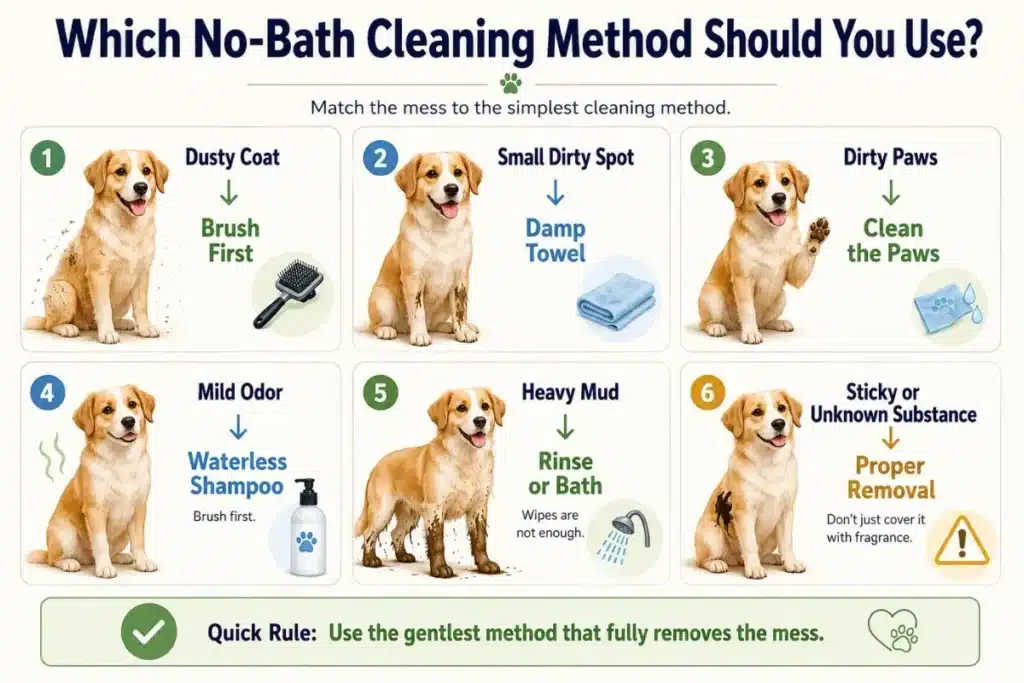
- Dusty coat: Brush away loose dirt, dust, and debris first.
- Small dirty spot: Use a damp towel and spot-clean only that area.
- Dirty paws: Wipe or rinse the paws as needed. See our guide on how to clean dog paws after a walk.
- Mild odor: Brush the coat first. If needed, use a dog-formulated waterless shampoo.
- Heavy mud: A proper rinse or bath usually works better than repeated wiping.
- Sticky, oily, or unknown substance: Quick wipes may not remove it fully. If the substance may be harmful, follow the ASPCA decontamination guide instead of guessing.
Quick rule: Match the cleaning method to the type and amount of mess.
7 Safe Ways to Keep Your Dog Clean Without Bathing
Start with the gentlest method that can remove the mess. Light dust may only need brushing. Muddy paws may need a quick rinse.
The goal is simple: clean only what needs cleaning without giving your dog an unnecessary full bath.
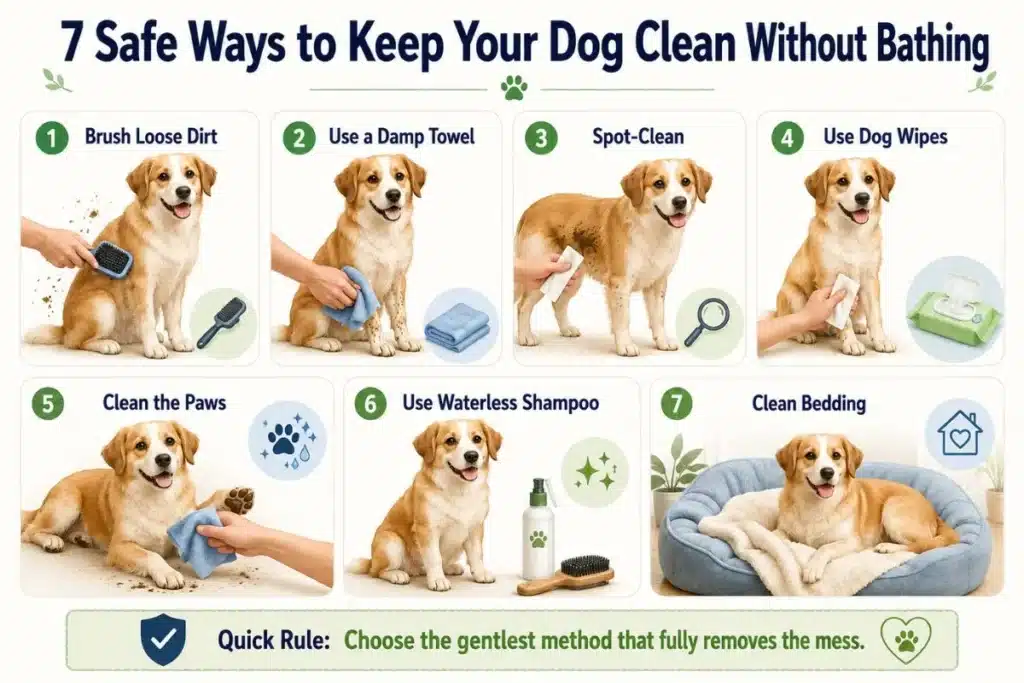
1. Brush Away Loose Dirt and Debris
Best for: Dry dust, loose dirt, debris, and loose hair.
Brushing is one of the easiest ways to clean your dog between baths. It can remove surface dirt before you use water or cleaning products.
Regular brushing also helps spread natural oils through your dog’s coat. The ASPCA grooming guide recommends regular brushing as part of basic coat care.
How to do it:
- Brush gently in the direction the coat grows.
- Use a brush that suits your dog’s coat type.
- Work slowly around tangled areas.
Need help choosing one? See our guide to the right dog brush.
Watch out for: Never pull hard on a tight mat. Stop if brushing causes pain or pulls the skin.
Practical example: After a dry, dusty walk, brushing may remove most surface dirt without wet cleaning.
2. Wipe the Coat With a Damp Towel
Best for: Light dirt on the legs, belly, or small areas of the coat.
A clean, damp towel works well when your dog is slightly dirty. You only need water for many small everyday messes.
How to do it:
- Wet a soft towel with lukewarm water.
- Wring out the extra water.
- Gently wipe the dirty area.
- Switch to a clean part of the towel as it gets dirty.
Keep the towel damp, not soaking wet.
Watch out for: A damp towel works for light surface dirt. It may not remove grease, sticky residue, or heavy dirt.
3. Spot-Clean Only the Dirty Areas
Best for: A dirty belly, muddy legs, rear fur, or one small dirty patch.
You do not always need to clean your dog’s whole body. Spot cleaning means cleaning only the area that is dirty.
For example, your dog may come home with mud only on the lower belly. Clean that area instead of wiping the entire coat.
How to do it:
- Find the dirty area first.
- Remove loose dirt if possible.
- Clean only that spot with a damp cloth or suitable dog-cleaning product.
Watch out for: Stop if you see redness, swelling, soreness, or pain. More cleaning will not fix an irritated skin problem.
4. Use Dog-Specific Grooming Wipes
Best for: Quick cleanup of light dirt on the paws, legs, or coat.
Dog grooming wipes can be handy when you cannot use a towel. Choose wipes made for dogs or pets.
The AKC no-bath guide also includes dog wipes as an option for quick cleanup between baths.
How to do it:
- Wipe the dirty area gently.
- Use a fresh wipe when the first one becomes dirty.
- Let the coat dry as directed on the label.
Watch out for: Keep wipes away from the eyes, mouth, and inside the ears unless the label allows it.
Also, do not assume baby wipes and dog wipes are the same. Products made for people are not automatically suitable for a dog’s skin.
5. Clean Dirty Paws Separately
Best for: Mud, dust, sand, or road residue after walks.
Sometimes your dog’s coat is clean, but the paws are dirty. In that case, you may only need to clean the paws.
Check the paw pads, between the toes, and lower legs.
How to do it:
- Use a damp cloth for light dirt.
- Rinse muddy paws with lukewarm water when needed.
- Dry the paws after cleaning.
For a complete routine, see how to clean dog paws after a walk.
Watch out for: Do not simply cover road salt or an unknown substance with a scented product. Remove the mess first.
6. Use a Dog-Formulated Waterless or Dry Shampoo
Best for: Mild odor, light coat dirt, and between-bath freshening.
A waterless dog shampoo can help when brushing or wiping is not enough. Dry shampoos and no-rinse products come in different formulas.
Choose a product made for dogs and follow its label.
The AKC waterless cleaning guide recommends brushing first before using dry shampoo.
How to do it:
- Brush away loose dirt first.
- Apply only the amount listed on the label.
- Work the product through the coat as directed.
- Brush or remove extra product if the instructions say to do so.
Not sure what type to choose? Read our dog shampoo guide.
Watch out for: Do not keep adding product to a coat that still feels greasy, dirty, or coated. Waterless shampoo helps with light cleaning, but it cannot handle every mess.
7. Keep Bedding and Resting Areas Clean
Best for: Reducing dirt and odor that can return to a clean coat.
Cleaning your dog is only one part of good hygiene. Bedding, blankets, crates, and sleeping areas can collect dirt, hair, and moisture.
A clean dog may smell dirty again after lying on an unclean bed.
How to do it:
- Check bedding regularly.
- Wash it when it looks or smells dirty.
- Keep sleeping areas dry.
- Clean reusable blankets as directed.
Watch out for: Do not keep adding fragrance if an odor returns quickly. Check whether the smell comes from the coat, bedding, or another source.
What Should You Avoid When Cleaning a Dog Without a Bath?
Cleaning without a bath should make hygiene easier—not cause a new skin problem. Keep the routine simple and use products made for dogs whenever possible.
- Avoid human or baby shampoo for routine cleaning. A dog’s skin has a different pH and structure from human skin. VCA recommends using shampoo made for dogs. You can also check our dog shampoo guide when choosing a suitable product.
- Do not use household cleaners or disinfecting wipes on your dog. These products are made for surfaces, not for pet grooming. Use dog-specific grooming products and follow the label directions.
- Avoid homemade essential-oil sprays. Concentrated essential oils can be risky when placed directly on a pet’s coat or skin.
- Do not keep adding more product if the coat still feels greasy, dirty, or covered with residue.
- Keep wipes and shampoos away from the eyes, mouth, and inside the ears unless the label says otherwise.
- Stop using a product if the skin becomes red, sore, swollen, or irritated. Ongoing skin problems may need veterinary care.
Most importantly, clean the source of the mess. Do not use fragrance to simply hide heavy dirt, grease, or possible contamination.
Common No-Bath Cleaning Mistakes
The biggest mistake is treating every mess the same way. Dust, mud, grease, and odor may need different cleaning methods.
- Skipping brushing first: Dry dirt and loose debris can stay trapped in the coat. When possible, brush your dog first before using wipes or waterless products.
- Using wipes on heavy mud: Wipes work best for small, light messes. If the coat is very muddy, repeated wiping may spread the dirt instead of removing it.
- Using too much waterless shampoo: More product does not always mean better cleaning. Too much can leave the coat greasy, sticky, or covered with residue.
- Hiding odor instead of finding the cause: A scented product may cover a smell for a short time. But the odor may come from the coat, paws, ears, mouth, or bedding. Learn more about healthy dog hygiene and common odor sources.
- Using the same routine for every dog: Cleaning needs can change with coat type, activity level, age, and skin condition.
- Thinking no-bath cleaning replaces every bath: Between-bath cleaning works well for everyday dirt. But heavy grime, grease, or contamination may still need a proper rinse or bath.
Quick tip: Use the simplest method that fully removes the mess, then stop.
When Does Your Dog Actually Need a Bath or Rinse?
Some messes need to be washed away, not just freshened up. No-bath cleaning works well for light dirt, but it has limits.
Your dog may need a proper rinse or bath if you notice:
- Heavy mud over a large part of the coat
- A greasy or very dirty coat
- Sticky residue that does not come off with a towel
- Dirt covering most of the body
- Buildup from repeated waterless products
- An unknown or possibly harmful substance on the coat or skin
If your dog touches an oily, chemical, or unknown substance, do not keep adding random products. The right cleanup method depends on what your dog contacted.
Also, check your dog’s skin, not just the coat. Ongoing itching, redness, sores, or a strong unusual odor may point to a skin problem. If your dog only needs a normal wash, follow our guide to bathe your dog at home.
Quick rule: If spot cleaning leaves the coat dirty, greasy, or coated with residue, a full bath may be the better choice.
Try This 30-Second Bath-or-No-Bath Check
Before you grab wipes or shampoo, ask four quick questions. This simple check can help you decide between spot cleaning and a full bath.
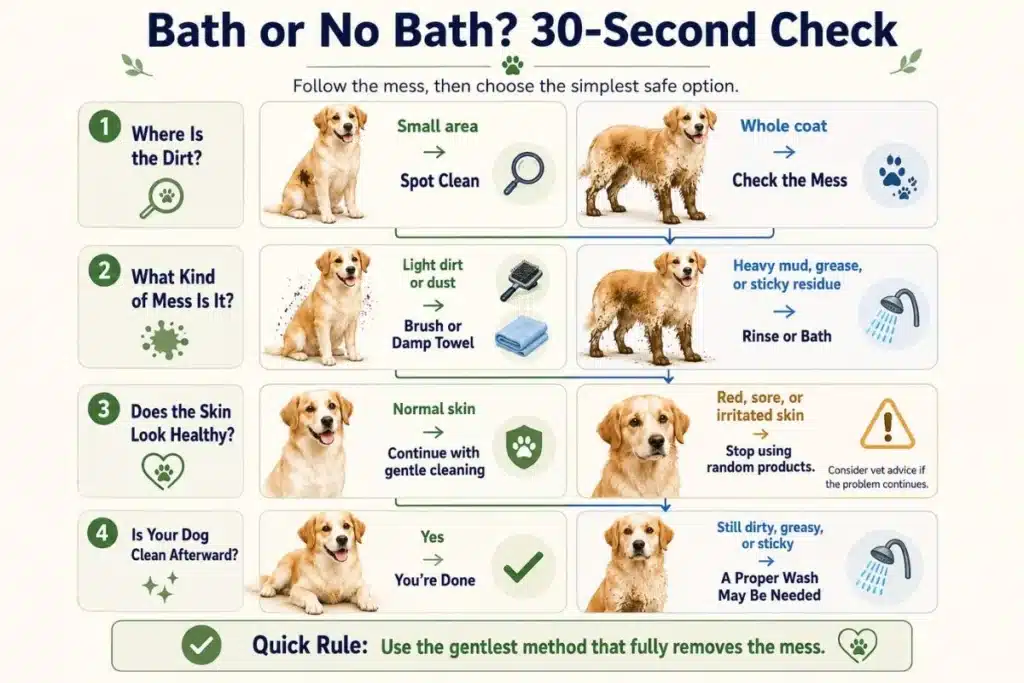
1. Where Is the Dirt?
If only the paws, belly, or one small area is dirty, spot cleaning may be enough.
If dirt covers most of the coat, check what type of mess you are dealing with.
2. What Kind of Mess Is It?
For dust or light dirt, start with brushing or a damp towel.
For heavy mud, grease, sticky residue, or an unknown substance, a rinse or bath may work better.
3. Does the Skin Look Healthy?
If the skin looks normal, you can use a suitable cleaning method.
But if you notice redness, swelling, soreness, or irritation, avoid trying random grooming products.
4. Is Your Dog Clean Afterward?
If the dirt and residue are gone, you can stop.
If the coat still feels dirty, greasy, or sticky, your dog may need a proper wash.
Quick rule: Use the simplest method that fully removes the mess.
Simple Between-Bath Cleaning Routine
A simple routine can help you keep your dog clean between baths. You only need to clean the areas that actually get dirty.
After Walks
Check your dog’s paws, lower legs, and belly. Wipe away light dirt, or rinse muddy areas when needed.
When the Coat Looks Dusty
Brush the coat to remove dust, loose dirt, and debris. For many dry outdoor messes, brushing may be enough.
When Only One Area Is Dirty
Use spot cleaning instead of cleaning the whole body. A damp towel works well for many small, light messes.
When Your Dog Smells Mildly Dirty
First, check where the odor is coming from. Brush or clean the dirty area before using a dog-formulated waterless product.
Check Bedding and Resting Areas
Dirty bedding can make a clean dog smell dirty again. Check beds, blankets, and resting areas, and clean them when needed.
Quick tip: Clean your dog as needed based on the coat, activity level, and type of mess.
Quick No-Bath Cleaning Checklist
Before you start, use this quick checklist to make sure no-bath cleaning is the right choice for your dog.
- ☐ Is the mess light enough for spot cleaning?
- ☐ Have you brushed away loose dirt and debris first?
- ☐ Is the wipe, shampoo, or cleaner made for dogs?
- ☐ Does your dog’s skin look healthy without redness or soreness?
- ☐ Can you keep the product away from the eyes, mouth, and ear canal?
- ☐ Have you removed any extra product or residue?
- ☐ Does the coat feel clean after you finish?
- ☐ Would a rinse or full bath remove the mess more safely?
Quick rule: If your dog still feels dirty, greasy, sticky, or irritated, stop adding more products. A proper wash may be the better next step.
Dog Cleaning Without a Bath: FAQs
Can I Wipe My Dog With a Damp Towel?
Yes, a damp towel works well for light dirt and small everyday messes. Use lukewarm water, wring out the extra water, and gently wipe the dirty area. It works especially well on the legs, belly, and paws. For heavy mud, grease, or sticky dirt, your dog may need more thorough cleaning.
Can I Use Baby Wipes on My Dog?
Dog-specific grooming wipes are the better choice. Products made for people are not automatically suitable for a dog’s skin or coat. The AKC paw guide recommends wipes labeled safe for pets when cleaning muddy, sandy, or salty paws.
So, do not assume all baby wipes are unsafe or toxic. Instead, choose a pet-formulated wipe and follow its label.
Is Waterless Shampoo Safe for Dogs?
A dog-formulated waterless shampoo can be useful for light between-bath cleaning when used as directed. Choose a formula made specifically for dogs and follow the product label.
Stop using the product if you notice redness, itching, or irritation.
How Often Can I Use Waterless Shampoo on My Dog?
There is no single schedule that works for every dog or every product. How often you use it depends on the formula, your dog’s coat and skin, and how dirty your dog gets.
Follow the product label rather than using a fixed daily or weekly rule. Waterless shampoo should help with cleaning—not leave repeated product buildup or residue.
How Can I Make My Dog Smell Better Without a Bath?
Start by finding the source of the odor instead of covering it with fragrance. Brush away loose dirt, clean dirty paws or small areas, and use a dog-formulated waterless product only when needed.
If a strong or unusual odor keeps returning, look beyond the coat. Ongoing odor can sometimes come from another hygiene or health issue rather than surface dirt alone.
Can I Clean a Puppy Without Giving a Full Bath?
Yes, you can spot-clean a puppy when only a small area is dirty. A soft damp cloth may be enough for light messes.
If you need a shampoo or cleaning product, choose one formulated for pets or puppies. VCA advises using pet-formulated shampoos because puppy skin differs from human skin in thickness and pH.
Keeping Your Dog Clean Between Baths
You can keep your dog clean without bathing by matching the cleaning method to the mess. For light dirt, dust, or dirty paws, brushing, a damp towel, spot cleaning, or a dog-safe product may be enough.
But no-bath cleaning has limits. Heavy mud, grease, sticky residue, or ongoing skin irritation may need a proper rinse, full bath, or veterinary advice.
The best approach is simple: use the gentlest method that fully removes the mess. For a broader care plan, follow our dog hygiene routine.