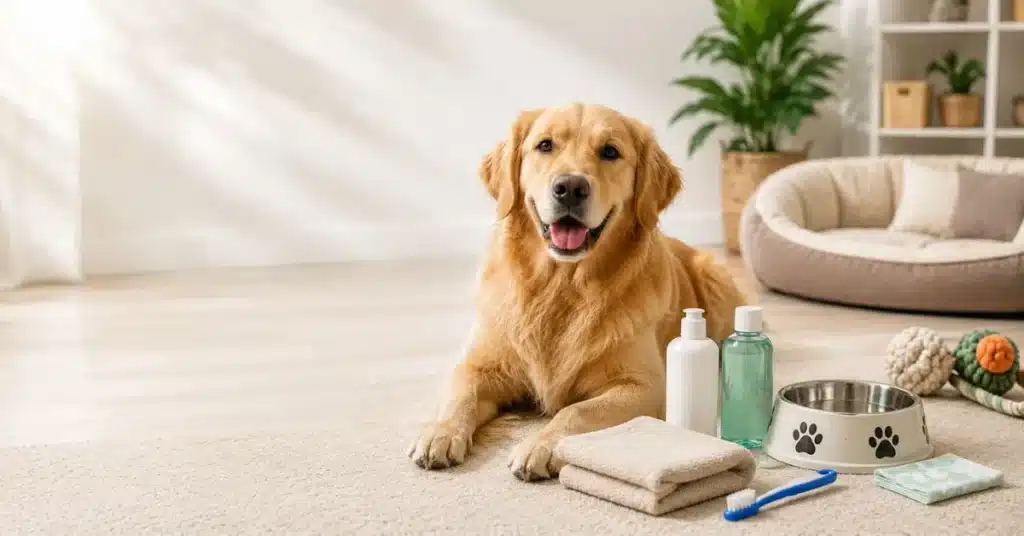
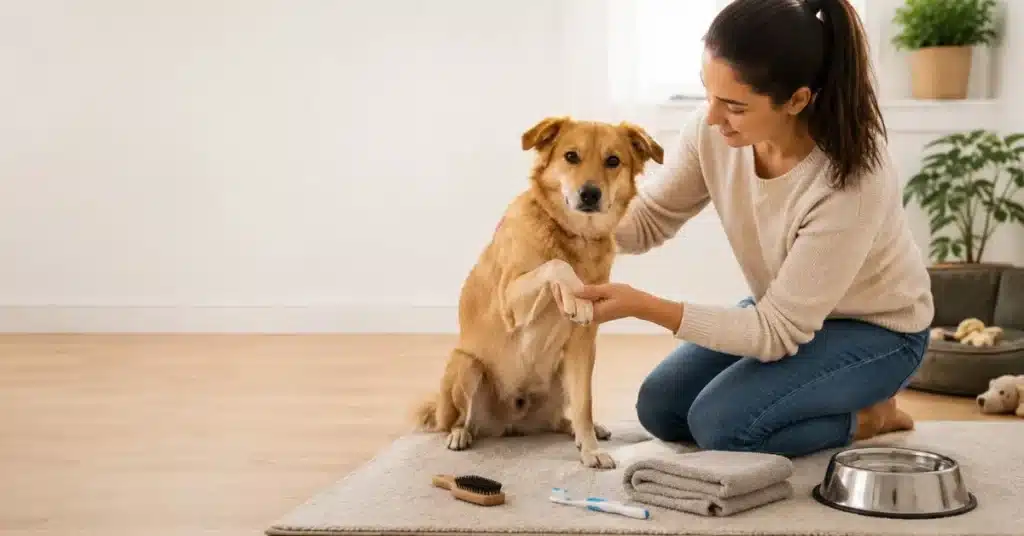
Dog hygiene is important because it supports your dog’s comfort, cleanliness, and daily well-being. Regular care can help keep the skin, coat, teeth, ears, paws, and nails in better condition.
Hygiene also includes your dog’s bowls, bedding, toys, crate, and other everyday items. These habits give you regular chances to notice changes such as mats, redness, unusual odors, sore areas, or dental buildup.
However, good hygiene cannot prevent every health problem or replace veterinary care. It works best as part of responsible daily care. This guide explains why hygiene matters, which mistakes to avoid, and when cleaning is not enough. It also supports the wider care covered in our beginner dog care guide.
Quick answer: Dog hygiene supports daily comfort, cleaner surroundings, and early awareness of unusual changes. It includes more than bathing, but it cannot diagnose illness or replace a veterinarian.
What Does Dog Hygiene Include?
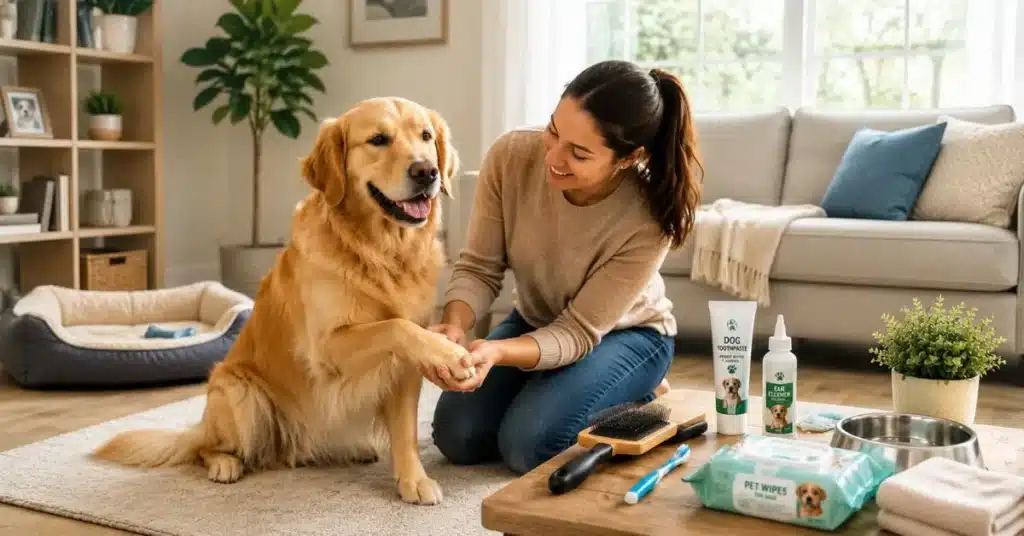
Dog hygiene covers both your dog’s body and the items they use every day. Good hygiene helps keep your dog clean, comfortable, and easier to check for unusual changes.
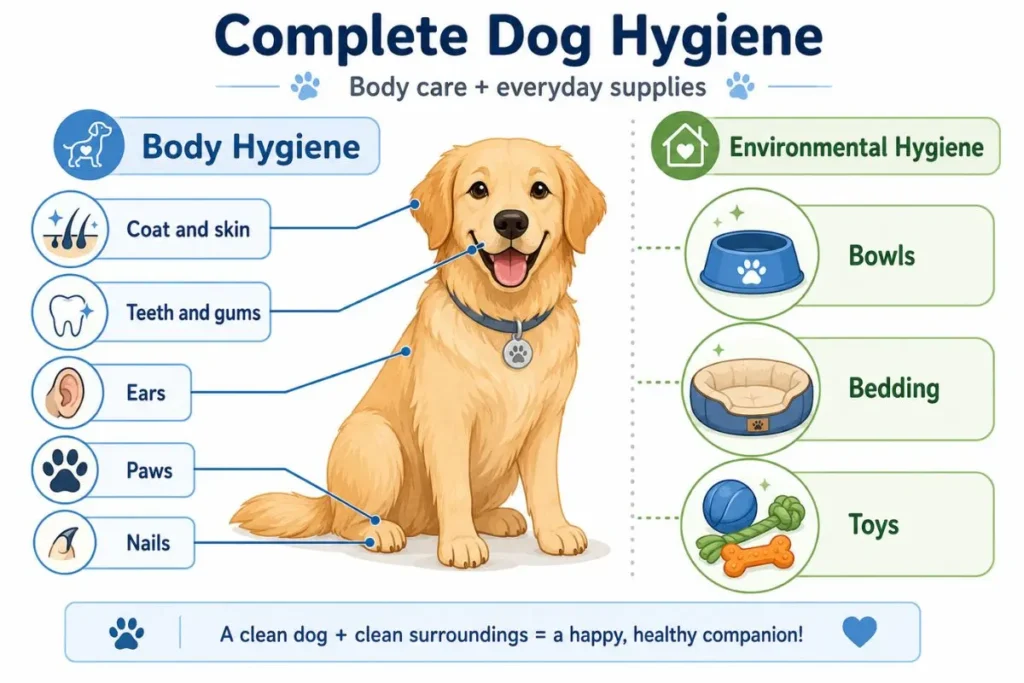
Body hygiene includes:
- Brushing the skin and coat
- Bathing when needed
- Caring for the teeth and gums
- Checking and cleaning the ears
- Cleaning the paws
- Keeping the nails at a comfortable length
Environmental hygiene means cleaning your dog’s food and water bowls, bedding, toys, crate, and resting area. Collars and harnesses also need cleaning because they can collect hair, dirt, moisture, and odor.
Each dog has different needs based on age, coat, health, and lifestyle. For a simple care schedule, follow our dog hygiene routine at home.
8 Reasons Dog Hygiene Is Important
Dog hygiene affects more than your dog’s appearance or smell. Simple care habits can improve daily comfort, keep supplies cleaner, and help you notice unusual changes sooner.
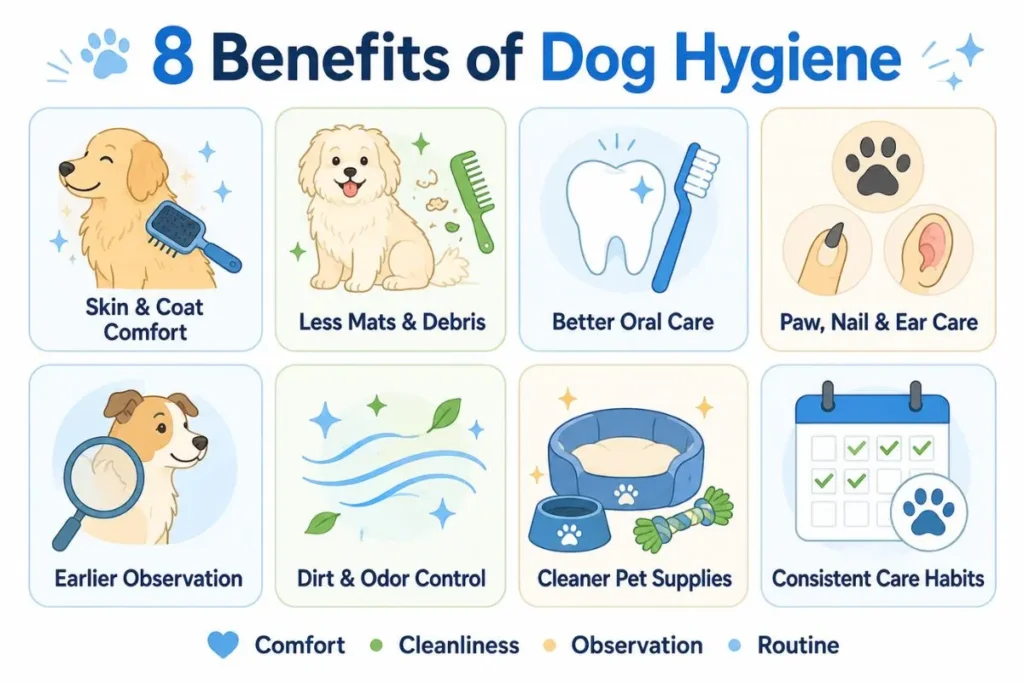
1. It Supports Skin and Coat Comfort
Regular brushing removes loose hair, dirt, and surface debris from your dog’s coat. It can also reduce tangles and spread the skin’s natural oils through the fur.
Brushing gives you a chance to look closely at the skin. You may notice redness, irritation, sore areas, or changes hidden under the coat.
Every dog has different grooming needs. Long, curly, and double coats often need more attention than short coats. However, brushing cannot diagnose or treat a skin condition.
2. It Helps Limit Mats, Dirt, and Discomfort
Mats are tight clumps of tangled fur. They can pull on the skin and make movement, resting, or touch uncomfortable.
Dirt, grass, mud, and small pieces of debris may also collect in the coat or between the paw pads. Regular checks help you find and manage this buildup before it becomes harder to remove.
Do not pull, cut, or shave a severe mat close to the skin. A professional groomer or veterinarian may need to remove painful matting safely.
3. It Supports Better Oral Care
Good oral hygiene does more than keep your dog’s breath fresh. Regular brushing helps control plaque, which is a soft film that forms on the teeth.
Over time, plaque can harden into tartar, also called calculus. Home brushing cannot remove hardened tartar, so some dogs may need professional dental care.
Use toothpaste made for pets. Human toothpaste may contain ingredients that are unsafe for dogs. The AAHA dental guidance explains why home care and professional dental checks both matter.
Contact a veterinarian if your dog has bleeding gums, mouth pain, heavy buildup, or trouble eating. You can also follow our guide to cleaning your dog’s teeth at home.
4. It Supports Paw, Nail, and Ear Comfort
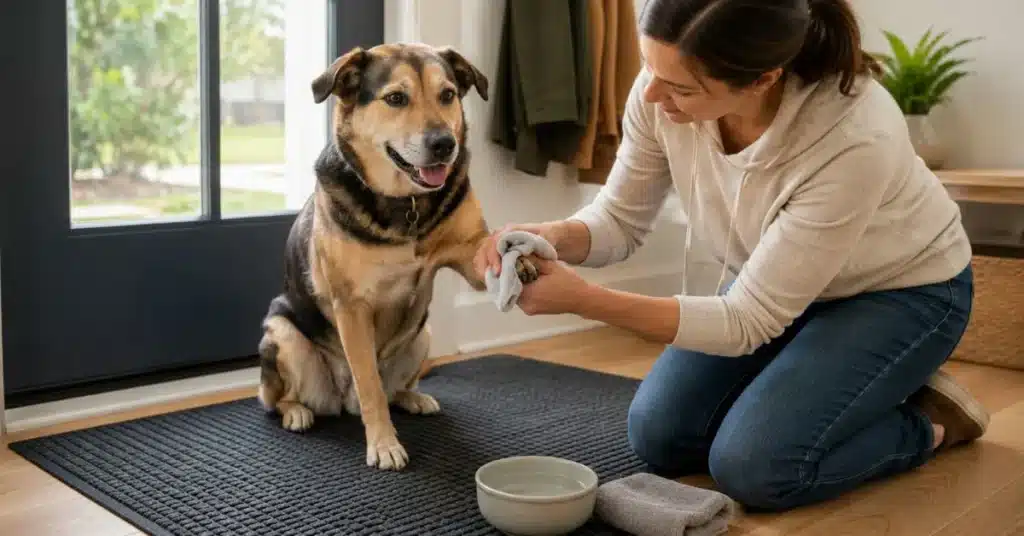
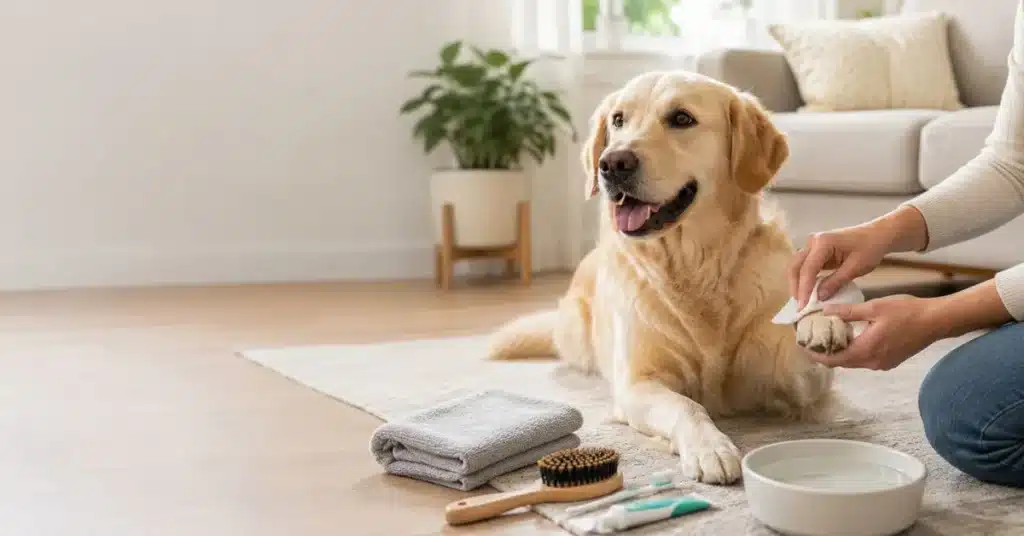
Your dog’s paws can collect mud, stones, road salt, and other debris during walks. Checking the paw pads may help you find cracks, trapped dirt, or tender areas.
Nails also affect comfort. Nails that become too long or damaged may make walking harder or more awkward. Our guide explains how to trim dog nails safely.
Check the ears for new odors, redness, discharge, or sensitivity. Do not keep cleaning an ear that looks painful or swollen. For routine care, read our dog ear-cleaning guide.
5. It Helps You Notice Changes Earlier
Regular hygiene checks help you learn what looks and feels normal for your dog. This makes unusual changes easier to notice.
While brushing or checking the paws, mouth, and ears, you may find:
- A new lump or swollen area
- Red or irritated skin
- An unusual odor
- Tenderness or pain
- A sudden change in behavior
These signs do not confirm a medical problem. However, they may show that your dog needs closer attention.
Our guide to at-home dog health checks can help you monitor changes beyond basic hygiene.
Everyday example: While brushing, an owner notices a red patch hidden under the coat. Brushing cannot explain the cause, but it reveals a change that may need veterinary attention.
6. It Helps Manage Normal Dirt and Odor
Brushing, suitable bathing, paw cleaning, and washing bedding can reduce normal dirt-related smells. These habits can help keep both your dog and your home fresher.
However, not every odor comes from a dirty coat. A strong or lasting smell may come from the mouth, ears, skin, paws, or bedding.
Do not simply cover a persistent odor with spray. Try to identify the source. Contact a veterinarian if the smell is sudden, unusual, or does not improve.
7. It Keeps Bowls, Bedding, and Toys Cleaner
Complete dog hygiene also includes the items your dog uses each day. Food bowls, water bowls, bedding, toys, and crates can collect hair, moisture, food residue, dirt, and germs.
Cleaning removes dirt and many germs with soap or detergent. Disinfecting uses a suitable product to kill germs left on a surface. These processes are related, but they are not the same.
Many items only need regular cleaning. Some situations may also require disinfecting. Always follow the product label and the item manufacturer’s instructions.
The CDC pet-supply guide explains how to clean and disinfect pet items safely. Never mix bleach with ammonia or other cleaning products, and let cleaned items dry before reuse.
8. It Builds a Consistent Care Habit
Small and repeatable habits are easier to maintain than rare deep-cleaning sessions. For example, check the paws after walks and inspect the water bowl when you refill it.
Gentle handling may also help your dog become more comfortable with checks around the coat, mouth, paws, and ears. Keep each session calm and stop if your dog shows pain or strong distress.
The goal is not perfect cleanliness. Focus on consistent, suitable care based on your dog’s age, coat, lifestyle, comfort, and health needs.
What Can Happen When Dog Hygiene Is Neglected?
Poor dog hygiene does not always make a dog sick. However, small problems can build up and cause discomfort over time.
Common signs include:
- Tangled or matted fur that pulls on the skin
- Dirt or a strong, lasting odor
- Visible plaque buildup on the teeth
- Overgrown or damaged nails that make walking uncomfortable
- Dirty food bowls, water bowls, bedding, or toys
- Mud, debris, or cracks around the paw pads
- Redness, discharge, or other changes in the skin or ears
These problems can make daily care harder. They may also hide changes that need closer attention.
However, these signs do not prove that poor hygiene caused a health condition. Your dog may need better routine care, help from a professional groomer, or a veterinary checkup.
Take a Five-Minute Dog Hygiene Check
You do not need special tools to spot changes in your dog. Choose a calm moment and check these areas:
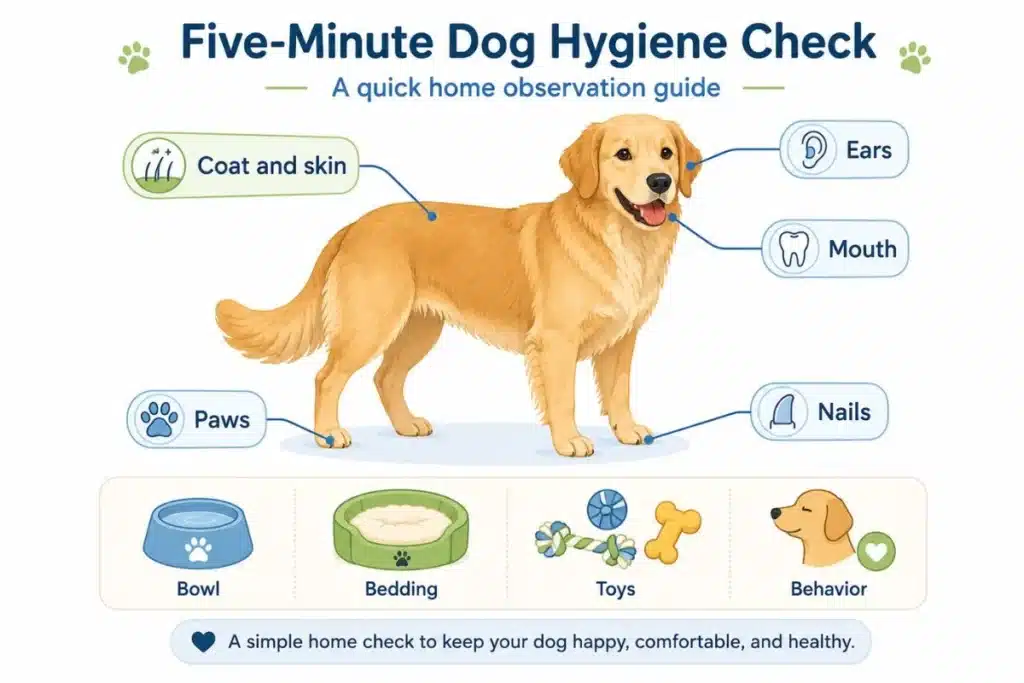
- Coat and skin: Look for mats, dirt, redness, or sore spots.
- Mouth: Check for lasting bad breath, red gums, or visible buildup.
- Ears: Notice any strong odor, discharge, redness, or pain when touched.
- Paws: Look between the pads for mud, debris, cracks, or soreness.
- Nails: Check for excessive length, splits, damage, or walking discomfort.
- Bowls: Look for leftover food or a slippery film inside the bowl.
- Bedding and toys: Check for moisture, dirt, damage, or lasting odors.
- Behavior: Watch for repeated licking, scratching, limping, or avoiding touch.
This quick dog hygiene check is not a medical test. It helps you learn what is normal for your dog and notice meaningful changes.
Contact a veterinarian if you find painful, sudden, or lasting problems.
Common Dog Hygiene Mistakes to Avoid
Some hygiene problems come from too little care. Others happen when owners clean too often or use the wrong products.
- Thinking bathing covers everything: A bath cleans the skin and coat. But complete hygiene also includes the teeth, ears, paws, nails, bowls, bedding, and toys.
- Believing more cleaning is always better: Every dog has different needs. Cleaning too often or using harsh products may cause dryness or irritation.
- Using human toothpaste or body products: Always choose products made for dogs. Some human toothpastes and mouthwashes contain xylitol, which can poison dogs.
- Hiding a lasting odor with spray: A strong smell may come from the mouth, ears, skin, paws, or bedding. Look for the cause instead of only covering the odor.
- Cleaning a painful area again and again: Stop if you notice swelling, bleeding, discharge, or strong pain. These signs need veterinary advice, not more cleaning.
Always read product labels and store cleaners away from pets. Follow the EPA pet-safety guidance and keep your dog away from treated areas as directed.
Can Too Much Cleaning Be Harmful?
Yes. Cleaning your dog too often can sometimes do more harm than good. Frequent bathing may remove natural skin oils and cause dryness, itching, or irritation.
Always use a shampoo made for dogs. Human or baby shampoo may be too harsh because a dog’s skin has a different pH balance.
Clean the ears gently and only when needed. Rough or repeated cleaning may irritate the ear canal, especially if it already feels sore.
Never use household cleaners on your dog’s skin or coat. Rinse shampoo well because leftover product may also cause irritation.
Every dog has different needs based on coat, age, activity, and health. Learn how to bathe your dog safely and contact a veterinarian if redness, pain, dryness, or itching continues.
Dog Hygiene vs Dog Grooming
Dog hygiene and dog grooming overlap, but they are not the same. Hygiene supports overall cleanliness, while grooming focuses mainly on physical upkeep.
| Dog hygiene | Dog grooming |
| Supports cleanliness and everyday care | Focuses mainly on coat and body care |
| Includes teeth, paws, bowls, and bedding | Includes brushing, bathing, clipping, and trimming |
| Covers your dog and their surroundings | Usually focuses on your dog’s body |
| Often involves simple daily habits | May involve home care or professional sessions |
Grooming is an important part of dog hygiene, but hygiene goes beyond the coat. Read our dog grooming guide for simple brushing, bathing, clipping, and coat-care advice.
What Dog Hygiene Can and Cannot Do
Good dog hygiene supports daily comfort and cleaner care habits. However, it has clear limits and cannot replace professional medical care.
| Dog hygiene can | Dog hygiene cannot |
| Remove everyday dirt and debris | Diagnose an infection |
| Support your dog’s daily comfort | Cure skin or ear disease |
| Help you notice unusual changes | Replace a veterinary examination |
| Keep bowls, bedding, and toys cleaner | Make your dog completely germ-free |
| Support at-home oral care | Remove hardened tartar at home |
| Build consistent care habits | Replace parasite prevention |
Think of hygiene as supportive care, not medical treatment. It helps you keep your dog clean and watch for meaningful changes. But ongoing pain, swelling, discharge, strong odors, or other lasting problems need veterinary care.
When Routine Cleaning Is Not Enough
Routine cleaning can remove normal dirt, debris, and mild odors. However, it cannot explain pain, swelling, discharge, or ongoing irritation.
Contact a veterinarian if you notice:
- Pain or sensitivity when touched
- Swelling, open wounds, or bleeding
- Skin redness that does not improve
- Ear discharge or a strong ear odor
- Bleeding gums or trouble eating
- Limping or painful paws
- A sudden or lasting strong odor
- A sudden change in behavior
These dog hygiene warning signs may point to a problem that cleaning cannot fix. Repeated cleaning may also make a sore or inflamed area more painful.
Do not keep cleaning a painful, swollen, or irritated area to treat it at home. Contact a veterinarian for advice based on your dog’s symptoms and health needs.
Frequently Asked Questions About Dog Hygiene
Why is dog hygiene important?
Dog hygiene supports daily comfort, skin and coat care, oral health, and a cleaner living space. Regular care also helps you notice changes such as redness, unusual odors, swelling, or tender areas. However, hygiene cannot replace veterinary care.
Is bathing enough to keep a dog clean?
No. Bathing only cleans the skin and coat. Complete hygiene also includes the teeth, ears, paws, nails, bowls, bedding, and toys. Each area needs suitable care based on your dog’s health, coat, and lifestyle.
What are the signs of poor hygiene in dogs?
Common signs include matted fur, lasting odors, dirty paws, visible dental buildup, and overgrown nails. You may also notice dirty bowls or bedding. These signs do not prove illness, but they may show that your dog needs more routine care.
Can you clean a dog too much?
Yes. Overbathing or using harsh products may remove natural skin oils and cause dryness or irritation. Aggressive ear cleaning may also hurt sensitive tissue. Use dog-safe products and clean each area only as often as your dog needs.
How often should you clean your dog?
There is no single schedule for every dog. Cleaning needs depend on coat type, age, activity, health, and environment. Check high-use areas regularly, then adjust the routine when needed. Follow a simple dog hygiene routine for practical guidance.
What supplies do you need for basic dog hygiene?
Basic supplies may include a suitable brush, dog shampoo, pet toothpaste, a dog toothbrush, nail clippers, clean towels, and bowl-cleaning tools. Choose products made for dogs, and follow all label directions before use.
When should a hygiene problem be checked by a veterinarian?
Contact a veterinarian for pain, swelling, bleeding, discharge, trouble eating, limping, or a sudden strong odor. You should also seek advice when redness or irritation does not improve. Do not repeatedly clean a painful area to treat it at home.
Final Thoughts on Why Dog Hygiene Is Important
Dog hygiene is about more than bathing or keeping the coat clean. It also includes the teeth, ears, paws, nails, bowls, bedding, and toys.
The goal is not perfect cleanliness. Focus on simple, regular care that fits your dog’s coat, age, health, and lifestyle. These habits can improve comfort and help you notice meaningful changes sooner.
Start with a practical dog hygiene routine. Contact a veterinarian if you notice pain, swelling, discharge, or a lasting unusual odor.