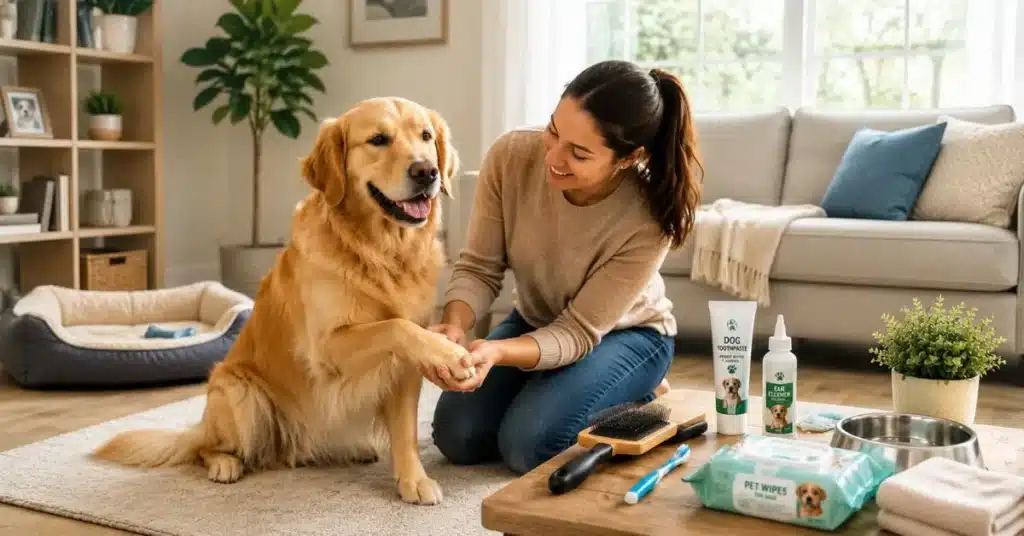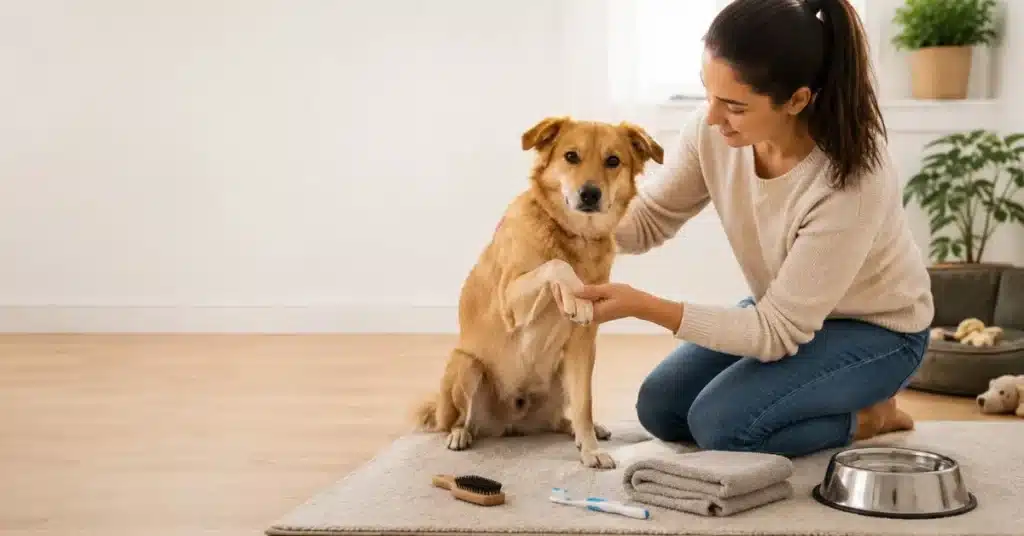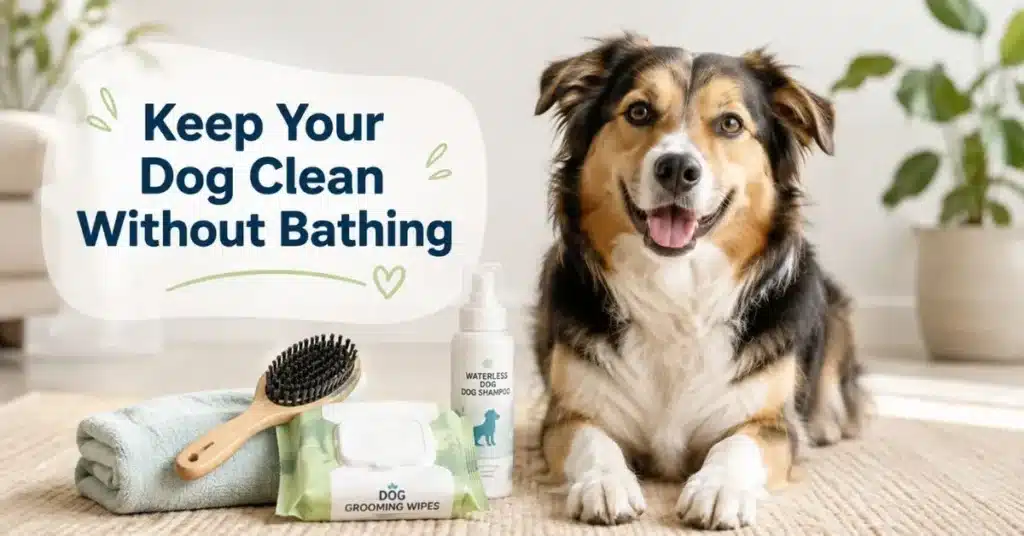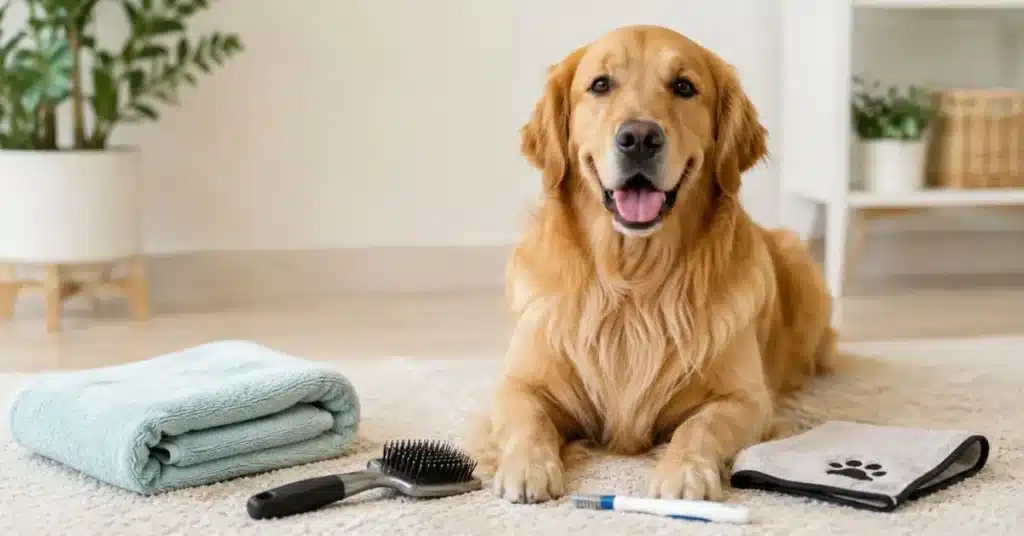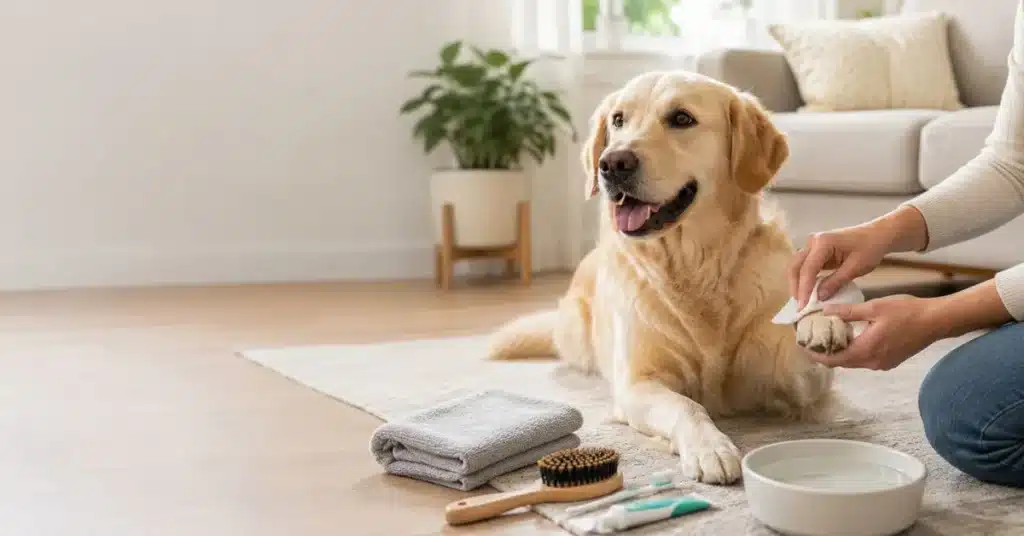
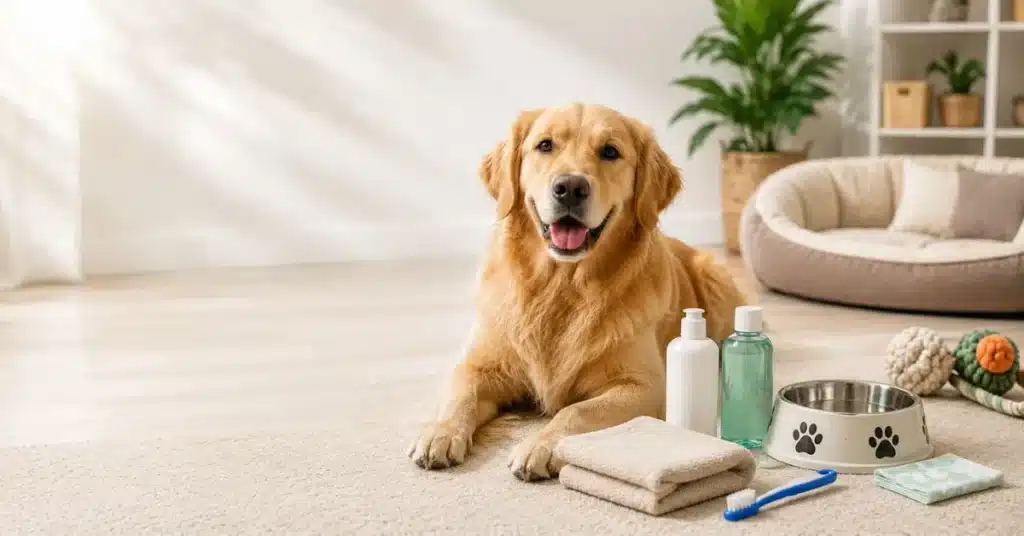
Common dog hygiene mistakes include cleaning too often, using unsuitable products, and missing important areas like the paws, ears, and teeth. Owners may also forget everyday items such as bedding, bowls, toys, and cleaning tools.
Good dog hygiene is not about bathing your dog as often as possible. It means keeping your dog and their surroundings clean with safe, practical habits that match their actual needs.
In this guide, you’ll learn which mistakes to avoid, what to do instead, and when routine cleaning may not be enough. If you are still building the basics, start with our dog hygiene routine.
Quick Reference: Common Dog Hygiene Mistakes and Better Habits
Many dog hygiene mistakes come from cleaning too much, using the wrong products, or missing important areas. The goal is not to clean your dog constantly. Instead, use safe habits that match your dog’s needs.
| Common mistake | Better habit |
| Bathing too often | Bathe your dog only when needed |
| Using human hygiene products | Choose products made for dogs |
| Not rinsing or drying well | Rinse fully and dry your dog properly |
| Ignoring dirty paws | Check and clean paws after messy walks |
| Cleaning ears too often | Check the ears first and clean only when needed |
| Skipping dental care | Make oral care part of the regular routine |
| Forgetting bedding, bowls, and toys | Clean your dog’s everyday items regularly |
| Masking a lasting bad smell | Find the source instead of just covering the odor |
| Cleaning through pain or irritation | Stop and consider veterinary help |
The simple rule is: clean when needed, use dog-safe methods, and watch for unusual changes. If cleaning causes pain or does not solve the problem, it may be time to get professional advice.
1. Bathing or Cleaning Your Dog More Often Than They Need
More cleaning does not always mean better hygiene.
Many owners bathe their dogs as soon as they notice dirt or a bad smell. Others give a full bath after every outdoor trip or follow the same schedule every week.
But every dog has different bathing needs. Coat type, activity level, lifestyle, skin health, and how dirty your dog gets can all affect how often they need a bath.
According to VCA Animal Hospitals, some dogs need only occasional baths. Dogs that spend more time outdoors may need bathing more often. Dogs with certain skin problems may also need a special routine.
If your veterinarian recommends a medicated shampoo, follow the schedule they provide. Medicated shampoos are made to help manage specific skin problems, so their use may differ from a normal bath.
What to Do Instead
Before giving your dog a full bath, check how dirty they really are.
A muddy or very dirty coat may need bathing. But a little dirt on the paws or belly may only need a quick clean.
For more guidance, see how often to clean your dog. If your dog only has a small mess, you can also learn how to clean your dog without bathing.
For example, if your dog comes home with muddy paws after a short walk, clean and dry the paws first. There is usually no reason to give the whole dog another bath just for a small mess.
2. Using Human or Unsuitable Hygiene Products
A product that is safe for you is not always safe for your dog.
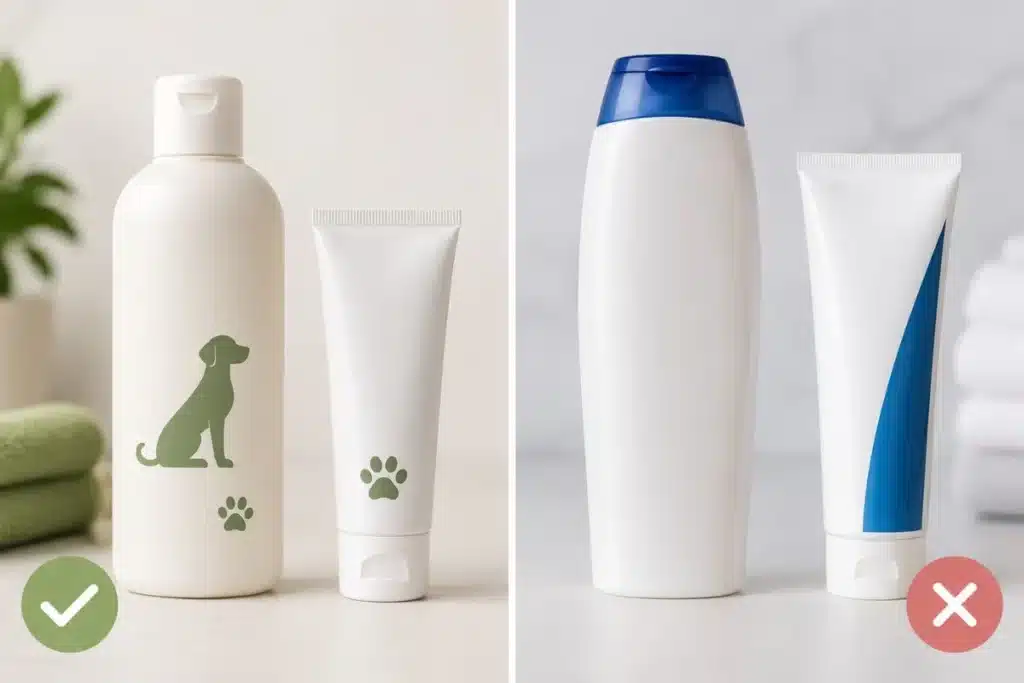
Many owners use human shampoo, soap, or toothpaste because these products are already at home. However, dogs have different skin and hygiene needs. Using the wrong product can cause irritation or create a safety risk.
Human Shampoo and Skin Products
For regular baths, use a shampoo made for dogs. Human shampoo is designed for human skin, not canine skin.
Dogs and people have different skin pH and protective oils. Skin pH simply means how acidic or alkaline the skin is. According to VCA Animal Hospitals, human shampoo may disturb a dog’s natural skin balance and protective oils. This can lead to dryness, itching, or irritation.
If your dog has sensitive skin, allergies, or ongoing irritation, ask your veterinarian which product to use. Avoid testing harsh or strongly scented products on irritated skin. For more basic bathing and product advice, see our dog grooming guide.
Human Toothpaste Needs Extra Caution
Do not brush your dog’s teeth with human toothpaste.
Some human toothpastes and mouthwashes may contain xylitol, a sweetener that can be toxic to dogs when swallowed. The FDA xylitol warning lists toothpaste and mouthwash among products that may contain xylitol.
Instead, choose a toothpaste made for dogs and check the label before use.
The simple rule is: use dog-specific hygiene products whenever possible. If your dog has ongoing skin or mouth problems, ask your veterinarian for advice.
3. Not Rinsing and Drying Properly After a Bath
A bath is not finished until the shampoo is fully rinsed and your dog is properly dried.
One common dog bathing mistake is leaving shampoo on the coat or skin. This can happen easily, especially with thick or long fur.
Rinse your dog slowly from the neck down. Check the belly, legs, underarms, and thick parts of the coat, where shampoo may hide.
If the fur still feels slippery or soapy, keep rinsing. VCA Animal Hospitals also recommends rinsing the entire body thoroughly so no shampoo stays on the skin.
Drying is just as important. Use a clean towel to gently pat away excess water instead of rubbing the coat hard.
Dogs with thick, long, or double coats may need more drying time. Moisture can remain under the outer coat even when the surface feels dry.
What to Do Instead
Keep the process simple:
- Rinse thoroughly until no shampoo remains.
- Check the coat for slippery or soapy areas.
- Towel-dry gently to remove extra water.
- Dry the coat fully, especially in thick areas.
- Watch your dog’s comfort throughout the process.
For the full step-by-step process, see our dog bathing guide.
4. Ignoring Paw Hygiene After Walks and Outdoor Messes
A dog can look clean while still carrying dirt on their paws.
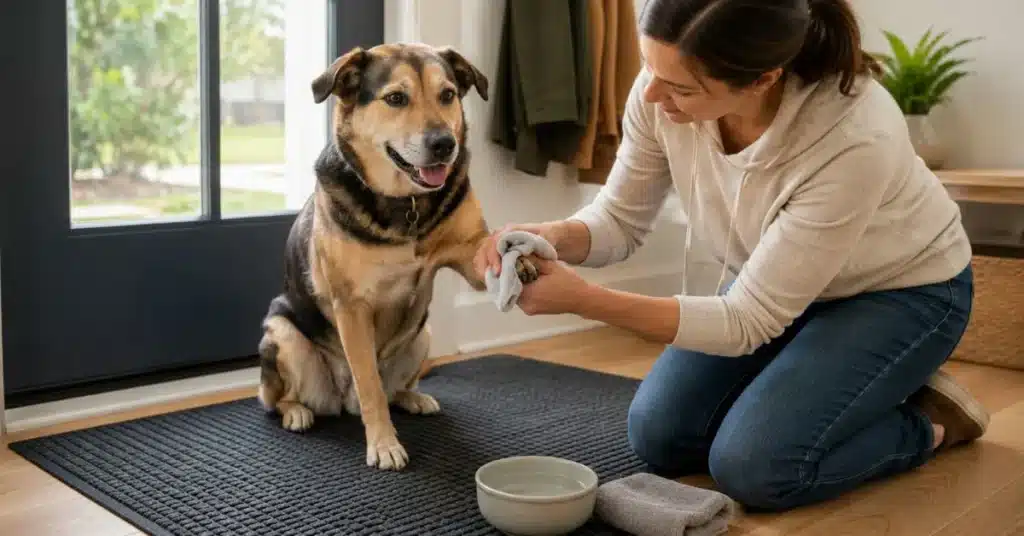
After a walk, check your dog’s paw pads and the spaces between the toes. Mud, sand, small debris, and other outdoor dirt can collect there.
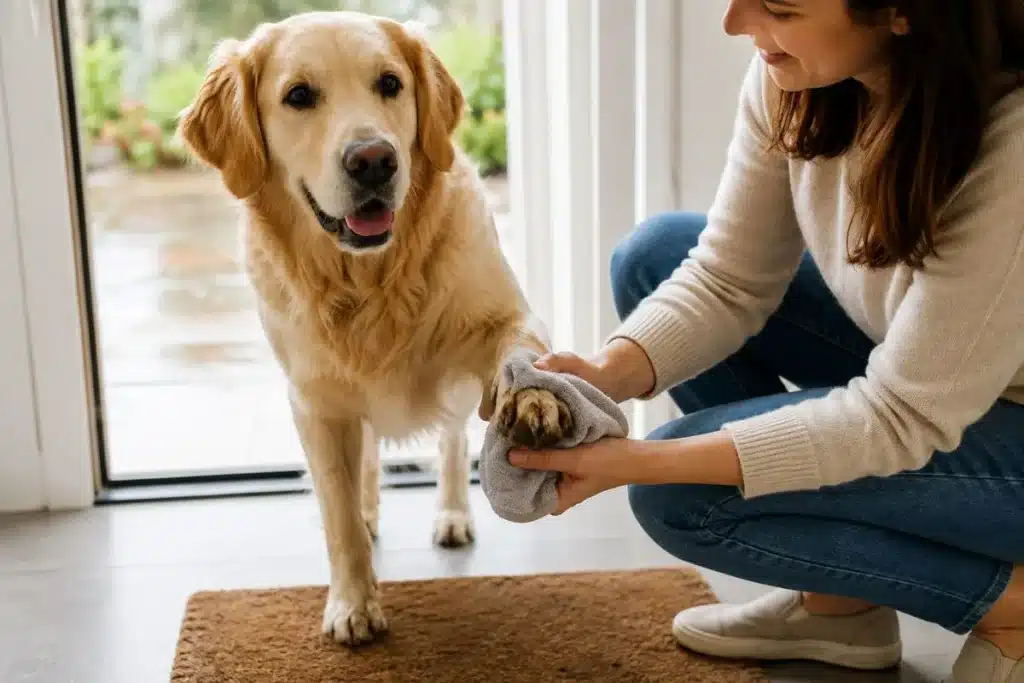
You do not need to scrub the paws after every walk. But cleaning can help when the paws are visibly dirty or exposed to messy surfaces.
The ASPCA paw-care guide also recommends cleaning paws after exposure to road salt or similar chemicals. It also suggests checking the pads for cracks, redness, or other problems.
Use a gentle wipe or rinse instead of hard scrubbing. Rough cleaning can make sore or irritated paws feel worse.
What to Do Instead
Keep paw cleaning simple:
- Check the paws for mud, dirt, or debris.
- Wipe or rinse gently when needed.
- Dry the paws well, including between the toes.
- Check the pads for cuts, swelling, redness, or irritation.
If you notice bleeding, swelling, a deep cut, or clear pain, do not treat it as a normal cleaning issue. Your dog may need veterinary care. For a full step-by-step routine, see how to clean dog paws after a walk.
5. Cleaning Your Dog’s Ears Too Deeply or Too Often
Cleaning your dog’s ears too much can cause more problems than it solves.
Checking the ears does not mean you need to clean them every time. Healthy ears may only need cleaning when you notice dirt, wax, or debris.
Cleaning too often can irritate the ear. Another common mistake is pushing Q-tips or cotton swabs deep into the ear canal.
Before cleaning, check for redness, discharge, bad odor, head shaking, itching, or pain. These signs may point to an ear problem rather than simple dirt.
If your dog seems painful while you clean the ears, stop and contact your veterinarian.
What to Do Instead
Start with a quick ear check.
If the ear looks healthy but has a little dirt or wax, use a dog-safe ear cleaner and clean gently. Avoid pushing anything deep into the ear canal.
There is no single schedule for how often to clean a dog’s ears. Some dogs need more frequent care because of allergies, recurring ear problems, or ear shape. Others may need very little cleaning. For the full step-by-step process, see our dog ear cleaning guide.
6. Treating Dental Hygiene as Optional
A clean coat does not mean your dog’s hygiene routine is complete.
Many owners remember baths, brushing, and paw cleaning but forget about dental care. Over time, plaque can build up on the teeth and around the gums.
Regular brushing helps control plaque before it becomes harder to remove. The AAHA dental care guide recommends daily brushing as the best at-home method for plaque control. It also recommends using a toothbrush and toothpaste made for pets, not human toothpaste.
Do not assume bad breath is always normal. Ongoing bad breath can be a sign of dental disease. Other warning signs include red or swollen gums, heavy drooling, dropping food, or trouble eating.
What to Do Instead
Keep your dog’s oral care routine simple:
- Use a soft dog toothbrush.
- Choose toothpaste made for dogs.
- Introduce brushing slowly.
- Brush regularly instead of waiting for visible buildup.
- Stop if brushing causes pain or bleeding.
Home brushing can support healthy teeth and gums. But it does not replace professional care when a dental problem is already present.
If you are new to brushing, follow our guide on cleaning dog teeth at home for simple, step-by-step help.
7. Cleaning Your Dog but Forgetting Bedding, Bowls, Toys, and Cleaning Tools
Cleaning your dog is only part of good hygiene. Their everyday items need regular cleaning too.
A freshly bathed dog may return to a dirty bed, bowl, toy, or crate. Over time, these items can collect dirt, food residue, fur, odors, and germs.
So, include your dog’s bowls, bedding, blankets, toys, crate, towels, and reusable cleaning tools in your hygiene routine.
Hard items, such as bowls and some toys, can often be washed with soap and water. Dishwasher-safe items can also go in the dishwasher.
Soft items, such as bedding and blankets, can usually go in the washing machine. Always check the care label first.
Cleaning and Disinfecting Are Not the Same Thing
Cleaning removes dirt and germs from a surface using soap or detergent.
Disinfecting uses chemicals to kill germs that remain after cleaning.
For most everyday pet items, the CDC says regular cleaning is usually enough. Disinfecting may be useful in some situations, such as after contact with urine, feces, or illness.
If you use a disinfectant, follow the label directions carefully. Pay attention to the required contact time, which means how long the surface must stay wet.
Let the item dry completely before your dog uses it again.
A Simple Cleaning Schedule
The CDC provides this example schedule. Your own routine may change depending on how quickly an item becomes dirty.
| Item | Example cleaning schedule |
| Wet-food bowl | After each use |
| Dry-food or water bowl | Daily |
| Bedding and blankets | Weekly |
| Toys | Monthly, or sooner if dirty |
Clean any item sooner if it becomes dirty, wet, or smelly.
Also clean reusable brushes, sponges, and other tools after use. Let them dry before storing them, and use a clean towel when needed.
For a simple routine that covers both your dog and their surroundings, see our dog hygiene routine.
8. Masking Persistent Odor Instead of Finding the Cause
A fresher smell does not always mean better hygiene.
Dogs can smell different after outdoor play, getting wet, or rolling in something dirty. That type of odor may disappear after normal cleaning.
However, a strong smell that keeps coming back deserves more attention. Before using a deodorizing spray, try to find where the smell is coming from.
Check your dog’s coat, ears, mouth, paws, bedding, and sleeping area. A spray may hide the odor for a short time, but it will not fix the cause.
For example, your dog may smell bad again soon after a bath. Instead of spraying more deodorizer, check the ears, mouth, paws, and bedding first.
Check the Source Before Masking the Smell
Watch for other changes along with the odor.
The mouth can also cause a lasting smell. The AAHA dental guide explains that bad breath can be an early sign of dental disease. Red gums, heavy drooling, dropping food, or trouble eating also need veterinary attention.
The simple rule is: find the source first, clean when needed, and do not use fragrance to hide a persistent odor.
9. Continuing to Clean When Your Dog Shows Pain or Other Warning Signs
Sometimes the safest choice is to stop cleaning.
Routine cleaning can help with normal dirt, odor, and everyday hygiene. But pain, irritation, or unusual changes may mean your dog needs more than another bath or wipe.
Stop cleaning and take a closer look if you notice:
- Pain when you touch or clean an area
- Strong redness or swelling
- Discharge, bleeding, sores, or open wounds
- Ongoing itching or scratching
- A strong odor that keeps coming back
- Sudden stress when an area is touched
- Drooling, swollen gums, or trouble eating
These signs do not tell you exactly what is wrong. But they can mean that routine cleaning is no longer the right next step.
For example, an ear may look dirty, but cleaning should not cause pain. The Cornell ear-care guide advises stopping if your dog shows pain during ear cleaning. In that situation, contact your veterinarian instead of cleaning more aggressively.
When Home Hygiene Is Not Enough
Do not try to fix an unexplained problem by cleaning harder or more often. Stop and contact your veterinarian if the problem is painful, persistent, or getting worse.
Also watch for changes in your dog’s appetite, energy, movement, or behavior. These may point to a broader health issue.
Our guide to early signs your dog is sick explains which changes deserve closer attention and when veterinary help may be needed.
Quick Mistake-Proof Dog Hygiene Checklist
Before cleaning your dog, take a moment to check what actually needs attention. This helps prevent unnecessary cleaning and makes it easier to notice problems early.
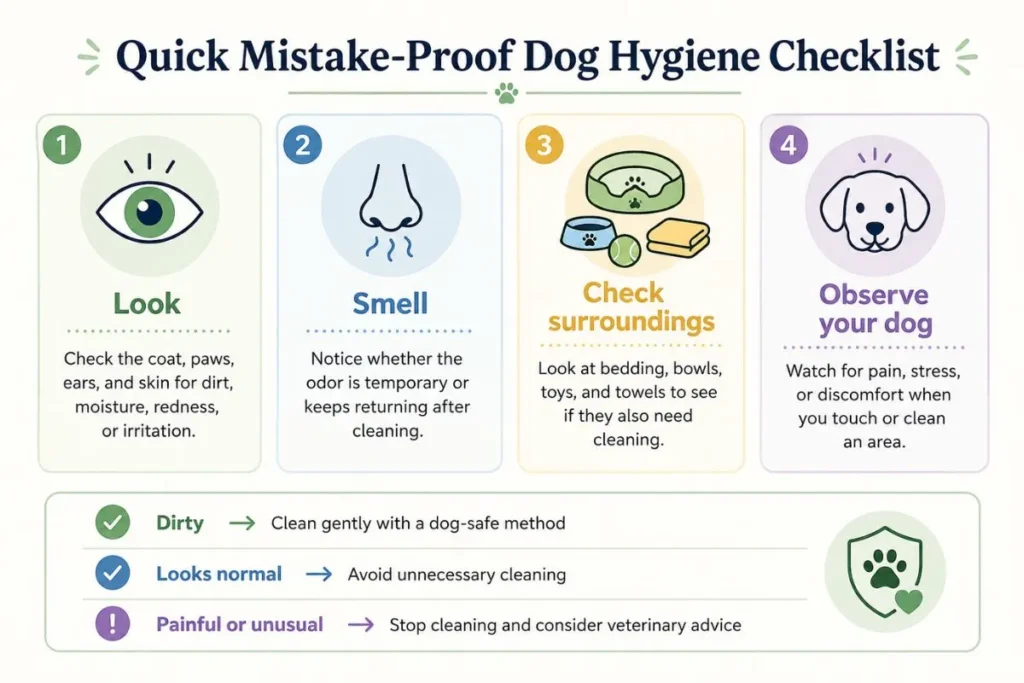
Before You Clean, Check Four Things
- Look: Check the coat, paws, ears, and skin for dirt, moisture, redness, or irritation.
- Smell: Notice whether the odor is temporary or keeps returning after cleaning.
- Check surroundings: Look at your dog’s bedding, bowls, toys, and towels too.
- Observe your dog: Watch for pain, stress, or discomfort when you touch or clean an area.
Then choose the right next step:
Dirty → Clean the area gently with a dog-safe method.
Looks normal → Avoid cleaning just because a fixed schedule says it is time.
Painful or unusual → Stop cleaning and consider veterinary advice.
A good dog hygiene routine is not about cleaning as often as possible. It is about cleaning the right area, at the right time, in the right way.
FAQs About Common Dog Hygiene Mistakes
What are the most common dog hygiene mistakes?
Common dog hygiene mistakes include bathing too often, using human hygiene products, skipping dental care, over-cleaning the ears, and ignoring dirty paws. Owners may also forget to clean bedding, bowls, toys, and reusable tools.
Another mistake is trying to hide a lasting odor instead of finding its source. Good hygiene means cleaning when needed and using the right method for each area.
Can you bathe a dog too often?
Yes. Some dogs can be bathed more often than they need, which may leave the skin or coat dry or irritated.
There is no single bathing schedule for every dog. Coat type, activity, lifestyle, skin health, and medical needs can all affect bathing frequency.
Can I use human shampoo on my dog?
For regular bathing, it is better to use a shampoo made for dogs. Human shampoo is designed for human skin and may disturb the natural oils and balance of a dog’s skin.
VCA Animal Hospitals recommends using pet-specific shampoo instead. If your dog has sensitive skin or an ongoing skin problem, ask your veterinarian which product is suitable.
Should I clean my dog’s ears on a fixed schedule?
Not necessarily. Healthy ears do not always need cleaning on a fixed schedule. Some dogs need regular ear care, while others may need very little.
The Cornell ear guide notes that over-cleaning can irritate the ears. Check first for dirt or wax, and avoid cleaning if the ear is painful, very red, or producing unusual discharge.
How often should dog bedding and bowls be cleaned?
The CDC pet-supply gives a useful example schedule. It suggests cleaning wet-food bowls after each use, dry-food and water bowls daily, and bedding about once a week.
These are general examples, not strict rules for every home. Clean items sooner when they become dirty, wet, or smelly.
Is bad breath normal for dogs?
A mild temporary smell can happen, but ongoing bad breath should not automatically be considered normal.
The AAHA dental guide explains that bad breath can be an early sign of dental disease. Red or swollen gums, heavy drooling, dropping food, or trouble eating are also reasons to arrange a veterinary dental exam.
When should a bad smell be checked by a veterinarian?
Consider veterinary advice when a strong or unusual odor keeps returning, especially if it comes with other changes.
For example, the Cornell ear guide lists ear odor with redness, discharge, itching, head shaking, or pain as possible signs of an ear problem. Persistent bad breath with gum changes or trouble eating can also point to a dental issue.
In these cases, more cleaning may not solve the cause.
Final Thoughts on Avoiding Common Dog Hygiene Mistakes
Avoiding common dog hygiene mistakes is not about cleaning your dog more often. It is about using the right method, at the right time, for the right need.
Pay attention to your dog’s coat, paws, ears, teeth, bedding, bowls, and toys. Use products made for dogs, clean only when needed, and watch for changes such as pain, redness, discharge, or a strong odor that keeps returning.
Good hygiene should help your dog stay clean and comfortable without overdoing it. To turn these habits into a simple routine, follow our dog hygiene routine.