If you want to know how to keep your dog smelling fresh, start by finding out where the smell is coming from. A dog can smell even when the coat looks clean, especially after wet walks, outdoor play, or resting on dirty bedding.
The good news is that another full bath is not always the answer. Regular brushing, clean paws, quick spot cleaning, proper drying, and fresh bedding can help control everyday odor between baths.
But don’t just cover the smell with fragrance. In this guide, you’ll learn how to find the odor source, choose the right cleaning step, prevent the smell from coming back, and know when a persistent odor may need more attention.
Why Does Your Dog Start Smelling Between Baths?
Your dog can start to smell between baths even when the coat looks clean. Dirt, damp fur, natural skin oils, and dirty paws can all cause everyday dog odor.
But the smell may not come from the coat. Your dog’s ears, mouth, bedding, collar, or harness can also hold odors and make your dog seem smelly.
A mild “doggy” smell does not always mean something is wrong. First, check where the smell seems strongest. Then clean or dry that area if needed.
The ASPCA’s dog grooming guidance also recommends checking the ears and teeth, since they can be sources of odor.
If the smell is strong, unusual, or keeps coming back despite normal grooming, don’t simply cover it with fragrance. Consider talking with your veterinarian to rule out an underlying problem.
First, Find Where the Smell Is Coming From
Before giving your dog another bath or using a deodorizing spray, find the source of the smell first. The odor may come from the coat, paws, mouth, ears, or even your dog’s bedding.
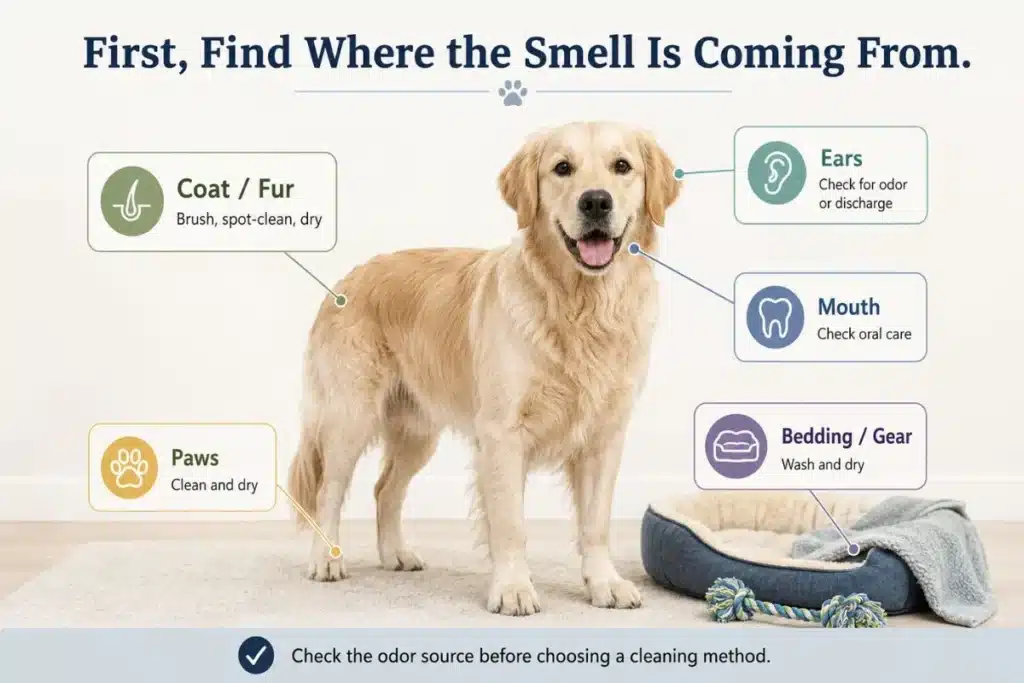
Use this quick check:
| Possible source | What you may notice | What to do first |
| Coat or fur | A musty, dirty, or damp smell | Brush the coat, spot-clean dirty areas, and dry well |
| Paws | Stronger smell after walks, rain, or mud | Clean and dry the paws |
| Mouth | Odor is strongest around the face or breath | Check the teeth, gums, and oral hygiene |
| Ears | A strong smell comes from one or both ears | Check for redness, discharge, or discomfort |
| Bedding or gear | Your dog smells again after resting | Check the bed, blankets, collar, and harness |
| No clear source | The smell returns soon after cleaning | Look for other signs and consider whether routine cleaning is enough |
Pay attention to where the smell is strongest and when it starts. For example, a dog that smells after a rainy walk may only need clean paws and dry fur.
If the smell comes back after your dog rests, check the bed, blanket, collar, or harness. These items can hold odors even when your dog is clean.
Avoid treating every odor with another full bath. Sometimes spot cleaning and proper drying are enough. And fragrance may cover a smell, but it does not remove the cause.
The goal is simple: find the source, then choose the right solution. If the odor is strong, unusual, or keeps coming back, especially with redness, itching, discharge, or discomfort, routine freshening may not be enough.
How to Keep Your Dog Smelling Fresh Between Baths
Once you know where the smell comes from, keeping your dog fresh gets much easier. Focus on regular grooming, light cleaning, proper drying, and a clean environment.
The goal is not to cover your dog with perfume. It is to remove odor at the source and stop it from coming back.
Brush Your Dog Regularly
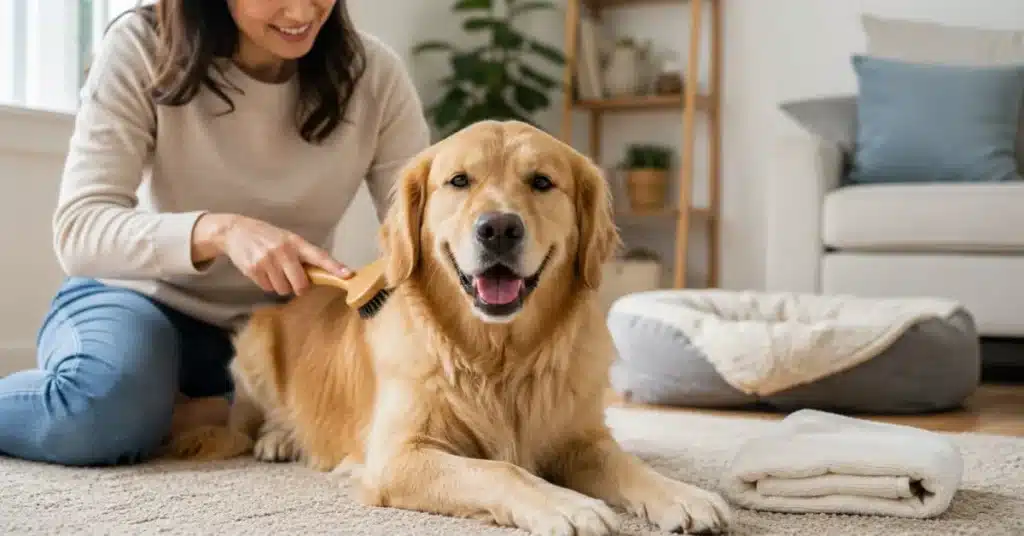
Regular brushing helps keep your dog’s coat clean between baths. It removes loose hair, surface dirt, and small pieces of debris from the fur.
Brushing also lets you check the coat and skin more closely. You may notice dirt, damp areas, or a new smell before it gets worse.
How often you brush depends on your dog’s coat type, shedding level, and daily activity. Long or thick coats often need more brushing than short coats.
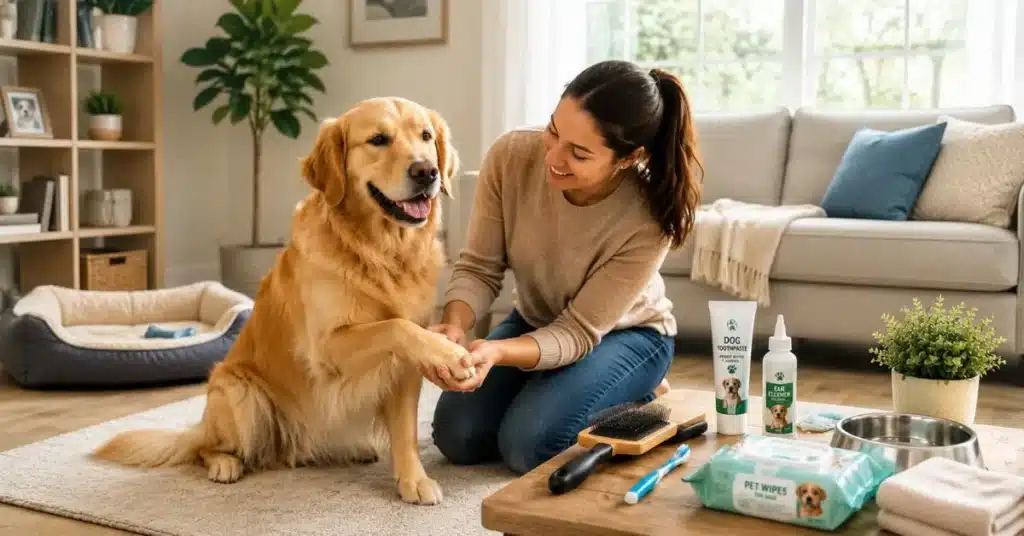
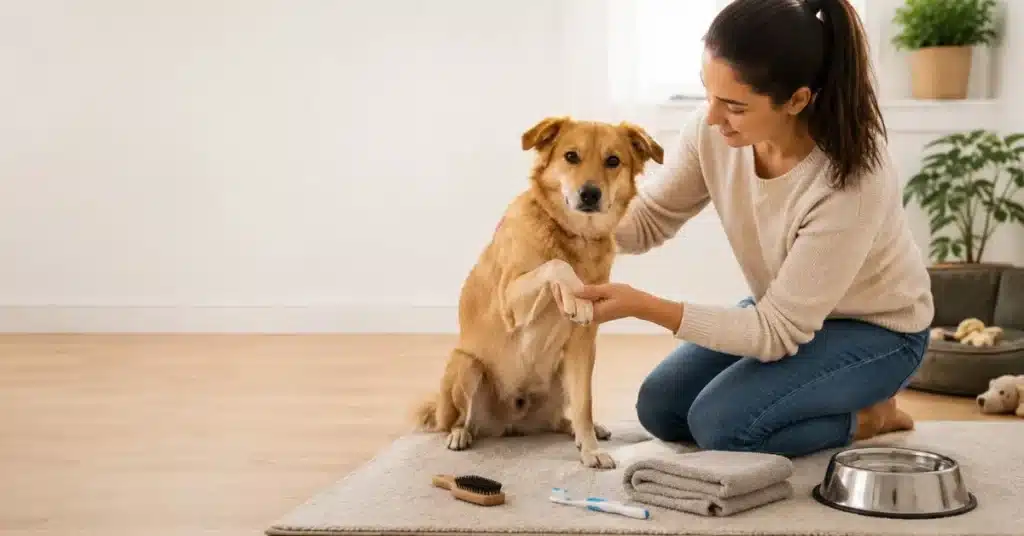
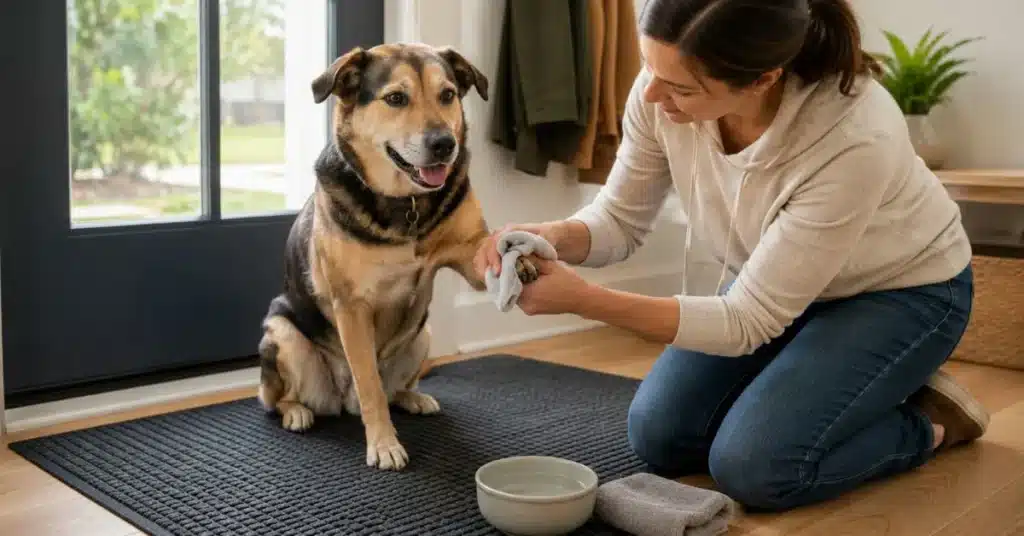
Clean and Dry the Paws After Wet or Dirty Walks
Your dog’s paws can collect mud, dirt, moisture, and outdoor smells during walks. This happens more often after rain, wet grass, or muddy ground.
After a dirty walk, check the paws and lower legs first. Remove visible dirt, check between the toes, and dry the paws well.
Your dog may not need a full bath every time. For a simple routine, see how to clean dog paws after a walk.
Spot-Clean Small Dirty or Smelly Areas
A small dirty spot does not always mean your dog needs a full bath.
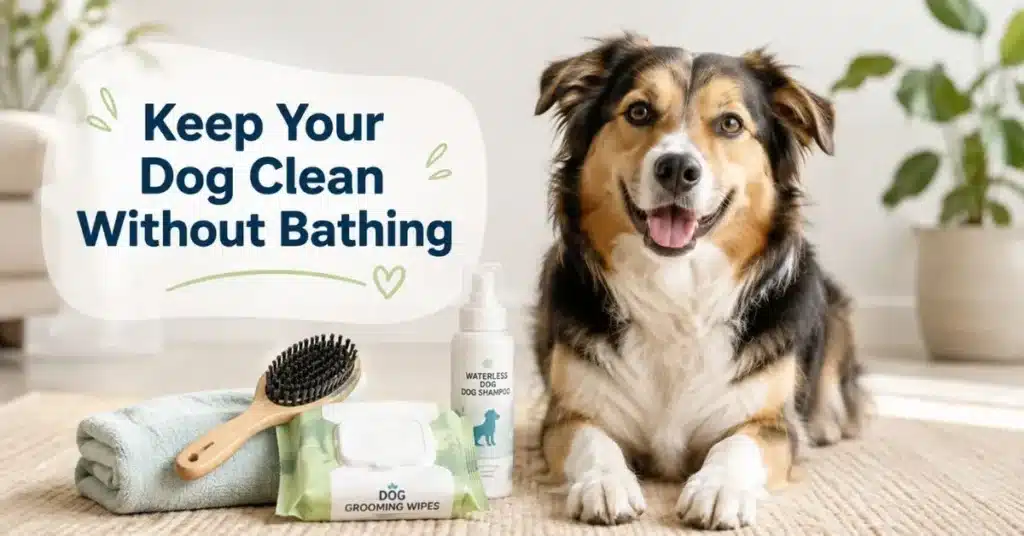
For light messes, use a damp cloth or dog-formulated wipe. These can work well on the paws, belly, lower legs, or small areas of the coat.
Always follow the product label. Avoid the eyes, mouth, and other sensitive areas unless the product is made for them.
If you need more ways to clean small messes, see how to keep your dog clean without bathing.
Dry the Coat Thoroughly
A clean dog can still develop a damp or musty smell if the fur stays wet.
After rain, swimming, spot cleaning, or bathing, dry the coat as well as you can. Pay extra attention to thick fur, the undercoat, paws, and skin folds.
A towel may work for a lightly damp coat. But thick or dense fur may take longer to dry.
Use your hands to check the deeper coat. The surface can feel dry while the fur underneath is still damp.
Keep Bedding, Blankets, Collars, and Harnesses Clean
Sometimes the dog is clean, but the smell comes back from the things they use every day.
Check the dog bed, blankets, crate bedding, collar, and harness. These items can hold body oils, dirt, moisture, and odor.
For example, your dog may smell fresh after cleaning but smell again the next morning. In that case, check the bedding before giving another bath.
Wash washable items when needed. And make sure bedding and gear dry fully before your dog uses them again.
Don’t Forget Your Dog’s Mouth and Teeth
Not every dog odor comes from the coat. Sometimes the main smell comes from the mouth or breath.
Check your dog’s breath during your normal hygiene routine. You can also look at the teeth and gums if your dog is comfortable with it.
Regular oral care helps keep the mouth cleaner. For a full routine, learn how to clean your dog’s teeth at home.
If bad breath is strong or keeps returning, do not try to hide it with fragrance. The source may need more attention.
Check Your Dog’s Ears
Your dog’s ears can also cause a noticeable smell.
Check for unusual odor, redness, discharge, frequent scratching, head shaking, or discomfort. A strong smell from one or both ears should not be covered with deodorizing spray.
For normal ear care, follow a safe method to clean dog ears at home.
If the smell is strong, keeps coming back, or comes with other signs, contact your veterinarian instead of cleaning the ears repeatedly.
Use Freshening Products Only When They Help
Products such as dog wipes, waterless shampoo, and dog-formulated freshening sprays can help in some situations. But they should support your cleaning routine, not replace it.
For example, wipes can help with a small dirty area. Waterless shampoo may help when a full bath is not practical.
Always choose products made for dogs and follow the label directions. Using more products does not always mean better results.
If the smell keeps coming back, check the source again. Look at the coat, paws, mouth, ears, bedding, and gear.
The basic rule is simple: clean what is dirty, dry what is wet, and do not hide an unexplained odor with fragrance.
Does Your Dog Need a Full Bath or Just a Quick Freshen-Up?
Not every smell means your dog needs a full bath. First, check where the smell comes from and how dirty your dog really is.
Use the simplest cleaning method that fits the situation:
- Dirty paws or lower legs: Clean only those areas, then dry them well.
- Damp fur after rain: Wipe away dirt and dry the coat fully.
- Light surface odor: Dog wipes or a waterless shampoo may help when used as directed.
- Dirty or greasy coat: A full bath may be the better choice.
- Strong or recurring odor: If the smell comes from the ears, mouth, or skin, another bath may not fix it.
Quick rule: Choose the simplest cleaning method that solves the actual problem.
For example, muddy paws usually do not mean your dog needs a head-to-tail wash. But if the whole coat feels dirty, greasy, or has a strong odor, you may need to bathe your dog at home.
The goal is simple: freshen your dog without unnecessary bathing. Choose spot cleaning, wipes, waterless shampoo, or a full bath based on what your dog actually needs.
What Not to Do Just to Make Your Dog Smell Better
A stronger scent does not always mean your dog is cleaner. Some quick fixes only cover the smell and may cause irritation in sensitive dogs.
Avoid these common mistakes:
- Do not give another bath just because your dog smells. If only the paws, belly, or one small area smells, clean that area first. Another full bath will not help if the odor comes from the ears, mouth, or bedding.
- Avoid human perfume and strong fragrances. Dogs have a very sensitive sense of smell. Even some pet products may irritate sensitive dogs. AKC’s guide to pet perfume safety also explains that fragrance can hide an odor linked to another problem.
- Do not use deodorizing spray to hide an unexplained odor. A spray may improve the smell for a short time. But it will not clean dirty paws or solve odor coming from the mouth or ears.
- Avoid homemade sprays with concentrated essential oils. “Natural” does not always mean safe. The ASPCA warns that concentrated oils can cause problems when used directly on pets. Read its guidance on essential oil safety.
- Watch for irritation after using scented products. Stop using a product if you notice redness, itching, discomfort, or unusual licking. Contact your veterinarian if the problem continues.
- Do not leave wet fur or paws damp. After cleaning, dry your dog well so moisture does not keep the smell around.
The best approach is simple: find the odor source, clean it, and dry your dog well. Use fragrance only as an optional extra, not as the main solution.
Build a Simple Dog Freshness Routine
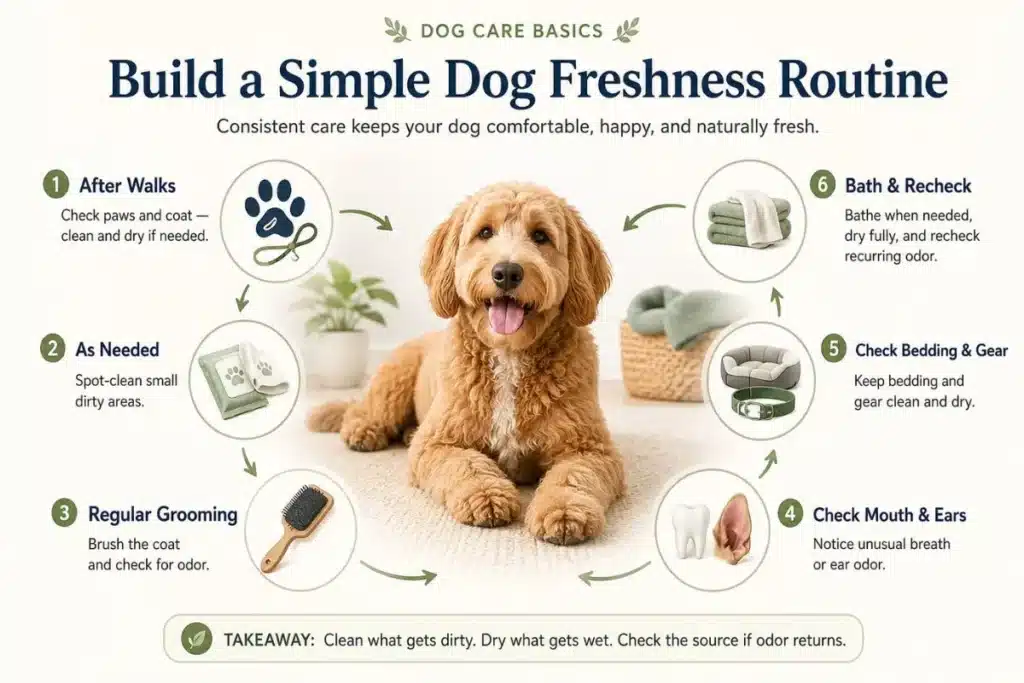
Keeping your dog fresh is easier when you follow a simple, steady routine. You do not need to wait until a strong smell appears.
Every dog is different, so adjust the routine based on your dog’s coat, activity, lifestyle, and cleaning needs.
| When | What to do |
| After wet or muddy walks | Check the paws and lower coat. Remove dirt and dry wet areas well. |
| As needed | Spot-clean small dirty or smelly areas instead of giving a full bath. |
| Regularly | Brush the coat and check the mouth, teeth, and ears for unusual smells. |
| Regularly | Check bedding, blankets, collars, and harnesses for dirt or odor. |
| On bath day | Bathe your dog as needed and dry the coat fully afterward. |
| If odor returns quickly | Check the source again before using more shampoo or fragrance. |
You do not need the same schedule for every dog. A dog that swims, hikes, or plays outside may need more cleaning.
An indoor dog with a short coat may need less. So focus on your dog’s actual needs instead of following a fixed schedule.
The basic routine is simple: brush what collects dirt, clean what gets dirty, and dry what gets wet.
For a complete head-to-tail plan, follow a regular dog hygiene routine. It can help you manage coat, paw, ear, dental, and everyday cleaning needs.
A good dog freshness routine helps control odor before it builds up. It also helps you avoid turning every small mess into another full bath.
When Persistent Dog Odor Needs More Than Home Care
A mild dog smell can be normal. But a strong smell that keeps coming back may need more attention.
Start by looking for other changes, not just the odor. Watch for:
- Red or irritated skin
- Frequent itching, licking, or rubbing
- Hair loss or changes in the coat
- Head shaking or repeated ear scratching
- Ear redness, discharge, or discomfort
- A strong smell from one specific area
- Odor that gets worse over time
- Clear signs of pain or discomfort
These signs do not tell you the exact cause. But ongoing odor can sometimes happen with skin problems, allergies, ear problems, or yeast and bacterial overgrowth.
The American Kennel Club also explains that persistent dog odor can be linked to skin and ear problems. It recommends veterinary care when the smell continues or comes with other concerning signs.
Do not try to diagnose your dog by smell alone. A musty smell does not always mean yeast. And a strong ear odor does not always confirm an infection.
If your dog still smells after normal grooming, or the odor is new, strong, or getting worse, contact your veterinarian.
Until you know the cause, avoid repeated bathing or using scented products just to cover the smell.
Dog Freshness Quick Checklist
Use this quick checklist to help keep your dog clean, dry, and fresh between baths:
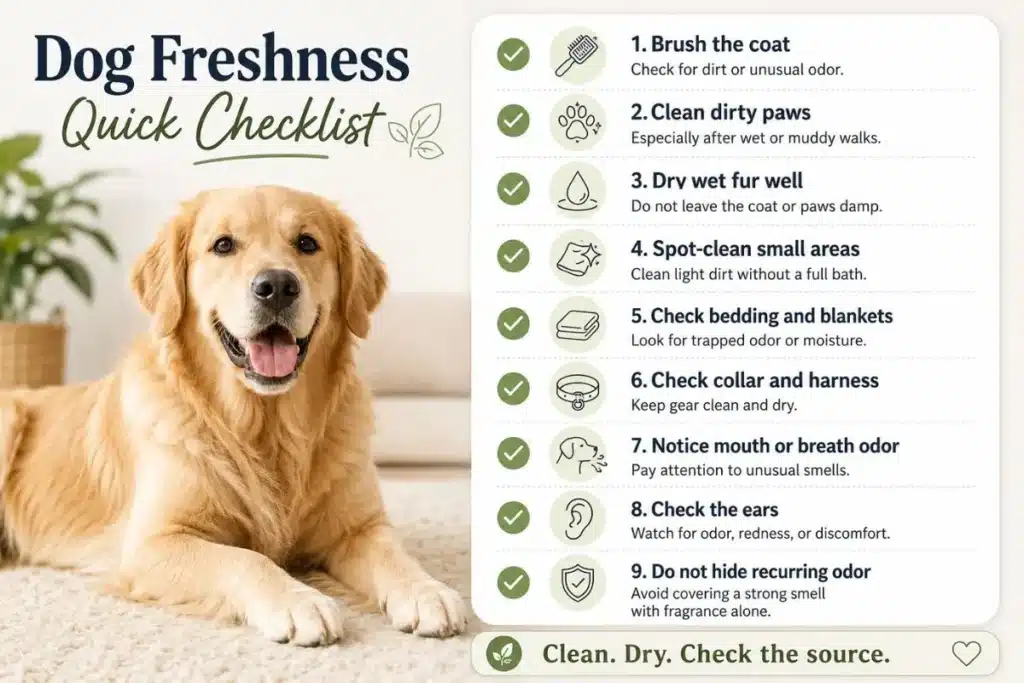
- ☐ Brush the coat and check for dirt or unusual odor.
- ☐ Clean muddy or dirty paws after walks.
- ☐ Dry wet fur and paws well.
- ☐ Spot-clean small dirty areas when needed.
- ☐ Check bedding and blankets for trapped odor.
- ☐ Check the collar and harness for dirt or smell.
- ☐ Notice any unusual mouth or breath odor.
- ☐ Check the ears for odor, redness, or discomfort.
- ☐ Do not cover a strong or recurring smell with fragrance alone.
For a complete head-to-tail routine, use our dog hygiene checklist.
FAQs About Keeping Your Dog Fresh
Why Does My Dog Smell Bad Even After a Bath?
Your dog may still smell after a bath if the coat stays damp, the bedding or gear holds odor, or the smell comes from another area. Check the ears, mouth, paws, bedding, collar, and harness instead of bathing again right away. If a strong smell keeps returning despite normal grooming, consider asking your veterinarian for advice.
How Often Should I Bathe My Dog to Keep Them Smelling Fresh?
There is no single bathing schedule that works for every dog. Your dog’s coat type, activity level, skin needs, and lifestyle all matter.
Instead of bathing only because you notice a mild smell, clean small dirty areas when needed. For more guidance, see how often you should clean your dog.
Is Waterless Shampoo Safe for Dogs Between Baths?
A waterless shampoo made for dogs can be useful for light freshening between regular baths. Always follow the label and avoid the eyes, mouth, and irritated skin unless the product says otherwise.
Stop using the product if your dog develops redness, itching, discomfort, or unusual licking. Waterless shampoo should support normal grooming, not hide a strong or unexplained odor.
Can I Use Dog Wipes Between Baths?
Yes, dog-formulated wipes can help with light dirt and small messes between baths. They can be useful for paws, lower legs, or other areas the product is designed to clean.
However, wipes do not replace a full bath when the entire coat is dirty or greasy. They also should not be used to cover a strong or recurring odor without checking the source.
Why Does My Dog Smell Worse When Wet?
Wet fur can make normal coat odors more noticeable. Moisture can also stay trapped in thick fur, the undercoat, paws, or skin folds, which may leave a damp or musty smell.
After rain, swimming, or bathing, dry your dog as well as you can. If the odor stays strong after the coat is fully dry, check for another source instead of assuming the wet fur caused it.
Final Thoughts on Keeping Your Dog Fresh
Keeping your dog fresh starts with a simple rule: find the odor source before trying to cover the smell. Clean dirty areas, dry wet fur well, and keep your dog’s bedding and gear clean.
Regular grooming can help prevent odor from building up. But if a strong or unusual smell keeps coming back, routine cleaning may not be enough. For more everyday care tips, explore our dog care guide.