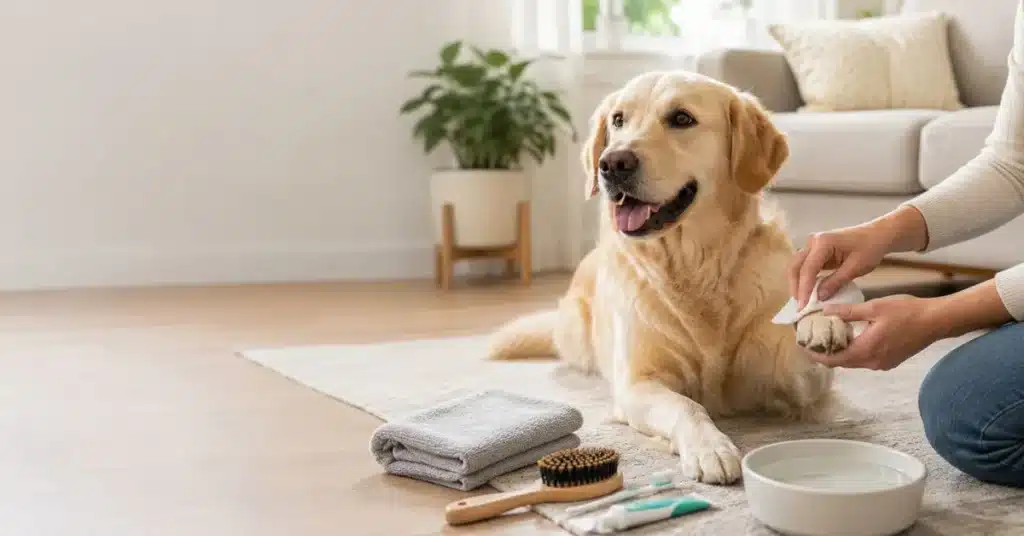
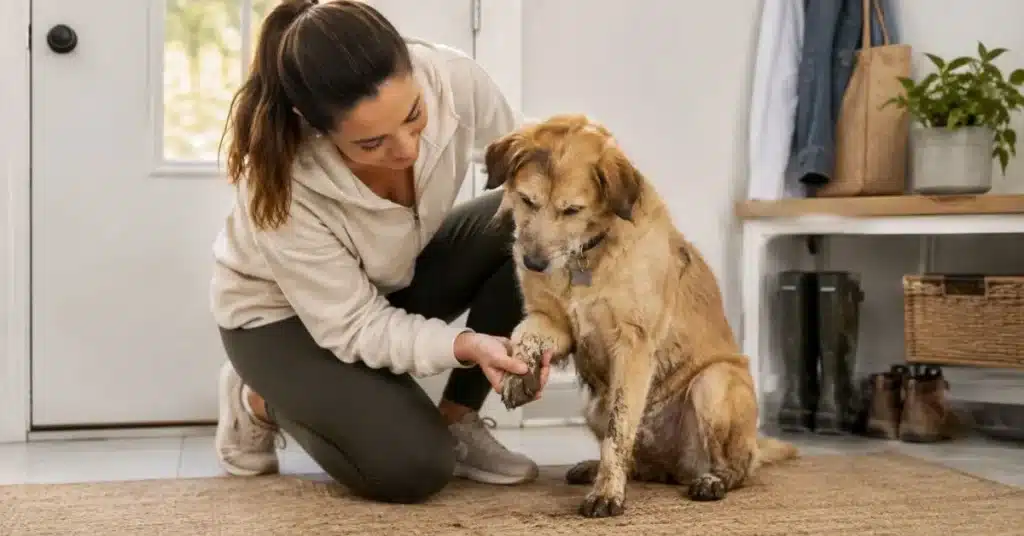
Does your dog really need a bath, or would a quick clean be enough? Common signs your dog needs a bath include a noticeable dirty-dog smell, visible mud or dirt, and a coat that feels greasy, sticky, or grimy.
But not every mess means it is time for a full bath. Muddy paws may only need spot cleaning, while widespread dirt or a foul-smelling coat may call for a proper wash. Bathing should also fit into a healthy dog hygiene routine.
In this guide, you’ll learn the 7 clearest bath signs, how to choose between a full bath and spot cleaning, and when ongoing odor or skin changes may need more than routine cleaning.
Quick Check: Does Your Dog Need a Full Bath?
Not every dirty dog needs a full bath. First, check how dirty your dog is and where the mess is.
| What you notice | What to do next |
| Most of the coat is muddy, dirty, or grimy | Give a full bath |
| Your dog rolled in something dirty or foul-smelling | Give a full bath |
| Only the paws or a small area is dirty | Spot clean that area |
| The coat has only loose surface dirt | Brush or wipe it first |
| The smell keeps returning with redness or strong itching | Don’t assume another bath will solve it |
The main thing is to check the type, amount, and location of the dirt. A small dirty spot may only need a quick clean, while a dirty or smelly coat may need a full bath.
7 Signs Your Dog Needs a Bath
Some signs are more reliable than others. Start with what you can see, smell, and feel on your dog’s coat.
A little itching or a few flakes do not always mean your dog needs a bath. Look at the whole picture before deciding.
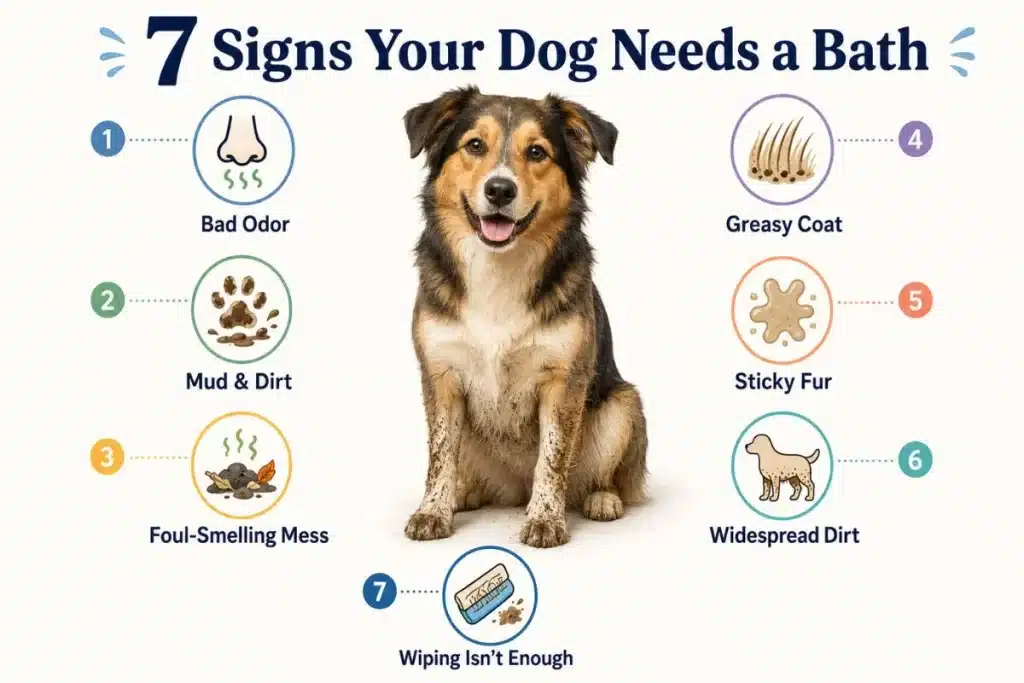
1. Your Dog Has a Noticeable Dirty-Dog Smell
A stronger-than-usual dirty-dog smell can mean it is time for a bath. This is especially true when the coat also looks dirty or feels greasy.
Outdoor play can make the smell stronger. Wet grass, mud, puddles, and dirty ground can all leave odor on the coat.
However, a normal dirty-coat smell is different from an unusual or lasting odor. If the smell returns quickly after a bath, there may be another cause.
2. You Can See Dirt, Mud, or Debris in the Coat
Sometimes the need for cleaning is easy to spot. You may see mud, dried dirt, sand, grass, or other debris in the fur.
For example, a rainy walk may leave only your dog’s paws muddy. A run through a wet yard may cover the legs, belly, and coat.
Visible dirt does not always mean your dog needs a full bath. Check where the dirt is and how much of the body it covers.
3. Your Dog Rolled in Something Dirty or Foul-Smelling
Dogs sometimes roll in mud or other unpleasant-smelling messes. If the mess spreads through the coat, brushing or wiping may not be enough.
A full bath can make more sense when dirt or odor covers a large part of the body.
If you do not know what your dog rolled in, avoid using random household cleaners. Try to identify the substance first and choose a safe cleaning method.
4. The Coat Feels Greasy or Grimy
Your hands can notice things your eyes may miss. Gently run your hand over your dog’s coat.
If the fur feels greasy, grimy, or coated with buildup, your dog may need cleaning. This sign is more useful when you also notice dirt or odor.
But coat texture differs from dog to dog. Do not assume every naturally oily coat is dirty. Grease that keeps returning, especially with skin changes, may need closer attention.
5. Something Sticky Is Stuck in the Fur
Sticky dirt or residue can be hard to remove with a brush. If it covers a larger area, a bath may help loosen and rinse away the mess.
First, check what is stuck in the fur. Normal outdoor grime is different from an unknown chemical or harmful substance.
Avoid using strong cleaners, solvents, or other household products on your dog. If you are unsure what the substance is, getting professional advice is safer than guessing.
6. Too Much of the Body Is Dirty for Spot Cleaning
One muddy paw does not need the same cleaning as a dog covered in mud from the paws to the belly.
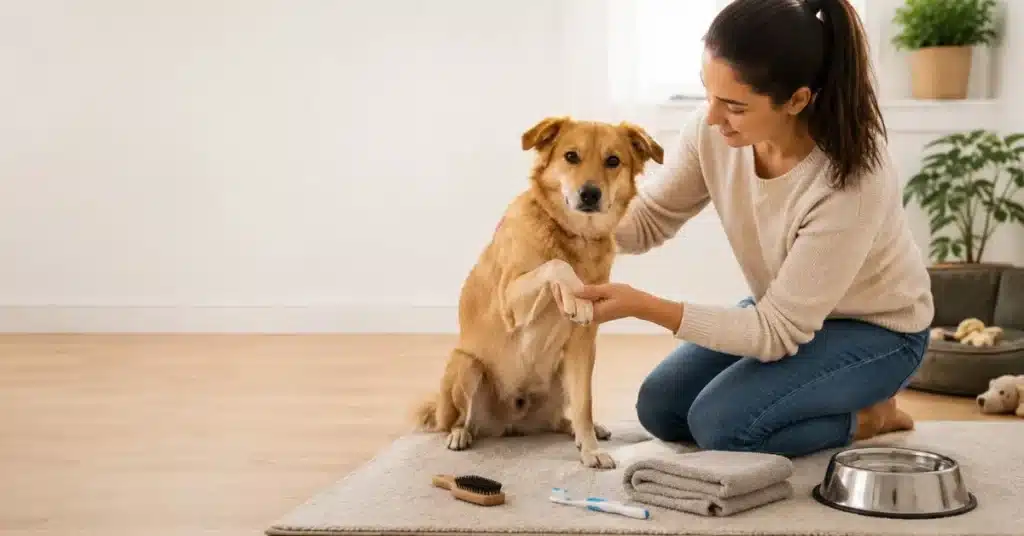
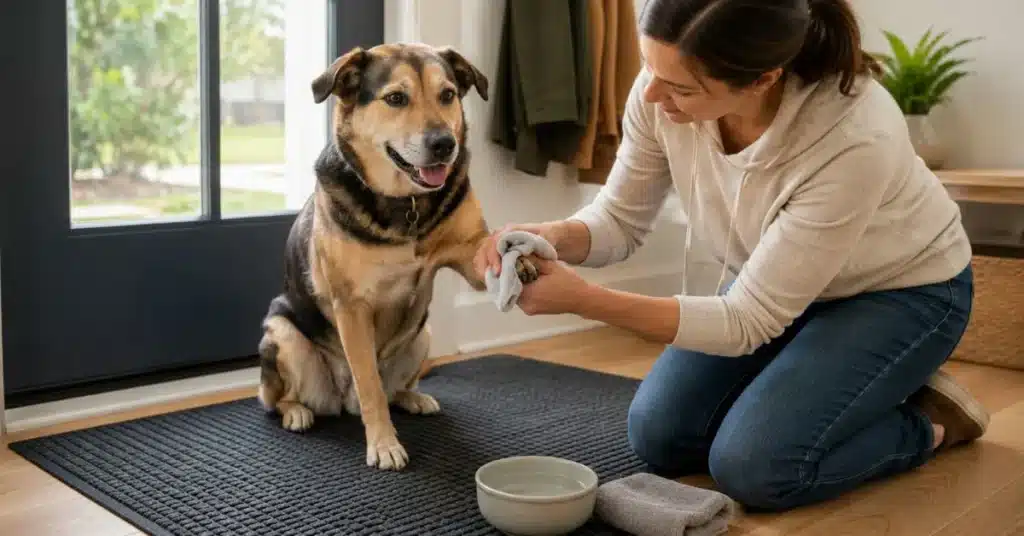
If only the paws are dirty, you can often clean muddy paws without giving your dog a full bath.
But when dirt, grime, or odor covers several parts of the body, a full bath may be easier and more effective.
So, do not ask only, “Is my dog dirty?” Also ask, “How much of my dog is dirty?”
7. Brushing or Wiping Is No Longer Enough
Light surface dirt does not always require a bath. Brushing, wiping, or spot cleaning can handle many small everyday messes.
If the dirt is minor, try a simple cleaning method first. You can also learn how to clean your dog without a full bath for quick in-between cleanups.
A full bath may be the better choice when odor, grime, sticky residue, or visible dirt remains after brushing or wiping.
The goal is not to bathe your dog as often as possible. It is to use the right cleaning method for the mess.
Full Bath or Spot Cleaning: Which Does Your Dog Need?
A dirty dog does not always need a full bath. First, check where the mess is, how much fur it covers, and what kind of dirt it is.
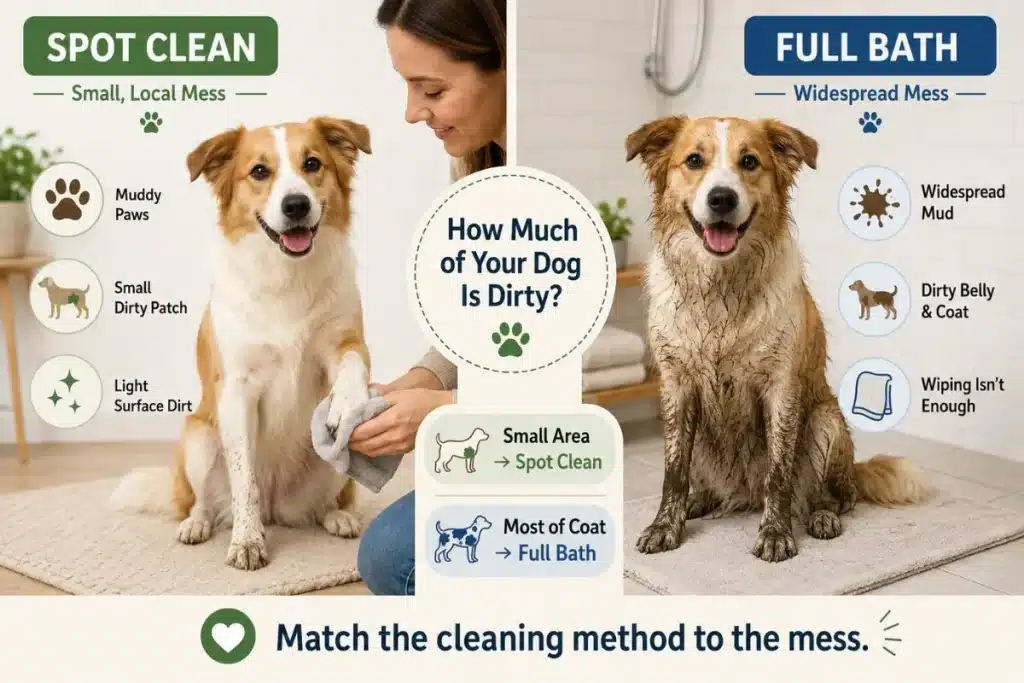
When Spot Cleaning May Be Enough
Spot cleaning is often enough for small messes. You may not need a full bath when:
- Only the paws or lower legs are muddy.
- One small patch of fur is dirty.
- The coat has light dust or surface dirt.
- A quick brush or wipe removes the mess.
For example, muddy paws after a short walk usually do not mean the whole dog needs washing.
When a Full Bath May Be Better
A full bath may make more sense when:
- Dirt or mud covers much of the coat.
- The legs, belly, and body are all dirty.
- The coat has widespread grime, grease, or odor.
- Your dog rolled in something foul-smelling.
- Brushing or wiping does not remove the mess.
So, if you are asking, “Does my dog need a bath?”, do not judge by one dirty spot.
Look at the amount, location, and type of mess. Small areas often need only a quick clean. Widespread dirt or odor may call for a full bath.
The goal is simple: use the easiest cleaning method that gets your dog properly clean.
Try the 30-Second Bath Check
Still wondering how to tell if your dog needs a bath? Use these five quick checks before you decide.
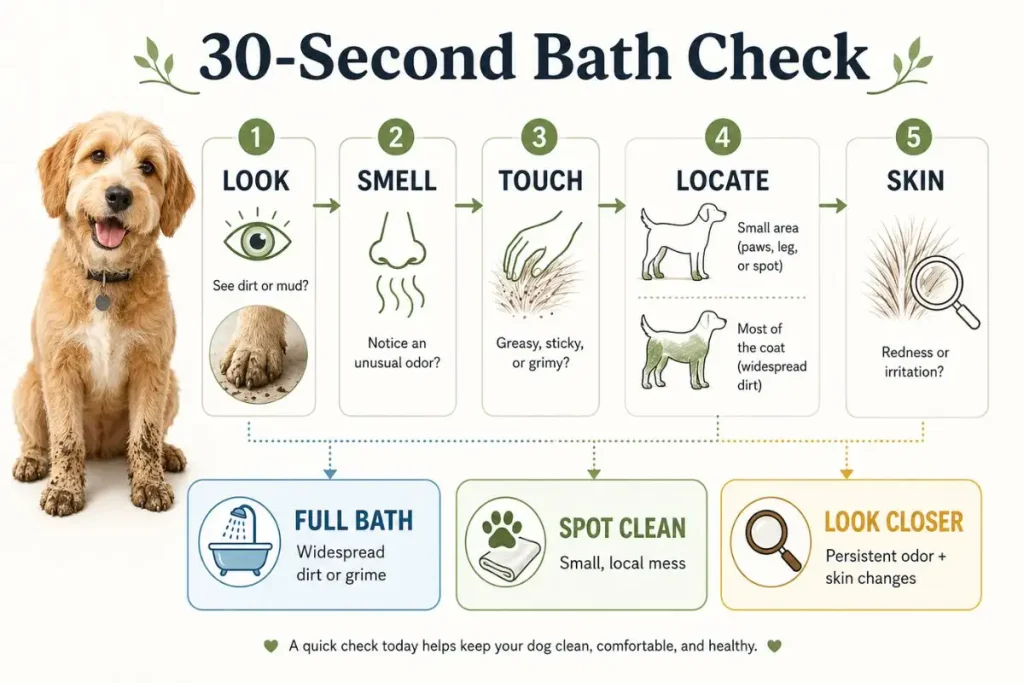
Look
Check your dog’s coat for mud, dirt, debris, or visible grime. Also notice how much of the body is dirty.
Smell
Notice the odor. A normal dirty-dog smell may mean it is time for cleaning.
But if the smell is unusual or keeps coming back, do not assume dirt is the only cause.
Touch
Gently run your hand over the coat. Does it feel greasy, sticky, or grimy instead of clean and normal?
Locate
Check where the mess is. Muddy paws or one small dirty area may only need spot cleaning.
If dirt covers the legs, belly, and much of the coat, a full bath may make more sense.
Check the Skin
Look for redness, sores, or noticeable irritation. These signs do not always mean your dog simply needs another bath.
Quick Decision
- Widespread dirt or grime: A full bath may be the better choice.
- Small, local mess: Try spot cleaning first.
- Persistent odor with skin changes: Do not assume another bath will solve the problem.
When Smell or Skin Changes May Mean More Than a Bath
Not every bad smell, itch, or skin change means your dog is simply dirty. Sometimes, another bath will not fix the real problem.
Watch more closely if you notice:
- A strong or unusual smell that keeps coming back
- Ongoing or intense itching or scratching
- Red or irritated skin
- Sores or inflamed areas
- Greasy or flaky skin that keeps returning
- The same symptoms coming back soon after a bath
These signs do not mean your dog definitely has a yeast infection. But they show why a lasting smell should not always be treated as a simple hygiene problem.
If the changes continue, monitor your dog’s health. Note when the problem started, how often it happens, and whether bathing makes any difference.
Also, avoid giving repeated baths just because the smell or itching returns. The Merck Veterinary Manual explains that bathing can affect how some skin problems appear. Too much bathing may also make certain skin conditions worse.
If your dog has recurring skin problems, a veterinarian can help find the cause. They can also advise whether your dog needs a different bathing or treatment plan.
The key point: ordinary dirt may need cleaning, but persistent odor with skin changes needs closer attention.
Don’t Decide Bath Time by the Calendar Alone
There is no single bath schedule that works for every dog. How often your dog needs a bath depends on their daily life and coat condition.
Some dogs get dirty faster because they spend more time outdoors. Others may stay clean longer, especially if they mostly live indoors.
A few things can affect dog bathing frequency:
- Coat type
- Activity level
- Outdoor environment
- Skin or health needs
- How quickly the coat becomes dirty, greasy, or smelly
So, do not bathe your dog only because a certain number of days have passed. Instead, look at the coat, odor, dirt level, and lifestyle. For a deeper guide, see how often to clean your dog.
The goal is simple: bathe your dog when they actually need cleaning, not just because the calendar says it is time.
What to Do Once Your Dog Really Needs a Bath
Once your dog clearly needs a full bath, keep the process simple and gentle. Focus on getting the coat clean without making bath time stressful.
Follow these basic steps:
- Use shampoo made for dogs. The ASPCA recommends using pet-formulated shampoo, since some human shampoos may irritate a dog’s skin.
- Use lukewarm water to help keep your dog comfortable.
- Gently work the shampoo through the dirty parts of the coat. Avoid rough scrubbing.
- Rinse thoroughly so no shampoo is left on the skin or fur.
- Dry your dog well with a clean towel after the bath.
You do not need to cover every bathing step here. If you need the complete process, follow our dog bathing guide.
The goal is simple: remove the dirt, protect your dog’s skin, and keep bath time as comfortable as possible.
Quick “Do I Need to Bathe My Dog?” Checklist
Still asking, “Does my dog need a bath?” Use this quick checklist to help you decide.
- ☐ Your dog has a noticeable dirty-dog smell
- ☐ You can see dirt, mud, or debris on the coat
- ☐ Your dog rolled in something dirty or foul-smelling
- ☐ The coat feels greasy or grimy
- ☐ Something sticky is caught in the fur
- ☐ Dirt covers a large part of the body
- ☐ Brushing or wiping does not remove the mess
If several of these signs apply, a full bath may be the better choice.
If only the paws or one small area is dirty, try spot cleaning first.
However, if the smell keeps returning with redness, ongoing itching, or other skin changes, do not assume another bath will fix the problem.
Common Bath-Decision Mistakes to Avoid
Even when your dog looks dirty, more bathing is not always the best answer. A few simple mistakes can lead to unnecessary baths or missed skin problems.
- Bathing for every small mess: Muddy paws or one dirty patch may only need spot cleaning.
- Following the calendar too closely: Bath timing should depend on your dog’s coat, activity, dirt level, and odor, not just a set date.
- Assuming every itch or smell means dirt: Ongoing itching or unusual odor can sometimes point to a skin problem, not poor hygiene.
- Repeating baths when the problem keeps returning: If smell, grease, or irritation comes back quickly, another bath may not solve the cause.
The best approach is simple: match the cleaning method to the problem instead of bathing automatically.
Common Questions About When to Bathe Your Dog
How do I know if my dog needs a bath?
Your dog may need a bath if the coat has a noticeable dirty-dog smell, visible mud or dirt, or feels greasy or grimy. Also consider how much of the body is dirty. A small mess may only need spot cleaning, while widespread dirt or odor may make a full bath more useful.
Does a smelly dog always need a bath?
No. A normal dirty-coat odor may mean your dog needs cleaning, especially after outdoor play or getting muddy. But a strong or unusual smell that keeps returning can have another cause. If the odor comes with redness, ongoing itching, or other skin changes, do not assume another bath will solve it.
Can I clean my dog without giving a full bath?
Yes. If only the paws, legs, or one small area is dirty, spot cleaning may be enough. You can often use gentle wiping or brushing for light everyday messes. A full bath usually makes more sense when dirt, grime, or odor covers a larger part of the coat.
Can you bathe a dog too often?
Yes, some dogs can be bathed more often than their skin and coat need. There is no single schedule that works for every dog. Coat type, activity, environment, skin condition, and how dirty the dog gets all matter. Bathing should match your dog’s actual cleaning needs rather than a fixed calendar.
Should I bathe my dog if they are itching?
Not automatically. Itching alone is not a reliable sign that your dog simply needs a bath. Dirt may sometimes add to discomfort, but ongoing or intense itching can have other causes. If itching continues or appears with redness, sores, unusual odor, or recurring skin changes, veterinary advice may be appropriate.
How often does a dog need a bath?
There is no universal bathing schedule for every dog. Some dogs get dirty quickly because they spend more time outdoors, while others stay clean much longer. Watch your dog’s coat condition, odor, activity, and skin needs. Bathing is most useful when your dog actually needs cleaning rather than simply because a certain number of days have passed.
When Your Dog Really Needs a Bath
The clearest signs your dog needs a bath are widespread dirt, mud, grime, or a noticeable dirty-coat smell. But not every mess calls for a full bath.
If only the paws or one small area is dirty, spot cleaning may be enough. And if a strong odor keeps returning with redness, ongoing itching, or other skin changes, do not assume another bath will fix the problem.
The goal is simple: choose the cleaning method that matches your dog’s actual needs. For more everyday care tips, see our beginner dog-care guide.