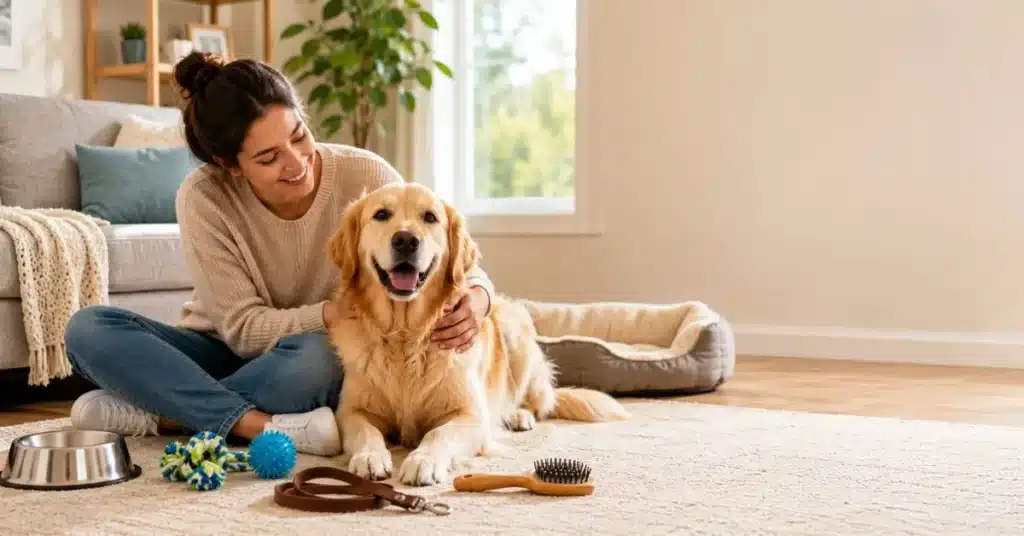
Dog care for beginners mainly involves proper feeding, daily exercise, grooming, sleep, training, social interaction, and regular health monitoring. Most first-time dog owners do not need complicated routines — simple consistency and healthy daily habits usually matter most.
Taking care of a dog for the first time can still feel overwhelming, especially with so much conflicting advice online. As a long-time dog owner, one thing I’ve learned is that small consistent habits often make a bigger difference than trying to follow complicated advice perfectly.
This beginner-friendly guide explains the essential dog care basics every first-time owner should know to help dogs stay healthy, comfortable, emotionally balanced, and easier to manage over time.
What Does a Dog Need Every Day?
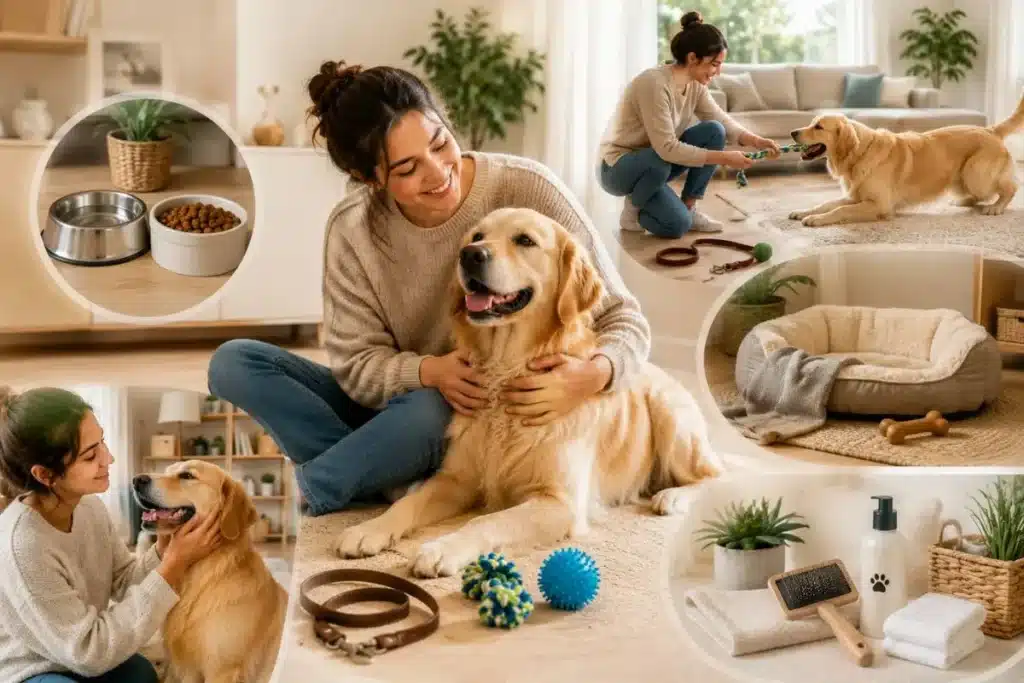
Many first-time dog owners think dog care is complicated, but most dogs simply need a few consistent daily essentials to stay healthy and comfortable.
At the most basic level, dogs need:
- Nutritious food
- Fresh clean water
- Daily exercise
- Mental stimulation
- Grooming and hygiene
- Sleep and comfort
- Attention and social interaction
When these needs are met consistently, dogs are usually calmer, healthier, and easier to manage.
Food & Fresh Water
A balanced diet plays a major role in your dog’s overall health, energy levels, digestion, and coat condition.
Most dogs thrive on high-quality dog food that supports healthy digestion, energy levels, and overall wellness.
- high-quality dog food
- consistent meal schedules
- proper portion sizes
- access to fresh water throughout the day
One common mistake many beginners make is giving too many treats without adjusting daily meals. Overfeeding can quickly lead to weight gain and digestive problems.
Quick Tip: Keep feeding times consistent every day. Dogs generally feel more secure when they follow a predictable routine.
What to Avoid
- Sudden food changes
- Too many table scraps
- Feeding toxic human foods
- Leaving dirty water bowls uncleaned
Some human foods can be dangerous for dogs, including:
- chocolate
- grapes
- onions
- garlic
- xylitol-based products
If you are unsure what foods are safe or appropriate for regular feeding, it’s always better to follow a balanced daily nutrition plan for dogs.
Exercise & Playtime
Exercise is not only important for physical health — it also affects mood, behavior, and mental stimulation.
Dogs that do not get enough exercise often become:
- restless
- bored
- destructive
- overly energetic
- more likely to bark excessively
In my experience, even short daily walks and interactive play sessions can noticeably improve a dog’s behavior and energy balance.
The amount of exercise a dog needs depends on:
- breed
- age
- size
- energy level
- health condition
For beginners, a simple daily walking routine is usually a great starting point.
Simple Beginner Exercise Ideas
- Short daily walks
- Indoor fetch
- Tug toys
- Basic obedience games and short training sessions
- Puzzle toys for mental stimulation
Signs Your Dog May Need More Exercise
- Excessive barking
- Chewing furniture
- Restlessness
- Digging
- Hyperactivity indoors
Sleep & Comfort
Dogs need a comfortable and quiet place where they can rest and feel safe.
A proper sleeping area may include:
- a comfortable dog bed that supports your dog’s size, sleeping habits, and comfort needs
- clean blankets
- a crate (if crate training)
- a calm sleeping environment
Many new dog owners underestimate how important sleep is for behavior and emotional balance. Dogs that don’t rest properly can become irritable, anxious, or overly hyperactive.
Puppies and younger dogs usually sleep more than adult dogs, while senior dogs and larger breeds may need additional comfort and better joint support while resting.
Quick Tip: Place your dog’s bed in a calm area where they can relax without constant noise or interruptions.
Grooming & Hygiene
Grooming is about much more than appearance. Regular grooming helps maintain skin health, coat condition, hygiene, and overall comfort.
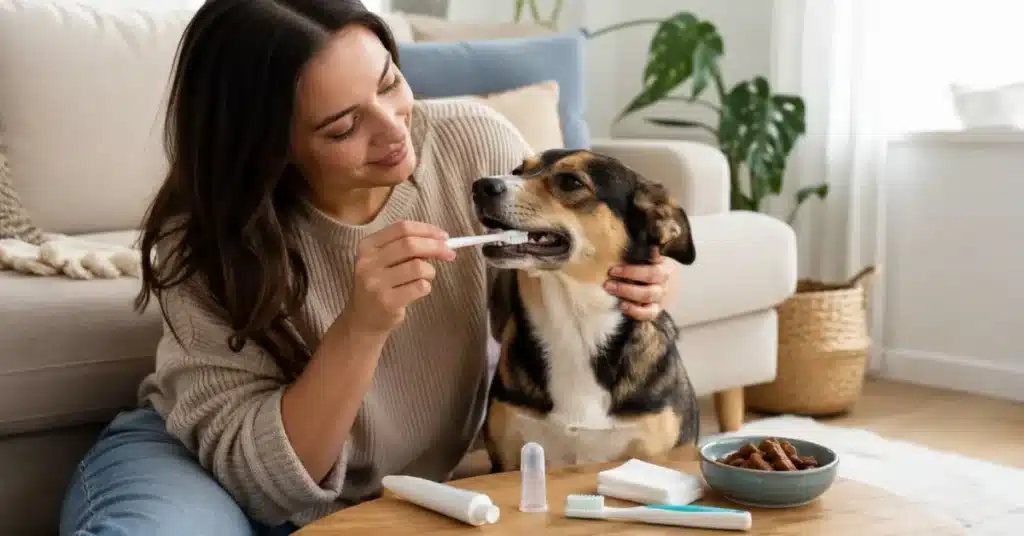
Basic dog grooming includes brushing, bathing, nail trimming, ear cleaning, and dental care as part of a consistent hygiene routine.
- brushing
- bathing
- nail trimming
- ear cleaning
- dental care
One thing many beginners don’t realize is that overbathing can actually irritate a dog’s skin and remove natural oils from the coat.
A simple grooming routine is usually more effective than using many expensive grooming products.
Basic Hygiene Habits
- Brush regularly
- Clean ears gently
- Check paws weekly
- Trim nails when needed
- Brush teeth consistently
Avoid This
- Using human shampoo regularly
- Ignoring ear odor
- Letting nails grow too long
- Skipping dental care
Attention & Socialization
Dogs are social animals and need regular interaction with people and their environment.
Daily attention helps:
- build trust
- reduce anxiety
- improve behavior
- strengthen training
- increase emotional stability
Even a few minutes of focused interaction can make a big difference.
Socialization is also important, especially for puppies and younger dogs. Introducing dogs gradually to different people, sounds, and environments can help them become more socially confident and emotionally balanced over time.
One Common Beginner Mistake
Many new owners focus only on food and grooming while overlooking mental stimulation and social interaction.
In many cases, boredom and lack of interaction are major reasons behind unwanted behaviors like excessive barking, chewing, or restlessness indoors.
Basic Daily Dog Care Routine for Beginners
One of the easiest ways to simplify dog care is by creating a consistent daily routine. Dogs generally feel calmer and more secure when they know what to expect throughout the day.
As a long-time dog owner, I’ve noticed that consistent routines often improve both behavior and overall health more than complicated training methods.
A beginner-friendly routine does not need to be perfect. The goal is simply to create healthy daily habits that are easy to maintain.
Morning Dog Care Routine
Mornings are a good time to establish structure and energy balance for the day.
A simple morning routine may include:
- fresh water refill
- bathroom break
- morning feeding
- short walk or exercise
- a quick body check to notice unusual behavior, appetite changes, or physical discomfort
Quick Health Check
Take a few seconds each morning to notice:
- appetite
- energy level
- eyes
- ears
- walking behavior
Small changes in appetite, behavior, or activity levels are sometimes early warning signs that a dog may not be feeling well.
Feeding & Water Routine
Most dogs do well with consistent feeding schedules and predictable meal routines throughout the day.
Depending on age and activity level:
- puppies may need multiple meals daily along with balanced nutrition that supports healthy growth and development.
- adult dogs often eat twice daily
Fresh water should always remain available.
Simple Feeding Tips
- Feed at similar times each day
- Avoid overfeeding treats
- Monitor appetite changes
- Keep food bowls clean
Avoid This
- Free-feeding without portion control
- Frequent sudden food changes
- Feeding immediately before intense exercise
Exercise & Playtime Routine
Regular activity helps maintain:
- healthy weight
- mental stimulation
- calmer behavior
- joint health
Even beginners can start with simple activities like:
- daily walks
- fetch
- indoor games
- short training sessions
Quick Tip: Mental stimulation can tire dogs almost as much as physical exercise, especially when dogs stay engaged with problem-solving activities and interactive play.
Evening Care Routine
Evening routines help dogs settle down and relax before sleep.
A basic evening routine may include:
- final bathroom break
- evening feeding
- light grooming check
- calm interaction
- comfortable sleep setup
Dogs usually respond well to calm and predictable nighttime habits.
Simple Evening Checklist
- Fresh water available
- Bathroom break completed
- Sleeping area clean
- Quick coat/paw check
- Calm environment
A quick paw and coat wipe before bedtime can also help keep dogs cleaner and more comfortable, especially after outdoor walks or playtime.
Simple Daily Dog Care Routine Table
| Time | Basic Care Task |
| Morning | Water, feeding, bathroom break, walk |
| Afternoon | Exercise, playtime, interaction |
| Evening | Feeding, hygiene check, relaxation |
| Night | Final bathroom break and sleep |
Building a healthy daily routine is the foundation of good dog care, but proper nutrition and grooming habits are equally important for keeping dogs healthy long-term.
Feeding & Nutrition Basics
Proper nutrition is one of the most important parts of beginner dog care. A healthy diet supports your dog’s energy, digestion, immune system, skin, coat, and long-term health.
Many first-time dog owners feel confused by the huge number of dog food options available today. The good news is that most dogs do well when they receive balanced nutrition, consistent feeding routines, and appropriate portion sizes.
As a long-time dog owner, one thing I’ve noticed is that consistency usually matters more than constantly changing foods or chasing trendy diets.
How Often Should Dogs Eat?
Feeding schedules depend on:
- age
- breed
- activity level
- health condition
In general:
- puppies often eat 3–4 meals daily to support healthy growth, energy levels, and early development
- adult dogs commonly eat twice daily
- senior dogs may need adjusted schedules depending on health needs
Dogs usually respond better when meals happen at consistent times every day.
Simple Feeding Routine Example
| Dog Age | Typical Feeding Frequency |
| Puppy | 3–4 times daily |
| Adult Dog | 2 times daily |
| Senior Dog | 1–2 times daily |
Quick Tip: Consistent feeding schedules can help improve digestion, bathroom routines, and overall behavior.
Common Beginner Mistake
Many beginners unintentionally overfeed because they confuse excitement with hunger. Dogs often enjoy eating even when they are already getting enough calories.
Signs Your Dog May Be Overfed
- Rapid weight gain
- Low energy
- Difficulty feeling ribs
- Frequent begging
- Digestive discomfort
How Much Water Do Dogs Need?
Fresh clean water should always be available throughout the day.
Water intake may vary depending on:
- weather
- activity level
- diet
- age
- health condition
Dogs that exercise frequently or spend more time outdoors may drink more water than usual.
Simple Hydration Tip: Wash water bowls daily to help reduce bacteria buildup and encourage healthy drinking habits.
Simple Dehydration Check
Gently lift the skin around your dog’s neck or shoulders. In many cases, the skin should quickly return to normal. Slow skin movement, low energy, or unusual drinking habits may sometimes indicate dehydration or other health-related concerns.
Warning Signs of Dehydration
- Dry gums
- Low energy
- Heavy panting
- Sunken eyes
- Loss of appetite
If symptoms appear severe or persistent, contacting a veterinarian is always the safest option.
Avoid This
- Leaving dirty water bowls unchanged
- Restricting water after exercise
- Ignoring sudden drinking changes
What Foods Are Toxic to Dogs?
One of the biggest beginner fears is accidentally feeding unsafe foods. Some common human foods can be dangerous for dogs, even in small amounts. Veterinary experts like the ASPCA Animal Poison Control Center also warn that certain foods may cause serious health complications in dogs.
Common Toxic Foods for Dogs
| Food | Why It’s Dangerous |
| Chocolate | Toxic compounds affecting the nervous system |
| Grapes & Raisins | May cause kidney problems |
| Onion & Garlic | Can damage red blood cells |
| Xylitol | Dangerous sugar substitute |
| Alcohol | Toxic to dogs |
| Caffeine | Can overstimulate the heart and nervous system |
Quick Safety Reminder:
If you are unsure whether a food is safe for dogs, it’s usually better to confirm which fruits and ingredients are considered dog-friendly before offering them regularly.
One Common Beginner Mistake
Many new dog owners assume small amounts of human food are harmless, but safe feeding habits are extremely important for preventing avoidable health risks.
Wet Food vs Dry Food
Many beginners become confused when choosing between wet and dry dog food. Both can work well depending on your dog’s needs, preferences, and health condition.
Dry Food Benefits
- Convenient storage
- Often more affordable
- Can support dental health in some cases
Wet Food Benefits
- Higher moisture content
- Easier for some dogs to eat
- Often more appealing for picky eaters
Some dog owners also combine both for balance and variety.
Balanced View
There is no single “perfect” food type for every dog. Breed, age, health conditions, and activity levels all influence what works best.
Experience Insight
Over the years, I’ve noticed that sudden food changes usually create more digestive issues than the specific food type itself. Gradual transitions tend to work much better for most dogs.
Avoid This
- Frequently switching foods without reason
- Choosing food only based on marketing
- Ignoring ingredient quality
- Overfeeding treats alongside meals
Simple Beginner Feeding Checklist
✅ Feed at consistent times
✅ Provide fresh clean water daily
✅ Monitor appetite and digestion
✅ Avoid toxic human foods
✅ Use appropriate portion sizes
✅ Introduce food changes gradually
✅ Limit excessive treats
Grooming & Hygiene Basics
Grooming is not just about keeping dogs clean. Proper grooming also helps maintain healthy skin, coat condition, hygiene, comfort, and early health monitoring.
Many beginners assume grooming only matters for appearance, but regular grooming can help you notice:
- skin irritation
- parasites
- unusual lumps
- ear problems
- coat changes
One thing I learned over time is that simple consistent grooming habits are usually more effective than buying large numbers of expensive grooming products.
How Often Should Dogs Bathe?
Bathing frequency depends on:
- breed
- coat type
- activity level
- skin sensitivity
- outdoor exposure
Some dogs may need more frequent baths, while others only require occasional cleaning.
In many cases:
- short-haired indoor dogs need fewer baths
- active outdoor dogs may need more frequent cleaning
Balanced Recommendation
Overbathing can sometimes dry out a dog’s skin and remove natural protective oils from the coat.
Quick Tip:
Use gentle dog-safe shampoos designed for sensitive canine skin whenever possible, especially for dogs prone to dryness or irritation.
Common Beginner Mistake
Many first-time dog owners bathe dogs too frequently because they think it automatically improves hygiene.
Avoid This
- Using human shampoo regularly
- Bathing too often
- Ignoring skin dryness
- Leaving shampoo residue on coat
Brushing & Coat Care
Brushing helps:
- remove loose hair
- reduce shedding
- prevent matting
- distribute natural oils
- improve coat condition
Long-haired breeds often need more brushing than short-haired dogs.
Signs Your Dog May Need More Brushing
- Tangled fur
- Heavy shedding
- Visible mats
- Dull coat appearance
Experience Insight
In my experience, regular brushing usually keeps dogs more comfortable and reduces cleaning problems around the house as well.
Simple Coat Care Tips
- Brush gently
- Check for skin irritation
- Inspect paws after walks
- Use appropriate brushes for coat type
Choosing the right grooming tools for your dog’s coat type can make brushing easier, safer, and more comfortable.
Nail Trimming Basics
Overgrown nails can affect walking posture and overall comfort.
Some signs nails may need trimming:
- clicking sounds on floors
- awkward walking
- visible curling
Many beginners feel nervous about trimming nails at home, especially when they are unsure how much to trim safely.
Beginner-Friendly Tip
Trim small amounts gradually rather than trying to remove too much at once.
Avoid This
- Cutting nails too short
- Ignoring cracked nails
- Waiting until nails become severely overgrown
Dog Dental Care
Dental hygiene is one of the most commonly overlooked areas of dog care.
Poor dental care may contribute to:
- bad breath
- plaque buildup
- gum irritation
- eating discomfort
Basic Dog Dental Habits
- Regular teeth cleaning habits can help reduce plaque buildup and improve long-term dental hygiene.
- Use dog-safe toothpaste
- Monitor bad breath
- Offer appropriate dental chews
Common Beginner Mistake
Using human toothpaste for dogs can be unsafe because some ingredients are not suitable for canine digestion.
Quick Tip: Even brushing a few times weekly may help improve long-term dental hygiene.
Ear Cleaning Tips
Ears are another area beginners sometimes forget to check regularly.
Healthy ears are usually:
- relatively clean
- odor-free
- free from excessive redness
Warning Signs
- strong odor
- excessive scratching
- dark discharge
- redness
- sensitivity
Experience Insight
Many new dog owners think frequent bathing alone prevents odor problems, but ear hygiene often plays a major role as well.
Simple Ear Care Tips
- Check ears weekly
- Clean ears gently using safe methods designed for regular ear hygiene and maintenance.
- Dry ears properly after bathing
- Avoid inserting objects deep into ears
Avoid This
- Overcleaning aggressively
- Ignoring persistent odor
- Using unsafe cleaning products
Simple Beginner Grooming Checklist
✅ Brush coat regularly
✅ Check ears weekly
✅ Trim nails when needed
✅ Maintain dental hygiene
✅ Use dog-safe grooming products
✅ Monitor skin and coat condition
✅ Avoid overbathing
Proper feeding and grooming habits create the foundation for good dog care, but exercise, training, and mental stimulation are equally important for keeping dogs healthy, balanced, and emotionally stable.
Exercise, Training & Mental Stimulation
Many first-time dog owners focus mostly on feeding and grooming while underestimating how important exercise and mental stimulation are for overall behavior and emotional balance.
Dogs are naturally active and curious animals. Without enough physical activity and engagement, many dogs may become:
- restless
- bored
- destructive
- anxious
- overly energetic indoors
In my experience, even simple daily routines like walks, play sessions, and short training exercises can noticeably improve a dog’s mood and behavior.
The goal is not perfection. Consistent activity and interaction usually matter more than intense training routines.
How Much Exercise Do Dogs Need?
Exercise needs vary depending on:
- breed
- age
- size
- energy level
- health condition
Some dogs naturally require more activity than others depending on breed, age, energy level, and daily lifestyle needs. High-energy breeds often need longer exercise sessions, while smaller or older dogs may do better with lighter routines.
General Beginner-Friendly Exercise Ideas
- Daily walks
- Indoor play sessions
- Fetch games
- Tug toys
- Light training activities
- Puzzle toys
Quick Tip:
Mental stimulation can tire dogs almost as much as physical exercise. Even short problem-solving games may help reduce boredom and keep dogs mentally stimulated indoors.
Signs Your Dog May Need More Activity
- Excessive barking
- Digging
- Chewing furniture
- Hyperactivity indoors
- Constant attention-seeking
Common Beginner Mistake
Many beginners assume exercise only means long walks outside. In reality, mental engagement and simple interactive play are also very important.
Avoid This
- Exercising heavily immediately after meals
- Inconsistent activity schedules
- Ignoring weather conditions
- Overexercising puppies
Why Playtime Matters
Playtime helps dogs:
- release energy
- build confidence
- improve social interaction
- strengthen bonds with owners
- reduce stress and boredom
For many beginners, structured play is also one of the easiest ways to build trust with a dog.
Simple Beginner Play Ideas
- Fetch
- Tug-of-war
- Hide-and-seek
- Puzzle feeders
- Basic obedience games
Experience Insight
One thing I noticed over the years is that dogs usually become calmer and more emotionally balanced when they stay mentally active and engaged throughout the day, especially indoors.
Signs of Boredom in Dogs
- Pacing
- Excessive barking
- Destructive chewing
- Constant jumping
- Attention-seeking behavior
Basic Beginner Training Tips
Training is not only about obedience. It also helps dogs understand boundaries, routines, communication, and expectations.
Many first-time dog owners worry about training too late or making mistakes, but simple consistent habits are often enough to build good behavior gradually.
Beginner-Friendly Training Basics
- Use short sessions
- Reward positive behavior
- Stay patient and consistent
- Use clear commands
- Keeping training calm, structured, and predictable can make learning easier for beginner dog owners at home.
Quick Tip:
Dogs usually learn better through repetition and consistency than through punishment or frustration.
Common Beginner Mistake
Many beginners accidentally send mixed signals by changing rules frequently or rewarding behaviors inconsistently.
Avoid This
- Yelling excessively
- Long frustrating sessions
- Inconsistent commands
- Punishment-based training
Experience Insight
In my experience, calm repetition and positive reinforcement usually work far better than trying to force quick results.
Socialization Basics
Socialization helps dogs become more comfortable with:
- people
- sounds
- environments
- other animals
- daily situations
Proper socialization may help dogs become more confident and emotionally comfortable in different environments and daily situations.
- fear
- anxiety
- aggressive reactions
- nervous behavior
This is especially important for puppies and younger dogs.
Beginner-Friendly Socialization Tips
- Introduce new experiences gradually
- Keep interactions calm
- Reward relaxed behavior
- Avoid overwhelming situations
- Be patient with nervous dogs
Common Beginner Mistake
Some owners accidentally expose dogs to stressful environments too quickly, which may increase fear instead of confidence.
Balanced Reminder
Every dog responds differently to socialization. Some dogs naturally adapt faster than others depending on personality, breed, and past experiences.
Simple Daily Exercise Checklist
✅ Daily walk or physical activity
✅ Interactive playtime
✅ Mental stimulation activities
✅ Positive interaction
✅ Calm training practice
✅ Social exposure when appropriate
Health Monitoring & Vet Care
Many dog health problems become easier to manage when small warning signs are noticed early.
First-time dog owners often worry about missing important symptoms, but basic health monitoring usually becomes easier with consistent observation and routine care.
As a long-time dog owner, I’ve learned that small changes in appetite, energy, behavior, or bathroom habits are often worth paying attention to.
You do not need to obsess over every tiny change, but building simple awareness habits can make a big difference over time.
Signs of a Healthy Dog
Healthy dogs usually show consistent daily habits and normal behavior patterns.
Common Signs of a Healthy Dog
| Healthy Sign | What It May Indicate |
| Good appetite | Normal digestion and energy |
| Clear eyes | Healthy condition |
| Clean ears | Proper hygiene |
| Consistent energy | Balanced wellness |
| Healthy coat | Good nutrition and grooming |
| Comfortable movement | Healthy joints and muscles |
Quick Tip:
The more familiar you become with your dog’s normal habits, the easier it becomes to monitor unusual physical or behavioral changes over time.
Experience Insight
In many cases, owners notice subtle behavioral or appetite changes before obvious physical symptoms appear.
Early Signs Your Dog Is Sick
Dogs often show small warning signs before more serious symptoms develop.
Common Early Warning Signs
- Loss of appetite
- Sudden low energy
- Vomiting
- Diarrhea
- Excessive scratching
- Unusual barking or hiding
- Limping
- Changes in drinking habits
Important Reminder
Not every symptom automatically means a serious problem, but persistent or severe symptoms should not be ignored, especially when dogs show sudden behavioral or physical changes that may require professional attention.
Common Beginner Mistake
Many beginners wait too long hoping symptoms will disappear on their own, especially when behavior changes seem minor at first.
Avoid This
- Ignoring sudden behavior changes
- Delaying veterinary care unnecessarily
- Assuming internet advice replaces professional care
When to Visit the Vet
Regular veterinary care plays an important role in preventive health monitoring.
Veterinary visits may help with:
- vaccinations
- parasite prevention
- nutrition guidance
- dental care
- routine health checks
Situations That May Require Veterinary Attention
- Persistent vomiting or diarrhea
- Refusing food for extended periods
- Difficulty breathing
- Severe lethargy
- Sudden limping
- Major behavior changes
Balanced Reminder
This guide covers general beginner dog care information, but veterinarians are still the best source for diagnosing serious health concerns, and organizations like the American Veterinary Medical Association (AVMA) strongly encourage regular preventive veterinary care for pets.
Experience Insight
Over the years, I noticed that early checkups often prevent small health problems from becoming much larger issues later.
Vaccinations & Parasite Prevention
Preventive care is often easier and safer than treating advanced health problems later.
Vaccinations and parasite prevention may help protect dogs from common external and internal parasites such as fleas, ticks, and worms. Veterinary resources like the CAPC Parasite Prevention Guidelines also recommend consistent preventive care and regular parasite monitoring for dogs.
- fleas
- ticks
- worms
- certain infections
- preventable diseases
Prevention schedules may vary depending on:
- age
- location
- lifestyle
- outdoor exposure
Simple Prevention Habits
- Keep grooming consistent
- Monitor skin and coat regularly
- Maintain veterinary checkups
- Use parasite prevention products responsibly
Common Beginner Mistake
Some new dog owners focus only on visible symptoms while overlooking preventive care entirely.
Avoid This
- Skipping vaccinations
- Ignoring fleas or ticks
- Using unsafe parasite products
- Delaying routine checkups
Simple Dog Health Monitoring Checklist
✅ Monitor appetite daily
✅ Check energy levels
✅ Observe bathroom habits
✅ Watch for unusual behavior
✅ Maintain regular vet visits
✅ Keep vaccinations updated
✅ Check coat, ears, eyes, and paws regularly
Understanding exercise, behavior, and health basics helps beginners build a healthier daily routine, but avoiding common first-time dog owner mistakes is equally important for long-term success.
Common Mistakes First-Time Dog Owners Make

Almost every new dog owner makes a few mistakes in the beginning, and that’s completely normal. The important thing is learning what helps dogs stay healthy, comfortable, and emotionally balanced over time.
Many beginner mistakes happen because owners care deeply but feel overwhelmed by too much conflicting information online.
As a long-time dog owner, I’ve noticed that simple consistency and patience usually matter far more than trying to do everything perfectly.
Overfeeding & Too Many Treats
One of the most common beginner mistakes is overfeeding.
Many dogs act excited around food even when they are already eating enough, which can make owners think they are constantly hungry.
Overfeeding and inconsistent portion control may contribute to weight gain, low energy, digestive discomfort, and long-term health issues.
Simple Feeding Reminder
Treats should support training and bonding, not replace balanced meals.
Signs Your Dog May Be Getting Too Many Calories
- Difficulty feeling ribs
- Rapid weight gain
- Low activity levels
- Frequent begging
Avoid This
- Giving table scraps regularly
- Too many treats during training
- Feeding based only on excitement
- Constant free-feeding without monitoring
Experience Insight
One thing I learned over time is that dogs usually respond better to consistent meal routines than constant snacking throughout the day.
Overbathing Dogs
Many beginners believe frequent bathing automatically means better hygiene, but bathing schedules should usually depend on coat type, skin condition, and activity level.
Bathing frequency depends on:
- breed
- coat type
- activity level
- skin condition
Balanced Reminder
Some dogs need more grooming than others, especially long-haired or highly active breeds.
Signs of Possible Overbathing
- Dry skin
- Excessive scratching
- Flaky coat
- Dull fur appearance
Avoid This
- Using human shampoo regularly
- Bathing too frequently
- Ignoring skin irritation
- Using harsh cleaning products
Experience Insight
In many cases, regular brushing and basic hygiene routines help more than frequent full baths.
Inconsistent Daily Routines
Dogs usually thrive on structure and predictability.
Inconsistent schedules may sometimes contribute to:
- anxiety
- restlessness
- excessive barking
- bathroom accidents
- attention-seeking behavior
Simple Routine Tip
Try to keep:
- feeding times
- walks
- bathroom breaks
- sleep schedules
relatively consistent each day.
Common Beginner Mistake
Changing routines too often because of excitement, frustration, or irregular schedules.
Experience Insight
One thing I noticed over the years is that calmer routines often create calmer dogs.
Ignoring Exercise & Mental Stimulation
Some first-time owners focus heavily on feeding and grooming while overlooking mental stimulation and physical activity.
Without enough engagement, many dogs may become:
- bored
- destructive
- hyperactive
- anxious
Simple Beginner Activities
- Short walks
- Indoor play
- Puzzle toys
- Training games
- Interactive play sessions
Warning Signs of Boredom
- Chewing furniture
- Excessive barking
- Digging
- Pacing
- Hyperactivity indoors
Avoid This
- Leaving dogs inactive all day
- Ignoring boredom signs
- Assuming physical exercise alone is enough
Experience Insight
Mental stimulation often tires dogs faster than many beginners expect.
Using Unsafe Human Products
Not every human product is safe for dogs.
Some beginners accidentally use:
- human shampoo
- human toothpaste
- unsafe cleaning products
- inappropriate foods
which may irritate dogs or create health risks.
Quick Safety Reminder
Dogs have different skin sensitivity and digestive systems than humans.
Avoid This
- Human toothpaste
- Strong chemical cleaners
- Unsafe flea products
- Toxic foods
Experience Insight
Simple dog-safe products are usually safer and more effective than trying random household alternatives.
Essential Dog Care Checklist for Beginners
Building simple daily habits is often the easiest way to make dog care feel less overwhelming.
Daily Dog Care Checklist
✅ Fresh clean water available
✅ Feed at consistent times
✅ Daily exercise or walks
✅ Bathroom breaks
✅ Mental stimulation or playtime
✅ Quick body and behavior check
✅ Calm interaction and attention
Weekly Dog Care Checklist
✅ Brush coat
✅ Check ears
✅ Inspect paws
✅ Clean feeding bowls thoroughly
✅ Monitor weight and appetite
✅ Check nails and coat condition
Monthly Dog Care Reminders
✅ Review parasite prevention
✅ Monitor overall behavior changes
✅ Restock hygiene supplies
✅ Check grooming needs
✅ Schedule vet visits if needed
Quick Beginner Health Check Table
| What to Check | Healthy Signs |
| Eyes | Clear and bright |
| Ears | Clean with minimal odor |
| Coat | Smooth and healthy |
| Appetite | Consistent eating habits |
| Energy | Normal daily activity |
| Movement | Comfortable walking |
Common Questions About Dog Care for Beginners
Is Dog Care Difficult for Beginners?
Dog care may feel overwhelming at first, but most beginners become more confident once they establish simple daily routines. Consistency, patience, and basic care habits usually matter more than trying to do everything perfectly.
How Often Should Dogs Eat?
Many adult dogs eat twice daily, while puppies may need more frequent meals. Feeding schedules can vary depending on age, breed, activity level, and health needs.
How Often Should Dogs Bathe?
Bathing frequency depends on coat type, lifestyle, and skin condition. Some dogs need more frequent baths, while others may only require occasional cleaning.
Can I Use Human Shampoo on Dogs?
Human shampoo may irritate a dog’s skin because canine skin has different sensitivity and pH balance. Dog-safe grooming products are usually the safer option.
How Do I Know If My Dog Is Healthy?
Healthy dogs usually maintain:
- consistent appetite
- normal energy levels
- healthy coat condition
- comfortable movement
- regular bathroom habits
Sudden or persistent changes may require closer monitoring or veterinary guidance.
What Supplies Do New Dog Owners Need?
Basic beginner dog supplies and everyday accessories often include:
- food and water bowls
- leash and collar
- dog bed
- grooming tools
- dog-safe shampoo
- toys
- training treats
Final Beginner Dog Care Tips
Taking care of a dog for the first time does not require perfection. Most dogs simply need consistency, attention, healthy routines, proper care, and patience.
As a long-time dog owner, one thing I’ve learned is that dogs usually respond best to calm routines, regular interaction, and simple daily habits. Small efforts done consistently often make a much bigger difference than trying to follow complicated advice.
Every dog is different, and some may need more grooming, exercise, training, or veterinary support than others. Over time, you’ll naturally learn your dog’s personality, habits, and unique needs.
The most important thing is building a safe, caring, and balanced environment where your dog can stay healthy and feel secure.