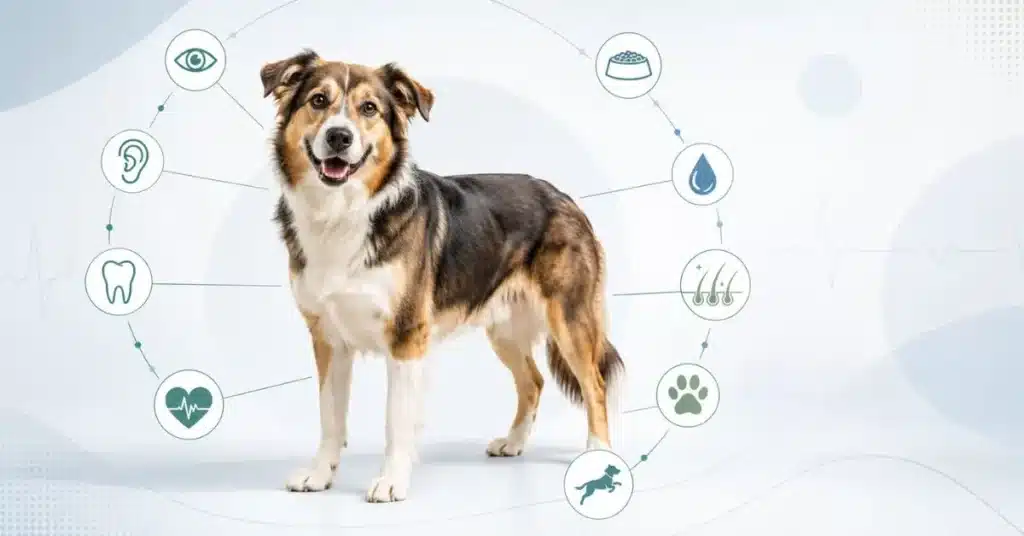
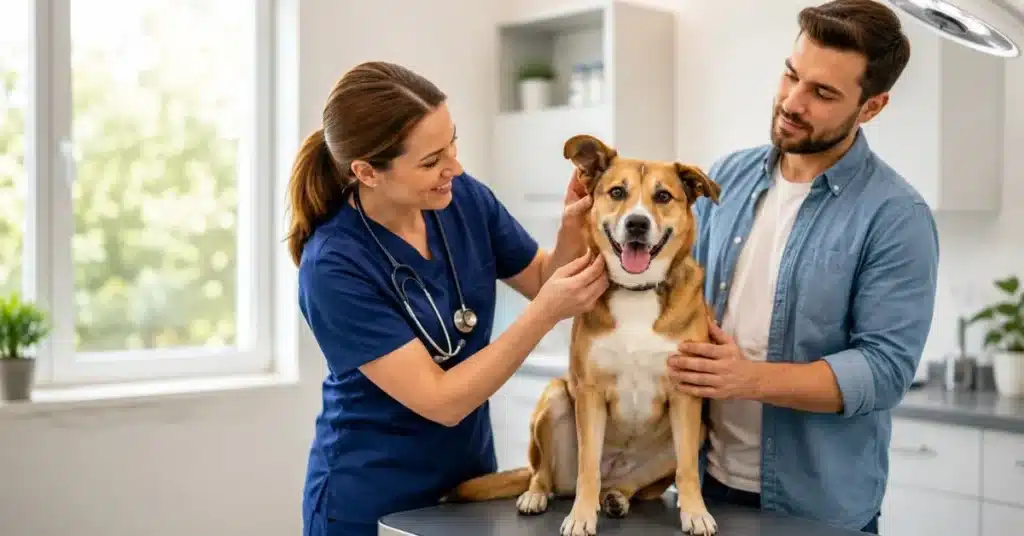
Common dog health problems include dental disease, ear infections, obesity, skin problems, parasites, digestive issues, and joint or mobility problems. Many conditions share similar warning signs, so symptoms alone cannot confirm the cause.
This guide explains what to watch for and how to reduce common risks. It also shows when your dog may need routine, prompt, or emergency veterinary care.
For feeding, hygiene, exercise, and everyday health routines, read our dog care guide.
Emergency Warning: Get Veterinary Help Now
Get emergency veterinary care right away if your dog has trouble breathing, collapses, has a seizure, bleeds heavily, cannot urinate, repeatedly retches without vomiting, develops a swollen or painful belly, or shows severe distress.
If you suspect poisoning, call your veterinarian, an emergency animal hospital, or an animal poison control center immediately. The FDA’s pet emergency guide explains whom to contact. Do not wait to finish this article.
Common Dog Health Problems at a Glance
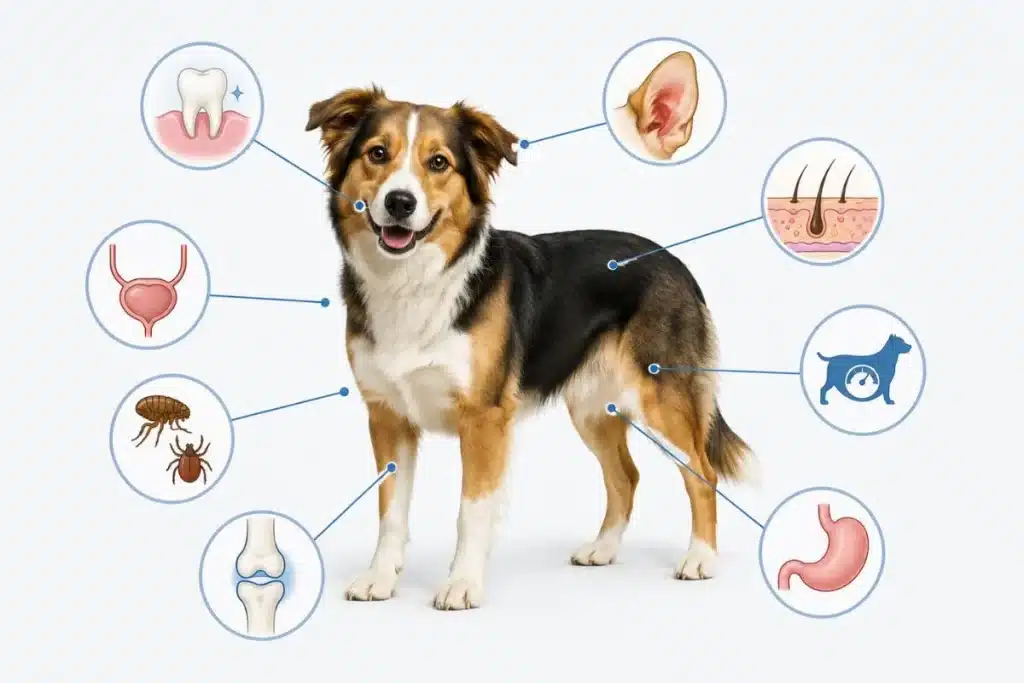
Dogs often show changes in appetite, behavior, movement, or daily habits before the cause becomes clear. Use this table to spot common signs and understand what to do next.
| Health problem | Signs you may notice | What to do next |
| Dental disease | Bad breath, red gums, trouble chewing | Book a veterinary checkup |
| Ear problems | Head shaking, odor, discharge, or pain | Contact a vet if the signs continue |
| Obesity | No clear waist, ribs are hard to feel | Ask your vet to check your dog’s weight |
| Skin problems | Itching, redness, hair loss, or odor | Get advice if the problem continues |
| Parasites | Scratching, visible fleas, or stool changes | Ask about testing and prevention |
| Digestive problems | Vomiting, diarrhea, or loss of appetite | Watch the severity and how long it lasts |
| Mobility problems | Limping, stiffness, or trouble standing | Book a checkup if the problem continues |
| Urinary problems | Straining, frequent urination, or blood | Contact a veterinarian promptly |
These signs can have many possible causes, so this table cannot diagnose your dog. A veterinarian may need to examine your dog to find the cause.
It is also easier to notice a problem when you know your dog’s normal condition. Review these signs of a healthy dog to understand what a healthy baseline may look like.
Signs Do Not Equal a Diagnosis
The same warning sign can appear with several health problems. For example, vomiting or diarrhea may come from digestive trouble, but other illnesses can also cause these signs. The Merck guide explains why one symptom cannot confirm the cause.
An online article cannot examine your dog, review their medical history, or run tests. Use this guide to notice changes and choose a safe next step. A veterinarian must make the diagnosis.
How We Selected These Health Problems
We selected these conditions by reviewing trusted veterinary manuals, preventive-care guidance, parasite recommendations, and common questions from dog owners. We grouped them into frequently seen health problems and serious or preventable illnesses so beginners can follow the guide easily.
This list is not a universal ranking. A dog’s risk can change with age, breed, size, lifestyle, health history, and location. Different studies may also report different patterns because they examine different dog populations.
AAHA’s preventive-care guidance covers routine exams, dental health, weight, vaccination, and parasite control. Its life-stage guidance explains why care needs change as dogs grow older. This article provides a clear overview, not detailed diagnosis or treatment instructions.
Frequently Encountered Dog Health Problems
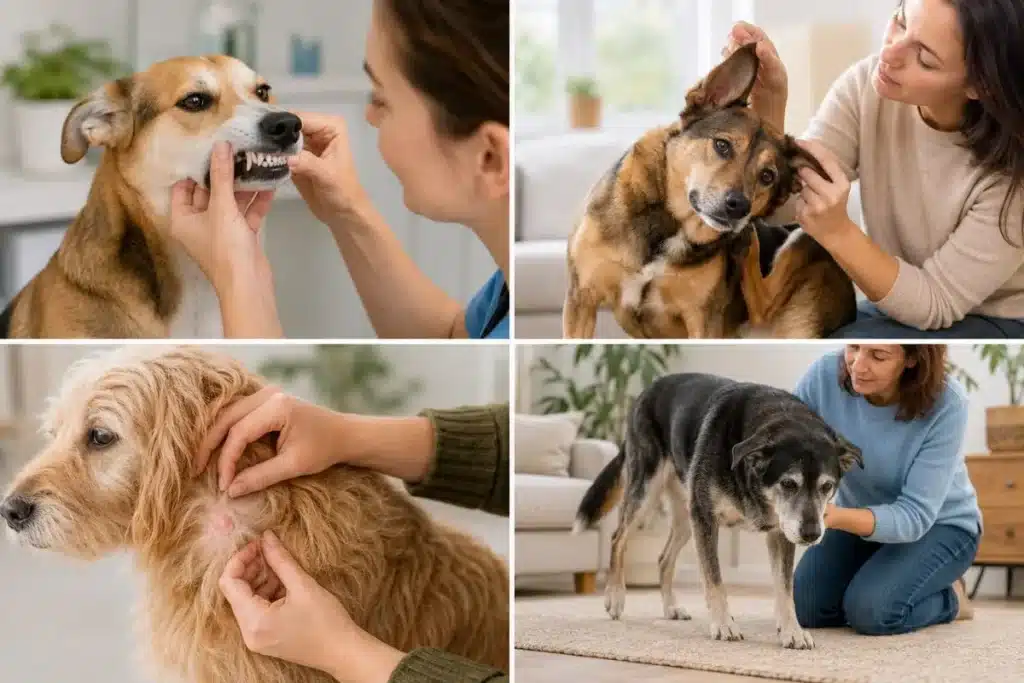
Many common health concerns affect a dog’s teeth, ears, skin, weight, digestion, joints, or urinary system. The sections below explain each problem in simple terms. You will also learn which signs to watch for and when to contact a veterinarian.
1. Dental Disease
Dental problems often develop slowly. Ongoing bad breath may be one of the first signs an owner notices.
Plaque is a soft film that forms on the teeth. If it stays there, it can harden into tartar. This buildup may irritate the gums and cause gingivitis, which means gum inflammation.
More serious periodontal disease can damage the gums, tissues, and bones that support the teeth.
Signs you may notice include:
- Ongoing bad breath
- Red, swollen, or bleeding gums
- Yellow or brown tartar
- Drooling
- Unusual chewing
- Dropping food
- Avoiding hard food
Older dogs and dogs without regular dental care may have a higher risk. However, dental problems can affect dogs at any age.
Veterinarian-approved home care may help reduce plaque. Learn how to clean dog teeth safely at home. However, brushing cannot repair a broken, loose, or infected tooth.
The AVMA dental guide lists bad breath, heavy tartar, drooling, unusual chewing, and dropping food as possible warning signs. Contact your veterinarian if your dog has mouth pain, bleeding, damaged teeth, or trouble eating.
2. Ear Infections
Repeated head shaking, ear odor, or pain may be more than normal earwax.
Inflammation of the outer ear canal is called otitis externa. Allergies, trapped moisture, parasites, ear shape, or another health problem may cause it. Because the causes differ, a veterinarian may need to examine the ear.
Signs you may notice include:
- Repeated head shaking
- Scratching one or both ears
- A strong or unusual smell
- Redness or swelling
- Wax-like or liquid discharge
- Pain when touched
- Itching around the ear
Routine cleaning is different from treating a painful ear. Read our guide on cleaning dog ears when normal cleaning is appropriate.
Avoid this mistake: Do not pour vinegar, peroxide, cleaners, or home remedies into a red, painful, or leaking ear without veterinary advice.
The Merck ear guide lists odor, redness, swelling, scratching, discharge, pain, and head shaking as possible signs. Contact a veterinarian if the problem continues or your dog develops a head tilt or balance problem.
3. Obesity
Weight gain often happens slowly. So, owners may not notice it until their dog’s energy or movement changes.
Obesity means a dog has more body fat than is healthy. Possible signs include ribs that are hard to feel, no clear waist, a rounded belly, low stamina, or less interest in exercise.
Veterinarians often use a body condition score, or BCS, to check body fat. They may also check muscle condition because body weight alone does not show the full picture.
Before changing your dog’s routine, review:
- Meal portions
- Treats and table food
- Daily activity
- Recent weight changes
- Current health problems
Do not start an extreme diet or suddenly increase exercise. Our guide to what dogs should eat daily explains basic food, portion, and treat needs.
The AAHA weight guide explains that slow weight gain can be hard to notice. Ask your veterinarian to check your dog’s body condition and suggest a safe plan.
4. Skin Allergies and Infections
Itching is common, but an allergy is only one possible cause.
Dogs may itch because of fleas, mites, food reactions, environmental allergies, or skin infections. Repeated licking and scratching can also damage the skin. This may lead to more irritation or a second infection.
Signs you may notice include:
- Frequent scratching
- Repeated licking or chewing
- Red or inflamed skin
- Hair loss
- An unusual smell
- Scabs or open sores
- Moist hot spots
- Dry or flaky skin
A gentle dog hygiene routine can help you notice changes in the skin and coat. However, cleaning alone will not treat allergies, parasites, or infections.
Avoid this mistake: Do not assume every itchy dog needs new food, supplements, or medicated shampoo.
The AAHA allergy guide explains that fleas, food, and environmental triggers may cause allergic reactions. Contact your veterinarian if itching continues or the skin becomes painful, broken, smelly, or increasingly bald.
5. Fleas, Ticks, and Intestinal Parasites
Some parasites are easy to see. Others may cause few clear signs at first.
Fleas and ticks live on the outside of a dog’s body. Intestinal parasites, such as roundworms, hookworms, and Giardia, live inside the digestive system. Some parasites can also spread disease or affect people.
Possible signs include:
- Scratching or biting the skin
- Visible fleas or attached ticks
- Red or irritated skin
- Changes in stool
- Vomiting or diarrhea
- A dull coat
- Weight loss
- Low energy
Some infected dogs may still look healthy. A veterinarian may use fecal testing, which means checking a stool sample, to look for intestinal parasites.
Risk can change with location, weather, age, travel, wildlife exposure, and lifestyle. Ask your veterinarian to choose a prevention plan that fits your dog.
The CAPC parasite guide recommends year-round protection against heartworm, intestinal parasites, fleas, and ticks. It also advises adjusting prevention to local risks and the individual dog.
6. Vomiting and Diarrhea
One mild stomach upset is different from repeated symptoms with pain, weakness, or blood.
Vomiting actively pushes stomach contents out and often involves belly movement. Regurgitation is more passive and may bring up undigested food. Telling your veterinarian what you saw can help, but neither sign shows the exact cause.
Other signs may include:
- Loss of appetite
- Diarrhea
- Belly pain
- Bloating
- Weakness
- Dehydration
- Blood in vomit or stool
- Repeated retching
For example, one loose stool in an active dog is different from repeated diarrhea with vomiting or weakness. Age, health history, symptom length, and possible exposure to toxins or swallowed objects also matter.
Do not give human medicine or follow an unverified fasting plan without veterinary advice.
Contact a veterinarian promptly if signs repeat, worsen, contain blood, or cause pain. Puppies, senior dogs, and dogs that may have eaten a toxin or object may need faster care.
7. Arthritis and Mobility Problems
Slower movement is often blamed on normal aging. However, pain or joint disease may also affect the dog.
Osteoarthritis is a long-term condition that causes joint pain, stiffness, and reduced movement. Older dogs may have a higher risk. But injuries, excess weight, body shape, and other joint problems can also play a role.
Signs you may notice include:
- Stiffness after rest
- Limping
- Trouble standing
- Refusing to jump
- Avoiding stairs
- Less interest in walks or play
- Irritability when touched
- Changes in posture
Not every limp means arthritis. Paw injuries, muscle pain, or other conditions can cause similar signs.
When it is safe, record a short video of your dog walking. Also note when the problem started and whether it changes after rest or exercise. These details can support at-home health monitoring.
Avoid this mistake: Do not give human pain medicine unless a veterinarian tells you to. The FDA’s pain medicine guide explains why drugs such as ibuprofen and naproxen can harm dogs.
8. Urinary Problems
Changes in urination may seem minor at first. However, a dog that cannot pass urine needs urgent veterinary care.
Urinary problems can affect the bladder, kidneys, ureters, or urethra. Possible causes include infection, stones, incontinence, kidney disease, or a blockage. These problems are different and may need different tests.
Signs you may notice include:
- Urinating more often
- Passing only small amounts
- Straining or crying
- Indoor accidents
- Dribbling urine
- Blood in the urine
- Drinking more water
- Passing little or no urine
Frequent urination does not always mean a simple urinary infection. A veterinarian may need a physical exam, urine test, blood test, or scan to find the cause.
Repeated straining with only drops—or no urine—is more serious. Merck explains that a urinary blockage can quickly damage the urinary system. Seek veterinary help right away.
Serious or Preventable Conditions Owners Should Recognize
Some illnesses are less common than everyday health problems, but owners should still know their warning signs. Vaccination, parasite prevention, testing, and early veterinary care may lower the risk. This section supports awareness and safe action, not self-diagnosis.

9. Heartworm Disease
Heartworm disease develops when infected mosquitoes pass heartworm larvae to a dog. These parasites can grow inside the heart, lungs, and nearby blood vessels.
Dogs may show no clear signs during the early stages. As the infection becomes more serious, owners may notice:
- An ongoing cough
- Tiredness after normal activity
- Reduced interest in exercise
- Low energy
- Appetite loss
- Weight loss
Because early signs can be hard to notice, prevention and regular testing are important. Your veterinarian can choose a suitable prevention and testing plan. The plan may depend on your dog’s age, health, lifestyle, and local mosquito risk.
The AHS heartworm guide explains heartworm prevention, testing, and common warning signs.
Do not stop, restart, or change heartworm medicine without veterinary advice. Contact your veterinarian if your dog develops an ongoing cough or becomes unusually tired. Trouble breathing, collapse, or severe weakness needs urgent care.
10. Canine Respiratory Infections and Kennel Cough
Canine infectious respiratory disease complex, or CIRDC, is a group of contagious breathing illnesses. Many people call it kennel cough.
A sudden and frequent honking cough is a common sign. Some dogs may also gag or retch after coughing.
Other possible signs include:
- Nasal discharge
- Eye discharge
- Fever
- Low energy
- Reduced appetite
- Frequent coughing
The risk may increase when dogs spend time in boarding facilities, daycare, shelters, training centers, or dog shows. However, coughing does not always mean kennel cough. Heart, lung, or throat problems can cause similar signs.
Keep a coughing dog away from close contact with other dogs until you receive veterinary advice. Contact your veterinarian if the cough continues or your dog seems unwell. Breathing trouble, blue or pale gums, collapse, or severe distress needs emergency care.
11. Canine Parvovirus
Canine parvovirus, often called parvo, is a highly contagious viral disease. It mainly attacks the digestive system.
The virus can spread through infected stool and contaminated surfaces. Puppies and unvaccinated dogs face a higher risk.
Possible signs include:
- Low energy
- Loss of appetite
- Fever
- Vomiting
- Severe diarrhea
- Bloody diarrhea
These signs can become worse quickly. However, symptoms alone cannot confirm parvo. A veterinarian may need to examine your dog and run tests.
Do not depend on home remedies or online medicine advice when parvo is possible. Seek urgent veterinary care if a puppy or unvaccinated dog develops vomiting, weakness, appetite loss, or diarrhea.
Vaccination can help lower the risk. Ask your veterinarian to create a vaccination plan that suits your dog’s age and health.
12. Leptospirosis
Leptospirosis is a bacterial infection that can affect the kidneys, liver, lungs, and other organs.
Dogs may become exposed through infected urine or water contaminated by urine. Wildlife can also carry the bacteria. Risk may change with location, weather, outdoor activity, and contact with standing water.
Some dogs show mild or no clear signs. Others may become seriously ill.
Signs owners may notice include:
- Low energy
- Appetite loss
- Vomiting
- Dehydration
- Belly or back pain
- Increased thirst
- Changes in urination
These signs can also occur with other health problems. A veterinarian must examine the dog and confirm the cause.
Leptospirosis is zoonotic, which means it can spread between animals and people. Avoid direct contact with urine from a possibly infected dog. Wash your hands and contact a veterinarian. Also discuss vaccination based on your dog’s individual risk.
Use the Notice–Check–Act Method
Owners often notice a change before they understand what caused it. The Notice–Check–Act method helps you collect useful details and choose a safe next step.
This is an observation method, not a diagnostic test. Only a veterinarian can diagnose your dog’s condition.
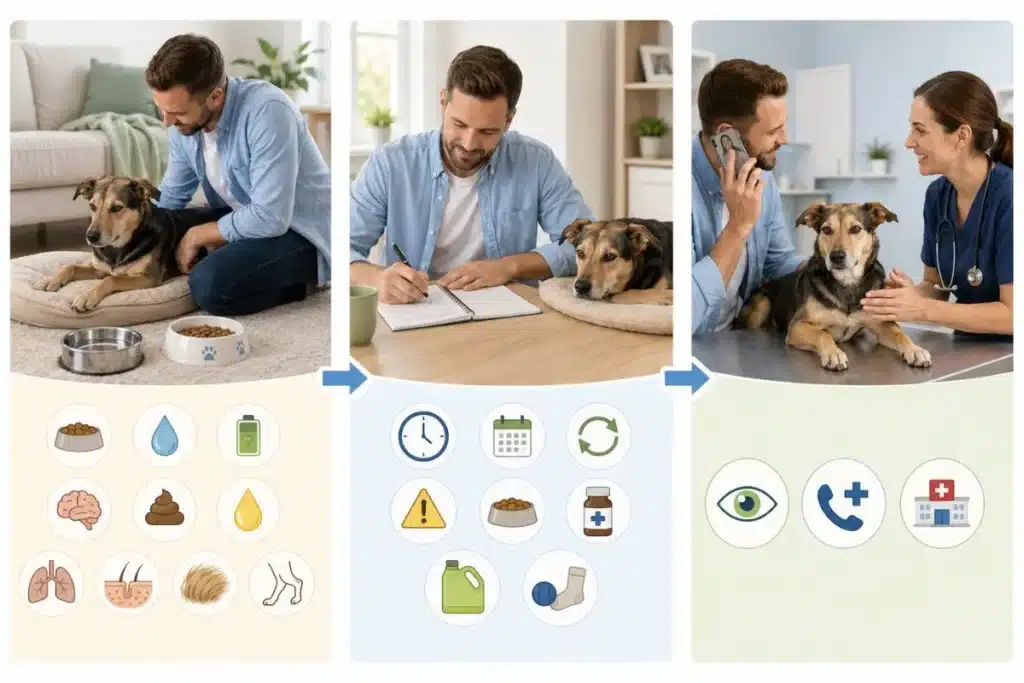
Notice What Changed
Compare your dog’s current condition with their normal baseline. Look for changes in:
- Appetite or water intake
- Energy or behavior
- Stool or urination
- Breathing
- Skin or coat
- Walking or movement
Write down exactly what you see. Avoid guessing the cause.
Check the Pattern
Ask these five questions:
- When did the change begin?
- How often does it happen?
- Is it getting worse?
- Are there any other signs?
- Could your dog have reached food, medicine, chemicals, or another object?
Act According to Urgency
A mild, one-time sign that does not worsen may need careful monitoring.
Contact a veterinarian if the sign continues, repeats, causes pain, or becomes worse.
Seek emergency veterinary care for breathing trouble, collapse, seizures, heavy bleeding, a swollen belly, or inability to urinate.
When Is a Dog Health Problem an Emergency?
Not every health change needs an emergency hospital. However, severe or quickly worsening signs should not be watched at home. Get professional help right away.
Seek Immediate Veterinary Care for Signs Such As
- Difficulty or labored breathing
- Collapse or loss of consciousness
- Seizures
- Heavy or uncontrolled bleeding
- Suspected poisoning
- Inability to pass urine
- A swollen and painful abdomen
- Repeated retching without vomiting
- Major trauma, such as being hit by a vehicle
- Severe pain or distress
If you suspect poisoning, call your veterinarian, an emergency animal hospital, or an animal poison control center. The FDA emergency guide explains whom to contact.
Xylitol in some sugar-free products can cause weakness, poor coordination, collapse, and seizures. Read the FDA xylitol warning and seek help immediately after possible exposure.
Contact a Veterinarian Promptly When
Call your veterinarian when:
- Vomiting or diarrhea keeps happening
- Blood appears in vomit, stool, or urine
- Pain continues
- Appetite loss lasts
- Your dog becomes weak
- Symptoms worsen or new signs appear
Contact a vet sooner if the dog is a puppy, senior, or has an ongoing medical condition. Review these early signs of sickness to recognize other changes that may need veterinary care.
How to Reduce Common Dog Health Risks
No routine can prevent every illness. However, regular preventive care can lower some risks and help you notice changes earlier.
Schedule Routine Veterinary Visits
Most healthy adult dogs need a preventive veterinary visit at least once a year. Puppies, senior dogs, and dogs with health problems may need more frequent care.
Your veterinarian can choose a schedule based on your dog’s age, breed, lifestyle, and health. AAHA explains these differences in its vet visit guide.
Maintain Dental Care
Use veterinarian-approved dental care at home and arrange regular oral checks. Seek veterinary advice for mouth pain, bleeding, broken teeth, or trouble eating.
Maintain a Healthy Body Condition
Give suitable food portions, limit extra treats, and provide safe daily activity. A veterinarian can assess your dog’s body fat and muscle condition more accurately than weight alone.
A consistent daily care routine can make feeding, exercise, and basic health checks easier.
Follow Vaccination and Parasite Guidance
Vaccination needs vary by age, health, lifestyle, travel, and exposure risk. Parasite risks can also change by location and season.
Observe Your Dog During Daily Care
Check your dog’s coat, ears, mouth, paws, movement, appetite, and bathroom habits. A daily care checklist can help you notice and record changes.
Keep Toxic Items Secure
Store human medicines, xylitol, chocolate, grapes, raisins, household chemicals, and rodent poison safely away. The FDA’s dangerous items lists common household hazards for pets.
What to Record Before Calling Your Veterinarian
Clear notes help the veterinary team understand what changed and how quickly it happened. Record only what you see, and avoid guessing the cause.
Dog Health Observation Note
- Date and time:
- Main change noticed:
- When it started:
- How often it happened:
- Getting better or worse:
- Food and water intake:
- Vomiting or stool changes:
- Urination changes:
- Energy and behavior:
- Possible food, medicine, plant, object, or chemical exposure:
- Photo or video available:
- Questions for the veterinarian:
A clear photo or short video may help show limping, coughing, unusual movement, or another visible change. Only record it when your dog is safe and calm.
Safety note: Do not delay emergency veterinary care to finish this note or record a video.
Dog Health Concerns Can Change With Age
Puppies, adult dogs, and senior dogs may face different health risks. However, illness can affect a dog at any age. Care needs also vary by breed, size, lifestyle, and current health. AAHA recommends adjusting preventive care to each dog’s life stage and individual needs. (AAHA)
Puppies
Puppies need close protection from parasites, digestive illness, and infectious diseases. Their vaccination status also affects their risk.
Watch for vomiting, diarrhea, appetite loss, weakness, or low energy. Puppies can become dehydrated quickly, so contact a veterinarian when signs continue or worsen.
Ask your veterinarian to create a suitable vaccination and parasite plan for your puppy.
Adult Dogs
Adult dog care often focuses on:
- Dental health
- Skin and ear problems
- Healthy body weight
- Parasite prevention
- Lifestyle-related exposure
Senior Dogs
Senior dogs may develop arthritis, dental disease, mobility changes, or long-term health conditions. Regular checks become more important as dogs age. AAHA notes that senior exams may include checks for pain, movement, and other age-related changes.
Watch for changes in thirst, appetite, weight, behavior, sleep, or movement. Do not assume every change is normal aging. Compare new changes with the signs of a healthy dog.
Common Dog Health FAQs
What Are the Most Common Health Problems in Dogs?
Common dog health problems include dental disease, ear infections, obesity, skin problems, parasites, digestive issues, and joint problems. Urinary changes are also common reasons for veterinary visits.
However, no single list applies to every dog. Health risks can change with age, breed, size, lifestyle, location, and medical history. Contact your veterinarian when a problem continues, causes pain, or becomes worse.
How Can I Tell if My Dog May Be Sick?
A dog may be sick when their normal habits or behavior suddenly change. Watch for appetite loss, low energy, vomiting, diarrhea, coughing, limping, unusual thirst, or bathroom changes.
Skin, breathing, sleep, and social behavior may also change. One small change may not always mean illness. However, repeated or worsening signs need attention.
Which Dog Symptoms Need Emergency Veterinary Care?
Seek emergency veterinary care for trouble breathing, collapse, seizures, heavy bleeding, major trauma, or suspected poisoning. A dog that cannot pass urine also needs immediate help.
Other urgent signs include a swollen, painful belly and repeated retching without vomiting. Severe pain, pale or blue gums, and loss of consciousness are also emergencies. Do not wait at home for these signs to improve.
Can Common Dog Health Problems Be Prevented?
Some dog health risks can be reduced, but no routine can prevent every illness. Regular veterinary visits, vaccination, parasite control, dental care, and a healthy weight may lower certain risks.
Daily activity, safe food portions, and keeping toxic items secure also help. Preventive care should match your dog’s age, lifestyle, location, and health history. Your veterinarian can create a plan that suits your dog.
What Health Problems Are Common in Puppies?
Common puppy health concerns include intestinal parasites, vomiting, diarrhea, dehydration, and infectious diseases such as parvovirus. Puppies without complete vaccination may face a higher risk of some infections.
Young puppies can become weak or dehydrated faster than healthy adult dogs. Contact a veterinarian when vomiting or diarrhea repeats, appetite drops, or energy becomes low. Ask your veterinarian about vaccination, feeding, and parasite prevention.
What Health Problems Are Common in Senior Dogs?
Senior dogs may develop arthritis, dental disease, mobility problems, and long-term health conditions. Owners may also notice changes in thirst, appetite, weight, sleep, behavior, or urination.
Do not assume every new change is a normal part of aging. Pain and illness may appear as slower movement or less interest in daily activities. Regular veterinary checks can help assess dental health, movement, body condition, and other changes.
Are Some Dog Breeds More Prone to Health Problems?
Yes, breed can affect the risk of certain dog health problems. Inherited traits, body shape, size, coat type, and physical structure may increase the chance of some conditions.
However, breed risk does not mean every dog will develop that problem. Age, weight, lifestyle, environment, and preventive care also affect health. Ask your veterinarian which breed-related concerns may need closer monitoring.
How Often Should a Healthy Dog See a Veterinarian?
Most healthy young adult dogs should generally see a veterinarian at least once each year. Puppies, senior dogs, and dogs with ongoing health problems may need more frequent visits.
The right schedule depends on age, breed, lifestyle, vaccination needs, and medical history. The AAHA vet visit guide explains how veterinary care may change during different life stages.
Final Thoughts on Dog Health
Knowing your dog’s normal appetite, energy, movement, bathroom habits, and behavior helps you notice health changes early.
One sign does not always show the exact problem. So, record what changed, when it started, and whether it is getting worse.
Contact a veterinarian if signs continue, repeat, cause pain, or become more serious. Seek emergency care for severe signs, such as breathing trouble, collapse, seizures, or inability to urinate. Next, learn how to monitor your dog’s health at home.