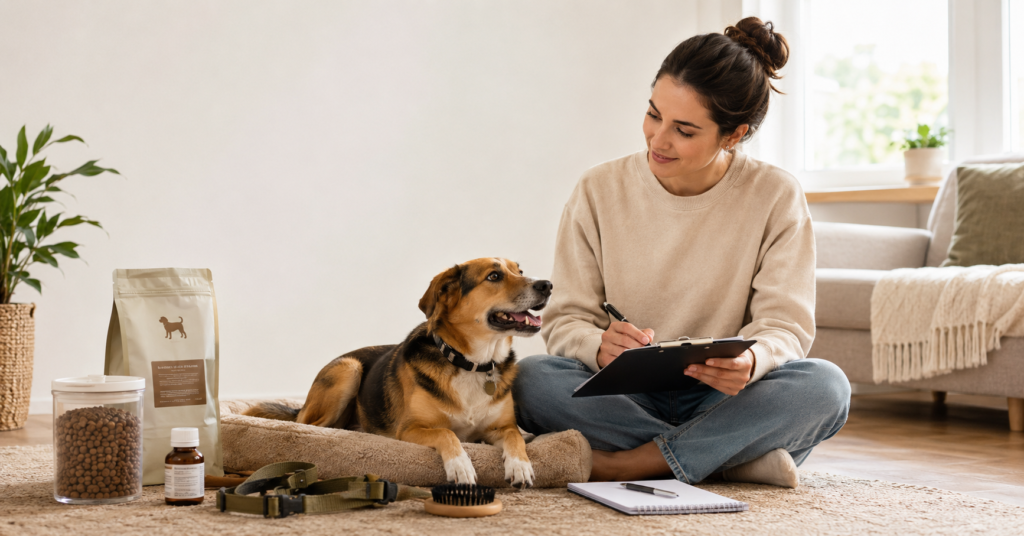
A monthly dog care checklist helps you review your dog’s health, grooming needs, supplies, equipment, and upcoming care dates. Once a month, compare your dog’s weight, appetite, water intake, energy, movement, skin, coat, and behavior with the previous month. Note anything that needs a refill, replacement, closer monitoring, or veterinary follow-up.
Your dog’s daily care routine covers food, water, exercise, potty breaks, and other immediate needs. This monthly dog-care reset focuses on longer-term changes and planning. It does not replace daily, weekly, or veterinarian-recommended care.
Monthly Dog Care Checklist at a Glance
Start with this quick checklist. Then read the detailed sections when you need more help.
Review Health Changes
- Compare your dog’s appetite and water intake with last month.
- Look for changes in energy, sleep, or behavior.
- Note any changes in stool or urination.
- Review your dog’s movement and exercise level.
Check Your Dog
- Record your dog’s weight and body condition.
- Check the skin and coat for visible changes.
- Look at the eyes and outer ears.
- Check the teeth, gums, and breath.
- Inspect the paws, pads, and nails.
- Watch your dog walk, stand, and move.
Review Routine Care
- Check whether grooming is due.
- Review medications and preventive care.
- Check upcoming appointments and care dates.
Inspect and Restock
- Check your remaining food and care supplies.
- Inspect the collar, harness, and leash.
- Check toys, bedding, the crate, and the ID tag.
Record and Schedule
- Write down any changes you noticed.
- List needed refills or replacements.
- Set the next action and due date.
Important: This checklist does not mean every task should happen only once a month. Food, water, exercise, medication, dental care, bowl cleaning, and some grooming tasks may need daily, weekly, as-needed, or veterinarian-recommended care.
What This Monthly Checklist Can—and Cannot—Do
This monthly dog wellness checklist helps you notice changes and organize your dog’s care. But it cannot diagnose a health problem at home.
It Can Help You
- Compare changes in your dog’s health and behavior
- Organize tasks that do not happen every day
- Notice low supplies or damaged equipment
- Prepare questions for your veterinarian
- Track appointments, refills, and care dates
It Cannot
- Diagnose an illness
- Prove that your dog is completely healthy
- Replace daily or weekly care
- Replace a veterinary exam or treatment
- Guarantee that you will find every health problem early
Use this checklist to observe, record, and plan your dog’s monthly care. For a broader care foundation, read our beginner dog care guide.
Daily vs Weekly vs Monthly Dog Care
The main difference is how often each task needs attention and what the task helps you manage.
| Frequency | Main purpose | Examples |
| Daily | Meet immediate needs and notice changes | Food, water, potty breaks, exercise, and prescribed medication |
| Weekly | Handle routine cleaning and care | Coat, ears, teeth, paws, bedding, and grooming checks |
| Monthly | Compare changes and plan ahead | Health trends, supplies, equipment, records, and appointments |
Your daily dog care checklist covers the tasks your dog needs each day. A weekly dog care checklist focuses on regular cleaning, grooming, and basic health checks.
A monthly review has a different purpose. It helps you:
- Compare changes with the previous month
- Restock food, medication, and care supplies
- Replace damaged toys or walking gear
- Update health notes and care records
- Schedule appointments, refills, and follow-up care
Some tasks may need more or less attention. Your dog’s age, health, coat, lifestyle, and veterinary advice can affect the schedule.
Step 1 — Review Changes From the Past Month
Look for patterns, not just how your dog seems today. Compare this month with your dog’s usual habits. Write down clear changes, but do not try to diagnose the cause yourself.
Compare Appetite and Water Intake
Think about your dog’s normal eating and drinking habits. Has your dog started leaving food, eating more, or asking for food at unusual times?
Also notice whether you refill the water bowl more or less often. One unusual day may not mean much. Focus on changes that continue or happen again.
Review Energy, Sleep, and Behavior
Compare your dog’s energy, sleep, and behavior with last month. Look for changes in:
- Interest in play
- Excitement before walks
- Restlessness or waking at night
- Hiding or avoiding family members
- New fear, irritation, or unusual reactions
It becomes easier to notice patterns when you track your dog’s health regularly.
Check Stool and Urination Patterns
Review your dog’s usual bathroom habits. Note any changes in:
- Frequency
- Stool firmness
- Indoor accidents
- Straining
- Unusual stool or urine color
- More frequent urination
Record only what you notice. Do not guess the medical cause. Contact your veterinarian if a change continues or gets worse.
Review Movement and Exercise
Watch how your dog moves during normal activities. Check whether your dog:
- Hesitates on stairs
- Struggles to stand
- Avoids jumping
- Stops earlier during walks
- Limps or moves more slowly
- Shows less interest in exercise
Example: Your dog still eats normally but now stops earlier during walks and hesitates on stairs. Record when the changes began and how often they happen. Do not assume your dog is simply being stubborn.
Sudden or worrying changes may be early warning signs that need attention.
Your next step: Record what changed, when it began, how often it happens, and whether it is improving, staying the same, or getting worse.
Step 2 — Check Your Dog From Nose to Tail
Look for changes from your dog’s usual condition. You do not need to search for signs of perfect health.
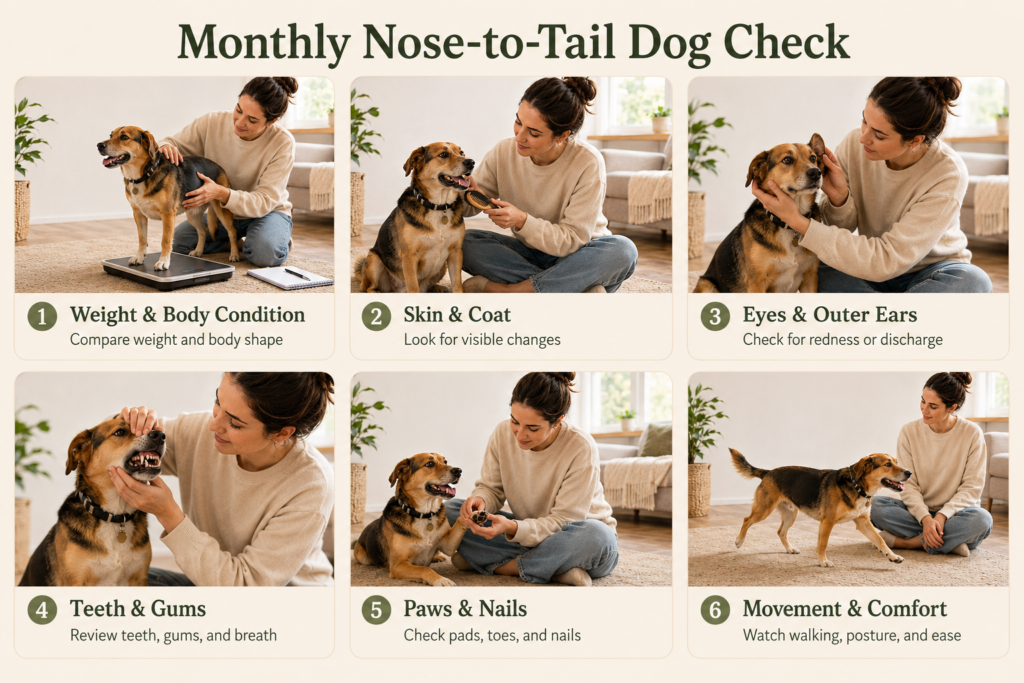
Complete the check in short stages on a calm, non-slip surface. Stop if your dog seems frightened, painful, or uncomfortable.
Record Weight and Review Body Condition
Weigh your dog under similar conditions each month. Try to use the same scale and a similar time of day.
Compare the result with last month. But do not rely only on the number on the scale.
Also check:
- How easily you can feel the ribs
- Whether you can see a waist from above
- Whether the belly curves upward behind the ribs
- Whether the shoulders, back, or hips show muscle loss
A Body Condition Score describes a dog’s body fat using the ribs, waist, and belly shape. The WSAVA body-condition chart shows how these features may look at different body conditions.
Record any unexpected weight change. However, do not change your dog’s food based on one reading alone. Contact your veterinarian if the change continues or has no clear reason.
Check the Skin and Coat
Part the coat in several places and look closely at the skin.
Check for:
- Redness or swelling
- Sore or irritated areas
- New hair loss
- Dry, oily, or flaky skin
- Mats and tangles
- New lumps or bumps
- An unusual smell
- Frequent scratching or licking
Do not decide that a lump is safe or dangerous from a home check. Record its location and size, then contact your veterinarian when needed.
Look at the Eyes and Outer Ears
Check both eyes in good light. Look for redness, cloudiness, discharge, squinting, or a clear difference between the eyes.
Next, inspect the visible parts of the outer ears. Watch for:
- Redness or swelling
- Discharge
- A strong smell
- Frequent scratching
- Repeated head shaking
A monthly ear check does not mean every healthy ear needs cleaning. Never push cotton swabs or other objects into the ear canal. Use our ear-cleaning guide when routine cleaning is needed.
Review Teeth, Gums, and Breath
Gently lift your dog’s lips and look at the visible teeth and gums.
Check for:
- Ongoing bad breath
- Visible plaque or hard tartar
- Red, swollen, or bleeding gums
- A broken or loose-looking tooth
- Drooling
- Trouble chewing
- Food falling from the mouth
AAHA recommends a dental check when pets show signs such as bad breath, red gums, drooling, or trouble eating. Its dental-care guide explains these warning signs in more detail.
Inspect Paws, Pads, and Nails
Check every paw, including the spaces between the toes.
Look for:
- Cracks or cuts
- Swelling
- Objects trapped between the toes
- Irritated paw pads
- Broken or damaged nails
- Frequent licking
- Nails that seem too long
Do not trim your dog’s nails only because one month has passed. Nail growth varies by dog, activity level, and walking surface. Follow our nail-trimming guide when a trim is needed.
Watch Movement and Comfort
Let your dog walk naturally in a familiar area. Do not force special movements or exercises.
Watch for:
- Limping or stiffness
- Uneven steps
- Changes in posture
- Trouble sitting or standing
- Difficulty using stairs
- Reluctance to jump
- Signs of pain during movement
Your next step: Mark each area as “No change,” “Action needed,” or “Ask the vet.” Record what you see, but do not use this checklist to diagnose a health condition.
Step 3 — Review Care, Supplies, and Equipment
Care products and safety equipment often need attention before they run out or break. Use this monthly check to find items that need grooming, refilling, replacing, or scheduling.
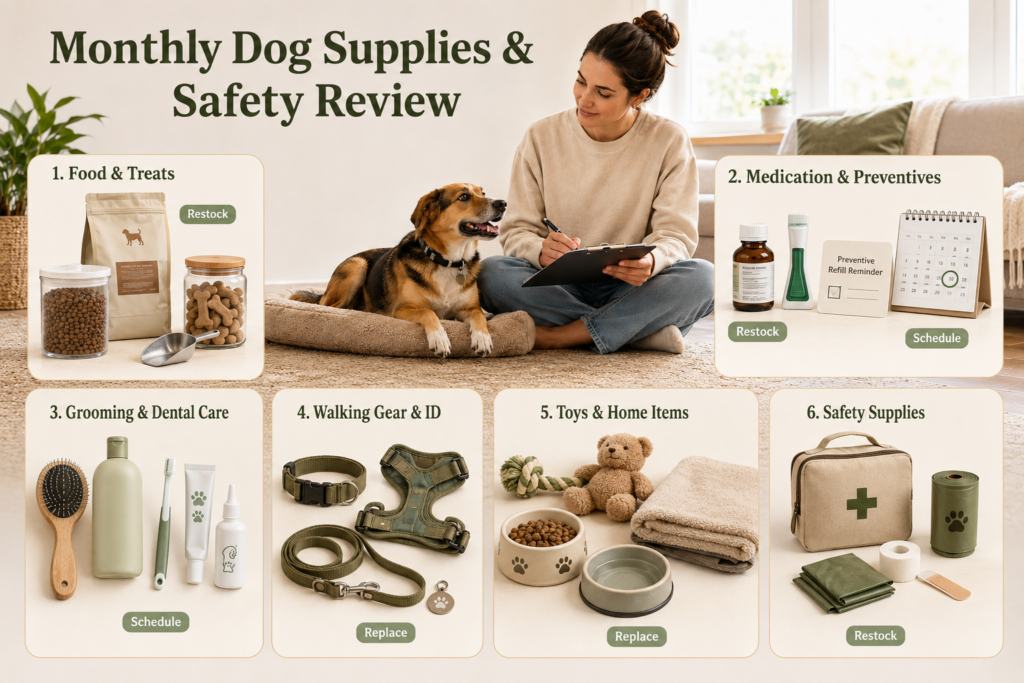
Review Grooming Needs
Check your dog’s coat, skin, paws, and nails before choosing which grooming tasks to do.
Review:
- Brushing needs and loose hair
- Mats or tangles
- Whether a bath is needed
- Nail length
- Coat or paw-hair trimming
- The next professional grooming visit
Not every dog needs a bath each month. Grooming needs depend on the dog’s coat, activity, skin condition, comfort, and lifestyle.
Check Medications and Parasite Preventives
Review every prescribed medicine and preventive product.
Check:
- Remaining doses
- Refill dates
- Expiration dates
- Missed doses
- The prescription label
- Flea, tick, heartworm, or other preventive dates
- Safe storage
Keep medicines in their original labeled containers. Store them where children and pets cannot reach them. The FDA storage guide explains how safe storage can reduce mistakes and accidental exposure.
The CAPC guidelines support year-round protection from common parasites. However, the right product and timing depend on your dog, local risks, and veterinary advice.
Always follow the product label and veterinary schedule. Do not move a dose simply to match your monthly checklist date.
If you miss a dose, ask your veterinary team what to do next. Do not automatically double the next dose.
Check Upcoming Care Dates
Review your calendar and veterinary records for:
- Wellness exams
- Vaccinations
- Recommended tests
- Prescription renewals
- Dental appointments
- Professional grooming
- Follow-up visits
A monthly review does not mean your dog needs a veterinary visit every month. It simply helps you notice upcoming care dates.
Follow the schedule made for your dog’s age, health, lifestyle, and treatment needs.
Review Food, Treats, and Care Supplies
Estimate how long your current food and prescribed medicines will last.
Also check:
- Food and treats
- Best-by dates
- Storage conditions
- Waste bags
- Dental products
- Shampoo and ear cleaner
- Grooming tools
- First-aid supplies
Keep the food’s lot number and best-by date available. A lot number identifies a specific batch during a recall or product complaint. The FDA lot-number guide shows where to find this information.
Example: Your current food bag may not last until the next planned order. Restock early to avoid a sudden last-minute food change.
Inspect the Collar, Harness, Leash, and ID
Check your dog’s walking gear closely.
Look for:
- Frayed straps
- Loose stitching
- Cracks or rust
- Damaged buckles
- Weak leash clasps
- Poor fit
- An unreadable ID tag
- Old contact details
Our accessories guide covers essential everyday equipment. Check the harness guide if your dog’s size or fit has changed.
Example: The harness still fits, but the fabric beside the buckle has started to fray. Replace it before the next walk instead of waiting for it to fail.
Inspect Toys, Bedding, Crate, and Bowls
Check toys for loose parts, exposed stuffing, sharp edges, or cracked rubber. Inspect the crate for damaged areas or broken latches.
Look for torn bedding, cracked bowls, and areas that need deeper cleaning. Replace anything that could cut, trap, choke, or fail during normal use.
Your next step: Make three short lists: Restock, Replace, and Schedule. Add a clear due date beside every item that needs action.
Step 4 — Record Changes and Plan the Next Step
A checklist becomes useful when each change leads to a clear action. Write down what you found. Then decide what needs attention and when you will handle it.
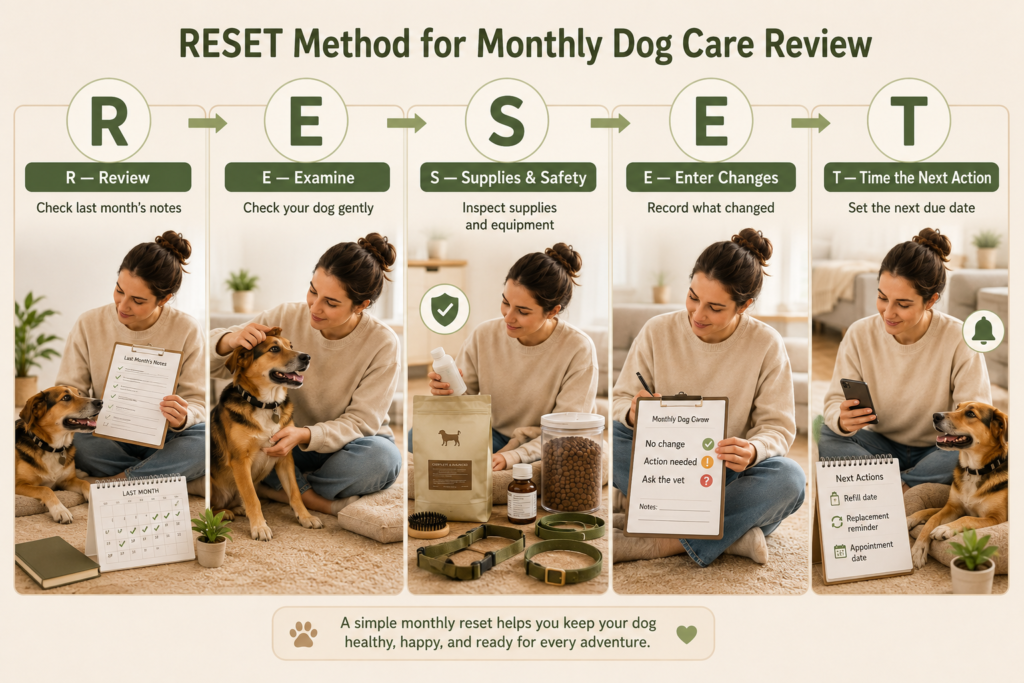
Use the RESET Method
Follow this simple method during each monthly review:
- R — Review: Read your previous notes and compare recent changes.
- E — Examine: Check your dog gently from nose to tail.
- S — Supplies and Safety: Inspect food, medicines, preventive products, and equipment.
- E — Enter Changes: Record new observations, low supplies, or damaged items.
- T — Time the Next Action: Set a date for each refill, replacement, appointment, or follow-up.
Give Each Item a Status
Use one of these three labels in your monthly dog care tracker:
| Status | What it means |
| No change | You found nothing new that needs action. |
| Action needed | You need to clean, refill, replace, book, or schedule something. |
| Ask the vet | A health change may need professional advice. |
These labels do not show how serious a medical problem is. They only help you organize your next step.
Set a Monthly Reminder
Choose the same general day each month, such as the first Saturday. However, never move a medicine or preventive dose to match that date.
Keep your dog’s health log in one place. Use a notes app, spreadsheet, or printed tracker. This makes monthly changes easier to compare.
Write only what you can see, hear, or measure. For example, write, “hesitated on the stairs three times.” Do not guess the cause. Our health tracking guide explains how to record changes clearly.
Your next step: Add a due date beside every action. Then set reminders for refills, replacements, appointments, and follow-ups.
Monthly Dog Care Checklist by Life Stage
The basic checklist stays similar throughout your dog’s life. However, monthly care priorities change as your dog grows and ages.
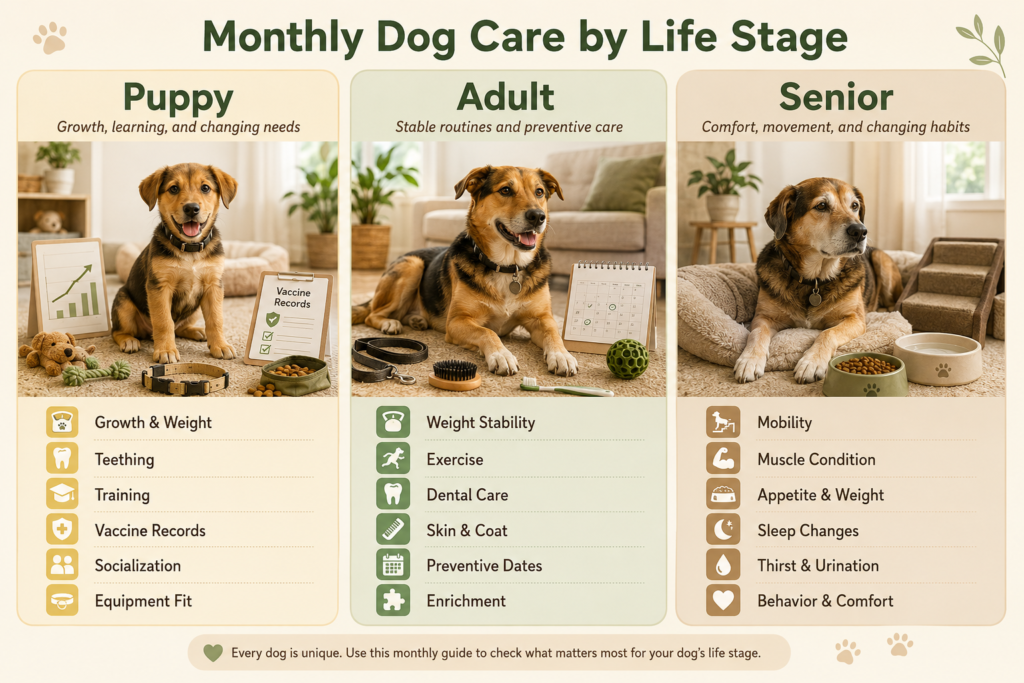
Puppy Monthly Review
A monthly puppy care checklist should focus on growth, training, and changing equipment needs.
Review:
- Growth, weight, and body condition
- Food amount and feeding schedule
- Teething and chewing habits
- Vaccine and preventive-care records
- Potty-training progress
- Safe socialization experiences
- Collar and harness fit
- Chewed or damaged equipment
Puppies grow quickly. A collar or harness that was fitted last month may now feel too tight.
Record any changes. Ask your veterinary team before changing your puppy’s food, vaccines, or preventive-care schedule.
Adult Dog Monthly Review
An adult dog monthly checklist helps you maintain stable routines and notice gradual changes.
Review:
- Weight and body condition
- Energy and exercise tolerance
- Dental-care routine
- Skin and coat condition
- Preventive-care dates
- Behavior and enrichment needs
- Condition of walking gear and toys
Compare each area with your dog’s normal habits. Monthly notes can make slow changes easier to notice over time.
Senior Dog Monthly Review
Senior dogs often need closer attention to comfort, movement, and daily habits.
Review:
- Mobility and muscle condition
- Appetite and weight
- Sleep patterns
- Thirst and urination
- Hearing and vision
- Behavior or thinking changes
- Comfort and quality of life
The AAHA senior-care guide covers important areas such as mobility, appetite, behavior, thirst, and urination.
Do not assume every change is simply part of aging. Record what changed, when it began, and how often it happens.
Common Monthly Dog Care Checklist Mistakes
A monthly checklist should make dog care easier. It should not move every task onto the same monthly schedule.
Treating Every Task as Monthly-Only
Some tasks need daily or weekly attention. Food, fresh water, prescribed medicine, dental care, and bowl cleaning should not wait.
Use a daily care checklist for your dog’s immediate needs. A weekly checklist can cover regular grooming, cleaning, and basic maintenance.
Checking Today but Ignoring Last Month
One check only shows your dog’s condition today. You need previous notes to notice slow changes over time.
Compare weight, appetite, movement, sleep, and behavior with the last month. Keep every result in the same tracker.
Forcing the Entire Check
Do not force your dog through one long nose-to-tail check. Use short sessions on a calm, non-slip surface.
Offer breaks and stop if your dog seems frightened, painful, or more uncomfortable.
Trying to Diagnose a Condition at Home
Write down facts you can see, hear, or measure. Do not guess the cause or name a health condition yourself.
Automatically Doubling a Missed Dose
Never double a missed medicine or preventive dose without clear instructions. The correct next step depends on the product and timing.
Read the prescription label and ask your veterinary team what to do.
Ignoring Equipment and Supplies
Your monthly reset should include more than a health check. Review food levels, refill dates, ID details, and everyday equipment.
Replace frayed straps, weak clasps, damaged toys, or cracked bowls before they fail.
Changes That Should Not Wait for the Monthly Review
Some changes can go in your monthly dog care tracker. However, serious or quickly worsening signs need faster action.
Continue Routine Monitoring
Continue normal monitoring when:
- Your dog seems comfortable
- You notice no important new health change
- Only cleaning, refilling, or replacing an item is due
Use one simple log to record changes at home. Clear notes make changes easier to compare over time.
Contact Your Veterinarian
Contact your veterinary team when an unexplained change continues, returns, or becomes more noticeable.
Examples include:
- An unexpected weight change
- Ongoing changes in appetite or thirst
- Lasting changes in movement or behavior
- A new lump or swelling
- Ongoing ear or dental problems
- Questions about medicine or preventive-care timing
Seek Prompt Veterinary Help
Do not wait for the monthly review if your dog has:
- Trouble breathing
- Collapse, seizure, or severe pain
- Suspected poisoning
- Trouble passing urine
- Pale, blue, grey, or purple gums
- Rapidly worsening signs
- Little or no response to you
AAHA recommends quick care for breathing trouble, collapse, seizures, unusual gum color, and reduced responsiveness. Its pet emergency guide explains these warning signs.
Important: This section offers basic next-step guidance. It does not diagnose an emergency or provide home treatment.
Printable Monthly Dog Care Tracker
Use one monthly dog care tracker each month. It helps you compare slow changes and find overdue tasks.
Choose one status for each review area:
- No change: You noticed nothing new.
- Action needed: You need to clean, refill, replace, or schedule something.
- Ask the vet: A health change may need professional advice.
Use the final column for short notes and due dates. Write only what you saw, heard, or measured. For example, write “stopped early during two walks” instead of guessing the cause.
| Monthly review area | No change | Action needed | Ask the vet | Notes or due date |
| Weight and body condition | ☐ | ☐ | ☐ | |
| Appetite and water | ☐ | ☐ | ☐ | |
| Energy, sleep, and behavior | ☐ | ☐ | ☐ | |
| Stool and urination | ☐ | ☐ | ☐ | |
| Skin and coat | ☐ | ☐ | ☐ | |
| Eyes and outer ears | ☐ | ☐ | ☐ | |
| Teeth and gums | ☐ | ☐ | ☐ | |
| Paws and nails | ☐ | ☐ | ☐ | |
| Mobility | ☐ | ☐ | ☐ | |
| Medication and preventives | ☐ | ☐ | ☐ | |
| Food and supplies | ☐ | ☐ | ☐ | |
| Collar, harness, and leash | ☐ | ☐ | ☐ | |
| Toys, bed, and crate | ☐ | ☐ | ☐ | |
| Records and appointments | ☐ | ☐ | ☐ |
Print a fresh copy each month or save it as a digital dog health tracker. Keep old copies together so you can compare changes over time.
Note: This tracker is for educational and organizational use only. It cannot diagnose illness or replace veterinary care.
Frequently Asked Questions About Monthly Dog Care
What should I do for my dog every month?
Complete five simple actions during your monthly dog care review. Review changes, check your dog, inspect equipment, restock supplies, and schedule upcoming care. Compare your dog’s weight, appetite, movement, skin, coat, and behavior with last month. Record what you notice without guessing the cause.
How often should I weigh my dog?
For many owners, weighing a dog once a month can help show gradual changes. Puppies, senior dogs, and dogs with health concerns may need a different schedule. Follow your veterinarian’s advice. Along with weight, check your dog’s ribs, waist, belly shape, and muscle condition.
Does every dog need a bath each month?
No. Bathing needs vary between dogs. Coat type, activity, lifestyle, skin condition, and comfort can all affect the right schedule. Bathe your dog when needed instead of following a fixed monthly rule. Our dog bathing guide explains how to prepare and bathe your dog safely.
Should dog nails be trimmed every month?
Not always. Nail growth depends on the dog, activity level, and walking surface. Check the nails each month, but trim them only when needed. Do not trim them just because a month has passed. Follow our nail-trimming guide for safe preparation and trimming steps.
Does a healthy dog need a veterinary visit every month?
Usually not. Veterinary visit frequency depends on your dog’s age, health, life stage, and care plan. A monthly home review helps you track changes and remember appointments. However, it does not replace regular veterinary exams. Contact your veterinarian sooner when a new or worrying change appears.
Are all flea, tick, and heartworm preventives monthly?
No. Preventive schedules can vary by product, location, parasite risk, and veterinary advice. Always follow the product label and prescribed schedule. Never change a dose date just to match your monthly checklist. Ask your veterinary team what to do when a dose is late or missed.
Is an at-home dog health check the same as a vet examination?
No. A home check helps you observe changes, keep records, and prepare questions. It cannot diagnose illness, perform tests, or provide treatment. Those tasks belong to a veterinary team. Our health monitoring guide explains how to record useful facts without making a home diagnosis.
Do puppies and senior dogs need different monthly checklists?
They can use the same basic checklist, but their priorities differ. A monthly puppy care checklist focuses on growth, teething, training, vaccines, and equipment fit. A senior dog monthly checklist focuses more on movement, muscle condition, appetite, sleep, thirst, urination, behavior, comfort, and quality of life.
Make Your Monthly Dog Care Review Easy to Repeat
A useful monthly dog care checklist does not mean every task must happen on the same day. It brings your dog’s health notes, supplies, equipment, and upcoming care into one simple review.
Each month:
- Review any changes from the past month
- Check your dog from nose to tail
- Inspect supplies and safety equipment
- Record anything that needs attention
- Set a reminder for the next review
Act sooner when a health change seems serious or gets worse. Between monthly reviews, use our daily dog care checklist to manage your dog’s everyday needs.