
There is no single cleaning schedule that works for every dog. How often you should clean your dog depends on what needs care. Bathing, paws, ears, teeth, coat, and nails all follow different routines.
Your dog’s coat type, lifestyle, activity level, age, and health can also change how often cleaning is needed. So, instead of following one fixed dog cleaning frequency, use a simple dog hygiene schedule based on your dog’s needs.
This guide explains how often to clean each area, when spot cleaning is enough, when a full bath makes sense, and how to avoid over-cleaning. For everyday care, follow our dog hygiene routine.
Quick Answer: How Often Should You Clean Your Dog?
There is no single dog cleaning schedule that works for every dog. Each hygiene task has a different routine. Your dog’s coat, lifestyle, activity level, and health can also change how often cleaning is needed.
Head-to-Tail Dog Hygiene Schedule
| Hygiene task | General approach |
| Bathing | Bathe as needed based on coat, lifestyle, and dirt |
| Brushing | Adjust the routine to coat type, shedding, and matting |
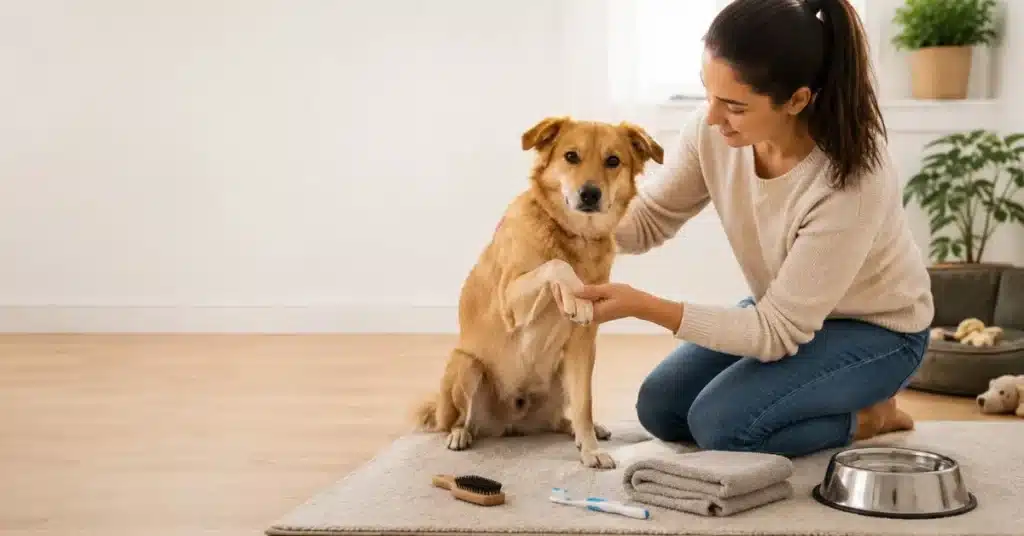
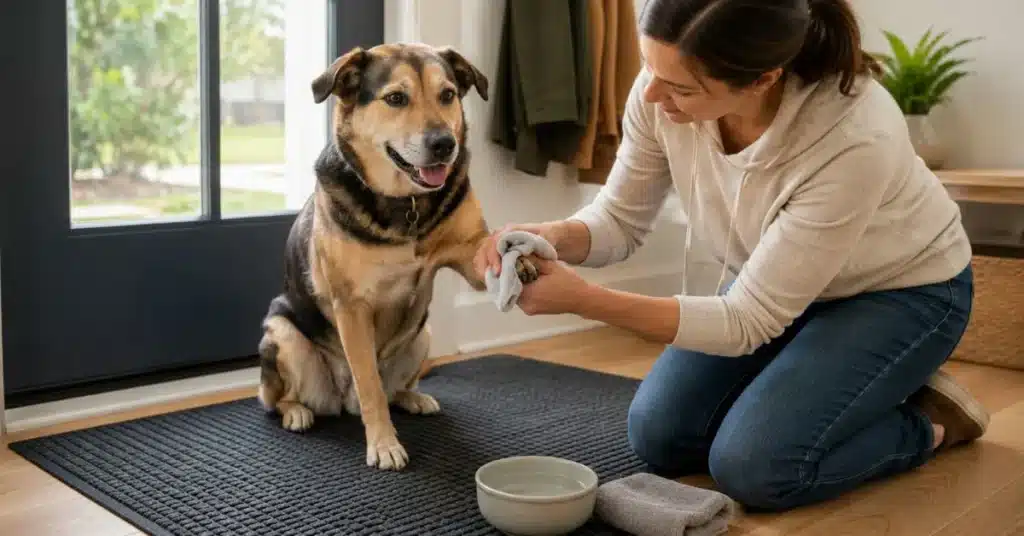
| Paws | Check after walks and clean mud, salt, or debris as needed |
| Ears | Check regularly and clean only when needed |
| Teeth | Aim to brush daily |
| Nails | Check often and trim when they become too long |
| Between baths | Spot-clean when only one area is dirty |
For a complete everyday routine, see our dog care guide.
What Changes How Often Your Dog Needs Cleaning?
There is no fixed dog cleaning schedule that works for every dog. Your dog’s coat, lifestyle, activity level, age, and health can all change how often cleaning is needed.
A good dog hygiene routine should match your dog’s needs instead of following one strict calendar.
Coat Type
Your dog’s coat type plays a big role in grooming needs. Long, curly, and double-coated dogs often need more brushing to prevent tangles and matting.
Lifestyle and Activity
Your dog’s daily routine also matters. A mostly indoor dog may stay clean longer and need fewer full baths.
But dogs that swim, hike, play in mud, or spend more time outdoors may need cleaning more often.
For example, an indoor short-coated dog may need a very different routine from an active, long-coated dog.
Age
Puppies, adult dogs, and senior dogs may have different hygiene needs. Their activity level, comfort, and ability to stay clean can change over time.
So, watch your dog instead of relying only on a fixed schedule.
Skin or Health Needs
Dogs with skin problems or other health concerns may need a different cleaning routine. In some cases, a veterinarian may recommend a specific bathing schedule or product.
If your dog has ongoing skin issues, follow your vet’s advice instead of bathing more often on your own.
Cleaning is only one part of overall care. Learning why dog hygiene matters can help you build a safer and more practical routine.
How Often Should You Clean Each Part of Your Dog?
Your dog does not need the same cleaning schedule from head to tail. Bathing, brushing, paws, ears, teeth, and nails all need different care.
The right routine also depends on your dog’s coat, lifestyle, activity, and health.
How Often Should You Bathe Your Dog?
A dirty dog does not always need a full bath. Most dogs only need a bath when their coat becomes dirty or starts to smell.
Your dog’s coat type and lifestyle can change how often baths are needed. A dog that swims, hikes, or plays in mud may need baths more often than an indoor dog.
Avoid bathing your dog too often without a reason. Frequent baths may dry or irritate the skin in some dogs.
Always use a shampoo made for dogs. Human shampoo has a different pH and may be too harsh for a dog’s skin.
If your vet prescribes a medicated shampoo, follow the schedule they recommend. For the full process, see our guide on how to bathe a dog.
How Often Should You Brush Your Dog?
Brushing frequency depends mostly on your dog’s coat.
Long, curly, or silky coats often need more brushing. This helps remove loose hair and prevent tangles and mats.
Short-coated dogs may need brushing less often. However, they can still benefit from regular coat care.
Brushing is not the same as bathing. Your dog may need a good brushing even when a bath is not needed.
The right brush also depends on coat type. Our guide to choosing a dog brush explains the main options.
How Often Should You Clean Your Dog’s Paws?
Your dog’s paws may need cleaning more often than the rest of the body.
Check the paws after walks, especially after muddy, sandy, snowy, or salty conditions. Clean away mud, road salt, sand, and other debris when needed.
You do not need to wash clean paws with soap after every walk.
For light dirt, a quick wipe may be enough. AKC’s paw-cleaning guide also recommends cleaning paws after exposure to dirt, salt, and other outdoor messes.
Check between the toes and around the paw pads while cleaning.
If you notice ongoing redness, pain, or irritation, stop repeated scrubbing and ask your vet for advice. For a simple routine, see how to clean dog paws after a walk.
How Often Should You Clean Your Dog’s Ears?
More ear cleaning is not always better.
Check your dog’s ears regularly. But do not assume they need cleaning every week.
Some dogs with clean, healthy ears may rarely need routine cleaning. Others may need more frequent care based on their individual needs.
Watch for bad odor, discharge, redness, swelling, or pain. These signs may need veterinary care instead of more cleaning.
Your vet can also help you decide the right ear-cleaning frequency for your dog. When cleaning is needed, follow our guide on how to clean dog ears.
How Often Should You Brush Your Dog’s Teeth?
Daily brushing is the ideal routine for your dog’s teeth.
Dental care follows a different schedule from bathing or coat care. The AVMA’s dental guidance recommends daily brushing when possible.
Regular brushing helps remove plaque, a soft buildup that can harden into tartar.
Use a toothbrush and toothpaste made for dogs. Never use human toothpaste.
Some human dental products contain xylitol, which the FDA warns is dangerous to dogs.
How Often Should You Trim Your Dog’s Nails?
Nail trimming is not technically cleaning. But it is an important part of a complete dog grooming routine.
Many dogs need nail trims about once a month. However, the timing can vary.
Dogs that walk often on hard surfaces may wear their nails down naturally. Less active dogs may need trims sooner.
Do not rely only on the calendar. Check your dog’s nail length regularly.
If you trim nails at home, learn where the quick is before cutting. The quick is the sensitive area inside the nail. For step-by-step help, see how to trim dog nails.
What About Cleaning Between Baths?
A small mess does not always need a full bath.
If only your dog’s paws, legs, face, or another small area is dirty, spot cleaning may be enough.
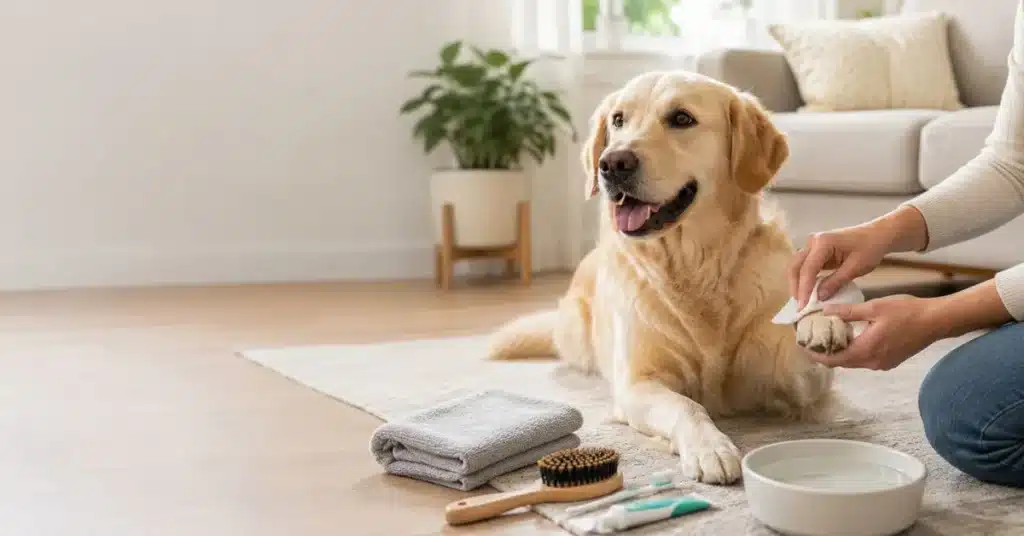
For light dirt, use a damp cloth or a dog-safe wipe when appropriate. This can keep your dog clean without washing the whole coat again.
However, spot cleaning does not replace every bath. A full bath may make more sense when the entire coat is muddy, heavily soiled, or smells unpleasant.
The goal is simple: clean what needs cleaning without overdoing it. For more practical options, see how to keep your dog clean without bathing.
Spot Cleaning vs. Full Bath: Which Does Your Dog Need?
Your dog does not need a full bath every time they get a little dirty. If only one area is messy, spot cleaning is often enough.
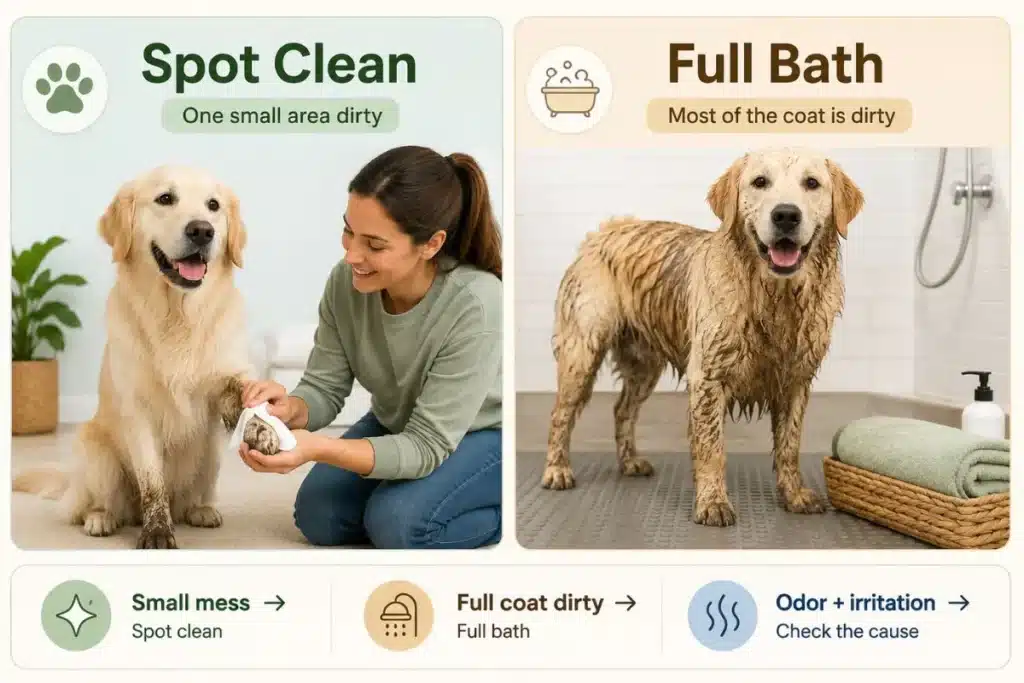
Spot Clean or Full Bath?
- Only the paws, legs, or one small area is dirty?
→ Clean that area with a damp cloth or a dog-safe wipe. - Mud, dirt, or odor covers most of the coat?
→ A full bath may be the better choice. - Your dog has ongoing odor, redness, itching, pain, or discharge?
→ Do not simply clean more often. These signs may need veterinary attention.
For example, your dog may come home from a rainy walk with muddy paws and lower legs. If the rest of the coat is clean, you can usually clean only those areas.
This saves time and helps avoid unnecessary bathing.
The goal is simple: clean what needs cleaning and leave the rest alone. Use a full bath when the whole coat needs it, not for every small mess.
Can You Clean a Dog Too Often?
Yes. More cleaning is not always better.
Bathing your dog too often can remove some of the natural oils that protect the skin and coat. This may cause dryness, itching, or irritation.
The same rule applies to your dog’s ears. Healthy ears do not always need frequent cleaning. In fact, cleaning ears too often can irritate the ear canal.
Also, avoid using human shampoo for regular baths. Human products may be too harsh for a dog’s skin. Choose a shampoo made for dogs instead.
If your dog still smells after cleaning, do not simply bathe them more often. Ongoing odor, redness, itching, pain, or discharge may need veterinary attention.
Avoid These Cleaning Mistakes
- Bathing only because the calendar says so
- Cleaning healthy ears too often
- Using human shampoo
- Scrubbing irritated skin
- Assuming every strong odor means your dog is dirty
Four Real-Life Dog Hygiene Scenarios
Every dog has different hygiene needs. Coat type, activity, dirt, and odor can all change the right cleaning routine.
These examples show when spot cleaning, brushing, or a full bath may make more sense.
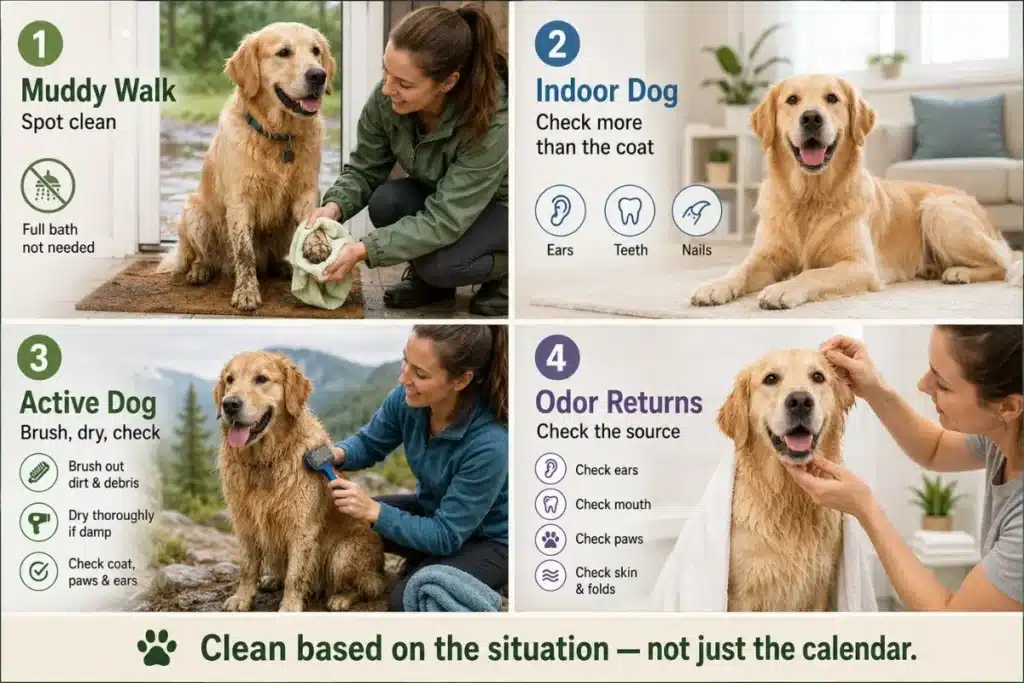
After a Muddy Walk
Your dog comes home with muddy paws and lower legs, but the rest of the coat looks clean.
In this case, a full bath may not be needed. Clean the dirty areas and dry them well. Spot cleaning is often enough for a small mess.
Mostly Indoor, Short-Coated Dog
A mostly indoor dog with a short coat may stay clean for longer.
But a clean coat does not mean every hygiene task follows the same schedule. You still need to check the teeth, ears, paws, and nails based on their own needs.
Active Long- or Double-Coated Dog
An active dog with a long or double coat may collect more dirt, loose hair, and moisture.
Regular brushing, drying, and coat checks can help prevent tangles and matting. But more outdoor activity does not always mean your dog needs more baths.
Our dog grooming guide explains how brushing, bathing, and other grooming tasks work together.
Your Dog Smells Again Soon After a Bath
If dog odor returns soon after a bath, another bath may not fix the problem.
First, check where the smell comes from. Look at the coat, skin, ears, mouth, and paws.
If the odor continues or comes with itching, redness, pain, or discharge, ask your vet for advice.
A 30-Second Head-to-Tail Hygiene Check
A quick head-to-tail check can help you see whether your dog needs cleaning or extra care.
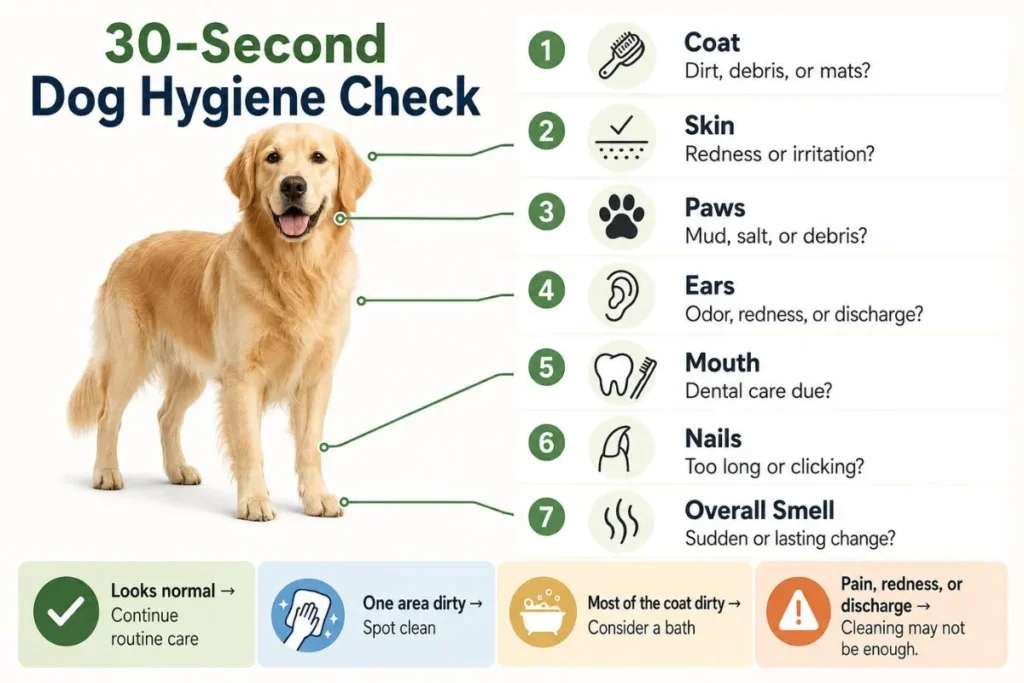
Use this simple dog hygiene checklist:
- Coat: Check for dirt, debris, tangles, or mats.
- Skin: Look for redness, irritation, or sore areas.
- Paws: Check for mud, salt, sand, or debris.
- Ears: Look for unusual odor, redness, or discharge.
- Mouth: Check whether your dog’s dental care is due.
- Nails: See if they look too long or click on hard floors.
- Overall smell: Notice any sudden or lasting change in odor.
If everything looks normal, continue your regular routine.
If only one area is dirty, spot clean that area. If most of the coat is dirty, a full bath may make more sense.
If you notice pain, redness, discharge, or a problem that keeps returning, cleaning alone may not be enough. For a broader routine, use our daily dog care checklist.
When Cleaning May Not Be Enough
Sometimes, cleaning more often will not solve the problem. If the same issue keeps coming back, your dog may need veterinary care.
Watch for signs like:
- Redness that does not improve
- Ongoing itching or frequent scratching
- Pain when you touch an area
- Unusual ear discharge
- Noticeable hair loss
- A strong odor that keeps returning
- Sores or other skin changes
- The same problem returning after normal cleaning
These signs do not point to one specific condition. But they can mean the problem needs more than routine hygiene.
So, avoid bathing or scrubbing the area again and again. Instead, watch for other changes and ask your vet for advice if the problem continues.
Common Questions About Dog Cleaning
Can I Clean My Dog Every Day?
You can do small hygiene tasks every day, such as checking the paws, coat, mouth, and ears. But that does not mean your dog needs a full bath every day.
Should I Clean My Dog’s Paws After Every Walk?
It is a good idea to check your dog’s paws after walks, but you do not need to wash them with soap every time.
Clean them when you see mud, sand, road salt, or other debris. Pet-safe wipes can work for lighter messes, while heavier dirt may need a more thorough wash.
How Often Should I Clean My Dog’s Ears?
There is no fixed weekly schedule for every dog. Some dogs with healthy, clean ears may rarely need routine cleaning.
How Often Should I Brush My Dog’s Teeth?
Daily brushing is ideal for your dog’s teeth. If daily brushing is difficult, brushing several times each week can still help.
Does Coat Type Change How Often a Dog Needs Cleaning?
Yes. Coat type can change both brushing and bathing needs.
Long, curly, non-shedding, or double-coated dogs may need different coat-care routines than short-coated dogs. Activity level and lifestyle matter too.
Can Dog Wipes Replace a Bath?
Not completely. Dog-safe wipes are useful for spot cleaning paws, legs, or small dirty areas between baths.
They may be enough for light dirt, but they do not replace a full bath when most of the coat is heavily soiled. AKC also lists wipes as a practical option for between-bath cleaning.
What Are the Signs I’m Cleaning My Dog Too Often?
Watch for dryness, itching, or skin irritation, especially if you bathe your dog frequently. Too much ear cleaning can also irritate the ear canal.
Final Thoughts on How Often You Should Clean Your Dog
There is no single cleaning schedule that works for every dog. Bathing, brushing, paws, ears, teeth, and nails all need different levels of care.
Your dog’s coat, lifestyle, activity, age, and health should guide the routine. So, focus on what actually needs cleaning instead of following a strict calendar.
Also, avoid over-cleaning, especially when the skin or ears look irritated. If odor, redness, itching, pain, or discharge keeps returning, ask your vet for advice. For broader everyday care, see our dog care guide.