
The best way to choose a dog leash is to match it with your dog’s size, strength, behavior, and daily walking needs.
For most beginner dog owners, a 6-foot standard nylon leash with a secure clip is a good first choice. It gives your dog enough freedom for daily walks while still helping you keep good control.
But every dog is different.
If your dog pulls, chews, gets reactive, or is still a puppy, you may need a different leash length, leash material, or leash style for better safety and comfort.
Quick Answer: What Dog Leash Should Beginners Choose?
For most beginners, a 6-foot dog leash made from standard nylon is the best first choice. It is simple, affordable, lightweight, and easy to control during daily walks.
A good beginner leash should also have a secure metal clip so it stays attached safely to your dog’s collar or harness.
Choose a stronger leash for large dogs, a lighter leash for puppies, and a reflective leash if you walk your dog at night.
If your dog is a pulling dog or reactive dog, avoid starting with a retractable leash. A standard leash usually gives better control for beginner dog owners.
Why Choosing the Right Dog Leash Matters
The wrong leash can make a simple walk harder than it needs to be.
A dog leash is not just a walking tool. The right dog leash helps with dog walking control, safety, comfort, and basic training during daily walks.
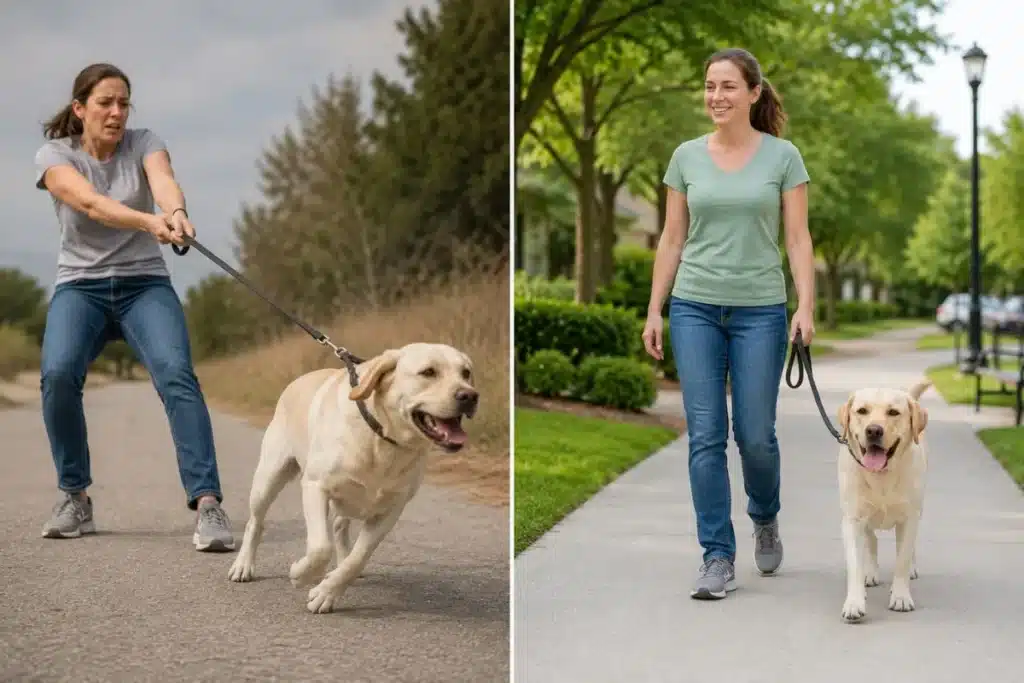
A good leash keeps your dog close in public walking areas, especially near roads, people, bikes, and other dogs. This is important for traffic safety and for keeping your dog easier to manage in a busy walking area.
The right leash can also make leash training easier. If the leash is too long, too heavy, too weak, or hard to hold, your dog may be harder to control.
A leash is one of the most important items in a basic dog accessories setup. Choosing the right one early can make your daily walks safer, calmer, and more comfortable for both you and your dog.
What to Consider Before Choosing a Dog Leash
Before you buy a leash, think about your dog first, not the leash design.
The best way to choose the right dog leash is to look at your dog’s size, strength, behavior, walking area, and training goal. A leash that works well for one dog may not be the best choice for another dog.
Your Dog’s Size
Your dog’s size matters because it affects the right leash width and leash weight.
A small dog or puppy usually needs a lightweight leash that does not feel heavy on their neck or body. A medium dog can often use a regular 6-foot dog leash. A large dog may need a wider and stronger leash for better control.
Your Dog’s Strength
A strong dog needs more than a cute leash.
If your dog pulls hard or has a lot of power, choose a leash with a secure clip, strong stitching, and durable material. A thin leash with weak hardware may not give you enough control during daily walks.
Your Dog’s Behavior
Your dog’s behavior should also guide your leash choice.
A calm dog may do well with a standard leash. A pulling dog, chewing dog, reactive dog, or anxious dog may need a different leash style, material, or length for better safety and control.
Your Walking Area
Think about where you walk most often.
For busy sidewalks, roads, people, bikes, and other dogs, a shorter or standard leash gives better control. For open fields or training areas, a longer leash may be useful, but it is not always the best choice near traffic.
Your Training Goal
Your training goal also matters.
For normal daily walks, a standard leash works well for most beginners. For leash training, recall practice, hiking, or running, you may need a different leash type.
Best Dog Leash Length for Beginners
Leash length controls how much freedom your dog gets and how much control you keep.
For most beginner dog owners, the best dog leash length is usually a 6 foot dog leash. It gives your dog enough space to walk comfortably, but still keeps them close enough for safe daily walks.
| Leash Length | Best For | Avoid If |
| 4 ft leash | Busy sidewalks, more control | Your dog needs more walking freedom |
| 6 ft leash | Daily walks, most beginners | Very crowded places |
| 10–30 ft long line leash | Recall training, open fields | Roads, crowds, reactive dogs |
| Retractable leash | Trained dogs in open areas | Pulling dogs, roads, beginners |
A 4 ft dog leash gives more control in busy places. It can be useful on crowded sidewalks, near traffic, or when walking close to people, bikes, and other dogs.
A 6 foot dog leash is the most balanced choice for many beginners. It gives a good mix of control and freedom, which makes it useful for normal daily walking.
A long line leash is better for recall training or practice in an open field. But it is not the best choice for busy streets, crowded parks, or dogs that react to other dogs.
A retractable leash can give more freedom, but it needs careful use. It is usually better for trained dogs in safe open areas, not for pulling dogs, busy roads, or beginner leash training.
Common Types of Dog Leashes
Not every leash type is made for the same kind of dog or walk.
When choosing between different types of dog leashes, think about your dog’s size, behavior, and where you walk most often. A leash for daily walks may not be the same leash you use for recall training, hiking, or running.
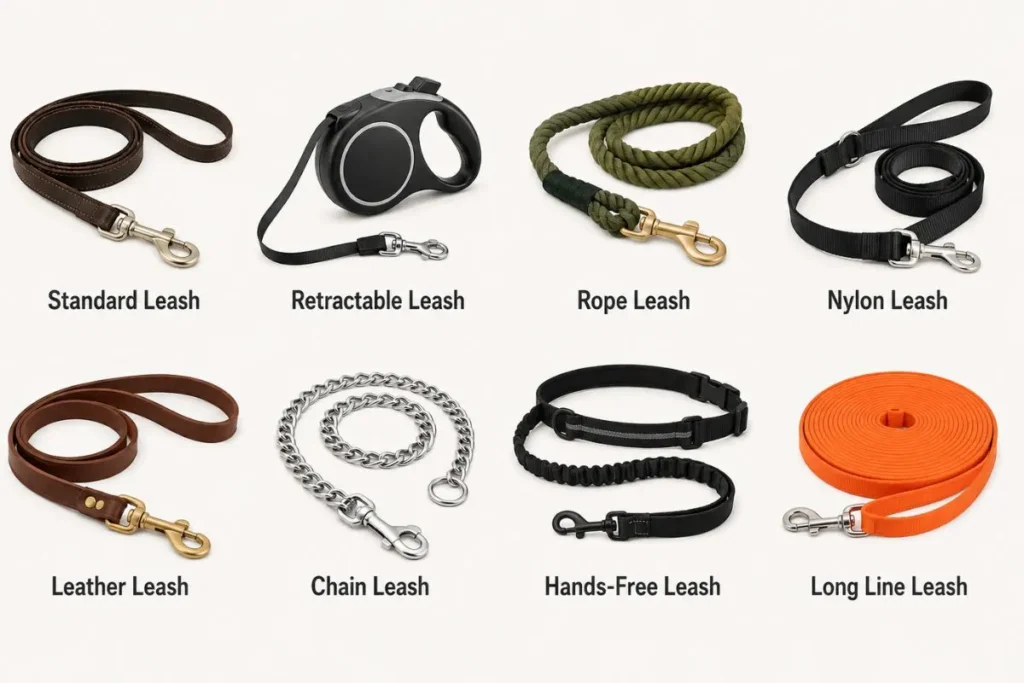
| Leash Type | Best For | Not Best For |
| Standard leash | Daily walks | Recall training |
| Retractable leash | Open areas, trained dogs | Busy roads, pulling dogs |
| Rope leash | Strong dogs, hiking | Very small puppies |
| Nylon leash | Beginners, daily use | Heavy chewers |
| Leather leash | Durability and comfort | Low budget |
| Chain leash | Leash chewers | Daily comfort |
| Hands-free leash | Running or hiking | Untrained pulling dogs |
| Long line leash | Recall training | Busy public areas |
A standard dog leash is the best choice for most normal walks. It gives simple control and is easy for beginner dog owners to use.
A retractable dog leash gives more freedom, but it is harder to control in busy areas. It is better for trained dogs in safe open spaces, not for pulling dogs or crowded sidewalks.
A rope dog leash is strong and useful for larger dogs, outdoor walks, and hiking. But it may feel too heavy for very small puppies.
A nylon dog leash is lightweight, affordable, and easy to find. It is a good beginner option for daily use, but heavy chewers may damage it.
A leather dog leash can be durable and comfortable in the hand. It usually costs more and may need more care than nylon or rope.
A chain leash can help with dogs that chew fabric leashes, but it is not the most comfortable choice for everyday walking.
A hands-free dog leash can be useful for running or hiking, but it is not ideal if your dog pulls hard or is not leash trained yet.
A long line leash is best for recall training in open areas. It should not be used like a normal daily leash near roads, crowds, or busy public areas.
Best Dog Leash Material
The leash material affects comfort, strength, cleaning, and durability.
There is no single best dog leash material for every dog. The right choice depends on your dog’s size, behavior, walking area, and how much maintenance you want.
Nylon Leash
A nylon dog leash is a good choice for most beginner dog owners. It is lightweight, affordable, easy to find, and simple to use for daily walks.
Nylon works well for many small, medium, and calm dogs. But if your dog is a heavy chewer, nylon may wear out faster.
Rope Leash
A rope dog leash is usually stronger and thicker than a basic nylon leash. It can be a good option for strong dogs, outdoor walking, and hiking.
Rope leashes often feel sturdy in the hand, but some may be too heavy for very small dogs or young puppies.
Leather Leash
A leather dog leash can be strong, durable, and comfortable after regular use. Many owners like leather because it feels smooth in the hand and can last a long time with proper care.
The downside is that leather usually costs more and may need cleaning or conditioning to stay in good shape.
Biothane or Waterproof Leash
A biothane leash or waterproof dog leash is useful if you walk in rain, mud, wet grass, or dirty areas. It is usually easy to wipe clean and does not hold smell as much as some fabric leashes.
For coated or waterproof leashes, check product labels like PVC-free, phthalate-free, PFAS-free, or PFOA-free if chemical safety matters to you.
You can check more about general pet safety standards from the EPA official guidelines.
Chain Leash
A chain dog leash is mostly useful for dogs that chew through fabric leashes.
But it is not the best choice for normal daily comfort. Chain leashes can feel heavy, noisy, and less comfortable to hold, especially for long walks.
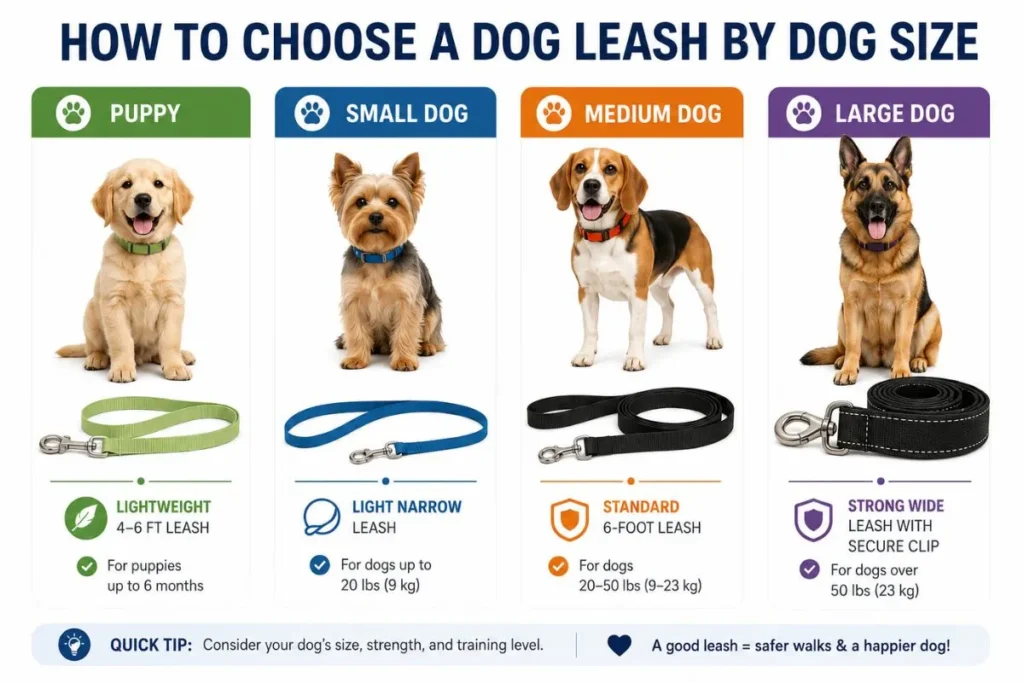
How to Choose a Dog Leash by Dog Size
A leash that works for a tiny puppy may not be strong enough for a large dog.
Your dog’s size affects the right leash width, leash weight, clip strength, and handle comfort. A good leash should feel comfortable for your dog, but also strong enough for you to keep control during daily walks.
Small Dogs
For a small dog, choose a lightweight and narrow leash. A heavy leash can feel uncomfortable and may make walking harder for small breeds.
A soft handle is also helpful because small dogs can still pull suddenly, even if they are not very strong. Small breeds may need a lighter setup, so you can also read our best dog leash for small dogs guide.
Medium Dogs
For a medium dog, a 6-foot standard leash is usually a good daily walking choice.
A nylon leash works well for many medium dogs because it is light, simple, and affordable. A rope leash can also be a good option if your dog is stronger or you walk in outdoor areas often.
Large Dogs
For a large dog, choose a wider leash with a secure metal clip, strong stitching, and a comfortable handle.
Large dogs have more strength, so a thin leash with weak hardware may not be safe enough. If you have a strong breed, check our guide to the best dog leash for large dogs.
Puppies
For puppies, choose a lightweight 4–6 ft puppy leash. It should be easy to carry, soft enough for early walks, and not too bulky.
Avoid heavy chain leashes or thick leashes that feel too heavy for a young dog. For young dogs, read our best dog leash for puppies guide before buying.
How to Choose a Dog Leash by Dog Behavior
A calm dog and a pulling dog should not always use the same leash.
Your dog’s behavior can change what leash is safest and easiest to control. Before buying, think about how your dog acts during walks. Does your dog pull, chew, react to other dogs, get nervous, or walk calmly beside you?
For Dogs That Pull
For a pulling dog, a strong standard leash is usually better than a retractable leash. Choose a leash with a secure clip, strong material, and a comfortable handle.
A front-clip harness may also help you get better control, especially if your dog pulls hard during daily walks.
For Reactive or Aggressive Dogs
For a reactive dog or aggressive dog, choose a shorter control leash with a strong clip. This helps keep your dog closer when you pass people, cars, bikes, or other dogs.
Avoid long leashes and retractable leashes in busy places. They can give too much distance and make quick control harder.
For Dogs That Chew
If your dog is a chewer, avoid thin or weak leashes that can be damaged quickly.
A chew proof dog leash or stronger material may help, but supervision is still important. Do not leave the leash attached when your dog is alone, because many dogs chew more when bored or excited.
For Anxious Dogs
For an anxious dog, choose a lightweight leash that does not feel heavy or stressful.
A calm walking routine, soft handling, and a comfortable harness can make walks easier. Avoid harsh pulling, sudden leash jerks, or heavy leash setups that may make your dog more nervous.
For Night Walks
For night walking, choose a reflective dog leash or a leash with reflective stitching. A bright color can also help your dog stay more visible.
This is useful when walking near roads, driveways, cyclists, or low-light areas. A visible leash does not replace safe walking habits, but it can add an extra layer of safety.
Dog Leash Decision Table
Still thinking, which dog leash should I choose? Use this simple dog leash decision guide to match the leash with your dog’s real situation.
| Dog Situation | Better Leash Choice | Avoid |
| Puppy | Lightweight 4–6 ft leash | Heavy chain leash |
| Large dog | Strong 4–6 ft leash with secure clip | Thin cheap leash |
| Dog that pulls | Strong leash + harness | Retractable leash |
| Reactive dog | Short control leash | Long or retractable leash |
| Night walks | Reflective leash | Dark leash with no visibility |
| Open-field training | Long line leash | Long leash near roads |
| Leash chewer | Chew-resistant leash | Thin nylon leash |
| Beginner owner | 6-foot standard leash | Complicated leash types |
For most new dog owners, the best dog leash for my dog question starts with one simple rule: choose a leash you can control safely. A 6-foot standard leash works well for many beginners, but your dog’s size, behavior, and walking area should decide the final choice.
Should You Attach a Leash to a Collar or Harness?
Where you attach the leash can matter as much as the dog leash itself.
A collar can work for a calm dog that walks politely and does not pull hard. It is simple, easy to use, and fine for many normal daily walks.
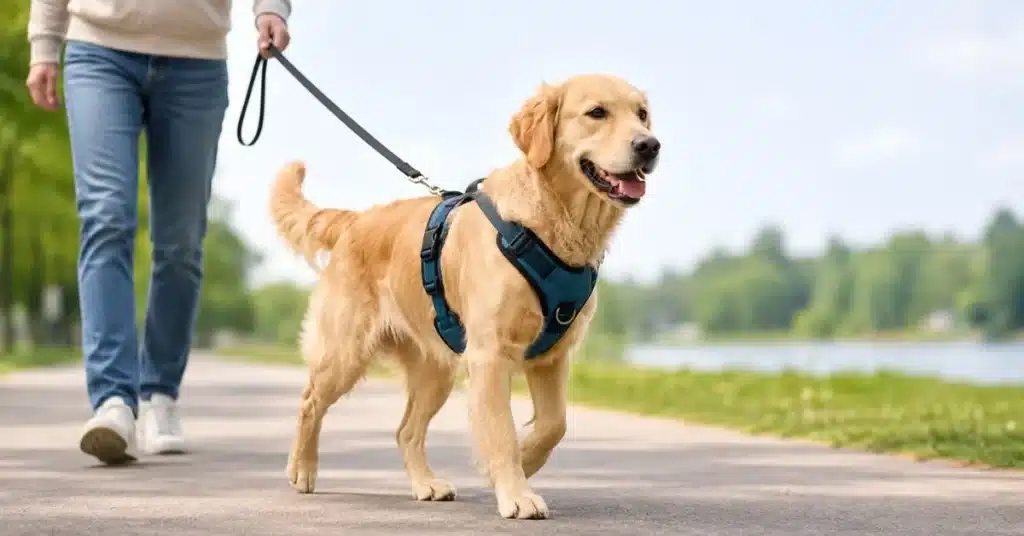
But a harness may be a better choice for dogs that pull, small dogs, or dogs with neck sensitivity. A harness can help spread pressure across the body instead of putting most of it on the neck.
For a pulling dog, a front-clip harness may give better control during walks. For a calm dog, a back-clip harness or collar may be enough.
The most important thing is fit. A poor-fitting harness can rub, feel uncomfortable, or make walking harder. So the harness should be snug, but not too tight.
For a reactive dog, the setup needs to be secure. Use a strong leash, a secure clip, and a well-fitted collar or harness that your dog cannot easily slip out of.
Are Retractable Leashes Safe?
Retractable leashes are useful in some places, but they are not ideal for every dog.
A retractable leash for dogs can work well for a trained dog in a safe open area. It gives the dog more freedom to sniff and walk around while still staying connected to you.
But it should only be used when you can keep good control. You also need to use the leash lock properly, so your dog does not run too far ahead.
A retractable leash may be okay for:
- Trained dogs
- Calm walking
- Open parks or quiet areas
- Owners who can control the leash well
But it is better to avoid retractable leashes for:
- Puppies
- Pulling dogs
- Reactive dogs
- Busy roads
- Crowded sidewalks
- Dogs you cannot control easily
The main risk is that a retractable leash can give too much distance too fast. Near traffic, people, bikes, or other dogs, this can make control harder. There is also more tangle risk, especially if the dog runs around people or objects.
For most beginner dog owners, a standard leash is usually easier and safer to manage during daily walks.
Dog Leash Safety Checklist
A dog leash should feel safe before you ever use it outside.
Before taking your dog for a walk, always check a few important things to make sure your safe dog leash is actually reliable and comfortable for daily use.
Safety Checklist
□ Secure metal clip that locks properly
□ Strong stitching with no loose threads
□ Comfortable handle for easy grip during walks
□ Right leash length for your walking area and control level
□ Right leash width based on your dog’s size and strength
□ No fraying or worn-out material
□ No chewing damage or weak spots
□ Easy to maintain control in your hand
□ Not too heavy for your dog to walk comfortably
□ Reflective stitching or design for night walks
□ Correct weight rating if mentioned by manufacturer
A good dog leash safety checklist helps you avoid common beginner mistakes like using damaged leashes or choosing the wrong strength for your dog.
The goal is simple: your leash should feel strong, comfortable, and reliable every time you use it.
If anything feels weak, slippery, or damaged, it is better to replace it before the next walk.
If you want to learn more about general dog safety and proper care practices, you can check the ASPCA dog care safety guide for trusted advice on pet care and safety standards.
What to Avoid When Choosing a Dog Leash
A good dog leash is not always the prettiest or the cheapest one.
Choosing the wrong leash can make daily walks harder, less safe, and more stressful. To pick a truly safe dog leash, you need to avoid some common beginner mistakes.
What You Should Avoid
- Buying a leash only because of color or design
- Choosing a leash that is too long for busy streets
- Using a retractable leash with pulling dogs
- Using weak clips for large or strong dogs
- Using a heavy leash for small puppies
- Ignoring fraying or loose stitching
- Using a damaged leash with worn-out parts
- Buying one leash for every walking situation
Many dog leash mistakes happen when beginners focus on looks instead of safety, control, and proper fit.
A wrong dog leash can reduce your control and increase risk during walks, especially in crowded or high-traffic areas.
Simple Leash Test Before the First Walk
Before trusting any new dog leash, always test it at home first.
A quick dog leash safety test helps you understand if the leash is strong, comfortable, and easy to control before you use it outside during real walks.
3-Step Leash Test
- Clip Test: Attach the leash and gently pull to check if the secure clip feels strong and locked properly.
- Handle Test: Hold the leash for a few minutes to see if the handle comfort feels good in your hand.
- Control Test: Walk your dog in a safe area and check how much control you have in real movement.
After these steps, observe carefully. Check the stitching, material strength, and overall build quality.
If the leash feels weak, slippery, too heavy, or hard to control, it may not be suitable for outdoor walks.
A proper home test helps you avoid unsafe choices and ensures the leash performs well in real walking situations, not just in the store.
How to Maintain a Dog Leash
Even a good dog leash can become unsafe if it gets damaged over time.
Proper dog leash maintenance is important to keep your walks safe, comfortable, and under control. A well-maintained leash improves both safety and durability during daily use.
What You Should Do Regularly
- Check the clip before every walk to make sure it locks properly
- Look for fraying along the leash edges or weak spots
- Inspect for chewing marks or hidden damage
- Wash the leash when it becomes dirty to keep it clean and hygienic
- Make sure to dry the leash properly before storing it
- Replace the leash if stitching becomes loose or the clip feels weak
A clean and well-maintained leash is always safer than a dirty or worn-out one.
Good cleaning and proper storage help extend the life of your leash, while also keeping it reliable for everyday walks.
Real-Life Examples: Which Leash Should You Choose?
Real walking situations make dog leash choice much easier to understand.
Instead of guessing, think about your real daily walk. Your dog’s size, behavior, and walking environment will always decide the best option.
Example 1: Puppy
If you have a puppy, avoid a heavy chain leash. A lightweight 4–6 ft dog leash is much better for early leash training because it is easier to handle and more comfortable for a young dog.
Example 2: Strong Pulling Dog (Labrador)
If you have a Labrador or any pulling dog, a thin retractable leash is not a good first choice. It can reduce control during walks.
A strong 4–6 ft standard leash with a secure clip and a well-fitted harness gives better control and stability during daily walks.
Example 3: Night Walking
If you walk your dog at night, choose a reflective leash instead of a dark leash with low visibility.
A leash with reflective stitching helps improve safety by making your dog more visible near roads, bikes, and low-light areas.
Example 4: Dog That Chews Leashes
If your dog is a leash chewer, avoid leaving the leash attached when unsupervised. Some dogs chew when bored or excited.
In this case, choose a stronger material and continue leash training to correct the behavior.
These real-life examples make it easier to understand that there is no single “perfect leash”—the right choice always depends on your dog’s behavior, size, and walking situation.
How to Choose a Dog Leash: Common Questions Answered
Below are the most common questions about choosing a dog leash. Answers are short and easy to scan.
What type of leash is best for beginners?
For most beginners, the best option is a 6-foot standard nylon leash. It is simple, lightweight, affordable, and easy to control during daily walks. This makes it a good starting point for most new dog owners.
What is the best leash length for daily walks?
The best dog leash length for daily walks is usually 6 feet. It gives a balanced mix of control and freedom, which works well in most walking situations.
Is a 4 ft or 6 ft leash better for dogs?
A 4-foot leash gives more control, especially in busy areas. A 6-foot leash gives more comfort and natural movement. Most owners choose 6 feet for balance.
Are retractable leashes safe for dogs?
Retractable leashes can be useful in open, safe areas with trained dogs. However, they are not ideal for puppies, pulling dogs, or crowded streets because they reduce control.
What leash is best for a dog that pulls?
For a pulling dog, a strong standard leash combined with a harness often works better. This helps improve control and reduces strain during walks.
What leash is best for puppies?
A lightweight 4–6 ft leash is best for puppies. It is easier to handle and helps with early leash training. Heavy or chain leashes should be avoided.
Should I attach a leash to a collar or harness?
A collar is okay for calm dogs that walk nicely. A harness is often better for pulling dogs or small dogs because it reduces neck pressure and improves control.
What material is best for a dog leash?
Nylon is best for beginners. Rope is good for strong dogs. Leather is durable but needs care. Each material depends on your dog’s size and behavior.
When should you replace a dog leash?
Replace a leash when you see fraying, loose stitching, chewing damage, or a weak clip. A damaged leash is not safe for daily use.
Can dogs hurt themselves by pulling on a leash?
Yes, constant pulling can cause discomfort, especially with poor control or wrong equipment. In severe cases, it’s better to consult a trainer or vet for proper guidance.
Final Dog Leash Recommendation for Beginners
The right dog leash is the one you can control safely and comfortably.
For most beginner dog owners, a 6-foot standard nylon leash with a secure metal clip is a good first choice. It gives a balanced mix of freedom, control, and comfort for everyday daily walks.
But the best how to choose a dog leash decision always depends on your dog’s size, strength, behavior, and walking environment. A leash that works well for one dog may not be right for another.
If your dog pulls hard, reacts to other dogs, or feels difficult to manage, choose a safer setup such as a stronger leash and better control system. In some cases, getting help from a qualified dog trainer can also improve safety and walking experience.
After choosing the leash, you can continue with our dog accessories for beginners guide to complete your basic setup.