How to choose dog bowls comes down to your dog’s size, eating style, bowl material, and cleaning needs. For most beginners, a non-slip stainless steel dog bowl is the best starting choice because it is durable, easy to clean, and practical for daily feeding.
If your dog eats too fast, spills water, or needs extra comfort, choose a slow feeder, no-spill bowl, or elevated bowl based on that specific problem.
Quick Answer:
For most beginners, a non-slip stainless steel dog bowl is the best starting choice. Choose a slow feeder for fast eaters, a no-spill bowl for messy drinkers, and an elevated bowl only if your dog has a real comfort need.
What Dog Bowl Should Beginners Choose?
For most beginner dog owners, the best dog bowl for beginners is a non-slip stainless steel dog bowl. It is durable, easy to clean, and practical for daily feeding.
But the right choice also depends on your dog’s age, size, and eating style. A puppy may do better with a shallow puppy bowl that is easy to reach. A dog that eats too fast may need a slow feeder bowl. If your dog spills water often, a no-spill water bowl can help reduce mess around the feeding area.
For senior dogs or dogs that struggle to bend down, an elevated dog bowl may feel more comfortable. But elevated bowls are not necessary for every dog. If your dog has neck pain, mobility issues, digestive problems, or a higher risk of bloat, ask your vet before using an elevated bowl regularly.
Why Choosing the Right Dog Bowl Matters
A dog bowl looks simple, but the wrong one can make feeding messy, uncomfortable, or harder to keep clean.
The right dog bowl should match your dog’s size, eating style, and daily feeding setup. It should also be stable, safe, and easy to wash.
If a dog feeding bowl is too light, your dog may push it around the floor while eating. If a dog food bowl is too small or too deep, food can spill out, or your dog may struggle to reach it comfortably.
A dog water bowl matters too. Some dogs splash water, tip the bowl, or make the floor wet. In that case, a heavier bowl, non-slip base, bowl mat, or no-spill design can help keep the area cleaner.
Dog bowl safety is also important. Scratched plastic, cracked ceramic, chipped bowls, or rusty metal can be harder to clean. They may also hold food residue, smell, or dirt more easily.
That is why beginners should choose an easy to clean dog bowl made from a safe material.
In simple words, choosing the right bowl is not only about looks. It helps reduce messy eating, improves comfort, and makes daily feeding easier.
Choose the Right Dog Bowl Material
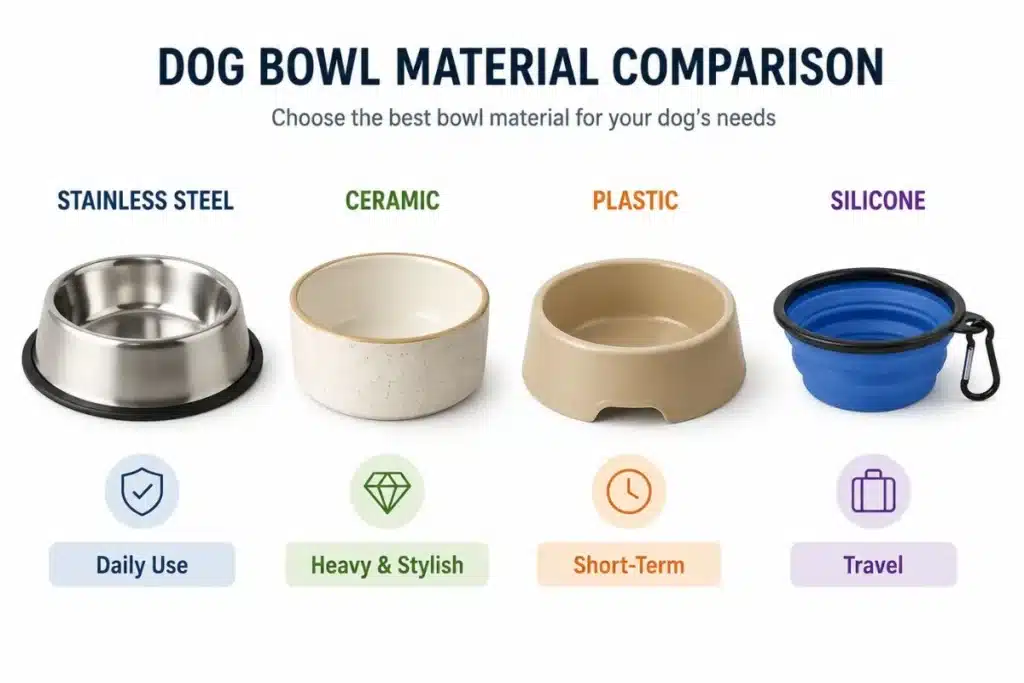
Start with the dog bowl material because it affects safety, cleaning, durability, smell, and daily comfort. The best material is not the same for every dog, but most beginners should choose something food-safe, stable, and easy to wash.
Stainless Steel Dog Bowls
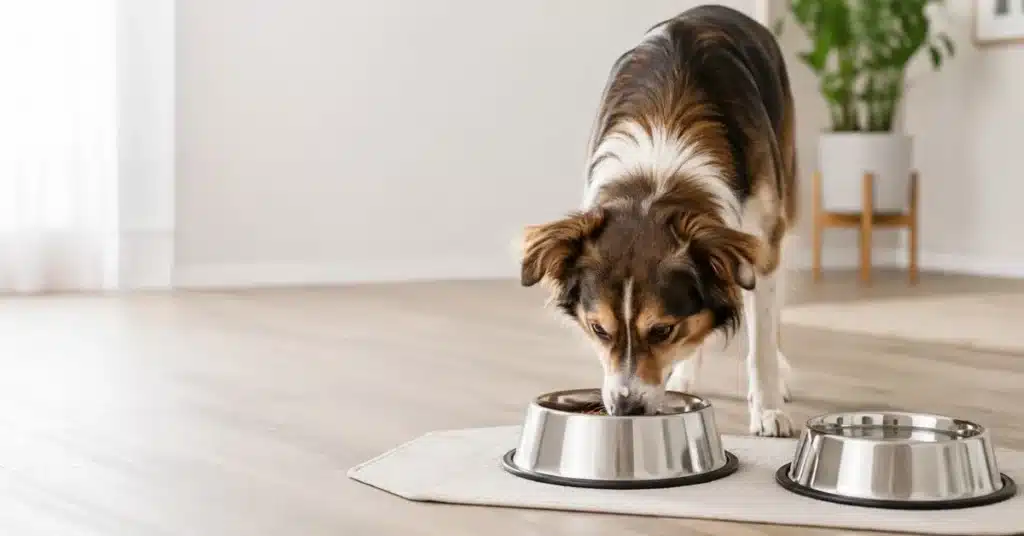
A stainless steel dog bowl is usually the most practical starting choice for beginners. It is durable, easy to clean, and does not hold smell as easily as many plastic bowls.
For daily feeding, look for a bowl made from food-grade stainless steel. A good stainless steel bowl should be rust-resistant, non-porous, and ideally dishwasher-safe. A non-slip base is also helpful because it stops the bowl from sliding while your dog eats.
Stainless steel is a good option for most dogs, but quality still matters. Avoid very cheap metal bowls that feel thin, rust quickly, or have rough edges. If a metal bowl becomes rusty, damaged, or hard to clean, replace it.
Ceramic Dog Bowls
A ceramic dog bowl can be a good choice if you want something heavy, stable, and stylish. Because ceramic bowls are heavier, they often slide less than lightweight plastic bowls.
But ceramic needs extra care. Choose food-safe ceramic with a lead-free glaze, cadmium-free label, or non-toxic glaze when possible. Do not use decorative-only bowls unless they are clearly marked safe for food contact.
The biggest issue with ceramic is damage. If the bowl becomes a cracked ceramic bowl or a chipped bowl, replace it. Cracks and chips can make the bowl harder to clean and may hold food residue or smell.
Plastic Dog Bowls
A plastic dog bowl is lightweight, affordable, and easy to find. It can be useful for short-term use, travel, or backup feeding.
However, plastic is usually not the best long-term daily feeding choice for most dogs. Plastic can scratch over time, and scratched plastic may hold smell, food residue, and dirt more easily. Some dogs may also chew plastic bowls, which can damage the bowl quickly.
If you use plastic, choose food-safe plastic that is marked BPA-free and phthalate-free. Also check the bowl often. If it becomes rough, scratched, stained, or smelly, replace it.
Silicone Dog Bowls
A silicone dog bowl is useful for travel, walks, hiking, or car trips. Many silicone bowls are collapsible, lightweight, and easy to carry.
For travel use, choose food-grade silicone and check for BPA-free silicone if the product label mentions it. Silicone can be very convenient, but it is usually better as a travel dog bowl than your dog’s main daily food bowl.
If you use a silicone bowl often, wash it properly and check for damage. Replace it if it becomes sticky, torn, cracked, or hard to clean.
Which Material Should Beginners Choose?
For most beginner dog owners, the best starting choice is a non-slip stainless steel dog bowl. It is practical, easy to clean, durable, and works well for daily feeding.
Choose ceramic if you want a heavier bowl and can check it for cracks or chips. Choose plastic only if it is food-safe, BPA-free, and replaced when scratched. Choose silicone mainly for travel or outdoor use.
In simple words, the safest dog bowl material for your dog depends on how easy it is to clean, whether it is food-safe, and whether it fits your dog’s daily eating habits.
Choose the Right Dog Bowl Size
Choosing the right dog bowl size is important because a bowl that is too small, too deep, or too light can make feeding uncomfortable and messy.
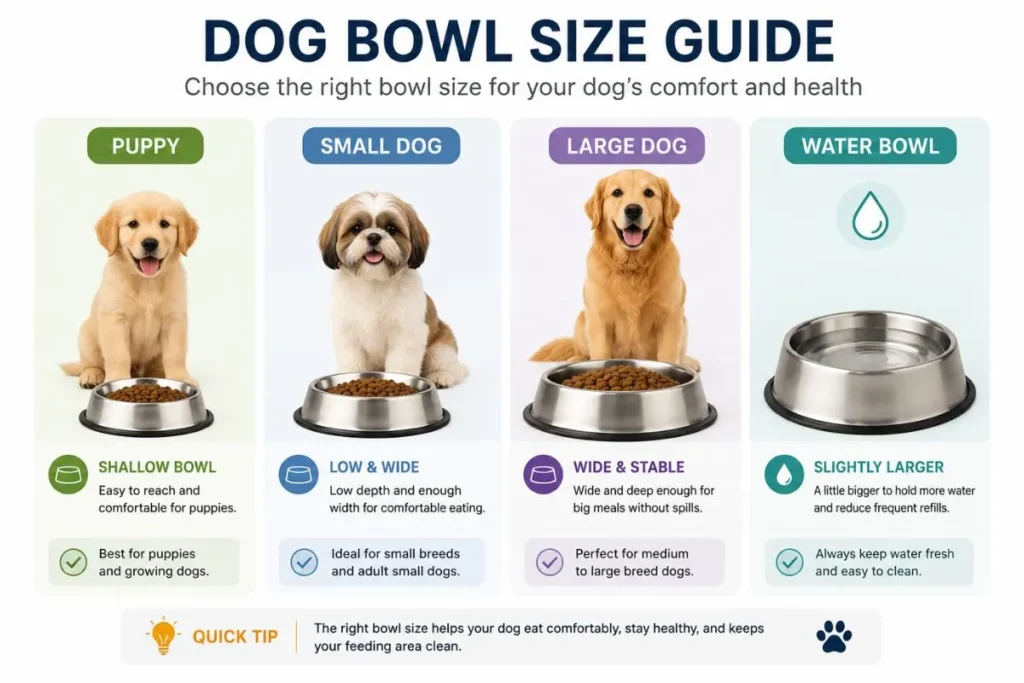
Your dog’s bowl should fit your dog’s meal amount, body size, and eating style. You do not need to make this complicated. Start with a bowl that holds your dog’s normal food portion comfortably and is easy for your dog to reach.
Food Bowl Size
The right dog food bowl size should hold your dog’s normal meal without food reaching the edge.
If the food is too close to the top or spills out while your dog eats, the bowl is probably too small. A food bowl should have a little extra space so your dog can eat comfortably without pushing food onto the floor.
Water Bowl Size
A dog water bowl size can be a little larger than the food bowl because your dog needs fresh water throughout the day.
But bigger is not always better. The bowl should still be easy to wash daily. A very large water bowl that is hard to clean can collect dirt, saliva, and food residue more easily.
Puppy Bowl Size
For puppies, choose a shallow bowl that is easy to reach. A deep bowl can make it harder for a small puppy to eat comfortably.
A good puppy bowl size should be small, stable, and not too tall. A non-slip base is also helpful because puppies often push bowls around while eating.
Small Dog Bowl Size
A small dog bowl should be low and easy to reach. Small dogs do not need a very deep bowl.
If a small dog has to push its face deep into the bowl, the bowl may be uncomfortable. A lower, wider bowl is usually easier for small breeds.
Large Dog Bowl Size
A large dog bowl should be wider, heavier, and stable. Large dogs can move lightweight bowls easily, especially if they eat quickly.
For bigger dogs, choose a wide dog bowl with enough bowl capacity for their meal. A heavier bowl or non-slip base can help stop sliding and reduce mess.
Quick Size Test
Put your dog’s normal meal amount into the bowl.
If the food reaches the edge or spills out easily, the bowl is too small. If a small dog has to push its face too deep inside, the bowl may be too deep.
A good bowl should let your dog eat comfortably without spilling food or struggling to reach it.
Match the Bowl to Your Dog’s Eating Style
Your dog’s eating style should help decide the bowl, not only the bowl’s design or color. A bowl that works for a calm dog may not work for a fast eater, messy drinker, or dog that pushes the bowl around.
Use this quick guide before choosing:
| Dog Situation | Better Bowl Choice |
| Puppy | Shallow, non-slip bowl |
| Fast eater | Slow feeder bowl |
| Messy eater | No-spill bowl or bowl mat |
| Dog pushes bowl around | Heavy bowl or rubber base |
| Large dog | Wide, stable bowl |
| Senior dog | Comfortable-height bowl, vet advice if needed |
| Travel dog | Collapsible silicone bowl |
| Strong chewer | Avoid weak plastic bowl |
If Your Dog Eats Too Fast
If your dog finishes meals very quickly, gulps food, or seems too excited while eating, a slow feeder bowl may help slow down the eating speed.
Slow feeder bowls usually have a maze pattern or raised design inside the bowl. This makes your dog work around the pattern instead of eating everything at once.
A slow feeder may help with gulping food, but do not claim it will prevent bloat or fix medical problems. If your dog eats fast and also vomits, coughs, or looks uncomfortable after meals, it is better to ask your vet.
If Your Dog Spills Water
Some dogs are messy drinkers. They splash water, step near the bowl, or leave the floor wet after drinking.
For this problem, look for a no-spill water bowl, heavier bowl, water bowl mat, or a bowl with a stable base. Some no-spill bowls also use a splash guard style design to reduce water mess.
This is helpful if your dog drinks quickly, has long ears, or keeps the feeding area wet.
If Your Dog Pushes the Bowl Around
If your dog pushes the bowl across the floor, the bowl may be too light. This is common with puppies, excited dogs, and large dogs.
Choose a heavier bowl, a non-slip base, a rubber base, or a non-skid dog bowl. You can also place a feeding mat under the bowl to reduce sliding.
A simple test is to place the bowl on the floor and gently push it with your hand. If it slides easily, your dog may move it during meals too.
If Your Dog Makes a Mess While Eating
If food falls around the bowl every time your dog eats, the bowl may be too small, too narrow, or not stable enough.
A messy eater may do better with a wider bowl, bowl mat, or a bowl designed to catch spills. For large dogs, a wide, stable bowl usually works better than a small lightweight bowl.
Should You Choose an Elevated Dog Bowl?
An elevated dog bowl can help some dogs, but it is not automatically better for every dog.
The right choice depends on your dog’s age, health, comfort, and normal feeding position.
A raised dog bowl or raised feeder may be useful for a senior dog or a dog with mobility issues. If your dog struggles to bend down, feels stiff, or looks uncomfortable eating from floor level, changing the dog bowl height may make mealtime easier.
But elevated bowls need caution.
They are not necessary for every healthy dog. If your dog is large, deep-chested, or has a higher bloat risk, ask your veterinarian before using an elevated bowl regularly.
Large and deep-chested dogs may need extra caution with feeding setup because they can be more at risk of bloat in dogs.
A simple rule is this: use an elevated bowl only when your dog has a real comfort need. Do not choose it only because it looks nicer.
For many dogs, a regular bowl on the floor works perfectly fine.
Quick Safety Note:
An elevated dog bowl may help some senior dogs or dogs that struggle to bend down. But if your dog has digestive issues, neck discomfort, mobility problems, or bloat risk, get vet advice before changing the feeding setup.
Special Dog Bowl Types Explained
Some dogs do well with a regular dog bowl, but others may need a special bowl based on their eating style, water mess, travel routine, or comfort needs.
You do not need every type of bowl. Choose a special bowl only when it solves a real problem for your dog.
Slow Feeder Bowls
A slow feeder bowl is made for dogs that eat too fast. It usually has a raised or maze-like design inside the bowl that makes your dog eat more slowly.
This can be useful for a fast eater, but it is not a guaranteed fix for every feeding problem. If your dog eats fast and also vomits, coughs, or seems uncomfortable after meals, ask your vet.
No-Spill Water Bowls
A no-spill water bowl is helpful for a messy drinker or a dog that splashes water around the feeding area.
Some no-spill bowls use a floating plate, splash guard, or controlled opening to reduce water mess. This type of bowl can also be useful for car rides, travel, or dogs that drink too quickly.
Elevated Dog Bowls
An elevated dog bowl or raised bowl may help some senior dogs or dogs with mobility issues eat more comfortably.
But elevated bowls are not needed for every dog. If your dog is large, deep-chested, or has a higher bloat risk, get vet advice before using one regularly.
Automatic Dog Feeders
An automatic dog feeder can help busy owners follow a regular feeding schedule. It can release food at set times, which may be useful if you are not always home at feeding time.
But an automatic feeder still needs cleaning. It should not replace proper feeding supervision if your dog has health issues, overeats, or needs a special diet.
Travel Bowls
A travel dog bowl is useful for walks, hiking, road trips, or outdoor activities. Many travel bowls are lightweight and easy to carry.
A collapsible dog bowl is a common travel option because it folds down and fits easily in a bag. For daily home feeding, though, a stable stainless steel or ceramic bowl is usually better than a lightweight travel bowl.
Quick tip: Start with a simple, easy-to-clean daily bowl first. Then add a slow feeder, no-spill water bowl, automatic dog feeder, or travel bowl only if your dog actually needs it.
Choose a Bowl That Is Easy to Clean
Even a good dog bowl can become a problem if it is hard to clean.
Your dog eats and drinks from the bowl every day. So choosing an easy-to-clean dog bowl is important for hygiene, smell control, and daily comfort.
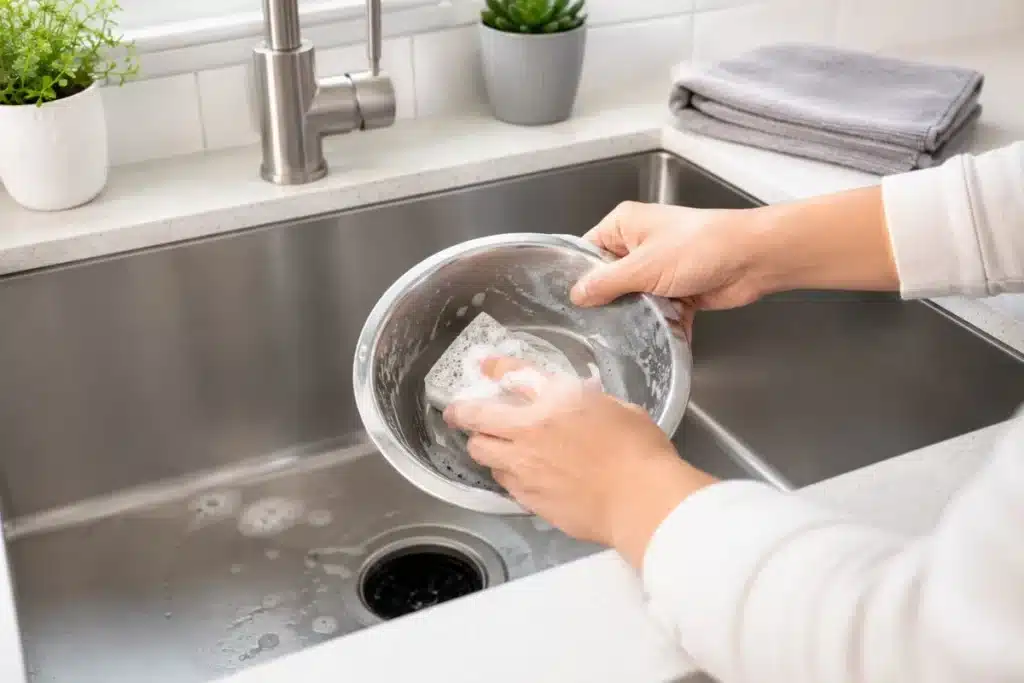
For daily use, choose a bowl with a smooth surface. A dishwasher-safe dog bowl can also make cleaning easier.
Stainless steel is usually a practical choice because it is smooth, durable, and does not hold smell as easily as plastic.
Food bowls should be washed regularly with soap and hot water.
If your dog eats wet food, clean the bowl after the meal. Wet food can leave more food residue behind.
Dry food bowls also need regular washing. Do not only shake out the leftover crumbs.
A dog water bowl should not only be refilled. It should also be washed often.
Water bowls can collect saliva, dust, food bits, and slimy buildup over time. If you notice a slimy dog bowl, bad smell, or rough surface, clean it properly before using it again.
Some materials need extra care.
A scratched plastic bowl can hold smell and residue more easily. A cracked ceramic or chipped bowl can be harder to clean. A rusty metal bowl should not be used for daily feeding.
After washing, rinse the bowl well.
A strong soap smell can bother some dogs. Leftover soap is also not something your dog should eat or drink from.
Safety Note:
Replace any bowl that becomes scratched, cracked, chipped, rusty, slimy, or hard to clean. Damaged surfaces can hold food residue, smell, and dirt more easily.
A clean, smooth, food-safe bowl is always better for daily feeding.
Simple Tests Before Using a Dog Bowl
Before using a new dog bowl every day, do a few simple checks. These quick tests can help you avoid the wrong bowl before it becomes a daily problem.
Stability Test
Place the bowl on the floor and gently push it with your hand.
If it slides easily, your dog may push it around during meals too. In that case, choose a heavier bowl, a non-slip dog bowl, or a bowl with a rubber base.
This is especially helpful for puppies, excited dogs, and large dogs that move the bowl while eating.
Size Test
Put your dog’s normal meal amount into the bowl.
If the food reaches the edge or spills out, the bowl is probably too small. If your small dog has to push its face too deep inside, the bowl may be too deep.
A good bowl should let your dog eat comfortably without struggling or dropping food everywhere.
Cleaning Test
Wash the bowl and check the inside surface with your hand.
If it still feels slimy, rough, scratched, or smells bad after washing, it may be hard to keep clean. A slimy dog bowl or rough surface can hold food residue and smell more easily.
For daily feeding, choose a smooth bowl that is easy to wash and rinse well.
Eating Speed Test
Watch how fast your dog finishes a normal meal.
If your dog is a fast eater, gulps food, or finishes too quickly, a regular bowl may not be the best option. A slow feeder bowl may help slow the eating speed.
But if your dog eats fast and also vomits, coughs, or seems uncomfortable after meals, ask your vet instead of only changing the bowl.
Quick tip:
A good dog bowl test should check four things: stability, size, cleaning, and eating speed. If the bowl passes these tests, it is more likely to work well for daily feeding.
Common Dog Bowl Mistakes to Avoid
Choosing the wrong dog bowl can make daily feeding messy, uncomfortable, and harder to keep clean. Most dog bowl mistakes happen when owners choose a bowl by looks instead of thinking about the dog’s size, eating style, and cleaning needs.
Avoid these common mistakes before buying or using a dog bowl:
- Choosing a bowl only because it looks nice
A cute bowl is not always the right bowl. Your dog’s comfort, safety, and daily feeding habit matter more than color or design. - Buying a bowl without checking your dog’s size
A bowl that is too small can spill food easily. A bowl that is too large or too deep can make eating uncomfortable, especially for puppies and small dogs. - Using a deep bowl for a puppy
Puppies usually need a shallow bowl that is easy to reach. A deep bowl can make them push their face too far inside and struggle while eating. - Using a regular bowl for a fast eater dog
If your dog gulps food or finishes meals too quickly, a regular bowl may not be the best choice. A slow feeder bowl may help slow down eating speed. - Keeping a scratched plastic bowl for too long
A scratched plastic bowl can hold smell, food residue, and dirt more easily. Replace it when it becomes rough, stained, smelly, or hard to clean. - Using a cracked ceramic bowl
A cracked ceramic bowl or chipped bowl can be harder to wash properly. If a ceramic bowl cracks or chips, it is better to replace it. - Only refilling the water bowl without washing it
A water bowl should not only be refilled. Good bowl hygiene means washing the bowl regularly, because saliva, dust, and food bits can build up over time. - Using cheap metal bowls that rust
A rusty bowl is not a good choice for daily feeding. Choose a smooth, rust-resistant bowl and replace it if rust appears. - Choosing an elevated bowl without a real reason
An elevated bowl mistake is thinking raised bowls are better for every dog. They may help some senior dogs, but they are not needed for all dogs. - Using an elevated bowl without vet advice for high-risk dogs
If your dog is large, deep-chested, has digestive issues, or may be at risk of bloat, ask your vet before using an elevated bowl regularly. - Using the same bowl as a food scoop
Do not use your dog’s eating bowl to scoop food from the bag. Use a separate clean scoop, cup, or spoon to keep the feeding setup cleaner.
The best dog bowl is not always the most stylish one. It should be safe, comfortable, easy to clean, and suitable for your dog’s daily eating behavior.
You can also follow the FDA pet food handling guidance for safer pet food storage and bowl cleaning.
Quick Dog Bowl Buying Checklist
Before buying a dog bowl, use this dog bowl buying checklist to make sure the bowl fits your dog’s size, eating style, and daily routine.
A good bowl should be safe, stable, and easy to clean. It should also solve your dog’s real feeding problem, not just look nice.
Before buying a dog bowl, check:
- Is it the right size dog bowl for your dog?
- Is the material food-safe?
- Is it easy to clean every day?
- Does it have a non-slip base?
- Is it too deep for a puppy or small dog?
- Does your dog eat too fast?
- Does your dog spill water often?
- Is it a dishwasher-safe dog bowl?
- Is the bowl scratched, cracked, chipped, or rusty?
- Does your dog need a slow feeder, no-spill bowl, or elevated bowl?
For most beginners, the best starting choice is a non-slip stainless steel dog bowl in the right size. It is practical for daily feeding, easy to wash, and stable enough for most dogs.
But if your dog eats too quickly, choose a slow feeder. If your dog spills water, choose a no-spill bowl. If your dog is senior or struggles to bend down, an elevated bowl may help, but vet advice is better if your dog has health or digestive concerns.
How to Choose Dog Bowls: Final Recommendation for Beginners
For most beginner dog owners, the best dog bowl for beginners is a non-slip stainless steel dog bowl in the right size.
It is practical, durable, easy to clean, and works well for daily feeding.
But not every dog needs the same bowl.
If your dog eats too fast, choose a slow feeder.
If your dog spills water often, a no-spill bowl can help reduce mess.
If your dog is senior or struggles to bend down, an elevated bowl may be useful.
But if your dog has health issues, digestive problems, or bloat-risk concerns, ask your vet before using an elevated bowl regularly.
An automatic feeder can help busy owners follow a regular feeding schedule. But it still needs regular cleaning and supervision.
In simple words, start with a safe, stable, and easy-to-clean bowl first.
Then choose a special bowl only if your dog has a real feeding problem or comfort need.
If you are still building your full setup, go back to our dog accessories for beginners guide.
FAQs About Choosing Dog Bowls
What type of bowl is best for dogs?
For most dogs, a non-slip stainless steel bowl is the best starting choice. It is durable, easy to clean, and practical for daily feeding.
But every dog is different. A fast eater may need a slow feeder bowl, while a messy drinker may do better with a no-spill water bowl.
Are stainless steel dog bowls better than plastic?
For daily use, stainless steel dog bowls are usually better than plastic dog bowls. Stainless steel is easier to clean, more durable, and does not hold odor as easily.
Plastic bowls can be useful for short-term use, but they can scratch over time. A scratched plastic bowl may hold smell, food residue, and dirt more easily.
How do I know what size dog bowl to buy?
Choose a dog bowl size that fits your dog’s normal meal amount without food reaching the edge or spilling out.
For food, the bowl should have a little extra space. For water, the bowl can be slightly larger, but it should still be easy to clean every day.
Are elevated dog bowls good for dogs?
An elevated dog bowl may help some senior dogs or dogs that struggle to bend down. It can make eating more comfortable for dogs with certain mobility issues.
But elevated bowls are not necessary for every dog. If your dog is large, deep-chested, has digestive issues, or may be at risk of bloat, ask your vet before using one regularly.
Are slow feeder bowls good for dogs?
A slow feeder bowl may help a fast eater slow down during meals. These bowls usually have raised patterns or maze designs that make the dog eat more slowly.
They can be helpful for dogs that gulp food, but they are not a guaranteed fix for medical problems. If your dog vomits, coughs, or seems uncomfortable after eating, talk to your vet.
Are plastic dog bowls safe?
Plastic dog bowls can be safe if they are food-safe, BPA-free, and in good condition. They can work for travel, backup use, or short-term feeding.
But plastic is not always the best long-term daily option. If the bowl becomes scratched, rough, stained, or smelly, replace it.
How often should you wash dog bowls?
Dog bowls should be washed regularly, not only when they look dirty. Food bowls can collect food residue, and water bowls can collect saliva, dust, and slimy buildup.
If your dog eats wet food, clean the bowl after meals. Water bowls should also be washed often instead of only refilled.
Should dogs have separate food and water bowls?
Yes, dogs should usually have separate food and water bowls. Separate bowls are better for hygiene and easier cleaning.
This also helps keep food residue away from drinking water. It makes your dog’s feeding area cleaner and easier to manage.