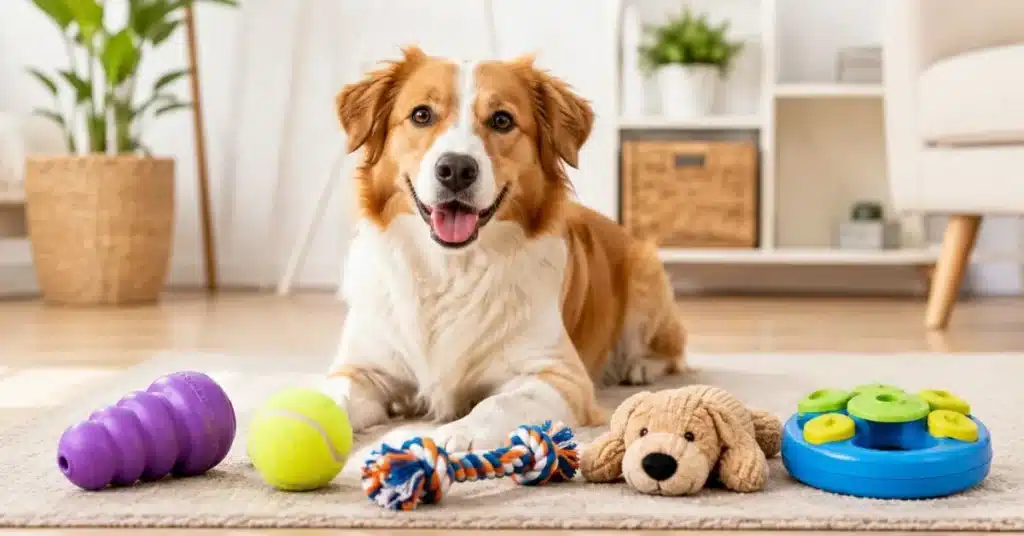
To choose dog toys, start with your dog’s size, age, chewing habit, play style, and safety needs. A good dog toy should be safe, the right size, and strong enough for how your dog plays.
The best toy is not always the cutest one. It should help with play, chewing, exercise, or mental stimulation without creating a choking risk.
Quick Answer: how to choose dog toys
To choose the right dog toy, pick a toy that is the right size, made from dog-safe material, and strong enough for your dog’s chewing habit. It should also match how your dog likes to play. Avoid toys with loose parts, sharp edges, weak stitching, or small pieces your dog can swallow.
Why Choosing the Right Dog Toy Matters
A dog toy is not just for fun. The right toy can help with safety, boredom, chewing, exercise, and mental stimulation.
Many dogs chew when they feel bored, stressed, or full of energy. A good toy gives them a safer way to use that energy instead of chewing furniture, shoes, or other unsafe things at home.
For puppies, the right chew toy can also help during puppy teething. At this age, puppies naturally want to bite and chew more.
Dog toys can also make daily life more active. A fetch toy can help with exercise, a puzzle toy can support enrichment, and a chew toy can help with normal chewing behavior.
But every toy is not right for every dog. The toy should match your dog’s size, age, chewing habit, and play style.
Choose Dog Toys Based on Your Dog’s Size
The wrong dog toy size can turn a fun toy into a choking risk. That is why you should always match the toy with your dog’s mouth size, body size, and chewing habit.
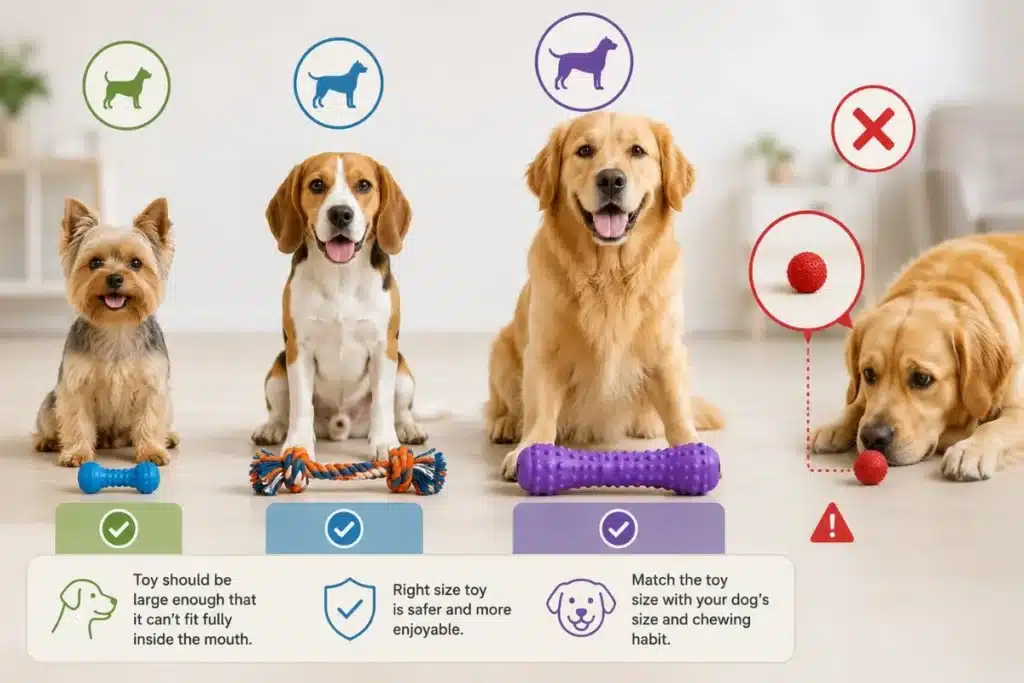
For small dogs, choose a toy that is easy to hold and chew, but not so small that they can swallow it. For large dogs, the toy should be bigger, stronger, and harder to break into small pieces.
A simple rule is: if the toy can fit fully inside your dog’s mouth, it may be too small. A toy that is too small can create a swallow risk, while a toy that is too large may be hard for your dog to enjoy.
For extra safety, the same basic idea is used in small parts and choking hazard guidance: small parts can become a choking, aspiration, or ingestion risk if they are easy to swallow.
| Dog Size | Toy Tip |
| Small dog | Choose a small toy, but not one your dog can swallow |
| Medium dog | Choose a medium-size toy that is easy to grip |
| Large dog | Choose a bigger and stronger toy |
| Heavy chewer | Choose a larger durable toy and use it under supervision |
Also remember that size is not only about breed. Some small dogs chew strongly, and some large dogs play gently. So always check your dog’s real behavior before choosing a toy.
Choose Dog Toys Based on Your Dog’s Age
Puppies, adult dogs, and senior dogs do not always need the same type of toy. A toy that works well for an adult dog may be too hard, too big, or too rough for a young puppy or an older dog.
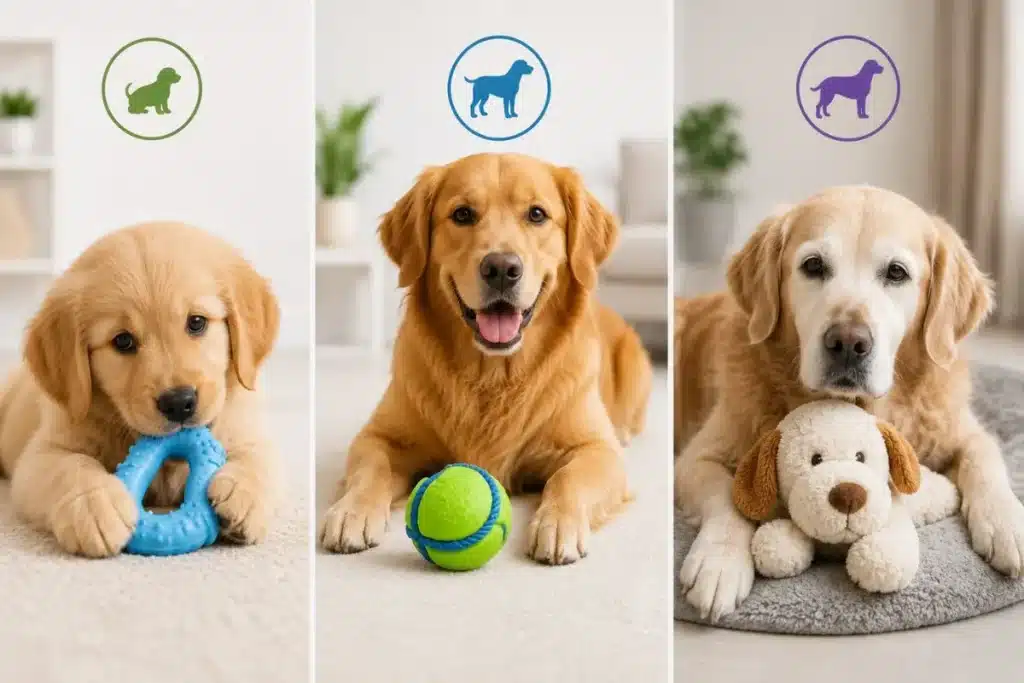
Toys for Puppies
Puppies usually need soft chew toys, teething toys, and puppy-safe toys. During the teething stage, they naturally want to bite and chew more. A soft chew toy can help them use that chewing habit in a safer way.
Toys for Adult Dogs
Adult dogs can usually enjoy more toy variety. Depending on their play style, they may like chew toys, fetch toys, tug toys, puzzle toys, or interactive toys.
If your adult dog has a strong chewing habit, choose a toy that is more durable. If your dog gets bored easily, a puzzle toy or treat-dispensing toy can help with mental stimulation.
Toys for Senior Dogs
Senior dogs may need softer and gentler toys. Some older dogs have sensitive teeth, weaker jaws, or less energy than younger dogs.
For senior dogs, choose gentle toys, soft chew toys, or easy puzzle toys. Avoid toys that are too hard if your dog has sensitive teeth or dental problems.
The main rule is simple: choose an age-appropriate dog toy that matches your dog’s teeth, energy level, chewing habit, and comfort.
Choose Dog Toys Based on Chewing Habit
A toy that works for a gentle chewer may not survive a heavy chewer. That is why your dog’s chewing habit is one of the most important things to check before buying a toy.
From my 15+ years of experience raising and caring for dogs, I have seen that some dogs gently carry toys, while others destroy the same toy in minutes. That is why I first look at the dog’s chewing strength before choosing a toy.
Gentle Chewers
A gentle chewer usually does not try to destroy toys quickly. These dogs may enjoy plush toys, soft toys, or comfort toys they can carry, cuddle, or gently chew.
But even with gentle dogs, you should still check the toy often. If a plush toy starts tearing or the stuffing comes out, remove it before your dog swallows any pieces.
Moderate Chewers
A moderate chewer needs something stronger than a soft plush toy. For these dogs, rubber toys, rope toys, or normal chew toys can work well.
The toy should be strong enough for daily chewing but not so hard that it feels uncomfortable. Always check for cracks, loose threads, or broken pieces after playtime.
Heavy Chewers
A heavy chewer or strong aggressive chewer needs a more durable toy. In most cases, durable rubber toys or nylon chew toys are better options than soft plush toys.
Still, no toy is truly “indestructible.” Even a strong toy can become unsafe if your dog breaks it into small pieces. Use heavy-chewer toys under supervision, especially during the first few play sessions.
The AKC rawhide safety guide also explains why your dog’s size, age, and chewing style matter when choosing chews or toys, especially for strong chewers.
Choose Dog Toys Based on Play Style
The best dog toy depends on how your dog actually likes to play. Every dog has a different play style, so the same toy will not work for every dog.
Some dogs love chewing for a long time. Some dogs enjoy running and chasing. Some dogs get bored quickly and need a puzzle toy or interactive toy to keep their mind busy.
If your dog loves to chew, a strong chew toy may be a better choice. If your dog loves running, a ball or fetch toy can help with daily exercise. If your dog gets bored easily, a treat-dispensing toy or puzzle toy can support mental stimulation.
If you are confused between different toy types, read our types of dog toys explained guide before choosing. It can help you understand which toy type fits your dog’s behavior best.
| Dog Play Style | Better Toy Type |
| Loves chewing | Chew toy |
| Loves running | Ball or fetch toy |
| Gets bored easily | Puzzle toy or treat-dispensing toy |
| Loves pulling | Tug toy |
| Likes comfort | Plush toy under supervision |
For dogs that need more activity and brain work, best interactive dog toys can be useful. If your dog enjoys solving problems or working for treats, you can also check our best puzzle toys for dogs guide.
A plush toy can be a good comfort toy for gentle dogs, but it may not be safe for strong chewers without supervision. For dogs that chew a lot, comparing chew toys vs interactive toys can help you choose the better option.
The main goal is simple: choose a toy that matches how your dog naturally plays, not just the toy that looks the cutest.
Safe Dog Toy Materials to Look For
Material matters because dogs bite, lick, chew, and sometimes break their toys. A toy may look fun, but the material should be safe, strong, and suitable for your dog’s chewing habit.
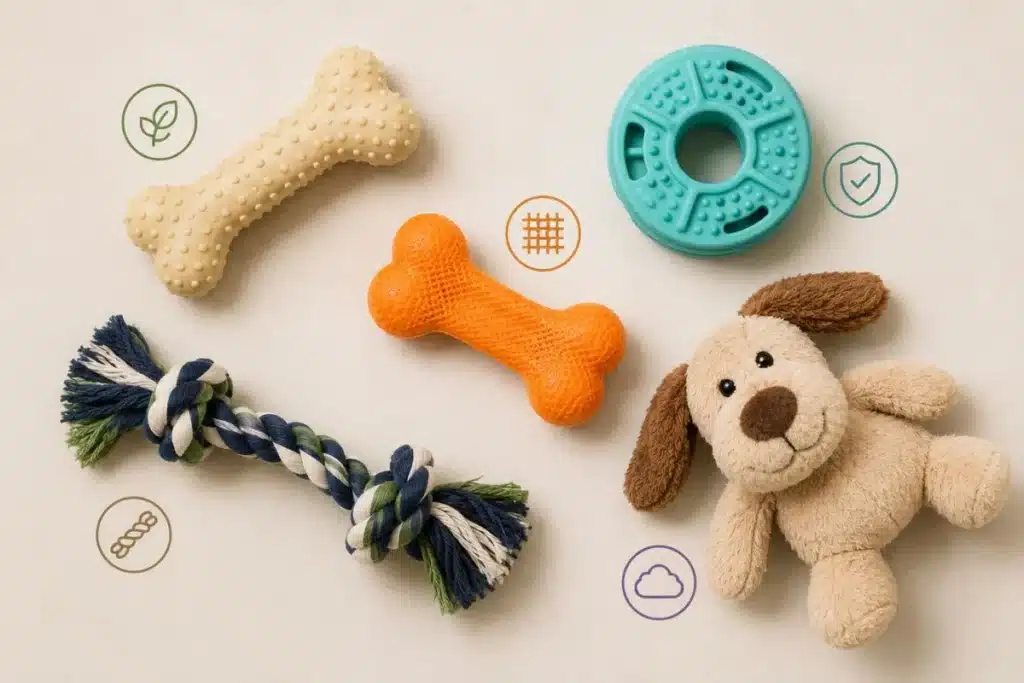
For many dogs, natural rubber is a good choice. It is flexible, durable, and useful for chewing. Food-grade silicone can also work well, especially for toys that are easy to clean.
For stronger chewers, nylon dog toys may be a better option. But the toy should not be too hard, because very hard toys may be uncomfortable for some dogs’ teeth.
Cotton rope toys can be good for tug play. But you should check them often. If the rope starts coming loose or your dog tries to swallow threads, remove the toy.
Washable plush toys can be good comfort toys for gentle dogs. But they may not be safe for heavy chewers, because some dogs can tear them open and reach the stuffing or squeaker.
When buying non-toxic dog toys, look for helpful labels like BPA-free, PVC-free, phthalate-free, PFAS-free, or PFOA-free. These labels can be useful, especially for rubber, plastic, silicone, or coated toys.
For plastic-related safety terms, the CPSC phthalates guidance explains how phthalates are often used to make some plastics softer, although this guidance is written for children’s toys and child-care articles, not specifically for dog toys.
But these labels do not make any toy completely risk-free. Always check the toy’s size, strength, condition, and how your dog actually uses it.
A safe material is important, but it is only one part of choosing the right toy. The toy should also match your dog’s age, play style, and chewing strength.
Dog Toys to Avoid
Some toys look cute, but they may not be safe for every dog. When choosing a toy, always think about your dog’s size, chewing habit, mouth size, and how easily the toy can break.
The biggest risk is a toy that becomes a choking hazard or breaks into small pieces your dog can swallow. A toy may also be unsafe if it has loose parts, sharp edges, or weak stitching.
Avoid these unsafe dog toys when possible:
- Toys that are small enough to swallow
- Toys with a loose squeaker
- Toys with loose stuffing
- Toys with buttons, beads, or plastic eyes
- Toys with sharp edges
- Cheap toys with a strong toxic smell
- Rope toys with loose threads
- Torn or broken toys
- Very hard toys that may hurt your dog’s teeth
A soft plush toy can be fine for a gentle dog, but it may not be a good choice for a heavy chewer. Some dogs can tear plush toys open quickly and reach the stuffing or squeaker inside.
Rope toys can also be useful for tug play, but you should check them often. If the rope starts falling apart, remove it before your dog swallows the loose threads.
The best rule is simple: if a toy looks damaged, too small, too weak, or easy to swallow, do not give it to your dog.
Quick Dog Toy Safety Checklist
Before giving any toy to your dog, do one quick dog toy safety check. A toy may look safe at first, but the wrong size, weak material, or loose parts can create a swallowing risk or choking hazard.
Use this checklist before your dog starts playing:
- Is the toy the right size for my dog?
- Can my dog swallow the toy or fit it fully inside the mouth?
- Does the toy have any loose parts?
- Is it strong enough for my dog’s chewing habit?
- Does it have sharp edges?
- Is the toy made from safe material?
- Is it easy to clean?
- Can my dog use it safely under supervision?
If the toy is too small, already damaged, or has pieces your dog can chew off, it is better to avoid it. A safe toy should stay in one piece during normal play and should not break into small parts easily.
Also, watch your dog during the first few play sessions. This helps you see if the toy is truly suitable for your dog’s chewing style.
Simple 3-Step Test Before Giving a Toy
A quick test can help you avoid many common dog toy mistakes. Before giving a new toy to your dog, check the size, strength, and how your dog reacts during the first few play sessions.
1. Size Test
First, check if the toy is too small for your dog’s mouth. If your dog can fit the whole toy inside the mouth, it may create a choking risk or swallowing risk.
A good toy should be easy for your dog to hold, but not small enough to swallow.
2. Strength Test
Next, do a simple strength test. Press, bend, and gently pull the toy with your hands.
If the toy feels too weak, cracks easily, or has parts that may come loose, it may not be safe for your dog’s chewing habit. This is especially important for heavy chewers.
3. First-Play Test
Finally, watch your dog during the first few play sessions. This first-play test helps you understand if the toy is truly suitable for your dog.
If the toy starts tearing, cracking, losing pieces, or your dog tries to swallow parts, remove it and choose a safer option.
Real-Life Examples: Which Toy Fits Which Dog?
Every dog plays differently. So real behavior matters more than how cute a toy looks.
A toy may look good, but it still may not fit your dog’s age, chewing habit, play style, or safety needs.
For example, a heavy chewer may destroy a soft plush toy in minutes. But a gentle dog may carry the same plush toy around for comfort.
A teething puppy may need a soft puppy-safe chew toy. A bored dog may need a puzzle toy or treat-dispensing toy to stay mentally busy.
Use this simple guide:
| Situation | Better Toy Choice |
| Dog destroys plush toys quickly | Durable rubber or nylon chew toy |
| Puppy is teething | Soft puppy-safe chew toy |
| Dog gets bored easily | Puzzle toy or treat-dispensing toy |
| Dog loves running | Ball or fetch toy |
| Dog likes comfort | Soft plush toy under supervision |
| Senior dog needs gentle play | Soft, easy-to-chew toy |
If your dog destroys toys quickly, do not keep buying the same soft toys again and again. A stronger toy may be a better choice.
The main rule is simple: choose a toy based on how your dog actually plays, not only by how the toy looks.
How Many Toys Does a Dog Need?
A dog does not need too many toys, but it helps to have a few useful dog toys for different needs. For many dogs, around 4–6 toys can be enough if the toys match their chewing habit, play style, and daily routine.
A simple toy mix can include:
- 1 chew toy for normal chewing
- 1 fetch toy for exercise
- 1 puzzle toy for mental activity
- 1 comfort toy for relaxing
- 1 tug toy if your dog enjoys pulling games
But every dog is different. Some dogs love playing with many toys, while others only enjoy one or two favorite toys. So instead of buying too many random toys, focus on toys your dog actually uses.
You can also try toy rotation. Keep a few toys available, then change them after a few days. This can make old toys feel new again and help your dog stay interested.
Maintenance Tips for Dog Toys
A safe toy can become unsafe if it gets dirty, cracked, or broken. That is why regular dog toy maintenance is important, especially if your dog chews toys every day.
You should clean dog toys often to remove dirt, saliva, food, and bad smell. Rubber, silicone, and hard toys can usually be washed with warm water and mild soap. Treat toys or puzzle toys should be washed after use, because food can get stuck inside.
For soft toys, check the label first. Some plush toys are machine washable, but others may need hand washing. Always dry toys properly before giving them back to your dog.
Use this simple maintenance checklist:
- Clean toys weekly
- Wash treat toys after use
- Check for cracks, tears, or sharp edges
- Check for bad smell
- Remove toys with loose stuffing
- Replace any broken toy
- Dry toys properly after washing
- Use toy rotation to keep your dog interested
Also check your dog’s toys during playtime. If a toy starts breaking into small pieces, it may become a swallowing risk.I
Common Mistakes When Choosing Dog Toys
Many dog toy problems start from simple buying mistakes. Most new dog owners do not make these mistakes on purpose. They just do not know what to check before buying a toy.
One common mistake is buying a toy only because it looks cute. A cute toy is not always the safest or most useful choice. The toy should match your dog’s size, chewing habit, play style, and safety needs.
Another mistake is choosing a wrong size toy. If the toy is too small, your dog may try to swallow it. If it is too large, your dog may not enjoy playing with it.
Avoid these common dog toy mistakes:
- Buying a toy only because it looks cute
- Choosing a toy that is too small
- Giving a weak plush toy to a heavy chewer
- Ignoring the toy material
- Not checking for damaged toys
- Not cleaning toys regularly
- Buying only one type of toy
- Leaving a new toy with your dog without supervision
A soft plush toy can be fine for a gentle dog, but it may not be safe for a strong chewer. If your dog can tear it open quickly, the stuffing or squeaker can become a risk.
Also, do not assume a new toy is automatically safe. Watch your dog during the first few play sessions and check the toy for damage.
No Dog Toy Is Perfect for Every Dog
No single toy works for every dog. A toy that works well for one dog may be too small, too weak, or too boring for another dog.
The right choice depends on your dog’s size, age, chewing strength, play style, and how safely the toy holds up during use. Even a strong toy can become unsafe if it breaks, cracks, or turns into small pieces your dog can swallow.
That is why supervision is important, especially when your dog is playing with a new toy for the first time. Watch how your dog chews, pulls, carries, or breaks the toy. If the toy starts falling apart, remove it early.
Also remember, no toy is risk-free. Good dog toy safety means choosing carefully, checking toys often, and replacing damaged toys before they become dangerous.
This guide is based on practical dog care experience and general safety research. It is not veterinary advice. If your dog swallows part of a toy, breaks a tooth, vomits, coughs, or shows pain after playing, contact a veterinarian.
Final Thoughts on Choosing the Right Dog Toy
Learning how to choose dog toys becomes easier when you focus on your dog, not just the toy. Before buying, look at your dog’s size, age, chewing habit, play style, and safety needs.
The best dog toy is not always the most expensive or most popular one. A good toy should be a safe dog toy, the right size, and suitable for how your dog naturally plays.
Start with safety, watch how your dog uses the toy, and replace damaged toys before they become risky. If you are still building your dog’s full setup, you can also read our dog accessories for beginners guide.
Frequently Asked Questions About Choosing Dog Toys
How do I choose the right toy for my dog?
To choose the right dog toy, look at your dog’s size, age, chewing strength, and play style. A good toy should be safe, easy for your dog to use, and strong enough for normal play.
Avoid choosing a toy only because it looks cute. The toy should match your dog’s real behavior.
What size toy should I buy for my dog?
The best dog toy size depends on your dog’s mouth size and body size. The toy should be easy to hold, but not small enough for your dog to swallow.
If the toy can fit fully inside your dog’s mouth, it may become a choking risk or swallowing risk.
What toys should dogs avoid?
Dogs should avoid toys with loose parts, sharp edges, weak stitching, loose stuffing, or pieces that can break off easily. You should also avoid toys that are too small for your dog.
Broken toys can become unsafe quickly. If a toy starts tearing, cracking, or losing pieces, remove it.
Are plush toys safe for dogs?
Plush toys can be safe for gentle dogs that like to carry or cuddle toys. But they may not be the best choice for a heavy chewer.
If your dog tears plush toys open, the stuffing or squeaker can become a risk. Use plush toys under supervision.
Are squeaky toys safe for dogs?
Squeaky toys can be fun for many dogs, but you should check them often. The main risk is a loose squeaker inside the toy.
If your dog breaks the toy and tries to remove or swallow the squeaker, take the toy away.
What toys are best for heavy chewers?
For heavy chewers, stronger toys like durable rubber toys or nylon chew toys are usually better than soft plush toys. But no toy is completely indestructible.
What toys are best for puppies?
The best puppy toys are usually soft, safe, and easy to chew. Teething toys and soft chew toys can help puppies during the teething stage.
How many toys should a dog have?
Many dogs do well with a small mix of useful toys. This can include a chew toy, fetch toy, puzzle toy, comfort toy, and tug toy if your dog enjoys pulling.
You can also use toy rotation to keep your dog interested without buying too many toys.
How often should you replace dog toys?
You should replace dog toys when they become damaged, cracked, torn, or start losing small pieces. A damaged toy can become a swallowing or choking risk.
Check toys regularly, especially if your dog is a strong chewer.
How do you clean dog toys?
You can clean dog toys with warm water and mild soap, depending on the toy material. Rubber, silicone, and hard toys are usually easier to wash.
Are puzzle toys good for dogs?
Yes, puzzle toys can be good for many dogs because they support mental stimulation and help reduce boredom. They are especially useful for dogs that get bored quickly.
Start with an easy puzzle toy first, then choose harder ones as your dog learns.