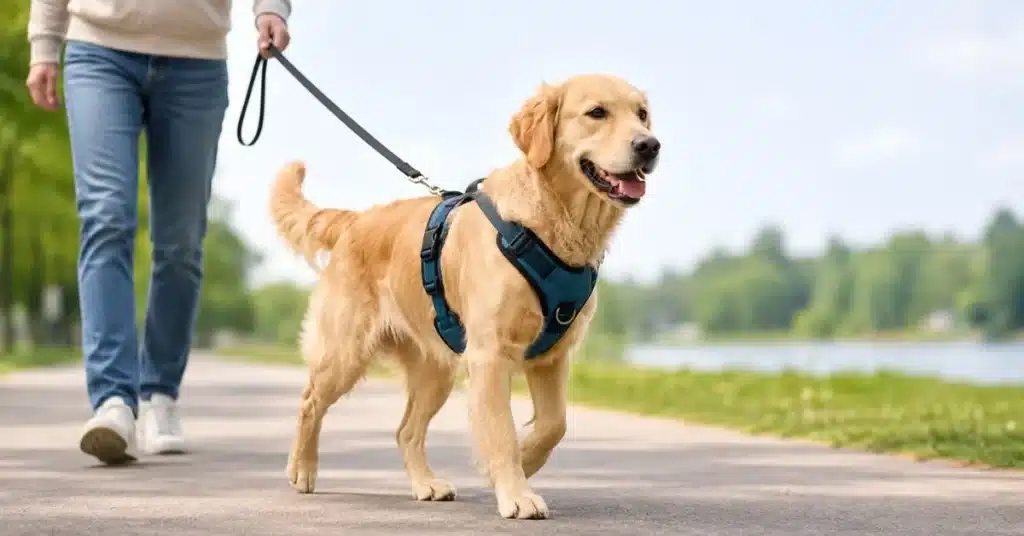
To choose a dog harness, start with your dog’s chest size, walking style, and comfort needs.
The right dog harness should fit securely without rubbing, allow natural shoulder movement, and stay comfortable during daily walks.
For most beginner dog owners, an adjustable padded harness with secure buckles is a safe starting choice.
Quick Answer: How to Choose a Dog Harness
To choose the right dog harness, first measure your dog’s chest girth and compare it with the brand’s size chart. Do not choose a harness by weight only, because dogs with the same weight can have different body shapes.
Follow these simple steps:
- Measure your dog’s chest girth around the widest part of the chest.
- Choose the right harness type based on your dog’s walking style.
- Check the fit with the two-finger rule so it is snug but not tight.
- Look for adjustable straps, soft padding, and a secure buckle.
- Make sure the harness does not rub, twist, or block natural shoulder movement.
For most beginner dog owners, a padded adjustable harness with strong buckles is a safe starting choice. If your dog pulls, slips out, or feels uncomfortable, you may need a different harness style.
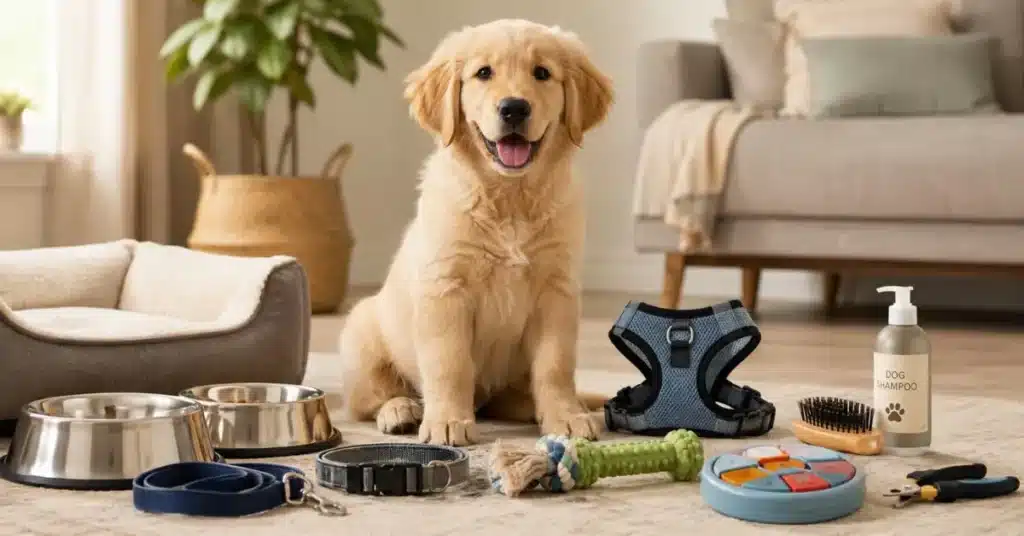
If you are still building your first setup, our dog accessories for beginners guide can help you understand other basic items new dog owners may need.
Why Choosing the Right Dog Harness Matters
Choosing the right dog harness matters because a poor fit can make daily walks uncomfortable and unsafe. A wrong dog harness may rub behind the front legs, twist to one side, or put pressure in the wrong place.
A harness that is too tight can cause rubbing, chafing, or skin irritation. On the other hand, a harness that is too loose can increase the risk of your dog slipping out during a walk.
The harness type also matters. If you have a pulling dog, a simple back-clip harness may not give enough walking control. In that case, a front-clip or no-pull style may help manage pulling, but it should still be used with basic leash training.
Many beginners choose a harness by color, price, or the size label only. Later, they notice problems like harness rubbing, slipping, pulling, or their dog refusing to walk comfortably.
For puppies, fit can change quickly because they grow fast. That is why harness comfort, proper adjustment, and regular fit checks are important for safe everyday walks.
Dog Harness vs Collar: Which One Should You Use?
A dog harness and a dog collar are useful for different situations.
A collar is helpful for holding an ID tag and can work for short, calm walks. A dog harness is often better for walking control, especially for puppies, small dogs, and dogs that pull.
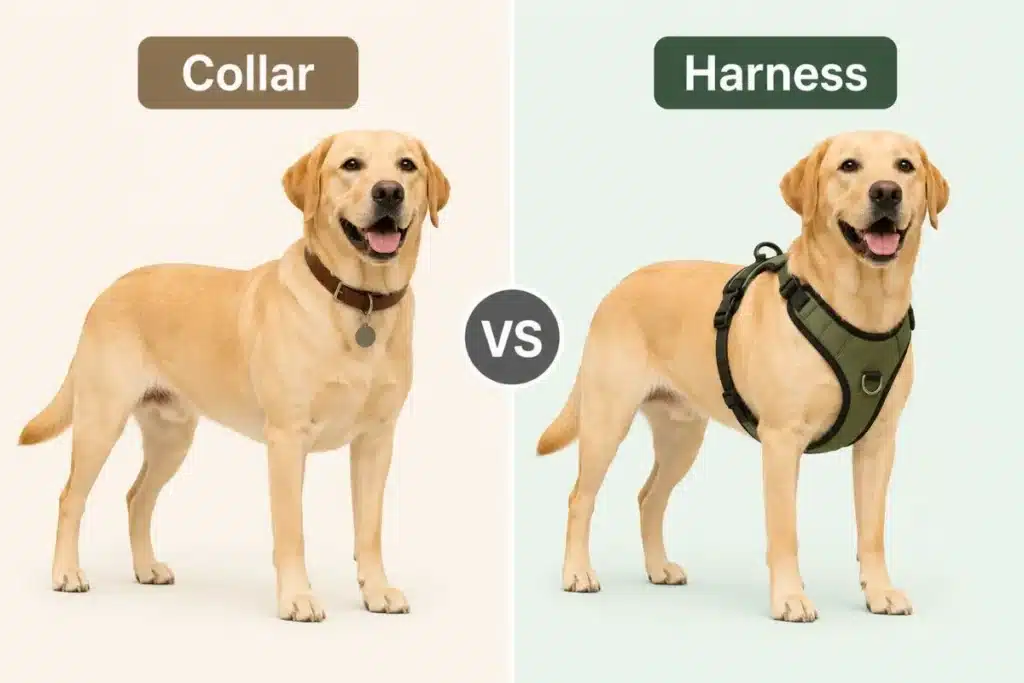
The main difference is pressure. A collar sits around the neck, so pulling may create more neck pressure. A harness supports the chest and body, which can feel more comfortable for many dogs during walks.
But a harness is not always the only answer. Many dog owners use both: a collar for ID tags and a harness for daily walks.
| Feature | Dog Harness | Dog Collar |
| Best use | Walking and control | ID tag and short calm walks |
| Pressure area | Chest/body | Neck |
| Good for pullers | Often better | Not ideal |
| Daily ID use | Not necessary | Very useful |
If your dog pulls, slips, coughs on leash, or seems uncomfortable with neck pressure, a harness may be a better walking choice.
Main Types of Dog Harnesses Explained
There are several types of dog harnesses, and each one works a little differently. The best choice depends on your dog’s size, walking style, and how much control you need during walks.
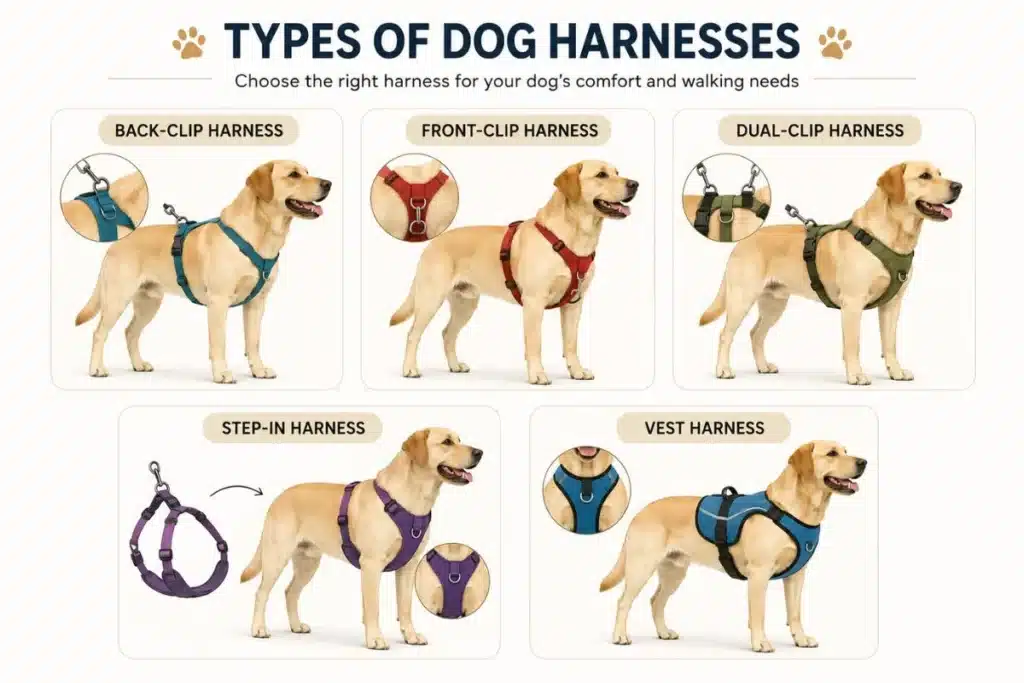
A back-clip harness has the leash attachment or D-ring on the dog’s back. It is easy to use and works well for calm dogs, but it may not give enough control for strong pullers.
A front-clip harness has the leash attachment on the chest area. This style can help redirect a dog that pulls, making it useful for leash training and better walking control.
A dual-clip harness has both front and back leash attachment points. It gives more flexibility because you can use the back clip for casual walks and the front clip when your dog needs more control.
A step-in harness is designed so your dog steps into it with their front legs. It can be easier for dogs that do not like harnesses going over their head.
A vest harness usually has a soft, padded body shape. It is often comfortable for small dogs, puppies, and dogs that need gentle chest support.
A no-pull harness is made to help manage pulling. It may help with control, but it should not replace basic leash training.
An escape-resistant harness is designed for dogs that slip out of regular harnesses. These usually have a more secure fit and extra adjustment points.
How to Measure Your Dog for a Harness
To measure your dog for a harness, use a soft measuring tape and measure your dog while they are standing naturally. Do not choose a harness by dog weight only, because two dogs with the same weight can have different chest shapes.
Start with the chest girth. Wrap the measuring tape around the widest part of your dog’s chest, usually just behind the front legs. This is the most important measurement for choosing the right dog harness size.
Next, check the neck circumference if the harness brand asks for it. Some harnesses fit around both the neck and chest, so the neck area may also matter.
After measuring, compare your numbers with the brand’s size chart. Every brand can fit a little differently, so do not guess based on small, medium, or large labels only.
If your dog is between two sizes, choose an adjustable harness with multiple adjustable straps. This gives you more room to create a secure and comfortable fit.
Quick measurement checklist:
- Chest girth
- Neck circumference
- Dog weight
- Brand size chart
- Adjustable straps
How Should a Dog Harness Fit?
A good dog harness fit should feel secure, but not too tight or too loose. The harness should stay in place during walks without rubbing, twisting, or blocking your dog’s natural shoulder movement.
Use the two-finger rule to check the fit. After putting the harness on, you should be able to slide two fingers under the straps.
If you cannot fit two fingers, the harness may be too tight. If you can fit more than two fingers easily, the harness may be too loose.
Check the area behind your dog’s front legs. A poor fit can cause armpit rubbing, chafing, or skin irritation.
If your dog slows down, scratches, or refuses to walk, the harness may be rubbing or sitting in the wrong place.
Your dog should also be able to walk, sit, and turn naturally. If the straps block the shoulders or change how your dog walks, adjust the harness or choose a different shape.
A secure harness should not twist to one side or slide around the body. Your dog also should not be able to back out of it easily, especially during outdoor walks.
Before going outside, let your dog walk indoors for a few minutes. Watch how the harness moves, then check the fit again.
Quick Fit Check
- Two fingers fit under the straps
- No rubbing behind the front legs
- Harness does not twist or slide
- Dog can move shoulders freely
- Buckles stay secure
- Dog cannot back out easily
Choose a Harness Based on Your Dog’s Walking Style
The best dog harness depends on how your dog behaves during walks. A calm dog, a pulling dog, a puppy, and a nervous dog may all need different harness styles.

For Dogs That Pull
If your dog pulls hard, a front-clip harness or no-pull harness may give better walking control than a simple back-clip harness. The front leash attachment can help redirect your dog’s body when they pull forward.
But a harness should not replace training. A no-pull harness can help manage pulling, but your dog still needs practice, patience, and loose-leash walking training.
For Puppies
A good puppy harness should be lightweight, soft, and adjustable. Puppies grow quickly, so the harness that fits today may feel tight after a few weeks.
Choose a harness with adjustable straps and check the fit often. Make sure it does not rub behind the front legs or block natural movement.
For Small Dogs
A small dog harness should feel soft and gentle on the body. Many small dogs do well with a soft padded vest harness because it spreads pressure around the chest instead of the neck.
Look for lightweight material, smooth edges, and secure buckles. Avoid bulky harnesses that feel heavy or stiff on a small dog.
For Large Dogs
A large dog harness should be strong, secure, and easy to control. Look for a secure buckle, wide straps, durable stitching, and a strong D-ring for leash attachment.
Large dogs can put more pressure on the harness during walks, so weak buckles or thin straps may not be safe enough.
For Dogs That Slip Out
If your dog backs out of gear, look for an escape-proof harness or escape-resistant harness. These usually have a more secure chest fit and multiple adjustment points.
The harness should not be too loose around the chest or shoulders. Always test the fit indoors before using it outside.
For Reactive Dogs
A reactive dog harness should offer secure control without causing discomfort. Choose a harness with strong buckles, a stable fit, and good leash attachment.
For dogs that lunge, panic, or react strongly outside, a harness alone is not enough. Use safe handling and consider help from a certified dog trainer if needed.
Dog Harness Decision Table
Use this dog harness decision table as a quick guide before buying. The better harness choice depends on your dog’s size, behavior, and walking routine. A pulling dog may need more control, while a puppy, small dog, or large dog may need a different level of comfort and support.
| Dog Situation | Better Harness Choice |
| Dog pulls on leash | Front-clip or no-pull harness |
| Puppy | Lightweight adjustable harness |
| Small dog | Soft padded harness |
| Large dog | Strong adjustable harness |
| Dog slips out | Escape-resistant harness |
| Night walks | Reflective harness |
| Daily casual walks | Back-clip padded harness |
| Reactive dog | Secure harness plus training support |
This table is a starting point only. Always check the fit, comfort, and safety before using any harness for regular walks.
Key Features to Look for in a Dog Harness
When choosing a dog harness, do not focus only on color, style, or price. A good harness should feel comfortable, stay secure, and support safe daily walking.
First, look for adjustable straps. An adjustable dog harness helps you create a better fit around your dog’s chest and body. This is important because every dog has a different shape, even if they have the same weight.
Soft padding is also important. A padded dog harness can help reduce rubbing and pressure, especially around the chest and behind the front legs. Avoid rough edges or stiff straps that may cause discomfort.
For comfort, choose a harness with breathable mesh or soft fabric. This can help your dog stay more comfortable during warm weather, longer walks, or daily use.
The buckle should feel strong and secure. A weak buckle can open during walks, especially if your dog pulls. Also check the D-ring, which is the metal ring where the leash attaches. It should feel strong, smooth, and firmly stitched into the harness.
For evening or early morning walks, reflective stitching or reflective strips are helpful. They make your dog easier to see in low light.
Also check the overall stitching. Durable stitching helps the harness last longer and stay secure during regular use. If the stitching looks loose or weak, choose another option.
A washable dog harness is also useful because harnesses can collect dirt, sweat, and odor over time.
In simple words, the best harness features are adjustability, soft padding, secure buckles, a strong D-ring, breathable material, and comfortable chest support. These features help keep your dog safer and more comfortable during walks.
Dog Harness Safety Checklist
Before a long walk, always check your dog harness safety. A harness can help with safe walking and better control, but only when it fits well and stays secure.
Use this quick checklist:
- Straps are not too tight around the chest or body
- No rubbing behind the front legs
- The secure buckle locks properly
- The D-ring feels strong and firmly attached
- The harness does not slide, twist, or move to one side
- Your dog can move their shoulders freely
- There is reflective material for night or early morning walks
- There is no broken stitching or loose fabric
- For puppies, the puppy fit is checked regularly
A good harness should feel secure, but it should not change how your dog walks.
If your dog slows down, scratches, bites the harness, or refuses to move, check the fit again. The harness may be too tight, rubbing the skin, or sitting in the wrong position.
Also check the buckle, D-ring, and stitching often. These parts take pressure during walks, especially if your dog pulls.
For puppies, safety checks are extra important because they grow fast. A harness that fits well today may feel tight after a few weeks.
A harness can help with safer walking control, but it cannot replace training or professional help for serious behavior issues. If your dog pulls hard, lunges, panics, or keeps escaping, consider help from a certified trainer.
Material Safety: What Should You Check?
When choosing a harness, the dog harness material should feel soft, smooth, and safe against your dog’s skin. Avoid rough edges, stiff straps, or material that may cause rubbing or irritation during walks.
Look for soft non-irritating material, especially around the chest, belly, and behind the front legs. A harness with padding can help improve comfort, while breathable mesh may be better for daily walks or warm weather.
Common harness materials include nylon, polyester, and mesh fabric. These can work well when the harness is properly stitched, lightweight, and comfortable for your dog’s body.
Also check the hardware. The D-ring, buckle, and clips should feel strong and secure. If available, look for lead-free hardware and smooth metal parts that do not feel sharp or weak.
For waterproof or stain-resistant harnesses, look for PFAS-free or PFOA-free labels when available, because PFAS may be used in water-repellent fabrics.
If the harness is colored, non-toxic dye labeling is a plus. Avoid saying any harness is completely “chemical-free.” Instead, choose materials with clear safety labels, strong hardware, and comfortable skin contact.
Simple At-Home Harness Fit Test
Before using a new harness outside, do a simple at-home harness fit test. This helps you check comfort, safety, and leash control before your dog goes on a real walk.
Start by putting the dog harness on your dog while they are standing naturally. Adjust the straps around the chest and body.
Next, use the two-finger rule. You should be able to place two fingers under each strap. If the straps feel too tight, your dog may feel pressure or discomfort. If the straps feel too loose, your dog may slip out.
Then let your dog do a short indoor walking test for about 3–5 minutes. Watch how the harness moves when your dog walks, turns, sits, or changes direction.
Check for these signs:
- The harness does not twist to one side
- There is no rubbing behind the front legs
- Your dog can move their shoulders freely
- The straps stay in place
- The buckle stays secure
- Your dog does not try to back out of the harness
After that, attach the leash gently and test light leash control indoors. Do not pull hard. Just check if the harness stays stable when your dog moves.
If the harness slides, twists, rubs, or your dog looks uncomfortable, adjust the fit before going outside. A good harness should feel secure, but it should not restrict natural movement.
Common Mistakes When Choosing a Dog Harness
Many beginners make simple dog harness mistakes because they choose too quickly. A harness may look good, but if the size, fit, or style is wrong, your dog may feel uncomfortable during walks.
Here are the most common mistakes to avoid:
- Choosing only by dog weight
Weight can help, but it is not enough. Two dogs with the same weight can have different chest shapes. - Not measuring chest girth
The chest girth is one of the most important measurements for choosing the right harness size. - Buying a loose harness
A loose harness can slide, twist, or allow your dog to slip out during a walk. - Choosing style over comfort
Color and design are not as important as comfort, padding, and proper fit. - Using a back-clip harness for a strong puller
A back-clip harness is easy to use, but it may not give enough control for a dog that pulls hard. - Ignoring rubbing behind the front legs
If the harness causes rubbing or skin irritation, it may be too tight, too stiff, or the wrong shape. - Not checking puppy growth
Puppies grow quickly, so their harness fit can change within a few weeks. - Thinking a no-pull harness replaces training
A no-pull harness can help manage pulling, but it does not replace leash training. - Leaving the harness on all day
A harness is mainly for walks. Leaving it on too long may cause rubbing or discomfort. - Buying a weak buckle harness
A weak buckle or poor stitching can become unsafe, especially if your dog pulls.
One common complaint is, “My dog’s harness keeps slipping.” This often happens because the harness is too loose, the shape is wrong, or the straps are not adjusted properly.
How to Maintain a Dog Harness
Good dog harness maintenance helps keep the harness clean, comfortable, and safe for daily walks. Even a strong harness can become unsafe if the straps, buckle, or stitching get damaged.
Wash the harness when it becomes dirty, smelly, or muddy after outdoor walks. Always follow the brand’s cleaning instructions. If the harness is machine-washable, use a gentle cycle. If not, hand wash it with mild soap and water.
After washing, dry the harness fully before using it again. A wet harness can feel uncomfortable and may cause rubbing around your dog’s chest or front legs.
Check the harness every week for signs of damage. Look for loose stitching, stretched straps, weak fabric, or rough edges. Also do a quick buckle check and D-ring check before walks. The buckle should lock properly, and the D-ring should feel strong and secure.
If the harness is torn, stretched, or the buckle feels weak, replace it instead of trying to keep using it.
For puppies, check the puppy fit every few weeks. Puppies grow quickly, so a harness that fits well now may become tight later.
When Should You Replace a Dog Harness?
You should know when to replace a dog harness because an old or damaged harness can become unsafe during walks. Even if the harness still looks usable, small problems like loose straps, weak stitching, or a damaged buckle can reduce control.
Replace your dog’s harness if you notice these signs:
- Your puppy outgrows it and the harness feels tight
- The strap becomes loose or does not stay adjusted
- The buckle breaks, cracks, or does not lock properly
- The D-ring bends, rusts, or feels weak
- The harness causes rubbing or skin irritation
- Your dog keeps slipping out during walks
- The stitching becomes weak, loose, or torn
- The harness still smells bad even after cleaning
A harness should stay secure without hurting your dog’s movement. If it slides, twists, or no longer fits your dog’s chest properly, it may be time to replace it.
For growing puppies, check the fit every few weeks. A harness that was comfortable last month may become too tight as your puppy grows.
Do not wait until the harness completely breaks. If you see a broken buckle, rusty D-ring, stretched strap, or weak stitching, replace the harness before your next long walk.
Final Recommendation for Beginners
For most beginner dog owners, an adjustable padded harness is a safe starting choice. Look for secure buckles, comfortable straps, and a proper chest fit so the harness stays in place without rubbing or twisting.
The best beginner dog harness is not always the most expensive one. It should match your dog’s walking style, body shape, and comfort needs. A calm dog may do well with a simple padded back-clip harness, while a pulling dog may need a front-clip or no-pull style.
If your dog pulls hard, slips out of gear, or reacts strongly outside, the harness alone may not solve everything. In that case, choose a more secure harness style and use proper training support when needed.
Start with fit, comfort, and safety first. Product choice should come after you understand what your dog actually needs.
New dog owner? Read our dog accessories for beginners guide to understand the basic items your dog may need.
Common Questions About Dog Harnesses
1. How do I choose the right harness for my dog?
To choose the right harness for your dog, start by measuring your dog’s chest girth. Then choose a harness based on your dog’s walking style, body shape, comfort needs, and safety.
Look for adjustable straps, soft padding, and secure hardware like a strong buckle and D-ring.
2. What type of harness is best for dogs?
The best dog harness type depends on your dog. Calm dogs may do well with a back-clip harness, while dogs that pull may need a front-clip harness or no-pull harness.
Puppies and small dogs may feel more comfortable in a lightweight, padded harness.
3. How do I know what size harness my dog needs?
To find the right dog harness size, measure your dog’s chest girth around the widest part of the chest. Then compare that number with the brand’s size chart.
Do not choose by weight only, because two dogs with the same weight can have different chest shapes.
4. How should a dog harness fit?
A good dog harness fit should be snug, but not tight. You should be able to place two fingers under the straps.
The harness should not rub behind the front legs, twist to one side, or block your dog’s natural shoulder movement.
5. Is a dog harness better than a collar?
A dog harness is often better for walks, pulling control, puppies, and small dogs. It spreads pressure around the chest and body instead of only the neck.
A collar is still useful for holding an ID tag and for short, calm walks.
6. Is a front-clip or back-clip harness better?
A front-clip harness may be better for dogs that pull because it can help redirect their movement. It gives more control during walks.
A back-clip harness is easier to use and works well for calm dogs that already walk nicely.
7. Are no-pull harnesses safe for dogs?
A no-pull harness can be safe when it fits properly and does not rub or restrict movement. It may help manage pulling during walks.
But it should not replace leash training. If your dog pulls hard, training support may still be needed.
8. Can a dog escape from a harness?
Yes, a dog can escape if the harness is too loose, the shape is wrong, or the straps are not adjusted well.
For dogs that back out of gear, choose a secure or escape-resistant harness and always test the fit indoors first.
9. Should a dog wear a harness all day?
Usually, no. A harness is mainly for walks, travel, or outdoor control. Leaving it on all day may cause rubbing, pressure, or discomfort.
Remove the harness when your dog is resting indoors unless your vet or trainer gives a specific reason.
10. When should you replace a dog harness?
Replace a harness if the straps stretch, the buckle breaks, the D-ring bends, or the stitching becomes weak.
You should also replace it if your puppy outgrows it, your dog keeps slipping out, or the harness starts rubbing your dog’s skin.