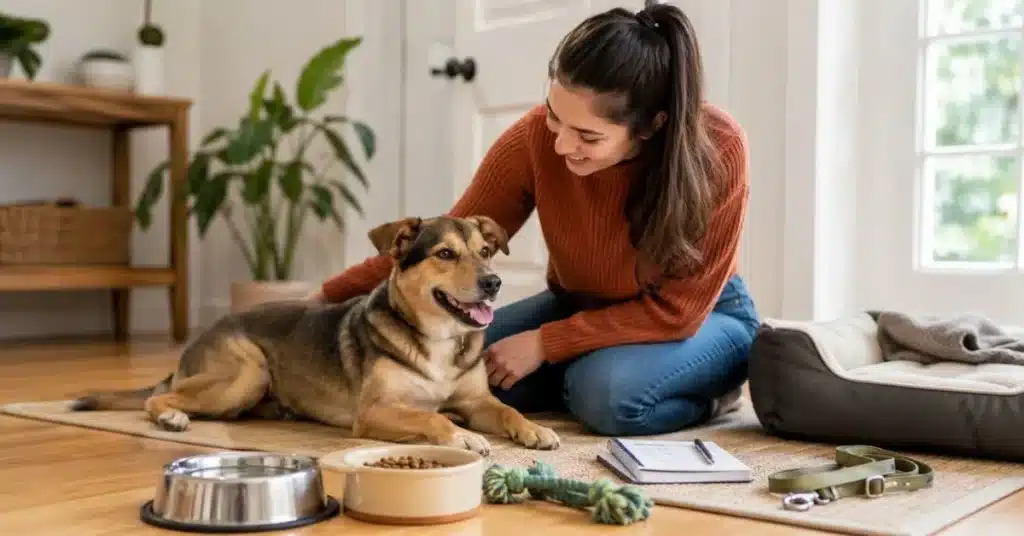

A weekly dog care checklist helps you stay organized and remember important tasks beyond daily feeding and walks. Each week, check your dog’s coat, skin, ears, mouth, paws, nails, bedding, toys, supplies, and any changes in appetite, energy, or behavior.
You do not need to complete every task each week. Some weekly dog care tasks only need a quick check. Cleaning, trimming, or professional care should happen when needed. New owners can also follow our dog care guide to understand daily, weekly, and long-term care.
Weekly Dog Care Checklist at a Glance
Use four simple steps each week: check, clean, review, and plan. This makes your weekly routine easier to follow.
Check Your Dog
Look at your dog’s:
- Coat and skin
- Eyes and outer ears
- Teeth and gums
- Paws, pads, nails, and dewclaws
- Movement and comfort
Check for new lumps, sore areas, redness, or other changes. Also inspect the collar, leash, harness, and ID tag for damage or poor fit.
Clean Essential Items
Check and clean the:
- Bedding and blankets
- Crate or sleeping area
- Washable toys
- Grooming tools
- Walking gear, when dirty
Review Recent Changes
Think about your dog’s appetite, water intake, stool, energy, sleep, behavior, exercise, and mental activity during the past week.
Plan the Next Week
Check your food, treats, medication, preventive care, grooming needs, and vet appointments. Then choose one clear care priority for the coming week.
This weekly checklist for dog owners is flexible. Some tasks need weekly action, while others only need a quick check.
Daily vs Weekly vs As-Needed Dog Care
A common mistake is treating every checklist item as a task that must happen each week. In reality, some jobs are daily, some need a weekly check, and others happen only when needed.
| Daily care | Weekly review | When needed or scheduled |
| Food and fresh water | Coat and skin check | Bathing |
| Walks and potty breaks | Bedding and toy check | Nail trimming |
| Regular medication | Ear, mouth, and paw check | Ear cleaning |
| Basic health observation | Health and behavior notes | Grooming appointment |
| Exercise and interaction | Food and supply planning | Veterinary visit |
Feeding, fresh water, walks, and potty breaks belong in a daily dog care routine. They should not wait for a weekly reset.
Simple Frequency Guide
- Do weekly: Review bedding, toys, supplies, equipment, and recent health notes.
- Check weekly: Look at the coat, skin, ears, mouth, paws, nails, and movement.
- Do more often if needed: Brush the coat, clean dirty items, or check for parasites.
- Only when due: Bathe your dog, trim the nails, or book grooming.
- Follow veterinary advice: Use the recommended schedule for medicine, preventive care, and health conditions.
A flexible weekly dog care routine helps you stay organized without doing tasks too often.
Example: A Simple Sunday Weekly Reset
During a Sunday weekly check, an owner finds a small tangle behind the dog’s ear. They also notice a worn harness strap and see that the dog food may run out soon.
None of these problems needs emergency care. But the weekly check helps the owner act early. They can remove the tangle, replace the damaged harness, and buy more food before it runs out.
This simple routine makes small care needs easier to notice, plan, and manage.
Step 1: Check Your Dog From Head to Tail
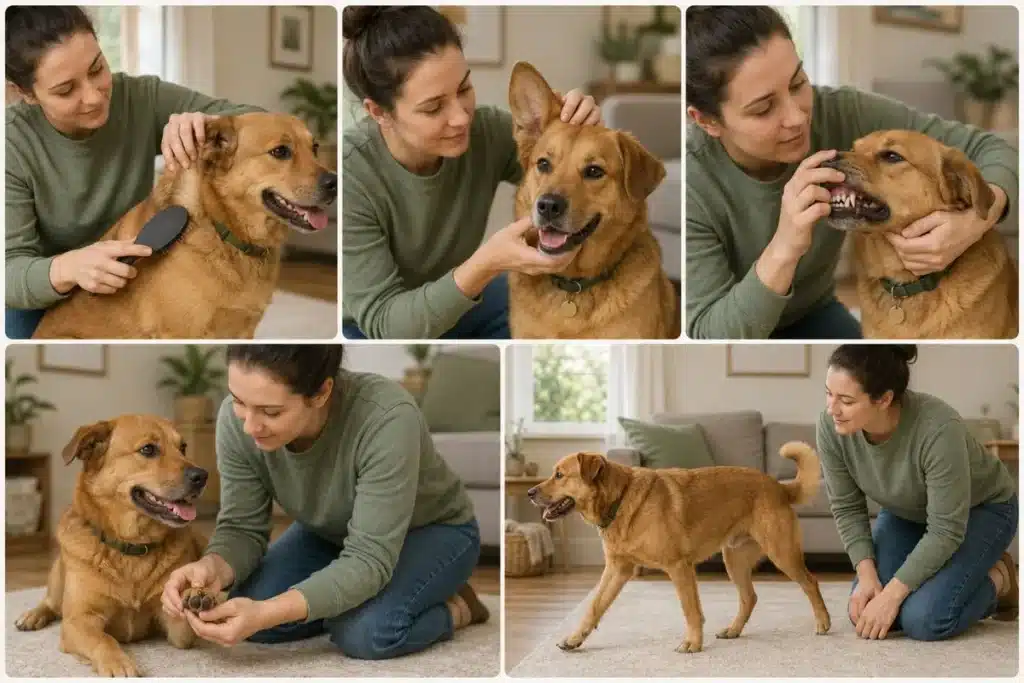
Follow the same head-to-tail order each week. This makes changes easier to notice and helps you avoid missing an area.
Brush and Check the Coat and Skin
What to do: Brush your dog slowly, then use your hands to feel the skin. Check behind the ears, under the legs, and around the tail. These areas often hide mats, tangles, and dirt, especially in long-haired dogs.
Watch for:
- Red or flaky skin
- Sores or irritation
- Fleas or ticks
- New lumps
- Unusual smells
- Sudden shedding changes
Frequency note: Check the coat and skin weekly. However, some coat types need brushing more often. Read our dog grooming guide.
Check the Eyes and Outer Ears
What to do: Look gently at both eyes and the visible parts of each ear. Never push cotton swabs or other objects deep into the ear canal.
Watch for:
- Redness or swelling
- Discharge
- Strong smells
- Frequent scratching
- Head shaking
- Squinting
- Cloudy-looking eyes
Frequency note: Check the ears weekly, but clean them only when needed or advised. Stop if your dog shows pain. Follow our ear-cleaning guide for safe steps.
Check the Teeth, Gums, and Breath
What to do: Lift your dog’s lips gently. Look at the visible teeth and gums. A weekly mouth check does not replace regular brushing.
Watch for:
- Plaque or tartar
- Red or bleeding gums
- Broken or loose teeth
- Strong bad breath
- Pain around the mouth
- Trouble chewing
Frequency note: Daily brushing is best, but brushing several times a week can still help. The AVMA dental guide explains regular home dental care.
Inspect the Paws, Pads, Nails, and Dewclaws
What to do: Check each paw pad and look between the toes. Inspect every nail, including the dewclaws, which may not wear down during walks.
Watch for:
- Cuts or cracks
- Swelling
- Trapped dirt or debris
- Broken nails
- Overgrown nails
- Pain or limping
Frequency note: Check the paws and nails weekly. Trim the nails only when they become too long. Use our guide to trim dog nails safely.
Check Body Shape, Lumps, and Movement
What to do: Gently feel along your dog’s body and compare it with their normal shape. Watch how your dog stands, sits, walks, and gets up after resting.
Watch for:
- A new lump or swelling
- Pain when touched
- Stiffness
- Limping
- Trouble standing
- Less activity
- Changes in weight or body shape
A home check cannot tell you what a lump or movement change means. Record anything new and contact your veterinarian if it continues or worries you.
Step 2: Clean Bedding, Toys, and Dog Equipment
Weekly care is not only about your dog’s body. The items your dog sleeps on, plays with, and wears also need attention. For a full cleaning plan, follow our dog hygiene routine.
Inspect and Wash Bedding
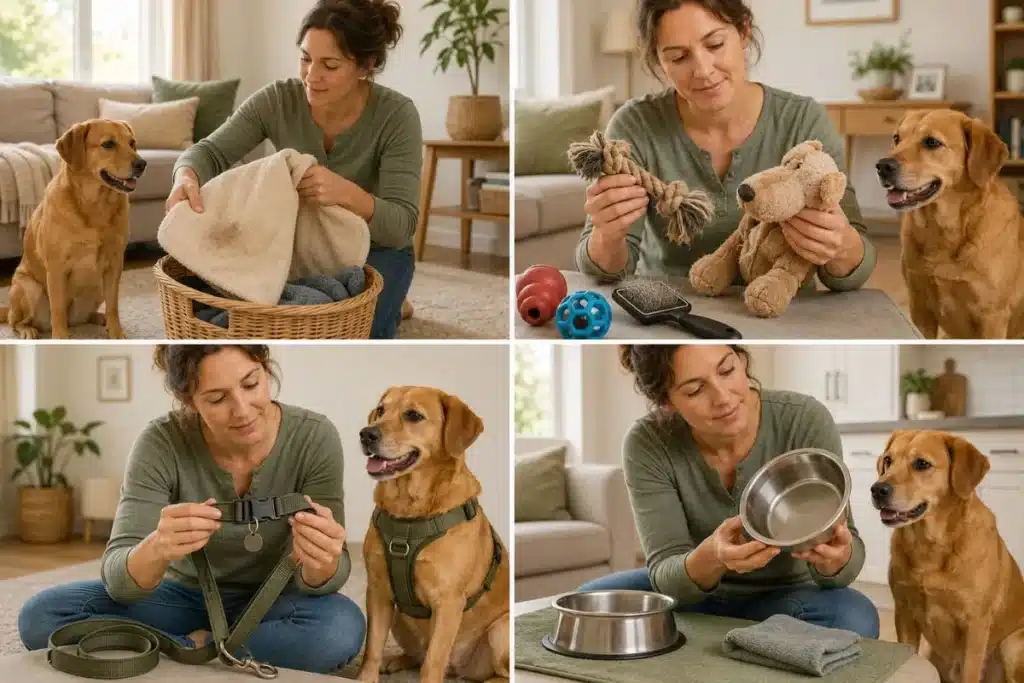
Check your dog’s bed, blankets, and sleeping mat each week. Look for dirt, damp spots, stains, heavy hair, or bad smells.
Wash dirty bedding according to the care label. Let everything dry fully before your dog uses it again. The CDC cleaning guide recommends cleaning pet bedding weekly, or more often when it becomes dirty.
Check Toys and Grooming Tools
Inspect rubber, plush, rope, and puzzle toys for damage. Remove toys with:
- Loose parts
- Sharp edges
- Exposed stuffing
- Pieces your dog could swallow
The ASPCA toy guidance advises replacing badly worn toys or chews. Also remove hair and dirt from brushes and combs, then clean them as directed.
Inspect the Collar, Leash, Harness, and ID Tag
Check the collar, leash, and harness for frayed fabric, broken clips, cracked buckles, or loose stitching. Make sure the ID tag is secure and easy to read.
Check the fit too, especially for a growing puppy or a dog whose weight has changed. The AKC harness guide explains how to check for rubbing, damage, and poor fit.
Keep Bowl Cleaning Separate
Clean wet-food bowls after each use. Clean dry-food and water bowls daily.
During the weekly reset, check the bowls for cracks, residue, rust, or damage. Deep-clean or replace them when needed.
Step 3: Review Health, Behavior, and Daily Patterns
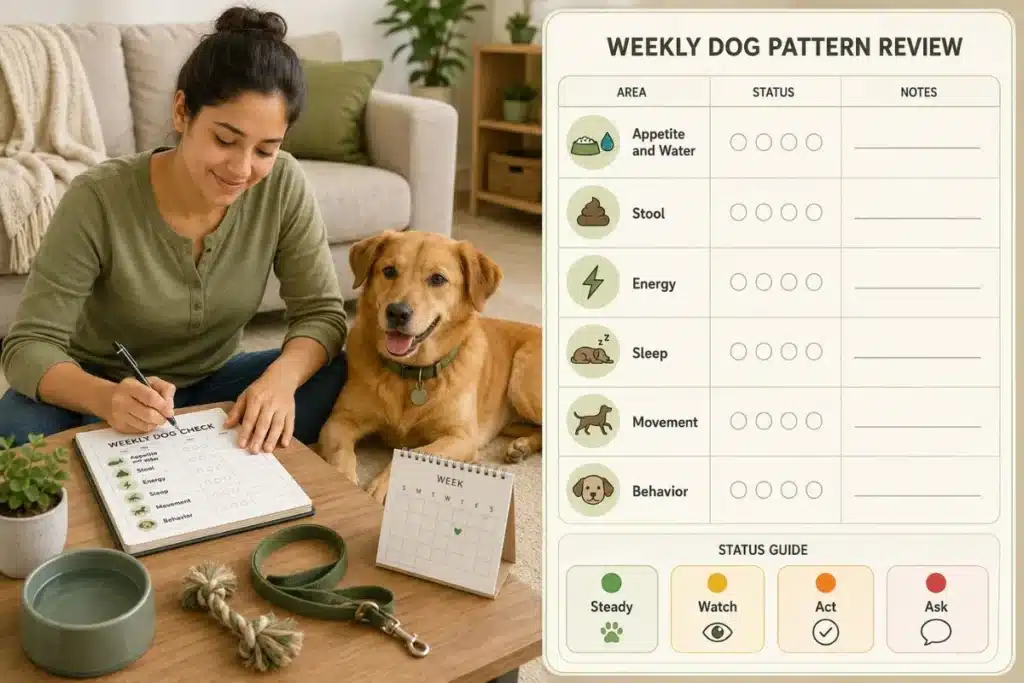
Small changes are easier to notice when you compare this week with your dog’s normal pattern. Keep brief notes instead of relying only on memory.
Review Appetite, Water, and Stool
Check whether your dog ate more or less than usual during the past week. Also note changes in water intake, stool frequency, color, or firmness.
Record any vomiting or diarrhea, including how often it happened. Do not use these notes to diagnose a health problem. Instead, use them to track health changes.
The AAHA warning signs guide advises contacting a veterinarian about sudden or ongoing appetite changes, especially with digestive problems or low energy.
Review Energy, Sleep, and Movement
Think about your dog’s energy, sleep, and movement. Are they more tired, sleeping at unusual times, or avoiding normal activities?
Watch how easily your dog stands, walks, climbs stairs, and gets up after resting. Note stiffness, limping, weakness, or discomfort, especially if the change continues.
Review Behavior, Training, and Enrichment
Look for changes in your dog’s mood and daily behavior. These may include more barking, fear, restlessness, hiding, irritability, or less interest in people and activities.
Also review training and mental activity. Note what has improved and where your dog needs more support. Use positive reinforcement, and rotate safe toys or activities to keep enrichment interesting.
Use the Steady–Watch–Act–Ask System
Use this simple dog health tracker to organize your weekly notes:
| Status | Meaning |
| Steady | Matches your dog’s healthy baseline |
| Watch | A small change to record and monitor |
| Act | Cleaning, replacement, or scheduling is needed |
| Ask | Professional advice may be needed |
Read about early warning signs if a change continues, worsens, or appears with pain, vomiting, diarrhea, or low energy.
Step 4: Plan the Next Week
The final step is to plan ahead. This helps you remember important tasks and avoid last-minute problems.
Check Your Dog Supplies
Review the items you use most often:
- Dog food and treats
- Poop bags
- Dog toothpaste
- Cleaning supplies
- Medication
- Parasite preventives
Restock anything that may run out before your next weekly check. Also check expiry dates and storage instructions.
Review Upcoming Care
Check your calendar for:
- Grooming appointments
- Veterinary visits
- Medication refills
- Training sessions
- Travel or schedule changes
Work or family plans may affect feeding, walks, and care time. Our morning dog routine can help you organize the start of each day.
Choose One Priority
Pick one simple goal for the next week. For example:
- Brush your dog more often
- Replace a damaged harness
- Track water intake
- Add one enrichment activity
One clear goal makes your weekly dog care plan easier to follow.
Try This 20-Minute Weekly Dog Care Reset
You do not need to finish every care task in one long session. Use this 20-minute weekly routine as a simple starting point.
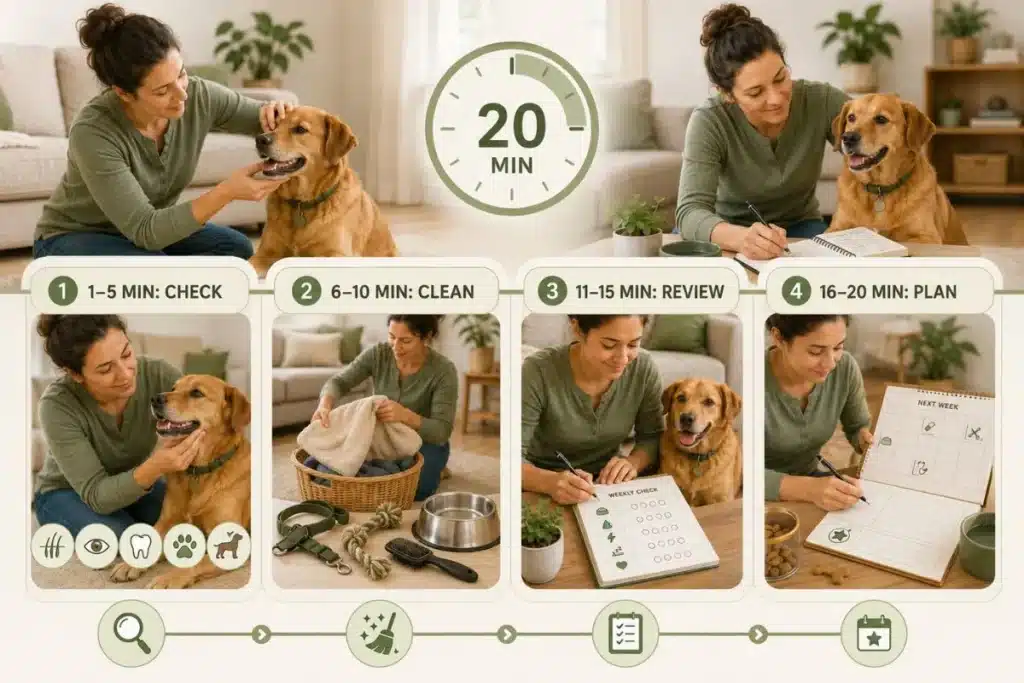
Minutes 1–5: Check Your Dog
Look at your dog’s:
- Coat and skin
- Eyes and ears
- Teeth and gums
- Paws and nails
- Movement and comfort
Minutes 6–10: Clean Essential Items
Check and clean the items your dog uses often:
- Bedding
- Washable toys
- Sleeping area
- Dirty walking gear
Minutes 11–15: Review the Past Week
Think about any changes in your dog’s:
- Appetite
- Water intake
- Stool
- Energy
- Sleep
- Behavior
Write down anything that seems different from your dog’s normal pattern.
Minutes 16–20: Plan the Next Week
Use the final five minutes to:
- Restock supplies
- Check appointments
- Record important changes
- Choose one care priority
This weekly dog care reset is only a practical example. Twenty minutes is not a fixed or proven time. Some dogs need less time, while others need more. The goal is to build a simple and consistent routine.
Adjust the Checklist for Your Dog
A useful checklist should change with your dog. Age, coat type, activity level, lifestyle, and health can all affect weekly care needs.
| Dog | Weekly focus |
| Puppy | Growth, collar and harness fit, damaged toys, and training progress |
| Adult dog | Routine care, activity level, behavior, and equipment condition |
| Senior dog | Mobility, nail length, appetite, comfort, and sleep changes |
| Long-haired dog | Mats, tangles, shedding, and dirt trapped in the coat |
| Active outdoor dog | Paws, coat debris, ticks, and damaged walking gear |
| Dog with a health condition | Care tasks and checks recommended by the veterinarian |
A weekly puppy care checklist should include fit checks because puppies grow quickly. Look for tight collars, poorly fitting harnesses, and toys damaged by chewing. Also review training and social progress.
A healthy adult dog may need a simple weekly care routine. Focus on body checks, cleaning, exercise, behavior, and supplies.
A senior dog care checklist should give extra attention to stiffness, trouble standing, appetite changes, long nails, and general comfort.
Long-haired and outdoor dogs may need more frequent checks. However, dogs with medical conditions should follow a vet-directed care plan, not a general checklist.
Tasks That Are Not Always Weekly
A weekly check does not mean every task must happen each week. First, inspect what your dog needs. Then clean, trim, treat, or book care only when it is due.
- Bathing: Bathe your dog when the coat is dirty or the skin-care plan requires it.
- Nail trimming: Check the nails weekly, but trim them only when they become too long.
- Ear cleaning: Inspect the outer ears weekly. Clean them only when needed or advised.
- Professional grooming: Book grooming based on coat type, matting, and your dog’s needs.
- Veterinary visits: Visit frequency depends on age, health, and risk.
- Preventive medication: Follow the product label and your veterinarian’s plan.
- Deep cleaning: Clean dirty bedding, toys, and equipment when needed. Always follow the care label.
- Weight checks: Record weight when useful or when your veterinarian recommends it.
Common Weekly Dog Care Mistakes
A checklist becomes less helpful when you follow it as a strict rule. Use it as a flexible guide based on your dog’s age, health, coat, and routine.
- Mixing daily and weekly tasks: Food, fresh water, walks, and regular medicine may need daily attention.
- Turning every check into an action: Checking the ears or nails does not mean cleaning or trimming them every week.
- Forcing a stressed dog: Stop if your dog shows fear, pain, or strong resistance.
- Using one routine for every dog: Puppies, senior dogs, and long-haired dogs often have different care needs.
- Not recording changes: Brief notes help you compare changes in appetite, skin, movement, energy, or behavior.
- Ignoring product instructions: Always follow the label when using cleaners, grooming tools, medicine, or parasite preventives.
A useful checklist should support safe handling, proper timing, and care that fits your dog.
When a Weekly Check Should Lead to Veterinary Advice
A home check can help you notice a change, but it cannot diagnose the cause. Contact your veterinarian if you find a problem that continues, worsens, or causes discomfort.
Watch for:
- A new or growing lump
- Ongoing redness or swelling
- Unusual discharge or a strong odor
- A broken nail or limping
- Pain when touched
- Trouble eating
- An ongoing appetite change
- A sudden change in behavior
Get Urgent Help Now
Seek immediate veterinary care if your dog has:
- Trouble breathing
- Collapse or loss of response
- Severe bleeding
- A serious injury
- Repeated vomiting with weakness
- Suspected poisoning
Printable Weekly Dog Care Checklist
Use this printable weekly dog care checklist to keep important tasks and health notes in one place.
Add these fields:
- Week of
- Dog’s name
- Coat and skin
- Eyes and ears
- Teeth and gums
- Paws and nails
- Bedding
- Toys and equipment
- Appetite and water
- Stool
- Energy and behavior
- Food, medicine, and supplies
- Steady / Watch / Act / Ask
- Notes for next week
Use the checkboxes to mark finished tasks. Add a status when something needs more attention.
Print or copy this weekly dog care tracker. Then adjust it for your dog’s age, coat, lifestyle, health needs, and veterinary care plan.
Frequently Asked Questions About Weekly Dog Care
What should be included in a weekly dog care checklist?
A weekly dog care checklist should cover your dog’s coat, skin, ears, mouth, paws, nails, bedding, toys, and equipment.
Also review changes in appetite, water intake, stool, energy, movement, and behavior. Check food, medicine, and other supplies for the coming week.
Should I clean my dog’s ears every week?
Not always. Check the outer ears each week for redness, swelling, discharge, bad smells, or frequent scratching.
Only clean the ears when needed or when your veterinarian advises it. Follow our guide to clean dog ears safely.
Should I trim my dog’s nails every week?
Usually not. Check the nails and dewclaws each week, but trim them only when they become too long.
Nails grow at different speeds. Our guide explains how to trim dog nails safely.
How often should I brush my dog’s teeth?
A weekly mouth check is helpful, but brushing should happen more often. Daily brushing is best, though several times a week can still help.
How often should I wash my dog’s bedding?
Check the bedding each week. Wash it when it looks dirty, feels damp, holds too much hair, or smells bad.
Dogs that shed heavily or spend more time outdoors may need more frequent washing. The CDC cleaning guide gives more advice on cleaning pet items.
Are dog bowls a daily or weekly task?
Dog bowls need daily cleaning, not only a weekly check. Clean wet-food bowls after each meal. Clean dry-food and water bowls every day.
During the weekly reset, check for cracks, rust, residue, or other damage.
Can I complete all weekly tasks on one day?
Yes. You can finish the checklist in one weekly session.
However, you can split the tasks across several days if your dog becomes stressed or you have limited time. Keep the routine calm and easy to follow.
Do puppies and senior dogs need different weekly checklists?
Yes. Puppies need extra checks for growth, collar or harness fit, damaged toys, and training progress.
Senior dogs may need closer checks for mobility, appetite, nail length, comfort, and behavior changes.
Build a Simple Weekly Dog Care Routine
A useful weekly dog care checklist helps you check, clean, review, and plan without making every task a strict weekly rule.
Start with the basic routine. Then adjust it for your dog’s age, coat, activity, health, and lifestyle. Keep short notes about changes in appetite, behavior, movement, or comfort. This makes patterns easier to notice.
For feeding, walks, exercise, and other daily needs, follow our daily dog care routine.