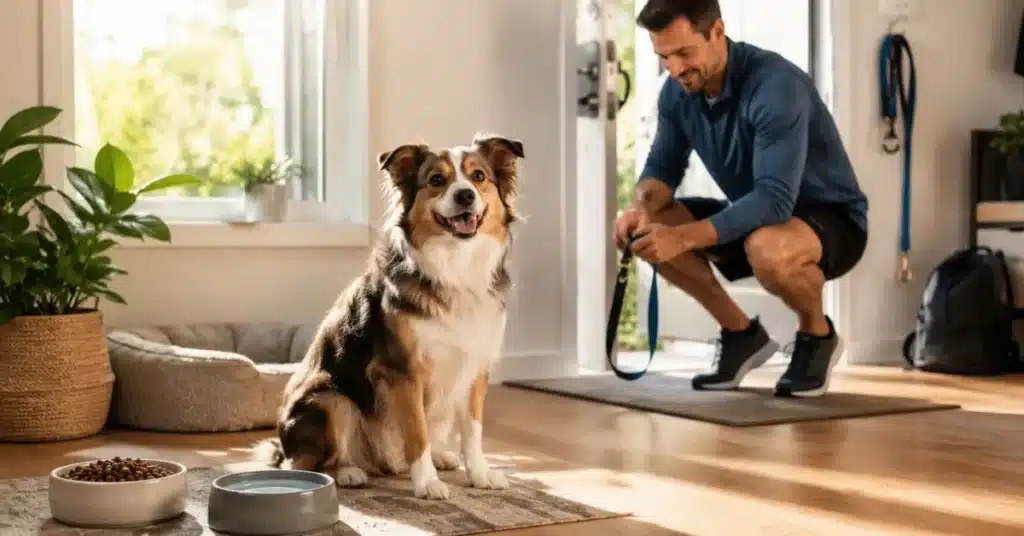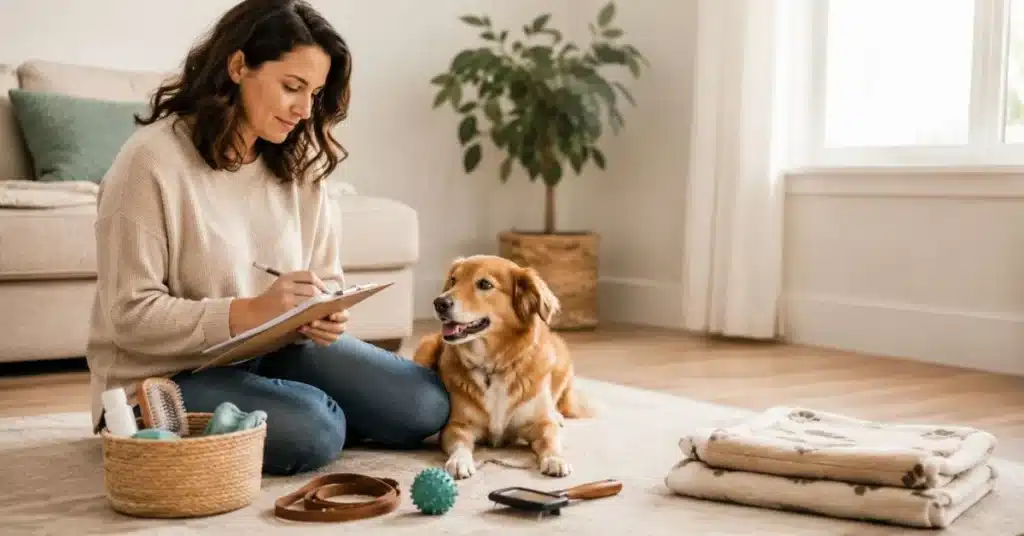
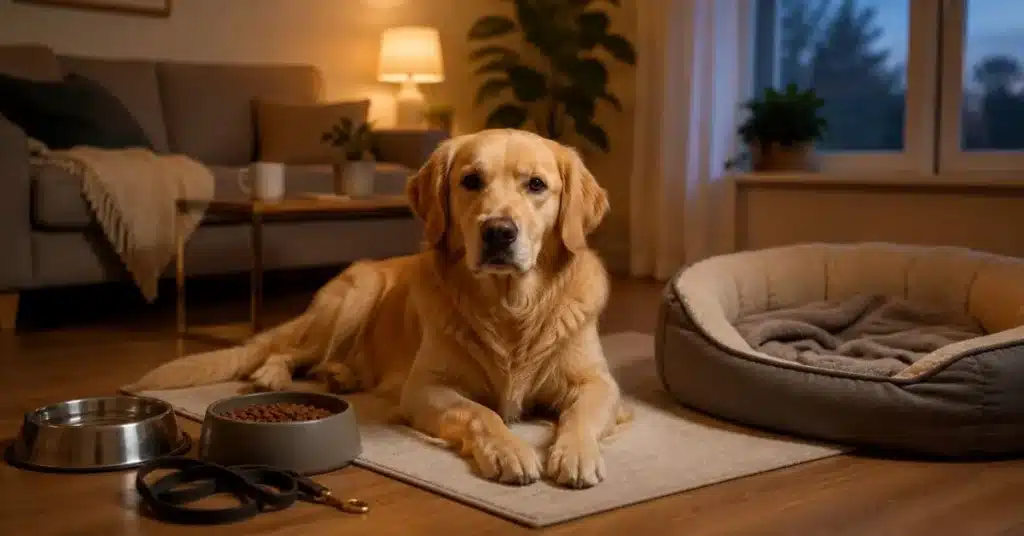
An evening dog care routine helps your dog move calmly from dinner to bedtime. It can include fresh water, the right dinner portion, quiet digestion time, a suitable walk, short mental activities, and a quick health check.
Your routine should also include dental care, a calm wind-down period, and a final potty break before bed. Keep the order familiar, but adjust the timing to your dog’s age, health, energy level, and household schedule.
Important: This guide is a flexible starting point, not a strict timetable or medical treatment plan. Adjust it to your dog’s age, health, mobility, feeding needs, daily activity, and veterinary guidance.
Quick Evening Dog Care Checklist
Short on time? Use this evening checklist to cover your dog’s basic needs before bed.
- Check your dog’s mood, appetite, energy, and movement.
- Refill the bowl with clean, fresh water.
- Serve the correct dinner portion.
- Give your dog quiet time to digest the meal.
- Offer a suitable evening walk and potty break.
- Add a short training, sniffing, or puzzle activity.
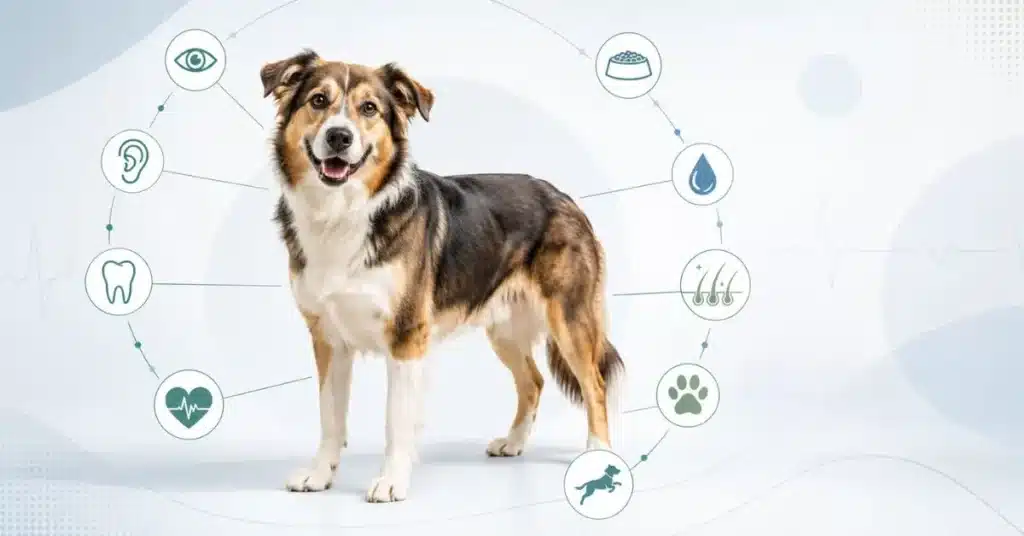
- Check the paws, coat, skin, eyes, and ears.
- Brush the teeth with dog-safe toothpaste.
- Reduce exciting play and begin quiet time.
- Prepare a clean and comfortable sleeping area.
- Take your dog out for a final potty break.
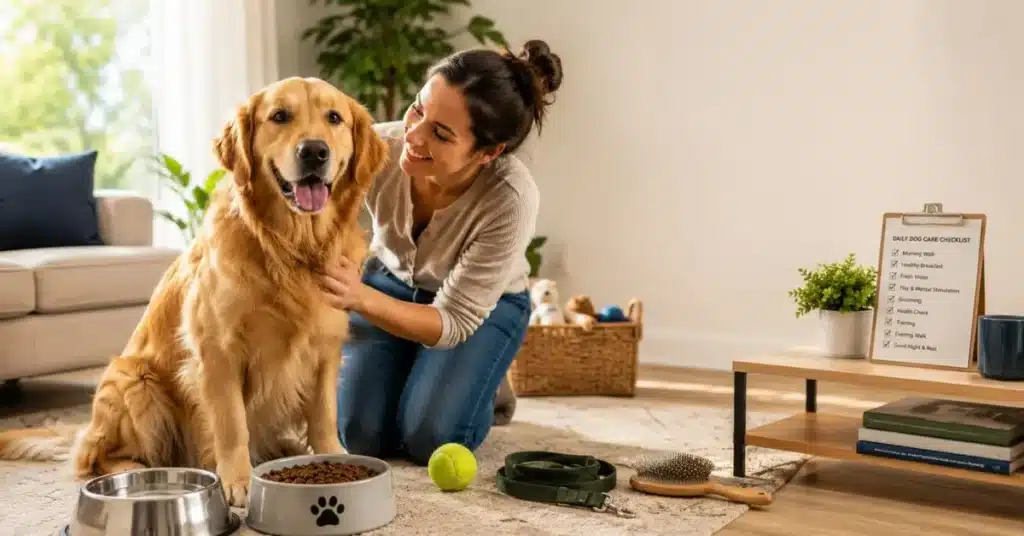
The order may change based on when your dog eats and walks. Use our daily care checklist to track feeding, water, exercise, medication, and health throughout the day.
A Flexible Evening Schedule for Dogs
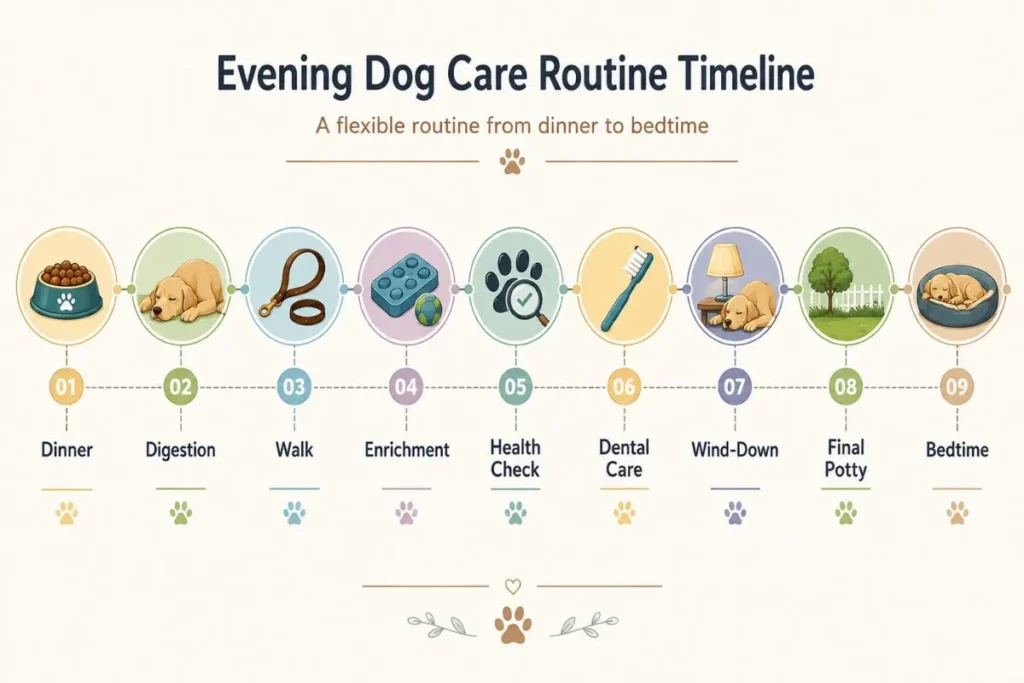
Not sure what should come first? This flexible evening schedule gives you a simple starting point. It follows a clear order from dinner to bedtime without forcing every dog to follow the same exact time.
| Example Time | Task | Purpose |
| 6:00 PM | Dinner and fresh water | Feeding and hydration |
| 6:15–7:00 PM | Calm rest | Digestion |
| 7:00 PM | Walk, sniffing, and potty | Activity and bathroom needs |
| 7:30 PM | Short enrichment activity | Mental stimulation |
| 8:30 PM | Health check and dental care | Daily care and observation |
| Before bed | Final potty break | Last bathroom opportunity |
| Bedtime | Quiet sleeping area | Calm and comfortable rest |
These times are only examples. Some dogs may take their main walk before dinner. Others may eat first, rest for a while, and then take a gentle walk or potty trip.
Adjust the routine to your dog’s age, health, energy level, feeding plan, and household schedule.
Routine flow:
Dinner → Digestion → Walk → Enrichment → Health Check → Dental Care → Wind-Down → Final Potty → Bedtime
Evening Dog Care Routine Step-by-Step
Follow these steps in a familiar order each evening. However, adjust the timing to your dog’s age, health, energy level, and daily needs.
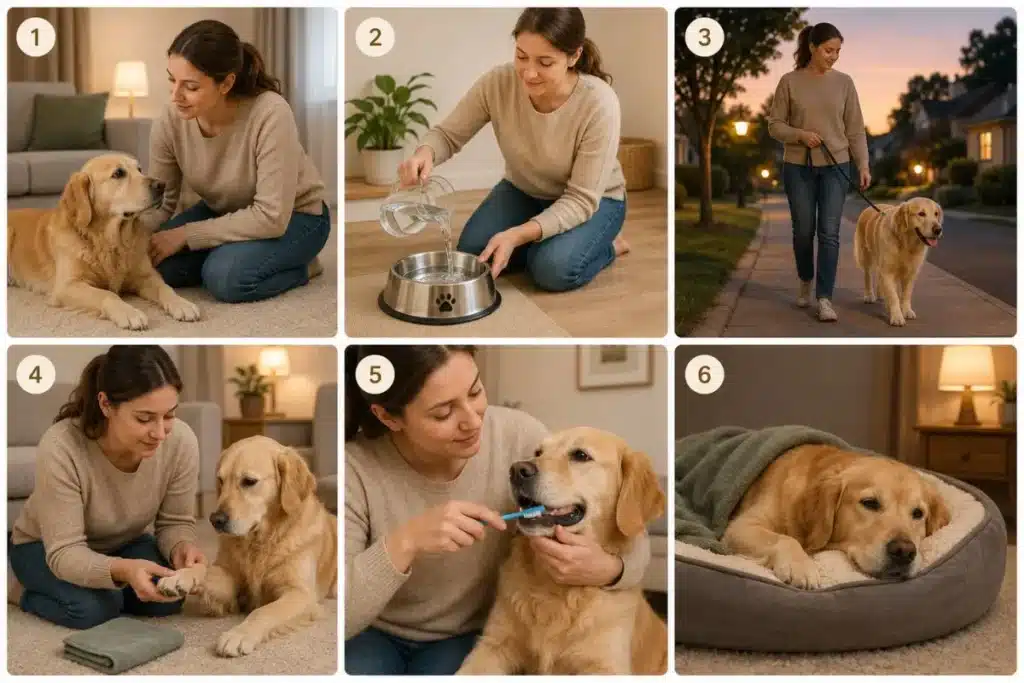
1. Start With a Quick Evening Check-In
A one-minute evening health check can help you notice small changes early. Compare your dog’s current condition with their usual behavior.
Check their:
- Mood and energy
- Appetite and water intake
- Walking and movement
- Bathroom habits
- Skin and scratching
- General comfort
Watch for limping, stiffness, vomiting, diarrhea, or unusual behavior. These signs do not always mean your dog is sick, but they should not be ignored.
Knowing the normal signs of a healthy dog can make changes easier to spot. You can also learn how to monitor your dog’s health without trying to diagnose problems yourself.
2. Refresh the Water and Serve Dinner
Dinner should fit your dog’s full daily feeding plan. It should not become an extra, unmeasured meal.
Refill the bowl with clean, fresh water. Then serve the correct dinner portion for your dog’s age, weight, activity level, and health needs.
Notice whether your dog eats and drinks normally. A sudden loss of appetite or a major change in water intake may need closer attention.
Remember to count treats, chews, and puzzle food as part of the day’s total calories. Avoid giving regular table scraps. Follow your veterinarian’s plan if your dog needs a special diet. For more feeding guidance, read what dogs should eat daily.
3. Allow Calm Digestion Time
A full meal should not lead straight into running, jumping, fetch, or rough play. Give your dog some quiet digestion time after dinner.
Calm activities may include:
- Resting beside the family
- Gentle petting
- Quiet chewing
- Relaxing in their usual space
Intense activity close to a meal may raise the risk of canine bloat. Bloat, also called GDV, is a serious condition in which the stomach fills and may twist.
Safety note: A swollen belly, repeated attempts to vomit, severe weakness, or collapse may be an emergency. Contact a veterinarian immediately.
4. Take an Evening Walk and Potty Break
An evening walk gives your dog more than physical exercise. It can also provide sniffing, mental stimulation, bonding, and a bathroom opportunity.
Match the walk to your dog’s needs. A young and active dog may enjoy a longer route. A puppy, senior dog, or dog with mobility problems may need a shorter and gentler walk.
Allow your dog time to sniff instead of focusing only on distance. Sniffing helps dogs explore their surroundings and use their minds.
Adjust the walk during very hot, cold, wet, or unsafe weather. Indoor training or scent games can provide activity when outdoor conditions are poor.
Common mistake: The evening walk does not always replace the final potty break before bed. The main walk may include exercise, while the last potty trip should stay short and calm.
5. Add Short Mental Enrichment
More exercise is not always the answer. A few minutes of calm mental enrichment may help your dog settle without becoming overstimulated.
You can try:
- A five-minute training session
- A simple find-the-treat game
- A snuffle mat
- A food puzzle
- Gentle play
- A safe chew
- A short scent game
Keep the activity brief, especially near bedtime. Stop before your dog becomes too excited.
A short session can build basic skills and help you train your dog at home with positive reinforcement.
Choose toys that match your dog’s size, age, and chewing strength. Our guide can help you choose safe dog toys.
Also, count any food used in puzzles as part of your dog’s daily calories.
6. Perform a Quick Health and Hygiene Check
A short check after walking can help you find dirt, irritation, or movement problems before bedtime.
Look at your dog’s:
- Paws: Check for cuts, thorns, dirt, or damaged nails.
- Coat and skin: Look for burrs, ticks, redness, or unusual lumps.
- Eyes: Notice any new or heavy discharge.
- Ears: Check for redness, swelling, or a bad smell.
- Movement: Watch for limping, stiffness, or discomfort.
- Collar and harness areas: Look for rubbing, redness, or hair loss.
This is only a quick inspection. It does not replace a full grooming session or veterinary examination.
Do not clean deep inside the ears or treat skin problems without knowing the cause. For a complete care schedule, follow our dog hygiene routine.
7. Brush Your Dog’s Teeth
Evening is often a good time to make dental care part of the daily routine. Start slowly and reward calm behavior.
Use a soft pet toothbrush and toothpaste made for dogs. Regular brushing can help reduce plaque and support healthier gums.
The AAHA dental care guide recommends daily brushing when possible.
Never use human toothpaste. Some human dental products may contain xylitol, which is toxic to dogs.
Follow our guide to clean your dog’s teeth safely. Stop brushing if your dog shows pain, bleeding, or strong distress.
Home brushing helps with daily care, but it does not replace professional dental checks.
8. Begin a Calm Wind-Down Period
Dogs may struggle to settle when the home moves straight from exciting play to bedtime. Start reducing activity as bedtime gets closer.
You can create a calmer mood by:
- Ending rough play
- Lowering noise
- Using a quiet voice
- Offering calm family time
- Moving toward the usual sleeping area
- Using familiar bedtime cues
The goal is not to exhaust your dog. Instead, help them move from activity into a calmer state.
Example: An adult dog may keep bringing toys after dinner. A short sniffing game followed by quiet family time may work better than another rough play session.
Keep the general order familiar. However, do not expect every dog to settle in the same way.
9. Take a Final Potty Break and Prepare the Bed
The final potty break should be short, calm, and focused on bathroom needs. It is especially helpful for puppies, senior dogs, and dogs still learning a toilet routine.
After the potty break, prepare a safe sleeping area. Make sure it is:
- Clean and dry
- Quiet and comfortable
- Free from electrical cords
- Away from medication and unsafe food
- Easy for an older or less-mobile dog to reach
- Suitable for the room temperature
A safely crate-trained dog may sleep in a secure crate. Another dog may prefer a comfortable bed in a quiet room.
Choose a bed that matches your dog’s size, sleeping style, age, and support needs. Use our guide to choose the right dog bed.
Should You Walk Your Dog Before or After Dinner?
Both options can work. The best choice depends on your dog’s health, meal size, energy level, and daily schedule.
Walk before dinner: Complete the main active walk first. Your dog can then eat dinner and enjoy a calm rest period. This option may suit dogs that prefer more exercise in the early evening.
Walk after dinner: Serve dinner first, then allow enough time for calm digestion. Later, offer a gentle walk or short potty trip. Avoid running, jumping, fetch, or rough play soon after a full meal.
High levels of exercise or intense play immediately after eating may increase the risk of bloat or GDV.
There is no single order that suits every dog. Choose a routine that meets your dog’s needs, but avoid strenuous exercise close to mealtime.
How the Evening Routine Changes by Life Stage
A puppy, an adult dog, and a senior dog should not follow the exact same routine. Each life stage has different needs for activity, potty breaks, comfort, training, and sleep.
| Life Stage | Main Focus |
| Puppy | Potty breaks, safety, training, and settling |
| Adult dog | Balanced activity and a steady routine |
| Senior dog | Comfort, mobility, and health observation |
Evening Routine for Puppies
A puppy evening routine should include frequent potty breaks, short activities, and enough sleep. Puppies are still learning bladder control, so take them outside after dinner, play, training, and before bed.
Keep play and training sessions short. You can also offer a safe chew to help your puppy settle.
Some puppies become mouthy or very energetic in the evening. These puppy zoomies do not always mean they need more exercise. Your puppy may need a potty break, less excitement, or sleep.
End the routine with a final potty break. Then guide your puppy to a safely introduced crate or another secure sleeping area. Young puppies may still cry or need another potty trip during the night.
Evening Routine for Adult Dogs
An adult dog evening routine should balance food, exercise, mental activity, and rest.
Serve the correct dinner portion and offer a walk that matches your dog’s needs. Add a short enrichment activity, dental care, and a quick health check.
Finish with a calm final potty break. Familiar bedtime cues can also help. For example, lower the noise, stop rough play, and guide your dog toward the usual sleeping area.
Evening Routine for Senior Dogs
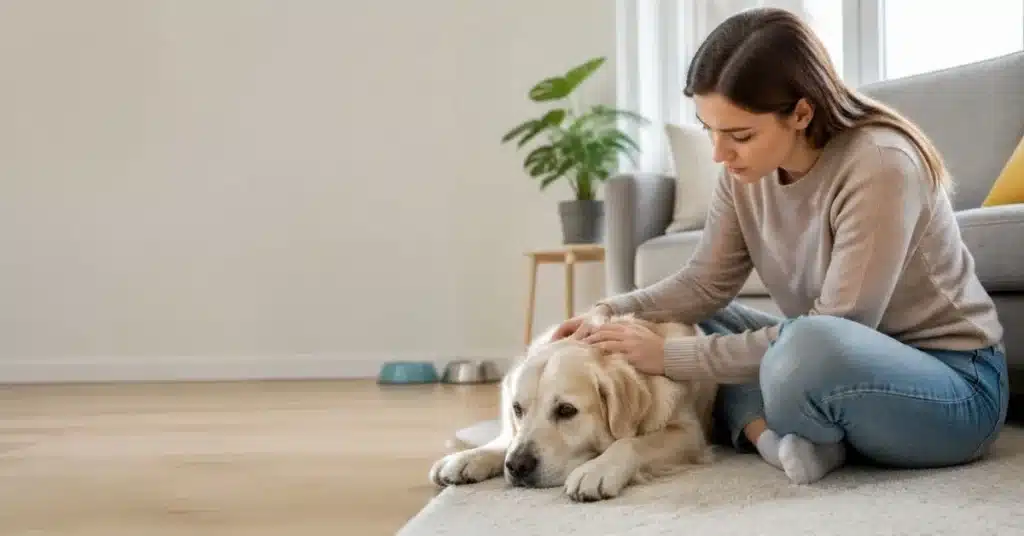
A senior dog bedtime routine should focus on comfort, gentle movement, and easy toilet access. Older dogs may need shorter walks, more frequent potty breaks, and extra time to stand or move.
Use non-slip flooring where possible. Also provide a comfortable bed that is easy to reach.
Watch for new stiffness, pacing, confusion, nighttime urination, or changes in sleep. Do not assume every new behavior is simply normal aging.
These changes may have several causes. They can also appear with canine cognitive dysfunction, a condition that can affect an older dog’s memory and behavior.
A senior dog that suddenly wakes often, paces, or seems confused may need a veterinary check, not only a new schedule.
Common Evening Dog Care Mistakes to Avoid
Small mistakes can make bedtime harder, even when you are trying to build a healthy routine.
- Giving hard exercise after dinner: Avoid running, jumping, fetch, or rough play soon after a full meal. Leave time between dinner and intense activity.
- Trying to exhaust a restless dog: More exercise may make some dogs even more excited. Try calm sniffing, short training, or quiet family time instead.
- Following a strict clock: Keep the routine familiar, but adjust the time to your dog’s age, health, and daily needs.
- Skipping the final potty break: An earlier walk may not cover your dog’s bathroom needs before bed.
- Removing water without veterinary advice: Keep fresh water available unless your veterinarian recommends a different plan.
- Giving too many evening treats: Include treats, chews, and puzzle food in your dog’s daily calories.
- Using human toothpaste: Use only dog-safe toothpaste. Some human products contain xylitol, which can harm dogs.
- Giving sleep medicine or calming supplements: Ask your veterinarian before giving any sleep or calming product.
- Ignoring sudden behavior changes: New pacing, crying, accidents, or restlessness may need a health check, not only a routine change.
Try This 7-Day Evening Routine Test
Not sure which part of the routine helps your dog most? Track the routine for one week. Test only one major change at a time so the results stay clear.
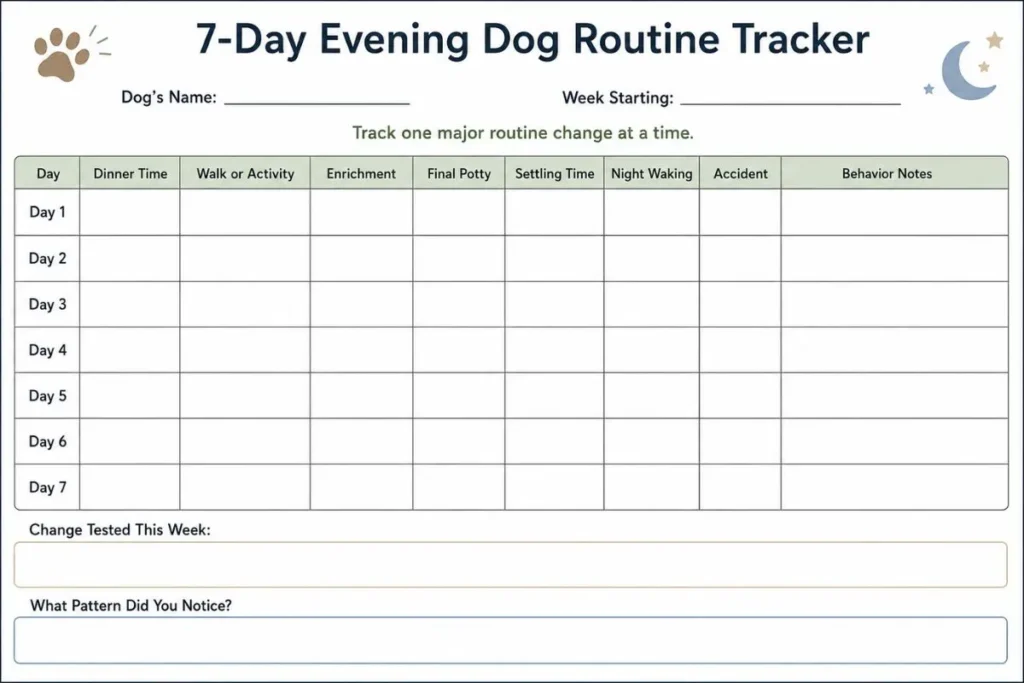
- Days 1–2: Keep your current routine. Record what happens between dinner and bedtime.
- Days 3–4: Make one small change. For example, move the walk earlier or add a calm sniffing game.
- Days 5–7: Follow the same change each evening. Then compare the results with the first two days.
Use a simple evening routine tracker to record:
- Dinner time
- Walk or activity
- Enrichment
- Final potty break
- Settling time
- Night waking
- Potty accidents
- Unusual behavior
- Change tested
Look for simple patterns. Your dog may settle faster after calm enrichment or sleep longer after a later potty break.
Important: This tracker can show routine patterns. However, it cannot diagnose anxiety, pain, urinary problems, digestive illness, or other health conditions.
How to Keep the Evening Routine Consistent
A consistent dog routine does not need the same exact time every day. However, the main steps should follow a familiar order. For example: dinner, rest, activity, health care, final potty, and bedtime.
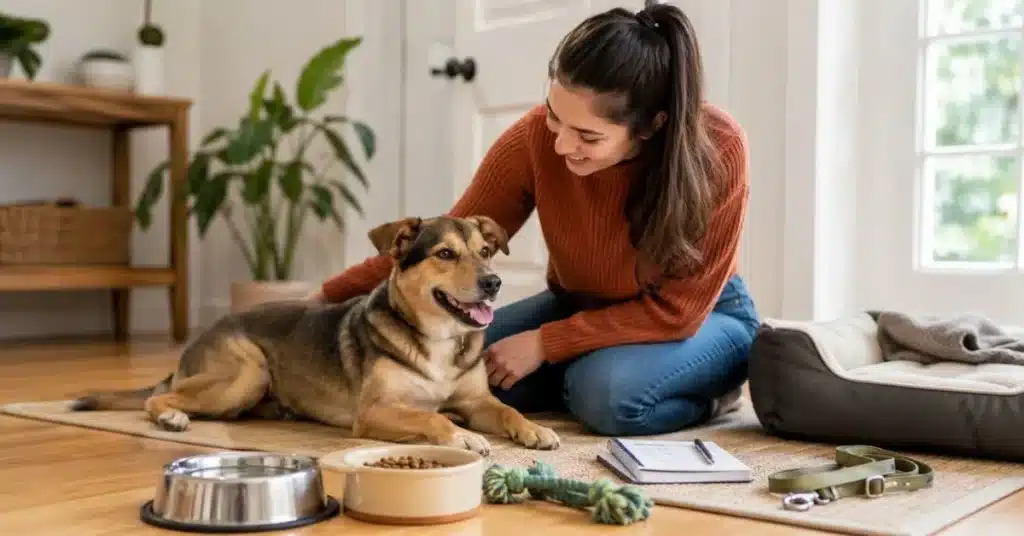
Keep your evening supplies in one easy-to-reach place. This makes the routine faster and helps prevent skipped tasks on busy days.
Adjust the schedule slowly when your household routine changes. Update it as your puppy becomes an adult or your senior dog develops new needs. You may also need to change walk times during hot, cold, or wet weather.
Keep using familiar bedtime cues, but stay flexible. Knowing your dog’s usual mood, appetite, energy, and movement can help you notice when something changes.
Practical tip: Store the leash, waste bags, towel, dental supplies, and bedtime items together.
When Nighttime Changes May Need Veterinary Attention
Most small routine problems are not emergencies. However, sudden or severe symptoms need more than a schedule change.
Seek Emergency Veterinary Care
Contact an emergency veterinarian right away if your dog has:
- Trouble breathing
- A swollen or painful belly
- Repeated attempts to vomit without bringing anything up
- Collapse or severe weakness
- Ongoing vomiting
- Sudden trouble walking
- Severe pain or distress
Arrange a Veterinary Check
Some changes may not be emergencies, but they still need attention. Contact your veterinarian if you notice:
- Unusual thirst or frequent urination
- New nighttime confusion
- Repeated accidents in a trained dog
- New pacing, restlessness, or sleep changes
Do not assume these changes are simply part of aging. Learn the early signs your dog is sick so you can spot problems early.
Important: This guide cannot diagnose medical or behavior problems. Contact a veterinarian if symptoms appear suddenly, become severe, or continue getting worse.
Evening Dog Care Routine FAQs
What Is a Good Evening Routine for a Dog?
A good evening routine for a dog should guide your dog calmly from dinner to bedtime. Include fresh water, the correct meal portion, quiet digestion time, a suitable walk, and short mental activity. Finish with a quick health check, dental care, a final potty break, and a comfortable sleeping area.
Should I Walk My Dog Before or After Dinner?
Both options can work. You may take the main walk before dinner, followed by the meal and quiet rest. Or you may serve dinner first, allow calm digestion, and take a gentle walk later. Choose the order that suits your dog, but avoid hard exercise close to a full meal.
How Long Should a Dog Rest After Eating?
There is no exact rest time that works for every dog. Meal size, age, health, and activity needs can affect the timing. After dinner, allow a period of calm digestion. Avoid running, jumping, fetch, and rough play. The AAHA bloat guide explains the related safety risks.
Does My Dog Need a Final Potty Break Before Bed?
Yes, most dogs benefit from a final potty break before bed. Keep the trip short, calm, and focused on bathroom needs. Puppies, senior dogs, and dogs learning house training may need it more often. Some dogs may also need another nighttime trip because of their age, routine, or health needs.
Should Dogs Have Water Available Overnight?
Most healthy dogs should have access to clean, fresh water overnight. Do not remove the water bowl only to prevent accidents. Your dog’s needs may change with weather, food, medication, or health conditions. The ASPCA recommends keeping fresh water available, unless your veterinarian gives different advice.
Why Is My Dog Restless at Night?
A dog may feel restless because they need to potty, have unused energy, or feel overstimulated. Stress, pain, discomfort, or another health change may also cause pacing or trouble settling. Try a calm and familiar routine. Contact your veterinarian if the restlessness starts suddenly, continues, worsens, or appears with other unusual signs.
Build a Calm Evening Routine
A good evening dog care routine does not need to follow the same clock every day. Keep the main steps familiar, but adjust the timing to your dog’s age, health, energy, and daily needs.
Watch for changes in appetite, movement, bathroom habits, or nighttime behavior. A calm evening can also help your dog start the next day more smoothly.
Pair this schedule with a practical morning dog care routine to build a complete daily pattern.