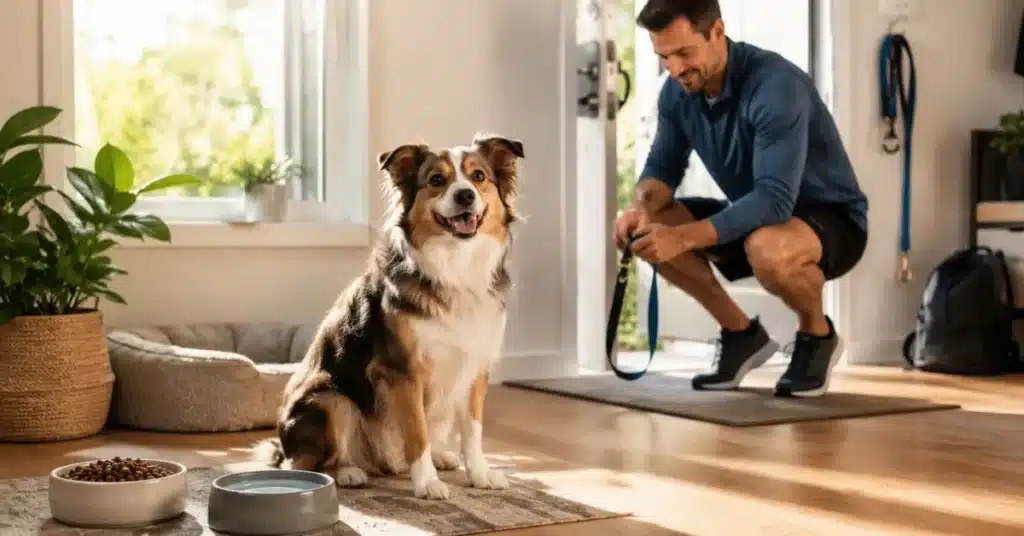
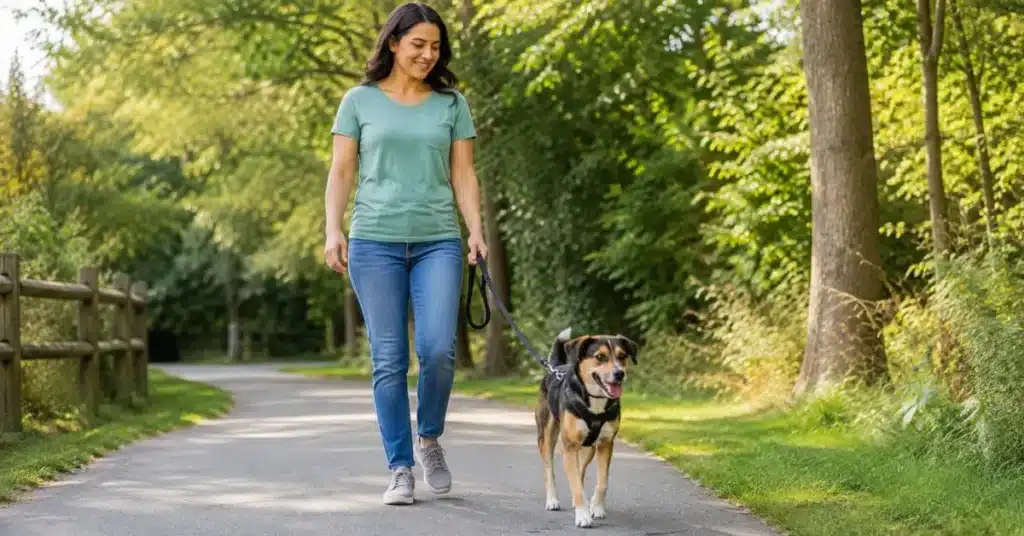
How much exercise does a dog need? There is no single daily target for every dog. Some active or working dogs may need one to two hours or more. Puppies, senior dogs, and dogs with health or mobility problems may need shorter, gentler sessions.
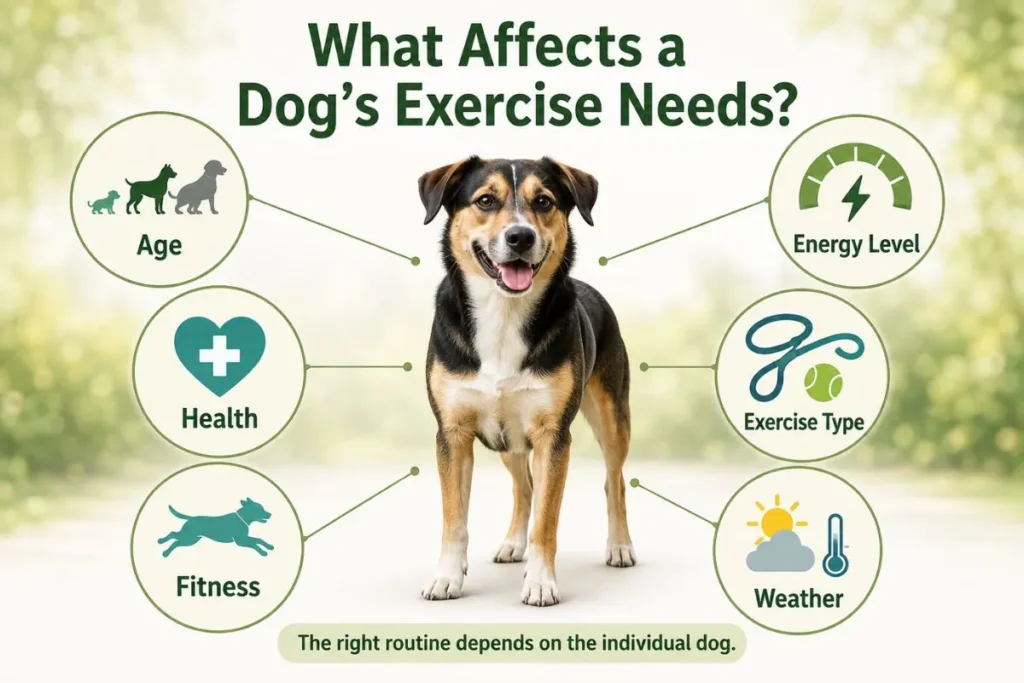
The right routine depends on your dog’s age, health, fitness, energy level, exercise intensity, weather, and recovery. Exercise is only one part of good care.
Quick Answer
How much exercise should a dog get daily? There is no single amount that works for every dog. A good routine considers how long, how often, how active, and what type of exercise your dog gets. It should also consider how well your dog recovers afterward.
Use this table as a general guide, not an exact exercise prescription.
| Dog profile | General approach |
| Puppy | Offer short, age-appropriate walks, play, training, and time to explore. |
| Healthy adult dog | Provide regular daily activity that matches your dog’s fitness and energy. |
| High-energy dog | Combine longer physical activities with training, sniffing, and mental games. |
| Senior dog | Choose shorter, gentler, and more frequent low-impact activities. |
| Inactive or overweight dog | Start slowly and watch how well your dog recovers. |
| Dog with a medical condition | Ask your veterinarian to create a safe, personalized exercise plan. |
How Much Exercise Does a Dog Need Each Day?
The right amount of exercise is not the most your dog can handle. It should match your dog’s age, health, fitness, energy level, and comfort.
You can exercise your dog in one longer session or several shorter sessions. Short sessions often work better for puppies, senior dogs, inactive dogs, and dogs that tire easily.
Consistency matters more than occasional long workouts. Regular activity helps your dog build fitness safely. A very long weekend walk cannot fully replace shorter exercise throughout the week.
Also, consider exercise intensity, not just time. A relaxed 30-minute sniff walk is much gentler than 30 minutes of running or repeated fetch.
Watch your dog during and after each activity. Check their:
- movement and walking pace
- breathing
- willingness to continue
- recovery time
- stiffness or unusual tiredness later
VCA recommends regular conditioning and explains that a short daily walk is better than one very long weekly walk. Always increase exercise gradually by changing either the time or intensity in small steps.
Exercise should also fit around meals, bathroom breaks, and rest. Our daily dog-care routine shows how to organize these needs throughout the day.
What Affects a Dog’s Exercise Needs?
Two dogs of the same breed and age may still need very different routines. Your dog’s age, health, fitness, energy level, activity type, and environment all affect their exercise needs.
Age and Life Stage
Puppies, adult dogs, and senior dogs have different levels of strength and stamina. They also recover from exercise at different speeds.
Life stage depends on more than age alone. Small dogs often mature sooner than large or giant breeds. This means physical maturity can vary from one dog to another.
Health and Mobility
Joint pain, heart disease, breathing problems, and nerve conditions may reduce a dog’s exercise tolerance. Exercise tolerance means how much activity a dog can handle comfortably.
A sudden drop in stamina may point to pain or illness. Do not try to diagnose the cause at home. Instead, monitor your dog’s health and discuss ongoing changes with your veterinarian.
Current Fitness and Body Condition
An inactive dog should not start with the same routine as a well-conditioned dog. Begin with a manageable amount of activity. Then increase it slowly.
Body size does not always show fitness. Consider your dog’s weight, muscle condition, recent activity, and recovery.
Energy Level and Breed Tendencies
Breed can offer a useful starting point. However, it cannot tell you the exact amount of exercise your dog needs.
Working, sporting, and herding breeds often enjoy more structured activity. This may include longer walks, training, scent work, or dog sports.
Still, dogs from the same breed can have very different needs. Temperament, health, and fitness also matter. PDSA exercise guidance recommends considering breed, age, health, and personality together.
Exercise Type and Intensity
Exercise time does not show the full workload. For example, a 30-minute sniff walk is much gentler than 30 minutes of running or repeated fetch.
Also consider:
- pace
- terrain
- activity type
- weather
- recovery time
A steep trail may require more effort than a flat neighborhood walk.
Weather and Environment
Heat, humidity, poor air quality, hot pavement, and rough ground can make exercise harder. Reduce the pace or duration when conditions are unsafe.
Knowing the signs of a healthy dog can help you notice changes in movement, breathing, and energy.
Exercise Needs by Life Stage
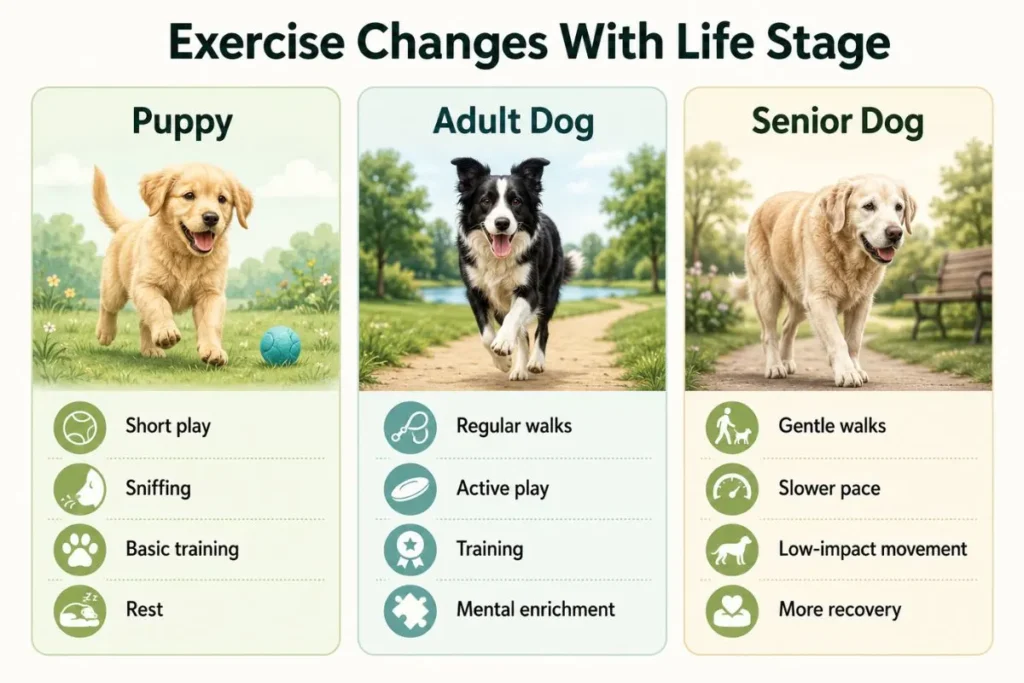
Your dog’s exercise routine should change as they grow and age. Start with their life stage, then adjust the routine for health, fitness, and recovery.
How Much Exercise Does a Puppy Need?
More exercise is not always better for a growing puppy. Puppies usually do well with short walks, gentle play, sniffing, exploration, and basic training.
They also need plenty of sleep and rest. Avoid forcing a puppy to complete:
- long-distance runs
- difficult hikes
- repeated high jumps
- intense agility exercises
Growth rates also vary by breed and size. Ask your veterinarian before starting running, agility, or other high-impact activities.
You can use short training sessions to provide mental activity without adding too much physical strain.
What about the five-minute rule?
You may hear that puppies need five minutes of exercise for each month of age. However, PDSA explains that this rule lacks strong scientific support. It should not be treated as an exact formula for every puppy.
How Much Exercise Does an Adult Dog Need?
An adult dog’s fitness and energy level often matter more than size alone. A healthy routine should include both physical movement and mental activity.
A lower-energy or less active dog may enjoy:
- gentle walks
- sniffing
- short play sessions
- simple training games
A moderately active dog may need daily walks, interactive play, and brief training sessions. Splitting exercise between morning and evening can make the routine easier to manage.
A high-energy or working dog may need longer or more challenging activities. Suitable options may include:
- structured walks
- running, when appropriate
- hiking
- scent work
- advanced training
- dog sports
These are general examples, not fixed rules. Watch your dog’s pace, breathing, interest, and recovery instead of following a strict breed chart.
How Much Exercise Does a Senior Dog Need?
Getting older does not mean a dog should stop moving. It usually means the routine needs to become gentler.
Senior dogs may benefit from shorter, regular walks at a comfortable pace. Stable surfaces and a short warm-up can also reduce strain.
Suitable low-impact activities may include:
- gentle walking
- slow sniffing
- light play
- swimming, when safe and appropriate
AAHA senior guidance recommends adjusting exercise to the dog’s health, mobility, and physical condition.
Watch for next-day stiffness, limping, pain, or reduced stamina. These signs may mean the routine needs to change.
Review any changes in normal mobility and energy and contact your veterinarian if the problem continues.
Is Walking Enough Exercise for a Dog?
Walking can be the base of a good exercise routine. But the quality of the walk matters as much as the time spent outside.
Most dogs benefit from a mix of walking, active play, and mental stimulation.
Brisk Walks vs. Sniff Walks
A brisk walk gives your dog steady physical exercise. It can help build fitness and use extra energy.
A slower sniff walk works the brain as well as the body. Your dog can explore new smells and learn about the environment.
Neither option is always better. A balanced routine can include both. For safer daily walks, learn how to choose a dog leash and use a well-fitting harness.
Physical Exercise vs. Mental Stimulation
Physical exercise helps your dog move and stay active. Mental stimulation helps them think, explore, and solve simple problems.
Useful mental activities include:
- scent games
- short training sessions
- food puzzles
- supervised interactive play
However, mental activities do not always replace physical movement. Most dogs need a suitable mix of both. You can also choose safe dog toys for fetch, puzzle games, and supervised play.
Does Backyard Play Count as Exercise?
Yes, active backyard play can count as exercise. Running, fetch, tug, and games with you can add useful movement.
But simply standing or wandering outside is not a complete exercise routine. According to the PDSA exercise guide, play can support daily activity but may not replace a proper walk.
Example Daily Exercise Routines
A daily exercise routine often works best when you spread activity across the day. This can help your dog stay active without becoming too tired.
These examples are general starting points, not veterinary prescriptions. Adjust them based on your dog’s age, health, fitness, energy, and recovery.
Lower-Energy Adult Dog
A lower-energy dog may prefer calm and steady activity.
- Morning: A relaxed 15–20-minute walk
- Midday: A short sniffing game or training session
- Evening: A gentle walk or calm play
Watch how your dog feels during and after exercise. Reduce the time or pace if your dog seems tired, stiff, or slow to recover.
Moderately Active Adult Dog
A moderately active dog may enjoy a mix of walks, play, and mental activities.
- Morning: A 20–30-minute walk
- Midday: A short play or training session
- Evening: A walk, fetch session, or interactive game
- At home: A scent game or food puzzle
Keep the routine regular, but change some activities to prevent boredom.
High-Energy Adult Dog
A high-energy dog may need more challenging physical and mental work.
A daily routine may include:
- one longer exercise session
- scent work or focused training
- a second walk or active play session
- quiet time for recovery
Increase exercise slowly. Do not increase the time, speed, and difficulty at once. Change one part, then watch how your dog recovers.
Puppy or Senior Dog
Puppies and senior dogs often do better with shorter, gentler sessions throughout the day.
Choose low-impact walks, sniffing, light play, and short training sessions. Give your dog enough rest between activities.
Watch for unusual tiredness, stiffness, limping, or changes in movement. A steady evening dog-care routine can help balance exercise, meals, bathroom breaks, and rest.
How to Tell Whether Your Dog Gets Enough Exercise
Do not judge exercise by how tired your dog looks. Instead, watch how comfortably your dog moves and recovers.
Your dog’s routine may be suitable when they:
- join activities willingly
- keep a normal walking pace
- do not often fall behind
- settle calmly after exercise
- stay interested in daily activity
- show no stiffness the next day
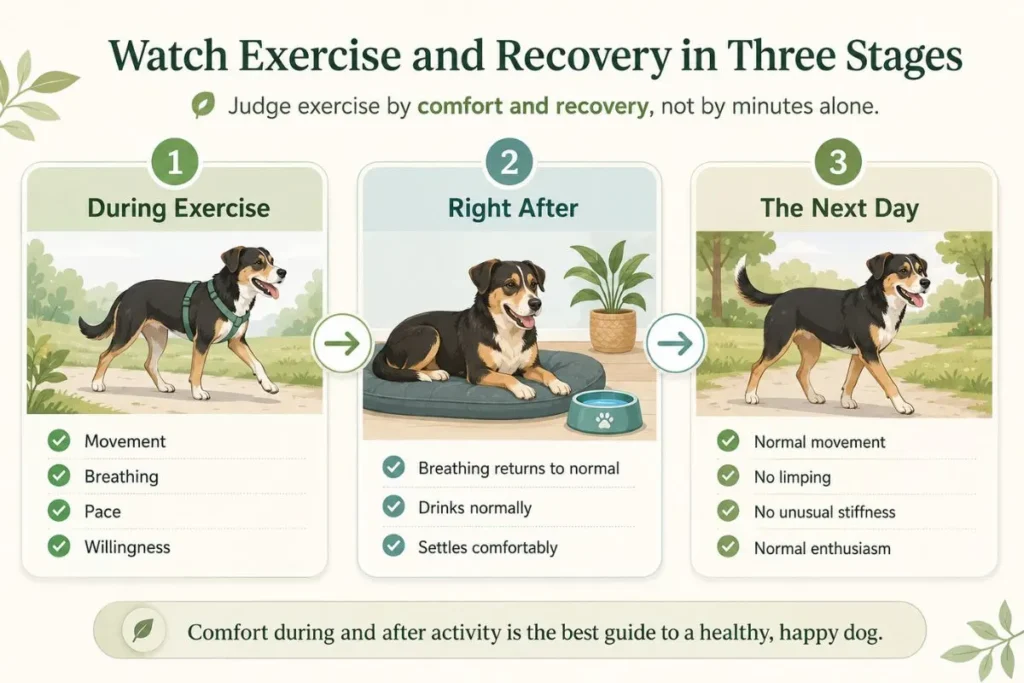
During Exercise
Watch your dog’s movement, breathing, pace, and interest. Your dog should move comfortably without struggling or stopping often.
Slow down or end the activity if your dog starts falling behind. Uneven movement or a sudden loss of interest may also mean the exercise is too hard.
Immediately After Exercise
Your dog should slowly return to their normal breathing and behavior. Mild tiredness and drinking water are usually expected after exercise.
However, watch for extreme tiredness, weakness, trouble settling, or heavy breathing that does not improve. These signs may mean the session was too long or intense.
The Next Day
Your dog should get up, walk, and behave as usual. Check for stiffness, limping, low energy, or trouble standing.
These changes may mean your dog needs a slower pace, shorter sessions, or more rest. You can track stamina and recovery to spot patterns and share them with your veterinarian.
Signs Your Dog’s Exercise Routine Needs Adjusting
Your dog’s exercise needs may change with age, health, fitness, weight, and daily habits. Look for repeated patterns instead of judging one unusual day.
| Your dog may need more activity | Your dog may be getting too much exercise |
| Ongoing restlessness | Falling behind during walks |
| Trouble settling after rest | Refusing to continue |
| Frequent demands for play | Unusual tiredness |
| Gradual weight gain | Limping or uneven movement |
| Destructive behavior | Sore or damaged paws |
| Lower fitness or stamina | Stiffness the next day |
| Slow recovery | |
| Less interest in exercise |
Signs Your Dog May Need More Exercise
Your dog may need more activity if they seem restless, bored, or unable to settle. They may also ask to play often, gain weight, or lose stamina over time.
However, these signs do not always mean your dog needs more exercise. Anxiety, pain, poor sleep, limited training, or illness can cause similar behavior.
Increase activity slowly and watch your dog’s response. More exercise may not help when the behavior starts suddenly or comes with other health changes.
Signs Your Dog May Be Getting Too Much Exercise
Dogs can get too much exercise, especially when their routine changes too quickly. Common warning signs include lagging behind, refusing to continue, limping, sore paws, and extreme tiredness.
Check your dog again later that day and the next morning. Stiffness, slow recovery, or less interest in walking may mean the routine is too demanding.
Reduce the time, speed, or difficulty when these signs appear. Stop the activity and contact your veterinarian if your dog has ongoing pain, weakness, or breathing trouble.
A sudden change in energy or behavior may also point to illness. Review the early signs of illness before assuming exercise caused the problem.
Common Dog Exercise Mistakes to Avoid
Avoid these common dog exercise mistakes when planning your dog’s routine:
- Using one time target for every dog: Exercise needs vary by age, health, fitness, energy level, and recovery.
- Increasing activity too quickly : A sudden increase can cause pain, fatigue, or injury. Follow VCA’s advice to increase exercise gradually.
- Doing too much on weekends: One long weekend session cannot replace regular exercise throughout the week.
- Treating exhaustion as success: Effective exercise should not leave your dog completely worn out.
- Tracking time but ignoring intensity: Running, repeated fetch, and steep walks demand more effort than relaxed sniffing.
- Continuing because your dog looks eager: Some dogs keep playing even when their bodies need rest.
- Ignoring weather and pavement: Heat, humidity, and hot ground can make normal exercise unsafe.
- Overlooking slow recovery: Reduce activity if your dog develops limping, stiffness, sore paws, or unusual tiredness. Contact your veterinarian if these signs continue.
The 7-Day Exercise and Recovery Check
One unusually active or tired day does not reveal much. A seven-day record can show clearer patterns in your dog’s comfort, activity, and recovery.
Use this simple tracker each day:
| What to record | Example |
| Activity | Sniff walk, brisk walk, or fetch |
| Duration | 20 minutes |
| Sessions | Two |
| Intensity | Gentle, moderate, or vigorous |
| Weather | Cool, warm, or humid |
| During activity | Comfortable, falling behind, or panting heavily |
| After activity | Calm, restless, or exhausted |
| Next day | Normal, stiff, or limping |
First, record your dog’s usual routine for seven days. This creates a baseline, which means a clear starting point for comparison.
Then change only one part of the routine. You may adjust the duration, intensity, or number of daily sessions. Avoid changing several things at the same time.
Watch your dog over the next few sessions. Check their movement, breathing, interest, and recovery.
If your dog recovers more slowly, return to the earlier activity level. Allow enough rest before making another small change.
You can compare these notes with your regular health records to spot changes in stamina, movement, and recovery.
Important: This is a simple observation tool for owners. It is not a veterinary fitness test and cannot diagnose illness or injury.
Exercise Safety and Special Considerations
A safe exercise routine should match your dog’s health, fitness, and surroundings. Change the pace, length, or activity when conditions become unsafe.
Hot and Humid Weather
Exercise during the cooler morning or evening hours. Keep sessions short, provide shade, and carry fresh water.
Avoid hard exercise in hot or humid weather. High humidity makes it harder for dogs to cool down through panting.
Stop the activity if your dog shows labored breathing, weakness, confusion, or trouble standing. Cornell’s heat-safety guide also recommends shade, water, and avoiding strenuous exercise in extreme heat.
Poor Air Quality
Wildfire smoke and polluted air can irritate your dog’s eyes and airways. Keep outdoor trips short and use them mainly for bathroom breaks.
Avoid running or hiking until the air improves, as advised in Cornell’s air-quality guide. Watch for coughing, unusual breathing, weakness, or eye irritation.
Overweight or Inactive Dogs
Start with short, easy sessions. Increase the time or intensity slowly as your dog becomes fitter.
Ask your veterinarian before making major changes. This is especially important if your dog has severe excess weight or another health problem.
Arthritis and Mobility Problems
Choose controlled, low-impact activities for dogs with arthritis or limited movement. Short, regular walks may feel easier than one long walk.
Short-Faced Dogs
Short-faced, or brachycephalic, dogs include breeds such as Pugs and Bulldogs. They may struggle more with heat, hard exercise, and breathing.
Cornell’s BOAS guide lists reduced exercise ability and labored breathing as warning signs. Difficult breathing is not normal. Stop exercising and contact your veterinarian if it occurs.
When to Contact Your Veterinarian
Stop your dog’s exercise if you notice pain, weakness, breathing trouble, or slow recovery. Use the guide below to decide what to do next.
Pause and Rest
Stop the activity and let your dog rest if they:
- fall behind or refuse to continue
- seem unusually tired
- show mild paw soreness
Check their breathing, movement, and energy before starting again.
Contact Your Veterinarian
Call your veterinarian if your dog has:
- repeated limping or next-day stiffness
- a sudden drop in stamina
- coughing during exercise
- slow recovery or trouble standing
- a known heart, lung, joint, or nerve condition
These signs may point to pain, illness, or exercise intolerance.
Seek Urgent Care
Get emergency help if your dog shows:
- collapse or severe breathing trouble
- confusion or disorientation
- inability to stand
- pale, gray, or blue gums
- signs of heatstroke
Heatstroke is a medical emergency. Follow Cornell’s heatstroke emergency guide and seek urgent veterinary care.
Dog Exercise FAQs
How much exercise should a dog get every day?
There is no single daily amount that suits every dog. Exercise needs depend on age, health, fitness, energy level, activity type, and recovery. Focus on a routine your dog can enjoy comfortably without pain, extreme tiredness, or next-day stiffness.
Is a 30-minute walk enough for a dog?
A 30-minute walk may be enough for some dogs, but not for all. A lower-energy dog may find it suitable, while an active dog may need more movement and mental work. The walk’s pace, terrain, and your dog’s recovery also matter.
How many times a day should I exercise my dog?
Many dogs do well with exercise split into two or more sessions. Puppies, senior dogs, and less active dogs may prefer shorter sessions with more rest. Choose a schedule that fits your dog’s health, energy, and ability to recover.
Does backyard play count as exercise?
Active backyard play can count as exercise. Fetch, tug, running, and games with you provide useful movement. However, simply standing or wandering outside is not a complete workout. Most dogs still benefit from walks, exploration, and activities beyond the yard.
Can mental stimulation replace physical exercise?
Mental stimulation supports a dog’s well-being, but it does not always replace physical activity. Training, scent games, and food puzzles work the brain, while walking and play move the body. Most dogs need a balanced mix of both.
Should dogs exercise every day?
Most healthy dogs benefit from some form of daily movement. However, every day does not need to include hard exercise. A lighter day might include a gentle walk, sniffing, or calm play. Adjust activity when your dog seems tired, sore, or unwell.
Can a dog get too much exercise?
Yes, dogs can get too much exercise, especially when activity increases too quickly. Warning signs include falling behind, refusing to continue, limping, sore paws, unusual exhaustion, and next-day stiffness. Reduce the workload and contact your veterinarian if the signs continue.
Should dogs have rest days?
Dogs may benefit from lighter recovery days, especially after demanding activity. Rest does not always mean no movement. A calm sniff walk or gentle play may be suitable. Puppies, senior dogs, and dogs with health problems may need more frequent rest.
Final Thoughts on Your Dog’s Exercise Needs
How much exercise does a dog need? There is no single target that suits every dog. Build a routine around your dog’s age, health, fitness, energy level, exercise intensity, and recovery.
Increase activity slowly and keep the routine consistent. Watch how your dog moves during exercise, settles afterward, and feels the next day. If you notice limping, pain, breathing trouble, or slow recovery, stop the activity and contact your veterinarian.
Exercise is only one part of keeping your dog healthy. For help with feeding, grooming, hygiene, and preventive care, read our dog-care guide for beginners.