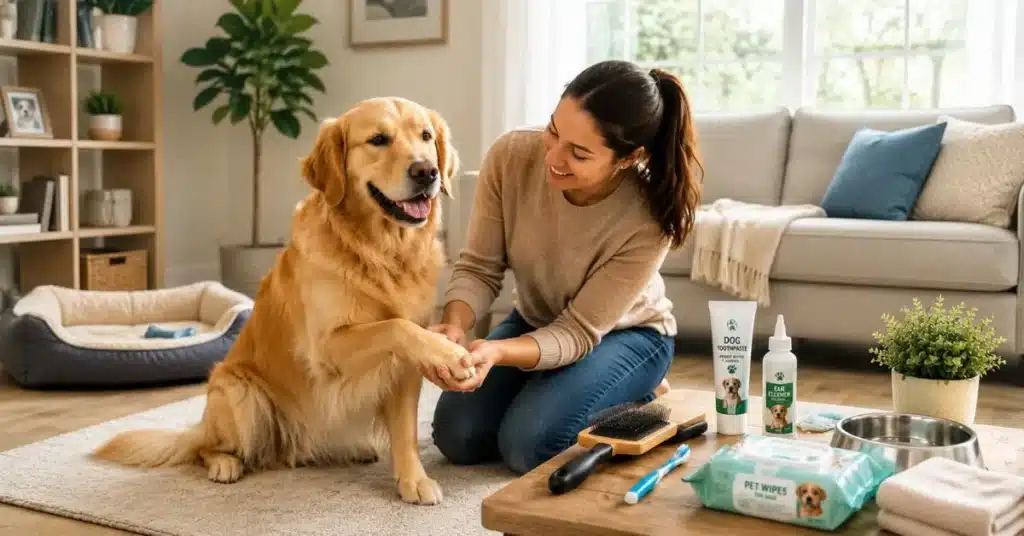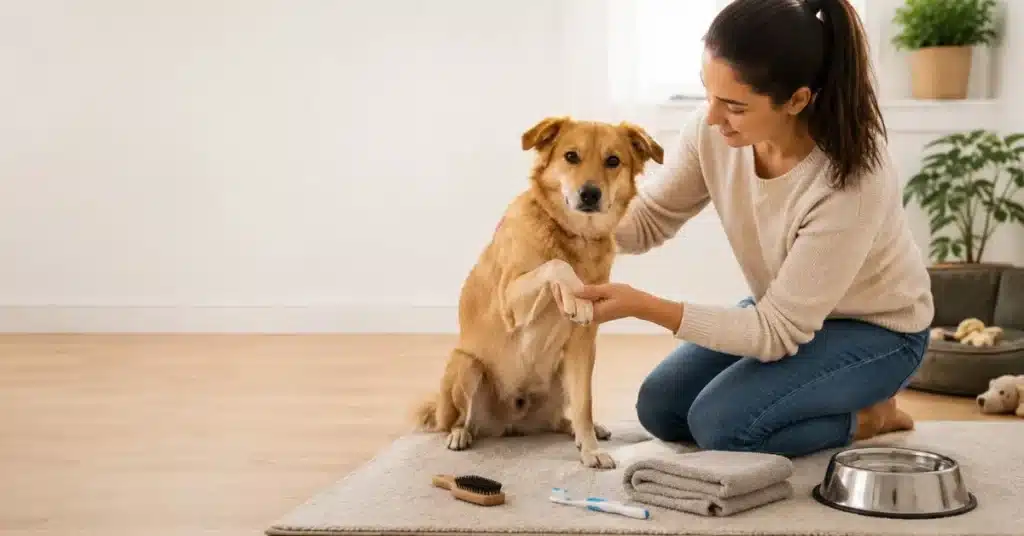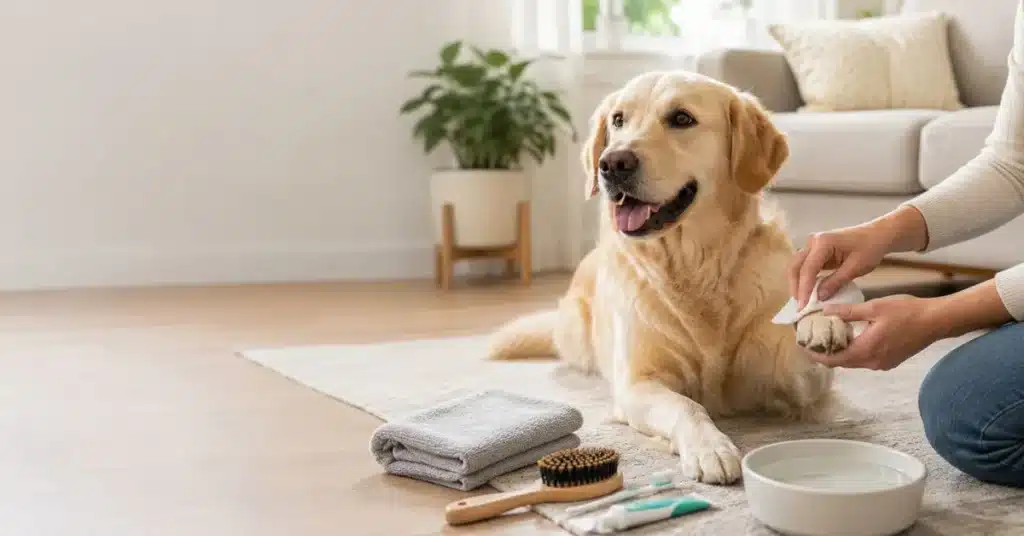
To clean dog paws after a walk, first check the paw pads and between the toes for dirt or debris. Use a clean, damp cloth for light dirt. For mud, sand, or road salt, rinse the paws with lukewarm water.
Then dry each paw well, especially between the toes. Check your dog’s paws after every walk, but wash them only when needed.
If you notice bleeding, swelling, pain, or a deeply stuck object, stop routine cleaning and check the paw more carefully.
Quick Guide: Choose the Right Paw-Cleaning Method
Not every walk leaves the same mess. Check your dog’s paws first, then use the simplest method that removes the dirt.
| Paw condition | What to do first |
| Paws look clean | Inspect only. Check the pads and between the toes. |
| Light dust | Wipe with a clean, damp cloth. |
| Minor surface dirt | Use a dog-safe wipe. |
| Wet mud or sand | Rinse with lukewarm water. |
| Road salt or de-icer | Rinse well, then dry each paw. |
| Pain, bleeding, or swelling | Stop routine cleaning and inspect the paw. |
Quick rule: Inspect first. Wipe light dirt. Rinse heavier messes. Then dry the paws well, especially between the toes.
Should You Clean Your Dog’s Paws After Every Walk?
You do not need to wash your dog’s paws after every walk. But you should give them a quick check each time your dog comes inside.
If the paws look clean after a short walk on dry pavement, an inspection may be enough. For light dust, wipe them with a clean, damp cloth. If you see mud, sand, or road salt, rinse the paws with lukewarm water and dry them well.
You also do not need soap or shampoo after every walk. Use them only when plain water cannot remove the mess.
Even when the paws look clean, check the paw pads and between the toes. Small stones, burrs, splinters, or other debris can hide there. Make this quick check part of your regular daily dog care routine.
What You Need to Clean Dog Paws
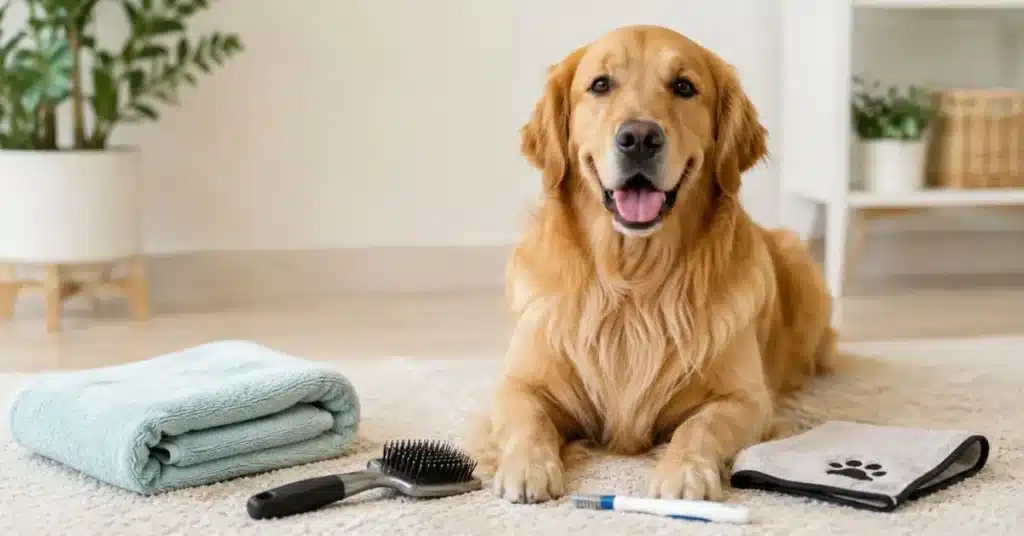
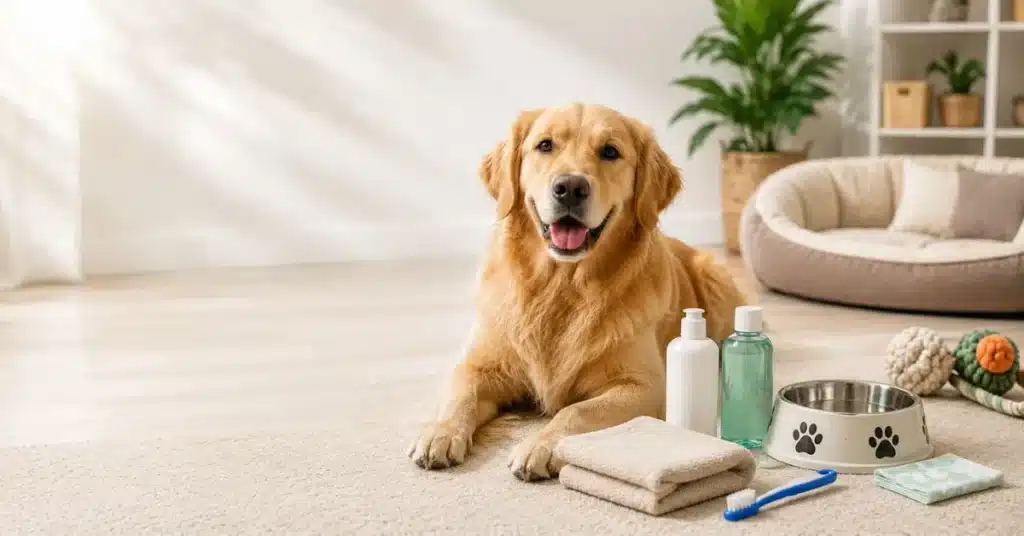
Most post-walk cleanups need only a few simple supplies. Start with the gentlest option that can remove the dirt.
Keep these items nearby:
- A clean, damp cloth for light dust or dirt
- A dry towel for drying the paws
- Lukewarm water for mud, sand, or road salt
- Dog-safe wipes for quick cleanups
- A small basin or paw washer, if needed
- Mild dog shampoo for dirt that water cannot remove
- Small treats to help your dog stay calm
You do not need to use every item after each walk. For light dirt, a damp cloth may be enough.
The AKC paw-care guide also suggests pet-labeled wipes for muddy, sandy, or salty paws. Heavier messes may need a warm washcloth or a more thorough rinse.
Quick tip: Use shampoo only when plain water cannot remove the mess.
How to Clean Dog Paws After a Walk
Start with the gentlest cleaning method that removes the dirt. Clean one paw at a time, and keep the process calm.
Do not rush or force your dog. If your dog seems uncomfortable, slow down and give them a short break.
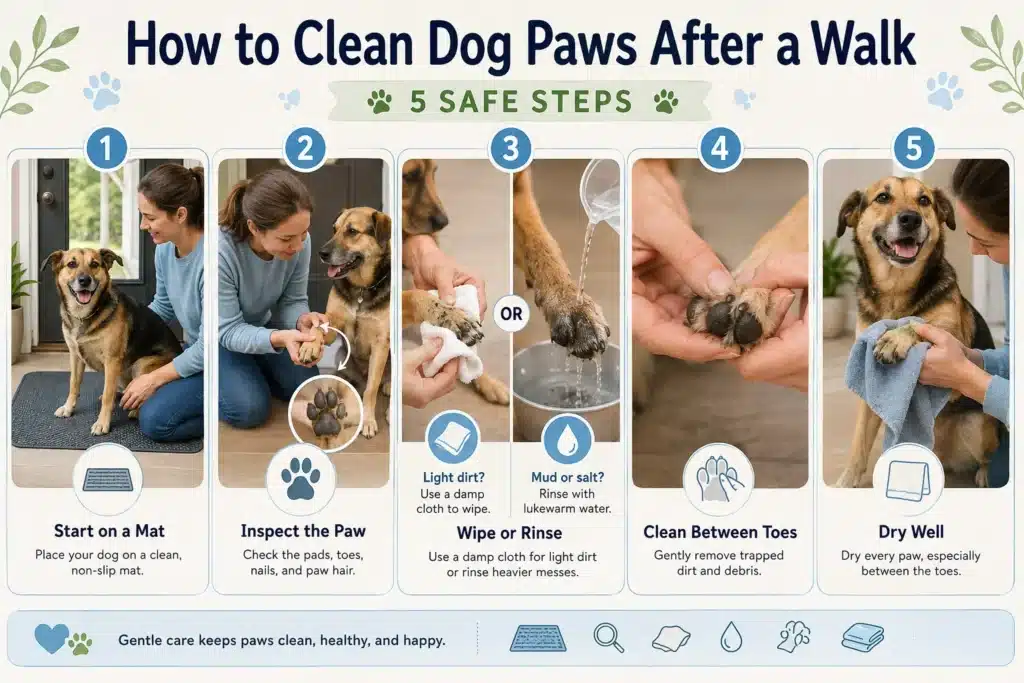
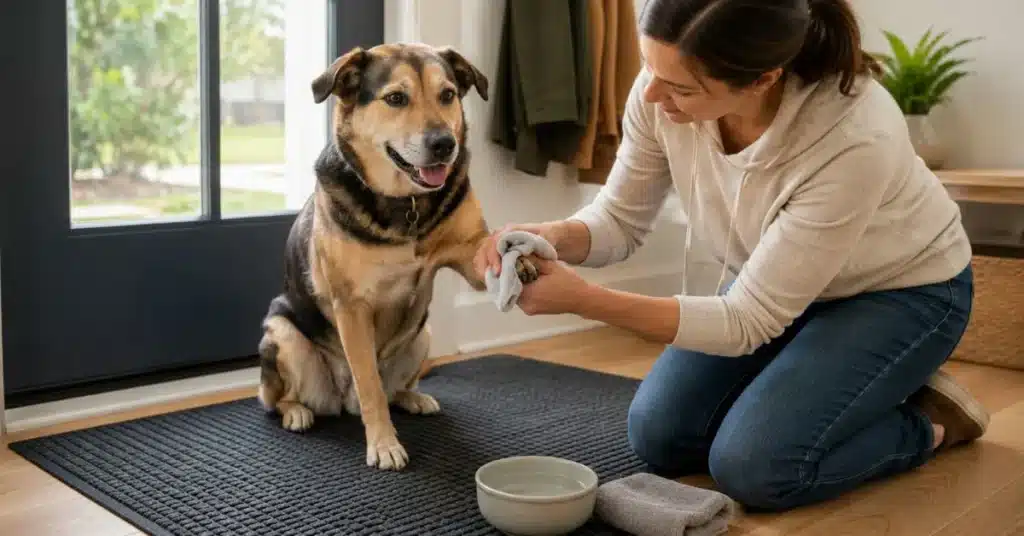
Step 1 — Start on a Washable Mat
Have your dog stand or sit on a washable, non-slip mat near the door. Keep your cloth, water, and towels within easy reach.
You do not need to put a large dog in the bathtub for a quick cleanup. Instead, clean one paw at a time where your dog feels comfortable.
Practical tip: Use one towel to remove dirt and a second clean, dry towel for final drying.
Step 2 — Check the Paw Pads and Between the Toes
Before cleaning, look closely at each paw pad and between the toes. Also check around the nails, paw hair, and lower legs.
Look for:
- Mud or sand
- Small stones
- Burrs or grass seeds
- Road salt
- Cuts
- Redness
- Swelling
The areas between the toes are sometimes called interdigital spaces. Dirt and small debris can easily get trapped there.
VCA recommends checking paws after walks for cuts, bruises, burrs, splinters, and other debris. Its paw-safety guidance also recommends checking around the pads and between the toes.
Step 3 — Wipe or Rinse Based on the Mess
For light dust or surface dirt, use a clean, damp cloth. Gently wipe the paw pads and between the toes.
For a quick cleanup, you can also use a wipe labeled for dogs. The AKC notes that pet-use wipes can help remove mud, sand, or salt from paws.
If the paws are covered in mud, sand, or road residue, rinse them with lukewarm water. A water rinse usually works better when dirt is packed between the toes.
For a harder mess, you may need a small amount of mild dog shampoo. Hill’s recommends gentle cleaning with lukewarm water and thorough rinsing when shampoo is used.
Avoid hot water, hard scrubbing, and unnecessary shampoo after normal walks.
Step 4 — Clean Carefully Between the Toes
Gently separate the toes and remove any trapped mud, sand, or small debris. Dogs with long paw hair may collect more dirt in these areas.
Use a clean part of the cloth as you move from one area to another. This helps prevent spreading dirt back onto a clean paw.
Do not dig at a deeply stuck thorn, piece of glass, or other sharp object. If your dog shows pain or strong resistance, stop and inspect the paw before continuing.
Step 5 — Dry Every Paw Well
Use a clean, absorbent towel to dry each paw. Pay special attention to the pads, the spaces between the toes, and any long paw hair.
If your dog’s lower legs are also wet, dry them before letting your dog walk around the house.
Drying matters because it removes leftover water, dirt, and cleaning residue. It also keeps moisture from sitting between the toes after cleaning.
Quick rule: Inspect → wipe or rinse → clean between the toes → dry well.
Choose the Cleaning Method Based on the Type of Mess
Not every mess needs the same cleaning method. Dust, mud, road salt, and chemicals should each be handled differently.
Light Dust or Surface Dirt
After a dry walk, check the paws first. If you see only light dust, wipe the pads and between the toes with a clean, damp cloth.
If the paws look clean after wiping, you do not need to wash them. Dry them with a towel if they still feel damp.
Mud, Rain, Sand, or Grass Debris
For muddy or sandy paws, first wipe away any loose dirt. Then rinse the paws with lukewarm water.
Check between the toes, around the nails, and in the paw hair. Remove trapped sand, grass seeds, or other small debris, then dry each paw well.
If mud also covers your dog’s legs, belly, or coat, a full bath at home may be easier than repeated spot cleaning.
Road Salt, Snow, or De-Icing Residue
After a winter walk, do not let your dog lick road salt or de-icer residue from their paws. Rinse the pads and between the toes with lukewarm water, then dry them well.
After cleaning, check for redness, cracks, swelling, or limping. The ASPCA also recommends wiping or rinsing paws after contact with de-icers. See its de-icer safety guide for more details.
Unknown, Sticky, or Chemical Substances
Treat an unknown chemical differently from normal dirt. Keep your dog from licking the paw, and save the product label or container if you have it.
Different chemicals may need different cleanup steps. So do not guess with solvents, disinfectants, or essential oils. The ASPCA’s decontamination guide explains why the right response depends on the substance involved.
Quick rule: Use a damp cloth for light dirt, rinse heavier messes, and treat unknown chemicals as a safety issue—not routine paw cleaning.
How to Clean Paws When Your Dog Resists
If your dog does not like paw cleaning, do not force the process. Pulling or holding harder can make your dog more nervous.
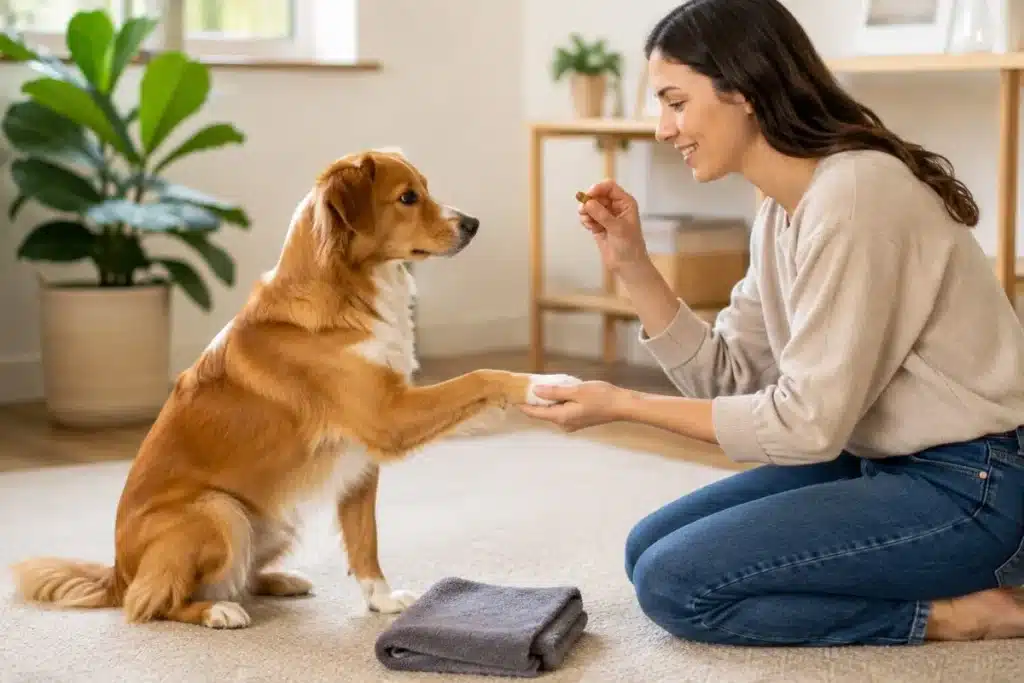
Instead, keep each session short and build comfort slowly:
- Touch one paw for a moment, then give a small treat.
- Let your dog see and sniff the towel.
- Clean one paw at a time.
- Reward calm behavior after each paw.
- Stop before your dog becomes stressed.
- Slowly work up to cleaning all four paws.
If your dog freezes, growls, snaps, or panics, stop and give them space. Also check for pain, swelling, or soreness, because discomfort may cause resistance.
This calm, reward-based approach also works well in a beginner dog grooming routine.
What Not to Use on Dog Paws
A product that is safe for floors or counters is not always safe for your dog’s paws. For everyday cleaning, use simple products made for dogs or plain water when possible.
Avoid using:
- Household disinfecting wipes
- Bleach
- Rubbing alcohol
- Strong surface cleaners
- Hot water
- Undiluted essential oils
- Strongly scented human wipes
- Shampoo after every normal walk
- Unknown homemade chemical mixtures
Not every baby wipe is toxic because formulas vary. However, a clean, damp cloth or a wipe labeled for dogs is a safer routine choice.
The EPA recommends reading and following product labels carefully because incorrect use of household products may harm pets. See the EPA pet-safety guide.
Also, avoid using dish soap for routine paw cleaning. Some chemical or oily exposures may need special cleaning steps instead. The ASPCA decontamination guide explains why the right method depends on the substance involved.
Quick rule: For normal dirt, keep paw cleaning simple, gentle, and dog-safe.
Common Paw-Cleaning Mistakes and Quick Fixes
Most paw-cleaning mistakes happen when the cleaning method does not match the mess. Problems can also start when dirt stays between the toes or the paws remain wet.
| Mistake | Why it can cause problems | Better action |
| Wiping thick mud | A wipe may not remove packed dirt | Rinse with lukewarm water |
| Cleaning only the paw pads | Dirt can stay between the toes | Gently check between each toe |
| Using shampoo after every walk | Most routine cleanups do not need it | Start with water or a damp cloth |
| Using the same muddy towel | Dirt can transfer back onto clean paws | Use a second clean towel |
| Leaving paws wet | Moisture and residue may stay on the skin | Dry well between the toes |
| Forcing your dog | Fear and resistance may increase | Clean one paw at a time and reward calm behavior |
| Ignoring limping | The problem may be more than dirt | Stop cleaning and check the paw |
Quick tip: Start with the gentlest method that works. Clean between the toes, then dry every paw before your dog walks away.
When to Stop Cleaning and Contact a Veterinarian
Some paw problems are more than simple dirt or mud. Stop routine cleaning if your dog shows pain, injury, or ongoing irritation.
Contact a veterinarian if you notice:
- Active bleeding
- A deep cut or puncture
- A burn or blister
- Noticeable swelling
- Limping or avoiding the paw
- Clear pain when you touch the paw
- Glass, a thorn, or another deeply stuck object
- Redness that does not improve
- Discharge or a strong odor
- Repeated licking or chewing
Ongoing redness, swelling, cracking, bleeding, or painful walking may need a veterinary check. The AKC paw-health guide explains these warning signs in more detail.
Regular paw checks can also help you monitor your dog’s health at home.
Quick Post-Walk Paw-Cleaning Checklist
Before your dog leaves the entry mat, use this quick paw-cleaning checklist:
☐ Check the paw pads and between the toes
☐ Remove loose dirt, stones, or grass debris
☐ Wipe light dirt with a clean, damp cloth
☐ Rinse off mud, sand, or road salt
☐ Dry every paw well, especially between the toes
☐ Look for redness, cuts, swelling, or pain
☐ Wash and dry reusable cloths or paw-cleaning tools
This simple routine helps you check, clean, rinse, and dry your dog’s paws without over-cleaning them. For other everyday care tasks, follow the complete daily dog care checklist.
FAQs About Cleaning Dog Paws After a Walk
Should I clean my dog’s paws after every walk?
You should check your dog’s paws after every walk, but you do not always need to wash them. Clean the paws when you notice dirt, mud, sand, road salt, or extra moisture. After a clean, dry walk, a quick inspection may be enough.
Can I clean dog paws with plain water?
Yes. Lukewarm water works well for many everyday messes, including mud, sand, and road salt. For light dust, you may only need a damp cloth. If the mess is greasy, sticky, or unknown, plain water may not be enough.
Can I use baby wipes on my dog’s paws?
Baby wipes have different ingredients, so you should not assume every formula is suitable for dogs. For routine cleaning, use a clean, damp cloth or a wipe labeled for pet use. This keeps the cleaning process simple and avoids unnecessary ingredients.
Should I use soap after every walk?
No. Most post-walk cleanups do not need soap or shampoo. Start with a damp cloth or lukewarm water. Use a small amount of mild dog shampoo only when water cannot remove a difficult mess, then rinse the paws well.
Is a paw washer better than dog wipes?
Neither option is best for every situation. Dog wipes are convenient for light surface dirt, while a paw washer may work better for mud or sand around the pads and toes. A damp cloth and water can also handle many everyday cleanups.
How do I remove road salt from my dog’s paws?
Keep your dog from licking the residue, then rinse the pads and between the toes with lukewarm water. Dry each paw thoroughly and check for redness, cracks, or discomfort.
Why does my dog lick its paws after walking?
Occasional paw licking can be normal grooming. However, frequent or intense licking may happen when a paw is irritated, sore, or has something stuck in it. Check between the toes and around the pads.
Final Thoughts on Cleaning Dog Paws After a Walk
Cleaning your dog’s paws after a walk does not need to be complicated. Check the paws first, then clean them only when dirt, mud, salt, or extra moisture is present.
Use a damp cloth for light dirt and lukewarm water for heavier messes. Always check between the toes and dry each paw well.
The goal is simple: use the gentlest cleaning method that works. If you notice pain, bleeding, swelling, or limping, stop routine cleaning and check the paw more carefully.
For a complete routine beyond paw care, follow our dog hygiene routine at home.